• Skip to primary navigation
  • Skip to main content

International Salsa Magazine

  • HOME
  • Previous editions
    • 2026
      • ISM / March 2026
      • ISM / February 2026
      • ISM / January 2026
    • 2025
      • ISM / December 2025
      • ISM / November 2025
      • ISM / October 2025
      • ISM / September 2025
      • ISM / August 2025
      • ISM / July 2025
      • ISM / June 2025
      • ISM / May2025
      • ISM / April 2025
      • ISM / March 2025
      • ISM / February 2025
      • ISM / January 2025
    • 2024
      • ISM / December 2024
      • ISM / November 2024
      • ISM / October 2024
      • ISM / September 2024
      • ISM / August 2024
      • ISM / July 2024
      • ISM / June 2024
      • ISM / May 2024
      • ISM / April 2024
      • ISM / March 2024
      • ISM / February 2024
      • ISM / January 2024
    • 2023
      • ISM / December 2023
      • ISM / November 2023
      • ISM / October 2023
      • ISM – September 2023
      • ISM – August 2023
      • ISM July 2023
      • ISM Edition June 2023
      • ISM – May 2023
      • ISM April 2023
      • ISM March 2023
      • ISM February 2023
      • ISM January 2023
    • 2022
      • ISM December 2022
      • ISM November 2022
      • ISM October 2022
      • ISM September 2022
      • ISM August 2022
      • ISM July 2022
      • ISM June 2022
      • ISM May 2022
      • ISM February 2022
      • ISM January 2022
    • 2021
      • ISM December 2021
      • ISM November 2021
      • ISM October – 2021
      • ISM September 2021
      • ISM August 2021
      • ISM July 2021
      • ISM May 2021
      • ISM April 2021
      • ISM June 2021
      • ISM March 2021
      • ISM February 2021
      • ISM January 2021
    • 2020
      • ISM December 2020
      • ISM November 2020
      • ISM October 2020
      • ISM September 2020
      • ISM August 2020
      • ISM July 2020
      • ISM June 2020
      • ISM May 2020
      • ISM April 2020
      • ISM March 2020
      • ISM February 2020
      • ISM January 2020
    • 2019
      • ISM December 2019
      • ISM November 2019
      • ISM October 2019
      • ISM Septembre 2019
      • ISM August 2019
      • ISM July 2019
      • ISM June 2019
  • Spanish
  • Download Salsa App
    • Android
    • Apple

Search Results for: Salsa music

Marimba is the name given in Spanish to a very old musical instrument that, over time, has gained visibility and importance in many countries.

The marimba is a musical percussion instrument with a rich history that spans continents and cultures.

Although its exact origin is debated, it is believed that the marimba has its roots in Africa and was developed by different African cultures such as the Bantu and the Marimberos.

The term “marimba” comes from the Bantu “marimba” or “malimba”, meaning “single bar xylophone”.

In America, historical records indicate that diatonic xylophones, precursors of the modern marimba, were introduced in Central America between the XVI and XVII centuries.

The first known marimba in America dates from 1545 in the Santa Lucia hacienda, in the municipality of Jiquipilas, Chiapas, Mexico. In Guatemala, historian Domingo Juarros documented in 1680 the use of marimbas with gourd resonators by Mayan musicians.

Musical Duo of a Guitarist and a Marimba player in Guanacaste in Costa Rica dates back to 1888

Throughout the 17th to 19th centuries, the marimba spread throughout most of the Americas and became a typical element of Mayan and Ladino ensembles.

Today, the marimba is considered a patriotic symbol of Guatemala and Costa Rica, and its music, along with the traditional songs and dances of Colombia’s South Pacific region and Ecuador’s Esmeraldas province, was inscribed in 2010 on UNESCO’s Representative List of the Intangible Cultural Heritage of Humanity.

The modern marimba, like the one seen in the image provided, consists of a series of wooden slats of different sizes, arranged from largest to smallest, each with a different sound pitch.

They are struck with mallets to produce musical notes, and each key has its own soundboard.

The development of the modern chromatic marimba was established in Chiapas, Mexico, around 1890.

This instrument has been integrated into a variety of musical genres, from traditional Latin American music to academic concerts, jazz and martial bands.

The marimba remains a vital instrument that celebrates the cultural heritage and musical creativity of the regions where it is loved and played.

Image of a musical duet between a guitarist and a marimba player dated Guanacaste, 1888.

Learning about the materials and components of the marimba, being aware of the playing techniques and learning about the existing varieties helps to broaden cultural knowledge and to discover a wonderful universe of particular sounds.

Marimba Moderna
Marimba Moderna

It is enriching to know, among other things, that a series of woods of multiple sizes arranged from longest to shortest are essential to assemble the keyboard. For the soundboard, on the other hand, it is necessary to work on the tuning so that each wood of this structure is in tune with each key.

As for playing procedures, the four-stick technique and the art of glissando appear as alternatives to keep in mind. Of course, the most advisable thing to do is to attend a marimba workshop in order to master the techniques correctly.

Nor should we forget that, since ancient times, many types of marimbas have been made and used and have contributed their characteristic sounds to multiple musical genres and styles.

Thanks to those who dare to experiment with instruments and musical compositions without being conditioned by prejudices, for example, the folk marimba and the midi marimba can coexist in harmony, to cite two specific cases.

Marimba Antonko-AMC12

Saurce: Recuperando la historia en Guanacaste

Also Read: Son Cubano is one of the most popular musical styles in Cuba and Kiki Valera is one of its leading exponents

Charlie Aponte presents his best salsa album

North America / USA / Las Vegas

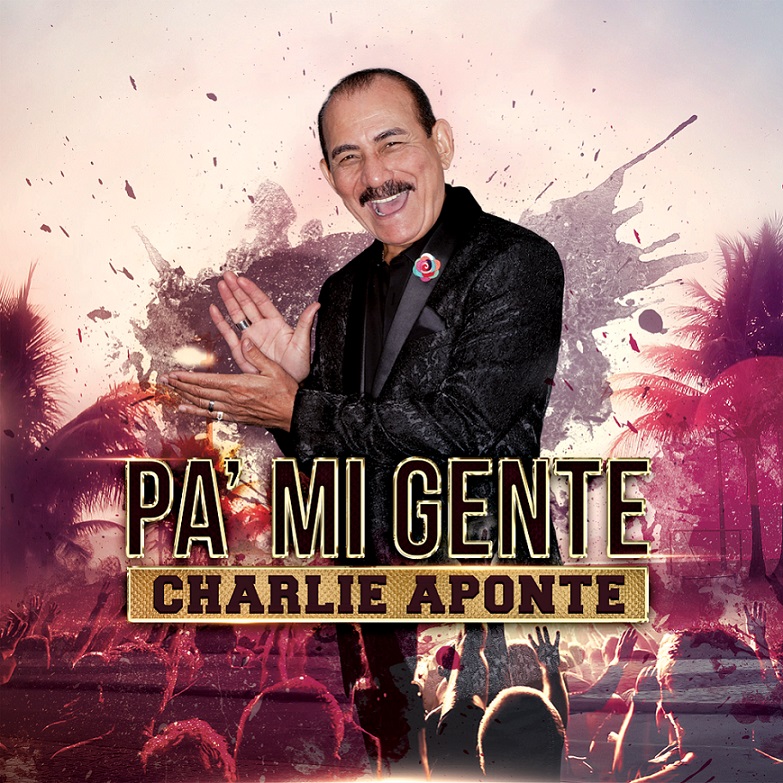
Charlie Aponte presents his best Salsa album. Partying with his first Latin Grammy 2018 nomination

Puerto Rican salsero Charlie Aponte has plenty of reasons to celebrate his first Latin GRAMMY nomination, with his second production

Charlie Aponte Flyer

“Pa’ Mi Gente” which was recognized in the category of “Best Salsa Album” for the nineteenth installment of these prestigious awards that will be delivered on Thursday, November 15 in Las Vegas.

“Very grateful to the Recording Academy, especially its members, for this important support that is definitely one more step to continue reaping success” said the artist who is reaching his five years as a solo artist.

“Pa’ Mi Gente” achieved an important debut, reaching the top of the “record pools” lists, with its songs, “La Salsa se Hizo Pa’ Bailar” and “No se le Presta el Alma”, which have been the most listened to, likewise; “Nobody takes away what you dance”, which was the first promotional single and which contains a video on his official YouTube channel, by this artist who works independently with the Criollisimo Inc. label.

This album is made up of 11 songs, among them one of his own authorship under the guidance of the musical director on the album and all his presentations, maestro Sammy García, who together recorded this production in the MÁS Audio studio of the sound engineer and producer Angelo Torres.

Charlie Aponte, who will soon release his new music video “Besos de Azúcar”, continues with his artistic commitments, including New York, Medellín and various presentations in his native Puerto Rico, and to end the year he will be with the public of Colombia, in the “Heroic City” Cartagena.

Biography Charlie Aponte:

Charlie Aponte
Charlie Aponte

Charlie Aponte, one of the most beloved voices remembered by thousands of salseros around the world, returns to the stage as a soloist in 2015 after 41 years of belonging to the salsa university, “El Gran Combo de Puerto Rico” Now he’s back as a solo artist.

Born in Caguas, PR on February 2, 1951. It was in 1973 when, after the departure of Pellín Rodríguez, he joined the “Mulatos del Sabor”. Since then there have been many successes that have been proclaimed as successes through Charlie’s voice. He has contributed as a vocalist and displayed his capacity as a sonero in hits such as “Brujería”, “Amor Brutal”, “La Loma del Tamarindo”, “Compañera Mía”, “No hay cama pa’ tan tan Gente”, “Hojas Blancas”, “ Rice with Beans”. Among many others.

In 2014, together with the multi-award winning producer, Maestro Sergio George (Top Stop Music), he presented his new musical proposal “Una Nueva Historia”. This new proposal has the best and most recognized composers and arrangers. Presenting the song “Para Festejar” as his new single in promotion, and grateful for the public’s reception of his musical production, which was on the Billboard charts for 10 consecutive weeks, which catalogs it as an excellent piece of music.

He debuts as executive producer of his new proposal “Pa’ Mi Gente”, a production by the best musicians, arrangers, composers, available in all major stores and digital platforms. In this new project he has a bolero composed by the artist, among other surprises for the public that follows him.

Accustomed to leaving his soul in each of his performances, he assures that with this album he intends that his followers listen to him, dance and continue to appreciate the quality with which his music is made.

The Great Combo of Puerto Rico – The famous salsa orchestra

Latin America / Puerto Rico / Puerto Rico

The Great Combo of Puerto Rico will receive 2019 in Puerto Rico.

The famous salsa orchestra will offer a dance concert on the last day of this year at the Miramar Convention Center.

For the first time in more than two decades El Gran Combo will have the opportunity to say goodbye to the year on its island, a fact that for the legendary Rafael Ithier does not go unnoticed.


The Great Combo of Puerto Rico

“For me it is a huge satisfaction and I think for the whole as well. Lately we have said goodbye to the year in Colombia, Ecuador, Peru, Venezuela, in the (Dominican) Republic, where we are going quite frequently, but in Puerto Rico it has been more than 20 years since we said goodbye and for us it is an enormous satisfaction that we they invited him to fire him,” the musical director of the famous salsa orchestra said in an interview with Primera Hora about the dance concert they will offer at the Miramar Convention Center.

“We are going to be able to be with the family and many friends that we do not see during the year. Because remember that we are a traveling band, and we spend all the time traveling”, added Ithier, anticipating that the public will be able to enjoy the best of the repertoire of the group with more than 56 years of experience.

“And if they allow us, and they will always allow it, we will play three or four numbers that we have new, because people always expect something new from El Gran Combo,” Ithier assured, sitting on the balcony of his home in Bayamón.

The Great Combo of Puerto Rico - Photo
The Great Combo of Puerto Rico – Photo

Son Cubano is one of the most popular musical styles in Cuba and Kiki Valera is one of its leading exponents

Over the last century, this style of traditional Cuban music has contributed to many other musical genres, including jazz, cha cha cha, mambo, salsa, songo and timba.

Cuban Son is one of the most popular musical styles in Cuba and Kiki Valera is one of its greatest exponents.

Cuban son is the music that made the Buena Vista Social Club worldwide stars in the late 1990s, but Kiki Valera comes from a family of musicians whose involvement with Cuban son predates BVSC by decades.

Kiki Valera is the eldest son of the famous septet La Familia Valera Miranda, a multi-generational traditional music group from Santiago de Cuba.

Since the 19th century, La Familia Valera Miranda has played an important role in Cuban culture by collecting and preserving the deep-rooted traditions of the legendary Sierra Maestra mountain region.

Their debut album, “Antología Integral Del Son”, released in 1982, helped initiate the explosion of interest in traditional Cuban music.

Kiki, like most of her family, is a virtuoso. A multi-instrumentalist, composer, arranger, sound engineer and producer, he is best known as one of the world’s best players of the Cuban cuatro, a medium-sized guitar with 8 strings grouped in sets of 2.

Kiki Valera is the eldest son of the famous septet La Familia Valera Miranda, a multigenerational group of traditional music from Santiago de Cuba.

Kiki learned the Cuban tres under the guidance of his father Felix as a child.

He later attended one of Cuba’s most prestigious music schools, the Esteban Salas Conservatory, in Santiago de Cuba and by the age of 15 was touring internationally.

Kiki continues to conduct, compose, arrange and perform internationally. She also performs and teaches in Seattle, Washington, where she contributes to the vibrant Pacific Northwest music scene.

His current project features several other internationally renowned artists, including Coco Freeman (former singer for Adalberto Alvarez y su Son and NG La Banda), vocalist Carlos Cascante (three-time Grammy Award winning vocalist for the Spanish Harlem Orchestra), trumpeter Alexis Baró (Cubanismo and Omara Portuondo) and bongocero Pedro Vargas (Barbarito Torres’ band). (Kiki Valera)

“Vacilón Santiaguero” is Kiki Valera’s second solo release in the United States after many distinguished years as the director of La Familia Valera Miranda in Santiago de Cuba.

He goes beyond his core group to present collaborations with some Grammy® award winning musicians and features his favorite trumpet players, some born in Cuba, some born in the U.S., but all with reputations jus????ficadas for playing Cuban music for love, if not DNA.

Son Cubano is one of the most popular musical styles in the world.

“Vacilón” is one of those words that doesn’t have a perfect English equivalent to Cuban Spanish, but something that’s a really good time (a little rum or aguardiente always helps).

So what sets this project apart from the vast mountain of excellent traditional albums already out there? Not only is there Kiki’s custom-made Cuban cuatro, which brings a unique texture to the sound, rather than a tres, but, in his jazz-influenced hands, you’ll occasionally hear twists and turns in his improvisations that you probably weren’t expecting when you first glanced at the song titles, which are mostly Cuban evergreens.

Thanks to Kiki’s creative arrangements, this is no mere recycling of covers of these classic songs.

Kiki is as exacting with the recording, mixing and mastering work as he is with the arrangements.

Much of the recording and mixing was done in Kiki’s custom home studio, and Grammy® winner Michael Lazarus mastered the project.

The result will be an audiophile’s delight, a reason, I might add, to want the physical product for your collection (Kiki Valera).

Kiki Valera – Vacilón Santiaguero (2024).

Tracks:

  1. Este Vacilón (Felix Valera Miranda)
  2. El Ají de Cocina (Felix Valera Miranda)
  3. Sobre una Tumba una Rumba (Ignacio Piñeiro)
  4. El Penquito e’ Coleto (Francisco Repilado “Compay Segundo”)
  5. Funfuñando (Arsenio Rodriguez)
  6. La Guajira (Olga de Blanck)
  7. Mari-Juana (Juana María Casas)
  8. Muñequita Feliz (DR)
  9. El Empanadillero (Teodoro Benemelis)
  10. Pájaro Lindo (Felipe Neri Cabrera)
  11. Dos Gardenias (Isolina Carrillo)
  12. El Cuarto de Tula (Sergio Gonzales Siaba)

Musicians:

Kiki Valera (Cuban cuatro, guitar, bass, harpsichord, maracas and backing vocals).

Pedro Vargas (congas, bongos and backing vocals)

Steve Guasch (Backing vocals)

Carlos Cascante (Lead vocals on tracks #1,#4,#5,#7,#9,#10,#12)

Francisco “Coco” Freeman (Lead vocals on tracks #2,#11)

Joshuah de Jesus (Lead vocal on tracks #3,#8)

Raquel Zozaya (Lead vocals on track #6).

Special guests:

Alexis Baró (Trumpet on tracks #1, #3, #4, #6, #9, #11).

Steve Mostovoy (Trumpet on tracks #1, #3, #3, #6, #11)

Michael Rodríguez & Jonathan Powell (Trumpet on track #8)

Pete Nater & Dennis Hernández (Trumpet on tracks #2, #5, #7, #12)

Brian Lynch & Thomas Marriott (Trumpet on tracks #1#0)

Leon Q Allen (Trumpet on track #4)

https://www.kikivalera.com/

Also Read: Yilian Cañizares, an excellent Cuban musician, studied in her hometown in the strictest tradition of the Russian school of violin

Ezequiel Lino Frías Gómez was an excellent musician, pianist, arranger and composer.

Ezequiel Lino Frías Gómez was born on April 10, 1915 in Havana, Cuba.

Lino Frías y Daniel Santos

Musician, Pianist, Arranger, Composer. He began his artistic career in the early 30’s, working with singer and composer Joseito Fernandez, in the orchestra of Raimundo Pla.

Later he became part of the Fantasía Orchestra.

At the end of the decade he worked with the Septeto Carabina de Ases.

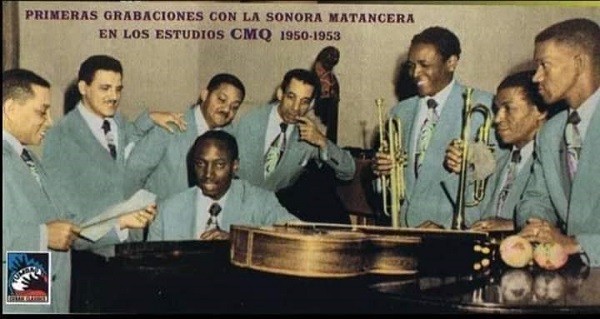
Some time later he joined Arsenio Rodríguez’s Conjunto Todos Estrellas in September 1940, remaining in it until November 1943, leaving his place to Adolfo Oreilly Panacea, to join the Sonora Matancera in 1944, until 1976, where he contributed in an important way both in the composition and musical arrangements, imposing his particular piano solos.

In 1974 he helped found with Armando Sánchez the Conjunto Son de la Loma.

Upon his retirement from La Sonora Matancera, the Puerto Rican producer René López invited Lino, together with Israel “Cachao” López, to revive the descargas he had already recorded in the fifties, assembling a Típica together with “Cachao”.

Sonora Matancea
Sonora Matancea

In his independent years Lino worked with Johnny Pacheco and Carlos “Caito” Diaz.

He accompanied great artists in recordings, in that period in New York, such as La Lupe, Olga Guillot, Daniel Santos, Carmen Delia Dipini, Bobby Capo, among others.

He died on May 22, 1983 in New York, USA.

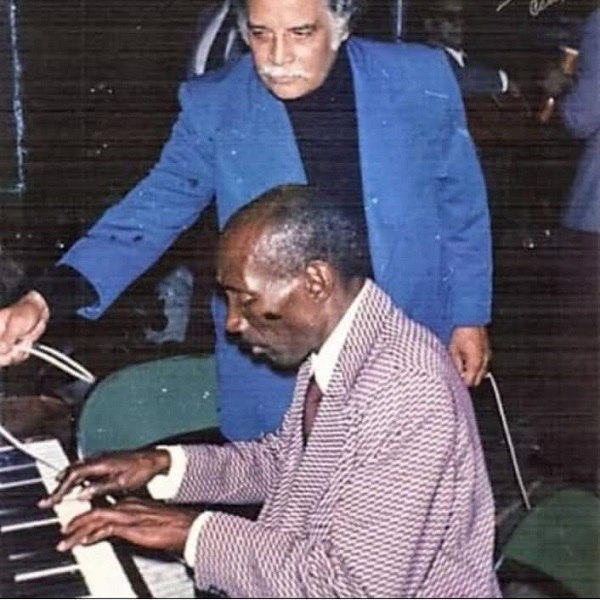
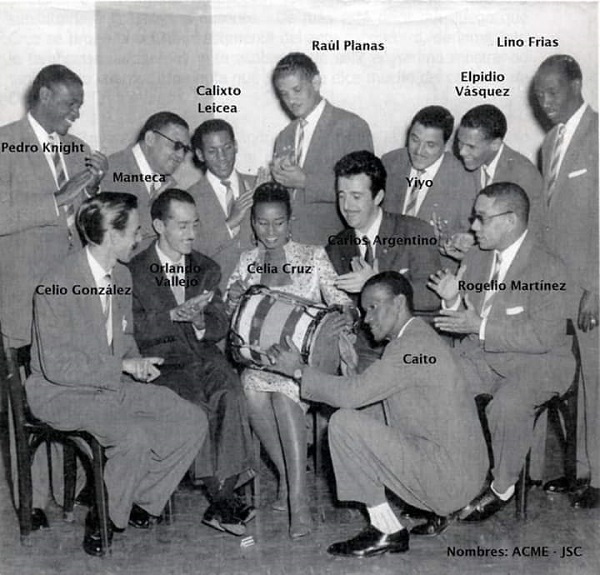
Lino Frías, who for twenty-two years was the pianist of the Sonora Matancera, composed the very popular Mata Siguaraya in 1951.

One of the most popular photos of the Sonora Matancera.

In it we can see Lino Frías from his piano looking at Celia Cruz, great interpreter of Mata Siguaraya, together with Benny Moré and Oscar D’León.

Ezequiel Lino Frías Gómez was born in Havana and died in New York in 1983.

Lino studied piano at the Havana Conservatory. For a time, in the 1930s, he played in the Raimundo Pia y Rivero Orchestra, whose singer was Joseito Fernandez. He would later play in the Orquesta Fantasía.

In 1939 he joined the Septeto Carabina de Ases, led by Mariano Oxamendi, guitarist and second voice, and with Bienvenido Grande, singer and harpsichord player, Nilo Alfonso, double bass, José Bergerey, maracas and third voice, Ramón Liviano Cisneros, tres player, Florencio Coco Morejón, bongos player, and Félix Chappotín, trumpet player.

In 1944, Lino joined the Sonora Matancera as a pianist, where he remained until 1976.

In the 1960s, Frías joined the movement that created the so-called salsa music, alongside Fania All Stars, Johny Pacheco, Bobby Rodríguez, Carlos Patato Valdés y Caíto, Carlos Manuel Díaz (Matanzas 1905-New York 1990), among others.

Don Adolfo, a Puerto Rican timbalero, worked with Lino Frías in a group that included some of the most renowned musicians and singers of the 1950s and 60s: Olga Guillot, Daniel Santos, Lucecita Benítez, Bobby Capó, Marco Antonio Múñiz, Carmen Delia Depiní, Chucho Avellaneda, Sergio González Siaba and La Lupe, among others.

In 1974, parallel to his work as a pianist in the Sonora Matancera, Lino Frías created the ensemble Son de la Loma, with the participation of Cuban-Niuyorquinos such as Marcelino Guerra, Rapindey (Cienfuegos 1914-Spain 1996), author of Convergencia, and Pedro Rudy Calzado (Santiago de Cuba 1929-New York 2002).

Celia Cruz y La Sonora Matancera

Due to arthritis, in 1976 Lino left the Sonora. His place is taken by Javier Vázquez, (Matanzas 1936), son of the double bass player Pablo Vázquez.

It is said that the death of Lino Frías, in 1983, was a hard blow for his great and faithful friend Celia Cruz (Havana 1925-New Jersey 2003).

In addition to Mata Siguaraya, Lino Frías composed Pan de piquito, Óyela, gózala, Vamos todos de panchanga, Cañonazo, Vive la vida hoy, Suena mi bajo, Convencida, Afecto y cariño, Has vuelto a mí, Baila Yemayá.

Also Read: Israel “Cachao” López Sobrado en fama y respeto en los años setenta se dedicó a mantener la tradición a nivel supremo

  • « Go to Previous Page
  • Page 1
  • Interim pages omitted …
  • Page 27
  • Page 28
  • Page 29
  • Page 30
  • Page 31
  • Interim pages omitted …
  • Page 293
  • Go to Next Page »

International Salsa Magazine (ISM) is a monthly publication about Salsa activities around the world, that has been publishing since 2007. It is a world network of volunteers coordinated by ISM Magazine. We are working to strengthen all the events by working together.