• Skip to primary navigation
  • Skip to main content

International Salsa Magazine

  • HOME
  • Previous editions
    • 2026
      • ISM / March 2026
      • ISM / February 2026
      • ISM / January 2026
    • 2025
      • ISM / December 2025
      • ISM / November 2025
      • ISM / October 2025
      • ISM / September 2025
      • ISM / August 2025
      • ISM / July 2025
      • ISM / June 2025
      • ISM / May2025
      • ISM / April 2025
      • ISM / March 2025
      • ISM / February 2025
      • ISM / January 2025
    • 2024
      • ISM / December 2024
      • ISM / November 2024
      • ISM / October 2024
      • ISM / September 2024
      • ISM / August 2024
      • ISM / July 2024
      • ISM / June 2024
      • ISM / May 2024
      • ISM / April 2024
      • ISM / March 2024
      • ISM / February 2024
      • ISM / January 2024
    • 2023
      • ISM / December 2023
      • ISM / November 2023
      • ISM / October 2023
      • ISM – September 2023
      • ISM – August 2023
      • ISM July 2023
      • ISM Edition June 2023
      • ISM – May 2023
      • ISM April 2023
      • ISM March 2023
      • ISM February 2023
      • ISM January 2023
    • 2022
      • ISM December 2022
      • ISM November 2022
      • ISM October 2022
      • ISM September 2022
      • ISM August 2022
      • ISM July 2022
      • ISM June 2022
      • ISM May 2022
      • ISM February 2022
      • ISM January 2022
    • 2021
      • ISM December 2021
      • ISM November 2021
      • ISM October – 2021
      • ISM September 2021
      • ISM August 2021
      • ISM July 2021
      • ISM May 2021
      • ISM April 2021
      • ISM June 2021
      • ISM March 2021
      • ISM February 2021
      • ISM January 2021
    • 2020
      • ISM December 2020
      • ISM November 2020
      • ISM October 2020
      • ISM September 2020
      • ISM August 2020
      • ISM July 2020
      • ISM June 2020
      • ISM May 2020
      • ISM April 2020
      • ISM March 2020
      • ISM February 2020
      • ISM January 2020
    • 2019
      • ISM December 2019
      • ISM November 2019
      • ISM October 2019
      • ISM Septembre 2019
      • ISM August 2019
      • ISM July 2019
      • ISM June 2019
  • Download Salsa App
    • Android
    • Apple
  • Spanish

Search Results for: Salsa music

ISM: Goce Pagano , one of the salsa places in Bogota Colombia

Goce Pagano, a Historical Salsa icon in the city of Bogota, Colombia :

Many Latin American rhythms have been present in different countries worldwide, especially in Latin America because of its culture and customs through time, and in Colombia music has its own history, it is influenced by Spanish, indigenous and African elements since colonization, and there are two large groups: Andean (with emphasis on the bambuco, the pasillo, the torbellino, the guabina and the bunde), llanera, Caribbean (the cumbia, the mapalé, the bullerengue, the porro, the vallenato, and the calypso), and Anglo-Saxon. Did you know that Colombia is known as the land of a thousand rhythms for its more than one thousand twenty-five (1025) folk rhythms?

Currently, the most played music everywhere (music venues, bars, restaurants, parties, academies or the streets of the country) are bolero, ranchera, tango, ballads, champeta and salsa.

Photo in Pagan Goce
Photo by Cesar Pagano

We can not ignore the main salsa icon in Bogota, Colombia with respect to history, how can we not be when we are talk about 39 years of tradition? It all began during the year 1978 when it comes out from a space oriented to Salsa in a city where this rhythm was not so normal like it was in Cali or Barranquilla (Bogota). By that time acetate discs, vinyl, became the element number one that made this capital dance, a case that incredibly remains in effect.

Here in the so-called Goce Pagano, we can delight with an important record collection from the most important salsa era, it was the 70’s. To the surprise od many, this years are the ones that still put rhythm in this place.

For its great tradition, it is common to gegatherings of collectors, forums or discussions with great personalities, therefore, this place not only calls you to dance and enjoy good music, but also to be a corner for those who make the history of salsa the fashion. On my visit I was able to enjoy a cocktail known as Joe Arroyo that shows us the flavors and colors of this beautiful country united to the well-known rhythm of the salsa icon in Colombia. The Goce Pagano opens its doors on Fridays and Saturdays from 7:00 pm (19:00 hrs) in a contemporary and trendy format, orange walls, candles, fireplace, wood and leather furniture calls you to an intimate space of great warmth and full of Latin rhythms that lets moonlight penetrate into the center of the ceiling.

Photo outside Goce Pagano
Photo by Cesar Pagano

For all the above reasons we can not fail to enjoy a space so full of history, rhythms and flavors like this, we can go to the diagonal 20-A # 0 – 82, in the town of Santa Fe near Las Aguas Transmilenio Station, Bogota, Colombia, attach yourself to the roots of salsa and request your most popular songs, it is sure that the Goce Pagano will pleasure you in that beautiful Latin evening.

If you want more information about the Goce Pagano club, click here in this links:

WebSite: https://www.elgocepagano.co/

Phone number (Whatsapp): +57 316 8710646

Facebook: @el.goce.pagano.bar

“¿What have we achieved?” winner at the Global Music Awards

The Global Music Awards

The Global Music Awards gave a silver medal to the Fahed Miter and Rubén Blades’s video “¿Qué hemos logrado?” The event took place on January 21 in the city of San Diego, California. The announcement was made as usual through the Global Music Awards’ website, an organization that in 2021 will have 10 years since they started with the awards.

The work behind the video

The video is different from the ones we all frequently watch and instead offers something more experimental. The video’s director was Luis Safa, who used around 800 drawings made with Chinese ink and animated all of them, a task that took months to complete. On the other hand, Safa’s direction it’s not the only remarkable achievement, since the person in charge of the video production was the Latin Grammy nominee and winner of a bronze medal this year at the Global Music Awards, Jorge Castro.

"Qué hemos logrado" wins a silver medal. - Global Music Awards
“Qué hemos logrado” wins a silver medal at the Global Music Awards

The video production and direction are phenomenal, as are the touching lyrics of the song, which was composed by Fahed Miter. These lyrics intrinsically invite everyone to reflect, while they transmit a clear message in all their verses. In this song, Fahed Miter’s voice sounds soft, with a slight tone that perfectly matches the melody that accompanies it, but as if was not enough, the recognizable voice of the incredibly talented Panamanian musician, Rubén Blades, adds an even more sentimental touch.

Focusing on the music, it also has various merits that are worth mentioning, one of them is the outstanding talent of the musicians that participated in the song, such as bassist John Patitucci and pianist Lito Vitale, both world-class musicians. The arrangements of the song were made by Edín Solís together with Vitale himself, by working together they managed to create the perfect melody for the song. In Fahed’s words, the video is “a perfect marriage between music and images, and it was made thanks to the creative freedom of an excellent team”.

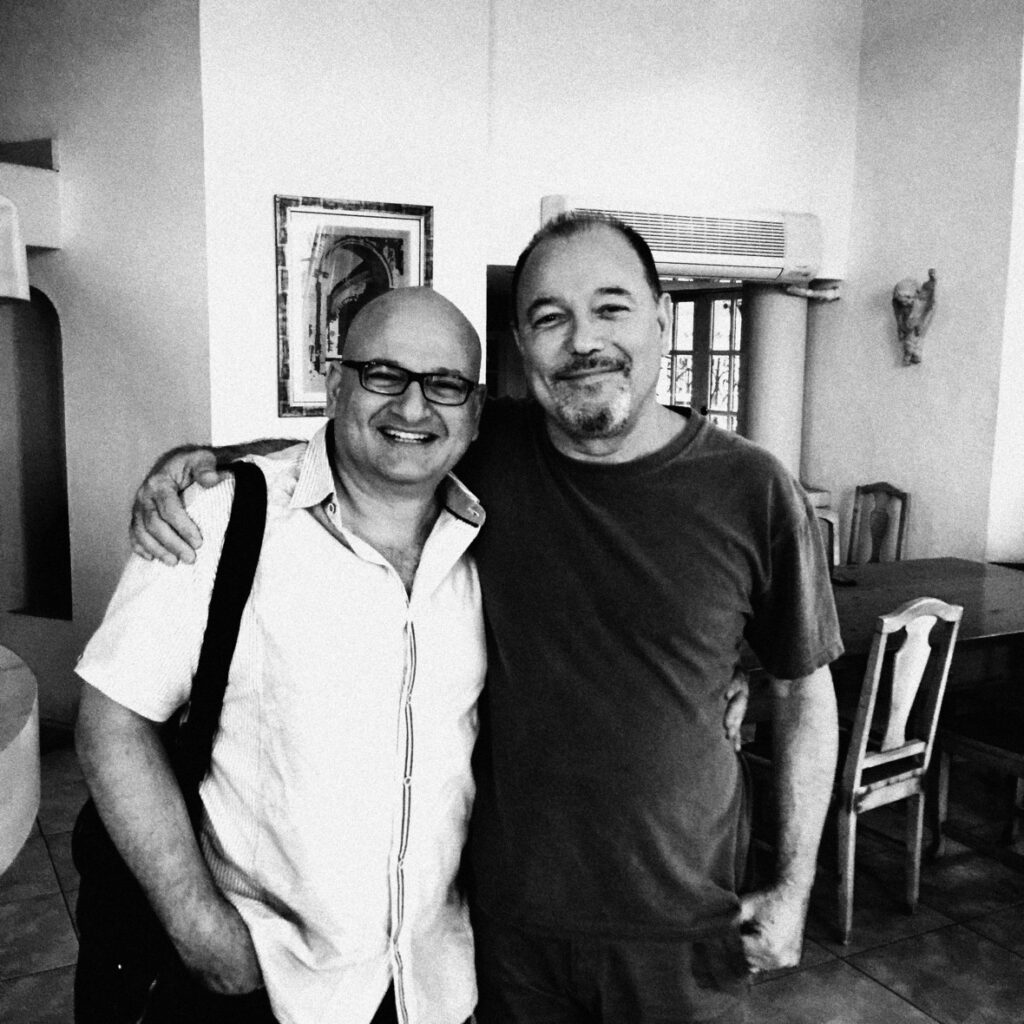
Fahed and Ruben Blades together. Global Music
Fahed and Ruben Blades together.

In regards to the video, the author of “piel adentro, corazón afuera”, has expressed that his intentions were doing something different from what is usually seen every day, and by watching the video, we can say that the objective was fulfilled; the result of all the work done is a very original video, one where the tone of the music, the animation of the handmade drawings and the lyrics of the song, manage to create a piece of art worthy of at least a silver medal at the Global Music Awards.

Using his Instagram account, Jorge Castro talked about the video too, while also highlighting how complicated 2020 was: “It is almost a prophetic video since although it was carried out before the global Covid-19 emergency, it fits perfectly for the times that we are living in right now. We must celebrate all the good things we have, but we cannot help but show empathy for the global suffering that this pandemic continues to cause.” I’m sure we will move forward with all of this.”

@Latinasson, the online radio of Latin music and rhythms

It was one of the means of communication from the 20th century for people to stay informed anywhere or music to be aired whether at work, in places to dance, outside or at home. Latinasson was the first radio station in 1920 nwith its regular commercials and entertainment broadcasting, initially to England and France as the first countries to broadcast it along the English Channel.

The Radio industry in Venezuela:

Did you know that Venezuelan music is characterized by mixing Spanish, indigenous and African elements? Since the colonization of Latin America, there has been a mixture of these races, customs and cultures emerged, which derived in the emergence of various Latin rhythms both in Venezuela and in Latin America as a result of the mestizo people.

From May 23, 1926, the first Venezuelan radio station called AYRE started airing in Caracas and its first speaker was Alberto Mûller who made the first live radio broadcast; the radio was also supported by José Vicente Gómez, who was the son of President Juan Vicente Gómez; the radio was based on the reading of news from the Caracas newspapers, humor and music that could be live or on records; this radio show lasted 2 years until it closed down for political reasons. But this did not stop the opening of other radio stations from 1930 with the YVIBC station, which would become into Radio Caracas Radio 5 years later.

And as the years pass by, technology advances where televisions and other equipment appeared, endangering radio stations; even today there is strong competition in this area since up to the present time, people pull everything off the internet so radio stations had to adapt to this new technology, so instead of depending on a transmitted frequency in a certain sector, they are transmitted oover the internet either on a social network or their own web page, making information more live more often at an international level for all their followers.

One of the Caracas radio stations at which you can listen to a great variety of Latin music (especially “Salsa” and “Son”), information about artists at national and international level and upcoming events, we have the radio station @ Latinasson, (Latinas Son Ipradiodigital).

Which is transmited from 4 to 6 pm hour from Caracas, Venezuela, every Friday, with the participation of the broadcasters @ frankcroquers and @ hectovaloe2.

Latinas Son Radio
Latinas Son – Roberto Roena – flyers

On Friday, January 22, 2021, they will have an interview and, later, they will delight you with salsa music. In the second hour, they will be celebrating the Maestro Roberto Roena’s 80th birthday, who was born on January 16, 1940, in Mayagüez, Puerto Rico; he is bongo player, salsa dancer, and orchestal director, with his most listened songs: “El Traqueteo”, “Cui Cui”, “Aquellos que Dicen”, “Traicion”, “Sing a Simple Song”, “Roena Medley Dos..”, “Ponte Duro”, “Como te Hago Enetender”, “Avisale a mi Contrario”, “Guaguanco del Adios”, and others.

Don’t miss it and listen to this Latin radio station. Currently, you can listen to the station when connecting through the following options:

Google Chrome search:  www.iptvdigital.com/radio

Firefox Search: www.iptvdigital.com/

Phones (Smarphones) : iptvdigital.com/radio

Direct Access Transmission: https://zeno.fm/ip-radio/

Professor MSc. Carlos Colmenárez and his “WRITTEN SALSA”

By: Professor MSc. Carlos Colmenárez (Venezuela)

Greetings, dear and consistent readers of Salsa Escrita, from this server, your longtime friend, Professor MSc. Carlos Colmenárez. It is a great satisfaction for me to be able to reach all of you through International Salsa Magazine, to whom I am very grateful for your trust and thus be able to make known the Venezuelan salsa talent and also from other countries, where Afro-Latin music continues and will continue to be projected and promoted with much professionalism in its prestigious pages.

Salsa Escrita, in charge of this server, your friend of always, professor MSc. Carlos Colmenárez
Professor MSc. Carlos Colmenárez (Venezuela)

In this issue of Salsa Escrita, we bring you four exponents of Afro-Caribbean music, born in Venezuela, who exalt the genre with great class and success, earning the respect and admiration of all its followers. So, ladies and gentlemen, we present to you in special reviews Hildemaro “El Sonero del Amor”, Mariana “La Sonera de Venezuela”, Édgar “Dolor” Quijada and Héctor “Malecón”. We hope you enjoy the written interaction between you and International Salsa Magazine.

Hildemaro “The Sonero of Love”

The Venezuelan singer-songwriter, born in Caripito, Monagas state, on November 10, 1957
Hildemaro The Sonero of Love

On this occasion we will mention a vocalist who has stood out for his excellent interpretive quality and professionalism during his long and successful career, both in Venezuela and abroad; we refer to José Hildemaro Hugas Amarista, better known as Hildemaro “El Sonero del Amor”.

The Venezuelan singer-songwriter, born in Caripito, Monagas state, on November 10, 1957, told us that his musical interests came from a very young age, participating in festivals in his home state and musical groups in that locality, until he was presented with the opportunity to go to Caracas in 1976 and join the orchestra “Los Satélites”; Then in 1979 he joined the “Orquesta Ideal”; later he worked with the “Súper Combo los Tropicales”, “Noche Caliente” and the “Orquesta de Porfi Jiménez”; and finally in 1985 he joined Renato Capriles’ orchestra “Los Melódicos”, which gave him the greatest and best experience.

The following year,” Hildemaro continued, “he decided to definitely make his way as a salsa performer, recording his first LP under the TH label, thanks to his music producer, José “El Flaco” Bermúdez, and since then he has remained in his project of a fruitful singing career.

In 1988 he recorded his album “Amanecí contigo”, propelling it into the international market, hitting his songs with great acceptance, both in Venezuela and abroad, showing his face in the country as a salsa performer before the world.

Peru was his first point of attack, as well as the United States, and with that goal he was always renewing his repertoire.

In 1989 he recorded the production “Sin Tabú”, winning a gold record and triumphing on stages in Panama, Mexico, Colombia and New York; In 1990 he recorded the acetate “Romántico y sensual”, with which he demonstrated once again that he has one of the best voices in Latin American and Caribbean salsa, qualities that were also captured in his 4th album entitled “Lo mejor de mi” in 1991, later in 1993 he released his 5th LP “Al natural”, two years later the long play “Lo que siento” in 1995 and in 1996 the album “La mejor salsa con Hildemaro”.

In 2002 and 2003, he burst again into the radio stations nationally and internationally with 2 singles: “Corazón loco” and “El celular”, with which he once again demonstrated his great vocal capacity.

Among his best known hits are: The first time, Hola, Amanecí contigo, Desde el fondo de mi corazón, Negra, Agua caliente, Sin tabú, Al natural, Apago la luz, Como nadie, Cabalgaremos, Lucero and many more.

At the present time it comes from succeeding in Peru, Colombia, Spain, Italy and Sweden. In Venezuela she works with her own orchestra “Caripito all Stars”.

Finally she told us “El Sonero del Amor” that she registered her foundation “Hildemaro Hugas”, a non-profit organization to help children, elderly and people who deserve it.

By 2020, with God’s favor, he returns to the United States, where he is acclaimed by romantic dancers, just like in Peru, his second homeland. Hildemaro’s social networks are: Instagram @sonerodelamor, Facebook: José Hildemaro Hugas, phone: +58 412 2934606 and +58 416 0580079 for bookings.

Edgar “Dolor” Quijada

Édgar José Quijada, from January 23, Caracas. The man of "Pain", a name given to him by his brothers
Edgar “Dolor” Quijada

Sonero from A to Z, it’s that simple. Not everyone can be graded that way and not everyone has the privilege of being so. It is a title that must be achieved “on the go”, working very hard day and night. The “Masters” in sounding were Benny Moré and Ismael Rivera, to name the most significant.

In this regard, we must mention other vocalists of the stature of Cheo Feliciano, Gilberto Santa Rosa, Pete “El Conde” Rodriguez, Chamaco Ramirez and others of renown who took the baton; in the courtyard, Oscar D’Leon, Orlando Watussi, Mariana Guevara, Marcial Isturiz, Charlie Guzman, Ronald Gomez, among others, each with his own style and particularity. The one we will talk about today, has already occupied that place for years, I am referring to Edgar José Quijada, from January 23rd, Caracas. The man of “Pain”, an appellation given to him by his brothers.

In all his life he has not stopped singing and that comes from his mother. The trajectory of Édgar “Dolor” Quijada, born on March 21, 1954, dates from more than 40 years ago, since he began with the Yacambú Orchestra and later he was called to accompany national and international singers and to integrate orchestras such as: Década, Federico y su Combo, Los Incorregibles, Repicao, Soledad Bravo, Naty y su Orquesta, Guajeo, Cheo Feliciano, Celia Cruz, Johnny Pacheco, Pete “El Conde” Rodríguez, Adalberto Santiago, Ismael Miranda, Ismael Rivera, Larry Harlow, Héctor Lavoe and Justo Betancourt.

Since the founding of Cheo Navarro’s Orquesta Bailatino 23 years ago, he has been one of its performers along with Rónald Gómez and Francisco Rojas. His hits include: Mi vecina, Tengo la piel cansada de la tarde, A donde está Margot, Loco en la vía and many more. He is also the vocalist of El Guajeo de Alfredo Naranjo, Orquesta Tributo, Los 12 Apóstoles; as well as his solo performances in shows at the national and international level.

Finally, Edgar “Dolor” Quijada told us that he is currently based in Bogota, Colombia, with new musical projects. Social networks: Instagram @edgardolor; Facebook: Édgar Quijada, telephone for bookings: +57 301 6593904.

Hector “Malecon”

Héctor Luis Montes González, artistically known as “Héctor Malecón”, born on April 3, 1988
Hector “Malecon”
of Barquisimeto

In Barquisimeto, a city known as the “Musical Capital of Venezuela”, there are musicians and vocalists of extraordinary quality, and on this occasion we will mention the singer, sonero and composer, Héctor Luis Montes González, known artistically as “Héctor Malecón”, born on April 3, 1988 and since his childhood he has lived in the El Malecón neighborhood of our twilight city; His musical beginnings were inspired by the composition of songs and by the mythical-religious influence, they motivated him to write and to interpret his first single titled “A la Reina”, in honor to María Lionza.

In April 2012, he decided to gather a group of young musicians from his neighborhood and formed a salsa group, calling it “Orquesta Malecón”, thus beginning his successful career with musical director César Salas and arranger Rubén Levy.

Some songs from their first recording production and authorship are A la Reina, Acepto mi error, Flor de mayo, Qué es lo que te pasa, Mejor plato, Castillo de arena y el Despojo; which you can enjoy on Youtube.

Likewise, he has shared the stage with the Lebrón Brothers, the Dimensión Latina, Bailatino, Orquesta La Salsa Mayor, Grupo Mango, Porfi Baloa y sus Adolescentes, Mariana La Sonera, Édgar “Dolor” Quijada, Hildemaro, Rónald Gómez, among others.

In 2016, he obtains the 1st place in the contest “Dile no a la Payola” of the PDVSA La Estancia Salsa Festival in Caracas and is later applauded by the Caracas salsa sovereign in the Diego Ibarra Square and El Poliedro.

Currently, Héctor Luis, becomes known with his project “Héctor Malecón” and from his own inspiration is promoted with his song “Quieres volver”, through @hectormalecon.

Finally, he declares that he was temporarily based in the city of El Callao, Peru, demonstrating his talent and affinity as lead vocalist of the orchestra “Son D’ Kalibre”, performing group songs and great salsa hits, under the direction of Rubén Medina and integrated by Venezuelan and Peruvian musicians.

At present, already in Barquisimeto, Venezuela, he has planned to structure his new orchestra, with new themes of his own inspiration, to put all salsa lovers to dance. His social networks are: Instagram @hectormalecon; Facebook: Héctor Malecón, for bookings by phone +58 412 7720290.

Mariana “La Sonera de Venezuela”

One of the most emblematic characters of Venezuelan salsa is Janett Guevara García, artistically known as Mariana "La Sonera de Venezuela" Born in Caracas and currently resides in La Guaira
Mariana “The Sonera of Venezuela”

One of the most emblematic characters of Venezuelan salsa is Janett Guevara García, known artistically as Mariana “La Sonera de Venezuela”; she was born in Caracas and currently lives in La Guaira. Since she was a child she showed her taste for music; activity that has been her eternal passion and has led her to make 12 record productions.

Mariana started with Naty Martínez’s Orchestra and has been supported by the Fania Stars, José Alberto “El Canario”, the Gran Combo of Puerto Rico and her great friend Oscar D’León, who has advised and helped her so that, throughout her career, the responsibility of being the sonera of Venezuela falls on her.

Mariana has had the opportunity to alternate with groups of the stature of the Orquesta de La Luz, Grupo Niche, Guayacán, El Canario, Gran Combo de Puerto Rico and la Sonora Ponceña. Among her songs are: Frases hechas and Eres más fuerte que yo.

It is worth mentioning that, among the numerous recognitions received, he was awarded directly from Miami and presented in Caracas by Richard Roman and Nohemy Chavez, the “Salsa Superior” prize, which among those who have it, are Luigi Texidor, Roberto Roena, La Dimensión Latina and Rubén Blades, among other salsa figures. The sonera is worthy of this plaque thanks to God and her public who have supported her during her 30 year artistic career.

The “Sonera” is part of the orchestra “Rumberos del Callejón”, “Los 12 Apóstoles” and also has its own group. Incidentally, she was honored in the city of Barquisimeto in 2018 with the unveiling of a mural in her honor on Oscar D’Leon Boulevard.

She will soon be making musical tours throughout the country and abroad. Among his latest works, he recorded the song “Mulata guerrera”, by Puerto Rican composer Eduardo Zayas, included in the production “Entre Titanes”, which featured the participation of figures such as Marcial Istúriz, Rodrigo Mendoza, Édgar “Dolor” Quijada, Efrén Avellaneda, Noel Machado, Choco Orta, Yomar Méndez “Caballo”, Leo Pacheco Jr.

For hiring Mariana “La Sonera de Venezuela”, you can do it by: +58 414 2921521 y +58 416 0580079. Her social networks are: Instagram @sonsonera1, Facebook: Mariana La Soner

Profesor MSc. Carlos Colmenárez

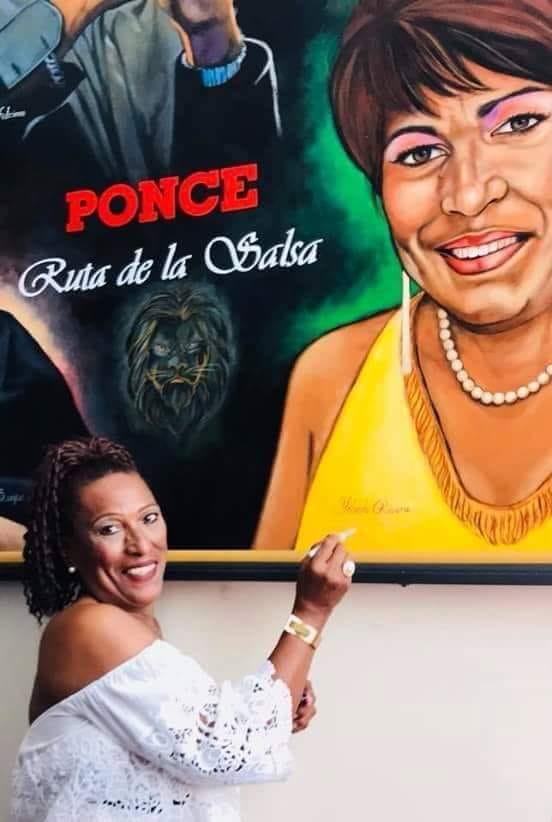
Yolanda Rivera The Lady of Salsa and the Sonera of Ponce

By: Diana Marie

Yolanda Rivera La Sonera of Ponce

Yolanda Rivera was born in Ponce, Puerto Rico on June 30, 1951, she admits to listening to Cuban music since the age of 8.

Her hometown of Ponce saw the Cuban singer Celeste Mendoza’s event that triggered in the young Yolanda her desire to sing.

Naturally, with an exceptional voice, she says she never took singing lessons. In her family everyone sang, without making it a profession.

Yolanda Rivera had the opportunity to meet Quique Lucca-founder of the Ponceña who decided to recruit
in the 90’s she integrated for 3 years the Rubby Haddock Orchestra

She began her singing career in New York in 1969 as a member of Willie Rosario’s choir. Returning to Puerto Rico in 1975, she has joined the group Roberto y su Changó.

His real professional debut with the orchestra can be considered as the Terrífica. With this formation, in 1976 he recorded 33 tours: “sabor a pueblo” (int 908), where he sang the hit “mi corazón es para ti” and “Guaguancó No. 3” boleros “para que sufras” and “esta demás” on the same album “Pichie” Pérez is responsible for other pieces.

Unfortunately the episode was very brief due to disagreements within the group.

Naturally, with an exceptional voice, she says she never took singing lessons. In her family everyone sang, without making it a profession
Yolanda Rivera The Lady of Salsa

After a few months of unemployment, he had the opportunity to meet Quique Lucca-founder of the Ponceña who decided to recruit.

With them he recorded “Borinquen”, his favorite song. He stayed from 1977 to 1984, the time to record some albums and browse the scenes around the world, albums with this prestigious formation are:

“The Giant of the South” (Inca-1977-1054)

“Exploring” (inca-1978-1060);

“The orchestra of my land” (1978-inca-1064);

Compilation “Energized” (1979-1072-Inca)

“New heights (1980-inca-1074)

“Unchained force” (1980-inca-1077)

“Night Raider (1981-inca-1079)

“Determinación” (1982-inca-1080)

“Squeezing” (1983-inca-1089)

Yolanda Rivera was born in Ponce, Puerto Rico on June 30, 1951
Yolanda Rivera La Sonera of Ponce

Parallel to her career, Yolanda had to take care of her family, she will stay in Florida for five years, but not stop completely with the song, indeed it is a record with the noble strength of ensemble led by Gabino Pampini.

The return home was more difficult to revive the trade. only in the 90s she integrated for 3 years the Rubby Haddock orchestra where several records, since then she has worked regularly with Luigi Texidor .

From time to time she attended the anniversaries of the Ponceña:

Sonora Ponceña 30th anniversary golden age (inca 1992);

Sonora Ponceña 45th anniversary live: history and we continue to make, (bmg / ariola 81 167) 2000 (only appears on cd).

But she never returned because Ponceña Papo Lucca the beloved joins Luigi Texidor in his career as a soloist in the interpretation of the orchestra’s old hit.

She also participated in the album “Ray Barretto 50th Anniversary Live” where she sings “Nadie se salva de la Rumba” with Adalberto Santiago for the year 2001, a song included in the production Tremendo Trio with Celia Cruz, Ray Barretto and with Adalberto Santiago, for the year 1983 distributed by Fania Record.

"Nobody is saved from the Rumba" with Adalberto Santiago for the year 2001
“Ray Barretto 50th Anniversary Live”


In February 2009, in Puerto Rico, Yolanda received the “Salsa Awards”, in recognition of her musical career.

That same year she participated once again in another event in La Ponceña, this time in the 55th anniversary of the Ponce giants.

The most recent musical production of the Dama de Ponce is a single titled “Yo no tengo marido” recorded in 2012.

The most recent musical production of the Dama de Ponce is a single titled "Yo no tengo esposo" recorded in 2012
Congratulations to the Lady of Salsa Yolanda Rivera

Congratulations to the Lady of Salsa Yolanda Rivera


Home


  • « Go to Previous Page
  • Page 1
  • Interim pages omitted …
  • Page 80
  • Page 81
  • Page 82
  • Page 83
  • Page 84
  • Interim pages omitted …
  • Page 293
  • Go to Next Page »

International Salsa Magazine (ISM) is a monthly publication about Salsa activities around the world, that has been publishing since 2007. It is a world network of volunteers coordinated by ISM Magazine. We are working to strengthen all the events by working together.