




A virtuoso musician, Luis Tata Guerra, member of a humble and hard-working family, is the last of 4 brothers, born of a musical tradition, his father played guitar, and his older brother Emerio Guerra is a guitarist in Havana.

He joined the Almendra Orchestra in 1954, performing in the best nightclubs of the island. He rehearsed with Conjunto Casino and Conjunto Arsenio Rodríguez.
In 1956 he arrived in Colombia with the Cuban Swing Orchestra, he stayed for 4 years working with the groups Sonera del Caribe and the Pepe Reyes Orchestra (Cuban singer). From there he went to Venezuela where he has lived since 1960.
Maestro Guerra has an extensive career as a musician for his activity in different groups such as: Los Melódicos, Víctor Piñero y sus Casiques, Aldemaro Romero, Chucho Sanoja, El Pavo Frank, and accompanying on percussion in Caracas Tito Rodríguez, Miguelito Valdez, Rolando Laserie, Daniel Santos, Olga Guillot, Rubén Blades, Paco de Lucia, including the Timbal King Tito Puente and many Others.
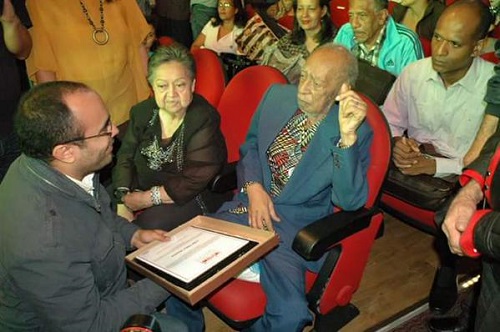
His compositions have been played in the media in Santo Domingo, Spain, Cuba, Puerto Rico, Colombia, Venezuela.
The composition “Son Matamoros” dedicated to this famous Cuban trio, was included in the movie “Salsa” with the participation of Celia Cruz, Tito Puente, Mongo Santamaria, Grupo Niche and other values. He was a member of the VTV Orchestra (channel 8) for 23 years (1965-1991).
Again in 1999, they returned to the Canary Islands for more than 2 months, in addition to performing at the fabulous The Trump Taj Mahal Casino Resort in Atlantic City, New Jersey.
He presented his program “RAICES CARIBEÑAS” on ANTV.
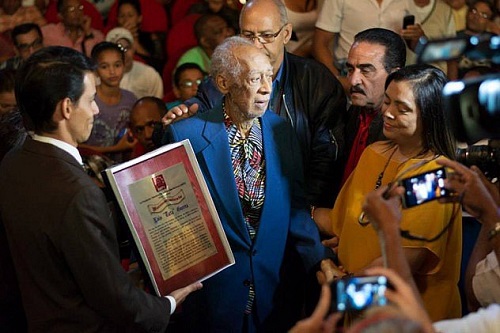
We also remember the time he shared with his compatriot Rafael “Felo” Bacallao Hernandez, who had retired from the Aragon orchestra.
With great regret we recorded on February 24, 2015, the unfortunate news of the death of Tata Guerra, four months shy of his 81st birthday, he had been suffering from an accelerated affection in his respiratory system, remaining hospitalized at the Florida Clinic in the city of Caracas, where in the early morning of that day he left us.
“When I listen to reggetón/ my heart stops/ because my thing is rumba and son”.
Read Also: Stelio Bosch Cabrujas a remarkable musician, but completely forgotten by the new generations
Source:
Por: Carlos Molano Gómez
Bogotá – Colombia
Derechos Reservados de Autor -primera publicación – 2016
Actualizado 2021.
Roberto is the author of Ray Barreto’s hit “Que viva la música”.
Roberto was born in 1938, in Cienfuegos (Cuba). He began his musical career at the age of 12, in his native province; cradle of the world famous Orquesta Aragón.
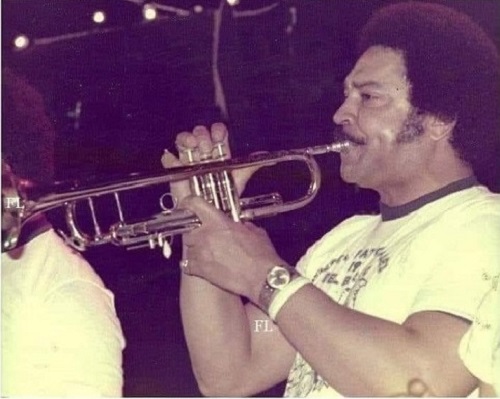
From an early age he participated in “Las Comparsas de Cuba” and with the orchestra “La Unión Fraternal de Cienfuegos”.
In 1955, he emigrated to the United States and in 1957 he married Nancy Zayas, with whom he had three sons: Roberto Jr., William and Richard.
While growing as an artist, Roberto co-founded the orchestra “Los Jóvenes Estrellas de Cuba” with his long-time friend Ernie Stairs. He later moved on to Wilfredo Figueroa’s orchestra and “Ritmo Swing”.
In 1965, Roberto was recommended to Ray Barreto by Eddie Martinez. Eddie was a pianist for both the TataVazquez and Ray Barretto orchestras.
His performance as first trumpet soloist was extraordinary. While in Ray’s orchestra, Roberto composed several famous songs such as: “Yo Soy La Candela”, “Fuego y Pa’Lante”, “Invitación al Son”, “Cienfuegos, Perla del Sur”, “Se Traba”, “El Tiempo lo Dirá”, “O’Elefante”, and the worldwide hit: “Que Viva la Música”.

In 1972, Roberto became a member of the Fania All-Stars as first trumpet and soloist. The documentary “Our Latin Thing” launched Roberto along with the other members of the All-Stars to international fame.
On August 26, 1971 New York City gave birth to a sound that would change Latin music forever. That night at the renowned Cheetah nightclub, the Fania All Stars took the stage with their unique sound that echoed across all borders and reached every country. Fania Records re-releases “Our Latin Thing” on DVD, the film that sparked the salsa movement of the seventies.

From the concert came a double LP entitled “Live At The Cheetah” and the historic film “Our Latin Thing”. Its director, Leon Gast, documented the events at the Cheetah with the addition of footage of the musicians in the recording studio and scenes of New York’s Spanish Harlem.
In 1975, Ray decided to take a turn towards a new musical facet and Roberto became part of the group “Los Kimbos”.
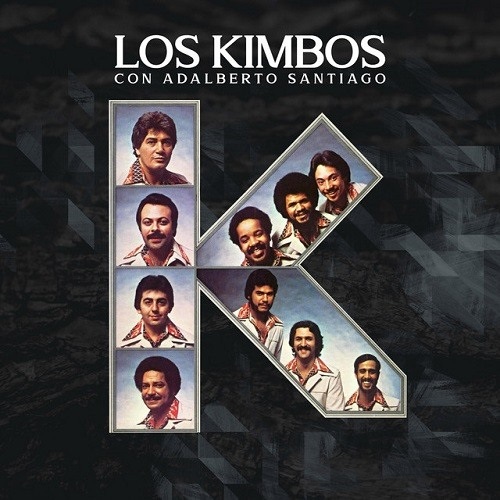
Two years later, in 1977, Roberto joined the charanga band “Orquesta Broadway”. In this group he not only excelled as a trumpet soloist but also as a vocalist. Here he composed new hits, including: “No Se Va a Poder” and “Como Nueva York no Hay”.
In 1982, Roberto decided to assist his sons in their desire to continue their musical journey and produced the album: “Roberto Rodríguez Presenta a Los Rodríguez”, under the “Combo Records” label.
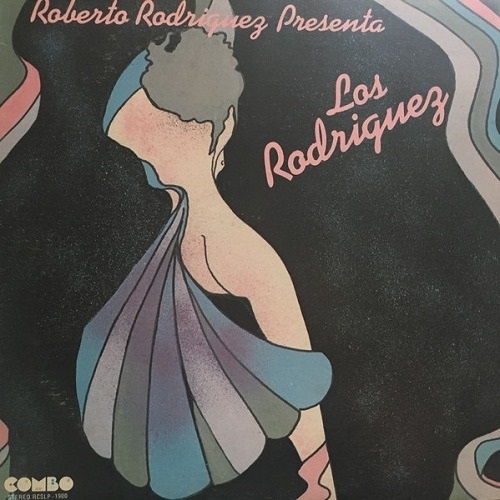
In 1983, Roberto joined the “Los Rodriguez” Orchestra, to perform with his sons Roberto Jr (trumpet player) and Willie (bass player).
Roberto Rodríguez was a Cuban trumpet player and composer
Read Also: Miguelito Cuní recognized among the best soneros of Cuba

Tempo Latino is a music festival held in Vic-Fezensac, France, in the region of Gers in Gascony it is the first and the greatest Latin American and Afro-Cuban music festival of the summer in Europe. The festival was founded in 1994 and has been held annually since then.
“In 2020 and 2021, the festival was only interrupted for two consecutive years due to the containment of the new crown pneumonia (COVID-19) epidemic.”
With around 600 volunteers from all over the city for four days of intense activities and an audience of around 60,000 people from all over the world.
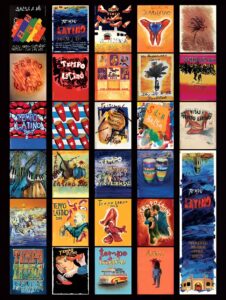
Tempo Latino offers a variety of Latin American and Afro-Cuban music, including Salsa, Bachata, Kizomba, Cumbia, Merengue, Rumba, Latin-jazz, Reggaeton and more. The festival also features dance workshops, food stalls and other cultural events.
International performers and instructors from Cuba, Puerto Rico, Colombia, Venezuela, Panama, Africa, the United States (primarily New York, Miami, and California), and Europe have participated in a number of concerts and workshops
Tempo Latino has grown from a small festival to one of the most important Latin American music festivals in Europe. The festival hosts some of the biggest names in Latin music, including Celia Cruz, Ruben Blades, Eddie Palmieri, Oscar D’ León, Johnny Pacheco, Adalberto Álvarez, El Gran Combo de Puerto Rico, Kassav, Totó la Momposina, and Los Van Van. Tempo Latino has also helped advance the careers of many new artists.
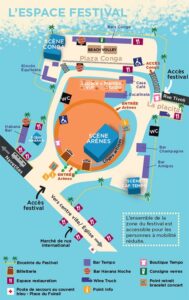
A festival of concerts takes place in the square and, at the same time, many free outdoor events for those who want to discover music in the city’s dance halls in the afternoon and evening. In the second edition, they have integrated dance, music, and percussion lessons.
La Conga
27 July – Ana Tijoux (France)
Les Arenes
28 July 2023
21:00 – Orchestra Baobab (Senegal)
23:00 – Grupo Compay Segundo (Cuba)
29 July 2023
21:00 – Lila Downs (Mexico)
23:00 – Cimafunk (Cuba)
30 July 2023
21:00 – Bernard Lavilliers (France)
23:00 – La Excelencia (USA)
and many more!
On the official website, tickets for four days are available for 120 € (during the festival, they cost 150 €).
The current director of Tempo Latino is Eric Duffau from Toulouse, France. He is also the founder of the music festival which he started in 1994. A passionate lover of Latin American and Afro-Cuban music, Dufour devoted his life to promoting this music to a wider audience and serves on the board of the French Association for the Promotion of Latin Music (AFMPL).
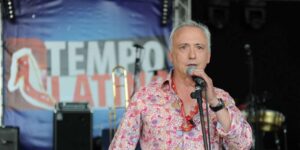
Dufoe was a tireless promoter of Latin American and Afro-Cuban music. He travels the world in search of new talent and works hard to make Tempo Latino a major cultural event. He is a passionate advocate of Latin music and works to bring this music to a wider audience.
Dufour graduated from the National School of Arts and Crafts (ENSAM) in Paris. In the early 1980s he worked as a DJ, during which time he became interested in Latin American and Afro-Cuban music. In 1989, he decided to create a festival to showcase this music and Tempo Latino was born.
 https://www.youtube.com/user/TempoLatinoFestival

Born in the Constitutional province of Callao (Bellavista) and having studied higher education in the National Police of Peru and half of career in the course of Psychology at the University San Martin.
Being able more the art is consecrated presenting his first success “Sin Ti” belonging in that instant to the Orchestra Peru Salsa All Star at the same time is invited to record songs like Niña and Tengo Todo Execto a Ti by the Orchestra of the Prestigious Oscar “Pitín” Sanchez La Sensual 990 achieving a greater acceptance the demands of work.

They were not made to wait in all the Peruvian literal for such reason is that Antonio Cartagena is traced important goals as the conquest of other countries reason others so that in 1991 produces his first album as a soloist with 10 songs where they highlighted songs like; Sedúceme and Necesito un Amor.
Becoming known in countries such as Colombia, Venezuela and part of the United States.
In 1992 he launches to the market a fresh and romantic Salsa where he highlights songs like Y que Tiene el and M Dueña; from there he reaffirms the internationalization being hired for a tour in the United States with all his group visiting places like New York, Los Angeles, Atlanta, Virginia, Dallas, Texas, San Diego, among others.
Then in 1993 he is hired by the prestigious international record company RMM of Mr. Ralph Mercado, one of the biggest salsa producers in the world; recording his first international album entitled Dime Que Si, where the most outstanding songs are Apaga La Luz and Perdone Querida.
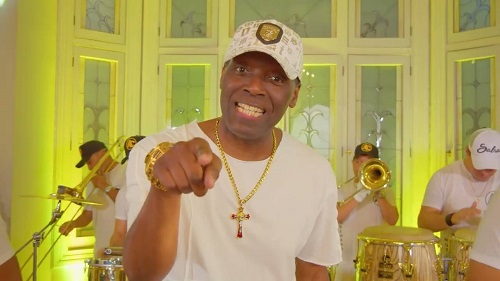
To perform in dream stages such as Carnegie Hall, Madison Square Garden and Miami Arenas, alternating with many stars such as Oscar Leon, Van Lester, India, Marc Anthony, Tito Puente, Cheo Feliciano, Ismael Miranda, Celia Cruz, Domingo Quiñonez, Ray de la Paz, Tony Vega, Ray Sepulveda, Johnny Rivera, Tito Nieves, Jose Alberto el Canario, Luis “Perico” Ortiz, Giovanni Hidalgo, and an innumerable list of the greats of the firmament of the salsa market. The tour continued to include Canada, Panama, Venezuela, Colombia, Santo Domingo, Puerto Rico and Argentina.
These were events that marked a milestone in the vertiginous career of the artist; who arrives in his country after three years of coming and going; with a production titled Punto de Vista (1996), where he consecrates himself with the songs Si Tu No Estas and Pídele Perdón, successfully placing himself at the threshold of his career in his own country.
Already in 1997 he wants to impose the criollismo converting famous and traditional waltzes of our country in salsa; Disc that made him known all over the world even in Europe, presenting himself in stages of Germany, France, Holland, Italy, Switzerland, Spain among others.
Then in 2001 he travels to New York to produce an album titled Volveré, with songs such as Ni Siquiera, giving much to talk about in that country and in Latin America, visiting countries such as the United States, Colombia, Venezuela, Ecuador, etc.
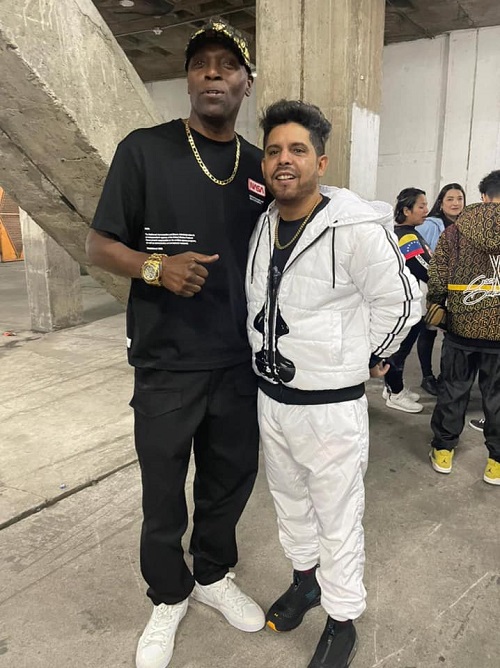
In 2005 he presents a renewed and updated product imposing themes such as Salsa Regaee, titled No Me Digas Que No, placing himself in the first places of our musical environment.
Antonio Cartagena, is one of our best internationally recognized bastions, who is going through his best moment, considered in salsa as the best exponent of music in his genre and winner for this year of a number of awards such as: Nominated for Best Interpreter of the year in the salsa music genre.
Cartagena is an acclaimed artist, leaving the name of Peru on high all over the world.
Read Also: Fanny Almenara better known in the salsa environment as “La Sonera del Callao”
