• Skip to primary navigation
  • Skip to main content

International Salsa Magazine

  • HOME
  • Previous editions
    • 2026
      • ISM / March 2026
      • ISM / February 2026
      • ISM / January 2026
    • 2025
      • ISM / December 2025
      • ISM / November 2025
      • ISM / October 2025
      • ISM / September 2025
      • ISM / August 2025
      • ISM / July 2025
      • ISM / June 2025
      • ISM / May2025
      • ISM / April 2025
      • ISM / March 2025
      • ISM / February 2025
      • ISM / January 2025
    • 2024
      • ISM / December 2024
      • ISM / November 2024
      • ISM / October 2024
      • ISM / September 2024
      • ISM / August 2024
      • ISM / July 2024
      • ISM / June 2024
      • ISM / May 2024
      • ISM / April 2024
      • ISM / March 2024
      • ISM / February 2024
      • ISM / January 2024
    • 2023
      • ISM / December 2023
      • ISM / November 2023
      • ISM / October 2023
      • ISM – September 2023
      • ISM – August 2023
      • ISM July 2023
      • ISM Edition June 2023
      • ISM – May 2023
      • ISM April 2023
      • ISM March 2023
      • ISM February 2023
      • ISM January 2023
    • 2022
      • ISM December 2022
      • ISM November 2022
      • ISM October 2022
      • ISM September 2022
      • ISM August 2022
      • ISM July 2022
      • ISM June 2022
      • ISM May 2022
      • ISM February 2022
      • ISM January 2022
    • 2021
      • ISM December 2021
      • ISM November 2021
      • ISM October – 2021
      • ISM September 2021
      • ISM August 2021
      • ISM July 2021
      • ISM May 2021
      • ISM April 2021
      • ISM June 2021
      • ISM March 2021
      • ISM February 2021
      • ISM January 2021
    • 2020
      • ISM December 2020
      • ISM November 2020
      • ISM October 2020
      • ISM September 2020
      • ISM August 2020
      • ISM July 2020
      • ISM June 2020
      • ISM May 2020
      • ISM April 2020
      • ISM March 2020
      • ISM February 2020
      • ISM January 2020
    • 2019
      • ISM December 2019
      • ISM November 2019
      • ISM October 2019
      • ISM Septembre 2019
      • ISM August 2019
      • ISM July 2019
      • ISM June 2019
  • Download Salsa App
    • Android
    • Apple
  • Spanish

Search Results for: Salsa

What zouk is and how its origin was

Zouk and its origins

It is incredible to see how far certain rhythms and dances from all over the world have become popular in Europe.  One of them has been zouk, which can be defined as a pretty fast musical style which is traced directly back to the French Antilles, mostly on the islands of Guadeloupe and Martinique.

Zouk was viewed as only one sensual dance practiced by African slaves in the less favored areas of the continent at the turn of the 21st century.

In fact, some think that this genre originated in Cape Verde and spread throughout the Caribbean thanks to the slaves were moved into that part of the world. 

As can be seen, the history of zouk is not very different from that of many rhythms of this type that were exported all over the world from Africa. As well as other genres, zouk was merged with other local styles to get as a result a set of sounds that is more relevant than ever. 

How is the origin of zouk? 
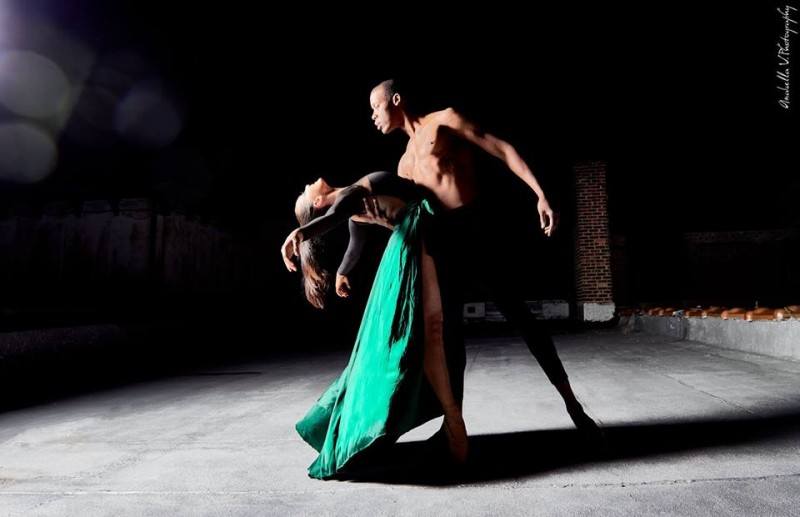
Two people dancing zouk with a dark background

According to the earliest records of the word zouk, it was the band Kassav that made this term popular during the 80’s decade, which means happiness or move with force. Supposedly, the rhythm was introduced by a large group of Haitian musicians in the above-mentioned decade. 

Since the 90’s decade, zouk began to diminish in popularity, but this rough patch did not last too long. When it arrived in Latin America, more specifically in Brazil, the genre started to mingle with local sounds and to adapt to the many shadesof lambada. That was the reason why zouk began to be known as lambada zouk, French lambada, among other nice monikers. 

So great was the rapport between zouk and lambada that they gave rise to a whole new mix known as lambazouk. While both rhythms appear to have separate origins, the truth is that these two genres have much more in common than you think. 

How to dance zouk 

Zouk and African slaves
Two people while dancing zouk

Officially, zouk has three different rhythms and one of its greatest characteristics is that it is always performed by couples while both members move in a very smooth and sensual way. It is possible to dance it with a lot of closeness or almost no physical contact on the part of the man and the woman. 

The man has a lead role in this dance and it is he is the one who leads the woman in order to keep up without losing balance at no time. It is the man who must propose all movements and steps that his female counterpart will reproduce on the dance floor. Everything depends on the boy the dance being varied, creative, and respectful of the essence of zouk in each step. 

All the woman has to do is allow the man to take control and follow his directions to the letter. Anyway, she needs to be very attentive to her back positioning and work hard on her style to achieve graceful and delicate movements. 

Home

Tune to the Bachatakiz Live Festival on Facebook Live

Bachatakiz: Current situation with regard to the pandemic

It is undeniable that the world has changed for a few months because of the sanitary situation resulting from Covid-19 and it may not be the same in a really long time. There have been many consequences arising from the pandemic caused by this new virus and one of them was the inability to perform concerts or massive events at the possibility of spreading it among the attendees. 

All this has caused many artists, singers, and dancers to adapt to new circumstances in order to survive in the competitive entertainment business. One of the means through which this has been possible is the use of social networks that have served as a springboard to continue to provide artistic content without the public having to be on site. This was unthinkable a few years back, but now it is a reality that permits no debate. 

At this point in the year, it is very common to see personalities of all kinds from the entertainment world maintaining contact with their followers in a virtual way to keep their interest. In fact, platforms have been introduced to upload or stream content, so only those who pay for it can enjoy it. 

Bachatakiz Live Festival

Bachatakiz Festival and other rhythms
logo of the Bachatakiz Live Festival with lots of information

One of those many events that will be carried online is the Bachatakiz Live Festival, which will be broadcast on Facebook Live next week. This festival will be the best proof that there are no impediments to people enjoying good music in any circumstance, even if it is unfavorable. 

This first edition of the Bachatakiz Live Festival offers viewers the presence of 10 great bachata and kizomba artists from all over France. In the same way, these artists will squander their talent with a good number of musical genres such as bachata, kizomba, afrohouse, urbankiz, among others. 

It is noteworthly that all these genres are becoming more and more present in musical events held in the Old Continent, telling of a genuine interest from Europeans in knowing much more about African culture and everything that derives from it. Well, this wonderful festival offers them a great opportunity to learn how to dance these cherry rhythms. 

Guests at the event: 

 – Kriss et Aurélie (La roche sur Yon) 

 – Alexandre et Jessica (Nantes) 

 – Mickaël et Malaury (Angoulême) 

 – Miguel Fossati (Nantes) 

 – Emmanuel Landry (Nantes) 

 – Laure Inglèse (Lyon) 

 – Moh Abchi (Nantes) 

 Inscription 

The Bachatakiz Live Festival in November 2020
Timetable of the Bachatakiz Live Festival with all its activities

 As we already mentioned, there are many methods for monetizing online events and generating income thanks to them. In this case, each one interested in enjoying the festival must pay a price of 10 euros. 

In this way, it is possible to click on the link that redirects to the private Facebook group where the event will be broadcast. Without a doubt, it is a revolutionary form of keeping safe and protected from the spread of Covid-19 and the health risks that this entails. 

This pandemic has come to make a really big difference for us and it is up to us to adapt or succumb to it. Fortunately, we have a good number of tools that enable us to make progress under the most difficult of circumstances. You have to make the most of them as much as possible. 

Home

What semba is and how it arises

How semba arises

Lately, many African rhythms have become very famous in Europe, which has motivated many African descendants and artists from African countries to organize all kinds of activities related to their culture, especially with music.  

One of the most present African genres in events with this type of music is semba. This lively musical style also known as the belly dance is an Angolan rhythm that originated during the colonial era when African slaves came to America. One of the receiving countries was Bolivia, a place in which it began to be widely danced by the local tribes of that territory. What is even more, this country hosts many festivities where this rhythm is very present despite the time elapsed.  

Over the years, semba slowly merged with other local styles, resulting in a set of mixes that have spread throughout the world. Indeed, it was a process much like that of kizomba and zouk, which also changed a lot after so many transformations and mergers.  

Currently, this African genre is very present in many musical events carried out in Europe. It is impressive to see how the locals have been interested in learning how to dance such a diverse set of sounds. 

What semba is 

semba and its presence in Bolivia
Two people dancing semba

Semba is a traditional dance that is very present in family celebrations and has gained tremendous traction in the European continent after being made known to the locals. Many know this genre as the kizomba’s father, as this style was inspired by semba, although the differences between both genres are more than noticeable. 

To begin with, this genre was the preferred dance for livening up public and family feasts, so there are many real stories about this rich set of sounds and the enthusiasm it aroused in people who danced it. Nowadays, this dance has an incredible presence in a large number of festivals, in which the curious can quench the desire to know much more about African culture. 

How to dance semba 

 There are two ways to dance semba, so the choice is at the convenience of the dancer. There is a version of the dance in which the embrace is not so closed and there are no tricks or pirouettes. In the other version (it is a bit more modern than the previous one), the members of the couple perform all kinds of tricks to decorate the dance and the woman has a much more predominant role than in kizomba. 

Additional characteristics 

Semba and African culture
A girl dancing semba with drums in the background

One of the most important characteristics of semba is the clashing of bellies that dancers are supposed to do during the dance. In the same way, they must move their belly buttons to the beat of drums and gesticulate in a flirty way to transmit more charisma to the dance, which gives the girl a bigger role. 

And plus, dance steps are usually very fast and accurate, so both member of the couple must be very attentive to each other’s moves. In the large majority of cases, it is the girl who walks quickly while the man must keep up with her and bust out cheerful and fun steps. 

There is no right or wrong way of dancing semba, but it is always recommended that those interested in attending events that include it learn as much about the typical steps and moves. This would make the experience a little more fruitful and intense. 

Home

What urbankiz is and how it is danced

Europe

Urbankiz and its relation with kizomba

In recent years, kizomba has become one of the most popular rhythms in many parts of the world. While ir is true that this genre has gained great ground lately, there are many who think that it is too soft and gentle, so some choose faster and more cheerful musical styles. One of those options is the so-called urbankiz. 

If you consider that kizomba is too slow for you, you have the possibility to learn to dance urbankiz, which is considered a variant of kizomba that is already present at many events worldwide. 

Urbankiz and its relation with kizomba
This is a group of people dancing urbankiz

How could we define urbankiz? 

The urbankiz can be defined as a version of kizomba that stands out for mixing the African essence with other slightly more modern musical styles. It is thought that the name was first heard in Paris, France, which then caused quite a stir between lovers of this fabulous dance style. 

One of the key differences between urbankiz and kizomba as it was known is a group of technical details of one dance relative to the other. In the case of the kizomba, you are meeting with linear movement, a greater distance between the dancers and a greater emphasis on the arm movements. And as regards urbankiz, one of its greatest attractions is its lively rhythm. 

This dance is a fusion of the most electronic versions of kizomba (zouk and terraxa) with well-known urban styles such as rap and hip-hop.

This mix of rhythms is what makes the dance happier and more lively from what one commonly imagines. In the same way, people have been introducing a few changes to the dance styles employed in classical kizomba. 

How to dance urbankiz? 

Urbankiz in Europe
This is a couple dancing urbankiz

One of the most impressive aspects of urbankiz is the separation of the couple during the dance. Many think that this detail does not make any sense, since one of the most enduring characteristics of kizomba is the sensuality wasted by two people who dance very close together. Why is this change taking place? What happens is that urbankiz is much more focused on other aspects such as the strength and the explosiveness appropriate for urban rhythms. 

Additional to that, this variant of kizomba includes various pauses, acrobatics, and very abrupt choreography switchs. This makes this style and the traditional one be quite different from each other, so faint that they do not seem to be linked in any way. 

Conclusions 

From the above, it can be concluded that urbankiz is a variant much more intended for those who want to try a more lively, cheerful, and picturesque style. It is only a matter of trying different rhythms until they find the most exciting and appropriate option for everyone. This is the reason why many artists and singers are always trying to create more new rhythms to choose from, which is very useful for those who are looking for new options.

The more mixes of genres are created, the more likely people are to find what they are looking for when dancing. 

Home

“Orquesta Bomplenea” with ISM

Meet the ” Orquesta Bomplenea “

Let’s start this month of November presenting a musical group that emerged in the year two thousand ( 2000 ), created with the sole purpose and intention of taking Puerto Rican culture to the top, it is nothing less than the “Orquesta Bomplenea”, who will be with us thanks to Mrs. Jimena Verano León from the company “Verano Producciones Latinoamérica” from Bogotá, Colombia; so that the public and fans of International Salsa Magazine can meet this great Latin music orchestra.

Mr. Gary Vera is the founder and member of the “ Orquesta Bomplenea ”, who has been an outstanding musician in the musical genre of Salsa, Merengue and Latin Jazz for about thirty-five (35) years, the past twenty (20) years in the genre of the Bomba (which is the first indigenous music of Puerto Rico, created in the sugar estates by slaves more than four hundred (400) years ago, where African slaves were brought to Puerto Rico by the Spanish and French in the year one thousand six hundred (1600)) and Plena (it is the native music of Puerto Rico, which has the history of miscegenation in the aforementioned country “the Puerto Rican culture”, its birth is located at the beginning of the twentieth century “XX ”). He has also traveled to Europe, the US (United States), and the Caribbean representing our music and culture.

Bomplenea Orquest
Bomplenea members

They knew that the “Plena” together with the “Bomba”, the “Trova Jíbara” and the “Danza” make up the four pillars of indigenous Puerto Rican music. The purpose of the “Orquesta Bomplenea” is always to maintain the culture of its island (Puerto Rico), of the greatest possible interest to Puerto Ricans inside and outside of Puerto Rico.

Trying to reach the hearts of everyone with flavor around the world all tastes. With this assignment in mind, they have adopted a different style of playing the “Plena” (Puerto Rican popular dance and song that is characterized by its musical simplicity and the repetition of its phrases, especially the choirs).

The lyrics and the aggressiveness of the piano together with the combination of the vocal tone (timbre) give a salsa touch to our Plena, but without forgetting the most essential purpose of the composition, which is to transmit to its audience the “Bomba” and the “Plenas ” .

At the beginning of January 2000, Gary Vera organized the musical group Bomplenéa and made his first recording entitled “Ritmo Caliente”. The CD includes eight (8) musical themes. La Mulata, which is a mix of (Bomba – Sicá – Plenas), Jazz A La Bomplenéa is the alloy of (Plena – Latin Jazz), and María Rumbón, La Carta, El Meneíto, Ritmo Caliente, Remembering Papá, and Bells De Christmas (Plenas).

They recently started a new proposal that includes Salsa, Bomba and full songs. Some themes are: El Pan (Bomba), Mi Parranda (Christmas Sauce) and Déjate Amar (Sauce).

Dejate Amar new music - Bomplenea
Bomplenea Orquest

Members: Gary Vera – composition, drummer, congas, Güícharo and direction; José Cheo Arce – arrangement; Luis Discípulo Cuevas, Jan Meléndez – vocals; Carlene Vera and Jan Meléndez – backing vocals; Omar Maldonado – piano; Carlene Vera – flute; Tito Degracia – timbal and bongo; Coamito Martínez – trumpet; Toñito Vásquez – Trombone; Efraín Hernández – bass; Juan Rivera – piano; Celso José Clemente – percussion and minor percussion, recording director, timpani, tambourine; Rafael “Bodo” Torres – piano; Papo Clemente – congas; Cándido Reyes – güícharo; Luis Jungo Ortiz – bass and arrangements; Orlando Ortiz – members; Danny Fuentes – Trombone; Carlos Torres – bass; José Rodríguez – Trumpet; Doel González – vocals

For more information contact you through:

Facebook @ Bomplenea

Home

  • « Go to Previous Page
  • Page 1
  • Interim pages omitted …
  • Page 392
  • Page 393
  • Page 394
  • Page 395
  • Page 396
  • Page 397
  • Go to Next Page »

International Salsa Magazine (ISM) is a monthly publication about Salsa activities around the world, that has been publishing since 2007. It is a world network of volunteers coordinated by ISM Magazine. We are working to strengthen all the events by working together.