Search Results for: Salsa
Eduardo Tancredi is a renowned Uruguayan pianist and composer specializing in Latin Jazz
Eduardo was a distinguished student at Berklee College of Music in Boston.

Musical Style: His music fuses a wide variety of Afro-Latin rhythms (such as Uruguayan candombe, Brazilian samba, Cuban son, Peruvian landó, and Venezuelan joropo) with the harmonies and melodies of modern jazz.
Accolades: He has recorded several CDs with his own compositions and has received awards for his outstanding performance in the Latin jazz scene. His album “Ongoing Dreams” was chosen as the best album in its category in 2002 by “The Boston Globe.”
Teaching Experience: During his time in the United States, he was a piano and harmony professor at Berklee College of Music. Since 2003, he has resided in Barcelona and teaches at ESMUC (Escola Superior de Música de Catalunya).
Collaborations: He has collaborated with numerous musical groups as a pianist and is a significant figure in the jazz scene in Spain.
Eduardo Tancredi is a prominent figure in Latin Jazz, known for his ability to integrate diverse Latin American rhythmic influences with the harmonic sophistication of modern jazz.
Latin accents took some time to establish themselves in jazz music. Very few composers ventured into that genre in the early decades of the last century, to the point that their timid attempts were considered exotic and trivial.
Initially, one recalls passages from William C. Handy’s “St. Louis Blues,” some Scott Joplin ragtimes, Jelly Roll Morton’s references to the “Spanish tinge,” or, shortly after, the themes performed by Duke Ellington’s orchestra.

It was in the 1940s that the Latin touch gained relevance. Cuban Mario Bauzá, who had played trumpet in Chick Webb’s and Cab Calloway’s orchestras, propelled the success of Machito’s band and convinced Dizzy Gillespie to hire conga player Chano Pozo.
Afro-Cuban influence became powerful in the following decades through sones, charangas, rumba, mambo, and salsa. Names like Chico O’Farrill, Tito Puente, Mongo Santamaría, Ray Barretto, and Chucho Valdés became highly regarded, and their works inspired a legion of jazz musicians.

Latin jazz today has a strong presence in popular music, and Uruguayan Eduardo “Edú” Tancredi is a brilliant exponent of that style. He was an outstanding student at Berklee College of Music in Boston, where he won awards such as the Quincy Jones Award and the Outstanding Latin Act Award.
After his acclaimed “Ongoing Dreams” from 2002, this CD, “Venimos Tumbando,” recorded in 2007, now arrives with ten formidable compositions and his own arrangements. His background in Latin American folklore plus his jazz studies have achieved a splendid confluence that is enjoyed from beginning to end on this album.
His versatility as a composer is evident in candombes (“La mama vieja” and “Montevideo”), a baião (“Baialona”), a chorinho (“El germen”), a zamba (“Zamba del aire”), and the obvious references to Afro-Caribbean rhythms that unite their exciting cadences with jazz elements. Edú’s works are incisive, stimulating, possess an overflowing swing, and it’s easy to imagine the musicians’ pleasure during their performance.
The arrangements contrast the different orchestral sections, highlighting their diverse sound textures, suggestive harmonizations, and enhancing the dynamics and fiery percussion instruments. Three saxophones, piano, guitar, bass, and drums alternate with ten other guest musicians (vocals, sax, harmonica, two basses, two drum sets, and three percussionists), generating a sonic turbine that captivates the listener from the first note.
This doesn’t mean that all tracks propose an overwhelming rhythm. There are passages of beautiful lyricism, as in the two versions sung by Ana Finger, or the pleasant harmonica of Antonio Serrano, or the director’s piano in “Como un blues.”
The soloists perform at a high level, with special mention of Miguel Zenón’s alto sax, an improviser of fresh ideas, clean musicality, and great inspiration and fervor. The interventions of guitarist Alejandro Luzardo, trumpeter Matthew Simon, tenor saxophonist Eladio Reinón, and baritone saxophonist Xavi Figuerola are also noteworthy.
“Venimos Tumbando” confirms Tancredi’s talent as a composer and pianist and his skill as an orchestra conductor. Abilities he generously demonstrated during his acclaimed performance at the Teatro Solís last December. Thomas Werner
Edu Tancredi & Bandon 33 – Venimos Tumbando (2007)
Tracks:
- El Subibaja
- Hocus Pocus
- Montevideo
- El Germen
- La Mama Vieja
- Baialona
- Mapa Del Mundo
- Venimos Tumbando
- Como Un Blues
- Zamba Del Aire
Musicians: Edu Tancredi (Piano) Ana Finger (Vocals) Antonio Serrano (Harmonica) Mathew Simón (Trumpet) Pere Grau (Soprano sax, alto sax) Miguel Zenón (Alto sax) Eladio Reinón (Tenor sax) Juajo Arrom (Trombone) Xavi Figuerola (Baritone sax) Alejandro Luzardo (Guitar) Matías Migues, Paco Weht, Javier Gómez (Double Bass) Santiago Blanco, Salvador Toscano (Drums) Carlos Reyes “Compota”, Alejandro Luzardo, Santiago Blanco, Alexis Liden, Sandro Lustosa, Salvador Toscano (Percussion)

Information By:
Also Read: Arturo “Chico” O’Farrill. “The Architect of Afro-Cuban Jazz”
Europe – August 2017
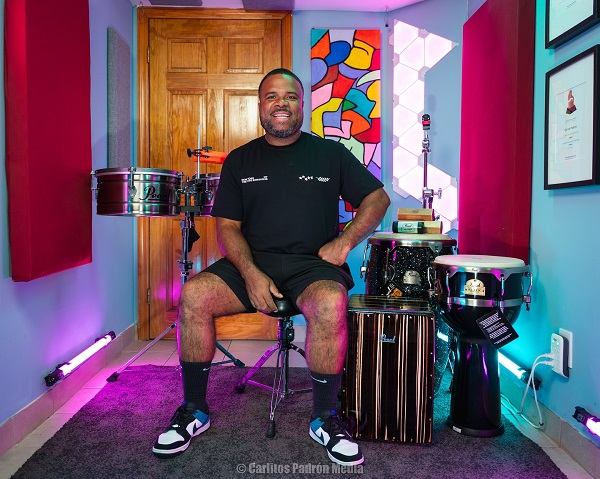
David Atanacio Percussionist, Composer and Singer Unveils a New Sound
David Atanacio, grounded in the values of honesty, integrity, loyalty, responsibility, and respect, appears to be an individual of strong moral and ethical character. He is someone who can be fully trusted, a faithful and committed friend and colleague who always tells the truth and acts with righteousness.
His sense of responsibility ensures he fulfills his commitments, while his respect makes him a considerate, open person capable of building harmonious relationships. Together, these values suggest a dependable, upright, and kind personality, making him a positive and admired presence.
Born in New York City and raised in Puerto Rico, specifically in the municipalities of Bayamón and Cataño, David Atanacio has cultivated a unique musical identity rooted in a powerful fusion of Cuban rumba, flamenco rumba, and Afro-Caribbean influences.

In 1993, he began his musical journey as a bongo player for his uncle’s “Grupo Típico,” later joining a local orchestra as a conguero in 1996. In 1997, he was presented with the opportunity to become a singer, marking a turning point in his musical destiny.
Recruited to co-found “Grupo Folclórico Yuba Iré,” it was with this group that he began to perfect his mastery of rhythms like La Bomba, La Plena, El Guaguancó, El Yambú, and more. During this same period, David Atanacio discovered his talent for composing and began writing his first songs, including one titled “Lo que dice el Tambor” (What the Drum Says).
He was recommended to work with the “Orquesta Abran Paso” from Puerto Rico, with whom he accompanied luminaries such as Ismael Miranda, Adalberto Santiago, Junior “Hommy” González (RIP), Larry Harlow (RIP), among others.
He then received a call from the Puerto Rican Maestro “Paoli Mejías,” percussionist for “Carlos Santana’s” group, who invited him to be part of his first musical project, “Mi Tambor.” On this album, David’s song “Lo Que Dice el Tambor” was recorded, appearing as Track No. 7. The album was nominated for “Best Latin Jazz Album” at the Latin Grammys in 2004.

David Atanacio: Percussionist, Composer, and Singer Unveils a New Sound
In 2003, the King of Rhythm, Mr. Afinque “Don Willie Rosario,” invited David to join the front line of his orchestra, where he remained until 2005. After leaving Willie Rosario’s Orchestra, David decided to move with his family to Tampa, Florida.
Even in his new home, David never lost touch with his roots. One day, he received a call to contribute background vocals to the production “Sobrevolando” by the acclaimed Puerto Rican group “Cultura Profética” (2019). This production earned them the Latin Grammy for “Best Alternative Album” in 2020 and a nomination for “Best Latin Rock or Alternative Album” at the 2020 Grammy Awards.
David Atanacio is a “Sonero de Calle” (Street Sonero), with ample talent and ability to succeed. He is a percussionist, composer, and possesses the added artistry of the “Soneo del Guaguancó” (Guaguancó vocal improvisation).
Atanacio is now releasing his musical proposal, “David Atanacio & Champán D’ Barrio,” featuring aged salsa and plenty of flavor.

The album contains ten tracks, eight of which are his original compositions. The production features special guest Herman Olivera, who performs a duet with David on a meticulously crafted song titled “De la Vieja Escuela” (From the Old School). The first single from this project, “Lo que dice el Tambor,” is hitting the airwaves, now presented under his orchestrated concept, “David Atanacio & Champán D’ Barrio.”
The Puerto Rican sonero recently released his latest single, “No Me Llores Más” (Don’t Cry For Me Anymore), a masterfully interwoven piece that pays homage to the musical genres that have shaped his artistic journey. The song perfectly fuses Cuban rumba, guaguancó, Spanish flamenco rumba, and son.

More than just a song, “No Me Llores Más” is a deeply personal sonic exploration that honors the genres that have influenced David Atanacio since his beginnings. Rhythms such as trova, décimas, aguinaldo, bomba, and plena have profoundly impacted his musical development, adding unique nuances to his artistic expression and reaffirming his commitment to the cultural heritage of his homeland and the Caribbean.
“No Me Llores Más” Credits:
- Lyrics, Music, and Lead Vocals: David Atanacio
- Background Vocals: Herman Olivera Jr. & Adriel González
- Musical Arrangement: Carlos García
- Piano: Yassel Puppo
- Bass: Kevin Pagan
- Trombone Solo: Carloscar Cepero
- Percussion: Diego Centeno

- Spanish Guitar: Alex García Potia
With an exquisite arrangement by Carlos García and impeccable execution by top-tier musicians, “No Me Llores Más” marks a new chapter in David Atanacio’s career. It’s where tradition and vanguard embrace to the rhythm of the drum, the guitar, and pure emotion.
This track will be available on all digital platforms starting June 14, 2025.
The rumba lives, the son renews, and David Atanacio’s voice celebrates it!
Press Contact: David Atanacio [email protected] 813-569-9581
Reference: Luis Rojas
Multi-instrumentalist Ian Dobson talks about his trips and academic background
American artist Ian Dobson, like many of his compatriots, could not resist the charms of Latin music and its huge diversity of rhythms, so today he talked with us about the way he walked to become the talented multi-instrumentalist he is today.
Enjoy Ian’s incredible story in the following lines and learn everything he has to share.

How Ian became interested in music
With just five years old, Ian already took a genuine interest in playing the drums and did not have any other family members who also liked music, except his aunt, who was a violinist. Although he does not have a very special motivation to love this instrument, he remembers that when he was 12, someone showed him a samba rhythm on his own drums, and he liked it so much that he continued playing it himself until perfectioning it. As a teenager, he was very involved in jazz, which also led him to Latin jazz and other genres derived from it.
On reaching majority, he had already discovered a little more of Latin music, so he began studying Spanish in order to understand it better, which of course helped him a lot for the following years. His curiosity about this colorful culture was such that he embarked on a series of trips to many Latin American countries, one of which was Venezuela, more specifically Margarita Island, in 1988. Ian wanted to practice his Spanish and see what rhythms he could find in that country, the most popular being salsa and merengue.
Genres and countries that most influenced Ian
Among the Latin American countries we can name are Venezuela, Colombia, Guatemala, Honduras, Mexico, and Cuba. He also had the opportunity to play on several cruise ships and visit many Caribbean islands.
Each and every one of these countries had things that caught his attention musically. In the case of Venezuela, Ian was able to study the maracas during his master’s degree in percussion in Washington. One of his teachers was Euclides Aparicio, with whom he was able to learn much more about the music of this nation.

The artist points out that the country that most aroused his attention was Cuba, but he assures us that he liked all of them due to the musical and cultural diversity he found on all his trips, and he hopes to return to the same destinations someday.
Mexico was the country where he spent more time, staying there for a total of six months.
Academic background
Ian has a very interesting academic background that has provided him with a huge amount of knowledge applicable to his career. We can mention the University of Lisbon, where he was studying Portuguese and found it fascinating because there were many people from the African colonies, resulting in this music permeating Portugal and mixing with local music. One of its most renowned composers was Fernando Lopez-Graça, whom Ian had the opportunity to meet during his stay in the European country.
He became so interested in this subject that he wrote essays on how Brazilian music influenced Portuguese music and what role Africa played in all of this. Ian had already earned his bachelor’s degree from Pomona College, so he found all these topics very interesting and took them into account when it comes to studying music.
He also studied jazz at the Oberlin Conservatory, and although he did not complete his classes there, everything he learned obviously helped him a lot later on. At the University of Washington, he earned a bachelor’s degree in percussion and learned much more about music from a purely academic point of view.

Ian the multi-instrumentalist
Ian studied timpani, marimba, vibraphone, piano, drums, percussion, and many other instruments throughout his career, so he can be considered a multi-instrumentalist who has sought to specialize in as many areas of music as possible.
During our conversation, Ian showed us through video call some of the instruments he was going to play that same day, such as steel drums, an electronic marimba, a drum set, a ukulele, DJ equipment, and so on.
He assures us that he is capable of playing these instruments and others during his performances, but he loves steel drums and the ukulele, which are a fundamental part of his repertoire.
Ian the teacher
While it is true that Ian has no private students right now, he previously offered music lessons for some time, gave workshops and created online spaces for his students and followers to learn from his experience.
Today, he only offers concerts, but he always tries to make them as educational as possible. In fact, he always has a few extra pairs of drumsticks that he offers to some of his concertgoers so they can play themselves while Ian explains what to do. This makes the performance much more interactive and dynamic thanks to audience participation.
The most satisfying aspect of being a teacher was to see his students gain much more self-confidence, which led them to pursue their goals with greater intensity. No matter how bad his mood may be at any given moment, he is always happy to see others learn and enjoy what they do.