• Skip to primary navigation
  • Skip to main content

International Salsa Magazine

  • Home
  • Previous editions
    • 2025
      • ISM / November 2025
      • ISM / October 2025
      • ISM / September 2025
      • ISM / August 2025
      • ISM / July 2025
      • ISM / June 2025
      • ISM / May2025
      • ISM / April 2025
      • ISM / March 2025
      • ISM / February 2025
      • ISM / January 2025
    • 2024
      • ISM / December 2024
      • ISM / November 2024
      • ISM / October 2024
      • ISM / September 2024
      • ISM / August 2024
      • ISM / July 2024
      • ISM / June 2024
      • ISM / May 2024
      • ISM / April 2024
      • ISM / March 2024
      • ISM / February 2024
      • ISM / January 2024
    • 2023
      • ISM / December 2023
      • ISM / November 2023
      • ISM / October 2023
      • ISM – September 2023
      • ISM – August 2023
      • ISM July 2023
      • ISM Edition June 2023
      • ISM – May 2023
      • ISM April 2023
      • ISM March 2023
      • ISM February 2023
      • ISM January 2023
    • 2022
      • ISM December 2022
      • ISM November 2022
      • ISM October 2022
      • ISM September 2022
      • ISM August 2022
      • ISM July 2022
      • ISM June 2022
      • ISM May 2022
      • ISM February 2022
      • ISM January 2022
    • 2021
      • ISM December 2021
      • ISM November 2021
      • ISM October – 2021
      • ISM September 2021
      • ISM August 2021
      • ISM July 2021
      • ISM May 2021
      • ISM April 2021
      • ISM June 2021
      • ISM March 2021
      • ISM February 2021
      • ISM January 2021
    • 2020
      • ISM December 2020
      • ISM November 2020
      • ISM October 2020
      • ISM September 2020
      • ISM August 2020
      • ISM July 2020
      • ISM June 2020
      • ISM May 2020
      • ISM April 2020
      • ISM March 2020
      • ISM February 2020
      • ISM January 2020
    • 2019
      • ISM December 2019
      • ISM November 2019
      • ISM October 2019
      • ISM Septembre 2019
      • ISM August 2019
      • ISM July 2019
      • ISM June 2019
      • ISM May 2019
      • ISM April 2019
      • ISM March 2019
      • ISM February 2019
      • ISM January 2019
    • 2018
      • ISM December 2018
      • ISM November 2018
      • ISM October 2018
      • ISM September 2018
      • ISM August 2018
      • ISM July 2018
      • ISM June 2018
      • ISM May 2018
      • ISM April 2018
      • ISM March 2018
      • ISM February 2018
      • ISM January 2018
    • 2017
      • ISM December 2017
      • ISM November 2017
      • ISM October 2017
      • ISM September 2017
      • ISM August 2017
      • ISM July 2017
      • ISM June 2017
      • ISM May 2017
      • ISM April 2017
  • Download Salsa App
    • Android
    • Apple
  • Spanish

Search Results for: Son de Bolero

Interesting conversation with vocal coach and YouTuber Ceci Dover

Who is Ceci Dover and what she has done

Ceci Dover is a professional vocal coach and singer of Argentinean origin residing in Spain, where she has been dedicated to voice, music and technological advances that have emerged out in this world over the past few years. All this accumulated experience has made her worthy of sharing the stage with several of the most important Spanish-speaking artists such as Coro Kennedy and Alejandro Lerner.

Ceci Dover working in her studio

In her talent and knowledge, we can notice that she has received a very solid training in the issues she always touches and two very important teaching centers in her academic life were the Manuel de Falla Conservatory and the singing academy Valeria Lynch, both of which contributed greatly to make Ceci the professional voice teacher she is today. Another important detail to highlight from her route is the Still Voice Training academy in the United States in 2020, which would complete her studies as a coach and professional singer.

Currently, Ceci is dedicated to perform vocal diagnosis for those who request it and she works as a content creator through YouTube, a platform on which she offers her analysis to well-known voices in the entertainment world so that the public can know a professional opinion on their quality or the absence of it.

In view of Ceci’s great career in the world of music, we wanted to talk to her and learn a little more about her career and experience from her own mouth.

How did your interest in music and vocal technique begin?

After thanking us for the space we gave her, Ceci went on to explain that it all started when she was in high school, which she combined with singing studies at a particular level since she turned 13 years old. Once she finished school, she enrolled in a conservatory and began studying lyrical singing full time for about 12 year until she chose to specialize in folk singing in order to achieve a change of range.

Throughout this process, she discovered that she enjoyed singing and teaching, although she would be dedicated exclusively to the latter.   

Major references and inspirations

Her most significant influences are Whitney Houston, Aretha Franklin, Mariah Carrey, Celine Dion, Barbra Streisand, Freddy Marcury, Michael Jackson, among others. Ceci said to belong to old school because of her tastes, but it took a few years for her to start paying more attention to music in Spanish. It was in 2020 that she started paying attention to Latin voices such as Juan Gabriel, who has gone on to become one of her favorite artists worldwide. Although she has discovered a lot of talent in music in Spanish, she has been really fascinated by Mexican culture, which has given birth to several of the songs that did not have faces during her childhood.

Italian singer Laura Pausini and Ceci Dover

One of the things that has caught her attention the most about rancheras and boleros is that they allow artists to show all their talent and vocal ability. In addition, he says that these genres come from times when singers ”sang for real, excellence was demanded of them and had to be good in order to succeed”.

The industry dies not require artists to offer quality because it only focuses on creating characters and products carefully designed to make shows,” said the professional singer on this subject.

Importance of lyrics in culture

Ceci has been highly critical of everything related to the kind of lyrics that have been used in modern genres such as reggaeton and considers that so much vulgarity is not necessary to express what is wanted. In fact, he considers that these lyrical resources are an involution and a total reversal in music. Ensures that trap and reggaeton do not bother her, but she believes that explicitness, offenses and vexations used by many of its exponents do not send any positive message to the youth.

For the artist, this issue becomes even more serious and delicate when talking about young children as well, who are the primary audience of this musical content. She comments that her own son learns these lyrics at school and comes home singing them, something that makes her very angry and leads her to do everything possible to reverse the negative effects that this may have on his upbringing.

Peruvian composer and singer Eva Ayllón with Ceci Dover

It is possible to talk about heartbreak without being vulgar and degrading. I understand that this is what many young people like nowadays, but I think it is not a generational thing, but a matter of education. I have very young students who also disagree with that way of expressing music”, she added.

In that sense, he also points out that parents should instill other musical references and listen to other music so that their children get to know other voices and styles. Few people know Freddy Mercury or Michael Jackson, but everyone knows Bizarrap, Rosalia and Quevedo. That has to change” said the performer.

Vocal diagnosis and training

When Ceci was asked if a person without natural vocal talent could develop it, her answer was yes, although with several points to consider. A person without natural singing talent can develop his full potential and educate his voice. I know singers who don’t have good voice, but they strive to make good songs, write good lyrics and convey the listening audience special things” Ceci replied.

”I encourage everyone to educate their voice, even if they weren’t born with the natural talent that can make that process a little easier. I think we all can work on our voice and offer quality singing, but within our means. You can’t promise people that they are going to sing like Celine Dion in a year if they don’t have the conditions to do that. There are borders we simply cannot cross, but we can look for the best version of ourselves” she added.

Ceci working in one of her videos

Scenography and details unrelated to voice

Just as voice is a very important part of the analysis, there are other aspects that can distract Ceci from her analysis, such as lyrics, costumes and choreography. In that sense, she mentions the recent case of Shakira, whose story of heartbreak attracts much more attention than the technical details involved.

He also mentioned the case of K-Pop groups, whose choreographies, pirouettes and costumes stand out much more than their members’ voices. ”Before, the technical aspects related to voice were what stood out on stage, but now the visual part of the show is much more important than before,” said the artist. ”I was very much against backing tracks, but I have realized that K-Pop groups cannot achieve a perfect voice with such demanding dances and aerobics,” she concluded on this issue.

Salsa exponents

Although Ceci has focused on analyzing rancheras, boleros, pop and reggaeton, she thinks it is time to dedicate some of her material to analyze other more tropical genres such as salsa or merengue. In this part of the conversation, she expressed her admiration for stars such as Juan Luis Guerra, Marc Anthony, Celia Cruz and many more. There have been many followers who have asked her to react to voices of this genre, so she is considering making an exclusive special for tropical rhythms such as these and thereby appeasing the part of her audience that enjoys these styles.

Read also: Mexican announcer Jesse ‘‘Chuy’’ Varela and the radio today

A walk through the history of Latin music in the United States

Latin music has been of great in­fluence for singers in training and, without a doubt, marked the lives of its pioneers. Some born in Spanish-speaking countries and others with descent from these lands have not been able to put aside the ­flavor that has been inherited to them. There are those who affirm that these tropical and Caribbean rhythms are carried in the veins and it is very difficult to get rid of these roots.

The arrival of Latinos in the United States also implied the arrival of their customs and culture. Latin music is considered to be a large number of genres, including: salsa, merengue, bachata, bolero, bossa nova, reggaeton, rumba, ranchera, cumbia, tango, among others.

Photo of Latinamerican Festival at Nagoya in Golden Week

Latinamerican Festival at Nagoya in Golden Week

How did Latin music begin to enter the United States?

Latin American music has in­fluenced American music, starting from jazz to country music. Many bands added congas, percussion, or maracas to their instruments as they were drawn to the result these elements brought.

Starting in 1940, the music of Latin America, which still did not have a specific term, covered a greater number of audiences in the United States; international radio networks broadcast different themes of the time. In addition, they featured different Mexican bolero musicians such as Alfredo Antonini, Néstor Mesta Chayres, Eva Garza and Juan Arvizu. In the 1940s the US also heard the “Calypso” with great acceptance.

It was not until the 1950s that the term “Latin music” became popular, seeking to establish a difference between Afro-American and Afro-Latin American rhythms. Some artists marked this musical fusion to a greater extent, making the best of Latin music known on American soil. During the 1950s, music brought to the north from the island of Cuba, such as mambo, cha-cha, and rumba, was very popular. As well as the famous Mexican songs: rancheras and mariachis.

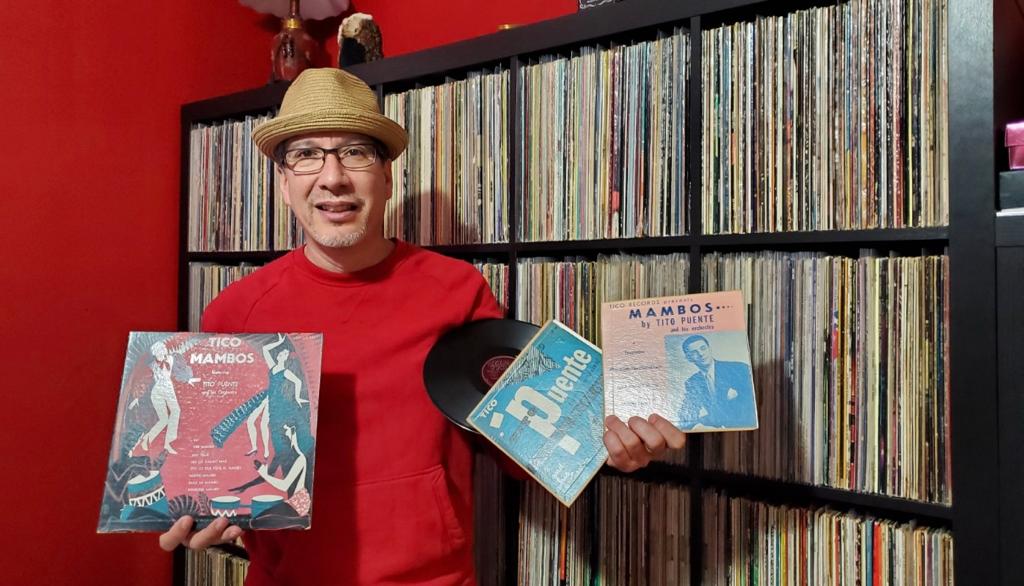
Some Latino artists who marked the history of Latin music in the United States Tito Puente was an American percussionist with Dominican origins remembered for his participation in worldwide jazz, Cuban music and salsa. In 1950 he helped promote the genre of mambo and cha-cha. His album “Dance Manía” was considered the most famous by the artist, it was one of the most heard among the Latino community in the US The album also set a precedent by being recorded in Spanish, generally, Latin albums were in English or with instrumental songs. It was Tito Puente who broke with this tradition.

At the beginning of the 20th century, tango touched American soil. Then, in the 70s, the Argentine Astor Piazzolla gave something to talk about by demonstrating his passion for the genre and revolutionizing what was known until that moment. Piazzolla was born in Mar de Plata but lived in New York from a very young age. It definitely changed the way of looking at music that was long marginalized, it was considered the music of the working class. The singer made mixtures between tango, jazz and contemporary classical music. His songs were a great success and were famous in bars of the time.

It was not until the late 1960s and early 1970s that the term “salsa” began to become known. Afro-Caribbean musicians mixed Cuban dance with infl­uences from jazz, Caribbean music, and American rhythms. Although in previous decades it had already had its beginnings, it was in the streets of New York where it was consolidated as a commercial success.

Photo by Celia Cruz and Tito Puente

Celia Cruz and Tito Puente – Latin music

Salsa launched artists who are now legends to stardom, such as: Celia Cruz, Willie Colón, Héctor Lavoe, Rubén Blades, Johnny Pacheco, among others.

Between the 1970s and 1990s, Dominican immigrants to the United States continued, especially to New York City, and promoted genres such as merengue and bachata. Juan Luis Guerra was one of the great exponents of both styles.

In the 90s, Selena mixed the Texan aesthetic with pop, giving her the title of the highest representative of the genre.

Entering the 2000s

In this decade, Latin rhythms continued to set the trend. Singers like Rubén Blades returned with songs that promised to be hits in the country.

At the end of 1999 Marc Anthony surprised his followers with an album of the same name. Although he was already known in the salsa genre, he decided to try other styles. With the intention of reaching the Anglo market, he is encouraged to sing in English. “I Need To Know” is a cha-cha song that quickly became popular in the United States. For eleven weeks it remained in the top North American positions, ranking in the Top 10 on the Billboard. The Spanish version won the Grammy for the best Latin song of the year 2000.

Marc Anthony was one of the artists who marked this decade in the US That same year a compilation of his best salsa songs went on sale, which he called: “Desde el principio”. With these successes to his credit within this country, he set out to make an important tour of the United States. Canada and Central America. Madison Square Garden in New York was over­flowing with fans who wanted to hear this American singer but who positioned himself as the leader of a Latin genre.

Photo by Marc Anthony

Marc Anthony

The opening of “I Need To Know” appeared in the Nissan Versa commercial in the United States and in 2009 it also featured in an American Dad chapter, an American television series; thus giving greater projection to this genre throughout the North American territory.

During this decade, salsa and Latin music in general ended up positioning themselves in the United States.

In 2002 Blades launched his album “Mundo”, becoming one of the most popular in the United States. In fact, it won a Grammy. The album contained a mix of various rhythms and instruments. The artist wanted to create a fusion of cultures and musicians from different countries. “Estampa” was a subject with great acceptance as it evoked the Afro-Cuban infl­uence in New York music.

By the year 2000, there were already music channels and with them the projection of emerging talents who in many cases did not speak the English language. The dynamics of these channels focused on the public, who chose which songs and videos were to be played, giving the opportunity to many young, little-known artists. They were also considered a springboard for the singers of the season and the Latin movement in general.

A movement that is here to stay

Latin music had come to continue making history and it was time to give it greater merit within the American spectacle.

Today, Latin singers, songwriters, and bands are innumerable. Latin music continues to gain space in the United States and more and more artists are achieving success within its borders. In addition, the endless awards that enhance their work in the industry.

Ruben Blades - Mundo

Ruben Blades – Mundo

The consumption of these musical rhythms has increased throughout the American territory. Latinos and followers of this genre have gained space over the years; they can enjoy nightspots, live music, festivals, concerts and much more. Long live Latin America and its people! Long live the United States and the countries that have opened their doors to Latin music

In front of adversity we grow with Johnny Cruz .

North America/ All USA

Johnny Cruz : This month I wanted to dedicate myself to good news, highlighting the work of those who, despite adversity, continue to strive to bring the best to the public. We keep working!

Gilberto Santa Rosa surprises us with his new album Colegas. His most recent phonogram. In this, Santa Rosa invested the last six years and presents 16 collaborations with Cuban artists -Isaac Delgado and Juan Jose Hernandez-Puerto Ricans -Tito Nieves, Tito Rojas, Luisito Carrion, Pirulo, Nino Segarra, Choco Orta among others-, as well as with a Dominican – Jose Alberto “El Canario” -.

Gilberto Santa Rosa - Colegas
Gilberto Santa Rosa – Colegas

The album is preceded by “40… y contando en vivo desde Puerto Rico”, an album recorded in 2018 live at the Coliseo de Puerto Rico in San Juan, to celebrate its 40 years of musical career. The majestic arrangements were the work of Dino Nugent (Apaga La Luz), Marty Sheller (Caminalo, Ban Ban Quere), Ramón Sánchez (Que Se Sepa), Javier Fernández (Tremendo Coco, Masacote), Louis García (Por La Calle Del Medio, Ocana Sordi, El Guateque De Chombo), Ricky González (Vamos a Bailar El Son, Eque Tumba), Manolito Rodríguez (Medley Boleros), José Madera (Bailadores), Rene González (Estoy como Nunca), Isidro Infante (Mario Ague, El Mejor Sonero, Sonerito), James Hernández (La Fonda De Bienvenido).

In good time Santa Rosa presents this production. He positions him on the GRAMMY platform and refreshes him in his role as sonero and incidentally, he extends a helping hand to some who had not recorded Salsa Brava again.

Tracks: La Familia; Caminalo; Que Se Sepa; Mazacote; Apaga La Luz; Sonerito; Por La Calle Del Medio; Nos Vamos A Bailar El Son; Medley Boleros; Ocana Sordi; Bailadores; El Mejor Sonero; Tremendo Coco; Estoy Como Nunca; Mario Ague; Eque Tumbao; La Fonda De Bienvenido; Ban Ban Quere; Guateque De Chombo.

Members: Angie Machado, Jan Duclerc, Jesús Alonso, turbidity Vilchez – trumpet; Charlie Sierra – maracas; Dino Nugent – violín; Johnny Torres, Pedro Perez – bass; Manolito Rodriguez – timbal; Rafy Torres, Toñito Vásquez, Víctor Vázquez, Reynaldo Jorge – trombones – trombone; Richie Bastar – bongo; Sammy García, Jimmie Morales – congas; Sammy Vélez, Josué Urbina; Pedro Méndez, Frankie Pérez, Janice Maysonet – saxophone; Luis Marín, Isidro Infante, Javi Fernández, Ricky González – piano; Orestes Vilató – timpani; Pablo “El Indio” Rosario – percussion; Meñique, Paquito Guzmán, Víctor Manuelle, Luisito Carrion, Justo Betancourt – backing vocals. Guests: Víctor Manuelle, Choco Orta, Juan José Hernández, Isaac Delgado, Yan Collazo, Luisito Carrion, Pirulo, Tito Nieves, Tito Rojas “El Gallo”, Ismael Rivera Jr., José Alberto “El Canario”, Carlitos Ramírez, Michelle Brava, Herman Olivera, Maelo Ruiz.

I take this opportunity to greet my good friend Johnny Rodríguez Jr., better known as Johnny “Dandy” Rodríguez, is an American bongo player. He was Tito Puente’s longtime bongo player, and also played with Tito Rodríguez, Ray Barretto, and Alfredo de la Fe. He belonged to various popular bands of the salsa era such as Tico All-Stars, Fania All-Stars, and Typica 73. He is a proud son of El Barrio (Spanish Harlem), New York, and stickball (street baseball) was more interested than music.

Marco Bermúdez - En mi voz
Marco Bermúdez – En mi voz

However, influenced by his father, Johnny, 17, earned the position of playing bongos in the Tito Puente Orchestra. Johnny spent more than 30 years with the orchestra, also working with Tito Rodríguez from 1965 to 1968 and with Ray Barretto from 1970 until the end of 1972. Johnny went on to form Tipica 73, of which he remained a member until 1979. He then returned to the band. Tito’s band, playing alongside him until the time of Tito’s death in May 2000.

Johnny “Dandy” Rodríguez Jr. continues to be a Latin jazz and salsa percussionist. Today he works as a percussionist in different Latin music ensembles, He is unstoppable and is very active with the Latin Jazz Giants (alongside his colleagues and Exclusive LP Artists Jose Madera and George Delgado) and that includes the stars from the original Tito Puente Orchestra. The band plays the famous music from the Palladium days of Tito Puente, Tito Rodríguez, and Machito, and also recorded The Giants Play the Music of the Palladium.

In 2008, Johhny entrusted LP’s Research and Development Department with the design of the John “Dandy” Rodríguez Jr. bongoes from the Legends series. John is proud that these drums, which bear his name, present such a sound and visual characteristics outstanding. Keep going, Johnny!

A few days ago, En Mi Voz, the solo debut of the Ecuadorian singer Marco Bermúdez, was officially launched on the market. This is a very good selection of ten songs, under the master hand of Oscar Hernández, the prestigious and renowned musician who is making his debut as a record producer with Ovation Records.

Pedro Bermudez - Arrasando
Pedro Bermudez – Arrasando

Marco has not saved anything for this premiere. He has met with his colleagues from the “Hispánica del Barrio” and the result could not be better: Jerry Madera, Máximo Rodríguez, Maneco Ruiz, Héctor Colón, Doug Beavers, Reynaldo Jorge, Jeremy Bosch, George Delgado, Luisito Quintero and Jorge González give solvency and flavor to En Mi Voz. The album opens with “Amanecer Contigo”, composed with four hands between Hernández and Bermúdez, where the trumpet solos by Maneco Ruiz and flute by Jeremy Bosch stand out.

Jeremy is also heard with his flute in his fine and heartfelt composition “Canto a mi Mamá” and in “Únicamente tú”, making Marco the second voice. The romantic spirit of the singer of the Spanish Harlem Orchestra and Mambo Legends Orchestra is confirmed in songs like “Solo Basta” and “Tu Regreso”. Oscar’s arrangements guarantee the key melody. Highly recommended this album, it has no waste!

I send my greetings and wishes for a reunion with this excellent salsa singer: Hermenegildo Olivera, or Herman Olivera. Born in Newark, New Jersey, the son of Puerto Rican parents and from an early age linked to Latin music. In the 70s, in the middle of the salsa boom, Herman began his love of singing by listening to the interpretations of Chamaco Ramírez, Héctor Lavoe, Cheo Feliciano and Marvin Santiago, among others. These vocalists were primarily his source of inspiration. When he was just 15 years old, Herman began his career as a salsa interpreter with an orchestra called La Justicia.

Johnny Rodríguez
Johnny Rodríguez

Later he was part of the band La Sónica, where he met his friend and trombonist Jimmy Bosch. After this he spent time with the Caramelo orchestra to later take the most important leap in his career by being part of the Conjunto Libre in 1978, where he left his voice reflected for the first time in the Incredible LP of 1981 under the direction of percussionist Manolo Oquendo and bassist Andy González, where he stands out with the theme Decídete.

In 1990, he was invited to record on the album Salsa Sudada, from the Valdesa Records label of Víctor Raúl Sánchez “Patillas” and with the musical direction of Isidro Infante, sharing vocalization with Mario Muñoz “Papaíto”, Adalberto Santiago, Eladio Peguero “Yayo El Indio” and Pablo Villanueva Branda “Melcochita”; in this work he interprets the songs La Aguja and a tribute to the city of Cali called Valle Plateado de Salsa. Later, it launched an independent project called Herman Olivera y La Exclusiva. Chequea la Mercancía.

Herman Olivera
Herman Olivera

Produced by Fernando Pastrana where the song Me Extraña Araña is one of the most outstanding. For 1997 he participates in the CD of the band Rikoson All Stars, called Evoluciones del Son, where he stands out very well in the romantic theme Aquella Noche. In 1998 he was requested by the piano teacher Eddie Palmieri and together with the vocalist Wichy Camacho they recorded the album El Rumbero del Piano, where he stands out as a singer on the songs Malagueña alerosa and Oiga mi Guaguancó.

That same year he was invited to the recording studios by the trombonist Jimmy Bosch and they released the album titled Soneando Trombón, which contains the hit Otra Oportunidad. Who plays a duet with Frankie Vázquez. On this CD also appears the song Descargarana. That same duo, Olivera and Bosch, meet the following year (1999) and produce Salsa Dura, where Herman shines performing the full Impacto Tendremos. The album also features the participation of singers Frankie “Nene” Morales and Frankie Vázquez. Parallel to this album, the RMM label launches a live CD and DVD titled Eddie Palmieri & Friend’s, where Herman looks excellent in the number Palo pa ’Rumba.

Felix Villalobos
Felix Villalobos

The invitation to tune in to the new Fm / Internet radio station on Live365.com continues: Salsagallery. Good music, interviews with the artists and much more… now with the participation of Felix Villalobos who joins Salsagallery Radio with a segment in which we will be talking about Music.

At the Spanish Harlem Salsa Gallery Museum we are happy to say that we are gradually returning to our activities and we will be opening the gallery sporadically. We do not stop, we continue to work for our music and we will always keep you informed through our social networks. We hope to have more news shortly and that we can return to normal soon.

Publicity
Raymond Stewart
Johnny Cruz
Correspondent
New York

The return of Ray Sepúlveda to Europe

The return of Ray Sepúlveda to Europe
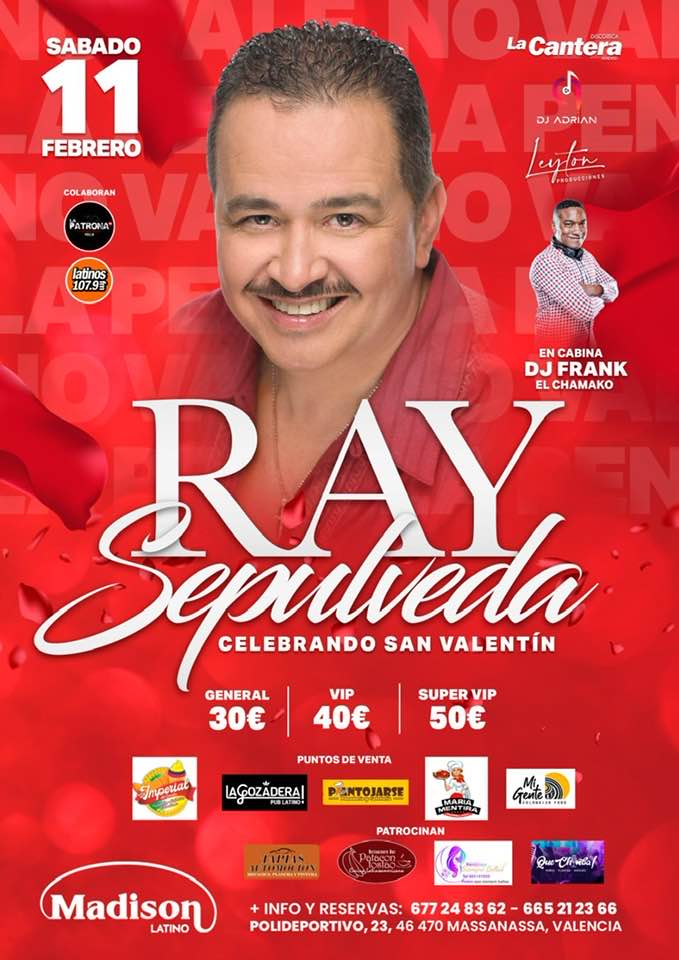

Ray Sepúlveda loves his music ardently, and it is for this reason that, for two decades, he has been one of the most notable voices in salsa to date. This much loved singer takes every opportunity he gets to give us all of his soul through his music, and his most intimate feelings. One of his first steps this 2023 is to visit Europe, to celebrate Valentine’s Day with all his European fans. Learn more about the singer, and his dates for this Europe Tour with the following lines.

Ray Sepúlveda is a singer forged in Salsa’s golden years

Sepúlveda Jr. was born in Brooklyn, his parents are originally from Puerto Rico. Today he is a successful singer who has recorded five albums for his current label RMM, and has built up a reputation as a vocalist on all continents. However, his journey to his success was not an easy one.

Since his childhood, Ray Jr. learned everything from his father, Ray Sepúlveda Sr., who was a bolero singer, and a member of Trío Los Románticos. This experience allowed him to listen to the best artists from Puerto Rico and Latin America, which inspired him to follow his dreams of becoming a renowned singer.

At the end of the 70’s Ray managed to record his first album and two more under Fania. He also got to dabble in the cinema, and in the 80s he even worked with Hector Lavoe. But in those years there was a decline in the genre, which is why Sepúlveda came to work with the United States Postal Service.

The 90s were his return to the stages with the Johnny and Ray Orchestra, with which he came to record his greatest hits. As he himself has commented on several occasions: “At that stage of my career I had the opportunity to work with Sergio George, the music producer of Salsa Con Clase. Sergio greatly influenced, and in a way created the musical style of Ray Sepúlveda.”

A few years later he would sign with RMM which led him to further consolidate his solo career. In “Salsabor,” his fifth production with RMM, Ray Sepúlveda shows us his way of being and feeling. He uses the same energy that he had on his first album with them, and inspires us to enjoy his well-known romantic salsa sound.

Ray has made appearances at some of the world’s most famous venues. For example, he has played in New York’s Madison Square Garden several times, including a Valentine’s Day concert. He has also performed at Radio City Music Hall and at the Continental Airlines Arena in New Jersey to celebrate RMM’s 10th anniversary. In addition, Ray has traveled throughout Europe, receiving a great reception especially in Italy.

2023 marks his return to Europe

This new year marks the return of Ray Sepúlveda to the European stages with his Europe Tour, led by Luisito Eventos and Amber Productions. This tour consists of a total of 6 dates, starting on February 3 in Madrid, Spain. Two dates follow in Italy on the 4th and 5th, in Genoa and Firenze respectively. It closes with stops on 10, 11 and 12 passing through Milano, Italy; to then reach Valencia and Barcelona in Spain.

In these presentations Ray will captivate the audience with his best-known classics, in addition to showing his new songs from his latest production Salsabor, among which stand out: Como Tiembla El Alma, Eres, Lo Necesario, Sabes Que Soy Aquel, among other great works. To obtain tickets for these dates and enjoy a great night, you just have to contact the following numbers: +34627098111 / +34635417043.

Salsa at Hacienda El Paraíso with Los Lebron Brothers Orchestra

The house of Hacienda El Paraíso or Casa de la Sierra, was built between 1816 and 1828, by Don Victor Cabal, a cattle rancher from Bugueño and ex-mayor of Cali. On June 20, 1854 it was sold to Don Jorge Enrique Isaacs, father of the poet, in whose hands it remained until June 15, 1858.

On April 18, 1953 it was acquired by the Department of Valle del Cauca and its first restoration was carried out by the master Luis Alberto Acuña in 1954.

It was declared a National Monument on December 30, 1959. It currently holds the status of Cultural Interest of the Nation.

With Law 397 of 1997 the properties previously declared national monuments were considered as properties of cultural interest and by Law 1185 of 2008 the BIC were defined as such due to the special interest that the property has for the community throughout the national territory…” (Law 1185 of 2008, Article 5, which modifies Article 8 of Law 397 of 1997).

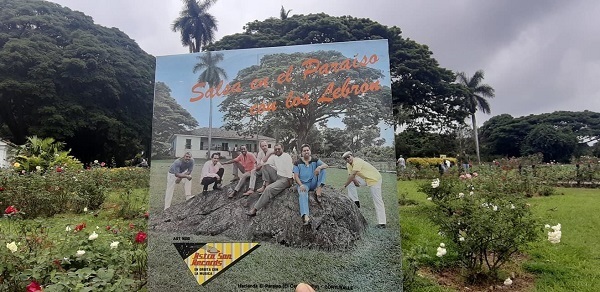
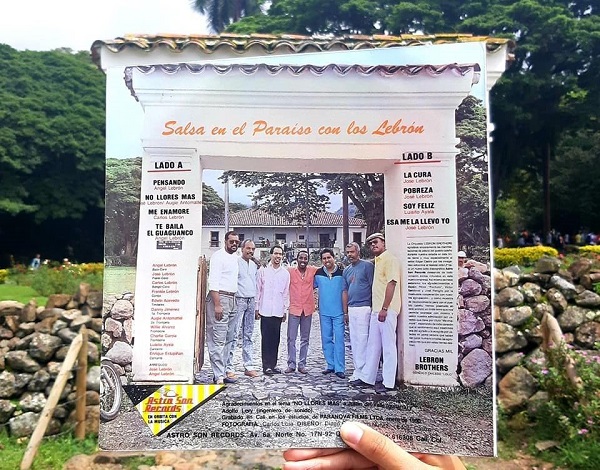
Los Lebron Brothers agradecidos y maravillados con Cali graban en enero de 1990 el elepé “Salsa en el Paraíso”

The Hacienda El Paraíso de Cali, setting of “María” written by Jorge Isaacs, a novel of an impossible romance and such wonderful landscapes that some Japanese decided to live in these lands just by reading the novel, landscapes that the Lebron Brothers also fell in love with.

The Lebron Brothers, grateful and amazed with Cali, recorded in January 1990 the LP “Salsa en el Paraíso” for the short-lived Cali label AstroSon Records, the hit of the album was the song “Thinking” with vocals by Luisito Ayala (RIP).

Los Lebron Brothers“ Salsa en el Paraíso”

The Lebrón Rosa family was born with the union of Francisco Lebrón Feliciano and Julia Rosa Sosa (mother of Pablo López Rosa) in Aguadilla (Puerto Rico), where María Antonia, José, Ángel and Carlos Enrique were born. They moved to New York in 1952, where Frank was born; they were educated in a purely musical environment, the father wrote décimas and in the family most of them were musicians and played cuatro and guitar, besides singing.

Pablo Lopez, since childhood was noted for his voice, was born on June 30, 1937 in Aguadilla, Puerto Rico.

Already settled in New York, he organized a trio “Las Tres Monedas” (1954). In 1962 José and Ángel formed their first group called Los Eltones.

Pablo founded the Orquesta Arecibeña (1965). Pablo managed to get the owner of the La Vega club in Brooklyn to give them an opportunity to audition, at which time José joined the Arecibeña as a pianist. In 1966 Angel Lebron y su Combo was formed, where his brother Carlos is the pianist.

The opportunity to record came from the hand of businessman George Goldner, head of the Cotique label, thanks to the fact that he had agreed to listen to them live.

As this meeting was important, Angel and Jose asked their brother Pablo to accompany them on vocals, to take advantage of his veteran and wonderful style.

The brothers Angel, Jose, Pablo and Carlos performed two boogaloos in their own way and style. It was Goldner who suggested that they call themselves Los Hermanos Lebrón and asked them to prepare a complete album.

Frank Lebron, Dj. Augusto Felibertt y Jose Lebron

The album appeared in 1967 under the title Psychodelic goes latin, which included the hit Summertime blues.

Thanks to the overwhelming success of the first work, in 1968 they presented their second album, The Brooklyn Bums, name of a famous baseball team. They released nine songs with interpretations in English and Spanish.

In 1969 the productions I Believe, (Lo tuyo Llegará) and Brother, (Pancho el Loco y Fe). These hits catapulted them internationally before the Latin American public, tracing a new musical horizon.

The boogaloo began to lose ground and Los Hermanos Lebrón reflected this change by producing an album entirely in Spanish with the title Llegamos, containing the songs Mi fracaso, Tus recuerdos (a song that achieved Pablo’s recognition as a great Bolerista).

BOOM…! SALSA…..!

In the same year with the production of the album Salsa y Control, success was glimpsed giving relevance and turning the term Salsa into a worldwide social phenomenon; where the younger brother (Frank Lebrón) makes his debut.

The innovations of three chorus singers (dubbed) were present, which gave it a true seal of distinction. In the boleros, they searched for the traditional sound of the Puerto Rican trios.

Los Lebron Brothers Orchestra

You can read: Luigi Texidor el Negrito del Sabor

  • « Go to Previous Page
  • Page 1
  • Interim pages omitted …
  • Page 18
  • Page 19
  • Page 20
  • Page 21
  • Page 22
  • Interim pages omitted …
  • Page 30
  • Go to Next Page »

International Salsa Magazine (ISM) is a monthly publication about Salsa activities around the world, that has been publishing since 2007. It is a world network of volunteers coordinated by ISM Magazine. We are working to strengthen all the events by working together.