• Skip to primary navigation
  • Skip to main content

International Salsa Magazine

  • Home
  • Previous editions
    • 2025
      • ISM / November 2025
      • ISM / October 2025
      • ISM / September 2025
      • ISM / August 2025
      • ISM / July 2025
      • ISM / June 2025
      • ISM / May2025
      • ISM / April 2025
      • ISM / March 2025
      • ISM / February 2025
      • ISM / January 2025
    • 2024
      • ISM / December 2024
      • ISM / November 2024
      • ISM / October 2024
      • ISM / September 2024
      • ISM / August 2024
      • ISM / July 2024
      • ISM / June 2024
      • ISM / May 2024
      • ISM / April 2024
      • ISM / March 2024
      • ISM / February 2024
      • ISM / January 2024
    • 2023
      • ISM / December 2023
      • ISM / November 2023
      • ISM / October 2023
      • ISM – September 2023
      • ISM – August 2023
      • ISM July 2023
      • ISM Edition June 2023
      • ISM – May 2023
      • ISM April 2023
      • ISM March 2023
      • ISM February 2023
      • ISM January 2023
    • 2022
      • ISM December 2022
      • ISM November 2022
      • ISM October 2022
      • ISM September 2022
      • ISM August 2022
      • ISM July 2022
      • ISM June 2022
      • ISM May 2022
      • ISM February 2022
      • ISM January 2022
    • 2021
      • ISM December 2021
      • ISM November 2021
      • ISM October – 2021
      • ISM September 2021
      • ISM August 2021
      • ISM July 2021
      • ISM May 2021
      • ISM April 2021
      • ISM June 2021
      • ISM March 2021
      • ISM February 2021
      • ISM January 2021
    • 2020
      • ISM December 2020
      • ISM November 2020
      • ISM October 2020
      • ISM September 2020
      • ISM August 2020
      • ISM July 2020
      • ISM June 2020
      • ISM May 2020
      • ISM April 2020
      • ISM March 2020
      • ISM February 2020
      • ISM January 2020
    • 2019
      • ISM December 2019
      • ISM November 2019
      • ISM October 2019
      • ISM Septembre 2019
      • ISM August 2019
      • ISM July 2019
      • ISM June 2019
      • ISM May 2019
      • ISM April 2019
      • ISM March 2019
      • ISM February 2019
      • ISM January 2019
    • 2018
      • ISM December 2018
      • ISM November 2018
      • ISM October 2018
      • ISM September 2018
      • ISM August 2018
      • ISM July 2018
      • ISM June 2018
      • ISM May 2018
      • ISM April 2018
      • ISM March 2018
      • ISM February 2018
      • ISM January 2018
    • 2017
      • ISM December 2017
      • ISM November 2017
      • ISM October 2017
      • ISM September 2017
      • ISM August 2017
      • ISM July 2017
      • ISM June 2017
      • ISM May 2017
      • ISM April 2017
  • Download Salsa App
    • Android
    • Apple
  • Spanish

Search Results for: Son de Bolero

Imágenes Latinas, the new album by Spanish Harlem Orchestra

New album by Spanish Harlem Orchestra

The three-time Grammy winner Spanish Harlem Orchestra has an undeniable impact on the perception of the public towards music in general and this is no coincidence, as the work done its members has an unsurpassed quality.

These salsa veterans have always been characterized by looking for a raw and organic sound based on the past, something that does not prevent them from being focused on the future. On each album, they are very conscious that their main goal is to keep good music alive.

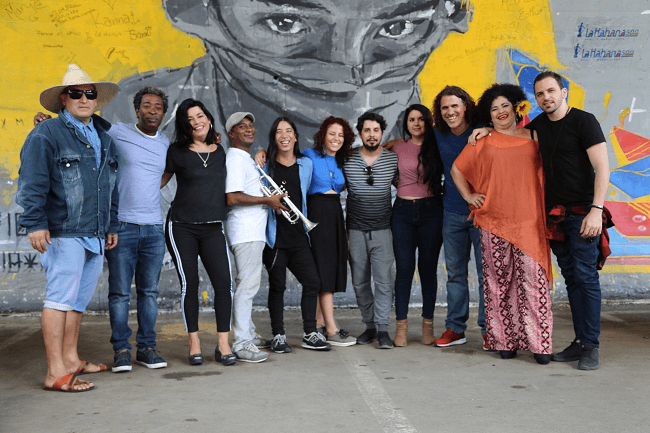
Spanish Harlem Orchestra members

How this started

Once again, the salsa orchestra shows what they are really made of in their new album Imágenes Latinas, which will surely be a hit with the band’s fans. The record label in charge of releasing this recording is Ovation Records, whose owner is Oscar Hernández, pianist, composer and founder of SHO.

It is very interesting to note that Imágenes Latinas is the result of a funding model driven by the group’s fans in exchange an advance copy of the album and even a type of executive producer credit. The release show took place on May 20 at DROM, New York. There are multiple images from the show on the group’s official social media accounts, whose members thanked those present for their support.

Oscar Hernández commented that his mission and vision is to represent the history and legacy of this music, of which he feels very lucky to be part of. He also pointed out that his commitment to the music will never end and that the group explores new dimensions without deviating from its core belief. What Hernández means is that the concept and sounds are the same, but the arrangements and shows always seek to innovate one way or another.
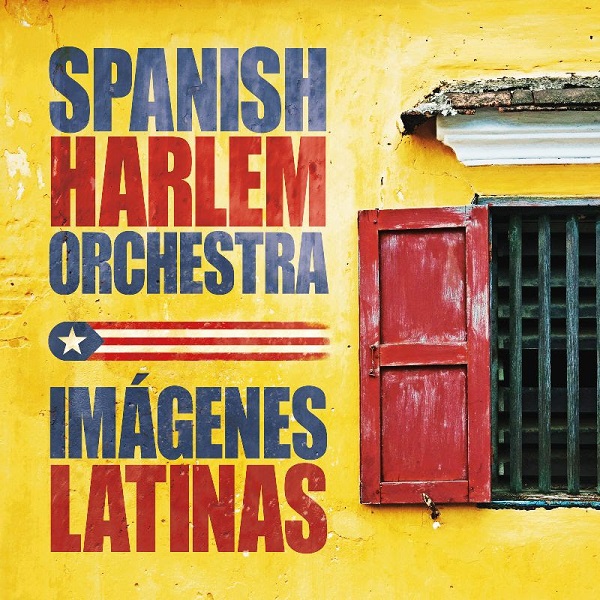
The new album by Spanish Harlem Orchestra Imágenes Latinas

Inspiration

The title is inspired by group Conjunto Libre, which has always been one of the main souces of inspiration for SHO. The song Imágenes Latinas was one of Conjunto Libre’s most important pieces throughout their career and talked about the evolution of the Latin American diaspora in history. SHO seeks to give a touch of modernity to the song and introduce some contemporary arrangements while respecting its original essence.

A noteworthy aspect of Imágenes Latinas is that the group travels through various moods and styles, showing the vast experience of all its musicians in each piece. A great example of this is Mi Amor Sincero, which starts with the typical sounds of the bolero until becoming a joyful cha-cha that surprises anyone who will listen. These sorts of transitions from one style to the other can be found throughout the work and its brilliant interpretations.

The album is a true reflection of SHO’s career, which is still seen as one of the leading salsa ensembles even after all these years. The quality of their work has not decreased in the least, quite the opposite. Its members continue to risk breaking ground and experiment with the novelty of music without losing focus of who they are.

Spanish Harlem Orchestra performing on stage

        By Johnny Cruz, ISM Correspondents, New York, New York City


Imágenes Latinas, the new album by Spanish Harlem Orchestra

New album by Spanish Harlem Orchestra

The three-time Grammy winner Spanish Harlem Orchestra has an undeniable impact on the perception of the public towards music in general and this is no coincidence, as the work done its members has an unsurpassed quality.

These salsa veterans have always been characterized by looking for a raw and organic sound based on the past, something that does not prevent them from being focused on the future. On each album, they are very conscious that their main goal is to keep good music alive.

Spanish Harlem Orchestra members

How this started

Once again, the salsa orchestra shows what they are really made of in their new album Imágenes Latinas, which will surely be a hit with the band’s fans. The record label in charge of releasing this recording is Ovation Records, whose owner is Oscar Hernández, pianist, composer and founder of SHO.

It is very interesting to note that Imágenes Latinas is the result of a funding model driven by the group’s fans in exchange an advance copy of the album and even a type of executive producer credit. The release show took place on May 20 at DROM, New York. There are multiple images from the show on the group’s official social media accounts, whose members thanked those present for their support.

Oscar Hernández commented that his mission and vision is to represent the history and legacy of this music, of which he feels very lucky to be part of. He also pointed out that his commitment to the music will never end and that the group explores new dimensions without deviating from its core belief. What Hernández means is that the concept and sounds are the same, but the arrangements and shows always seek to innovate one way or another.

The new album by Spanish Harlem Orchestra Imágenes Latinas

Inspiration

The title is inspired by group Conjunto Libre, which has always been one of the main souces of inspiration for SHO. The song Imágenes Latinas was one of Conjunto Libre’s most important pieces throughout their career and talked about the evolution of the Latin American diaspora in history. SHO seeks to give a touch of modernity to the song and introduce some contemporary arrangements while respecting its original essence.

A noteworthy aspect of Imágenes Latinas is that the group travels through various moods and styles, showing the vast experience of all its musicians in each piece. A great example of this is Mi Amor Sincero, which starts with the typical sounds of the bolero until becoming a joyful cha-cha that surprises anyone who will listen. These sorts of transitions from one style to the other can be found throughout the work and its brilliant interpretations.

The album is a true reflection of SHO’s career, which is still seen as one of the leading salsa ensembles even after all these years. The quality of their work has not decreased in the least, quite the opposite. Its members continue to risk breaking ground and experiment with the novelty of music without losing focus of who they are.

Spanish Harlem Orchestra performing on stage

The Tempo Latino Festival is Back

The major European festival of Latin and Afro-Cuban music will present Los Van Van, Pacific Mambo Orquestra, Interactivo, and Minyo Crusaders (H2)

The benchmark Festival of Latin and Afro-Cuban music in Europe, Tempo Latino, resumes its activities after the forced cessation of its activities for two years due to the Pandemic.

From Thursday, July 28th to Sunday, July 31st, on the main stage Les Arènes, the whole family, heterogeneous public, and inveterate traveler will enjoy the performances of Los Van Van, Pacific Mambo Orquestra, and Interactivo, as well as an exceptional set & exclusive presentation on Saturday, July 30th  at 11 PM of “Con Tumbao All Stars” with the winners of Best Traditional Tropical Album at the Latin Grammy 2021 for their album “Chachachá…Homenaje a lo Tradicional”, Issac Delgado and Alain Pérez, as well as Oscar Hernández, Robby Ameen, Tony Succar, and many more.

Minyo Crusaders rediscovered the songs associated with the working classes.

The festival to be held in Vic-Fezensac, the heart of the Gers de Gascony department (France), will open its doors on Thursday, July 28th, with Tempo Latino Social Club on the stage of its satellite “Geo-rhythmic” Conga with a special performance by the Tokyo band, Minyo Crusaders.

This Cumbia band with a Japanese identity aims to make reversals between the traditional and foreign rhythms. Guitarist Katsumi Tanaka was in charge of bringing together the twelve musicians to perform these magnificent melodies with a fusion of the Caribbean (Reggae, Cumbia, and Cuban Salsa), Africa (Afro-Blues, Afro-Funk, Ethiopian rhythm), and Asia (Thai Pop) after of the Fukushima accident in 2011. The ticket for this show costs €15.80, and the opening is at 6 PM.

Pacific Mambo Orchestra is the only active Latin Big Band on the West Coast of the United States.

Continue on Friday, July 29th with the concerts of the Pacific Mambo Orchestra and Los Van Van together with the Cuban trumpeter, composer, singer, and leader of the band Havana D’Primera, Alexander Abreu.

The first orchestra to perform at the festival in its twenty-eighth edition at 9 PM will be the Pacific Mambo Orchestra. This North American band, a winner of the Grammy Award in the category “Best Tropical Album” in 2014, is the revival of the Latin sound of the Big Bands of the 40s with the combination of Mambo, Pop, Cha Cha, Timba, and Bolero. Pacific Mambo Orchestra founded 12 years ago by the Mexican pianist Christian Tumalan and the German trumpeter Steffen Kuehn has collaborated with renowned artists such as Carlos Santana, Poncho Sánchez, Pete Escovedo, and Arturo Sandoval.

Currently, this Latin Big Band performs on the West Coast of the United States with elite musicians from the Bay Area, and their repertoire is in English and Spanish. Their third album “The III Side” (2020) fuses the traditions of the Mambo of the 50s with the musicality of the moment. This Latin Big Ban considered one of the best in the United States will also is at the prestigious San Francisco Annual Jazz Festival on Wednesday, June 8th from 7:30 PM to 9 PM. Address: Miner Auditorium, 201 Franklin Street, San Francisco (EEUU).

“Legado” is an album in homage to the legacy left by maestro Samuel Formell.

The second orchestra is to take the stage on Friday at 11 PM and will be Los Van Van with their special guest Alexander Abreu. The emblematic Cuban music orchestra will celebrate its more than 5 decades of history.

Los Van Van known by many as the “Rolling Stones of Salsa” was founded in 1969 by bassist and composer Juan Formell, a legend of Cuban music, who accompanied by José Luis Quintana, known as “Changuito” and César “Pupy ” Pedroso, invented the “Songo”, a Cuban rhythm predecessor of the “Timba” or “Salsa Cubana”, which generated the “Salsa – Son” with a Cuban sound that has made generations dance.

In 2018, they recorded their first record production “Legado” since the physical departure of Juan Formell in 2014. This tribute album has 14 songs with 3 new versions of the international singles Te extraño, Por qué lo haces y Amiga mía.

On the third day of the Festival, Saturday, July 30th, the Latin sound will be awakened by the performances of the Interactivo group and the exclusive presentation of “Con Tumbao All Stars”. On Sunday, July 31st, Tempo Latino will close its doors on the Les Arènes stage with London Afrobeat Collective and Alain Pérez & La Orquesta Bassiste.

Most of the members of Interactive are representatives of currents such as Nueva Trova, son, and Cuban jazz.

The avant-garde collective, Interactivo, is one of the most representative bands of the current Cuban generation and will take to the Tempo Latino stage at 9 PM.

This emerging orchestra of international stages brings together the most brilliant and eclectic composers and producers in Havana. Each member contributes their specialty: Timba, Funk, Jazz, Hip Hop, Rock, Rumba, traditional Cuban music, and Soul for a result of great richness, where individual originality, musical creativity, and avant-garde ideas enrich the group.

London Afrobeat Collective has hypnotic flashes and powerful percussive beats.

Similarly, the addictive London Afrobeat Collective has been offering festive music based on Jazz, Funk, Rock, Dumb, and African Vibes for ten years. Its international DNA made up of nine members from England, Italy, France, Congo, Argentina, and New Zealand with the powerful voice of the Congolese singer Juanita Euka has made its rhythm addictive music with powerful and committed messages. The London-based band will open the night of concerts on Sunday, July 31st at 9 PM.

Alain Perez and the Bassiste Orchestra will offer a mixed show of Salsa, Son, Timba, and Latin Jazz

This musical evening ends with Alain Perez, bassist, singer, arranger, and who composes his orchestra of 13 young musicians on stage to offer a mixed show of contemporary Cuban Salsa, Timba, and Latin Jazz. His talent has given him wonderful experiences with internationally famous orchestras and musicians such as Los Van Van, Irakere, Issac Delgado, Paquito D’Rivera, and Celia Cruz. Always accompanied by his elephant-headed cane, in homage to Cuban musician Benny Moré, Alain has been influenced by flamenco through his work with Cuban artist Paco de Lucía.

The versatile artist born in Havana was twice-nominated for the Latin Grammy Awards in the category of Best Traditional Tropical Music Album with “El alma del Son, tribute to Matamoros” (2015) and “ADN” as Best Salsa Album. (2017).

El Cuento de la Buena Pipa (2020) is his most recent record production, and you can enjoy it on the main stage of the festival at 11 PM.

You can get the tickets for Tempo Latino 2022 on their official site http://www.tempo-latino.com/ for a four-beat tempo. The Tickets for the four nights of concerts are €86.70.

And while you wait for the Tempo Latino Festival (28th edition) you can enjoy its free predecessor event Clutcho at La Grainerie this May 4th. This place is emblematic of the circus and itinerant disciplines that take place with a large space that involves a large open-air square, and a performance hall with a capacity for 230 people through an “interior street” that serves for creative studios and workshops.

To speak of Leonardo Ortiz Chacón is to speak of a musical institution of Mexico

Performer of the tres, composer, arranger, music and radio producer, director and founder of Combo Ninguno since 1983.

He studied at the Faculty of Music of the UV, in JAZZUV, in Musinetwork in Boston MA and with teachers Luis Martinez, Carlos Tercero and Edgar Dorantes, he is a teacher of Musical Education in the Ministry of Education of Veracruz and since January 2019 participates in the direction of the Papakilistli Orchestra of the same Secretariat.

He has collaborated in television as musical director of the program “Cómo suena la clave” in TV Más. He is currently producer and host of the program “Cadencia Caribe”.

Since 1983 in Xalapa, the members of Combo perform dance music from the Antilles, integrating a repertoire with their own creations and original arrangements to themes of other authors in different musical genres such as son, guaracha, mambo, merengue, danzón, bolero, etc, achieving in their thematic diversity, a unique sound full of references to their native state of Veracruz.

He has taught workshops of appreciation and execution of Caribbean music and has participated as a lecturer and speaker on this subject in countless events, have been presented in Spain, Cuba, United States and Canada.

Accessing different forums from the small and improvised street space to large venues with capacity for tens of thousands of spectators such as the Azteca stadium or the Salsa Fest in Boca del Rio.

He has performed at prestigious cultural festivals such as the Cervantino, the Quimera, the Afro-Caribbean of Veracruz, the Vancouver Folk Festival and the International of Houston, at Fairs such as the San Marcos and the Expo Sevilla, Carnivals such as the one of Veracruz, Havana and the Mardi Gras in New Orleans and Galveston Texas.

Maestro Leo, how can you define yourself in the music scene?

Leonardo Ortiz Chacón is to speak of a musical institution in Mexico.
Leonardo Ortiz Chacón Tres player, composer, arranger, music and radio producer

I see myself as someone captivated by this music since I heard it for the first time, thanks to it I have been able to enjoy unforgettable moments and for many years I have not had a day in my life without doing something related to music. Be it as a performer, manager, broadcaster, props man, audio manager, producer, etc.

I understand that you have had many presentations abroad?

For me there have been many and I would like to have more. I think I have been fortunate to take advantage of the opportunities that have presented themselves with Combo Ninguno. I must say that personally I would never have been able to be in the places where music has taken me.

As part of your presentations you toured the U.S. How pleasant was the experience?

At one time we participated in a project to promote tourism in the State of Veracruz and we continually visited the State of Texas and then extended to Louisiana and Colorado, thanks to this an American promoter invited us to tour from coast to coast presenting a show of music and dance that began in New Hampshire and continued in New York, Pennsylvania, Illinois and other states to conclude in California after performing in New Mexico and Arizona. The program of the presentations was with original repertoire and Mexican authors.

What did it mean to you to perform for the first time in such a musical country where many great exponents of the island of Cuba came from?tional in 1989 at the Na Theater of Cuba

For me this was one of the memorable moments that I thank to music, the fact of participating with Combo Ninguno in a Gala dedicated to Mexico, in such an important place in Cuba, the country where this music was born.

I tell you that my emotion was so great that at the beginning of our performance, I could not complete the first verse of the song with which we opened, it was El jarocho by Lino Carrillo, I had to sing: Jarocho yo soy señores and I only said Jarocho, the rest was a sort of incomprehensible sounds that I could emit with a lump in my throat.

Have you had an endless number of participations in Cultural Festivals, which is the one that leaves a mark on you in your own country?

I can’t say one in particular, I remember presentations at anti-nuclear rallies where there were children, young people, adults and elderly people that were not festivals strictly speaking, a Cervantino festival where in the middle of a downpour people danced in the Alhóndiga de Granaditas under an impressive downpour, the Festival de la Nueva Canción Mexicana where we performed for the first time in 1983. And I could go on mentioning many more.

How did the Como Suena La Clave Festival come about?

 Combo Ninguno
Combo Ninguno

This festival arises with the intention of being a showcase where to make visible and position the Mexican orchestras with original proposal. Trying to promote, preserve and spread salsa music made in Mexico.

At first the orchestras were invited to play original arrangements of songs by other composers, then they were asked to play music by national composers and nowadays they are asked to play original music complemented of course with songs by national composers.

You don’t stop, you continue harvesting and now the project Coloquio Musical Afroantillano is born, why make this new proposal?

I think that in Mexico little is reflected and little is written about this genre. It seems that when we take the music out of the dance floor, we lose the rhythm and also the step.

For some time now, most of the debates on this subject have taken place backstage and in the places where musicians and some dancers gather to refresh themselves after the events. Recently, social networks have continued with this exercise, I must point out that for decades the main topic to be discussed has been: Does salsa exist or not? Should it be called salsa or son? And I believe that among other issues, we have left aside fundamental matters such as the creative part, the economic aspect and the diffusion.

Based on this consideration and thanks to the support of Rafael Figueroa, the Festival Como suena la clave, the Centro de Estudios de la Cultura y la Comunicación of the Universidad Veracruzana and the Red de estudios de la Música Afroantillana en México convened the Colloquium La música afroantillana en México: confluencias y divergencias where the participants in a framework of cordiality and respect have made valuable contributions that will be included in a report that will be released as a digital multimedia document for free distribution.

Do you think that the music called salsa is evolving worldwide?

I don’t have the slightest doubt about it, just as I don’t hesitate to mention that due to diffusion factors we only know a small part of the new salsa music that is being made in many places and that perhaps most of the music that is more accessible to us on digital platforms is not the best.

Have you experienced the best times in music today, and what do you think is missing?

Among other things, today and always it will be necessary to contribute new music that increases the cultural heritage of this genre. We need to talk about our present without forgetting the past, about our environment and our daily life in a globalized world. We need to speak our own language and disseminate these productions in the best possible way, trying to overcome the reluctance of many towards what is new and what does not come from the places where this music has traditionally been produced.

Already with seventeen record productions, now that you have worked on them, which is the production that has marked the history of Combo Ninguno? What has been the one that has left the greatest mark on you?

Undoubtedly the most significant record production is the first one, in it, as in each of the subsequent ones, our desires and also our possibilities and limitations are recorded musically. The most present record you have now is the one you are making or that you intend to make. Each record becomes a part of your musical history and your own life.

Have I heard salsa with the jalapeño touch mentioned because of that phrase?

In our case it is an advertising phrase that alludes to the hot sauce.  Salsa with jalapeño flavor. Initially it was used for our presentations in the United States where the chili peppers are called jalapeños. Today we use it by writing jalapeños with an x.

Combo None other cultural heritage that we have while we are still alive that you feel after 39 years in the music industry?

I’m looking forward to at least as many more. Looking back I realize that Combo Ninguno became a life project that has filled my days with music, so there will always be little I can do for music.

What do you expect from Leonardo Ortiz Combo Ninguno?

I have two record productions pending with Combo Ninguno, one of them is already quite advanced and I hope to finish both this year. I hope to give continuity to the Festival Como suena la clave and continue participating and enjoying everything that has to do with salsa made in Mexico.

Maestro, what would you like to say goodbye with and what message would you like to leave to the new generations?

I would invite them, besides the musical study, to try to make their contribution and leave their name in the salsa made in Mexico, to document their creativity in our reality and then communicate it in their creations, I would also ask them to debate and collaborate with their colleagues.

DISCOGRAPHY

 In their discographic work we can see a style that can be projected without problems towards the universal, but that does not cease to feed on their own Veracruz identity by offering us a combination of traditional and original pieces that exude Veracruz and Afro-Hispanic Caribbean flavor.

 To date they have made seventeen recordings, seven exclusively of combo none:

– Tumba Verde (1987)

– Traigo este son (1990)

– Son de amor (1994)

– Carnaval Veracruzano (2001)

– Con Sabor a Veracruz (2005)

– La Bruja recorded at the 17th Afro-Caribbean Festival Veracruz 2011 (2012)

– Inventario- Combo Ninguno, of which the singles Descarga de las flores, Calaveritas de Azúcar and Alambre, cuero y madera have been presented.

 And ten productions in which they intervene with other groups:

– Son 13 rolas antinucleares (1989).

– Somos indios (1995)

– Homenaje a Luis Martínez, recorded live at Barlovento de Xalapa in the 1st.

Festival Como Suena la Clave 1997 (1998)

– Tribute to Carlos Pitalúa, recorded live at Barlovento de Xalapa in the 2nd Festival Como Suena la Clave 1998 (1998).

Festival Como Suena la Clave 1998 (1999)

– From Son to Danzón (2000)

– Tribute to Emilio Domínguez, recorded live at Barlovento de Xalapa in the 3rd Festival Como Suena la Clave 1998 (2000)

3rd Festival Como Suena la Clave 2004 (2010)

– Con sabor a Veracruz-RTV music (2012)

– Tribute to Toña la Negra, a recording that records the V Festival Como Suena la Clave

Clave Festival held in Veracruz, Veracruz, Ver (2013)

– Salsa a la veracruzana, recording of the VI Festival Como Suena la Clave held in Veracruz, Veracruz, Veracruz, Veracruz (2015).

Veracruz, Ver (2015)

– Al Son del Covid, record of the VII Festival Como Suena la Clave held in Veracruz, Veracruz, Veracruz (2015).

virtual way in December 2020.

Erika Muñoz (La Mulata Rumbera)

Article of Interest: Maestro Jorge Anselmo Barrientos Silva, conductor, arranger and composer

Pedro González

Musician, Instructor, And Pioneer Of Salsa Casino In Venezuela

Pedro González dressed in white playing the bass
“I always had the connection to music, and today, I still have two congas. Sometimes I play them during classes.” Pedro González

“If people dedicate themselves to this, it is because we are doing it well.” This nice phrase arose from the pleasant and attractive telephone conversation about the history of the pioneer of Salsa Casino in Venezuela, the charismatic Cuban-Venezuelan musician and instructor Pedro González.

This affable musician and Salsa Casino instructor told us that he carved out his career from a very young age. He was born in Havana (Cuba) in 1966 and began his musical studies at the National School of Arts in the Havana capital at the age of ten, graduating in the specialty of Guitar (Short Course of 8 years) in 1984.

He comes from a musical family, his grandmother was the soprano Rosa “La China” and his mother (teacher and school principal) Zoe Portuondo Suarez, a distant relative of the singer Omara Portuondo.

“…Since I was little I liked to dance, I would dance everywhere. I learned with my cousin… I went to places like Playa… Besides, my mother danced a lot and my grandmother was a singer and she was also linked to the world of art…” Pedro commented.

His first job was as a music teacher in the Pinar del Río city, three hours from Havana. A short time later, he joins the Caranday group, and they play Son Cubano every night at the luxurious Hotel Nacional De Cuba.

After 45 days from his first presentation with the group, they meet the Venezuelan businessman Martín Gutiérrez, who takes them to Venezuela in 1993 to perform at private parties in the Falcón state.

Due to the few opportunities he had in Cuba, he decided to stay in Venezuela and formed the Latino Son band, made up of four Cuban musicians, and in turn began to be members of the Tropicana-style Cuban Fiesta Magazine (Show with a range of musical genres, interaction with guest singers, and dancers) in nightclubs of the Capital.

In Moments of pause with the musical magazine (1997), he undertook a tour with the Latino Son group with whom he traveled for almost all of Venezuela and toured the main stages of large national festivals such as La Feria del Sol (Mérida), Feria de San Sebastián (San Cristóbal), and La Feria de la Chinita (Zulia) among many others.

“We played permanently at La Giralda… At La Giralda we organized a party playing the Cuban Timba, then, there they called us “The Cuban Orchestra” in 1996, 1997, and 1998…”

During the ’90s and already residing in Venezuela, Pedro became the first Salsa Casino instructor in Venezuela without planning it as a life plan, and in 2000 he founded his homonymous academy that has graduated thousands of fans of this style of salsa dance.

Dancing is one thing that keeps you active. That is good for the body. If you have a problem in two hours or an hour and a half dancing you forget it. For my part, I like to teach… And, I like people to have fun.” Pedro González

History And Evolution Of The Academy Dance

Pedro González with burgundy flannel and four women on the sides
Pedro González is the President of the Salsa Casino Organization in Venezuela

One night at the end of the 90s, Pedro along with his friend Milan (Medical and Countryman) began to remember the Dance of the Casino in La Giralda (old venue to listen to live music and enjoy various drinks on the Boulevard de Sábana Grande – Caracas) after his customary presentation with the Latino Son group.

Both began to stand out on the dance floor with the genre of La Timba and for a way of dancing Salsa different from the one practiced in Venezuela. “We began to dance with two Venezuelan girls in the Rueda style (which was not a Rueda because there must be 3 couples)… I began to say Milan “Give me one”, “Plugin”, “The Hat”, and we began to dance the Casino Style”. Pedro “El Cubano” told us between laughs during the interview.

The two ladies were so impressed by that way of dancing that they did not hesitate for a moment to ask Pedro for dance lessons. After so much insistence, “El Cubano” agreed for the first time to give Salsa Casino classes in the capital of Venezuela in an improvised and reduced space with his first five couples. “I am from the Cerro municipality, which is the closest to Old Havana. I used to go to Playa (Municipality of Havana) a lot to dance and I learned many dances and turns…”

And so Salsa Casino began spontaneously in 1999. By the following year (2000), Pedro had 20 couples and a larger room to teach.

The evolution of him in his rise during this year was impressive. Due to the influx of students, he began to teach in the blue auditorium of the Faculty of Economic and Social Sciences (Faces) of the most prestigious University in the country, the Central University of Venezuela (UCV) through Reinaldo Mijares, Director, and choreographer of the contemporary dance “Mudanza” attached to this institution and where González assures that this movement grows.

From there, he gave way to the Casa Monagas club, a place located in the Las Acacias sector (west of Caracas) behind the UCV with the capacity to hold up to 1,000 people. Here, Pedro’s students had more space to rehearse, and Salsa Casino Parties began to be organized monthly.

Pedro González with a blue shirt dancing with two women
Dance academies in Venezuela were teaching Puerto Rican Salsa Style in the year 2000

With this overwhelming success, the creation of the Academia Salsa Casino in Caracas was imminent. It had massive attendance, national impact with graduate students, and attendance at national and international festivals such as Curacao Salsa Tour, Festivals in Cuba, and an amazing show at the Amador Bendayán Theater.

With more than 20 years of teaching Salsa lessons, Pedro has graduated more than 2000 students and changed its name to Academia Pedro González. It currently has five locations: Sábana Grande (main location), Chacaíto, San Antonio de los Altos (Los Teques), Capitolio, and El Cafetal.

The classes are aimed at children and adults. The call is open, so you can sign up without a partner and don’t worry because the essence of the Rueda remains. The estimated graduation time is three years with four basic levels, four intermediate levels, six advanced levels, you will also receive a triple casino level, two dance technique levels, and to complete the process a final choreographic exam is done.

Every dance lesson is fun because of Pedro’s ability to teach. The names of each step such as “Pégale un Cacho” are adapted to the colloquial vocabulary of the Venezuelan so that it is easy and fast to learn.

Due to Covid-19, the Pedro González Academy makes the use of the mask and antibacterial gel an essential requirement for permanence within the institution, as well as reducing the maximum number of couples per level to only ten.

Vanessa Lovera y sus amigas vestidas de negro
Vanessa Lovera (Left) accompanied by two Salsa Casino dancers at the Caracas Carnival party

At the main headquarters, there are four instructors. One of them is Vanessa Lovera, a graduate instructor from the academy. For Pedro, she has been unconditional support in difficult moments of the institution. Vanessa teaches Salsa Casino and Ballroom Dance. You can also find her at the El Cafetal headquarters, but if you prefer the main headquarters, the address is as follows: Sábana Grande Boulevard, Fénix building, 5th floor, next to the Gran Café.

For this 2022 and if there is a return to normality, the Cuban instructor and musician residing in Venezuela hopes to resume the lost spaces in Caracas such as discos, nightclubs, presentations in theaters, once again hold large Salsa Casino parties in large rooms, the return of national competitions, and the continuation of the training of instructors in person (it is only online currently).

Casino Dance Or Salsa Casino?

Club Casino Deportivo in Havana, Cuba
Club Casino Deportivo no longer exists. Nowadays only the sports fields were preserved of this infrastructure.

According to the friendly instructor Pedro González, the origin of Salsa Casino on the island of Cuba has a unique story that begins like this…

Since 1956 numerous Cuban orchestras have been registered that played very popular and contagious musical genres such as Cha Cha Cha, Guaracha, Mambo, and Son. Rhythms that invited the young inhabitants of Cuba of this time to just want to dance and have fun all night with these melodies, but they not only wanted to do it with their partners but also with those of their friends, acquaintances, and strangers. However, for this decade that was not allowed because the rules of the strict and conservative society dictated it.

In this way and with the pursuit of that goal, the gentlemen created this style of dance. A style that did not require constant practice and where partners could be exchanged using keywords such as “Plugin” to perform the movement and for the theory to be carried out perfectly without altering society. The place where this event was recorded was Casino Deportivo, a private summer vacation club located in the Miramar residential area in Havana.

“We (in Venezuela) call it Salsa Casino because it is the commercial name already used in the United States. In Europe they call it Salsa Cubana, but the original name is Baile Del Casino”. Pedro Gonzalez

That is why at the end of 1950 this style of dance began to be generated that people internationally associate with the style of gambling performed in a Casino because it is a dance in Rueda.

The popular expression of most people in Cuba every time they saw this peculiar way of dancing was to say “Ah! But you are dancing like the people of the Casino (Casino Deportivo Club)” that each day was shortening the expression until reaching the Baile Del Casino.

The peculiarity of this dance style is that it does not have a musical genre, that is, no melody that identifies it. For example, a Danzón is danced with the music of the Danzón, the same happens with the Cha Cha Cha, Mambo, Son, and Bolero. There is no rhythm called Casino, therefore this style acclaimed in the world and preferred by Cubans began with the music that existed in this glorious decade of the ’50s.

  • You Can Also Read: Sidney Poitier

  • « Go to Previous Page
  • Page 1
  • Interim pages omitted …
  • Page 21
  • Page 22
  • Page 23
  • Page 24
  • Page 25
  • Interim pages omitted …
  • Page 30
  • Go to Next Page »

International Salsa Magazine (ISM) is a monthly publication about Salsa activities around the world, that has been publishing since 2007. It is a world network of volunteers coordinated by ISM Magazine. We are working to strengthen all the events by working together.