• Skip to primary navigation
  • Skip to main content

International Salsa Magazine

  • Home
  • Previous editions
    • 2025
      • ISM / November 2025
      • ISM / October 2025
      • ISM / September 2025
      • ISM / August 2025
      • ISM / July 2025
      • ISM / June 2025
      • ISM / May2025
      • ISM / April 2025
      • ISM / March 2025
      • ISM / February 2025
      • ISM / January 2025
    • 2024
      • ISM / December 2024
      • ISM / November 2024
      • ISM / October 2024
      • ISM / September 2024
      • ISM / August 2024
      • ISM / July 2024
      • ISM / June 2024
      • ISM / May 2024
      • ISM / April 2024
      • ISM / March 2024
      • ISM / February 2024
      • ISM / January 2024
    • 2023
      • ISM / December 2023
      • ISM / November 2023
      • ISM / October 2023
      • ISM – September 2023
      • ISM – August 2023
      • ISM July 2023
      • ISM Edition June 2023
      • ISM – May 2023
      • ISM April 2023
      • ISM March 2023
      • ISM February 2023
      • ISM January 2023
    • 2022
      • ISM December 2022
      • ISM November 2022
      • ISM October 2022
      • ISM September 2022
      • ISM August 2022
      • ISM July 2022
      • ISM June 2022
      • ISM May 2022
      • ISM February 2022
      • ISM January 2022
    • 2021
      • ISM December 2021
      • ISM November 2021
      • ISM October – 2021
      • ISM September 2021
      • ISM August 2021
      • ISM July 2021
      • ISM May 2021
      • ISM April 2021
      • ISM June 2021
      • ISM March 2021
      • ISM February 2021
      • ISM January 2021
    • 2020
      • ISM December 2020
      • ISM November 2020
      • ISM October 2020
      • ISM September 2020
      • ISM August 2020
      • ISM July 2020
      • ISM June 2020
      • ISM May 2020
      • ISM April 2020
      • ISM March 2020
      • ISM February 2020
      • ISM January 2020
    • 2019
      • ISM December 2019
      • ISM November 2019
      • ISM October 2019
      • ISM Septembre 2019
      • ISM August 2019
      • ISM July 2019
      • ISM June 2019
      • ISM May 2019
      • ISM April 2019
      • ISM March 2019
      • ISM February 2019
      • ISM January 2019
    • 2018
      • ISM December 2018
      • ISM November 2018
      • ISM October 2018
      • ISM September 2018
      • ISM August 2018
      • ISM July 2018
      • ISM June 2018
      • ISM May 2018
      • ISM April 2018
      • ISM March 2018
      • ISM February 2018
      • ISM January 2018
    • 2017
      • ISM December 2017
      • ISM November 2017
      • ISM October 2017
      • ISM September 2017
      • ISM August 2017
      • ISM July 2017
      • ISM June 2017
      • ISM May 2017
      • ISM April 2017
  • Download Salsa App
    • Android
    • Apple
  • Spanish

Search Results for: Son de Bolero

Mariana “The Sonera of Venezuela and for the world”

Janett Guevara García, artistically known as Mariana “La Sonera de Venezuela”, was born in La Pastora, Caracas on January 19, daughter of Reina García and Vicente Guevara.

Daughter of Reyna García and Vicente Guevara, she is the oldest of six siblings and from a very young age she showed her taste for music; an activity that has been her eternal passion, and has led her to make 12 record productions.

Mariana La Sonera de Venezuela

She is the oldest of six siblings and from a very young age she showed her taste for music; an activity that has been her eternal passion and has led her to make six record productions.

Educated in a convent school, she always participated and stood out in cultural events, until on one occasion she was suspended for telling the mother superior that there was a song called “La Cárcel” by Septeto Juventud that she wanted to sing at a cultural event.

At the age of 14, during her high school education, she learned to play drums and participated in the choir of the Caricuao Parish church where she lived.

As the years went by, Mariana was invited by Mr. Naty Martinez to a rehearsal, who was impressed when he heard her and decided to make a musical production.

That is when Mariana’s true pilgrimage began, going through stages earning the admiration of salsa greats.

In past years, she received praise from Queen Celia Cruz and has the guarantee and support of the singers of the Fania Stars, the Gran Combo de Puerto Rico, José Alberto El Canario and even her great friend and fellow countryman Oscar D’León.

Oscar El Sonero del Mundo y Mariana La Sonera de Venezuela

Mariana has been worthy of awards such as “El Congo de Oro” at the Barranquilla salsa festival.

She has been praised by personalities such as Don Tite Curet Alonzo. Mariana alternates her exciting career with the media, where she has a radio program dedicated to our Latin music “Sonsoneando con Mariana” winner of the 2010 Excellence Award, as a popular radio space in the Vargas State Venezuela.

She recently participated in the heartfelt tribute to the 50 years of artistic career of maestro Elio Pacheco, founder of the Latin Dimension, where she recorded an excellent song called “Al Olvido”.

She received praise from the Cuban queen Celia Cruz, and has the support of singers such as the Fania Stars, José Alberto “El Canario”, the Gran Combo de Puerto Rico and even her friend and confidant Oscar D’ León.

“Oscar represents more than a friend to me; he is like a brother. When he has a presentation in Vargas he does not hesitate to call me to see us and talk about our projects. I thank him a lot for his advice, because it has helped me to be where I am. The responsibility of being La Sonera de Venezuela falls on my shoulders.”

Y así quedó esta Sonera para su noche boleros

She has managed to release 12 musical productions. Among her best-known songs are “Frases hecha” in 1996, recorded in Peru and “Eres más fuerte que yo” by the composer Enrique Hidalgo.

Awards obtained

La Sonera has been worthy of multiple awards, including the “Congo de Oro” at the Barranquilla Salsa Festival, as well as the nomination three times in a row for the Vargas Excellence.

She has also received plaques as Female New Artist of the Year and Best Sonera in Caribbean Representation.

“I will never forget when they gave me the Catatumbo de Oro in Maracaibo, in the year 2000. It is one of my greatest achievements.”

Mariana La Sonera en el Santuario de La Divina Pastora en Barquisimeto

My family is my life

At just 18 years old, Mariana became a mother for the first time. “It is something that very few people know, but my first husband mistreated me physically, verbally and psychologically. The only thing I can be thankful for from that relationship is the existence of my son.”

She is currently a speaker, producer, and host of her own radio show “SONSONEANDO CON MARIANA,” broadcast Monday through Friday from 12:00 AM to 2:00 PM on Dial Azul 95.9 FM. At the same time, she directs her own group and is part of Jeque y su Banda, the Rumberos Callejón orchestra, directed by the experienced timbalero Carlitos Padrón, where she shares the stage with Rodrigo Mendoza, Wilmer Lozano, among others.

Edgar Dolor, Hayzalex, El Jeque, Janett Trejo, Mariana, Frederick, Carlitos Hurtado

Research Sources:

Djane. Shina Rojas

Luisana Brito, [email protected]

Also Read: “Canelita Medina” Caribbean popular music loses one of its best exponents

Robert Tellez is undoubtedly “El más que sabe de salsa” (The one who knows the most about Salsa)

Recently, the second edition of the authorized biography of Míster Afinque, entitled Willie Rosario, El Rey del ritmo, was released. This work is authored by journalist and music researcher Robert Tellez M. The publication of this second edition of Willie Rosario, El Rey del ritmo came just in time to add to the centennial celebration of the musical leader, who has managed to keep his orchestra active and alive for more than six decades.

Photo by Sandro Sanchez Robert Tellez
Robert Tellez (Photo by Sandro Sanchez )

With this second edition, in alliance with our publishing house, the author was pleased with the treatment of the content and in his appreciation tells us: “This is a documentary work that exposes the different facets of the maestro Willie Rosario: the human being, the family man, the radio broadcaster and of course the leader of the “Banda que deleita””.

Fortunately, during the five years that followed the publication of the original text, maestro Willie Rosario has remained extremely active. In addition, since 2019, the orchestra leader has received several awards; so it was quite easy to collect data and photos that allowed us to expand the text with unpublished content.

As a journalist and researcher, Tellez affirms the importance of the text while clarifying: “This book is also a contribution to the preservation of the memory of salsa, a task that requires a rigorous, precise and responsible approach, ensuring adequate documentation for present and future generations. In my opinion, the work of building this memory is an inherent duty for communicators who are dedicated to disseminating this musical expression.”

Robert Téllez con Willie Rosario
Robert Téllez and Willie Rosario

Who is the biographer of Mister Afinque?

Labeled as “the one who knows the most about salsa”, Robert Téllez Moreno is a journalist.  Within journalism, he has excelled in different media.  He says he prefers his facet as a radio broadcaster, a branch in which he decided to specialize since he was a child.  However, Robert has also made a name for himself in the press and has ventured into television. Specifically, his interest in salsa music led him to be the biographer of Willie Rosario, his third literary work entitled Willie Rosario, el Rey del Ritmo (Willie Rosario, the King of Rhythm). His first literary publication was Ray Barretto, Fuerza Gigante and his second was Frankie Ruiz, Volver a nacer (co-authored with Felix Fojo).

A passion for salsa, but first a passion for the radio

Robert says that his first encounter with salsa was inexplicable.  It happened when he was a child by way of the Martínez family, some Caleños who moved in across the street from the Téllez Moreno home, located in a popular neighborhood.  In the mid-1980s, the Martinez family came to live in a neighborhood that did not accept them as noisy, because the Bogotá of that time was very conservative. Bogota belonged to the Bogotanos, and those who came from other parts of the country were in the minority. Robert’s mother went further and said that the Martínez were marihuaneros, not because she saw them smoking marijuana, but because she thought it was too noisy for the tranquility of the neighborhood before the arrival of the Caliños.  Téllez adds: “I was struck by the fact that since they arrived they had parties every weekend; Thursday, Friday and Saturday. There was music all night and they would wake up there. In reality, they were family parties.”.

“Uncles, nephews, cousins and brothers shared that taste for music there. The only thing you could hear was salsa at a time when salsa was not the prevailing thing in Bogotá. That sound attracted me.  That’s where I identify that my passion for this music began. Of course, first came a greater passion, which was the passion for the radio. I connected them very early in my childhood. I was attracted to what I heard. However, my brothers listened to Anglo American music. They heard other kinds of sounds. Break dancing was coming in, American music was invading us. Ballads were what my sister liked; the romanticism of Juan Gabriel, Camilo Sesto and all that kind of music. Vallenato was also listened to a lot, but the only thing that made an impact on me was salsa. As my love for salsa was born without explanation, but it arrived, I romantically say that salsa touched the window of my room, and I fell in love with it. It’s just that the room in the living room where those parties were held faced my bedroom window.”

Robert Téllez con Ismael Miranda
Robert Téllez and Ismael Miranda

A potential programmer

At just 7 years old, Robert began to understand the workings of radio as a means of communication and entertainment intuitively. He recalls how for as long as he can remember, he imitated the announcers of the moment, knew to tell the time; maintaining awareness of the time in relation to the songs in the order of radio programming. Sometimes he reasoned and concluded: “that song played a while ago and so he tried to understand everything that was happening on the radio”. However, that station did not play salsa; it played ballads, vallenatos, American music, and other genres. Of course, within the musical environment available, since he was a child he began to understand the style of the whole radio world and there he drew a line of programming. Later, when the Martinez family arrived in the neighborhood, Robert was able to connect the radio with salsa. However, he says, “I didn’t even have a record in my house to be able to have a reference. The arrival of the new neighbors coincided with the arrival of a Caracol FM station called Bienvenida Estéreo, the director was Rodrigo Salazar. Today I understand that Salazar began to program salsa in a city that was not salsa. But he came from Cali and tried to program the first salsa station in Bogotá, on FM”.

Robert Téllez con Willie Rosario
Robert Téllez and Willie Rosario

At just 8 years old, the precocious programmer had already won a radio contest that consisted of going to the station that sponsored the contest and doing voice-over, presenting songs and having the listeners select the winner. Robert does not remember which song he presented, but he does remember that he knew the station’s slogan, told the time, said his name and went to commercials. With the memory vivid in his mind, Robert adds, “I won because of the confidence I had. The other kids were shy. Many were silent on the air.”

In spite of his young age, with discipline and precision he remained engrossed by the radio, listening to it as if it were a mandatory activity. He knew all the programming, made programming spreadsheets and began to understand how the songs rotated and to memorize the songs that were played in the morning and later played at noon and then at night.

I began to understand everything and to compare different stations. Already with his critical thinking polished in the prediction of musical themes within the programming lineup, he began to participate in radio competitions in which they gave away records on a weekly basis and, “as that was what I wanted, to have records, then I became quite tired”. He continues his story, stating: “I think they already knew me there and I always guessed what the number one song of the week was. Since I had the program listings, it was easy for me”.  That’s how he got his first album: Salsa Fever, (1988, Gunda Merced y su Salsa Fever). But, he had nowhere to listen to it. He put it in his room, looked at it and read that the record had the song ‘La familia’ on it.  He went to a friend’s house to listen to it. After listening to it several times, he returned home and put it away again. Later, that LP gave him entry to the Martinez house, and established him as the DJ of the family parties; at first programming what they told him so that people would dance. About that entry, Robert adds: “Later I learned and I was already programming according to what they liked”. Later, that experience led him to play music at youth parties of the time that were called “minitecas” and to earn his money programming.

At just 14 years old, he went to his first concert, to see Grupo Niche, during the time when Tito Gómez was part of the front. It was also in those days when, in addition to being the Martínez’s DJ, he had already convinced the parents’ association of the public school where he was studying that it was time to create a school radio station. First they gave him permission to animate the breaks that were half an hour. He used the school recorder and placed it in front of the microphones, which were the same ones used for protocol activities. From there, Robert would give the time and announce the songs. Later on, a messenger service was created to guarantee the permanence of his radio functions on campus.

When he finished high school, he went to do mandatory military service in the Colombian army. There he had already defined that he wanted to study Social Communication and Journalism, but he had to go to the army first. Going to the army was not his worst drawback; the real impediment was the lack of money to pay for a career.

Before applying for the army he sold everything, even his records. He later regretted it, although the money came in handy to survive in the army from 1992 to 1993. He served days after Pablo Escobar’s death. While in the army, he did not stop listening to the radio, nor did he stop listening to salsa. In order to have access to the radio, he was designated to carry and maintain the communications radio and to prepare the sergeants’ reports. As a reward, he was allowed a transistor radio to listen to commercial radio. That radio wave accompanied him in the army and that is how he learned of Hector Lavoe’s death on June 29, 1993.

Eventually, in January 1994, he began studying at the Colegio Superior de Telecomunicaciones in Bogotá, and was also employed full time at the Luis Ángel Arango Library.  On Fridays and Saturdays, after his shift at the library, he would go to El Canelazo to program music until 3:00 a.m.

Once graduated from the Superior College of Telecommunications, the recent graduate was disappointed at not being able to enter the media because he did not have a referral. Later on, a client of the men’s fashion store that Robert managed, more out of necessity than for pleasure, recommended him to Gilma Camelo de Tobón, who gave him his first opportunity in the radio. About this, the journalist says: “she gave me the opportunity to enter the radio without having a name, without being anyone, without having had any experience working in the booth”. This is how Téllez entered Radio Capital that first of three times, in 1999. In his first on-air program, hosted by Henry Segura, Téllez was in charge of programming and news reading. In his second contract, in 2001, he programmed the station, but this one was boleros. Eventually, Robert took over the station, turning it into a 100% salsa station, 24 hours a day.

Already with the maturity of one who can choose his functions, Robert has dedicated himself to interviewing salseros. “That’s what I started to like more than the programming itself and they say that what I do best is the music programming, but interviewing is where I think I add the most to salsa and the media (…) because I am original, because I already have a method that works well for me. Some people want me to share my interviews in order to plagiarize them”, says Téllez, who remembers having made his debut as an interviewer with Ismael Miranda in 1998.

In the editorial field, Téllez was founder and director of Sonfonía magazine.  Sonfonía was first a portal that was managed as a virtual magazine and then went to paper, to which Robert adds: “It was an economic failure, but we did it”.

From there it went to Superestación Salsa, which is an important brand within Colombian youth radio and was a milestone in the 80s. Under the brand, Superestación rock, Superestación ballada, super pop station and super vallenata station were created. Within that conglomerate, Robert came to be the founder of Superestación Salsa under the online radio system, as director of that salsa concept.

In 2012, he accepted to be the manager of singer Miles Peña, and successfully represented him for a year. However, in 2013, when he accepted a contract with Radio Nacional de Colombia, he had to terminate his representation agreement with Miles.  Of course, they are still linked by a great friendship that survived beyond that artistic representation agreement. And as for his imprint on Radio Nacional de Colombia, for nine years he directed and hosted the weekly program known as Conversando la salsa con Robert Téllez. In that space, in which more than 400 unpublished interviews were published, hundreds of key figures in the musical memory of salsa were made known. There at Radio Nacional de Colombia he also maintained a podcast, entitled Cronología de la salsa as well as La salsoteca, digital content produced specifically to interact with salsa fans during the COVID-19 pandemic.

Today he is an advisor to a Christian radio station, Ambiente Estéreo, of which he was director a few years ago. Before directing it, he had a program entitled Salsa de verdad. In that space, in which he listened to salsa dura, he even programmed non-Christian artists who have recorded songs with a biblical message.

According to Téllez, his greatest professional achievement has been to write the biography of the longest-serving salsero who remains active playing his instrument and directing the oldest salsa orchestra in the salsa scene. In addition, as a result of that work he achieved a close relationship with Dr. Willie Rosario, adding: “that has no comparison”. Robert is welcome in Willie’s home, and often shares phone calls in which he is free to talk about any subject, including politics and religion. These are privileges he is humbled to receive, which he insists have come about because of the publication of the literary work. Regarding this achievement, Tellez shares with us: “Having the privilege of being the biographer of maestro Willie Rosario represents the pinnacle of my work as a researcher and journalist. It is an honor that transcends into a deeply rewarding and enriching experience. The opportunity to delve into the life and work of such an emblematic figure in the world of Latin music as Maestro Rosario has been a fascinating journey, full of invaluable discoveries and learning. Robert was recently invited by the Senate of Puerto Rico to be t Robert Téllez M.’s musical knowledge has been requested and published in prominent media such as Revista Nómadas, – a scientific publication, with an interdisciplinary approach and monographic character. – of the Universidad Central de Colombia. He has also collaborated with Latin Beat Magazine, Agencia EFE, Semana Magazine, Caracol Televisión, El País de Cali Newspaper, El Heraldo de Barranquilla, El Tiempo Newspaper and El Espectador Newspaper, among others.

Robert Téllez en el Capitolio de Puerto Rico
Robert Téllez at the Capitolio de Puerto Rico

Full time and overtime -because his days are approximately 12 hours working for the responsible documentation of salsa- he is a repository of stories that nurture what he has aptly called the memory of salsa. Currently, he is building a comprehensive project and, as he says: “I believe that this will be published, but we will disclose it in due time”.

The second edition of Willie Rosario, El Rey del ritmo is the second work that author Robert Téllez M launches in collaboration with Be more. The first was the translation of Ray Barretto, Fuerza Gigante (Unos y Otros Editores, 2016) under the title: Ray Barretto, Giant Force (Be more, 2021), which won a silver medal for best translation from Spanish to English in the 23rd International Latino Book Awards.

For me as an editorial leader, the publication of this work is of utmost importance not only because my roots, like those of maestro Willie Rosario, come from the Center of the Universe, as Coamo is known, but also because I am passionate about the cultural and historical context in which salsa has developed as an artistic and sociological movement. For my work team, it is a priority to disseminate the memory of salsa with the responsibility and scientific precision with which history is written.

Bella Martinez Puerto Rico

Also Read: A party of dancers at the concert to celebrate Willie Rosario’s 100th birthday

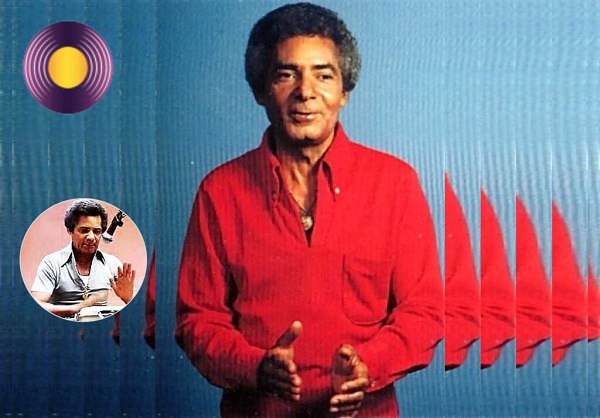
Virgilio Martí participated as aVirgilio Martí participated as a vocalist in the Grupo Folklórico Experimental Newyorkino in which he composed the song “Cuba Linda”

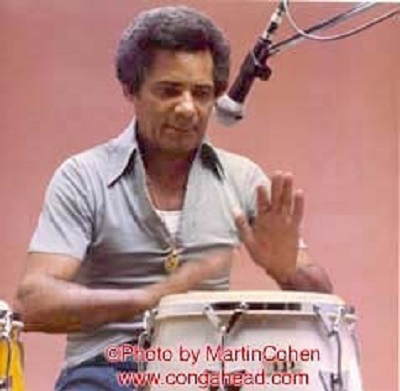
Virgilio Martí, born in the year 1919 Havana, Cuba, Rino Rumbero, Singer, Composer, Arranger, Percussionist, Actor and Orchestra Director, well known since the late 40’s, especially as a guaguancó singer.

He began touring the world in 1949 and met his later wife in 1960 in Peru.

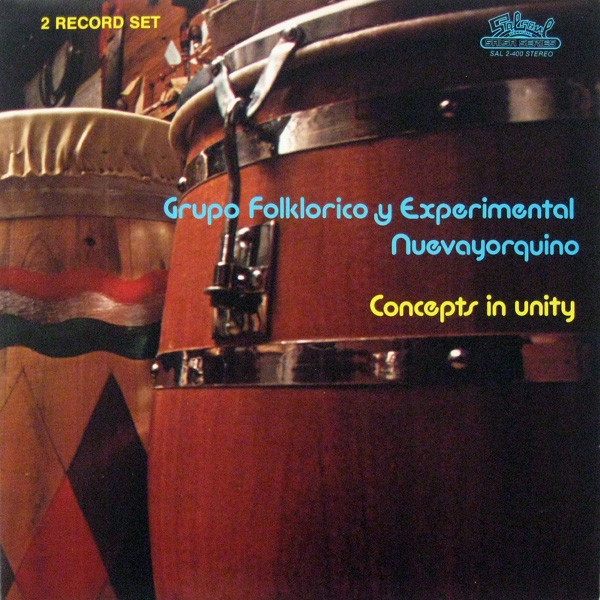
Virgilio Martí participated as a vocalist in the Grupo Folklórico Experimental Newyorkino in which he composed the song "Cuba Linda".
Virgilio Martí participated as a vocalist in the Grupo Folklórico Experimental Newyorkino in which he composed the song “Cuba Linda”.

That same year, he settled in New York, participating in the local scene.

He participated in the LP “Patato y Totico” in 1967, he also participated with his brother Eloy Martí, in a Quintet accompanied by Gene Golden, for the year 1979.

Israel López (Cachao), Arsenio Rodríguez, Héctor Cadavieco, Francisco Valdés, Papaíto, Tony Mayari and Mario Cadavieco also worked on that album.

He participated in the “Grupo Folklórico Experimental Newyorkino”, where he was their vocalist and percussionist, in 1975. During his stay with them, he composed the song “Cuba Linda”.

"Grupo Folklórico Experimental Newyorkino, donde fue vocalista y percusionista del mismo, en 1975
“Grupo Folklórico Experimental Newyorkino, donde fue vocalista y percusionista del mismo, en 1975

Another work of Martí of great remembrance is the album entitled: “Saludando A Los Rumberos”, published by the Caimán label in the early 80’s and in which the Cuban acts as vocalist and main star. In it, Martí is involved with talents such as: Tony Cofresí, Andy and Jerry González, Yomo Toro, Paquito Pastor, Ray Romero, Claudio Roditti and Ignacio Berroa, among others.

Virgilio Martí, born 1919 Havana, Cuba.

“Iya Modapue”, constitutes in itself, a guaguancó with open rumba being at the same time the favorite number of the “Grupo Folklórico”, and even the first groove that was recorded.

The levels of experimentation and the freedom to unload several rhythms in a single musical performance are the factors producing the attraction of the musicians for “Iya Modupue” (which means Thank You Mother).

The vocal part is in the hands of Virgilio Martí. The trumpet of “Chocolate” Armenteros, the trombones of José Rodríguez and Reinaldo Jorge, the flute of Gonzalo Fernández and the percussion of Frankie Rodríguez stand out.

“Se Me Olvidó” – a bolero by Lolita de la Colina – but adapted in guaguancó to the style of the Grupo Folklórico, which, by the way, turned out to be the piece with the greatest radio airplay in the tropical environment and, therefore, the one that would open the doors to the group. The song was performed by Virgilio Martí, who also plays the congas. In “Se Me Olvidó”, the violin of Cuban Alfredo de la Fe, the quinto of Julito Collazo, the street redoblante of Jerry González and a Mexican marimba played by Andy González in counterpoint to the notes of the double bass, also played by Andy, stand out.

Here it is worth mentioning that Alfredo de la Fe is a virtuoso violinist and among his many performances, I remember his work with Eddie Palmieri, Larry Harlow (the wonderful Jew), the Fania All-Stars and the avant-garde Típica 73.

In the early 80’s he formed a band with brothers Andy and Jerry González, and percussionist Ignacio Berroa.

It is worth mentioning Virgilio Martí’s 1985 performance in the film by Cuban filmmaker León Ichaso entitled: “Crossover Dreams” (Sueños truncados). In it, the Havana native plays the role of “Cheo Babalú” and sings the song “Llora Timbero”.

In this film production made in New York City, the actor Rubén Blades, who plays the role of “Rudy Veloz”, also participates. There they sing the song “Todos Vuelven”.

In 1990, he contributed to the “Soundtrack” of the movie Azúcar Amarga.

He maintained a great skill in converting songs from other genres into rumba arrangements. We can mention the adaptation of the song by Brazilian composer Jorge Ben, “Más Que Nada”, which appears on the LP with Patato y Totico. Martí died on October 17, 1995. (Tom Data “Facebook”)

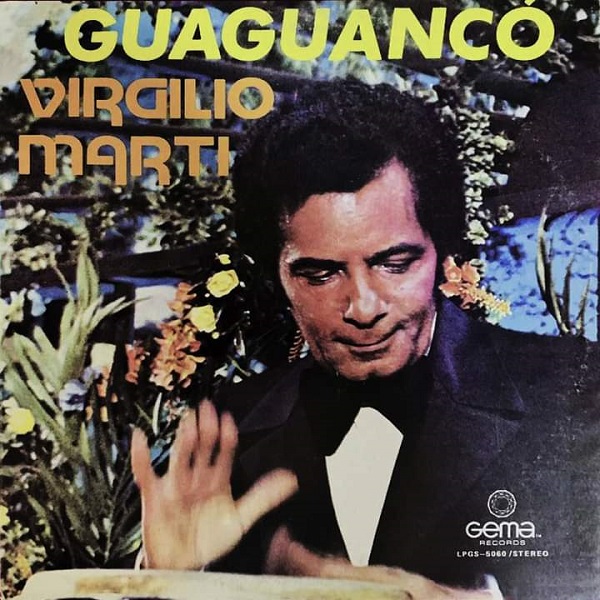
Virgilio Marti - Guaguanco (1979)
Virgilio Marti – Guaguanco (1979)

Virgilio Marti – Guaguanco (1979)

Tracks:

  1. Amanecer (Armando Manzanero)
  2. Todos vuelven (Rafael Otero)
  3. A tus pies (D.R.) (Agustin Lara)
  4. My childhood (Laureano Martinez)
  5. Saluting the rumberos (Manolo Albo)
  6. I’m going to divide it (R. Livi)
  7. Acanapon (D.R.)
  8. The little handkerchief (D.R.)
  9. Que susto (Virgilio Marti)
  10. Odiame (Rafael Otero)

Information realized (June 1, 2024)

Sources:

DiscoGS

Spotify Virgilio Marti

Virgilio Marti Youtube

Also Read: Justo Betancourt Querol Cuban sonero and singer famous for his interpretation of the song “Pa’ bravo yo”

The Cuban pianist Chucho Váldes launched his new album “Jazz Batá 2”

East Coast – New York – New Jersey

Chucho Váldes. This virtuous pianist, composer and arranger brings to the music market the sequel of his album Jazz Batá after four decades

Musicians: Chucho Valdés (Piano), Yelsy Heredia (Double Bass) – Dreiser Durruthy (Voice and Superaron Batá) & Yaroldy Abreu Robles (Congas & Percussion) – and Guest artist: Regina Carter (Violin). 

After (Forty Six) 46 years, Chucho Valdés returns to the musical arena with Jazz Batá 2, an album that once again shows the creativity of this imposing Cuban music artist.

Jazz Batá 2 of the Latin Jazz genre contains eight tracks recorded in two and a half days in the John Lee´s studio in New Jersey. This ten-handed CD is the mix of classical music from West Africa impregnated in the piano solos with the Jazz Batá (sacred drums, with the hourglass shape of the Yoruba religion in Cuba), Violin, Bass and Percussion that give a sound with personality, rhythmic and lyrical at the same time.

The band in small format for this record production has four supporting musicians: Yaroldy Abreu Robles, Dreiser Durruthy Bombalé, Yelsy Heredia and Regina Carter. The first three belong to the Guantánamo region and they have deep roots in the Cuban musical culture, in addition to having studied at the conservatory.

Chucho Váldes
Chucho Váldes

Likewise and it should also be noted that Chucho Valdés, influential star of the contemporary Afro-Cuban Jazz, established this experimental format to three instruments (Piano, Bass and Batá) for the first time in 1972 with his album Jazz Batá.

The Jazz Batá 2‘s first single, “100 Años de Bebo”, is an unpublished melody whose composition was by Bebo and it’s a tribute to his centenary. This Danzón-Mambo is played by Regina Carter with an introduction and a “Tumbao” final, added by Chucho Valdés.

The tracks: “Obatalá”, “Oshun” and “El Güije” are themes inspired by the Yoruba religion of Cuba (Santería). Oshun is a Haitian merengue with the incursion of the violin, while El Güije is based on a rhythm created by the percussionist Dreiser Durruthy, and he presents it by speaking the sacred language, derived from the Afro-Cuban religion known as “palo”.

“Son XXI” from this new studio album, is a song by the deceased Cuban composer, Enrique Ubieta, who played with rhythmic clusters of Jazz. The first time that Chucho Valdés interpreted this theme was in the Musical Theater of Havana at the beginning of the 60s.

“Luces” is the first Bolero that incorporates Congas and Batá, as well as the harmonies of increased chords. And the single seven: “Chucho Valdés humor” is a “Descarga”, built on a rhythmic three notes (G, B, and C). According to the Valdés’ Words, “It’s like a twister”.

Finally, the eighth track: “El Payaso” is a piano solo, dedicated to Maurice Ravel. This melody was composed by Chucho Valdés when he was a member of the Cuban Orchestra of Modern Music (Founder in 1967). “… I’m a bit avant-garde, I play Batá on the Piano …”, said Chucho Valdés .

With this record production, Chucho Valdés marks a new milestone in his career, a beginning with the record label: Mack Avenue Records, and a significant chapter of his past.

TRACKS:
  1. Obatalá
5. El humor de chucho
  1. Son XXI
6. 100 Años de Bebo
  1. Luces
7. El Güije
  1. Oshun
8. El payaso


Release: November 16th 2018

Label Record: Mack Avenue Records


Available NOW to download in the entire world!


For more information, please visit:

Web Site: https://www.valdeschucho.com/

Or Follow him for his Social Channel: https://www.facebook.com/valdes.chucho

For more information visit this social medias:

Facebook: https://www.facebook.com/valdes.chucho/?locale=es_LA 

Instagram: @chuchovaldesmusic

X (Twitter): https://x.com/chuchovaldes?lang=en&mx=2 

Spotify: https://open.spotify.com/artist/27mRThsZ9K1BYmz0rioxwp

La Puertorriqueña de Don Perignon presents her new recording work

Demostrando in time

With great enthusiasm, La Puertorriqueña de “Don Perignon” announces the release of its most transcendental recording production, entitled Demostrando a tiempo.

La Puertorriqueña de Don Perignon presents her new recording work

This release is a testament to more than forty-five years dedicated to music by the orchestra’s leader, Pedro Morales Cortijo, known artistically as “Don Perignon”. After overcoming health challenges,

“Don Perignon“, with renewed vigor, turns his attention to what he calls “an unprecedented chapter for the orchestra”.

And what better way to kick off this new phase than with the release of the album? Demostrando a tiempo, a title derived from Moncho Rivera’s composition arranged by Carlos García, adds a historical and significant nuance to the recording.

“Don Perignon” highlights the importance of paying tribute to the pioneers of Puerto Rican popular music, Ismael Rivera and Rafael Cortijo, underlining the crucial influence they had on the musical movement to which their group belongs:

“Moncho represents Ismael Rivera and I represent Rafael Cortijo. They (Cortijo and Rivera) were the ones who created what we do, that’s why we decided to pay tribute to these two greats of our music”.

The album opens with a composition by Sammy Ayala, entitled ‘Dilo tú’, previously recorded by Rafael Cortijo’s Combo. This song, on this occasion, includes an exquisite timbal solo by Perignon.

This, which is La Puertorriqueña’s thirteenth production, rescues two jewels of the prolific composer Catalino “Tite” Curet Alonso.

The first, ‘Aquí estoy con mi son’, was first recorded in 1991 by singer Frankie Hernández under the production of Bobby Valentín. The second, ‘Soy tu ley’, was initially recorded in bolero time by Cheo Feliciano, the so-called “Señor sentimiento”. For this occasion, the skillful musical arrangement -in salsa key- by Ramón Sánchez gives the song a fascinating nuance, by integrating it with the distinctive sonority of the orchestra.

Pedro Luis Morales Cortijo, is the first name of the Puerto Rican timbalero and musical director

It should be noted that ‘Soy tu ley’ was destined to be part of the album Música Maestro (2014), but like fine wines, it waited patiently until it reached its optimum point to be released.

Highlighting the musical diversity, the album includes ‘A quién iré’, a composition by singer-songwriter Héctor Olmo, which at Perignon’s request, seeks to express gratitude to God for all that He has given him, including what the orchestra leader calls “a new opportunity in life”.

“I have my way of thanking God, but not through a message as fine as that,” says the director of La Puertorriqueña, considering that the song written by Olmo came to answer questions about everything he has achieved musically, despite the many obstacles that have come his way. ‘A quién iré’ features the arrangement by Juan C. Cardona, the vocal participation of Alex D’ Castro and the creation of the chorus by “Don Perignon” himself.

Demostrando a tiempo includes the songs: ‘Sácala a bailar’ (composition and vocals by José Karlo Ribot, with a tasty arrangement by Andy Guzmán who incorporates a forceful piano solo); ‘Sin brújula’ (lyrics by Harold Aguirre, musical arrangement by Ramón Sánchez, sung by Joe González); ‘La clave me lleva’, ‘Como si me amaras’ and ‘Afinque, cadencia y sabor’ (title that lists the distinctive adjectives of La Puertorriqueña).

Demostrando a tiempo reflects the dedication and unparalleled talent of “Don Perignon” and La Puertorriqueña.

Through a careful fusion of tradition and innovation showcased in the repertoire, this album represents the invaluable contribution of the orchestra, captivating dancers around the world with its vibrant and distinctive sound.

La Puertorriqueña de “Don Perignon” invites the public to immerse themselves in this unique musical experience and enjoy Demostrando a tiempo, available on digital platforms and select music stores.

La Puertorriqueña de “Don Perignon” invites the public to immerse themselves in this unique musical experience and enjoy Demostrando a tiempo, available on digital platforms and select music stores.

Don’t miss the opportunity to experience the magic of Demostrando on time. Join us on this exciting musical journey.

About Don Perignon:

Pedro Luis Morales Cortijo, is the first name of the Puerto Rican timbalero and musical director known internationally as “Don Perignon,” whose musical career began in 1974.

Don Perignon y la Puetorriqueña

“Don Perignon” comes from a family with a long musical tradition, which includes his cousin, Rafael Cortijo.

After having stood out as musical director for singers Andy Montañez and Lalo Rodríguez, in 1989. “Don Perignon” released his first production La buena vida, which featured the participation of Victor Manuelle. This album was followed by Festival de soneros (1990) and Subiendo (1992).

In his career “Don Perignon” with his orchestra, La Puertorriqueña, has released thirteen recordings, in which figures such as Gilberto Santa Rosa, Víctor Manuelle, Luisito Carrión, Oswaldo Román, Pedro Brull, Josué Rosado, Rico Walker, José Alberto “El Canario” and Hermán Olivera, among others, have collaborated.

Bella Martinez Puerto Rico


Also Read: Déjalo, the latest track by Pedro Conga y su Orquesta Internacional

  • « Go to Previous Page
  • Page 1
  • Interim pages omitted …
  • Page 3
  • Page 4
  • Page 5
  • Page 6
  • Page 7
  • Interim pages omitted …
  • Page 30
  • Go to Next Page »

International Salsa Magazine (ISM) is a monthly publication about Salsa activities around the world, that has been publishing since 2007. It is a world network of volunteers coordinated by ISM Magazine. We are working to strengthen all the events by working together.