• Skip to primary navigation
  • Skip to main content

International Salsa Magazine

  • Home
  • Previous editions
    • 2025
      • ISM / November 2025
      • ISM / October 2025
      • ISM / September 2025
      • ISM / August 2025
      • ISM / July 2025
      • ISM / June 2025
      • ISM / May2025
      • ISM / April 2025
      • ISM / March 2025
      • ISM / February 2025
      • ISM / January 2025
    • 2024
      • ISM / December 2024
      • ISM / November 2024
      • ISM / October 2024
      • ISM / September 2024
      • ISM / August 2024
      • ISM / July 2024
      • ISM / June 2024
      • ISM / May 2024
      • ISM / April 2024
      • ISM / March 2024
      • ISM / February 2024
      • ISM / January 2024
    • 2023
      • ISM / December 2023
      • ISM / November 2023
      • ISM / October 2023
      • ISM – September 2023
      • ISM – August 2023
      • ISM July 2023
      • ISM Edition June 2023
      • ISM – May 2023
      • ISM April 2023
      • ISM March 2023
      • ISM February 2023
      • ISM January 2023
    • 2022
      • ISM December 2022
      • ISM November 2022
      • ISM October 2022
      • ISM September 2022
      • ISM August 2022
      • ISM July 2022
      • ISM June 2022
      • ISM May 2022
      • ISM February 2022
      • ISM January 2022
    • 2021
      • ISM December 2021
      • ISM November 2021
      • ISM October – 2021
      • ISM September 2021
      • ISM August 2021
      • ISM July 2021
      • ISM May 2021
      • ISM April 2021
      • ISM June 2021
      • ISM March 2021
      • ISM February 2021
      • ISM January 2021
    • 2020
      • ISM December 2020
      • ISM November 2020
      • ISM October 2020
      • ISM September 2020
      • ISM August 2020
      • ISM July 2020
      • ISM June 2020
      • ISM May 2020
      • ISM April 2020
      • ISM March 2020
      • ISM February 2020
      • ISM January 2020
    • 2019
      • ISM December 2019
      • ISM November 2019
      • ISM October 2019
      • ISM Septembre 2019
      • ISM August 2019
      • ISM July 2019
      • ISM June 2019
      • ISM May 2019
      • ISM April 2019
      • ISM March 2019
      • ISM February 2019
      • ISM January 2019
    • 2018
      • ISM December 2018
      • ISM November 2018
      • ISM October 2018
      • ISM September 2018
      • ISM August 2018
      • ISM July 2018
      • ISM June 2018
      • ISM May 2018
      • ISM April 2018
      • ISM March 2018
      • ISM February 2018
      • ISM January 2018
    • 2017
      • ISM December 2017
      • ISM November 2017
      • ISM October 2017
      • ISM September 2017
      • ISM August 2017
      • ISM July 2017
      • ISM June 2017
      • ISM May 2017
      • ISM April 2017
  • Download Salsa App
    • Android
    • Apple
  • Spanish

Search Results for: Son

Anderson Quintero

North America / United State / California

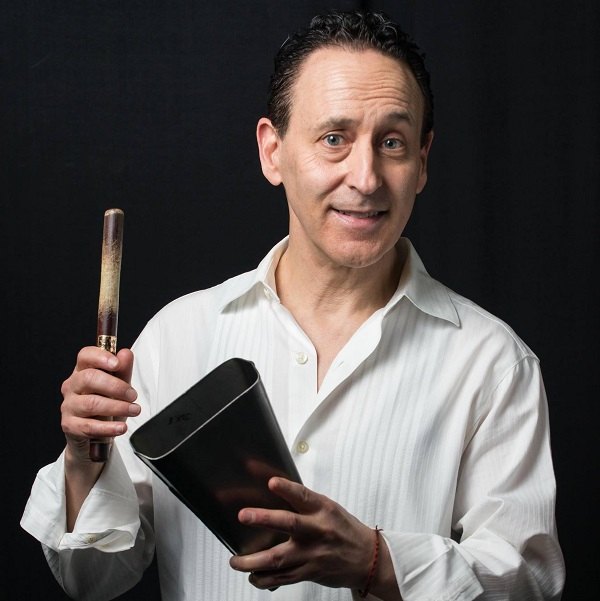
Anderson Quintero. The Multi Percussionist of relief generation in the Quintero Dynasty

Anderson Quintero began his musical career at the age of seven, when he joined Salserin, the only children’s Salsa orchestra visiting more than 10 countries.

Anderson Quintero
Anderson Quintero

Throughout his journey in this group, the young Anderson Quintero demonstrated the talent inherited from his father and the rest of his paternal family, who have been recognized as the greatest percussionists in Venezuela.

While in Salserin, Anderson Quintero became the official timbale player of the group, however he continued his developed on other percussion instruments.

This experience led him to visit about 20 countries, and record 5 musical productions.

Nevertheless, the talent that flowed through Quintero’s veins grew stronger with his studies in the Conservatory José Angel Lamas, along with lessons through which he discovered an interest for drumset.

Well-known musicians such as Vinnie Colaiuta, Tony Williams, Elvin Jones, Paul Wertico, Brian Blade, Robby Ameen, Jack Dejohnettee, and others, have influenced his musical career.

His talent on the drums eventually led him to join several rock bands in the city of Caracas, Venezuela.

During 2004 and 2005, Anderson Quintero was part of the band that accompanied Venezuelan singer/songwriter/Grammy Award Winner Franco de Vita on his tour “Mil y una Historias”, visiting more than 10 countries and garnering 2 Grammy nominations in 2006. That same year Quintero met up with two ex-band members of Salserin, Servando and Florentino, and joined their band “Enamorame”, playing drums and the timbales.

In mid-2006, Anderson Quintero moved to New York City, where he began to gain international recognition. Since then, he has performed with Jerry Rivera, Obie Bermudez, Louie Vega, Don Omar, Servando Y Florentino, Chino Y Nacho, Luisito Quintero Percussion Madness, Paloma San Basilio, Huascar Barradas , Aditus, Vanessa May, Kevin Jones, Tenth worlds, Sheila Charles (Ray Charles’ daughter), Emilly King, Taxi Amarillo, and Willie Colon’s bands, with whom he has traveled internationally.

Anderson worked on a musical about the life of the “Guarachera de América” Celia Cruz, in an Off-Broadway show.

He is a first-call session drummer in Venezuela and has recorded with the most important artist in that country in many different styles of music: pop, rock, folk, ethnic, latin, and jazz.

He’s also on tour with Venezuelan Trombon Ensamble, the best known trombone players in Venezuela. He recently joined the band of Spanish singer Paloma San Basilio, playing drums for their American tour.

In 2011 Quintero won a Grammy for Chino y Nacho’s album “mi nina bonita”.

He recently recorded drums on the album “punto ciego” by Venezuela’s progressive rock band LEXESTET and on “third element” by Luisito Quintero.

Anderson began 2014 touring with Frank Quintero and then joined the salsa orquestra “Los Adolescentes” for a tour around Mexico.

Currently he finds himself in the city of Los Angeles, California where he continues his musical career.


Soneros Birthdays Party

Soneros Birthdays Party

Omara Portuondo, Ismael Rivera, Jimmy Bosch, and Luisito Carrión celebrate their birthdays this month

October is filled with talent and it’s that in this month a hurricane of brilliant artists of the Salsero genre was born, who have captivated us and have shown their Gift before hundreds of audiences around the world. These Latin Stars have bathed us in SABOR with their lyrics and infected with joy with their melodies. It for that, this month we celebrate their births and dance to the rhythm of the applause towards them. Happy Birthday, Soneros!

Omara Portuondo (October 29, 1930)

Omara was born in La Habana (Cuba). Her first encounter with music was at a very early age. Just as in any other Cuban home, the future singer and her siblings grew up with the songs which her parents, for lack of a gramophone, sang to them. Those melodies, some of which still form part of her repertoire, were young Omara’s informal introduction to the world of music.

She and her sister Haydee sang well-known American group “Los Loquibambla” and their style, a Cubanised version of the Bossa Nova with touches of American jazz, was known as “Feeling”. In their radio debut, Omara was introduced as “Miss Omara Brown, the girlfriend of Feeling”.

“Magia Negra” was her debut record released in 1959. It combined Cuban music with American jazz and included versions of “That Old Black Magic” and “Caravan”, by Duke Ellington. Later she joined one of Cuba’s most important orchestras, La Orchestra Aragón, with which she recorded several albums, such as the one she did with Adalberto Álvarez in 1984 and “Palabras and Desafíos” on which she was accompanied by Chucho Valdés.

Omara Portuondo
Omara Portuondo

However, Omara Portuondo catapulted to her well-earned fame was in the mid-1990s when she collaborated in the recording sessions for Buena Vista Social Club on which she sang “Veinte Años”.

She was the star of the third launching of the Buena Vista Social Club released in 2000 and she toured Europe, traveled to Japan, and performed in the USA and Canada.

Omara went back to the studio to record her second solo album “Flor de Amor” (World Circuit), which was produced by Nick Gold and Alê Siqueira, signals a change in direction in her career: it is an album marked by a more subtle sound and a richness of texture. Portuondo brought in a mixture of Cuban and Brazilian musicians for this album, and it is this factor which influences the particular style of the music.

Omara returned to Europe in 2004 to promote this album, performing at such illustrious venues as the North Sea Jazz Festival, Marble Hill House in London, Olympia in Paris and the Concertgebouw in Amsterdam. “Flor de Amor” was nominated for a Grammy in the Best Traditional Tropical Record category and the 16th edition of the Billboard Latin Music Awards (2005); this album obtained the Tropical Record of the Year award.

Later, Omara released “Gracias”, the record that marks her sixtieth year in the music business and won the Latin Grammy Award for the Best Contemporary Tropical Album. It was a very special night as Omara was there to receive the prize in person and she also presented one of the awards, the first time that a Cuban artist has done this. The album was also later nominated for a Grammy in the Best Tropical Latin Album category.

After touring with the Orquesta Buena Vista Social Club in Europe during 2010, “the girlfriend of Feeling” released the latest recording, Omara & Chucho (Montuno Producciones) in spring 2011. 14 years after their last joint album, they reunite once again to continue unravelling the thread of their first joint project, and show us their talents in the simplest, most unclad manner on a context that enables them to lay emphasis on some of the features that been characteristic of their music at various stages in their careers.

Omara will also tour with the Orquesta Buena Vista Social Club later in Europe and the U.S.

Ismael Rivera (October 5, 1931 – May 13, 1987)

Puerto Rican singer and songwriter contributed to the dissemination of the island’s native rhythms such as the Bomba and Plena, and he was one of the first standard-bearers of the Salsero movement of the decade, the reason for he was called “El Sonero Mayor” and also known for others by the nickname “Maelo”.

In 1952 he was hired as a singer for the Lito Peña’s Orquesta Panamericana with which he became known and reaped his first hits: “La vieja en camisa”, “La sazón de la abuela” and the most popular “El charlatán”, a song in Plena rhythm that was widely heard through the Puerto Rico’s local radio stations.

Two years later he left this group to join the Combo de Cortijo with whom he popularized “El bombón de Elena” by Rafael Cepeda Atiles, and as well as performed on Puerto Rican television in the “El Show del Mediodía”.

At the end of the ‘50s, they were presenting their shows at the prestigious New York club Palladium Ballroom, where they contributed to making popular the tropical rhythms imported from the island with great hits such as “El negro bembón”, “Maquinó Landera”, “Tuntuneco ”, and others.

Ismael Rivera
Ismael Rivera

Ismael Rivera’s triumphant career was interrupted in 1962 for paying four years under the laws of Puerto Rico for possession of narcotics. Then, after recovering his freedom, Ismael formed his musical ensemble “Los Cachimbos” and immersed himself in the nascent Salsero movement to which he contributed two classics such as “Dime por qué” y “Mi negrita me espera”.

In the mid-70s “El Sonero Mayor” became the ambassador of Salsa throughout America, working for the record label of the genre Fania, and triumphing with emblematic songs such as “De todas maneras rosas”.

In his facet as a composer, he wrote very notable pieces such as “Besito de Coco” (famous song by Celiz Cruz), “El incomprendido”, “Arrecotín, arrecotán”, “El que no sufre no vive”, y “Mi libertad eres tú among many others.

In his last years, he suffered a throat cancer that caused him to lose his voice and he died as a result of a heart attack.  R.I.P MASTER!

Jimmy Bosch (October 18, 1959)

Jimmy Bosch was born in 1959 (New Jersey, U.S.). He is a world-renowned Trombonist, composer, singer, and bandleader in the world music genres. He has been performing professionally since age 13. Jimmy’s first two solo CDs, “Soneando Trombón” and “Salsa Dura” established him as the Ambassador of the Salsa Dura movement. He ignited this movement by combining old school quality salsa arrangements with a modern NY aggressive edge and socially conscious lyrics. “El Avión De La Salsa” demonstrates and solidifies his commitment to dancer centered music, while “A Millón” is the title of Jimmy’s 4th solo record released.

Jimmy Bosch
Jimmy Bosch

Appearing in over 100 recordings, Bosch “El Trombón Criollo de La Salsa” has garnered at least 10 Grammys and has toured with his orchestra, his sextet or as a solo artist, as well as with: Eddie Palmieri, Ruben Blades, Celia Cruz, Ray Barretto, Willie Colon, Manny Oquendo y Libre, FANIA Allstars, and the list goes on.

Jimmy has been featured throughout the world in major venues and festivals, including; Carnegie Hall, Lincoln Center (NYC), Celebrate Brooklyn (NYC), Montreal Jazz (Canada), Madison Square Garden (NYC), Sydney Opera House (Australia), Barranquijazz (Colombia), El Poliedro and Teresa Careña (Venezuela), and many other important places.

Luisito Carrión (OCTOBER 26, 1962)

A native of Arecibo in Puerto Rico, Luisito Carrión has been singing since he was 13 years old. He began his career as a Salsa artist with the Orquesta Kafe, Orquesta La Nativa and Grupo Concepto Latino.

In his first performances, he sang along with Celia Cruz, Adalberto Santiago, and Santitos Colón. Later on, he was a member of Salsa Fever together with Julio “Gunda” Merced, were several hits come from: “Renta de Amor” and “Señores ahí va Julián”. Afterward, he joined the Bobby Valentín Orchestra, where he sang songs, such as: “El Señor de las Señoras”, “Ramos de flores”, “El Gigoló”, “Tributo de Cali” and “Como lo hago yo”. In his evolutionary process, Luisito joined the Orquesta Don Perignon where he sang “La Fuga” and later with the Sonora Porceña, where he performed songs, such as “Yaré” and “A Comer Lechón”.

Luisito Carrión
Luisito Carrión

In 1997, he recorded with Roberto Roena y Su Apollo Sound “Mi música 1997”. At the end of the 90s, Carrión began his career as a soloist with the record company MP Records with Julio “Gunda” Mercéd and Rafael Bodo Torres, which led to hits, such as: “Sin tu amor”, “La Chica Más Popular”, “Nadie Como Tú”, “Porque”, “Amiga Mía”, “Muriendo”, “Como Ave Sin Rumbo” and “Para Ser Real”. Nowadays, Luisito Carrión is one of the best Puerto Rico’s Soneros bringing on “Histeriaaaa…” in his fans.

Musical director of VibraSÓN Jake Jacobs is here

VibraSÓN is a musical group that makes life in the state of California, specifically in the San Francisco Bay Area, which has become one of the best options for festivals and nightclubs seeking fresh sounds in terms of salsa, swing and Latin music in general.    

I was pleased to know about this great orchestra, its members and sound thanks to its work at Charley’s LG, Bar and Nightclub where Eduardo Guilarte, our editor, was working and directing everything related to the lineups and musical programming for Latin music nights, more specifically on Tuesdays.   

When I made contact, the person who was kind enough to reply was musical director of VibraSÓN. Jake Jacobs, who at the same time works as a producer, percussionist and backing vocalist.    

Jake Jacobs from VibraSÓN
Jake Jacobs, musical director of VibraSON

Talk with Jake Jacobs from the group VibraSÓN   

Jake Jacobs comes from a very interesting background. His first contact with music took place with his father and uncle, both of whom were professional musicians, but Jake says he has always been interested in this world.   

He studied classical piano and music theory at the University of Illinois and took some jazz piano lessons in his passage through the University of California. During these years, the musical director spent roughly 13 hours a day practicing with this instrument to master it as well as possible. 

With time, he became interested in Latin music and dance, which also led him to take dance classes at university. With that knowledge acquired up to that moment, he went to visit New York and his trip coincided with the National Puerto Rican Day Parade (an event held annually in New York and other states to celebrate Puerto Rico and its traditions in the United States). 

This event inspired Jake so much that he returned to the Bay Area with the intention to switch his dance classes to salsa classes. He became so good that he began to teach salsa dance classes himself to numerous students interested in learning these rhythms, something he has been done for over 20 years in widely recognized clubs and dance studios.   

He used to provide these classes twice a week at the Cocomo Club, which was very important at the time and attracted more than 600 people every day. When bands performed live, the future leader of VibraSÓN began to know musicians, who, in turn, gave him music lessons and his first opportunities to play in bands.   


Jake Jacobs with VibraSÓN
Jake Jacobs and the other members of VibraSÓN

Apprenticeships and classes with great musicians 

One of the most impressive credentials that Jake can have is to have studied with some of the best musicians in the San Francisco Bay Area such as Edgardo Cambón, Karl Perazzo, Michael Spiro, Louie Romero, among others. 

Evidently, all these luminaries have taught the producer much of what he knows and applies today, but he ensures that it was not easy to learn from so many ”teachers” at the same time, in both dancing and music performance.   

Ensures that some of the most important things he learned have to do with technique and tips to be applied such as how to play the drums, the notes at the right times, silences and much more. 

He points out that they all taught him valuable and important things, which are still very useful to this day. One of those great lessons was to practice and practice until he achieved the sounds he wanted, especially in Latin music. 

VibraSÓN 

Finally, in 2014, Jake decided it was time to put into practice everything he learned and create his own musical group with his own original details. This is how VibraSÓN came about.    

The origin of his band’s name came from Luis Morales, one of its members. It is based on vibraphone, which is not widely used by the orchestras from the San Francisco Bay Area, but by the dancers and by this new group in their performances. As for the end of the name, it comes from ”son cubano”, a typical genre of the island Jake likes very much.   

Although Club Cocomo unfortunately closed the following year, that didn’t stop VibraSÓN from making its way and becoming one of the most demanded groups in the Bay Area in recent years.   

One of the things that Jake thinks makes his group unique is that there are very few people who use the vibraphone and, due to his training as a dancer, he is always looking to make the most appropriate music for that part of the audience for whom dancing is very important.   

Jake Jacobs in San Francisco
Jake Jacobs performing on stage in San Francisco

How Jake and VibraSÓN read the crowd   

For Jake and the rest of the band, it is very important to read the crowd and see how people react to the music they play at any time. They pay a lot of attention to the dance floor to see what works and what doesn’t with the people they play for that night.   

Having played at clubs such as Charley’s, Bar Fluxus, La Peña Cultural, The Cigar Bar and Space 500, they have prepared a very generous repertoire for each performance. Just as they have written original music, they have also dedicated themselves to perform covers of the most buzzed-about artists in recent times in certain contexts, something that worked out for several orchestras when they need to draw on these resources to entertain the audience.   

This wide repertoire that they now enjoy is what has allowed them to make diverse shows with lots of variety so that those present never get bored, even if they usually go to the same place.   

Another thing they tend to do is add new arrangements and change genres to the covers they do so that they do not sound exactly like the originals and they can inject some of their essence, even if they are not songs written or sung by them originally. ”Even if they are covers, we always try to add our original arrangements so that the dancers enjoy them that much more” said Jake.   

They have also learned to connect with the audience and know what the dancers and the general public want in order to give them exactly what they want. And they did not learn this overnight, but have observed in detail what other orchestras do to imitate what is good and useful.    

Jake and VibraSÓN on stage
VibraSÓN performing on stage

Tours and future plans of VibraSÓN

At the end of the interesting talk, Jake told us that, for now, they only plan to record new music and other activities that are comfortable for all the members, since many of the musicians are in other orchestras and record for other people, so it is too complicated for them to tour with VibraSÓN. In addition to that, several of them have small children to care for, so it is impossible for them to travel for a long time.   

He is so considerate because he always tries to keep the same members and preserve the unity of the group above all else. It has worked for them, as they have managed to made a name, which will continue to become popular over time. 

Read also: Fausto Cuevas Y La Moderna in International Salsa Magazine 

Roberto Rodríguez was a Cuban trumpet player and composer, author of Ray Barreto’s hit song “Que viva la Música” (Long Live Music)

Roberto Reimundo Rodríguez (Cienfuegos, January 23, 1936 – April 18, 1988), was a Cuban trumpeter and composer, who belonged to Ray Barreto’s orchestra, which he would later leave to belong to Fania All-Stars, as lead trumpet player.

Roberto is the author of Ray Barreto’s hit “Que viva la música”.

Roberto was born in 1938, in Cienfuegos (Cuba). He began his musical career at the age of 12, in his native province; cradle of the world famous Orquesta Aragón.


Roberto Rodríguez
Roberto Rodríguez

From an early age he participated in “Las Comparsas de Cuba” and with the orchestra “La Unión Fraternal de Cienfuegos”.

In 1955, he emigrated to the United States and in 1957 he married Nancy Zayas, with whom he had three sons: Roberto Jr., William and Richard.

While growing as an artist, Roberto co-founded the orchestra “Los Jóvenes Estrellas de Cuba” with his long-time friend Ernie Stairs. He later moved on to Wilfredo Figueroa’s orchestra and “Ritmo Swing”.

In 1965, Roberto was recommended to Ray Barreto by Eddie Martinez. Eddie was a pianist for both the TataVazquez and Ray Barretto orchestras.

After listening to Roberto, Ray Barretto recognized that he was in contract with Vivar, one of his former colleagues and musicians, and brought him on board. Roberto remained in Ray’s orchestra for 11 years.

His performance as first trumpet soloist was extraordinary. While in Ray’s orchestra, Roberto composed several famous songs such as: “Yo Soy La Candela”, “Fuego y Pa’Lante”, “Invitación al Son”, “Cienfuegos, Perla del Sur”, “Se Traba”, “El Tiempo lo Dirá”, “O’Elefante”, and the worldwide hit: “Que Viva la Música”.

Roberto Rodríguez
Que viva la música

In 1972, Roberto became a member of the Fania All-Stars as first trumpet and soloist. The documentary “Our Latin Thing” launched Roberto along with the other members of the All-Stars to international fame.

Our Latin Thing

On August 26, 1971 New York City gave birth to a sound that would change Latin music forever. That night at the renowned Cheetah nightclub, the Fania All Stars took the stage with their unique sound that echoed across all borders and reached every country. Fania Records re-releases “Our Latin Thing” on DVD, the film that sparked the salsa movement of the seventies.

Roberto Rodríguez
Our Latin Thing (Nuestra Cosa)

From the concert came a double LP entitled “Live At The Cheetah” and the historic film “Our Latin Thing”. Its director, Leon Gast, documented the events at the Cheetah with the addition of footage of the musicians in the recording studio and scenes of New York’s Spanish Harlem.

The 40th anniversary edition of “Our Latin Thing” includes a DVD with the remastered film, and two CDs with the music from the film and some additional tracks, which can be purchased on the label’s official website.

In 1975, Ray decided to take a turn towards a new musical facet and Roberto became part of the group “Los Kimbos”.

Roberto Rodríguez
Los Kimbos

Two years later, in 1977, Roberto joined the charanga band “Orquesta Broadway”. In this group he not only excelled as a trumpet soloist but also as a vocalist. Here he composed new hits, including: “No Se Va a Poder” and “Como Nueva York no Hay”.

In 1982, Roberto decided to assist his sons in their desire to continue their musical journey and produced the album: “Roberto Rodríguez Presenta a Los Rodríguez”, under the “Combo Records” label.

Roberto Rodrígue
Roberto Rodríguez Presenta a Los Rodríguez

In 1983, Roberto joined the “Los Rodriguez” Orchestra, to perform with his sons Roberto Jr (trumpet player) and Willie (bass player).

His health deteriorated in early 1988, and he finally passed away in April of that year, victim of skin cancer. His son Roberto Rodriguez Jr. followed in his footsteps and has excelled in salsa orchestras in New York.

 Roberto Rodríguez was a Cuban trumpet player and composer

Read Also: Miguelito Cuní recognized among the best soneros of Cuba


Sony Music’s new talent, Luis Figueroa, is unstoppable…And, he is a salsa singer

The singer and songwriter of Puerto Rican descent, Luis Figueroa, is one of Sony Music’s most recent acquisitions. Most recently… La Luz is now available on all digital platforms. Listen to it HERE.

Imparable el nuevo talento de Sony Music, Luis Figueroa

He is not new to the music scene. He brings experience from other sounds and has been nominated twice for a Latin Grammy. For Luis Figueroa, the recently signed Sony Music talent, success in the salsa sound is already assured.

Proof of this is that he has already performed on the most important salsa stage in the world, during the 39th edition of the National Salsa Day at the Hiram Bithorn Stadium in San Juan, Puerto Rico.  The salsa public is betting on him, and Sony Music seems to know it.

He says he has not come to the salsa scene to change anything. He claims “to have come to make a new chapter in what salsa is and to leave my essence within what inspired me and motivated me to be a salsa artist…Learning from the pioneers, who also had resistance in their time. In spite of that, salsa erotica and salsa romántica came to stay.”

He started early on and decided to combine his academic and artistic work. From his academic application, he approached music as a business, which is very encouraging for the tropical genres.

El cantante y compositor de ascendencia boricua, Luis Figueroa

Luis confesses that it was always clear to him that he “was not going to be just another one of the horrendous stories that have been heard about the contractual environment”.

For the singer and composer it was “extremely important to know the business side of the music business, to know the contractual aspect and to protect my copyrights”.

Luis is an artist with his sights set high and his feet on the ground.  He is a humanistic and transparent person, allowing the positive in every story to prevail. He has been very judicious in applying the advice that more experienced artists offer him in good faith.

He recalls that when he was barely eight or nine years old, Gilberto Santa Rosa told him, “you have to keep studying because we are tired of brute singers, you know?” Luis took that statement almost as an instruction.  Eventually, he managed to get accepted into Berklee College of Music, from where he graduated with a concentration in Song Writing and Music Business.

As soon as he finished college, the invitations and requests from different producers began.

He came to Sony Music through Magnus with Marc Anthony’s endorsement, but he was polishing his songwriting skills with the band Magic. He says he was not fluent in Spanish at the time. However, his mother always instilled in him the obligation he owed to himself to keep his mother tongue, Spanish, alive.

Although he learned the structure and mechanics of songwriting in Los Angeles trying to keep the focus on both languages, he didn’t feel the confidence with Spanish that he had with English.

Nevertheless, his development as a songwriter flowed. Before signing with Sony Music, in 2018, he had the opportunity to position a single with Sebastian Yatra, spreading nothing more and nothing less than the urban pop hit, Por perro, which is from his audit.

Luis Figueroa y Bella Martinez  , Sony Music Latin

Today he reflects and understands that Por perro opened doors for him as a composer in both the American and Latin markets. Por perro has accumulated over 654 million views on YouTube and reached #16 on Billboard’s Latin Pop Songs chart. In addition, RIAA® certified it 4X-Platinum. And, the video went on to be nominated for Video of the Year at the 2019 HTV Heat Awards. Luis presented this single during Romeo Santos’ Golden Tour in stadiums throughout Latin America to sold-out crowds.

Says the artist, “We came to Sony at a time when we were not signed as a salsa artist. We were still finding our style, we wanted to go more on the urban pop side. We did songs for Janis and Sebastián Yatra and Manuel Turizo. I think from sharing with different songwriters on the Latin side I was able to develop more with my ideas and now I have the ability to be able to compose songs completely my own. It took me about four or five years to be able to generate that confidence to compose and to have the audacity to expose my inspiration.”

For Luis it was surprising that his interpretation of Hasta el sol de hoy was so well received.  For a moment he thought he was going to hear something like: “you’re crazy, like this is not what we want you to do”, but it was precisely that song one of the bases of the bridge that managed to unite the urban aspect to salsa.

With that hit, which is already a salsa classic, Luis Figueroa made the transition that turned him into a trend. With that song he continued to be known and received massive support. With that song he gained more confidence, not only in the compositions he was creating, but also strengthened his career within the salsa sound. Luis has nourished himself from other genres, refreshing and enriching salsa.

Luis Figueroa y Bella Martinez DNZ 2023

Salsa fans have long been calling for new injections of talent and suggesting new nuances. Luis seems to have picked up on those ideas, sharing new energy gained from his time in bachata, urban, romantic and pop.

I also find it fascinating that this recent salsa convert has made the long-awaited crossover from Spanish to English in reverse; that is, the innovative route from English to Spanish.  That reverse crossover gave Luis a clear understanding of the artistic route he is passionate about and which seems to be one in a continual evolutionary process.

Maybe that is the key, what made him one of the fastest growing exponents of salsa, of the so-called new generation.  He attributes this growth to the audacity to continue creating, which in turn has strengthened his roots in what he does: music. He reflects and affirms that: “seeing my friends take songs of mine, seeing them grow and seeing them be so successful gave me confidence in my pencil, as a composer on the Latin side, although it took me a while. Initially, I took the easy route; doing covers and interpretations of different songs, but I set out to focus on composing and I succeeded.

Before salsa it was bachata. The Caribbean rhythm was all around it.  When he was working with Romeo Santos, his life was all bachata. “I was living, sleeping, singing and speaking in the language of bachata music that inspired me a lot. That’s where my compositions began to stand out, while I was doing backing vocals for Romeo Santos and Juan Luis Guerra on certain songs. It was in that environment that he came into contact with my interpretation.”

However, his greatest inspiration is Jerry Rivera and he considers himself fortunate to have many mentors and several godfathers in salsa, including Johnny Rivera, whom he thanks for lending him a hand and his collaboration in various projects.

Artists such as Tito Allen, Marc Anthony’s musical director Angel Fernandez, Johnny Rivera and Ray Sepulveda have all been supportive. Songs like the one catapulted by the eternal daddy of salsa, Frankie Ruiz, Esta cobardía, and Borinquen -from the pen of Johnny Ortiz- in voice of Yolanda Rivera managed to tattoo themselves in his musical formation.

Two of the aforementioned referents, Tito Allen and Yolanda Rivera were performing on the same stage of the 39th edition of the National Zalsa Day, which was given by Luis Figueroa. For his part, the famous Borinquen composer, Johnny Ortiz, witnessed the great concert accompanied by his most loyal fans in the front row.

Other composers who have influenced Luis are: “The composer of Hasta el sol de hoy – Gustavo Márquez – and Omar Alfano, with whom I had the opportunity to share the stage in Panama when I went to share the stage with great musicians, opening a Marc Anthony concert”.

Luis says he doesn’t mind having the same blueprint of all the others who came before him, and adds: “if you see all my songs, they have to be four or five pregones. The songs from the times before were six minutes, five interludes, they were eight minutes long.” He says he has taken the basic structure to merge it with the modern one on the urban side of salsa. He assures to have adapted because the times require agility in the processes. Having refreshed the salsa scene is one of his great achievements, and by leaps and bounds, hand in hand with Sony Music Luis Figueroa reached the National Salsa Day, the most important salsa stage in the world.

Luis made it to the finish line. Of course, he can’t afford to relax his spirits in this competitive environment.  Nor can he afford to listen to criticism from detractors. His innovative spirit and the freshness of his pen make this salsa singer one of infinite possibilities and a forceful pace. From my corner, I will be supporting him, not only because of the clarity of what he is doing.

The public that follows salsa will support it because we all need salsa to do well. The coalition that we call salsa is now one of action and not complaints, because there is no Musical Productions, because there is no Fania, because everything has been changing, and now that the record companies have reduced their footprint, I affirm as a researcher, that there is nothing more true than the saying: “Nobody knows what he has until he loses it”.

I know that Luis is prepared for what is coming, and more. I know that he will continue to move forward like the snowball that continues to grow and as it moves, it becomes unstoppable. He has already reached the stage of the National Zalsa Day.  He is no longer an emerging artist, nor a new artist.  He arrived at the plaza by way of triumph.  Luis Figueroa is a fully-fledged salsa artist. What remains is for him to continue.

What’s next… For those who continue his unstoppable rise, the question is: What’s next? Luis Figueroa arrives with the album, Voy a ti, which includes the single, Bandido. We’ll keep an eye out for the release of what is sure to be another hit.

Chronology of an evolving salsero:

Awarded at the 2016 Premios Juventud for his version of Flor Pálida, performing with Marc Anthony.

In mid-2017, after being discovered through several videos uploaded on his YouTube page, Luis signed with Magnus Media, Marc Anthony’s entertainment company. His performance of Flor Pálida won him a Premio Juventud for Best Video Cover.

Combining his musical and acting abilities, Luis had a featured role in Telemundo’s acclaimed television series Guerra de idols. Along with Pedro Capó and Christian Pagan, he performed the series’ theme song, Tequila pa’la razón, presenting it live at the Billboard Latin Music Awards, 2017.

In 2018, he accompanied Romeo Santos as a vocalist on three of his international tours, including the world tour, Golden.

In 2019, he released his first single for Sony Music Latin, La Especialista, which reached #27 on the Billboard Latin Pop Airplay chart, remaining for 8 weeks, and the pre-release single from his debut album, Te Deseo, reached #24 on the Latin Pop Airplay chart, remaining 11 weeks on Billboard. La Especialista, boldly combines acoustic guitars and melodies that complement her voice.

Pandora named Luis to its Latin Artists to Watch 2020 music discovery playlist. That same year, Luis made Billboard’s list that consolidated 17 male Latin artists to be discovered during the forties. He was also named one of Billboard’s fastest rising Latin artists.

In July 2021 Luis scored his first #1 on Billboard with Hasta El Sol De Hoy, a track that also reached the top of the Mediabase and LATIN monitor charts. His follow-up single Si Tú Me Dices Ven became his second Top 10 hit, while Billboard chose Luis as part of its Latin Artist on the Rise series. Also in 2021, he was nominated for Best Pop Artist at the HTV Heat Latin Music Awards.

In 2022, Luis released his first salsa album. The production generated three consecutive Top 10 hits on the Billboard Tropical Airplay chart and earned him his first Latin GRAMMY Award nominations for “Best Salsa Album” and “Best Tropical Song”.

The album – self-titled Luis Figueroa – solidified his status as one of the salsa genre’s leading voices and rising stars. Luis was nominated for his first Premios Lo Nuestro in 2022 for Tropical Artist of the Year and Tropical Song of the Year for Hasta El Sol De Hoy.

Luis Figueroa has had a good year in 2023. In January he topped the Media Base – Tropical chart with his Latin GRAMMY® nominated song Fiesta Contigo, and was also nominated for three Premios Lo Nuestro Awards in the Tropical – Artist of the Year, Tropical – Song of the Year and Tropical – Album of the Year categories.

Bella Martinez  Sony Music Latin

By: Bella Martinez

bellamartínezescribe.com

Bella Martínez Writer, Researcher in Afro-Caribbean music.


Bella Martínez
Writer, Researcher in Afro-Caribbean music.


Read Also:  «Mambo Night in Miami Beach» celebra el centenario del natalicio de «El Inolvidable», nuestro Tito Rodríguez.

  • « Go to Previous Page
  • Page 1
  • Interim pages omitted …
  • Page 11
  • Page 12
  • Page 13
  • Page 14
  • Page 15
  • Interim pages omitted …
  • Page 247
  • Go to Next Page »

International Salsa Magazine (ISM) is a monthly publication about Salsa activities around the world, that has been publishing since 2007. It is a world network of volunteers coordinated by ISM Magazine. We are working to strengthen all the events by working together.