• Skip to primary navigation
  • Skip to main content

International Salsa Magazine

  • Home
  • Previous editions
    • 2025
      • ISM / November 2025
      • ISM / October 2025
      • ISM / September 2025
      • ISM / August 2025
      • ISM / July 2025
      • ISM / June 2025
      • ISM / May2025
      • ISM / April 2025
      • ISM / March 2025
      • ISM / February 2025
      • ISM / January 2025
    • 2024
      • ISM / December 2024
      • ISM / November 2024
      • ISM / October 2024
      • ISM / September 2024
      • ISM / August 2024
      • ISM / July 2024
      • ISM / June 2024
      • ISM / May 2024
      • ISM / April 2024
      • ISM / March 2024
      • ISM / February 2024
      • ISM / January 2024
    • 2023
      • ISM / December 2023
      • ISM / November 2023
      • ISM / October 2023
      • ISM – September 2023
      • ISM – August 2023
      • ISM July 2023
      • ISM Edition June 2023
      • ISM – May 2023
      • ISM April 2023
      • ISM March 2023
      • ISM February 2023
      • ISM January 2023
    • 2022
      • ISM December 2022
      • ISM November 2022
      • ISM October 2022
      • ISM September 2022
      • ISM August 2022
      • ISM July 2022
      • ISM June 2022
      • ISM May 2022
      • ISM February 2022
      • ISM January 2022
    • 2021
      • ISM December 2021
      • ISM November 2021
      • ISM October – 2021
      • ISM September 2021
      • ISM August 2021
      • ISM July 2021
      • ISM May 2021
      • ISM April 2021
      • ISM June 2021
      • ISM March 2021
      • ISM February 2021
      • ISM January 2021
    • 2020
      • ISM December 2020
      • ISM November 2020
      • ISM October 2020
      • ISM September 2020
      • ISM August 2020
      • ISM July 2020
      • ISM June 2020
      • ISM May 2020
      • ISM April 2020
      • ISM March 2020
      • ISM February 2020
      • ISM January 2020
    • 2019
      • ISM December 2019
      • ISM November 2019
      • ISM October 2019
      • ISM Septembre 2019
      • ISM August 2019
      • ISM July 2019
      • ISM June 2019
      • ISM May 2019
      • ISM April 2019
      • ISM March 2019
      • ISM February 2019
      • ISM January 2019
    • 2018
      • ISM December 2018
      • ISM November 2018
      • ISM October 2018
      • ISM September 2018
      • ISM August 2018
      • ISM July 2018
      • ISM June 2018
      • ISM May 2018
      • ISM April 2018
      • ISM March 2018
      • ISM February 2018
      • ISM January 2018
    • 2017
      • ISM December 2017
      • ISM November 2017
      • ISM October 2017
      • ISM September 2017
      • ISM August 2017
      • ISM July 2017
      • ISM June 2017
      • ISM May 2017
      • ISM April 2017
  • Download Salsa App
    • Android
    • Apple
  • Spanish

Search Results for: Son

Allyson Briggs ”La Rubia de La Salsa”

A little of her story

Allyson Briggs ”La Rubia de La Salsa” is a bandleader and singer who has earned a lot of recognition in recent years. Currently, this talented woman leads the Fleur Seule orchestra, whose main musical genres are salsa, jazz, swing and ballroom dancing.

Also known as ”The Glamorous Girl of Jazz” is able to sing in seven different languages and several of her covers have been written by artists such as Edith Piaf, Ella Fitzgerald, Louis Armstrong, Frank Sinatra, Marc Anthony, Héctor Lavoe, among others.

We feel very fortunate to have been able to interview Allyson, who has kindly agreed to tell us about her life and career so that readers of International Salsa Magazine can get to know her better.

Allyson Briggs ''La Rubia de La Salsa'' performing on stage
Allyson Briggs ”La Rubia de La Salsa” performing on stage

How she became interested in music

When we hit the subject of her childhood, Allyson told us that her parents always played classical music. ”We listened to a lot of the classics, big bands, swing, blues, rock and roll, jazz, opera, among other genres,” she said. That’s how her love for these styles began, but the case of Latin music was different.

Her taste for Latin music is because she is married to a Puerto Rican, so she feels her husband and her in-laws have influenced her to end up falling in love with salsa, Puerto Rican music and its culture in general.

This inclusion of Latin rhythms has made her Fleur Seule orchestra collect a lot of fans who simply want to dance to these genres and, some of them, remember their roots.

How she learned to sing in Spanish

Long before she learned Spanish, Allyson began to learn German, which she considers her second language. This interest came from the German roots in her family, whose past always seemed very interesting to her. The same happened with French, as the artist also has French ancestors.

In the case of Spanish, she had some kind of contact with the language at school, but its actual use began when she got married and had to communicate in that way at home. In addition to that, Allyson has a lot of friends in New York, who have helped her a lot to understand certain things about the language.

Allyson learned Spanish thanks to her Puerto Rican husband

Hispanic artists she likes the most are Héctor Lavoe, Rubén Blades, Celia Cruz and Javier Solis. As for covers, she commented that she always tries very hard to understand what a composer wants to say with his lyrics in order to make the interpretation as faithful as possible.

Why is she called ”La Rubia de La Salsa”?

The name ”La Rubia de La Salsa” was not invented by Allyson herself, but by some concertgoers when she sang at La Marqueta, Spanish Harlem. The point is that no one could pronounce Fleur Seule, so they opted for something that everyone could pronounce with no problem.

Upon hearing it for the first time, she realized that this nickname captured her essence perfectly due to her physique, her costumes and the type of music she makes. For the same reason, she is still called by that name to this day.

Fleur Seule

Allyson revealed that she chose the name ”Fleur Seule” for her orchestra in honor of the French language. In addition to that, it sounds unique and elegant to anyone who hears it.

As for the beginning of her orchestra, she told that she met a guitarist with whom she started doing some musical projects. This same person provided her with certain recommendations in terms of singing and even language, which were taken into account until she was able to assemble a complete group.

She chose the name ''Fleur Seule'' for her orchestra because it sounds elegant and unique
She chose the name ”Fleur Seule” for her orchestra because it sounds elegant and unique

Activity during and after the pandemic

Allyson told us that the pandemic gave her the opportunity to meet multiple people through social networks due to online concerts she offered twice a week. When things began to return to normal, there were many fans who told her that they got to know her music through digital platforms like Instagram and Facebook.

At the moment, she has some performances planned in Puerto Rico and the state of Florida after the success he had the last time she went to those places. He also mentioned that she would like to go to Colombia and Japan, as both countries are big salsa fans.

Read also: Producer, film director and actor Jess Thomas

Ever Zapata and the Son de Ébano Orchestra

Latin America / Colombia / Cali

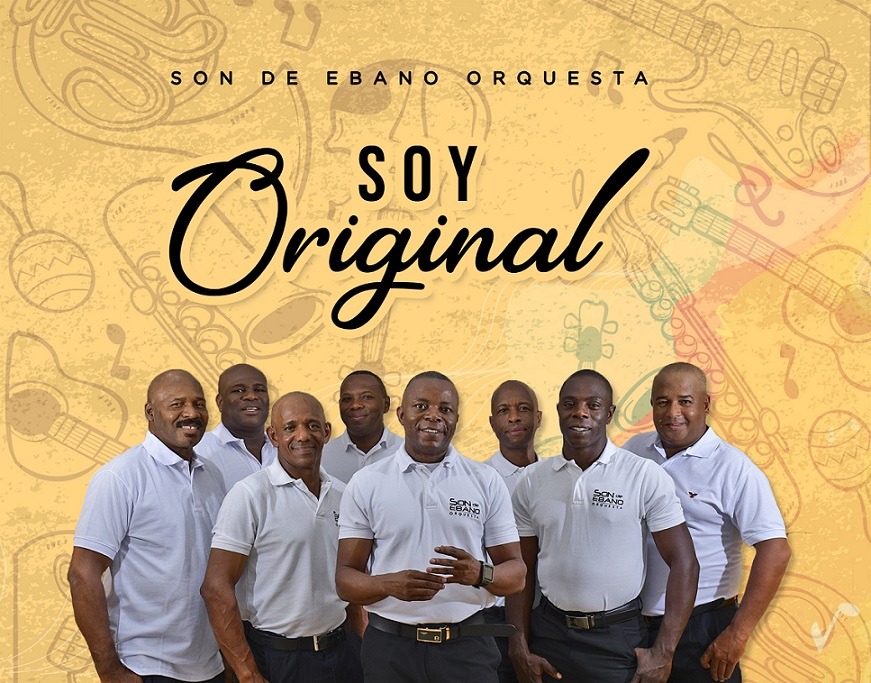
Get to know the Son de Ébano Orchestra

Son de Ébano, which was born in the municipalities of Puerto Tejada and Guachené Causa in the South of Colombia, its objective is that with its musical compositions it is possible to recover and maintain salsa de coup and salsa brava (both highly requested by the public).

Ever Zapata and the Son de Ébano Orchestra

The Son de Ébano orchestra has certain characteristics that identify it from other salsa orchestras, and the most important is that it preserves the rhythms and essences of its African roots fused with all the Latin flavor and cadence.

Among the members of the orchestra they have:

  • Manager
  • Sound Engineer
  • 1 Bass
  • 1 Conga drums
  • 3 Trompet
  • 1 Violin
  • 1 Bongo drum
  • 1 Tres
  • 1 Lead Voice
  • 1 Piano
  • 1 Trombone
  • 2 “Choirs”
  • 1 Timbal Drum
  • 1 Saxo

His best-known themes and/or songs are:

  • Vale un Millón
  • Pedro Rumba
  • Cuando Necesites
  • Layka
  • Como no voy  a quererte
  • Herencia africana

In 2018 they made a national tour (Colombia) and participated in an event of international stature without mentioning that they produced their hits with their unmistakable label “La Buena Salsa Ya Esta Cooking”. The cost of the Son de Ébano Orchestra show has a cost of:

At the national level

  • COP$9,000,000,000 (of which they receive 50% and transportation at the time of signing the contract, and the remaining 50% before going up to the stage, all tax free).
  • COP$4,500,000.00 (If it is the Ever Zapata show without the orchestra)

On an international level

  • The cost is US$5,000.00 with the orchestra, without the orchestra it is US$4,000.00
  • The cost may vary depending on the conditions of the show.

If you want to contact them to hold a concert and/or event:

Telephone: +57 311 45 6364 (his office in Cali-Colombia) / 1 – 829 965 3863 (his manager Charlie Perez).

Hindy & his Orchestra “The Sonera of the Moment”

Latin America / Buenos Aires / Argentina

Hindy Singer of the Latin genre, with a high and extensive artistic career in salsa.

Hindy born in San Félix – Edo. Bolívar, in the south east of Venezuela, in 27 years of artistic career, has enriched her musical career through her different participations as a soloist, chorister, singer-songwriter and producer.

Photo 1: Hindy dancing in a party festival

His beginnings in the Venezuelan salsa music elite are with a first place in the Record Report, at the hands of the international producer César Monges “Albóndiga” interpreting in his production “De Regreso a mi País” the version of the song A Flor de Piel del Venezuelan singer-songwriter Yordano Di Marzo, being in turn the leading voice of the Monges orchestra “Latín Girls” under the representation of Korta Records of the businessman “Negro Mendoza”.

Among some of the national and international celebrities with whom he has participated on different stages are: Cheo Feliciano, Viti Ruiz, Henry Fiol, Roberto Blades, Jr. Gonzáles, Paquito Guzmán, Richie Ray & Bobby Cruz, Gilberto S, Wladimir Lozano, Erick Franchesqui , Paquito Barón, Gustavo Rodríguez, Armando Manzanero, Pancho Céspedes, Gran Combo, S. Ponceña, Hildemaro, etc.

There is a long way to go, if it can be said, in the “short” artistic career of Hindy Castillo. His jump to internationalism was in 2007-08 to Europe, where he participated for two consecutive summers in different popular music orchestras touring more than 30 cities in Spain, and in France.

Photo 2: Hindy dancing in a party festival

His next artistic stop was in the state of Mexico.

Hindy was selected to assemble an international orchestra and travel from Venezuela to do a 3-month tour, which lasted another 13 months, the immediate rapport of all its members was a total success, profiling a true blunderbuss in the salsa environment. Veracruz.

She was also chosen to participate in the 1st Boca del Río salsa festival and, among other presentations, shared the stage with the great composer Armando Manzanero and Pancho Céspedes, extending her presentations to Guatemala City. Later, she travels to the capital, DF, invited by a local producer, who, seduced by her talent, encourages her with her orchestra to perform on different stages of the Aztec capital, capturing the taste of the Mexican music lover and salsa dancer, who turn to her presentations. to appreciate and enjoy his voice and the special talent of the soneo Salsoso.

Hindy musicalizes, produces her first songs and debuts as a singer-songwriter, under the executive production of her representative Carlos Zapata.

They record four songs sprinkled with romanticism, maintaining the bases of “hard” salsa and with novel musical variants.

Flamenco was one of these variants that played an important role in this product since its mixture with salsa resulted in a very genuine and fresh sound, from the pen of select Venezuelan arrangers. Graduated instructor of Popular Singing.

He has developed musical studies of: vocal technique, German singing method in Spain, Latin piano and modern harmony. He is currently doing his Bachelor of Music and Popular Singing at the José Ángel Lamas High School of Music. And preparatory studies of trombone. Caracas.

Photo 3: Hindy dancing in a party festival

As a musical producer, she manages the concepts “MujereSon & Boleros”, a musical of Boleros and sones, the social project Mujeres de la Escena, and her main project “Hindy & su Orquesta”, with a dynamic scene, full of salsa for all tastes, with the majestic quality that characterizes her performances.

Hindy is a talent full of energy, charisma, quality, with a Venezuelan flavor to export.

Luis “Papo” Marquez, Musician, singer, songwriter and producer

North America / Miami / Florida

This son of music, born on December 18, 1972, in the Pinar del Río Cuba Province, was raised between notes and chords that led him to be the artist he is today, known as Luis “Papo” Marquez, and considered a complete musician: trumpeter, composer, arranger, singer and music producer.

Luis Papo Márquez in the studio

As a child, he contemplated music as his environment, profession and way of life, thanks to his family who instilled in him all the passion for art and provided him with the tools to develop his knowledge. He began his trumpet studies at the age of 8 (eight) and, at 15 (fifteen), he already practiced professionally as a trumpet player in groups such as the Bella Mar Orchestra, Grupo Cumbre, musical grouping Los Trimmers, Grupo Íreme and Ricardo Hechemendía, in Pinar del Río and Havana.

Luis Papo Márquez
Luis Papo Márquez

At 19 (nineteen) he emigrated with his family to Venezuela, a country that opened the doors for his artistic consolidation, where he managed to make art on a large scale with the execution of his instrument and took the first steps within the world of composition and production.

“In Cuba, love and passion for music through the trumpet was born from me, but it was in Venezuela where I had, for the first time, the opportunity to look closely at how the art of composition worked. Suddenly, I was sitting in front of a piano and reading music sheet, trying to understand how they worked and falling in love with the trade. ” LPM

the equalizer equipment

This is how he started a successful career, thanks to his perseverance and permanent study, having the opportunity to play his trumpet with Venezuelan orchestras such as Mauricio Silva, Erick Franchesky, Naty and his Orchestra, Biella Da Costa, Ilan Chester, Sergio Pérez, Porfi Jimenez , Alfredo Naranjo, Orlando Poleo, Los Incorregibles, Mulato, Repicao and Guaco.

He continues forging his path and arrives in Miami, where he expands his international path with artists such as Jon Secada, Bacilos, Willy Chirino, Oscar D ‘León, Juan Gabriel, Gilberto Santa Rosa, Jerry Rivera, Celia Cruz, Cheo Feliciano, Chayanne, José Luís Quintana “Changuito”, Jose Alberto “El Canario”, Víctor Manuel, among others, with whom he has the opportunity to present himself as a trumpeter and in some cases, as arranger and producer.

Luis Papo Márquez playing trumpet

One of his biggest recognitions has been the delivery of an American Grammy Award for best music producer with the album “Son del Alma” by Willy Chirino; however, for LPM, the recognitions come day by day with the opportunity to make the music that moves and elevates them in their personal and artistic satisfaction.

Luis Papo Márquez defines himself as a “citizen of the world” born in Cuba and with a Cuban-Venezuelan heart. Work and discipline are his pillars to get ahead and his greatest passion will always be “creating music that makes the world move”.

Participation as Trumpeter and Arranger: Jon Secada, Bacilos, Willy Chirino, Juan Gabriel, Gilberto Santa Rosa, Jerry Rivera, Celia Cruz, Guaco, Cheo Feliciano, Chayanne, Edwin Bonilla, Luis Enrique, Victor Manuel, Rafael “El Pollo” Brito, Oscar D´León.

Primogénito Luis Papo Márquez

Record Productions:

  • Son del Alma (The rhythm of the soul). Willy Chirino. 2004. Grammy winner.
  • De corazon a corazon (From heart to heart). Team VIP. Luis Papo Marquez. 2007
  • Wireless Telegraphy. José Luis Quintana “Changuito”. 2007
  • Puedes volar (You can fly). Luis Papo Marquez. 2011
  • Arturo Sandoval tribute. 2016
  • Cuban Añejo. 2017
  • Firstborn. 2019

Jay Ruiz, singer-songwriter, From the Sultana del Oeste, Mayagüez – Puerto Rico

North American / Puerto Rico / Puerto Rico 

Jay Ruiz is the stage name of Jonathan Camacho Ruiz, a singer-songwriter born in La Sultana del Oeste, Mayagüez, but raised in the Pueblo de Rincón neighborhood, the westernmost municipality of La Isla Del Encanto.

Jay Ruiz Photo
Jay Ruiz Photo

Among his ancestors, Jay Ruiz, highlights his paternal grandfather Antonio Camacho who was a musician and troubadour, in his native Rincón.

Jay Ruiz’s musical beginnings date back to his short 5 years, when he sang in the choir of the Presbyterian church he attended. However, he would later become involved in sports, which would keep him away from music until he was 11 years old, when at the middle school where he was studying, the teacher promoted him as a soloist in a 24-member choir group.

Jay Ruiz and his team

He also stands out as a percussionist, performing skillfully on the bongo, the congas and the drums; instruments that he would learn to play by ear when he was 8 years old.

When he turned 12, the guitar and the bass would be the instruments that would captivate him and to which he would dedicate his time.

When he turned 15, he decided to form his own Christian music group: this is how the New Creation group was born, in which he developed as a drummer and singer.

A year later, while he was a member of the baseball team that represented Puerto Rico, he was about to be signed by the University of Cleveland, but in the process he was diagnosed with neck and throat cancer.

Jay Ruiz photo
Jay Ruiz photo

He traveled to Maryland to undergo exhaustive examinations at the John Hopkins Hospital, the same ones that would determine that he would undergo six months of chemotherapy and subsequent radiotherapy, treatments that he would receive at the San Jorge Children’s Hospital (Santurce, Puerto Rico).

Before the radiation treatment he was warned that he would lose 85% of his vocal abilities, however, the story was different: August 12, 2001, he would finish the treatment for his illness and five days later, for his birthday, he meets in his town -Rincón- to the entire community in a musical activity in which he would play, sing and give testimony of his case.

Jay Ruiz
Jay Ruiz

Thinking about his future, he studies at the Interamerican University, San Germán Campus, where he obtains a bachelor’s degree as a Physical Education teacher for children with disabilities.

The illness of his father, who lived in New York, forces him to cross the pond to take care of him, until his death, five years later.

In 2011 he returned to Puerto Rico, and enrolled in the Ponce Paramedical College at the Mayagüez Medical Center, to continue studying Physiotherapy, however, he became involved again in music participating in the famous franchise IDOL PUERTO RICO, ranking among the 32 last finalists. He continues his academic life and at the same time, works as a chef in a restaurant, a situation that would lead him to serve a musical entrepreneur based in New Jersey (United States) who was visiting the island, and with whom he would start a friendly relationship first, that would turn into work a few months later, when the businessman invited him for an audition in the neighboring municipality of Cabo Rojo.

Jay Ruiz boards the flight

After that meeting, in 2014, Jay Ruiz would pack his bags again to settle in Newark (New Jersey, USA) from where he would launch his career as a performer of the bachata genre, and that he would have on the songs “Ven A Mí , Girl” and “Culpables” two singles of wide diffusion and consideration in the international radio circuits, to the point of having disputed with the last mentioned cut, the category of Favorite Tropical Song of the Latin American Music Awards between great personalities of the music like Víctor Manuelle, Prince Royce and Gente de Zona (feat. Marc Anthony).

Jay Ruiz
Jay Ruiz

In 2017 he becomes independent, returns to Puerto Rico and decides to promote his career, but this time as a salsero, recording the single “Lo Sé”, of his own, under the production of maestro Nino Segarra.

Two years later, he brings us this new single, of which he is also the author, both of the lyrics and the melody.

Jay Ruiz
Jay Ruiz

The following staff participate in this single:

Lyrics, Melody & Interpretation: Jay Ruiz

Arrangement: Ceferino Caban

Complete Percussion: Rafael “Tito” de Gracia

Bass: Alexis Perez

Trumpets: Luis Aquino

Trombones: Jorge Dobal

Choirs: Norberto Vélez Curbelo, David Carrero & Ceferino Caban

Piano & Keyboards: Ceferino Caban

Mastering: Esteban Piñero

Jay Ruiz
Jay Ruiz

  • « Go to Previous Page
  • Page 1
  • Interim pages omitted …
  • Page 12
  • Page 13
  • Page 14
  • Page 15
  • Page 16
  • Interim pages omitted …
  • Page 247
  • Go to Next Page »

International Salsa Magazine (ISM) is a monthly publication about Salsa activities around the world, that has been publishing since 2007. It is a world network of volunteers coordinated by ISM Magazine. We are working to strengthen all the events by working together.