• Skip to primary navigation
  • Skip to main content

International Salsa Magazine

  • Home
  • Previous editions
    • 2025
      • ISM / November 2025
      • ISM / October 2025
      • ISM / September 2025
      • ISM / August 2025
      • ISM / July 2025
      • ISM / June 2025
      • ISM / May2025
      • ISM / April 2025
      • ISM / March 2025
      • ISM / February 2025
      • ISM / January 2025
    • 2024
      • ISM / December 2024
      • ISM / November 2024
      • ISM / October 2024
      • ISM / September 2024
      • ISM / August 2024
      • ISM / July 2024
      • ISM / June 2024
      • ISM / May 2024
      • ISM / April 2024
      • ISM / March 2024
      • ISM / February 2024
      • ISM / January 2024
    • 2023
      • ISM / December 2023
      • ISM / November 2023
      • ISM / October 2023
      • ISM – September 2023
      • ISM – August 2023
      • ISM July 2023
      • ISM Edition June 2023
      • ISM – May 2023
      • ISM April 2023
      • ISM March 2023
      • ISM February 2023
      • ISM January 2023
    • 2022
      • ISM December 2022
      • ISM November 2022
      • ISM October 2022
      • ISM September 2022
      • ISM August 2022
      • ISM July 2022
      • ISM June 2022
      • ISM May 2022
      • ISM February 2022
      • ISM January 2022
    • 2021
      • ISM December 2021
      • ISM November 2021
      • ISM October – 2021
      • ISM September 2021
      • ISM August 2021
      • ISM July 2021
      • ISM May 2021
      • ISM April 2021
      • ISM June 2021
      • ISM March 2021
      • ISM February 2021
      • ISM January 2021
    • 2020
      • ISM December 2020
      • ISM November 2020
      • ISM October 2020
      • ISM September 2020
      • ISM August 2020
      • ISM July 2020
      • ISM June 2020
      • ISM May 2020
      • ISM April 2020
      • ISM March 2020
      • ISM February 2020
      • ISM January 2020
    • 2019
      • ISM December 2019
      • ISM November 2019
      • ISM October 2019
      • ISM Septembre 2019
      • ISM August 2019
      • ISM July 2019
      • ISM June 2019
      • ISM May 2019
      • ISM April 2019
      • ISM March 2019
      • ISM February 2019
      • ISM January 2019
    • 2018
      • ISM December 2018
      • ISM November 2018
      • ISM October 2018
      • ISM September 2018
      • ISM August 2018
      • ISM July 2018
      • ISM June 2018
      • ISM May 2018
      • ISM April 2018
      • ISM March 2018
      • ISM February 2018
      • ISM January 2018
    • 2017
      • ISM December 2017
      • ISM November 2017
      • ISM October 2017
      • ISM September 2017
      • ISM August 2017
      • ISM July 2017
      • ISM June 2017
      • ISM May 2017
      • ISM April 2017
  • Download Salsa App
    • Android
    • Apple
  • Spanish

Search Results for: Son

Miguelito Cuní recognized among the best soneros of Cuba

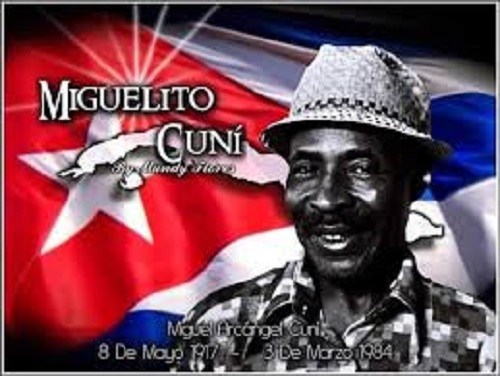
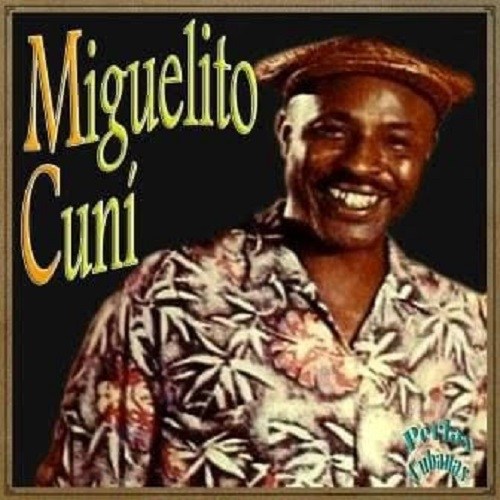
Miguelito Cuní. Pinareño recognized among the best soneros of Cuba, who shared the stage with Benny Moré, Arsenio Rodríguez, Félix Chapotín, Richard Egües, Enrique Jorrín, among others.

Miguel Arcángel Conill, better known as Miguelito Cuní (Pinar del Río, May 8, 1917 – Havana, March 3, 1984), was a Cuban music singer. He was one of the emblematic voices of Cuban son in the 1940s and 1960s.
He was born in Pinar del Río, the westernmost province of the island of Cuba, into a humble family.

Miguelito Cuní Pinareño reconocido entre los mejores soneros de Cuba

During his school days he dedicated himself to the exercise of minor trades to help support the family. In 1932, at the age of fifteen, he began as a vocalist in the group “Los Carameleros”.
Soon after, he was the vocalist of Septeto Lira, Septeto Caridad and other groups in his province.
In 1938, already in Havana, he joined Arsenio Rodríguez’s group, and also worked actively with the orchestras “Melodías del 40” and Arcaño y sus Maravillas, making recordings and performing live and on the radio.

Miguelito Cuní
Miguelito Cuní

During the forties he developed an intense artistic life, he lived two years in Panama and in 1949 he settled in New York, as director of the orchestra of trumpeter Félix Chappottín.

He worked with Cuban music icons such as Beny Moré and in 1956 he traveled to Caracas to work with the “Bárbaro del Ritmo” with the group “La Tribu”. In 1960 he returned to New York, where he made several presentations, including the famous “Palladium”.

He returned to Cuba in 1966 where he founded his own group.
He participated in the film “Nosotros, la música” and other documentaries.

Some of the melodies that reached popularity in his voice were Con maña se rompe, No hay amor sin caridad, Viejo Socarrón, Nos estamos alejando, Canallón, Quimbombó, Yo sí como candela, Ay qué Canuto, Ya tú ves campeón, Cuento na’ ma, Mi son, mi son, mi son, mi son, Alto Songo, Canto al monte, Cuchillo para la piña cubana, Sacando palo del monte, Camina y prende el fogón, Rompe Saragüey, Convergencia, La protesta de Baraguá, Todos bailan con la guajira, Cárdenas, Guachinango, El carbonero, among others, most of them recorded with the group Chappottín y sus Estrellas, a group with which he achieved great projection and in which he sang until his death.

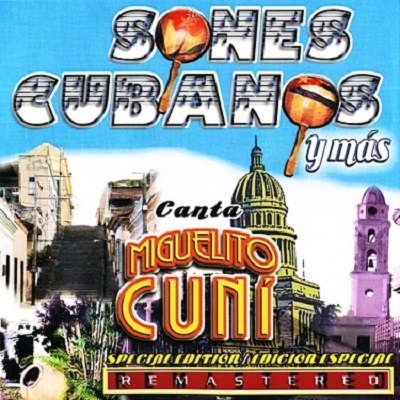
Sones Cubanos con Miguelito Cuni

In his last recording he interpreted the bolero “Lágrima” from the long-playing record entitled “De nuevo Arcaño”. His last trip abroad was to Mexico in 1982.

Composer

Besides being a singer, he ventured into the world of musical composition, of his authorship are cited: Congo africano, Ay mamita!, Batanga africana, A bailar con la guajira.
Sones montunos from the late 1950’s, the boleros: Lloró Changó, Toque santo, Las ansias mías, A ti, Benny Moré.
And the guaracha “Esto no se ve”, among other titles.

He died in Havana on March 3, 1984, three months after his dear friend and companion of countless days, Félix Chapotín, who had passed away on December 21, 1983.

Tribute

Miguelito Cuní was admired by all those who knew him, highlighted by all his friends and close ones as a man of excellent human qualities, in homage to his trajectory the Commander of the Revolution, Juan Almeida composed the lyrics “Este son homenaje”, which was interpreted by the singer-songwriter Pablo Milanés.
In the artistic field, he deserved the recognition of his colleagues and thousands of admirers, and in the personal field, those who treated him remember him as a man of impeccable words and good speech, Miguelito Cuní was a true Creole gentleman.

Source: Ecured

Interview with Colombian singer-songwriter Potty Lozano

Conversation with Potty

It is a great honor for us to announce that we have spoken with the talented and prodigious Colombian singer and songwriter Potty Lozano, better known as Lozano, who had the kindness of spending a few minutes of his time to talk about his story, his former groups, his release as a solo artist, his current projects and much more.

Here are the most important details of the nice chat we had about the most interesting aspects of his career.

Potty Lozano singing on stage

Arrival in the United States

Potty has been living in the United States for over 30 years to further advance his career, which began in his native Colombia. That same year in which she came to the United States, the Kambaro Orchestra, a group where she participated, won the ”Congo de Oro” prize in the category of ”New Orchestra Of The Year”. The aforementioned award is one of the most important in Colombia and is given as part of of the world famous Carnivals of Barranquilla.

The reason why he left his native country is that he wanted to look for new airs and go international as a romantic salsa artist, something that would be extremely complicated if he continued to live in the same place. Thanks to the hard work of the artist, he managed to sign with the record label FONOVISA/MUSIVISA and turn his situation around.

It was the beginning of very successful years, touring Mexico and across the entire European Union and constant professional growth as time progressed.

When did you decide to go solo?

Lozano has said that it was precisely the award he won with the Kambaro Orchestra which motivated him to make progress in other areas of the music field. Another of his main motivations was the success of his song with the Cachaco Orchestra ”Si Tú Supieras”, which led him to continue making romantic salsa for a few more years under the label FONOVISA until the cessation of his contract with this record company. ”That’s when I decided to make some changes in my independent musical life with my own style, have the power to decide, choose songs to please myself and be free to make fusions between Latin Jazz, Bosa, Bolero Jazz and some Caribbean fusions” said the artist.

Potty Lozano next to songwriter and musician Francisco Zumaque

When asked about the best time for an artist to pursue a solo career, he replied that artists gradually mature both musically and personally, leadings them to the point where they feel ready to take that important step and decide that there is a high probability of success. ”There is a click or reset in your senses and you do what you think you have to do, but the important thing is to get it right”, he added.

Differences between commercial salsa and non-commercial salsa

Regarding this important issue, the singer-songwriter replied as follows: ”I love traditional salsa and it is the basis of everything that follows. I am from that generation, but I also grew up in an atmosphere of jazz, bosa, bolero, Colombian street genres and a lot of American pop music, so my brain mixes all that set of rhythms and fuses them in several ideas presented in workshops with my music producers. That’s why I don’t make COMMERCIAL radio music, which every day is more disposable and meaningless, my target has always been cultural, music with soul, harmony, intelligence and possitive messages and effects, but above all, pleasant the ear as music should be”.

He also pointed out that he mixes these genres according to his own musical tastes and the music he listened to when he was a child. All of this with the support from the members of his work team, who are on the same page, although they contribute their own ideas.

Potty Lozano during an interview

”Aquel Loco Miami”

In terms of his latest single ”Aquel Loco Miami”, he told us that ”it is the preamble to a CD in which we are working on, whch is also full of melting pots and rhythms such as salsa jazz, a little conventional salsa with fused touches and more modern salsa using fusions”.

Aquel Loco Miami is a song penned by BRAULIO, a famous Spanish singer and songwriter who is allowing me to record several of his songs. It is a chachachá song where there is no apology to the crime or what happened in Miami in the 70s/80s/90s. It’s just to remind the new generations that negativity can also bring positive things and Miami was in his time the Mecca of Rumba and enjoyment and, despite the violence there was space room for fun”-

Read also: Almost two years of Leon Gast’s departure to another plane

Multi-Percussionist Carlos Navarro and his Son Y Clave Orchestra

Who is Carlos Navarro?

There have been many celebrities, orchestras, groups of all genres who played their part in the salsa cultural movement in the United States, but we cannot deny that bandleader Carlos Navarro and his Son Y Clave Orchestra played a very important role, since they achieved many goals in the Latin music scene in California, specifically in Los Angeles.

Carlos Navarro was a child of the couple formed by Rafael Navarro and Maria De Jesus Velasquez de Navarro, being at the same time the brother of Alexis Enrique (the famous singer Cherry Navarro), Manuel, Rene, Lelys and Audy. The whole family decided to move to Caracas, the parish of El Valle, where all the children continued their studies.

The first one to start an artistic career at a very young age was his older brother Alexis, who would later be known as Cherry Navarro in the artistic field. Carlos followed the same steps and also dedicates himself to music, but focused on salsa, mambo, merengue, and Latin jazz.

Producer, bandleader, percussionist and singer Carlos Navarro

Las Versalles

In the early 80’s, specifically in 1983, the artist served as co-founder and percussionist in one of the first and most important orchestras in Los Angeles, California, with styles of Salsa, Guaguancó, Merengue, cha cha chá, and Latin Jazz.

This group was called Las Versalles and hired many musicians based in the same city. Here you can see some of the main members and their instruments, Güiro: Carlos Navarro and Jorge Luis Balmaseda, Vocalist, Piano, Arranger: Fito Foster, Vocalist, Guitar, Flute, and Arrangements: Niño Jesús, Bass: Geraldo Zuldo and Luis López, Trumpets: Carleton Smith and Robert Hernández, Trombo: Arturo Velazco, Violin: Gene Hugo, Congas: Humberto Hernández and José “Papo” Rodríguez, Timbales: Héctor Andrade and Edwin Rolland, Backing Vocals: Fitto Foster, Niño Jesús, Bobby Rivas, Jorge Luis Balmaseda and Bass in ‘’Cama Y Mesa’’: Cuco.

Famous singer Cherry Navarro, Carlos Navarro's brother
Famous singer Cherry Navarro, Carlos Navarro’s brother

Son Y Clave

In 1999, the producer, percussionist and singer founded the Son Y Clave Orchestra and became a very important group in the nightlife of Los Angeles and surrounding areas.

One of the most attractive things for spectators of the places where they perform is the ease with which they dance and execute choreography, which are highly contagious, fast and elegant at the same time.

This diversity of performance styles is another one of the many things that has led this orchestra to the summit. In the same way, they have participated in all kinds of festivals, congresses, concerts and much more. They also had an important participation in salsa nights at venues in Los Angeles and the Bay Area such as El Floridita, where they played with Son Y Clave every Monday, until Carlos had to leave for a while and left talented musician Johnny Polanco in charge.

They have been so popular in the last few years that they have managed to open for world famous bands such as the Rolling Stones, who counted on the talent of the orchestra to grace their performances in one of their most important tours.

All members of the Son Y Clave Orchestra

God & Salsa and more

They have also been involved in major film projects such as ”Almost A Woman”, whose director has a long-standing friendship with Navarro. They participated in both the promotional trailer and various parts of the film, especially where there are parties and dancing.

Kaplan was so pleased with Carlos’ work in ”Almost A Woman” that she decided to contact him again to work hand in hand on a project titled ”UNO” which is based on one of the most famous Latin American TV hosts, the famous Renny Ottolina. Once again, Son Y Clave will join forces with the renowned filmmaker to put music to ”UNO”.

”Almost A Woman” had a lot of repercussion at the time, but the film for which they became known in recent years was ”God & Salsa”. Carlos Navarro himself was the main responsible for composing much of the original music that was part of the soundtrack of the film. In addition, they were also present at the filming, displaying their great talent and dedication to the audience.

Currently, Navarro has a lot of contacts, friendships and dealings with other figures and producers of the stature of classical guitarist Yalil Guerra, with whom he has participated in multiple musical projects both with his orchestra and at the production level.

He has also shared the stage with important talents in Los Angeles such as Tito Nieves, Luis Barbarán, Guillermo Canales, Ernie Valenzuela, Melissa Campos, Roosevelt Córdova, among many others.

Carlos Navarro, Luis Conte, Jorge Valmaceda, and the rest of the Siva Orchestra

La Sonora Matancera musical congregation of long trajectory and its sound quality, is one of the most popular in the Caribbean island “Cuba”

It was founded in Matanzas in 1924 under the name of La Tuna Liberal.

Its first members were: Valentín Cané, director and tres player, Manuel Valera, guitar and second voice, Manuel Sánchez (Jimagua), timbal, Ismael Governa, cornetín, Pablo Vázquez Govín (Bubú), double bass, Domingo Medina, guitar, Ismael Goberna, cornetín, Julio Govín, guitar, José Manuel Valera, guitar, Juan Bautista Llopis, guitar.

In 1926 Carlos Manuel Díaz Alfonso (Caíto), falsetto voice and maracas, and Rogelio Martínez Díaz (El Gallego), guitar, joined the group and it adopted the name Sexteto Soprano.

On January 12, 1927, under the name of Estudiantina Sonora Matancera, they moved to Havana. In November of that year they recorded their first two recordings for the Victor label: Fuera, fuera, chino, by José Manuel Valera, and El porqué de tus ojos, by Valentín Cané.

With the definitive name of Conjunto Sonora Matancera, it began its transmissions on the radio station El Progreso Cubano (later Radio Progreso). At that time it appeared on Radio Atwater Kent; in 1932, at the suggestion of Rogelio Martínez Díaz, it took the name of Sonora Matancera, and began its performances in the Havana Sport dance academies, and later in Marte and Belona, and later became part of the cast of CMQ Radio. In 1935, trumpeter Calixto Leicea joined the group; in 1939, composer, pianist and orchestrator Severino Ramos, who gave the Sonora its distinctive sound with his orchestrations.

La Sonora Matancera congregación musical de larga trayectoria y su calidad sonora, es una de las más populares en la isla caribeña “Cuba”

In 1944 pianist Lino Frias and trumpeter Pedro Knight Caraballo joined the group, who with Calixto Leicea formed the most interesting trumpet duo in the history of Cuban ensembles; in 1945 singer Bienvenido Granda Aguilera; in 1948, Angel Alfonso Furias (Yiyo), tumbadora. At this time the Sonora Matancera was formed by Rogelio Martínez Díaz, director, guitarist and chorus; Pablo Vázquez Govín (Bubú), double bass; José del Rosario Chávez (Manteca), timbal; Ángel Alfonso Furias (Yiyo), tumbadora, who replaced Valentín Cané; Calixto Leicea, first trumpet; Pedro Knight Caraballo, second trumpet; Lino Frías, pianist; Carlos Manuel Díaz Alfonso (Caíto), falsetto voice and maracas; Bienvenido Granda, singer and claves; and Celia Cruz, who soon became the stellar singer we knew and the mainstay of the Sonora Matancera hits. Thus began a period that critics have called the golden age of the Sonora.

In 1950, with the advent of television, the Sonora Matancera was one of the first musical groups to perform on this medium. It also signed a contract with the Seeco record company, with whose recordings it made a name for itself in the international market. In 1952, Raimundo Elpidio Vázquez replaced his father, Pablo Vázquez, on double bass (when Rogelio Martínez Díaz died in 2001, he took over the leadership of the group).

In 1926, it changed its name to “Septeto Soprano”. That same year, Carlos M. Díaz “Caíto” accompanied Eugenio Pérez in the choir.

Later in 1927, on Caíto’s recommendation, Rogelio Martínez joined the group and the name of the group was changed to Estudiantina Sonora Matancera.

Sonora Matancera
Sonora Matancera

With a great desire to improve the group travels to Havana where they get in touch with the record company “RCA Victor” and make their first recording on January 12, 1928.

At the beginning of the thirties, the group began to adapt to the new rhythms that were appearing at that time as well as adapting new instruments, such as the grand piano, which was played for the first time in the group by Dámaso Pérez Prado, who years later would become the “King of the Mambo”.

But it was in 1935 when the group took the name La Sonora Matancera, and with this change it introduced a new trumpet player: Calixto Leicea, who replaced Ismael Goberna, who died a few months later due to health problems.

The unforgettable José Rosario Chávez “Manteca”, who replaced the resigned “Jimagua”, also joined the band. Humberto Cané joined the group playing the tres and his father Valentín Cané began playing the tumbadora.

In 1938, Dámaso Pérez Prado retired and left the vacant piano position to Severino Ramos, who soon after became the musical arranger of the group.

During the first years of the forties they made presentations in dance academies, cabarets and in Radio Progreso Cubano, they also included in their repertoire: guarachas, montunos.

On January 6, 1944, two musicians from Arsenio Rodriguez’s group joined the group: Lino Frias (author of the popular song Mata Siguaraya) who began to play the piano and Pedro Knight who became the second trumpet player of the Sonora Matancera.

In the month of December, Bienvenido Granda enters the band recommended as vocalist, being his first recording “La Ola Marina” by Virgilio González, and with him they sign a contract with the nascent record label Panart Records. Valentín Cané, Israel del Pino, Caíto and Humberto Cané made recordings with this label.

In the middle of 1946 the founder Valentín Cané suffers asthmatic problems that force him to leave the group, dying two years later. Before the group joined Panart Records, it recorded other songs for the “Varsity” label, without the name of the Sonora Matancera appearing on the labels, here the first version of “Se Formó la Rumbantela” by Pablo Cairo, “Tumba Colorá”, “El Cinto De Mi Sombrero”, Bienvenido Granda and Humberto Cané participated in these numbers.

El Regreo de La Sonora Matancera 2022 2023

Members

Trumpets: Calixto Leicea and Pedro Knight

Double Bass: Elpidio Vázquez, replacing his father Pablo Vázquez, “Bubu”.

Piano: Lino Frías

Timbales, Bongó and Campana: José Rosario Chávez “Manteca” Chávez

Tumbadora: Ángel Alfonso Furias “Yiyo”.

Guitar and Choir: Rogelio Martínez

Maracas and Chorus: Carlos Díaz Alonso “Caíto”.

Claves and Choir: Bienvenido Granda.

Last January 13, 2023 they turned 99 years old and are still going strong from generation to generation.

Source:

Enrrique “Culebra” Iriarte, Venezuelan pianist, arranger and orchestra conductor.

Bibliography: Ecured Cuba

La Sonora Matancera 

You can read: Carlos “Patato” Valdés one of the best percussionists in the history of Latin Jazz

Son Del Monte’s musical director and timbalero Manuel Rivera

Who is ”Manny”

Manuel ”Manny” Rivera is the musical director and timbalero of the Son Del Monte Orchestra. We had the great opportunity to have a friendly conversation with him to know in detail his beginnings, career, groups, role as musical director, among other things.

Manuel ''Manny'' Rivera tells us his interesting story
Manuel ”Manny” Rivera tells us his interesting story

Time in the Yambú Orchestra

After apologizing for his deficits in the Spanish language, he continued by thanking us for the opportunity to tell his story and describe his time in the Yambú Orchestra, which was the first group in which he could start developing his talents in the 70’s. ”what we wanted to do at that time was make a mix between jazz with typical music because the pianist, who was of African descent, was who wrote the music with musical director and bassist Ramón Rodríguez”. It is presumed that the pianist focused a lot on these genres because of his roots, but his colleagues were fine with it.

Although he loved jazz, Manuel began to notice that it was not very danceable for the audience, which is what caused him to become interested in charanga, a genre that was already very famous in New York City in those years. That’s how he decided to immerse himself in this set of rhythms because he liked to see people go to the dance floor and enjoy themselves.

He also liked Yambú’s style a lot, but felt he had to take a more accurate path for what he was feeling at the time.

Manuel Rivera performing on stage

Similarities of Son Del Monte with other jazz big bands and members

I was a bongo player, but I started playing timbales because they are widely used in charanga. What I was looking for was to do a similar thing to what Eddie Palmieri did with La Perfecta, who used trombones and a flute mixed with timbales to achieve a charanga sound” said Rivera on this subject. He also added that ”I also wanted to avoid monotony of charanga so I also started using trombones, violin and a flute. This is what I have baptized as chajunto, a mixture of charanga with the characteristics of an ensemble (conjunto in Spanish) ”.

He also pointed out that New York does not have an orchestra like his because he did not want to do the same thing that all groups of this kind do, but something different and novel. ”Son Del Monte is charanga with something more for the people, not only violin and flutes,” said the artist. ”I have three singers with three different styles and they are Puerto Rican Luis Ayala, Colombian Armando Son Giménez and Puerto Rican-Dominican Luisito Soto Junior,” he added.

The Son Del Monte Orchestra also features from the talent of flutist Mauricio Smith Junior, violinist Erick Salazar, trombonist Juanga Lakunza, trombonist Charlie García, bassist Bert Castro, conguero Joe González, pianist Andy Colón, among others. This is the group that has stuck by his side for more than six years in spite of the storms and they always perform together.

All members of the Son Del Monte Orchestra

Opinion on the academic training of musicians

Rivera was one of the best students at Harbor’s Conservatory of Music in Manhattan, New York and he thinks that institution had done so mucho good for folk music because of all the talent that graduated there. After studying there, he began to read percussion music and learned to play batá, tumbadora, Colombian rumba, guaguancó, yambú, and so on.

The musician stresses the importance of studying, as this knowledge helps to understand the clave, the moment to start playing an instrument, the chime, the reading of music, discipline and many more. Before this, Manuel played led by the spirit and sensations, but his teachers at the conservatory taught him to have the technical tools necessary for being even more professional.

What is more important, experience or studies?

”Definitely experience. I have seen many great artists learn to read music without going to a conservatory and a great example of that is Roberto Roena, who did not need that learning to be who he was. However, that is something that not everyone can do” said Manuel. I can also mention the case of Tito Rodriguez who was not a musician guided by the lyrics, but he knew very well what he wanted. These are some of the many examples of privileged artists who only needed accumulated experience to achieve wonders with their work”.

However, this does not mean studies are not important, as they can teach things that can be useful later on and under some circumstances.

Front cover of the Son Del Monte Orchestra's album ''Una Charanga Con Algo Más''
Front cover of the Son Del Monte Orchestra’s album ”Una Charanga Con Algo Más”

Covid-19

”The pandemic did not let us do anything on stage. The guys went to the studio from time to time or we met virtually, as we do now. It was so sad because there are many venues that have failed to open their doors again. Since the pandemic started, we have not seen as much activity in New York as it used to be before” expressed the artist sadly.

Also of concern to the musical director of the Son Del Monte Orchestra is that this situation has put many musicians out of work, at least in the industry. Active musical groups have very few members in the vast majority of the cases, contrary to his and the orchestra he conducts. He hopes that it will improve with time.

Read also: Founder of the Son Latino de Orlando Orchestra Carlos Rodríguez

  • « Go to Previous Page
  • Page 1
  • Interim pages omitted …
  • Page 14
  • Page 15
  • Page 16
  • Page 17
  • Page 18
  • Interim pages omitted …
  • Page 247
  • Go to Next Page »

International Salsa Magazine (ISM) is a monthly publication about Salsa activities around the world, that has been publishing since 2007. It is a world network of volunteers coordinated by ISM Magazine. We are working to strengthen all the events by working together.