• Skip to primary navigation
  • Skip to main content

International Salsa Magazine

  • Home
  • Previous editions
    • 2025
      • ISM / November 2025
      • ISM / October 2025
      • ISM / September 2025
      • ISM / August 2025
      • ISM / July 2025
      • ISM / June 2025
      • ISM / May2025
      • ISM / April 2025
      • ISM / March 2025
      • ISM / February 2025
      • ISM / January 2025
    • 2024
      • ISM / December 2024
      • ISM / November 2024
      • ISM / October 2024
      • ISM / September 2024
      • ISM / August 2024
      • ISM / July 2024
      • ISM / June 2024
      • ISM / May 2024
      • ISM / April 2024
      • ISM / March 2024
      • ISM / February 2024
      • ISM / January 2024
    • 2023
      • ISM / December 2023
      • ISM / November 2023
      • ISM / October 2023
      • ISM – September 2023
      • ISM – August 2023
      • ISM July 2023
      • ISM Edition June 2023
      • ISM – May 2023
      • ISM April 2023
      • ISM March 2023
      • ISM February 2023
      • ISM January 2023
    • 2022
      • ISM December 2022
      • ISM November 2022
      • ISM October 2022
      • ISM September 2022
      • ISM August 2022
      • ISM July 2022
      • ISM June 2022
      • ISM May 2022
      • ISM February 2022
      • ISM January 2022
    • 2021
      • ISM December 2021
      • ISM November 2021
      • ISM October – 2021
      • ISM September 2021
      • ISM August 2021
      • ISM July 2021
      • ISM May 2021
      • ISM April 2021
      • ISM June 2021
      • ISM March 2021
      • ISM February 2021
      • ISM January 2021
    • 2020
      • ISM December 2020
      • ISM November 2020
      • ISM October 2020
      • ISM September 2020
      • ISM August 2020
      • ISM July 2020
      • ISM June 2020
      • ISM May 2020
      • ISM April 2020
      • ISM March 2020
      • ISM February 2020
      • ISM January 2020
    • 2019
      • ISM December 2019
      • ISM November 2019
      • ISM October 2019
      • ISM Septembre 2019
      • ISM August 2019
      • ISM July 2019
      • ISM June 2019
      • ISM May 2019
      • ISM April 2019
      • ISM March 2019
      • ISM February 2019
      • ISM January 2019
    • 2018
      • ISM December 2018
      • ISM November 2018
      • ISM October 2018
      • ISM September 2018
      • ISM August 2018
      • ISM July 2018
      • ISM June 2018
      • ISM May 2018
      • ISM April 2018
      • ISM March 2018
      • ISM February 2018
      • ISM January 2018
    • 2017
      • ISM December 2017
      • ISM November 2017
      • ISM October 2017
      • ISM September 2017
      • ISM August 2017
      • ISM July 2017
      • ISM June 2017
      • ISM May 2017
      • ISM April 2017
  • Download Salsa App
    • Android
    • Apple
  • Spanish

Search Results for: Son

The salsa artisan who made the best cowbells and or timbales and bongo bells

The percussion artisan passed away in New York on June 31, 2017, he was the creator of the “JCR” Calixto “Cali” Rivera bells,

Cali was born in Puerto Rico and came to the United States in 1958. He was first an auto mechanic and years later started in instrument making. He was also a percussionist (he excelled for many years performing with Yomo Toro) and his father made guitars.

One of JCR’s peculiarities was that his instruments were not mass-produced but “handmade”, which is why Rivera was recognized as a reputable percussion artisan, standing out especially for the manufacture of bells, which were “the specialty of the house”.

The cowbell is a percussion musical instrument, it has the shape of a bell and is struck with wooden drumsticks. These can be made of copper, steel or other alloys.

Its use in music is very widespread and we can hear it in the folk music of the North Alpine as well as in the academic music and even in the pop and Latin music of our times.

One of the best manufacturers of cowbells is Calixto “Cali” Rivera who for more than 40 years has forged the metal to manufacture in his small workshop in the Bronx (JCR Percussion), about 10 to 12 pieces per week.

Since its creation, his instruments became a vital part of the recordings of both Salsa Dura and Salsa Suave, from the 70’s until the day of his death.

In the Bronx, there is a man who builds instruments for the great Latin percussionists of the world: Tito Puente, Eddie Montalvo, Giovanni Hidalgo, Bobby Sanabria.

He had no signs, no storefronts, no advertising of any kind, but people from all over the world call him for work.

After all, nothing sounds like one of his handmade cowbells.

Calixto “Cali” Rivera’s father was a guitar maker, and his son picked up the tradition of the craft.

But Cali gravitated to drums – he’s a timbale – and made congas, bongos and other percussion instruments.

These days, he specializes in high-quality cowbells of all kinds.

He is in his late 70s, with only his wife for administrative support, yet he cranks out dozens a week.

Jazz Night In America recently visited Rivera in his JCR percussion workshop to discover how, for nearly 40 years, he transformed strong metal into strong bells.

The Cencerro. What It Is, Origin, Types, Characteristics And How To Play It.

The cowbell is a small instrument which belongs to the family of hand percussion instruments, it is used in various styles of music including salsa and rarely in other genres of popular music. The cowbell is similar to the bell historically used by shepherds to keep track of the whereabouts of cows, hence its name.

Origin

Although the cowbell is currently found in musical contexts, its origin comes from the tracking of animals that roamed freely in the countryside. Likewise, to help identify the herd to which these animals belonged, the shepherds placed these campaigns around the animal’s neck.

As the animals moved in different parts, the ringing of the bell could be heard, which made it easier to know their whereabouts. Although the bells were used on various types of animals, they are typically referred to as “cowbells” due to their extensive use on livestock.
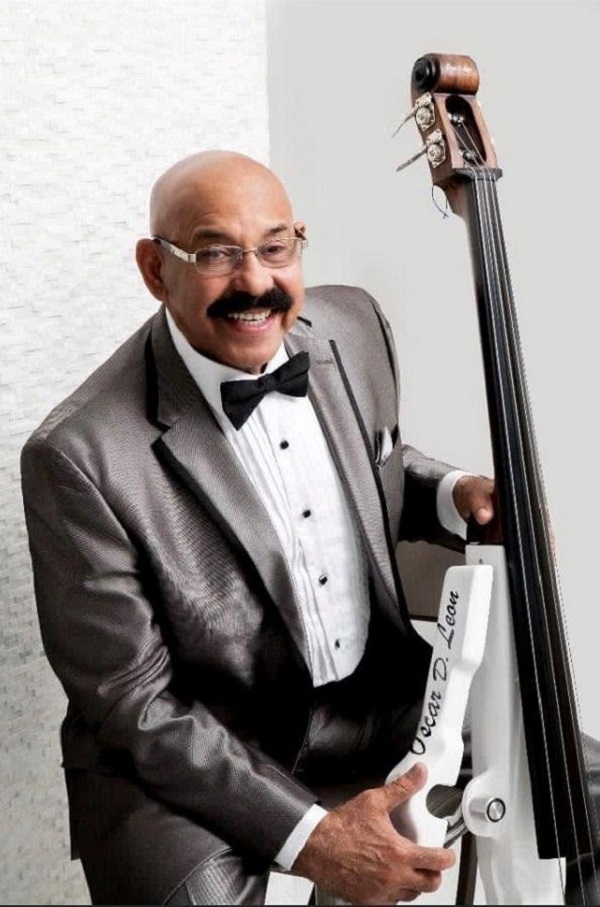
Oscar D’León celebrates 50 years of career in Caracas “International Salsa Magazine says present”

In September, the greatest exponent of Venezuelan salsa in the world will celebrate five decades of brilliant artistic career with an international tour that will have as its main event, an impressive and awaited symphonic gala at the Teresa Carreño Theater. And for september 22 at the Forum in Valencia.

Miami, May 19, 2022. Undisputed legend of Caribbean music, Oscar D’León, the Sonero of the World, celebrates 50 years of successful artistic career with an international tour that will take him to different locations in the Americas and Europe this summer.

This tour, which will begin on June 20 in Mexico City, will continue in July with the “50th Anniversary Europa Tour 2022”, culminating in a spectacular symphonic gala at the iconic Teresa Carreño Theater, which, during two performances on September 16 and 17, will give his audience the opportunity to sing and dance to the music that has made him the most recognized and admired Venezuelan artist in the world over the course of five decades.

Acapulco, Arequipa, Santiago de Chile, Miami, Frankfurt, Munich, Berlin, Paris, Amsterdam, Madrid, Tenerife, London, Istanbul are some of the cities that will live the energizing experience of seeing him on stage, a real party for music lovers.

Deserving of hundreds of awards and recognitions, including five Latin Grammys, D’León has been nominated nine times for the U.S. Grammy, being the first Venezuelan to obtain such a statuette. He did it in 2001 thanks to the song “Cielito Lindo, La Negra Mariachi Medley” Featuring-Oscar D’Leon, included in a collection album: “Masterpiece/Obra Maestra de Tito Puente y Eddie Palmieri”.

In 2013, he received the Award for Musical Excellence, a special recognition granted by vote of the Board of Trustees of the Latin Recording Academy to artists who have made creative contributions of exceptional artistic importance in the field of recording during their careers.

A true prophet in his own land, this global artist who began writing his formidable musical history in 1972, at the age of 28, when he formed the Dimensión Latina Orchestra, promises to celebrate his half-century of career with an unforgettable show at the Teresa Carreño Theater, the most important in Caracas, organized by the Venezuelan companies Imagen Producciones and Oz Show, in alliance with the National Orchestra System of that country.

Important Notes

Venezuelan musician who is among the most outstanding authors and performers of salsa and Caribbean music in general. Oscar D’León’s professional career began late: legend has it that one night, while visiting a nightclub in 1973, he heard that the band playing there had been fired. Oscar seized the opportunity and offered his own band to replace the one that had left.

The owner accepted and hired him to start playing a few days later. There was only one problem: the band at that time consisted only of D’León himself. He quickly got in touch with trombonist César Monge, told him what had happened and both got down to work to put together a line-up.

The band was finally formed by Oscar (vocals and bass, an instrument he had taught himself to play), César Monge (trombone), José Rodríguez (percussion), Enrique Iriarte (piano) and José Antonio Rojas (trombone).

Thus was formed La Dimensión Latina, Oscar D’León’s first orchestra. “Pensando en ti” was the first of the orchestra’s long list of hits. Four years later, Óscar left the band and was replaced by Puerto Rican Andy Montáñez, a vocalist who sang with the Gran Combo de Puerto Rico. Óscar returned with his own orchestra, La Salsa Mayor, with which he recorded his first album, titled after the group’s name: La Salsa Mayor (1977). The work was a great success in his country, and little by little his name began to be heard on an international scale. The following year he recorded the album El Más Grande, which contained the songs “El baile del suavecito” and “Mi bajo y yo”, and shortly afterwards he made his first visit to New York to offer live performances.

Aside from being a great sonero, Oscar D’León is also an extraordinary showman. Almost always accompanied by his bass, with which he plays and dances as if they were a couple, Óscar moves around the stage with great skill. In Venezuela, Óscar D’León is an idol, not only as a singer and musician, but also as a model of a self-made man who, from a very humble position, achieves fame and success on an international scale.

He is considered one of the best interpreters of Afro-Latin music of all times and is undoubtedly among the Venezuelan artists with more projection abroad.

Despite having gone through several stages in the development of Latin music, Oscar D’León’s style, always unmistakable, has maintained some constants that have allowed him to ensure the loyalty of his wide audience. D’León has recorded with the most outstanding salsa stars; among his collaborations, which can be traced in more than fifty albums, stands out his participation in The Mambo King, the hundredth full-length album by the legendary Tito Puente.

Corresponsal: Lida. María Fernanda León

www.Sanjuanproducciones24.blogspot.com

Versatile multi-instrumentalist, producer and arranger, Taylor Aranguren

In Barquisimeto, a city catalogued as the musical capital of Venezuela, there are musicians of excellent quality and one of them is the versatile multi-instrumentalist, producer and arranger, Taylor Eduardo Aranguren García, a young man born in the aforementioned city on August 2, 1991.

Taylor plays piano, bass and trumpet to perfection. His musical beginnings were in 2003 and in 2005 he had the great honor of joining the Lara State Symphony Orchestra, accompanying the “Sonero del mundo” Oscar D’León in a concert held at the “Coliseo Hípico” of the twilight city of the country.

Then in 2005, he makes artistic life in Puerto la Cruz, Anzoátegui state; in 2007 he moves to Colombia, in 2009 he returns to Caracas as a member of the Staff of the television program “Súper Sábado Sensacional”; then in 2010 he travels to Beijing to perform musical works, later in 2012 he accompanies Maelo Ruiz on a tour of Venezuela, later he is contacted by the Band of Benjamin Rausseo, humorist known as “Er Conde del Guácharo”.

In 2014 he joins Óscar Arriaga and Néstor Rivero ex-vocalists of “Los Adolescentes”, directing them as musician and arranger and additionally they record with the musicians: Diego Galé, Ytúrvides Vìlchez, Franco Lemus and Freddy González, achieving successful concerts in countries such as: Dominican Republic, Peru, Colombia, Chile, Ecuador, Panama, United States, Mexico, Italy, Germany and Spain.

And with this preamble of his artistic career, consequent readers, we welcome again, to the column “Salsa Escrita” to one of the best musicians of our country.

Greetings Taylor, it is an honor to have you as a special guest in International Salsa Magazine, “the Only Salsa Magazine in the World”.

Thank you Professor Carlos, for giving me the opportunity to be in your well read column “Salsa Escrita”, through this prestigious media and to be able to interact with all readers nationally and worldwide, making known my projects and part of my artistic life.

Taylor to begin with, we want you to tell us about your role as an arranger and to which artists you have done your musical works?

Ok my friend Carlos, let me tell you that I was arranger and musician in the production “Quintero Salsa Proyect” with the Quintero brothers (Luisito and Roberto Quintero) on that occasion with the song “Chamito Candela”, performed by Gustavo Aguado and Luis Fernando Borjas of Guaco, I also had the pleasure of arranging the song “No lo Beses” in the voice of my uncle Jorge Luis Suarez (former singer of Oscar D’Leon), also the song “Chismoso” by Marcial Isturiz; “Te Quedas” interpreted by José Alberto “El Canario”, in the same way “Te amo y punto” with Óscar Arriaga, I also made arrangements for the last movie of “Er Conde del Guácharo” and many more that at the moment do not come to my memory.

Very good Taylor, Congratulations, but we are curious to know in which facet you feel better, as a musician or as an arranger?

Professor, it is different to feel as an arranger, it is cool because it is a work or a child that comes out of your guts, it is something that you create, it comes from you and you enjoy it a lot, but playing live is a feeling in the moment, you know, enjoy the stage, the musicians, but I like the recording more, both for me are super important.

Excellent, now which singer, arranger and percussionist would you like to record and play live with?

Well, as a singer would be Oscar Arriaga, in percussion, Luisito Quintero and arranger I would like to share with Oscar Ivan Lozano, a great brother from Colombia, director and arranger of “Grupo Niche”.

Taylor, can you tell us about the work you have been doing with the ex-vocalists of Adolescentes Orquesta?

Actually I am working sporadically with some of them and right now I am in alliance with former teenagers from Venezuela who are currently based in Bogota and God willing at the end of July we will be touring throughout Colombia.

My friend Taylor, do you have planned this year some shows where you accompany as a musician to some recognized artist?

Well yes brother, in mid-July I will be accompanying Andy Montañez and Maelo Ruiz in Buenos Aires – Argentina and then I’m going to Uruguay with my project Taylor Aranguren to a concert in the city of Montevideo.

And in relation to the recording of the video, “Taylor Aranguren and his Venezuelan salsa” which would be captured for DVD format and would be recorded in Barquisimeto and where they would be invited figures such as: Luisito Quintero, Roberto Quintero, Edward Montoya, (Willie Colón’s trombonist), Rónald Borjas, Rónald Gómez, Jorge Luis Suárez, Wilmer Lozano, Toñito León “El Bebé Salsero”, Marcial Istúriz, Hildemaro, Mariana “La Sonera de Venezuela”, among others; it is still standing? Tell us:

Let me tell you professor Carlos that for reasons of the pandemic everything was suspended and thanks to God I already have almost certain date between November and December of this year 2022 and we will record it in the city of Sol Miami – Florida and the reason for the change of city is because of the ease that almost all the artists and musicians are there and the logistics and sponsorship is broader, many producers have been interested and for that reason, it is less expensive and after that recording I am committed to do a concert with them in the city of Barquisimeto.

My friend Carlos, I take this opportunity to tell you that in August I have a tour in Europe with Maelo Ruiz and David Pabon but I am waiting for the confirmation of my friend also from Lara, Yomar “Caballito” Mendez and for my album that will be released with God’s favor at the end of the year, Rónald Borjas has already recorded, Óscar Arriaga, Néstor Rivero, Benjamín Rausseo, Erick Franchesky, Luis Matheus from Colombia, Rodrigo Mendoza, Sócrates and soon Oscar D’León, and I am also making some arrangements for Luis Fernando Borjas ex Guaco.

Excellent Taylor, we would like to know your social networks and also wish you the best of success and many blessings for exalting and putting up the name of our country outside our borders, demonstrating your quality as a musician; you know that you always have our support in all projects you undertake in your artistic career.


Thanks a thousand, my friend Professor Carlos Colmenárez and INTERNATIONAL SALSA MAGAZINE through www.SalsaGoogle.com for giving me the support not only to my person, but also to many artists of Venezuela that day by day we work for our Latin music, also on behalf of this server Taylor Aranguren, I wish you the greatest success in your work and continue to make us known worldwide, to finish you can follow me through @Taylorarangurenpiano.

Hasta la próxima y sigamos salseando!

Article by Correspondent: Carlos Colmenarez

Yissy García Calzadilla, former member of the Anacaona Orchestra, plays drums, timbal and bongo

On May 29, 1987, in Havana, Cuba, Yissy García Calzadilla was born.

With a great musical heritage that comes from her father and inspiration, Bernardo Garcia, who is a drummer of the ICRT Orchestra.

Since she was a child she has been inclined towards percussion and has her father as her first teacher.

At the age of 9 she began her elementary music studies at the “Manuel Saumell” school, later attending the Amadeo Roldan Conservatory where she excelled in the school’s Charanga band and was also a member of the Youth Symphony Orchestra.

As a student of the conservatory in 2004 she traveled to the island of Guadeloupe as part of a cultural exchange between music schools in both countries.

Also in 2005 she was invited as a soloist in the paila (Cuban percussion instrument) to play with the National Symphony Orchestra of Cuba under the direction of the prestigious conductor Zenaida Romeu. In the same year she obtained the Special Prize of the “Fiesta del Tambor” contest.

In 2006 he travels to Barbados to participate with the “Quinteto Chico de la Habana” (a group of outstanding students of the conservatory) in the Barbados Jazz Festival and shares the stage with prestigious jazzmen such as Horacio Hernández (El Negro), Giovanni Hidalgo, Arturo Tappin (saxophonist) and Roy Hargrove (trumpeter), his performance is reviewed by international television stations and for the English newspaper Daily Niticns.

In November of the same year he obtains a Special Performance MECION at the International Festival of Young Jazz Players “JOJAZZ” and plays drums with the Big Band of Canada.

It is in this same year that she graduates in Percussion with excellent grades.

Once graduated, she joined the female orchestra Anacaona with which she made multiple performances on stages all over the country, and also performed on national television and radio, recorded the album “No lo puedo evitar” for the Bis Music label, and has also accompanied the Buena Vista Social Club diva Omara Portuondo.

With a small orchestra format, he recorded in 2008 the song “Parampampán”, for the musical film: “Chico y Rita” by the Spanish filmmaker Fernando Trueba. And also participates in another recording of traditional music with an American singer, both in the Areito studios of the EGREM.

In 2009 she made two important international tours with Anacaona, first in several Canadian cities, among them, performing at the “Art Jazz Festival” in Toronto, and in the Lula Lounge of the same city, the “30th Montreal International Jazz Festival”, alternating with the famous salsa singer “La India” with whom she was also invited to play, During the days of this great festival she participated very actively in various Jan sessions with Canadian musicians and musicians from other countries, in the city of London in the “Sunfest”, the Festival “La Nuit de Africa” in Montreal in its 27th edition and in the cities of Chicoutimi in the Festival “Rhythms of the World” and in the City of Quebec in its festival “Musics of the World” in addition to other venues in some of these cities, monopolizing in all many applause and congratulations for his outstanding performance.

In September 2010 the Aruba Jazz Festival is presented where they have the responsibility to close the festival and also perform with great success with saxophonist David Sanborn with whom they have the honor of downloading to close his performance the first day of the festival, for all this they are welcomed with great success by the public and the press.

He has worked in Cuba with other important jazzmen such as Alexis Bosh and Orlando Cubajazz.

He also performs for a special program on French TV channel 33 about his musical life and appears on a web page of the Spanish magazine “The H”.

He competes again in the JOJAZZ Contest and obtains the 2nd place in interpretation.

He has also recorded the Cuban Television program “A todo jazz” with trumpeter Roberto García and saxophonist Emir Santa Cruz, and with the group “Joven Jazz” led by saxophonist Michel Herrera, with whom he also performs in Havana’s Jazz clubs. He has worked with the outstanding trumpet player Yasser Manzano and his group.

In early 2010 he made the national tour of the singer Cucu Diamantes and also participates in the film that was recorded of the same.

In June 2010 he performed with Anacaona a successful tour of Curacao presenting the show “Viva Cuba”, in order to raise funds for the fight against breast cancer, organized by the Sinte Rose Foundation of that country and also close the 1st International Film Festival of Aruba.

Solo career

Yissy and Bandancha.

In 2012 she decided to embark on her solo career, debuting as composer and leader of the project YISSY & BANDANCHA, a quintet that develops jazz from the fusion with other genres.

She is regularly invited to participate in the most important festivals in Cuba, such as Jazz Plaza, JoJazz, Ellas Crean, Havana World Music Festival, among others.

Along with her project, she develops an intense work of collaboration in record productions and with various artists and recognized groups in the country, as is the case of Interactivo, Alexis Bosch and Telmary Diaz.

In 2014 he participated in Argentina in the festival El sur suena a cubano, along with Kelvis Ochoa, William Vivanco and Yusa, whom he also accompanied on his tour of Japan. He participated in the recording of the album Feeling Marta, by singer Gema Corredera, and accompanied the Buena Vista Social Club diva, Omara Portuondo, on her tour of Mexico.

Since that same year and until now, he is part of the line up of the band Maqueque, led by the renowned Canadian saxophonist Jane Bunnet, with whom he has played in the most important festivals in Canada and USA, in addition to having recorded the album Jane Bunnett and Maqueque, winner of the 2015 Juno Award for Best Jazz Album.

She began 2015 with the recording of her debut album Última noticia, and with a tour with her band YISSY & BANDANCHA through several cities in the USA.

She was included in a documentary for Brazilian TV directed by filmmaker Max Alvim, which aims to collect the most outstanding of the vanguard of Cuban jazz today.

She was part of the concert Women of the World, led by M Alfonso. She participated, together with Brazilian artist Baddi Assad, in the Les Voix Humains festival, held in Havana and organized by the Leo Brouwer Office.

Invited by the prestigious drummer Terri Lyne Carrington, she gave a clinic on Cuban rhythms at Berklee College of Music.

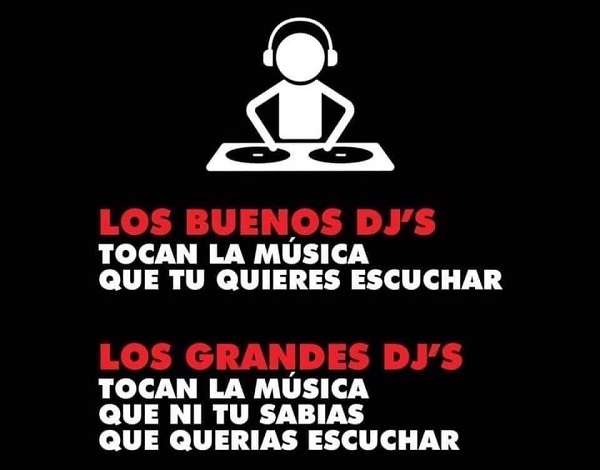
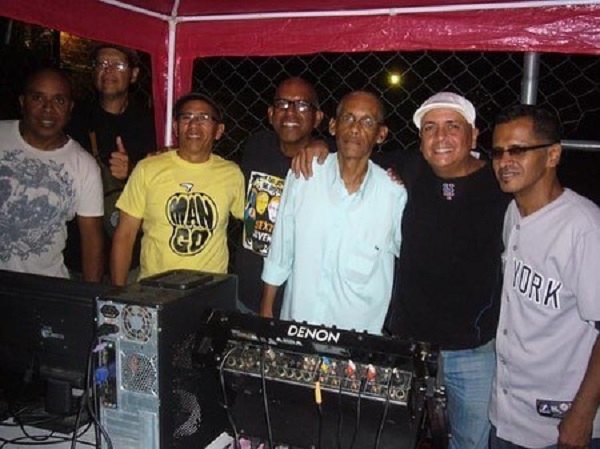
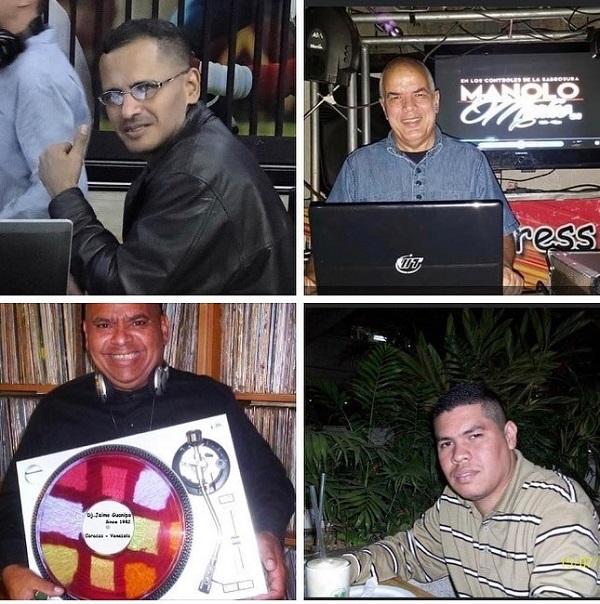
Perspectives of our senses in being an excellent Dj. and or Musicalizer

It is known as Disc Jockey (also known with the abbreviation of DJ, and its Anglo-Saxon pronunciation of Deejay) or disyóquey to “the person who selects and mixes recorded music of his own or of other composers and artists, to be listened to by an audience”.

Musicalizador: is that person who can extract a periodic and varied list of an equis amount of songs of proven success loaded in the storage system.

Many people and/or dancers express the controversy of the musicalizadores and Dj’s. Of the rumbas salseras of all the times nowadays that call it of (Salsa Guateque and Baúl).

With respect to the content or musical selection that they place or propose each one to give to understand to the public rumbero dancer.

Today there are many musicalizers and above all self-appointed “Dj`s” and they use to call themselves from one day to another and what they do not know that to reach this art they must study and know the art of basic music such as harmonies, theory and solfeggio, to be more complex.

First, one thing is to be a Dj and another musicalizer, both have to know music, but the Dj is responsible for making the mix of one over the other in couplings of the song without distorting the original revolutions or Bpm that makes you feel the harmony of both in one. Making the dancers flow and make the place feel good and cool.


The Djs and musicalizers have a difficult task to bring the creativity and the magic to put to dance to their public some traditional and others demanding to be able to over carry a rumba or danceable night.

This work has been difficult, but also easy to have an ear to select a song with a good sense of lyrics and above all with a harmonious and contagious arrangement that gives pleasure at the time of dancing. Making of them the work of how and when to place the melody to make the hook between the public/dancer.

The public rumbero, dancer…It is hard to understand that going out one night and feeling the atmosphere with something musical that not only you like, but also your partner or whoever you ask to dance likes the theme. Remember that not only the song makes the night enjoyable, but also the sound of the song and the people around you.

On the other hand, there is the audience that is not even a dancer. Many have the bad sense to bother with a drink in hand, dance alone, even take pictures and record the musicians and / or DJs. They get in the way of those who really want to enjoy the dance floor.

The criticisms are constructive to be better for the next dance, remember that there is a lot of music from the older music stirring memories of the public. As well as the newest, given that the music is modern and evolving.

With this I do not mean that all are bad, on the contrary there are good musicians and DJs par excellence that I follow for many years. But there is a large group that is coming out in this that lacks some of the conditions mentioned above.

For DJ’s

  1. If you are going to play a number, play the original. The musicians, composers, arrangers and dancers will thank you for it.
  2. Music with instrument downloads are UNCOMFORTABLE FOR DANCING. Know how to choose which solos are danceable. Give swing to the dancer.
  3. Don’t cut the end of the music, or mix it up. It takes away the happy moment of that final punch.
  4. Just because it’s fast doesn’t mean it’s danceable; listen and see how people enjoy the different tempos in the music.
  5. Hey…the guajira, the son montuno, the chachacha…whatever you call it, it’s part of the genre. Why do you have to ask for it and they look at you funny? Out of every three to four salsas, a chacha goes down very well.

  • « Go to Previous Page
  • Page 1
  • Interim pages omitted …
  • Page 163
  • Page 164
  • Page 165
  • Page 166
  • Page 167
  • Interim pages omitted …
  • Page 247
  • Go to Next Page »

International Salsa Magazine (ISM) is a monthly publication about Salsa activities around the world, that has been publishing since 2007. It is a world network of volunteers coordinated by ISM Magazine. We are working to strengthen all the events by working together.