• Skip to primary navigation
  • Skip to main content

International Salsa Magazine

  • Home
  • Previous editions
    • 2025
      • ISM / November 2025
      • ISM / October 2025
      • ISM / September 2025
      • ISM / August 2025
      • ISM / July 2025
      • ISM / June 2025
      • ISM / May2025
      • ISM / April 2025
      • ISM / March 2025
      • ISM / February 2025
      • ISM / January 2025
    • 2024
      • ISM / December 2024
      • ISM / November 2024
      • ISM / October 2024
      • ISM / September 2024
      • ISM / August 2024
      • ISM / July 2024
      • ISM / June 2024
      • ISM / May 2024
      • ISM / April 2024
      • ISM / March 2024
      • ISM / February 2024
      • ISM / January 2024
    • 2023
      • ISM / December 2023
      • ISM / November 2023
      • ISM / October 2023
      • ISM – September 2023
      • ISM – August 2023
      • ISM July 2023
      • ISM Edition June 2023
      • ISM – May 2023
      • ISM April 2023
      • ISM March 2023
      • ISM February 2023
      • ISM January 2023
    • 2022
      • ISM December 2022
      • ISM November 2022
      • ISM October 2022
      • ISM September 2022
      • ISM August 2022
      • ISM July 2022
      • ISM June 2022
      • ISM May 2022
      • ISM February 2022
      • ISM January 2022
    • 2021
      • ISM December 2021
      • ISM November 2021
      • ISM October – 2021
      • ISM September 2021
      • ISM August 2021
      • ISM July 2021
      • ISM May 2021
      • ISM April 2021
      • ISM June 2021
      • ISM March 2021
      • ISM February 2021
      • ISM January 2021
    • 2020
      • ISM December 2020
      • ISM November 2020
      • ISM October 2020
      • ISM September 2020
      • ISM August 2020
      • ISM July 2020
      • ISM June 2020
      • ISM May 2020
      • ISM April 2020
      • ISM March 2020
      • ISM February 2020
      • ISM January 2020
    • 2019
      • ISM December 2019
      • ISM November 2019
      • ISM October 2019
      • ISM Septembre 2019
      • ISM August 2019
      • ISM July 2019
      • ISM June 2019
      • ISM May 2019
      • ISM April 2019
      • ISM March 2019
      • ISM February 2019
      • ISM January 2019
    • 2018
      • ISM December 2018
      • ISM November 2018
      • ISM October 2018
      • ISM September 2018
      • ISM August 2018
      • ISM July 2018
      • ISM June 2018
      • ISM May 2018
      • ISM April 2018
      • ISM March 2018
      • ISM February 2018
      • ISM January 2018
    • 2017
      • ISM December 2017
      • ISM November 2017
      • ISM October 2017
      • ISM September 2017
      • ISM August 2017
      • ISM July 2017
      • ISM June 2017
      • ISM May 2017
      • ISM April 2017
  • Download Salsa App
    • Android
    • Apple
  • Spanish

Search Results for: Son

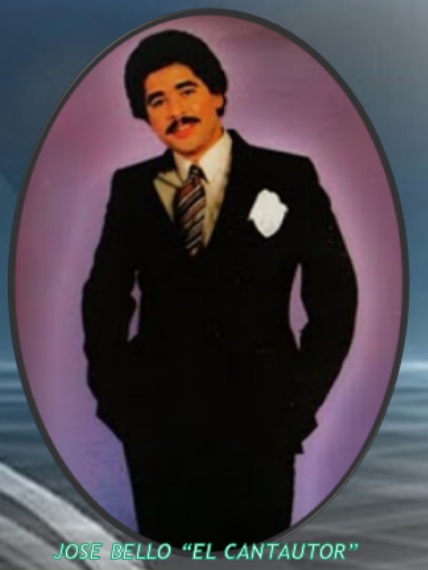
Jose Bello “The Singer-Songwriter”

North America / USA / New York
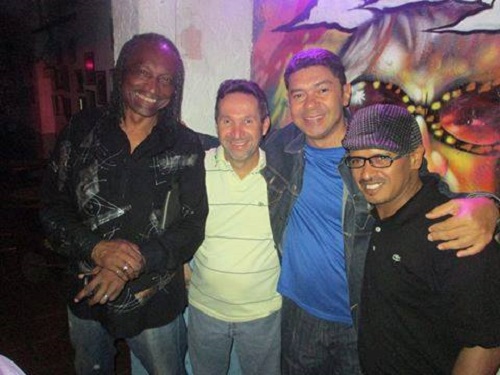
Jose Bello - Photo
Jose Bello – Photo

At International Salsa Magazine, we were able to chat with this incredibly talented artist. Below is the interview:

How was your first presentation? Did you know after that that music would be your passion?

In the kindergarten of the La miraculous school they had parties and they had a stage where I sang constantly and even had choirs that accompanied me and also acted, since I can remember, my passion is music.

How did you and Carlos Castillo meet? Did you know about his career before?

I met Carlos Castillo, because my mom lived in the house next to him and she talked about me to Carlos’s mom and they both agreed to introduce me, I had no idea who he was, until I met him.

What inspired you to compose those songs?

The experience of life and the gift that I always knew I had to compose, at any time.

Jose Bello
Jose Bello

Tell us a little about Aldemar Barona, what year did you decide to start with the label?

My great friend Aldemar Barona always went to my presentations and when the contract ended with the best record, we decided to make our own record label in the late 80s, early 90s.

Was this performance during a tour? Which album were you promoting? Where could that DVD be purchased?

Exclusive record. He hired me to make that dvd in the mid-90s and you could get it online, or at the Musical 90 record store in Jackson Hghts Queens New York All these artists are very well known worldwide and having been able to share stages with them speaks volumes about your incredible talent and career.

Which of these artists would you say is your greatest inspiration or example?

As I said before, my inspiration is a divine gift, I love all my colleagues very much, I respect and admire them, some started before me, others are from my generation and others became famous after my love, and I respect music, I They have bitten as I am and have led me to feel fulfilled in what I do, blessed and immensely happy.

Where would you like to present yourself in the next opportunity? How was your first presentation?

After I would like to personally take my art to some countries that I have not visited to this day, such as Mexico, Peru, Panama, Canada, Japan, Chile, and Argentina.

What comes next in the life of Jose Bello, El Cantautor?

Make my new recording, already as JOSE BELLO EL MAGNATE DE LA SALSA 40 ANIVERSARIO and finish negotiating my next tours, to Central Europe and South America.

Jose Bello flyers
Jose Bello flyers

Where does his nickname El Magnate de La Salsa come from?

On July 23, 2017, I married the designer Patricia González on the largest luxury yacht in New York called “Infinity”, around 2000 people and with two orchestras. Tito Nieve with his orchestra and my orchestra. The ceremony was on the high seas. When in Mexico they found out about my marriage, they wrote me congratulating me and told me “Now you are the salsa magnate” I was surprised and asked them why? and they told me “Only Arab tycoons get married on the high seas on a luxury yacht” I liked the idea.

I always hear that in music there are kings, princes, knights, but there are no tycoons and I think that because of the explanation of the Mexicans, I am the salsa tycoon

Marcial Isturiz from Capaya with soneos and melodic phrases and his popular “Agua pa’ los Gallos “Puerto Rico

In 2023 Sergio George, the famous “magician” who produced the artistic career of famous salseros and artists, said that salsa was “dead” and called on new artists to resurrect it and support each other as urban singers do.

Marcial Isturiz de Capaya

This caused commotion and controversy among salseros and made them doubt without a doubt what is the reality that salsa lives and more with the progressive physical departure of emblematic legends who made history in the world, coupled with the proliferation of the so-called “DJ” who multiply many times the nostalgia of the public for living the times of said legends and who became a trend due to this fact. In 2024 we saw how important salsa concerts were held in our country Venezuela where foreigners who had not visited us for a long time did so and so we enjoyed what some call “the last of the Mohicans”, as well as Venezuelans who took to various stages making it clear that, if they continue creating, either by adjusting the sound of the old and modernizing with quality staging or simply delighting with their career and style what they have already established.

We think that there is a lot missing since there is plenty of musical talent and a new generation in every sense, but not who listens to them and supports them, this being a truth bigger than the size of the sun.

Marcial Isturiz
Marcial Isturiz

After this necessary reflection we want to talk about Marcial Isturiz who was born in the sandunguera town of Capaya, Barlovento in the Miranda State of VENEZUELA, and we put it in capital letters because this “extraordinary sonero who wandered through the streets of Petareña hitting any pot he found in his path, finding out where and at what time the “arayé” was lit, always on the “hunt” for a good opportunity”, a quote was written by Ángel Méndez in his book “Entren que Caben Cien” describing how clear this man has been since childhood in pursuing and having the firm certainty of where he had to go to achieve his dream. He understood, from my point of view, that he who perseveres succeeds and we have seen his professional growth during all these years, thirty years recently completed, being a musician performing several instruments, going on to be also a composer and arranger, accompanying with his voice in duos of consecrated stars and groups, renowned orchestras as well as others not so well known, his voice being a characteristic seal that draws the attention of his followers, a sonero that we can say “gets lost from sight”.


A man who has earned the respect and affection of the public wherever he goes and to name one of the presentations in which he has demonstrated his “people skills”, we had the opportunity to travel and share with him closely accompanying him Sonero Clásico del Caribe in that free event that the Barquisimetanos salseros put on at the end of January 2024 to Ramón Méndez, where by the way Marcial took advantage of the invitation to perform the National Anthem the day before at the Cardenales – La Guaira Game, impeccably. Undoubtedly, that presentation was an omen of good fortune for what would be a year full of success.


Marcial Isturiz began hitting a home run this 2025 by performing on January 5 in Puerto Rico on the “Island of Enchantment”, at the traditional Three Kings Eve dance at the Sheraton Hotel, Convention District, with Don Perignon and La Puertorriqueña, with salsa figures such as Herman Olivera, Pedro Bull, Pichie Pérez, Joe González, Rico Walker, Josué Rosado, Jerry Rivas, Gilberto Santa Rosa and of course our Marcial Izturiz.

Joe, Rico, Marcial, Herman

We saw him singing choruses with these greats, specifically next to Herman Olivera and Rico Walker waiting for his turn like each of those called to this meeting until Peter Perignon introduced him for the first time with his Orchestra La Puertorriqueña and said that the person responsible for that invitation and presence of our sonero there was his friend Gilberto Santa Rosa.

Briefly, Perignon told the audience that he knew Marcial since he was part of Bailatino and he fell in love with that group, since then he had been following him and now recently in his participation with the Latin Dimension he knew that Marcial with this performance made his dream of being in that country come true.

Saying good night to Puerto Rico he performed the song “La Familia” (authored by José Curbelo and musical arrangement by Louie Ramírez, inserted in the production titled Indestructible by Ray Barretto and his Orchestra in the voice of Tito Alen for the year 1973) with soneos and melodic phrases and his popular “agua pa’ los gallos Puerto Rico” left established what this Venezuelan is made of, acclaimed and congratulated by his peers on stage.

Joy is not enough for what we salseros in Venezuela feel for this representation that should not be overlooked because if there are soneros from Venezuela and with class: Marcial Isturiz is one of them; with his own style and professionalism, this is how our “Mayor of Capaya” was seen next to these greats, comfortable, safe and proudly waving our tricolor wherever he goes.


At Swing Latino we say congratulations to Marcial, keep doing your thing without resting like until now, because later it will be too late:

AGUA PA’ LOS GALLOS  y

¡Ponle Sabor!

Source: Giorgenling Méndez from Swing Latino

Also Read: Salsa at its best, led by the leader of La Puertorriqueña: Don Perignon

Songoyó the perfect idea Experimental Cuban Son Group with its own style

Songoyó is an experimental musical group of the Cuban son genre with a particular style, since it fuses many musical rhythms, born on the initiative of Professor John “Goyo” Useche, on November 11, 2021 in La Victoria, Aragua State, Venezuela.

Songoyó the perfect idea Experimental Cuban Son Group with its own style

In order to unite Victorian musicians and start putting together songs by the remembered Madera Group, icon of the Caracas parish of San Agustín in Marín, and thus present themselves at the Guataca Salsera, which takes place every December 31 at the Madera 15 court, located in the Las Mercedes urbanization of the same town.

The idea immediately begins to take shape and that is when Professor John “Goyo” decides to communicate his project to Shinaury Rojas, a personal friend of many years, who at that time was based in Argentina, then informs the poet guitarist Rafael Pérez who was in Brazil and knew by reference of salsa groups via the web. Communication was fluid and accepted, regardless of the distance. John, Rafael and Shinaury embody everything that Songoyó is today.

It should be noted that the first name of the Victorian group was Son Madera 15, due to the loyalty that is maintained with the Madera 15 foundation, then it was changed to Sabor Madera 15 and finally they decided to name it “Songoyó” as the definitive name.

Songoyó is an experimental musical group of the Cuban son genre.

The communication was continuous and they immediately began to organize the activities that had to be carried out to group the musicians who were willing to belong to the group, musicians were contacted by phone and in person, finally the interested parties were grouped and the rehearsals began in an accelerated manner at Professor John’s house, to fulfill the main objective which was the presentation at the Guataca Salsera at the end of the year, in that 2021.

From that moment until the present, there have been many musicians who have passed through the son group, including the young music teacher Willian Herrera who is assigned the task of directing the group, the rehearsals are given and four songs are put together that were played at the Guataca Salsera achieving total success in said presentation causing the acceptance and applause of all those present.

Our Sonero Machado Noel the indigenous salsa singer and our General Manager John Goyo

By January 2022, the creator of the group calls the musicians and proposes to continue the project, achieving the acceptance of all. In the following months they contacted maestro Fael Alvarado, an expert musician who knows the TRES very well, the base instrument of the Cuban son, who agreed to join the project and professor William Herrera gave the musical direction to maestro Fael.

In February of that same year, the second presentation was made before a large audience at the Juventud de la Victoria festivities on Paseo La Juventud and Songoyó was again liked by the public.

The rehearsals continued, and it was maestro Fael himself as musical director, who proposed to everyone to create their own style with songs that belonged to the group and to have a unique sound in order to accept more contracts from then on.

In January 2024, the recording of the first and unpublished production of Songoyó “EL NEGRITO BEMBA” began under the creation and pen of the poet Rafael Pérez and the general recording direction of maestro Fael, in the recording studio “Fael Alvarado” in San Mateo, Aragua State. This recording was a huge success and can be found on various digital platforms,  Its release took place in January 2025, with a great acceptance.

Songoyó
Songoyó

From that moment on, the group began to be sold and promoted for public and private events inside and outside Venezuela.

Currently, there are 8 musicians that make up the group: Norberto Machado, güiro voice, Noel Machado, clave voice and percussion direction, Rafael Pérez, maracas voice, Alexis Tovar, tres, Edwin González, bass, Jonhy Vergara, tumbadoras, Fael Alvarado, tres, piano, violin and musical director, and John Goyo, bongo and general direction.


“SONGOYÓ, THEY ARE AS WE ARE”

For hiring, contact Professor Useche by phone at

+58 424-3212762

Instagram: Songoyo

Facebook: Songoyo

Research and Writing Source:

Djane. Shina Rojas

Also Read: Cuban Son is one of the most popular musical styles in Cuba and Kiki Valera is one of its greatest exponents.

Mariana “The Sonera of Venezuela and for the world”

Janett Guevara García, artistically known as Mariana “La Sonera de Venezuela”, was born in La Pastora, Caracas on January 19, daughter of Reina García and Vicente Guevara.

Daughter of Reyna García and Vicente Guevara, she is the oldest of six siblings and from a very young age she showed her taste for music; an activity that has been her eternal passion, and has led her to make 12 record productions.

Mariana La Sonera de Venezuela

She is the oldest of six siblings and from a very young age she showed her taste for music; an activity that has been her eternal passion and has led her to make six record productions.

Educated in a convent school, she always participated and stood out in cultural events, until on one occasion she was suspended for telling the mother superior that there was a song called “La Cárcel” by Septeto Juventud that she wanted to sing at a cultural event.

At the age of 14, during her high school education, she learned to play drums and participated in the choir of the Caricuao Parish church where she lived.

As the years went by, Mariana was invited by Mr. Naty Martinez to a rehearsal, who was impressed when he heard her and decided to make a musical production.

That is when Mariana’s true pilgrimage began, going through stages earning the admiration of salsa greats.

In past years, she received praise from Queen Celia Cruz and has the guarantee and support of the singers of the Fania Stars, the Gran Combo de Puerto Rico, José Alberto El Canario and even her great friend and fellow countryman Oscar D’León.

Oscar El Sonero del Mundo y Mariana La Sonera de Venezuela

Mariana has been worthy of awards such as “El Congo de Oro” at the Barranquilla salsa festival.

She has been praised by personalities such as Don Tite Curet Alonzo. Mariana alternates her exciting career with the media, where she has a radio program dedicated to our Latin music “Sonsoneando con Mariana” winner of the 2010 Excellence Award, as a popular radio space in the Vargas State Venezuela.

She recently participated in the heartfelt tribute to the 50 years of artistic career of maestro Elio Pacheco, founder of the Latin Dimension, where she recorded an excellent song called “Al Olvido”.

She received praise from the Cuban queen Celia Cruz, and has the support of singers such as the Fania Stars, José Alberto “El Canario”, the Gran Combo de Puerto Rico and even her friend and confidant Oscar D’ León.

“Oscar represents more than a friend to me; he is like a brother. When he has a presentation in Vargas he does not hesitate to call me to see us and talk about our projects. I thank him a lot for his advice, because it has helped me to be where I am. The responsibility of being La Sonera de Venezuela falls on my shoulders.”

Y así quedó esta Sonera para su noche boleros

She has managed to release 12 musical productions. Among her best-known songs are “Frases hecha” in 1996, recorded in Peru and “Eres más fuerte que yo” by the composer Enrique Hidalgo.

Awards obtained

La Sonera has been worthy of multiple awards, including the “Congo de Oro” at the Barranquilla Salsa Festival, as well as the nomination three times in a row for the Vargas Excellence.

She has also received plaques as Female New Artist of the Year and Best Sonera in Caribbean Representation.

“I will never forget when they gave me the Catatumbo de Oro in Maracaibo, in the year 2000. It is one of my greatest achievements.”

Mariana La Sonera en el Santuario de La Divina Pastora en Barquisimeto

My family is my life

At just 18 years old, Mariana became a mother for the first time. “It is something that very few people know, but my first husband mistreated me physically, verbally and psychologically. The only thing I can be thankful for from that relationship is the existence of my son.”

She is currently a speaker, producer, and host of her own radio show “SONSONEANDO CON MARIANA,” broadcast Monday through Friday from 12:00 AM to 2:00 PM on Dial Azul 95.9 FM. At the same time, she directs her own group and is part of Jeque y su Banda, the Rumberos Callejón orchestra, directed by the experienced timbalero Carlitos Padrón, where she shares the stage with Rodrigo Mendoza, Wilmer Lozano, among others.

Edgar Dolor, Hayzalex, El Jeque, Janett Trejo, Mariana, Frederick, Carlitos Hurtado

Research Sources:

Djane. Shina Rojas

Luisana Brito, [email protected]

Also Read: “Canelita Medina” Caribbean popular music loses one of its best exponents

De Tierra Caliente founder Bronson Tennis talks about his career and band

There have been many American musicians who have fallen to the charms of Latin music, which is a practically inexhaustible source of genres allowing them to experiment with in many ways. One of them is Bronson Tennis, with whom we have been fortunate to talk about his interesting career and current musical group, De Tierra Caliente.

Bronson playing
De Tierra Caliente founder Bronson Tennis playing the guitar

Bronson’s beginnings in music

Bronson Tennis began to put his eyes on music when he was just a child, when he was very attracted to the 1990s alternative rock movement in the United States. When he was only 11 years old, his parents bought him his first bass guitar and later he also wanted to learn to play the guitar and sing.

In family matters, Bronson and his three brothers are musicians and several of his cousins and uncles have also been musicians. In addition, his mother was a fine artist and his grandmother was an art teacher.

Both in school and church, the boy always chased opportunities to sing and show his vocal skills to anyone who wanted to hear. He also took advantage of all these spaces to learn as much as he could about music until he was old enough to exercise it professionally. 

Today, his main instrument is the guitar, although he also plays the cavaquinho (an instrument of Portuguese origin which is widely used in samba) and the roncoco, which is an adaptation of the Andean charango that he uses to play salsa and Cuban son.

Bronson posing for the camera
Bronson Tennis playing the guitar while posing for the camera

Professional debut in music

Bronson also told us that he began his career path as a bassist and chorister in several musical groups in the city of San Diego between 2006 and 2009. He then spent some time in Philadelphia, where he also played with other bands from a variety of genres.

It is interesting that he lived in Buenos Aires, Argentina, where he also worked as a bassist and singer in some bands. In fact, in that same country, he helped form a Caribbean funk band in which he learned a lot about these genres so foreign to what he played in his childhood and youth. He stayed about four years in Argentina, specifically between 2009 and 2012, until he moved to Brazil for about six months to continue learning more and more about Latin music, but it was not his last stop in South America, as he was also in Colombia for a while more.

Following this, he returned to Philadelphia and decided to form his own orchestra which he named De Tierra Caliente.

Prior to De Tierra Caliente

When Bronson returned to Philadelphia, he had the chance to meet some musicians from the Puerto Rican music scene in that city and saw that they had similar outlooks on music, so they got back in the saddle to prepare a formal project amongst themselves.

The artist assures that it was in Argentina where he learned what it takes to move forward with his band. ”Argentines are people who do everything with strength and confidence, whether in music or in soccer. No matter who or what they have to face, as they take on all the challenges with confidence and that is something we could all learn from Argentina.” Bronson said of his stay in that country.

Bronson and his band
(L to R) Papo Buda, Bronson Tennis, Eubie Nieves, Andy Meyer and Steve Cochran

In Brazil, he studied percussion and learned Portuguese, while Colombia taught him to play salsa, champeta, vallenato and many other genres. In short, each country he has visited gave him tools to facilitate his learning in everything about Latin music in various areas.

Precisely thanks to all this acquired knowledge is that Bronson finally felt able to form his own band in 2014 in union with fellow musicians who understood what he wanted to carry out.

How De Tierra Caliente started

Upon his return to the United States, Bronson was very clear that he wanted to incorporate all those elements learned in South America and the Caribbean, but giving them his own touch. It was then that he met conguero Papo Buda, with whom he agreed on much and began the recruiting process for the rest of the musicians.

After that, Bronson and Papo could add more artists to the group, resulting in a fairly consistent group over time. Since its founding, very few musicians have left the band and Bronson and those who remain have an excellent relationship with all of them despite no longer being band mates.

Among his greatest inspirations, Bronson mentioned many artists and groups of various nationalities and genres such as El Gran Combo de Puerto Rico, the Brazilian composer and singer Paulinho da Viola, the group Caribe Funk and many others.

De Tierra Caliente playing
De Tierra Caliente playing live in Yardley

Read also: Latin jazz and mambo trumpeter Jonathan Powell and his great collaborations

  • « Go to Previous Page
  • Page 1
  • Interim pages omitted …
  • Page 3
  • Page 4
  • Page 5
  • Page 6
  • Page 7
  • Interim pages omitted …
  • Page 247
  • Go to Next Page »

International Salsa Magazine (ISM) is a monthly publication about Salsa activities around the world, that has been publishing since 2007. It is a world network of volunteers coordinated by ISM Magazine. We are working to strengthen all the events by working together.