• Skip to primary navigation
  • Skip to main content

International Salsa Magazine

  • HOME
  • Previous editions
    • 2026
      • ISM / March 2026
      • ISM / February 2026
      • ISM / January 2026
    • 2025
      • ISM / December 2025
      • ISM / November 2025
      • ISM / October 2025
      • ISM / September 2025
      • ISM / August 2025
      • ISM / July 2025
      • ISM / June 2025
      • ISM / May2025
      • ISM / April 2025
      • ISM / March 2025
      • ISM / February 2025
      • ISM / January 2025
    • 2024
      • ISM / December 2024
      • ISM / November 2024
      • ISM / October 2024
      • ISM / September 2024
      • ISM / August 2024
      • ISM / July 2024
      • ISM / June 2024
      • ISM / May 2024
      • ISM / April 2024
      • ISM / March 2024
      • ISM / February 2024
      • ISM / January 2024
    • 2023
      • ISM / December 2023
      • ISM / November 2023
      • ISM / October 2023
      • ISM – September 2023
      • ISM – August 2023
      • ISM July 2023
      • ISM Edition June 2023
      • ISM – May 2023
      • ISM April 2023
      • ISM March 2023
      • ISM February 2023
      • ISM January 2023
    • 2022
      • ISM December 2022
      • ISM November 2022
      • ISM October 2022
      • ISM September 2022
      • ISM August 2022
      • ISM July 2022
      • ISM June 2022
      • ISM May 2022
      • ISM February 2022
      • ISM January 2022
    • 2021
      • ISM December 2021
      • ISM November 2021
      • ISM October – 2021
      • ISM September 2021
      • ISM August 2021
      • ISM July 2021
      • ISM May 2021
      • ISM April 2021
      • ISM June 2021
      • ISM March 2021
      • ISM February 2021
      • ISM January 2021
    • 2020
      • ISM December 2020
      • ISM November 2020
      • ISM October 2020
      • ISM September 2020
      • ISM August 2020
      • ISM July 2020
      • ISM June 2020
      • ISM May 2020
      • ISM April 2020
      • ISM March 2020
      • ISM February 2020
      • ISM January 2020
    • 2019
      • ISM December 2019
      • ISM November 2019
      • ISM October 2019
      • ISM Septembre 2019
      • ISM August 2019
      • ISM July 2019
      • ISM June 2019
  • Spanish
  • Download Salsa App
    • Android
    • Apple

Search Results for: Soneros

The “Patio de Tula”

Latin America / Venezuela / Yaracuy

In the Yaracuy state of Venezuela, where nature reigns, salsa is also danced

Meeting point: El Patio de Tula in the city of San Felipe

In the patio of a house in an urbanization in the city of San Felipe, since 2013, there has been a salsa scene that is worthy of recognition. The Patio de Tula is the name of the place, named after the Buena Vista Social Club song: El Cuarto de Tula. It is a space created by music lover and cultural promoter Yony Padilla, inspired by some night spots in Caracas where salsa was danced, such as the emblematic “El Maní es Así en Sabana Grande.”

El Patio de Tula
El Patio de Tula

Apart from having become a point of reference in the Yaracuy state and a meeting place for musicians and passionate salsa lovers, or simply a place to de-stress or have a delicious soup on Sundays, in El Patio de Tula We work diligently to rescue the salsa genre and become an engine of dissemination and a teaching center for the musical education of children, young people and adolescents.

The aim is to create an African-American percussion and dance school, where rhythm and dance are connected in a vital and artistic encounter, through Afro-Caribbean, Afro-Venezuelan percussion workshops and Caribbean dance (salsa) and traditional Venezuelan dance classes. It is important to highlight that this training proposal will be called the Juan Carlos Marín Percussion School, as a living tribute to this musician from Yaracuya, who throughout his career has dedicated himself to the study and research of Latin music and the Yaracuyan drum. It would be well worth it for this project to be taken into account by the region’s cultural organizations to support it.

There are various personalities and groups linked to the salsa and urban music scene that have visited El Patio de Tula, among them we can mention: Edgar “Dolor” Quijada, Orlando “Watussi” Castillo along with Mandinga Star Band, Rodrigo Mendoza, Carlos Hurtado , Jóvito Eduardo, Wilmer Lozano, Edgar “El Abuelo” Rodríguez, Alejandro Mayora, Ray Herrera, David González Jr., Ronald Gómez, Cheo Linares, Aquamarina “La Sirena de la Salsa”, DJ. Augusto Felibertt, Sonora Yambú, Orquesta Salsa Cinco 25, Orquesta Salsa Libre, Orquesta Malecón, the Mango Group, Dame Pa Mátala, Y de Cuba, Sixto Llorente and the Yoruba Andabo Folkloric Group.

Yony ​​Padilla tells us that the salsa scene in the Yaracuy state is on the rise. To do this, they have the Hermandad Salsera de Yaracuy Foundation, which goes hand in hand with El Patio de Tula and at the same time is linked to the radio program Expresion Latina, produced and hosted by Hermes Mejías, and broadcast on the 102.9 FM dial from the central area of ​​San Felipe. Another location that is leading the scene in the area, as Yony tells us, is El Rincón de La Salsa. The large number of musicians and orchestras in Yaracuy are proof of what was said above. Among the musicians the following stand out:

  • Domingo Bracho – piston trombone
  • Jorge Yujere – trombone
  • Harry Ramos –piano
  • Luis Reyes –percussion
  • Kendri Siso –percussion
  • Asael Hernández – piano
  • Darwin González – Cuban three
  • Domingo Suárez – percussion
  • Jimmie Graterol – percussion
  • Jesús Mieres – percussion
  • Manuel Mieres –trombone
  • among others.

The salsa orchestras are: Sonora Yambu, Elegua Son, Yaracuy es Salsa, Orquesta Los Gullet de Marín, where Sonero Orlando “Watussi” Castillo, residing in Milan, Italy, participated as a special guest, Orquesta Trombosis and Escala 78. Among the DJs are: Diego Music, Jesús (Drupy) and Robert Villalobos.

Flyer de Patio de Tula

Further, investigating the salsa scene in the states surrounding Yaracuy, we were able to verify with the promoter Padilla that salsa is picking up in Aragua, this, if we measure it by the number of orchestras that he mentioned to us: Orquesta Mangue, Orquesta Primera Clase, La Foca and his Caribbean Sextet, Enmanuel Orchestra, Latinos Orchestra, Mondys Band, Fascination Orchestra (Recognition from the Universidad Bicentenario de Aragua –UBA–), Sono-Star Orchestra and Roberto Monasterios and his Orchestra.

Likewise, in other nearby states there are orchestras such as Malecón, Sazón Latino, Soneros Latinos, Líder, La Nor-Star in Lara; Osaona, Juramento, Sorongo, Batakum, Son Colón, Adrenalina Latina Puerto Cabello in Carabobo; and the Piri Salsa Orchestra in Falcón.

We invite you, therefore, to attend one of the tremendous rumbas that take place in El Patio de Tula, in a family and calm atmosphere, and in the process visit the greenest and most vibrant state of Venezuela. The Exotic Tropical Flora Park, the San Felipe El Fuerte Archaeological Historical Park and the Cumaripa Reservoir Recreational Park are an exemplary example of how, in Yaracuy, nature reigns.

ADDRESS: El Patio de Tula is located on 3rd street, San Rafael, Independencia, Yaracuy state, Venezuela.

Note: We highly appreciate the collaboration received from Yony Padilla and Augusto Felibertt in the preparation of this text.

Javier Plaza – Biography

Europe / Alemania / Munich

Javier Plaza was born on October 4, 1952 in the Target Shooting sector of the populous neighborhood of Sarría, in Caracas – Venezuela.

In 1957 the urbanization 23 de Enero was inaugurated and the Plaza Castillo family is one of the many founding families of this beautiful project of the government of Marcos Pérez Jiménez. Javier’s Plaza childhood and adolescence take place in this environment.

The parking lot of block 5 of the Monte Piedad area on January 23, was the space where Javier Plaza began to discover his skills as a percussionist, because it was the place chosen by the neighborhood boys to take out the drums, unload and share. Among some of these future stars we can mention Bitervo Plaza, José “Cheo” Navarro and Alfredo “Cutuflá” Franchesqui.

Starting in the mid-70s, he began his professional career in Latin music, forming part of groups such as Rumbón 10, Sexteto Juventud, Enrique “Culebra” Iriarte y su Orquesta, Culebra being the one who gave him the opportunity to be one of the orchestra singers.

This work opens the doors for him in the record market, with the help of producer Víctor Mendoza, he participates in recordings of different groups such as José Rosario y sus Soneros, Federico y Su Combo and El Clan de Victor.

At the beginning of the 80s, the Orquesta Café was formed, Javier is one of its vocalists along with Joe Ruiz and Carlos Espósito, managing to record one of the most important albums of his career and one of the most significant for the inhabitants of January 23, Due to the fact that most of its musicians are parishioners, the rehearsals were held in Monte Piedad and the economic resources for the recording of the album arose in the neighborhood, thanks to a great collaborator and music lover, Mr. Andrés “Culebra” Vasquéz.

In this group musicians participated, who at the time were not as recognized as today, among others Jose “Tucky” Torres, César “Chino” Pérez, Carlos “Kutimba” Espósito, Bitervo Plaza, Gerardo Rosales, Jorge “Venado” Ponce and the late Joe Ruiz.

Javier Plaza
Javier Plaza

By the mid-1980s, Javier began to knock on doors in the old continent and Alfredo Cutuflá, who lives in Paris, invited him to participate in Combo Ventú, a group established in Paris with most of its Venezuelan members.

There he began a successful career in Europe participating in different groups and collaborating in recordings and presentations of other artists. Thanks to the presentations of Combo Ventú, the director of the Conexión Latina Orchestra, based in Munich-Germany, contacted him to be part of their ranks, he has remained with this orchestra for 18 years, currently being the oldest musician of the grouping.

Since he (Javier Plaza) was hired by the Connection, he has lived in the city of Cologne-Germany, a place where a large group of Venezuelans live, many of them dedicated to culture.

He (Javier Plaza) reinforced his musical studies of vocal technique, theory and music theory at the Köln Mülheim and studied the German language at the IBM Institute.

He has participated in groups such as Kimbiza, La Charanga Nueva de Alfredo Cutuflá, the Colombian pianist Francisco Zumaqué, Salsamanía, Cesar “Chino” Pérez and Gerardo Rosales, without abandoning his responsibility within the Latin Connection vocalists.

With La Conexión, he has had the opportunity to accompany international stars of Latin music, such as Perico Ortiz, Ismael Miranda, Adalberto Santiago and Azuquita, among others. Javier comments that Nicky Marrero worked with La Conexión for five years.

Since 1992, Javier Plaza has been managing his personal project, the Son-Risa Orchestra. With her he has made two productions entitled “Libre Soy” and “Mi Música”, with most of the songs of his own authorship.

In 2006 he came to Venezuela with a project under his arm, lyrics, musical arrangements and a proposal, in search of private or government financial support.

The name of the project “El Reencuentro”, with which he planned to bring six talented Venezuelan musicians based in Europe to meet again with musicians who make life in our country and thus make a recording where this experience would be reflected, these musicians were Alfredo ” Cutuflá” Franchesqui, Orlando “Watussi” Castillo, Carlos “Kutimba” Espósito, Orlando Poleo, Yma América and José Ávila…

but the money was not enough to purchase the tickets. Therefore, El Proyecto Reencuentro was recorded with the musicians residing in our country, resulting in a product of excellent quality, among others, Nelson “Melo” Douglas, Alberto Crespo, Leonel Sanchez, Charles Peñalver, Alberto Naranjo, Tucky Torres, Rafael González, Carlos Julio “El Oso” Ramírez, Marcial Istúriz and José Ramoncini.

During the recording of this album, his mother passed away (02-04-2006), Rosario Castillo, popularly known in the neighborhood as Rosarito, to whom he dedicated this album and one of its songs was written especially for her.

The chorus of one of the themes of the new Son-Risa production says: “Let’s get the drums out again, let Caribe not die”.

As the boys did in the parking lot of Block 5 of Monte Piedad, we know that Javier Plaza and his Son-Risa Orchestra will have the support of all Venezuelan music lovers.

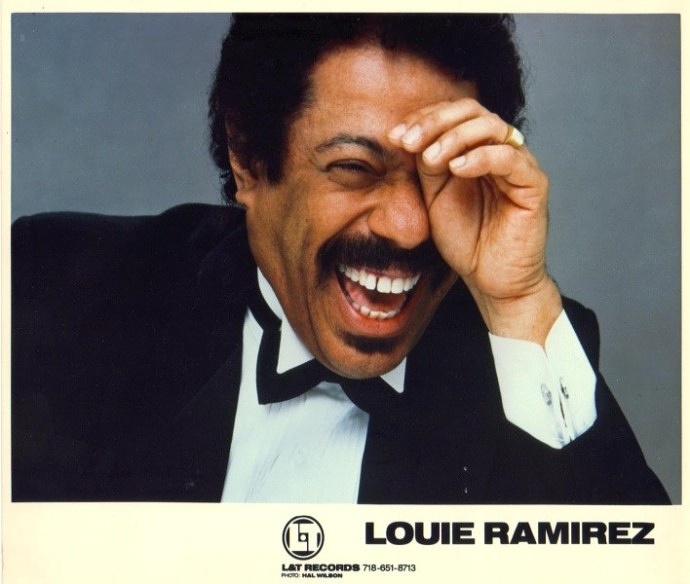
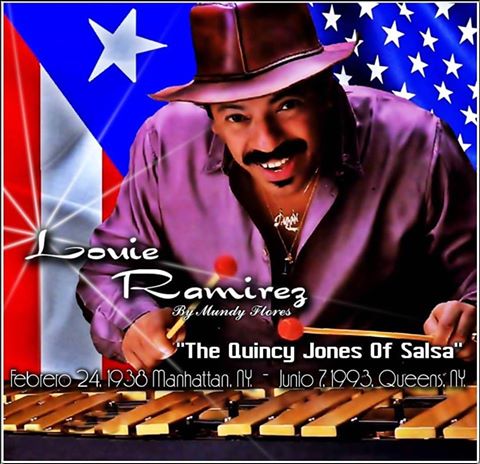
Louie Ramírez. The Hidden Talent of Salsa Ahead of its time

North America / USA / New York

Louie Ramírez.

Music often requires characters who are always behind the scenes and support the work of singers and performers with their talent, who are ultimately the ones who “put on their face” and become popular. Sometimes, however, these anonymous characters rise to fame in order to perform their own work and even become more popular than any popular singer.

In the case of Pop, this character is called Quincy Jones, of whom it is enough to say that he has been an arranger for Frank Sinatra and a producer for Michael Jackson. A nobody”. In the case of Salsa, these characters have been symbolized by Jones’ emulator, a guy named Louie Ramírez who has done everything with everyone.

Louie Ramírez
Louie Ramírez

One afternoon in 1994, Ramírez was driving his car down the highway that would take him to Variety Studios in New York. It was going to be a quick session since he only needed one song to complete his 20th album as conductor. Perhaps that was why he was nervous and that filled him with anxiety. Minutes later he couldn’t resist the feeling and had to pull over to the side of the car. He had not finished doing it when a cardiac arrest ended his life.

Louie Ramírez
Louie Ramírez

Louie Ramirez was a genius. The classic man to whom everyone turns for advice and solutions to their problems. It didn’t matter if they were young or old musicians. The fact was, Louie had the answer, and visiting him was like rubbing Aladdin’s lamp. That was a characteristic that always accompanied him, from that first recording “Conozca a Louie Ramírez” in 1963.

He was 20 years old at the time and had already stood out for composing some pachangas and arranging for Pete and Tito Rodríguez’s orchestras. The commentator Dick Sugar then presented it like this: Ramírez breaks the image of the director of a group that uses the talent of other composers and becomes a follower of a rhythm. No, Louie Ramírez is a creator in his genre.

Louie Ramírez Photo
Louie Ramírez Photo

That talent did not go unnoticed by the new Czar of Latin music in New York, Jerry Masucci, who hired him as a star for Fania Records and at the same time, as an arranger for the orchestras and ensembles that belonged to the record company. Ramírez was soon involved in work and was only able to record two albums during the sixties, “Good news” and “Alí Babá”.

On that last album appeared the hit that allowed him to be a famous artist, El Títere, a true Salsa classic. The theme was sung by Rudy Calzado, the third of the soneros that Louie had used without finding the ideal. That was a burden that accompanied him as a director during the seventies, when he used singers of the stature of Pete Bonet, Tito Allen, Jimmy Sabater, “Azuquita” Rodríguez, Adalberto Santiago, and even Rubén Blades.

Louie Ramírez
Louie Ramírez

It was with Blades, precisely, that he made an anthological album, “Louie Ramírez and his friends”, in which the song Paula C was included, with an arrangement of those that deserve -hats off-. By then, Ramírez was considered in New York as the most progressive arranger that Salsa had, thanks to the brilliant work done for the Fania All Stars. An excellent job had been the instrumental arrangement of Juan Pachanga, to be sung by Blades, of Canta Canta for a performance by Cheo Feliciano, and of the entire album “Algo nuevo” that Tito Rodríguez sang with Louie’s orchestra.

But the high point of Ramírez’s career came in 1980 when Joni Figueras, representative of the K-Tel International label, hired him to arrange the ballads Todo se derrumbó and Estar Enamorado de Manuel Alejandro. The album, which included these and other tracks, was released two years later under the title “Hot Night” and was recorded by Louie’s own orchestra.

Louie Ramírez - Salsa Progresiva
Louie Ramírez – Salsa Progresiva

This is how the Salsa-ballad or Salsa-romántica was born in a job that Ramírez continued until his death, making attempts at Latin Jazz from time to time, which he loved. That is why he recorded an album in tribute to Cal Tjader, where Louie was director, producer, composer and arranger, in addition to playing the timpani and his favorite instrument: the vibraphone.

Louie Ramírez was a genius in arranging, in a career where those of Guantanamera and Isadora stand out for Celia Cruz, El Guiro de Macorina for Johnny Pacheco and El Caminante for Roberto Torres. Apart from this, there are his works for the Alegre and the Cesta All Stars. Regarding this profile of Ramírez, the critic Eleazar López defined it very well:

Louie Ramírez - salsero
Louie Ramírez – salsero

It is not easy to arrange for a dance band, especially when it comes to a group that cultivates the hot tropical genre. Many musicians feel influenced by Jazz and the result of their orchestrations leaves a void in the dancer. Others arrange simple, but so simple that they repeat and copy themselves, and the result is tiresome music, without any degree of creativity: music that says nothing, that leaves nothing. Louie Ramírez has found the perfect balance… that’s why he always stays current.

Louie Ramírez flyers

José Ernesto Parra is ready to embark on his solo journey in Salsa

Throughout his career, José Ernesto Parra has consolidated his place in the history of salsa. Each project in which he has participated reflects his great talent.

José Ernesto Parra was born in Santurce and grew up in Bayamón, Puerto Rico. From a very early age, he was an admirer of the music of La Sonora Ponceña and El Gran Combo de Puerto Rico. Later, Héctor Lavoe, Frankie Ruiz and Luisito Carrión became his references.

José Ernesto Parra to embark on his solo journey in salsa Photos Miguel Mitchel..

Before deciding on singing, he was captivated by percussion, focusing on the conga and drums.

Eventually, he began to explore his vocal ability, with the help of composer and music teacher Rafy Monclova. This training led him to become a singer, while helping him develop his distinctive interpretive style.

In 1989, José Ernesto Parra joined the orchestra of singer Viti Ruiz, just at the time when the latter was beginning to enjoy success with the hit ‘Caricias Prohibidas’. For two years, José Ernesto was part of Viti’s orchestra, which allowed him to perform his first shows outside of Puerto Rico, marking the beginning of his career in the international music scene.

Having been part of Viti Ruiz’s orchestra, later opened doors for him with Pupy Santiago’s orchestra and with Anthony Cruz’s orchestra, where he remained for four years. José Ernesto considers his time in Anthony Cruz’s orchestra as a key phase in which he consolidated his artistic training.

José Ernesto Parra Fotos Miguel Mitchel

Later, the renowned musician and producer Julio “Gunda” Merced identified José Ernesto Parra’s talent, selecting him as a backing vocalist for a series of recordings of artists belonging to the Musical Production M.P. label. During that period, José Ernesto’s voice was recorded in important projects for artists such as Anthony Cruz, Giro, Los Hijos de los Célebres, Luisito Carrión, Pedro Conga, Tito Gómez and Tito Rojas, among others. Thus, he was able to hone his skills as a vocalist while collaborating with the production team in the creative process behind some of the greatest salsa hits.

In addition, José Ernesto Parra stood out as the lead singer in the short-lived but innovative group Salsa 2000, expanding his experience in the salsa field, demonstrating his versatility and interpretive abilities. He also played an important part in the album Con el golpe de siempre, with which Pedro Conga’s La Internacional orchestra celebrated its 35th anniversary. For the latter, José Ernesto sang the songs ‘Contigo estaré’, ‘Si me vuelvo loco’, ‘No quiero, no puedo’, ‘El ritmo que pica’ and ‘Parece’.

In 2001, José Ernesto Parra joined Luisito Carrión’s orchestra as a chorister. In 2002, he participated in the First Soneros Festival in Orlando, Florida, USA, sharing the stage with veteran vocalists such as Chamaco Rivera, Héctor Tricoche, Junior González, Luigi Texidor, Yolanda Rivera and Tito Allen, among others.

That stage laid the groundwork for the creation of his record production Así es la vida, published under the M.P. label. The album included songs by renowned composers such as Harry Suárez, Mimi Ibarra, Pedro Jesús and Rando Tamasta. In addition, it featured arrangements by the talented Julio “Gunda” Merced, Ramón Sánchez and Rafael “Bodo” Torres. Among the songs on the album are ‘Morir por amar’, ‘Solo por ti’, ‘Un amor así’ and ‘Cosas bonitas’.

Throughout his career, José Ernesto Parra has consolidated his place in the history of salsa. Each project he has participated in reflects his great talent. Photos Miguel Mitchel.

Later, and for a brief but significant period, José Ernesto further expanded his professional horizon by collaborating with the Don Perignon orchestra and with Tommy Olivencia’s La Primerísima. These interventions offered him the possibility of interacting with different musical styles and approaches, strengthening his versatility within salsa.

Since 2011 and for twelve years, José Ernesto Parra stood out as a singer in the orchestra of “Míster Afinque”, Willie Rosario. His presence in the music industry was reinforced through the recording of his voice in the song ‘Ya no eres nada’, which is part of the production Evidencia (2016).

Social Networks

José Ernesto Parra (Singer)

jose.ernesto.parra

To book José Ernesto Parra you can contact him at (787) 309-2958 or write to the email: [email protected]

Bella Martinez Puerto Rico

Also Read: Robert Tellez is undoubtedly “El más que sabe de salsa” (The one who knows the most about Salsa)

Hernan Olivera the sonero of the 21st century

Latin America / Puerto Rico / Puerto Rico

Hernan Olivera, this excellent Salsa singer named Hermenegildo Olivera was born on January 30, 1959 in Newark, New Jersey.

Hernan Olivera is the son of Puerto Rican parents and from an early age he felt a great affinity for Latin music since his father listened to the groups of the moment such as Tito Puente, Celia Cruz, Machito, Ismael Rivera with Cortijo y su Combo, Alegre All Stars, Tito Rodríguez, Santitos Colon, etc.

Hernan Olivera
Hernan Olivera

Then, in the 70s, in the midst of the Salsa Boom, Herman began his love of singing listening to the performances of Chamaco Ramírez, Héctor Lavo’e, Cheo Feliciano and Marvin Santiago, among others. These vocalists were mainly his source of inspiration; That school of soneros served as an apprenticeship for him and that is when he made the decision to sing professionally.

Hernan Olivera - photo
Hernan Olivera – photo

When he was just 15 years old, Herman began his career as a Salsa performer with an orchestra called “La Justicia”, after this he was part of the band “La Sónica” where he met his friend and trombonist Jimmy Bosch, after this He spent time with the “Caramelo” orchestra and later made the most important leap in his career by joining the “Con Conjunto Libre” in 1978, where he left his voice for the first time on the LP “Increíble” from 1981 under the direction by percussionist Manolo Oquendo and Bassist Andy González where he stands out with the song “Decide”.

Then in 1983 he would record with the Conjunto Libre in the production “Rhythm, sound and style” the song “Que Humanity” that would become a success. In 1988 Herman left the group “Libre” and became part of a project by Mr. Fernando Pastrana and under the musical direction of trumpeter Miguel Santiago whose album was called “La Exclusiva” which shared the vocal part with Roberto Mier, in this album stands out interpreting the songs “Xiomara” and “Te vi pasa”.

Hernan Olivera with his piano

After this, in 1990 he was invited to record on the album “Salsa Sudada”, for the Valdesa Records label of Víctor Raúl Sánchez “Patillas” and with the musical direction of Isidro Infante, sharing vocals with Mario Muñoz “Papaíto”, Adalberto Santiago, Eladio Peguero “Yayo El Indio” and Pablo Villanueva Branda “Melcochita”; in this work he interprets the themes “La needle” and a tribute to the city of Cali called “Valle plata de salsa”.

He continued with his career as a performer and in 1993 he was once again invited to record the production “Now” with the Free Ensemble, where his great conditions and resources as a singer are undoubtedly reflected, there the song “You belong to me” became a hit in addition to other songs such as “Obsesión” and “El Son” stand out on this album.

Subsequently, he launched an independent project called Herman Olivera and La Exclusiva “Chequea La Mercancía” produced by Fernando Pestana, where the song “Me Extra Spider” is one of the most outstanding. In 1996 he reunited with the Conjunto Libre and made the live album entitled “On The Movie”.

Caratula Alta resolucin sin letras of Hernan Olivera

In 1997 he participated in the CD of the band Rikoson All Stars called “Evoluciones Del Son” where he stands out very well in the romantic theme “Aquella Noche”.

Photo - Hernan Olivera in concert
Photo – Hernan Olivera in concert

In 1998 he was requested by the piano teacher Eddie Palmieri and together with the vocalist Wichy Camacho they recorded the album “El Rumbero Del Piano” in which he stood out as a singer in the songs “Malagueña salerosa” and “Oiga mi guaguancó” that same year. he is invited to the recording studios by the trombonist Jimmy Bosch and they release the album titled “Soneando Trombón” which contains the hit “Otra opportunity” that he performs as a duet with Frankie Vázquez, on this CD the song “Descargarana” is also inserted. ”.

Photo 2- Hernan Olivera in concert

That same duo Olivera and Bosch meet the following year (1999) and make the production “Salsa Dura” where Herman shines interpreting the full “Impact we will have” this album also has the participation of the singers Frankie “Nene” Morales and Frankie Vázquez parallel to this album, the RMM label launches a live CD and DVD entitled “Eddie Palmieri & Friend’s” where Herman looks excellent in the number “Palo Pa’ Rumba”.

Hernan Olivera in concert
  • « Go to Previous Page
  • Page 1
  • Page 2
  • Page 3
  • Page 4
  • Page 5
  • Page 6
  • Interim pages omitted …
  • Page 11
  • Go to Next Page »

International Salsa Magazine (ISM) is a monthly publication about Salsa activities around the world, that has been publishing since 2007. It is a world network of volunteers coordinated by ISM Magazine. We are working to strengthen all the events by working together.