• Skip to primary navigation
  • Skip to main content

International Salsa Magazine

  • HOME
  • Previous editions
    • 2026
      • ISM / March 2026
      • ISM / February 2026
      • ISM / January 2026
    • 2025
      • ISM / December 2025
      • ISM / November 2025
      • ISM / October 2025
      • ISM / September 2025
      • ISM / August 2025
      • ISM / July 2025
      • ISM / June 2025
      • ISM / May2025
      • ISM / April 2025
      • ISM / March 2025
      • ISM / February 2025
      • ISM / January 2025
    • 2024
      • ISM / December 2024
      • ISM / November 2024
      • ISM / October 2024
      • ISM / September 2024
      • ISM / August 2024
      • ISM / July 2024
      • ISM / June 2024
      • ISM / May 2024
      • ISM / April 2024
      • ISM / March 2024
      • ISM / February 2024
      • ISM / January 2024
    • 2023
      • ISM / December 2023
      • ISM / November 2023
      • ISM / October 2023
      • ISM – September 2023
      • ISM – August 2023
      • ISM July 2023
      • ISM Edition June 2023
      • ISM – May 2023
      • ISM April 2023
      • ISM March 2023
      • ISM February 2023
      • ISM January 2023
    • 2022
      • ISM December 2022
      • ISM November 2022
      • ISM October 2022
      • ISM September 2022
      • ISM August 2022
      • ISM July 2022
      • ISM June 2022
      • ISM May 2022
      • ISM February 2022
      • ISM January 2022
    • 2021
      • ISM December 2021
      • ISM November 2021
      • ISM October – 2021
      • ISM September 2021
      • ISM August 2021
      • ISM July 2021
      • ISM May 2021
      • ISM April 2021
      • ISM June 2021
      • ISM March 2021
      • ISM February 2021
      • ISM January 2021
    • 2020
      • ISM December 2020
      • ISM November 2020
      • ISM October 2020
      • ISM September 2020
      • ISM August 2020
      • ISM July 2020
      • ISM June 2020
      • ISM May 2020
      • ISM April 2020
      • ISM March 2020
      • ISM February 2020
      • ISM January 2020
    • 2019
      • ISM December 2019
      • ISM November 2019
      • ISM October 2019
      • ISM Septembre 2019
      • ISM August 2019
      • ISM July 2019
      • ISM June 2019
  • Download Salsa App
    • Android
    • Apple
  • Spanish

Search Results for: Tito Puente

Poncho Sanchez visited us at the Salsa Museum

Like every month, we are going to dedicate this edition to a very special name in the Latin music scene and it is about the extraordinary percussionist and conguero Poncho Sanchez, who has given us the honor of donating some of his congas and the suit he wore during the Grammy Awards to the Spaha Salsa Gallery Museum.   

In gratitude to such a generous act, we want to dedicate the following lines to his brilliant career and everything he has contributed to Latin music with his work and talent.    
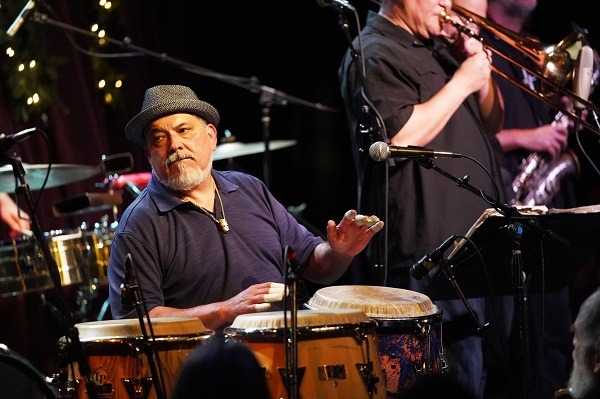
Poncho playing the congas
Poncho Sánchez playing the congas live

Poncho’s beginnings in music 

Pablo Sanchez, better known as Poncho Sanchez, is currently a percussionist and salsa singer who leads a renowned Latin jazz and Cuban music band. He became such a talented artist after a long journey in the difficult and competitive music industry. 

Poncho is the son of two Mexicans from different cities who had eleven children, the musician being the youngest of them all. From a very young age, he developed an intense love for music, which led him to learn to play instruments on his own.   

Although Poncho was born in Laredo, Texas, he spent all his childhood in Los Angeles with his family. In that place, he began to have a lot of contact with American jazz, Latin jazz and soul. During his adolescent years, his musical tastes were dominated by artists such as Mongo Santamaría, James Brown, John Coltraine, Miles Davis, among many others.   

Poncho at Catalina Bar
Poncho Sánchez performing at Catalina Bar and Grill in Hollywood

When he decided he wanted to take music up professionally, he began to teach himself to play the congas, guitar, drums, timbales and flute. This is how he was preparing for what was to come in his professional life later on.   

When he reached adulthood in his twenties, he was playing in various dance clubs for a while, until finally he got Cal Tjader and his group to notice his talent and invite him to join them.   

Today, Poncho is very grateful to Cal and said that he learned a lot from him during the time he was in the group. In fact, he even recalled in an interview that he gave him some lessons just as he was a teacher and Poncho was a student. This, in order to be on par with his bandmates and be able to put on a good show to the public.   
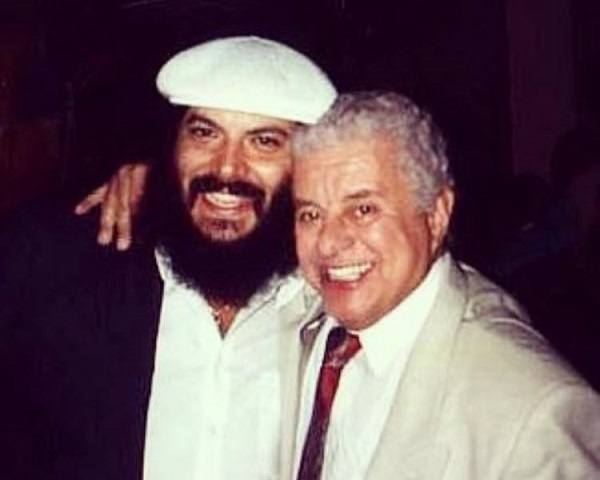
Poncho and Tito Puente
Poncho Sánchez and Tito Puente ”The King of Timbales”

Poncho as a soloist  

In 1980, Poncho finally managed to form his own group with which he began to carry out certain projects, although he had not completely departed from Cal’s band. In fact, the conguero worked with the musical director till the end of his days in 1982.   

Just a few months later, he signed with the Concord Records label to release his first official solo album, which he titled ”Sonando”, marking the beginning of a partnership that remains intact to this day. So far, Poncho has some two dozen recordings with Concord.  

Following decades of starting his career, Poncho saw his dreams become a reality when he won a Grammy for ”Best Latin Album” in 1999 thanks to the Latin soul album he had recorded at the time. That’s when the artist finally felt that everything he had worked for in the previous years had paid off.   

As for his latest album called ”Trane’s Delight”, Poncho seeks to pay homage to the artists who have inspired him and helped him develop his own art, as he considers that these personalities have been a fundamental basis for his growth as a music professional. 

Johnny Cru ISM corresponde in New York City

Read also: The Great Pichie Pérez and his brilliant career 

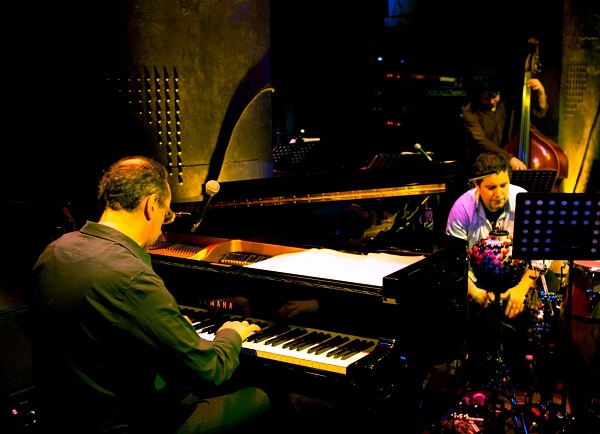
Héctor Martignon has been one of the most sought-after pianists on the Latin jazz scene in New York

New York based-, Colombian born Hector Martignon has composed, orchestrated, produced, performed and recorded music in a wide spectrum of genres, from Classical and Crossover, to Jazz and World Music, to Rock and Pop.

His five albums as a leader, two as co-leader (MOZART’s BLUE FANTASIES and BACH’s SECRET FILES) as well as his work on over a hundred albums, scores for five feature films, three Broadway Musicals and multiple other projects, showcase his wide-ranging area of expertise.

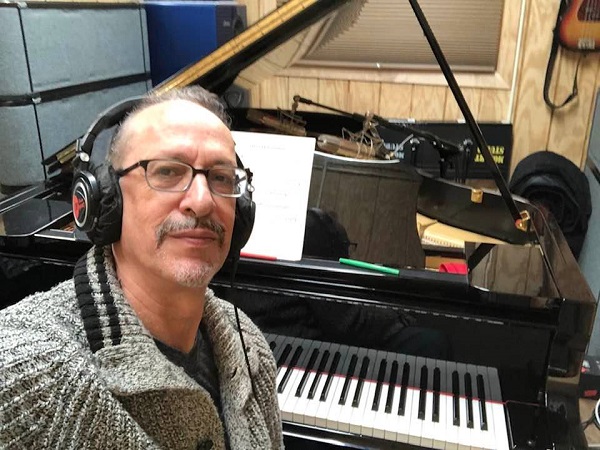
At Mozart Studios recording Carlos Jimenez’ second CD, + Ruben Rodriguez + Vince Cherico. A pleasure!

After several nominations as a sideman, two of his five solo CDs were nominated for a GRAMMY Award (REFUGEE, 2008, and SECOND CHANCE, 2010).

He arranged and performed parts of the score of Ang Lee’s OSCAR-nominated movie EAT, DRINK, MAN, WOMAN.

His first professional recording was at age 18 (Mikis Theodorakis’s “Canto General”) while one of the most recent was on legendary rock band CHICAGO’s latest production, the Latin-tinged “EXITOS”.

He has written symphonic orchestrations, performed and recorded by the Russian Philharmonic Orchestra and compositions like ABRE LOS OJOS, CIERRA LOS OJOS, commissioned and premiered by the MUSICA DE CAMARA STRING ORCHESTRA at St Patrick’s Cathedral in April 2011.

Hector Martignon is currently working on a first CD with his BANDAGRANDE Big Band + String Quartet as well as an album with selections out of a series of  7 solo piano recitals at the Ludwigsburg University of Education (Germany), where he conducts a “compact seminar” on Classic Music-based improvisation every November.

Our trio in Tokyo
Our trio in Tokyo

As a requested sideman he has toured the world with such greats as Paquito D’Rivera, Ray Barretto, Gato Barbieri, Steve Turre, Don Byron, Tito Puente and was featured pianist with Max Roach’s PROJECT AMERICA at the 92 St Y.

His joy of teaching has made him a requested guest-lecturer and performance teacher in music faculties and academies in several countries of Europe, Japan, North- and South America.

Hector wrote an instructional book on Latin piano commissioned and published by Hal Leonard, the SALSA PIANO BOOK.

Martignon’s abilities as a pianist have always been enriched by his interest in varied musical genres.

He paid for his studies of classical piano and composition at the prestigious Freiburger Musikhochschule in Germany by performing with the best Afro-Cuban and Brazilian bands of Europe, backing stars like Celia Cruz and Ismael Quintana on their European tours, and recording with Tata Güiness and Arturo Sandoval.

At the same time he was attending seminars of contemporary composition with masters like Gyorgi Ligetti, Luigi Nono and Karl Heinz Stockhausen.

He also performed classical music in recitals and concerts in Germany, Italy and his native Colombia, specializing in Chopin, Bach and Debussy.

One of his latest endeavors has been a Jazz-Classical crossover  project, co-lead with star virtuoso trumpeter Joe Burgstaller, in which the music of the classics, from Bach to Ellington is re-created in a chamber-jazz setting, to be enjoyed on their two releases, “Mozart’s Blue Fantasies” and “Bach’s Secret Files”.

Living in Brazil for a one-year love affair with that country and its music, Martignon soon became a requested studio musician and worked for star producer Carlinhos Brown.

Luquillo Beach, PR
Luquillo Beach, PR

Since relocating to New York City, Martignon has been one of the most sought-after pianists on the Latin jazz scene.

He’s toured North and South America, Europe, and Asia with the bands of Mongo Santamaría, Gato Barbieri, Steve Turre and Don Byron, who had him record in his latest CD.

He was featured pianist with the bands of Tito Puente, Mario Bauzá, Chico O’Farrill, Paquito D’Rivera, and Max Roach in his “Project America.”
Most notably, Martignon was pianist for the late Ray Barretto’s various ensembles.

During his eight-year association with Barretto, his contributions as pianist, arranger, and composer were fundamental in shaping the sound of the now famous New World Spirit Sextet.

One of his last collaborations with Barretto, “My Summertime,” was a favorite nominee for a Grammy award.
Martignon’s versatility has also made him extremely active in the film and television industries.

Besides playing all piano parts, he arranged and produced many parts of the score for the Oscar-nominated film “Eat, Drink, Man, Woman” by Ang Lee and performed the piano and keyboard parts for many movie scores (i.e., “Gloria”, “Relativity”).

He is composer of the original music of two feature films, one of which, “Septimo Cielo”, won international awards. He also collaborated in the production of many Broadway musicals (“Chronicle of a Death Foretold”, Paul Simon’s “The Capeman”, “Selena Forever”) as conductor, arranger, and co-composer.
In the fall of 2003 Hector visited Slovenia and Russia to collaborate with singer-songwriter Vitaly Osmsçko’s first symphonic CD.

The Russian Philharmonic Orchestra recorded in Moscow the orchestrations written by Hector.

As a composer, producer and arranger of TV and radio music his record is no less impressive. In 2001 he landed two spots for HBO Latino, and one for Coca Cola.

HECTOR” S FOREIGN AFFAIR
In 1998 Martignon performed with his quartet “Foreign Affair”at the Brooklyn Academy of Music’s famed annual festival “The Next Wave” on a triple bill with Tito Puente’s “Top Percussion” and Don Byron’s “Music for six Musicians”.

This proved to be a turning point for him and his ensemble, which evolved from the strictly acoustic trio sound of the first two CDs to a more eclectic and electric quartet sound.

The new configuration that evolved from that memorable concert started a series of concerts and recordings, with guitarist Mark Whitfield, Cameroonian bassist Richard Bona and Cuban drummer Horacio “Negro” Hernández.

This quartet performed and recorded live during a weeklong stint at New York’s famous Birdland.

The group has also performed on BET television festivals, at jazz clubs in Manhattan, and made various appearances in clubs and open-air festivals in his native Colombia and in Europe.

Martignon’s third solo project, to be released in the fall of 2003, is not only a reflection of the group’s new musical direction but also of his interaction with other world class musicians.

Eddie Gomez, Jeff Watts, Mathew Garrison, John Benitez, Dafnis Prieto, Willard Dyson have all made their unique contribution to this, Martignon’s new sound of Jazz.

Hector In Amsterdam with daughter Leticia

Hector Martignon never fails to surprise, challenge and delight us. Stay tuned and get involved in this affair.

Site: Héctor Martignon

Also Read: “El Sol de la Música Latina” el primer premio Grammy para el histórico disco de Salsa Eddie Palmieri

Producer and saxophonist Martin Franco talks about his passion for music

Martin Franco is a talented New York’s producer, sound engineer, composer, vocalist, percussionist and saxophonist who has had a big trajectory in music, which he shared with us in a half-hour conversation we had.   

The artist of Colombian parents has been kind enough to reveal some of the most important details of his artistic career and the process by which he has managed to become the professional in the music field he is today, so we hope the information revealed here will be liked by those who usually follow our publications.  

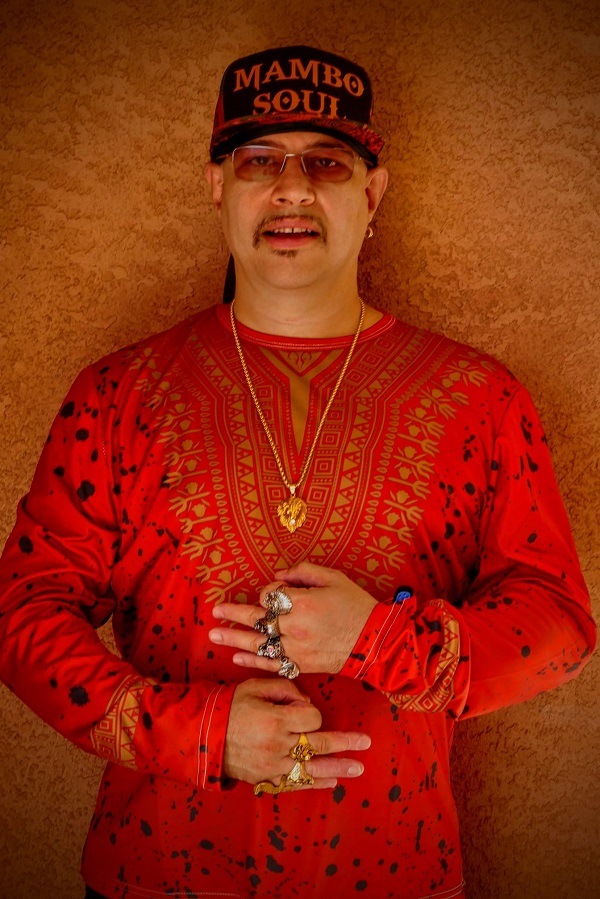
Martin, founder of Mambo Soul Band
This is Martin Franco, saxophonist and founder of Mambo Soul Band

Martin’s interest in music while still a child 

Something important we did not know about Martín is that, although both his parents are Colombian, they moved to Mexico when he was little and he spent the first eight years of his childhood in that country, before moving to Laredo, Texas.   

At his new school in the US, he and his classmates were allowed to choose the instrument they liked most to learn to play it and the boy chose the saxophone, as he thought it was ”the most beautiful” at the time.   

When Martin began his training, he discovered that he had a real taste for music and began to see it as a pleasant pastime and not an obligation, which led his mother to buy him his own saxophone and tell him to ”throw forward to music” if that was what he liked. 

When he turned 12, the family moved back to New York, where Martin started to take music more seriously and meet people related to the industry. That was when percussion and tropical music also caught his attention, as Texas was packed with Mexican cumbia and other such rhythms.   

On the other hand, New York had an immense Puerto Rican community and even his own aunts had married Puerto Ricans. Since this was the dominant community in the city in those years, Martin began hearing the conga, the keyboard, the trombone, the timbales and all the music made by the Fania. It was then when his musical tastes and plans began to change.   

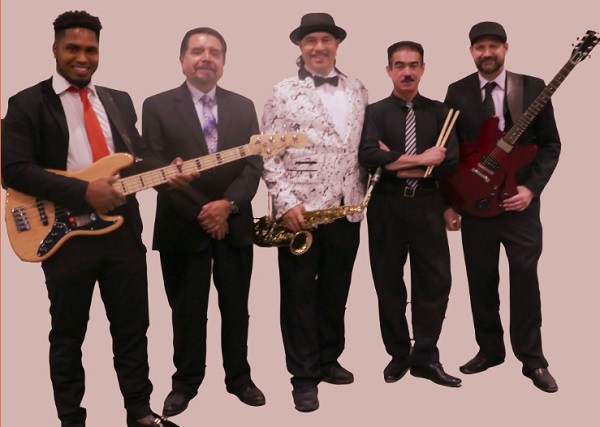
Martin and the rest of the group
Martin Franco and the rest of his orchestra Mambo Soul Band

Martín’s beginnings in music in New York City 

When he arrived in New York, Martin was not old enough to start a professional career, so he was engaged to play with friends in the streets, houses, apartments and private parties. However, this time helped him a lot to gain experience and his family was a great support in all this.   

Martín, his family and some of his friends used to go to see live Latin artists and orchestras such as Celia Cruz, Héctor Lavoe, Tito Puente, Eddie Palmieri, Ray Barretto, Mongo Santamaría, among others. This also represented part of his motivation to do salsa in the future, although he also liked American jazz, which features the saxophone, his favorite instrument.   

The mix of Latin and American genres resulted in the music that became popular in those years, and the music Martin makes today has much of what he learned back then. It was a mix of Caribbean tropical rhythms, jazz and American funk.   

The musician considers that American and Latin rhythms have complimented each other over the years and he always tries to unite them in his performances, just like English and Spanish.  

Mambo Soul Band 

The name ”Mambo Soul Band” is a mixture of ”mambo”, which means ”to greet someone” or ”to communicate” in some African dialects, and ”soul” in English. This resulted in something like ”to communicate from the soul”, a concept that fascinated Martin. At the same time, both are the names for well-known musical genres, the one Latino and the other American. 

He selected these genres as the name of his band because they contain what influenced him musically speaking. Latin jazz, soul and funk were the genres on which Martin based his songwriting for the band he was creating and he hired musicians who had experience with these rhythms. And in case they do not master any of them, he teaches them.   

According to Martín, guitarists and bassists are the ones who usually have more problems when playing or learning to play these genres, while a percussionist usually has a greater dominion over these areas. 

Another variant of the same project also led by Martín is Mambo Soul Jazz, which offers music and songs much more inclined to the American way. Mambo Soul Jazz is more aimed at quiet events where people do not usually dance much and just want background music to enjoy the evening. 

The choose of one or the another will vary depending on the public of the day, although the basis of everything is always Latin music.  

Martin performing live
Martin Franco and Mambo Soul Band performing live

The most challenging aspects of the Latin music scene 

In the view of Martin based on his experience, one of the most challenging things for him and his musicians is the economic issue. At the level where they are, they do not make big profits from their work, which contrasts to the high cost of living in California.  

This situation has led many of the musicians to have parallel jobs that allow them subsistence since it is very difficult to make a living from music. The only alternative is to constantly tour with famous groups, but not everyone is willing to do that, so they prefer to work on other things. 

In his particular case, he can afford to live only from music because he is the leader of the orchestra and the one who is in charge of getting contracts and shows for the group.  

What we took from the conversation 

From the beginning, we have noticed that Martin is a man absolutely passionate about his Latin roots and all that comes with them, especially the musical part. He always stressed that everything he does is for his love of music.   

It is our pleasure to have the opportunity to talk with this great exponent of Latin and Afro-Caribbean music and we offer him our best wishes for success from now on. 

Read also: Lengaïa Salsa Brava is killing it in Montréal 

Metamorphosis: from music to photojournalism, a reinvention without limits

In the salsa scene, we are privileged to have the presence and companionship of Felix “Guayciba” Ayala.Guayciba is one of the greatest photojournalists Puerto Rico has ever produced.

He has moved from the musical notes that embrace our ears to now capturing visuals that awaken our five senses of unrepeatable moments.

I appreciate and share first hand the reference of how this idea begins, how the seed of wanting to be a photojournalist is planted, after having directed the Guayciba Group for 12 years.

“In the mid-’80s, a group of friends and I got together. We started playing and put together a Christmas repertoire. People liked it, and they told me, ‘Hey Felix, you should form a group, you sound great.'”

Félix “Guayciba” Ayala y Chucho Valdes

Encouraged by the public’s reception, they set about the task of banding together and formalizing a repertoire of Christmas music, which they later expanded to include popular music. In 1987, the group did not yet have a name, but the musicians were already rehearsing and playing in a bar in Santa Rosa (Bayamón, Puerto Rico).

In 1988 they started calling themselves Murciélago Sound Machine and got their first professional contract, for which they charged $200.00. During one of the rehearsals, Felix’s neighbor, who owned a movie and video rental store, offered to give him the name of his store: Guayciba; which he had already registered with the State Department.

The rest is history.

Felix liked the name, even though he still didn’t know what it meant. Guay-ciba means to take care of the stone.  It turns out that our Taino Indians communicated by carving messages on stones, which we now know as petroglyphs.

This form of communication of our Indians, the Tainos, was engraved on the stones that are part of our heritage.

Since 1989, Guayciba claims to have lost his last name – Ayala – to replace it with the name he is known by in the media, Guayciba.

On the salsa stage we have the privilege of having the presence of Felix "Guayciba"
On the salsa stage we have the privilege of having the presence of Felix “Guayciba”

This was the name of the musical group of which Félix Guayciba was the director, composer and singer.  As the main member and founder, he took on the task with commitment and in 1989 they released their first record production, entitled Nuestra música primero en LP, because CDs were not yet widespread in the market.

Felix remembers that the first singer of Grupo Guayciba was Gisela Ortiz.  Some time later, Gisela got thyroid cancer and when she lost her voice, she had to be replaced by Aidita Encarnación.

Guayciba recalls that Aidita made her debut with the group during the “Coffee Festival” in Maricao and remained with the group until it disbanded in 2000.

In 1991 they produced Echemos pa’lante, which opened the door to radio stations on the island. In 1992 they produced Por ti doblaré rodillas, and in 1993 they released what Felix considers their masterpiece under the title Borinquen, nido de amores.

Félix affirms that this production became the classic album that consolidated them in Salsoul, Z-93 and Estereotempo.  Later they released La revolución apoya lo nuestro. In 1999 they released their last album, Contra viento y marea.

In this last Guayciba production, Maestro Luis ‘Perico’ Ortiz made two arrangements: “Déjame Soñar” by Perín Vázquez, which Tito Puente had already recorded on the 100th album, backing the voice of Tony Vega (Antonio Vega Ayala), the cousin of Félix Guayciba Ayala. The six albums of the Grupo Guayciba were recorded in the studio of Maestro Pedro Rivera Toledo, and in Contra viento y marea Maestro Rivera Toledo recorded the saxophone.

Félix “Guayciba” Ayala

In his last album, the song “Por nada la cambiaré” was composed by Guayciba and dedicated to his homeland, Puerto Rico.

They never recorded Christmas music because their mission was to defend our music, the seis, the bomba, the plena and the guaracha, among other indigenous rhythms. The time came for the group to disband, but as Guayciba affirms: “We left a legacy for the musical history of our nation (…) Guayciba was, is and will be one of the best musical groups in the history of typical Puerto Rican music. I have retired, but at least we have left a legacy for history, we have left a mark”.

With the arrival of the new millennium, Guayciba’s musical stage ended to give way to the visual arts, making it clear that he had not retired from the humanistic arts, but had reinvented himself and now stood out in the visual arts.

The images captured by Guayciba’s photographic lens are full of life and movement. The viewer sees as if the artist, athlete or object in the photo comes to life.

Guayciba reflects while explaining how the image speaks or remains silent, depending on the adjustment made, the movement given, the position and the light.

He hastens to clarify: “I have used my musical career to distinguish myself in photography. I photograph artists the way I want them to photograph me.

I try to make the image I take of an artist or a show speak. In photojournalism, the photo has to speak.”

Guayciba made the decision to move from music to photojournalism as a result of a deep depression that he faced and fought with professional help.  Once the decision was made, he began training at the University of Puerto Rico.

He never forgot what one of the specialists who was part of the medical team that helped him recover told him: “I have faith in you.  If you are going to be a photojournalist, I want you to be the best photojournalist”.

Felix attended classes every Wednesday for three hours. He remembers his first photographic experiments.  One that comes to mind is Ricardo Arjona, who performed for an entire season at the Centro de Bellas Artes. Felix would leave his weekly class to go to the CBA, where he would stay until late.

On the salsa stage we have the privilege of having the presence of Felix "Guayciba"
On the salsa stage we have the privilege of having the presence of Felix “Guayciba”

The next day he would go to a megastore to develop the photos from the night before and bring them to the professor to evaluate the shots.  The professor would give him advice on what to do to improve the photos he had in hand.

Another moment he remembers with emotion was in 2002, when Fania played a concert at the Juan Ramón Loubriel stadium in Bayamón.

Guayciba already had a digital camera, and during that concert, he says he used 25 rolls of film with 36 exposures each.

He says this was his first international assignment. The first time he photographed an international artist was when he was still a photography student, practicing with Ricardo Arjona in the Fine Arts Department.

As a result of that coverage, he got in touch with the Guatemalan artist, who was thrilled with the photos Felix took, saying at the time that they were the best photos he had ever taken, adding that the Puerto Rican had captured his best side.

Felix has continued to evolve and has had the opportunity to cover concerts by Elton John, the Rolling Stones and Paul McCartney, among others.  He says: “The only thing I don’t do is pornography, weddings or quinceañeras”. His specialty is artistic shows and sporting events.

Guayciba is the longest serving photographer to cover the Coliseo de Puerto Rico since its inauguration in 2004, when Sonora Ponceña, Richie Ray & Bobby Cruz and Roberto Roena’s Apollo Sound performed in that memorable concert produced by Pepe Dueño.

One of the highlights of his career was a trip to Cuba in 2009, where Guayciba was the official photographer for the Puerto Rican delegation that went to the Cuba Disco Festival, which was dedicated to Puerto Rico in that edition.

He has taken more than 24,000 pictures of Cuba. The most memorable experience of his trips to Cuba was visiting the resting place of Che Guevara.

He continues to learn from all the images he has taken and published.  “At one point, during the performance of the 2013 musical Pedro Navaja, the Caballero de la Salsa, Gilberto Santa Rosa told me, “You have to let yourself be criticized and you have to accept criticism as long as it is constructive criticism.”

Felix added and still maintains: “It depends on who is criticizing you, because there are people who criticize you just to make fun of you; yes, you know, out of envy”. In fact, Felix understood that he had the best photos of Gilberto.

When he went to see him to show him, Santa Rosa told him: “They’re good, but these photos where I’m alone don’t say anything because it could be at the Fine Arts Center or it could be in some theater.  This concert is symphonic, where is the symphony orchestra?” Santa Rosa was right. “From that ear flattery I learned that you have to take the picture of the artist and the complements like stage, orchestra, etc..  It’s like writing a story.  You have to include the day, the historical setting, the characters, and make sure that the viewer can get a picture of what happened there in the moment. It’s more of a frozen in time effect.

Guayciba considers Conrado Pastrano her teacher and mentor. She expresses gratitude for all that she has learned in photography and acknowledges that there is still more to learn.

Conrado is an exceptional colleague who takes the time to explain ways to correct unwanted effects in images. Guayciba has developed her own unique style by studying the works of other colleagues and drawing inspiration from each of the photojournalists whom she admires.

Guayciba is highly regarded as one of the top photojournalists in Puerto Rico, although he is humble and has never claimed the title for himself.  He recognizes that there are others who may be more talented than him.  His motto is: “I may not be the best, but I am proficient in my craft and the photos I take convey a narrative.”

When he is at the ball park, he adeptly adjusts his lighting, shutter speed, and lens to capture the intricate details on a ball despite its velocity exceeding 100 miles per hour. When artists perform on stage, Guayciba faces the task of restoring their natural appearance despite the color filters and stage lighting often making them look unnatural or cartoonish.  Overcoming these challenges and bringing the images to life, imbues these artists with renewed enthusiasm for their craft, a pursuit they have devoted over two decades to.

At 68 years of age, he prays daily for longevity. He abstains from drugs and alcohol, including wine, champagne, and cider. His sole indulgence is tobacco and photography.

To view Félix Guayciba’s artistic works and keep in touch with this vital advocate of Puerto Rican culture, please visit the publication at www.guayciba.com. To email him, please use [email protected], or follow his IG account at https://www.instagram.com/guay54/.

To reach him by phone, please dial 787-637-8617. He is always available and eager to assist with his usual helpful demeanor.

Bella Martinez Puerto Rico

Also Read: Bella Martínez presents “Las memorias de Jimmie Morales: un conguero para la historia” [Read more…] about Metamorphosis: from music to photojournalism, a reinvention without limits

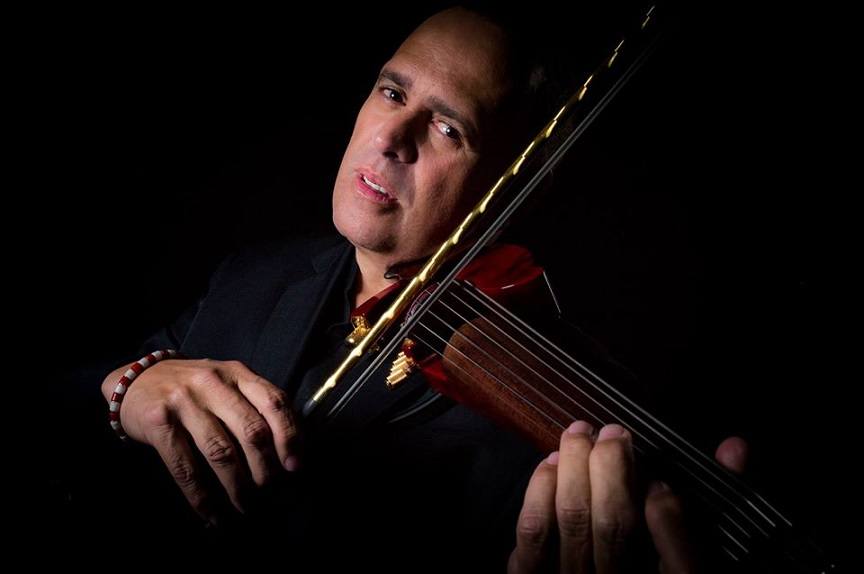
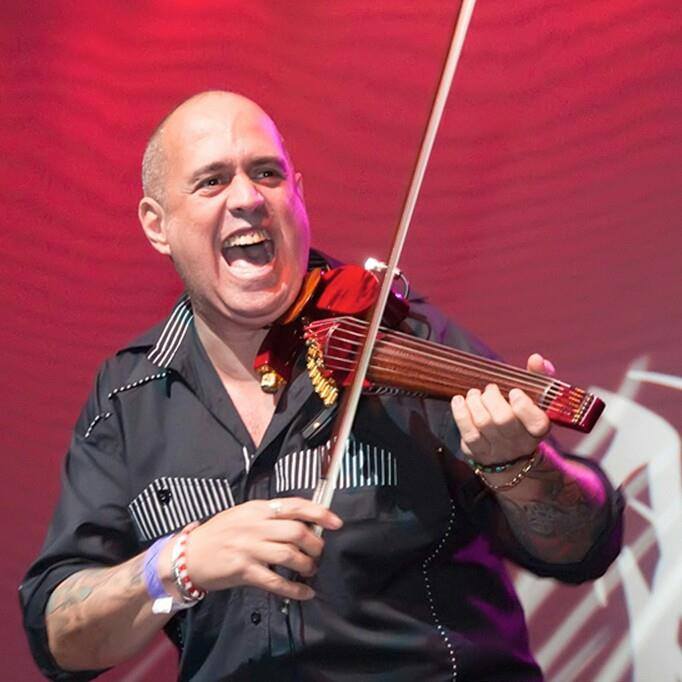
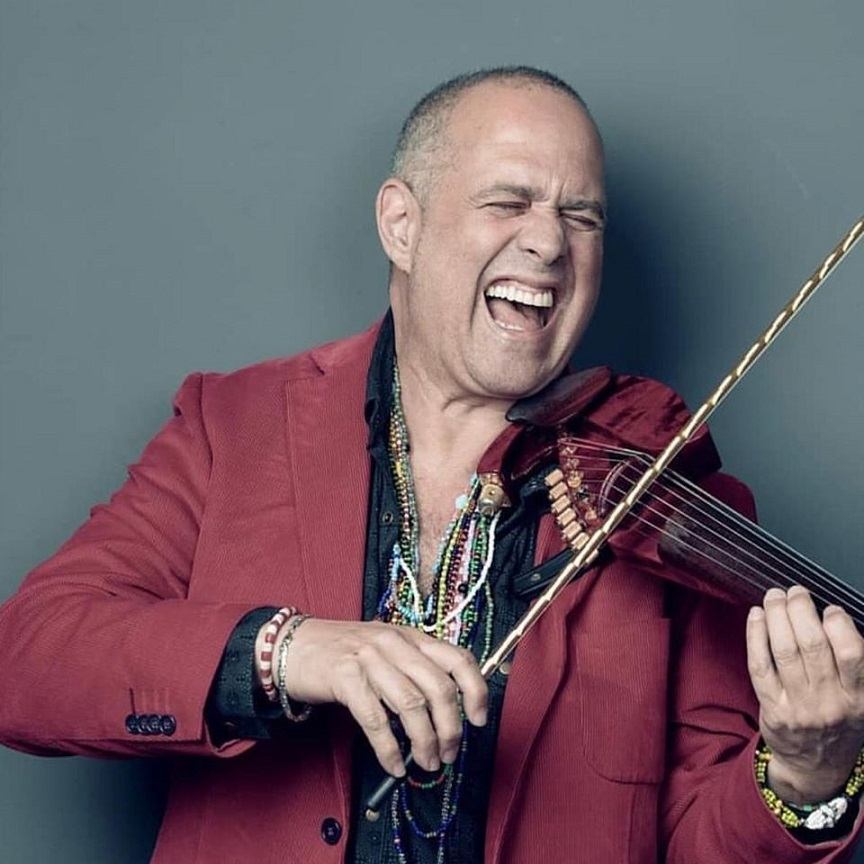
Alfredo De La Fe, is responsible for transforming the violin for Latin Music

Latin America/ Colombia/ Cali

Alfredo de la Fe is a Cuban-American violinist based in New York, who also lives in Colombia.

He is responsible for transforming the violin into a sound much more suitable for Salsa and Latin music, as well as having manufactured and patented his own violin. De la Fe began studying the violin at the Amadeo Roldán Conservatory in Havana in 1962.

Two years later, he receives a scholarship to enter the Warsaw Conservatory, in Poland.

In 1965, he soloed compositions by Mendelssohn and Tchaikovsky with the Metropolitan Opera Orchestra at Carnegie Hall.

Alfredo De La Fe playing the violin

A scholarship at Juilliard opened new doors for him. De la Fe began his professional career, at the age of twelve, when he switched from classical music to Salsa, and accepted an invitation to join charanga legend José Fajardo’s Orchestra.

In 1972, he joined the Eddie Palmieri orchestra. He was a member of the group for a very short period, temporarily moving to San Francisco, where he met Santana. Returning to New York, De la Fe joined Típica ’73 in 1977. Two years later, he released his debut solo album, Alfredo.

In 1980, De la Fe signed with the Fania All-Stars, and produced thirty-two albums for Fania Records. His second solo album, Charanga ’80, was released in the same year.

In 1981, De la Fe became musical director of Tito Puente’s Latin Percussion Jazz Ensemble.

The following year, he confirmed his solo career, signing with Taboga, for whom he recorded the album Triunfo. He settled in Colombia in 1983, and signed with Philips; As a result of this, he released three albums: Made in Colombia, Dancing in the Tropics and Alfredo de la Fe Vallenato, at the end of the 80s.

In 1989, De la Fe signed with Discos Fuentes. Although he was one of the members of the Fania All-Stars for 1995, De la Fe continued his solo career.

He signed with Sony Music in 1997. Two years later, he toured with his own orchestra, appearing at festivals in Denmark, the Netherlands, France, Turkey, and Belgium, and reuniting with Eddie Palmieri and his orchestra for a European tour.

In 2002, after several years in Europe, Alfredo moved back to New York and visited the US with his New York band, led by pianist Israel Tanenbaum.

Alfredo De La Fe
Alfredo De La Fe

Other musicians including bassist Máximo Rodríguez, percussionists Tony Escapa and Johnny Pequeño Rivero, and autistic Andrea Brachfeld.

Discography Solo albums

  • 1979 : “Alfredo”
  • 1980 : “Alfredo de la Fe y la charanga 1980”
  • 1981 : “Para África con amor”
  • 1982 : “Triunfo”
  • 1984 : “Made in Colombia”
  • 1985 : “Alfredo de la Fe Vallenato”
  • 1990 : “Salsa”
  • 1990 : “Los violines de Alfredo de la Fe”
  • 1992: “Los violines de Alfredo de la Fe vol. 2: Sentir de Cuba”.
  • 1993 : “Con toda la salsa Alfredo de la Fe”
  • 1995 : “La salsa de los dioses”
  • 2000 : “Latitudes”
  • 2006 : “Alfredo de la Fe y Fruko (La Llave de Oro)”
Alfredo De La Fe - Photo
Alfredo De La Fe – Photo

Session Artist and Collaborations:

    • 1973 : “The Sun de música latina” por Eddie Palmieri & Amigos Con Lalo Rodríguez
    • 1976 : “De ti depende” por Héctor Lavoe
    • 1977 : “Selecciones clásicas” por José Fajardo
    • 1977 : “El Baquine de Angelitos Negros” por Willie Colón
    • 1978 : “Comedia” por Héctor Lavoe
    • 1979 : “Típica 73 en Cuba – Intercambio cultural” por Típica 73
  • 1979 : ” Necesito tú” por Sylvester
  • 1980 : “Charangueando con la Típica 73” por Típica 73
  • 1980 : “Señor Charanga” por José Fajardo
  • 1982 : “Encima Broadway” por Tito Puento
  • 1997 : “Bravo” por Fania Todo-Estrellas
  • 2001 : “Diferente” por José Alberto (El Canario)


Melao
Melao
  • « Go to Previous Page
  • Page 1
  • Interim pages omitted …
  • Page 14
  • Page 15
  • Page 16
  • Page 17
  • Page 18
  • Interim pages omitted …
  • Page 42
  • Go to Next Page »

International Salsa Magazine (ISM) is a monthly publication about Salsa activities around the world, that has been publishing since 2007. It is a world network of volunteers coordinated by ISM Magazine. We are working to strengthen all the events by working together.