• Skip to primary navigation
  • Skip to main content

International Salsa Magazine

  • Home
  • Previous editions
    • 2026
      • ISM / January 2026
    • 2025
      • ISM / December 2025
      • ISM / November 2025
      • ISM / October 2025
      • ISM / September 2025
      • ISM / August 2025
      • ISM / July 2025
      • ISM / June 2025
      • ISM / May2025
      • ISM / April 2025
      • ISM / March 2025
      • ISM / February 2025
      • ISM / January 2025
    • 2024
      • ISM / December 2024
      • ISM / November 2024
      • ISM / October 2024
      • ISM / September 2024
      • ISM / August 2024
      • ISM / July 2024
      • ISM / June 2024
      • ISM / May 2024
      • ISM / April 2024
      • ISM / March 2024
      • ISM / February 2024
      • ISM / January 2024
    • 2023
      • ISM / December 2023
      • ISM / November 2023
      • ISM / October 2023
      • ISM – September 2023
      • ISM – August 2023
      • ISM July 2023
      • ISM Edition June 2023
      • ISM – May 2023
      • ISM April 2023
      • ISM March 2023
      • ISM February 2023
      • ISM January 2023
    • 2022
      • ISM December 2022
      • ISM November 2022
      • ISM October 2022
      • ISM September 2022
      • ISM August 2022
      • ISM July 2022
      • ISM June 2022
      • ISM May 2022
      • ISM February 2022
      • ISM January 2022
    • 2021
      • ISM December 2021
      • ISM November 2021
      • ISM October – 2021
      • ISM September 2021
      • ISM August 2021
      • ISM July 2021
      • ISM May 2021
      • ISM April 2021
      • ISM June 2021
      • ISM March 2021
      • ISM February 2021
      • ISM January 2021
    • 2020
      • ISM December 2020
      • ISM November 2020
      • ISM October 2020
      • ISM September 2020
      • ISM August 2020
      • ISM July 2020
      • ISM June 2020
      • ISM May 2020
      • ISM April 2020
      • ISM March 2020
      • ISM February 2020
      • ISM January 2020
    • 2019
      • ISM December 2019
      • ISM November 2019
      • ISM October 2019
      • ISM Septembre 2019
      • ISM August 2019
      • ISM July 2019
      • ISM June 2019
      • ISM May 2019
      • ISM April 2019
      • ISM March 2019
      • ISM February 2019
      • ISM January 2019
    • 2018
      • ISM December 2018
      • ISM November 2018
      • ISM October 2018
      • ISM September 2018
      • ISM August 2018
      • ISM July 2018
      • ISM June 2018
      • ISM May 2018
      • ISM April 2018
      • ISM March 2018
      • ISM February 2018
      • ISM January 2018
    • 2017
      • ISM December 2017
      • ISM November 2017
      • ISM October 2017
      • ISM September 2017
      • ISM August 2017
      • ISM July 2017
      • ISM June 2017
      • ISM May 2017
      • ISM April 2017
      • ISM March 2017
      • ISM February 2017
  • Download Salsa App
    • Android
    • Apple
  • Spanish

Search Results for: Tito Rodríguez

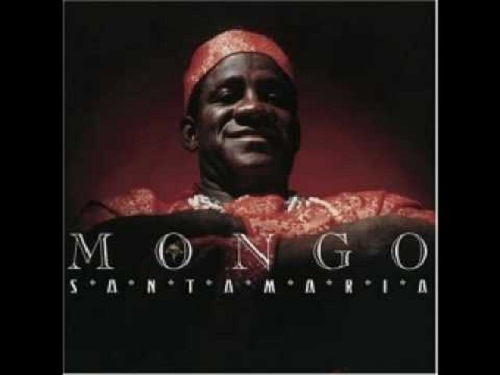
Ramón “Mongo” Santamaría “I wanted to do something that sounded like home”.

April 7, 1917, Mongo Santamaría was born in the Jesús María neighborhood of Havana, Cuba.

Exceptional percussionist of Latin Jazz and related rhythms, whose first name was Ramón Santamaría.

Mongo left to continue playing his Congas hard in the sky on February 1st, 2003.

“I wanted to do something that sounded like home”. With these simple words, Ramón Santamaría Rodríguez “Mongo Santamaría” spoke of his essence.

The purpose of his music pursued a sonority and a memory, possibly located in Cuba, in Jesús María, a marginal neighborhood where he grew up and enjoyed a tradition attached to the drum, to religion, to the street and from where this great Cuban percussionist drank infinitely.

But surely those drums also came to him from far away, from the Congo, where his grandfather came from to be a slave on the island and who also filled his head with sounds full of meanings and colors, which he later masterfully spread around the world.

The name of Mongo Santamaría (Havana, April 7/1917 – Miami, Feb. 1/2003) is, for the glory of all music, an inevitable reference of Cuban percussion.

Since he was a child he knew that his thing was to play the drum and he was lucky enough to belong to a family of empirical musicians, singers and drummers who supported him in the learning and mastery of these instruments.

During his time in Cuba, already a professional musician, he participated in numerous groups that little by little gave him a place among the most outstanding percussionists of the time. Some names of these groups are El Conjunto Boloña, Lecuona Cuban Boys, with whom he was able to participate in the recording of his first album, Conjunto Matamoros, Segundo Grupo de Arsenio Rodríguez, among others.

Each group had its own style and stamp, but in each of them Santamaría put his personal “touch”.

At the prestigious Tropicana cabaret he played with Chano Pozo as a member of Armando Romeu’s orchestra.

From that moment on, his career would not stop. Conjuntos, Septetos de Son were the perfect selection to complete the sap from which he would draw all his style and technique.

Later, from carnival to carnival, he would gather with other percussionists to play in the comparsas and experience the festive musical atmosphere par excellence of those years.

Alongside him played other friends who soon became a Cuban reference in the United States: Patato Valdés and Armando Peraza.

As part of the Tropicana orchestra and located in a show in Mexico, he decided to settle there as did many musicians of his time and came to play with Pérez Prado and Benny Moré.

It was precisely in the latter orchestra where he met Clemente Piquero “Chicho”, another Cuban percussionist whose style made him rethink the role of percussion in Cuban popular orchestras.

Mongo Santamaría belongs to the second wave of Cuban percussionists who arrived in New York in 1950.

His new idea of restructuring and designing his own style in the use of Cuban percussion was perfectly in tune with the reality that a few years earlier was being experienced in the music produced and sold in New York, after the arrival of the Cuban rumbero Chano Pozo.

“The rhythm produced by the conga organizes all the percussion of a band, from which melodies and counter-melodies can be experimented with.”

“I think percussion is the base from which things come out.”

Already in the United States, Mongo plays with Gilberto Valdés, again he is part of Pérez Prado’s orchestra and finally with Tito Puente’s, where he stayed for 7 years. Once in the line of Afro-Cuban jazz, so popular at the time, he joined George Shearing’s group and later the vibraphonist Cal Tjader.

With his own orchestra, he accompanied La Lupe, one of his favorite singers, and undertook projects of novel formats for the time, such as small formations of brass trio, piano, bass, percussion and drums, at a time when jazz bands predominated.

Mongo Santamaría, perhaps without the theatricality to which Chano had accustomed the New York public, focused all his strength on achieving his own sonority, with a fusion of Cuban styles and genres, perfected and deepened in the introduction of Afro-Cuban rhythms with a naturalness and using colorful timbre elements by using several tumbadoras in his set.

His creativity is highly demonstrated in the great amount of music that is part of his catalog of works and the quality becomes indisputable when seeing the amount of outstanding jazz interpreters that version and recreate his work.

In 1959 he recorded Tambores y cantos, which contains the song Afro blue, which over the years became “a jazz anthem of all times”, according to Nat Chediak, author of the Latin Jazz Dictionary.

His long recording career (50 albums), testifies to the musical activity that this great percussionist carried out throughout his professional career. He worked with American jazz legends such as Chick Corea, Herbie Hancock, flutist Hubert Maws, Dizzy Gillespie, trumpeter Marty Seller, among other musicians who today still pay tribute to this Cuban conguero who was the architect of the fusion of rhythm & blues rhythms and Afro-Cuban music, recognized the connection of Cuban music to African roots and placed the congas in an indispensable instrument for the determination of Latin jazz.

In 1977 Mongo Santamaría received the American Grammy Award for “Best Latin Recording” for the work Dawn.

In 1999, Rhyno Record Company, based in Los Angeles, California, recognizing his contribution to Latin Jazz, released the “box set” (CD) Skin On Skin: The Mongo Santamaría Anthology (1958-1995), which includes 34 of his most successful pieces (from his rumba albums, his LP with La Lupe and his projects in the fusion of Jazz and Latin) and an extraordinary literature about his career written by actor Andy García, musician Poncho Sánchez and other connoisseurs of the Latin Jazz genre such as José Rizo, Luis Tamargo, Joel Dorn and Miles Pelich.

The legendary musician was extremely honored and grateful for the distinction Rhyno gave him by introducing this historic anthology to the world. As stated in the conversation with Jaime Torres, Mongo said:

“This is the fruit of many years of work, music made with taste and love.”

May he rest in peace and eternal glory to him.

Johnny Andreu “Almendra”. Bandleader, percussionist and founder of Los Jóvenes del Barrio

Growing up and listening to music, he played with various objects around the house. Taking things seriously at the age of 16, he started with bongos, then congas and then timbales, which is the instrument he is best known for.

Andreu y Los Jovenes Del Barrio, the band was led by his ex-wife, the American born singer JILLIAN (1962-2009) able to charm you in two languages, a great loss at a young age, another victim of the scourge of our time, cancer. Blending elements of Charanga, Jazz, Typical Latin, the group dominated radio stations for a decade.

Brooklyn-born composer Johnny Andreu, who from an early age was introduced to and kept in touch with Latin rhythm through family influences, received his musical training at U.C.L.A., the “University on the Corner of Lexington Avenue. When he was 18, Mario Lebran, a musician with Ricardo Ray and author of ‘Mambo Jazz’, helped him get into the music business. He has learned a lot by listening to his records and playing his instruments.

Lebran Andreu also encouraged him to audition for his first job as a percussionist working for “Mike y Su Rítmico”. From there he moved on to the Bobby Matos orchestra whose pianist Paquito Pastor said one day he named him Andrews after Andreu. You are Latin, you are an ‘Almendra'”. That’s how Johnny Andreu became Johnny Almendra.

In the late 1960s he teamed up with Johnny Colon, they performed at the Corso and the legendary Cheetah, and after a year, Almendra and Louie Bauzo left to form their own band, Tambo.

This group lasted about four years and later worked with Almendra Charanga ’76, Orquesta Broadway, and the Típica Novel. Playing with Típica Ideal, he met Milton Cardona, who became a lifelong friend.

Band director, percussionist and founder of Los Jóvenes del Barrio.
Johnny Andreu “Almendra”

One day Cardona invited Almendra to see Willie Colón at Casa Borinquén, and as it turned out, they were in need of a timbalero. They invited Almendra who stayed for eight years.

During 1977 and 1978, Willie Colón Rubén Blades recorded history-making albums. A large number of the best musicians of the time were brought together, including Héctor Lavoe, percussionist José Cándido Rodríguez, bassist Víctor Venegas and many others. This material was released in 1998 for the RMM label.

For International Salsa Magazine through www.SalsaGoogle.com it is a great pleasure to review an artist of the stature of Jhonny Almendra, catalogued as one of the greatest percussionists in the city of New York for his ability and skill still in the forefront of Latin Music.

Johnny Almendra, Los Jóvenes Del Barrio  Reconfirmando “1997”

Johnny Almendra, Los Jóvenes Del Barrio – Reconfirmando “1997”

Tracks

Todo el Mundo Necesita

Pasión Sin Freno

Hechicera

Everybody Plays the Fool

Borincuba

Zapato Apartao

Cumbiaranga

Compassion

Rent

Cold and Darkness, The

Hechicera Reprise/A-Files

Musicians

Regina Carter – trombone

Ozzie Meléndez – trombone

Ronnie Bar – backing vocals

David O’Quendo – flute

Karen Joseph – flute

Kimson Plaut – accordion, piano, synthesizer

Oriente Lopez – flute, synthesizer, backing vocals

Ray Sepulveda – vocals

Tito Nieves – vocal

Robert Thomas – violin

Sam Bardfeld – violin

Al Bello – percussion

Andreu Johnny Almendra – percussion

Frank Seguinot – vocal

Miles Peña – vocal

Sources: 

https://lasalsaesmivida.com/johnny-almendra-y-los-jovenes-del-barrio-reconfirmando/https://www.pinterest.com/bobbymartell/johnny-almendra/

Article of Interest: What Ángel Meléndez has to say about his brilliant musical career

From Zurich-Switzerland MERCADONEGRO Orchestra presents its latest song titled “Que Ironia”

Since Friday, January 21, 2022, is available on Youtube the new video clip from the Mercadonegro.

Mercadonegro was Created at the end of 2000 with influences from Salsa Dura thanks to their experiences working with artists such as Celia Cruz, Alfredo de la Fe, Cheo Feliciano, Tito Nieves, and many more.

Orquesta Mercadonegro titled “Que Ironia” song that is part of the production SOMOS DEL BARRIO, returning to the radio waves and digital platforms, a song that had been on hold, but now takes off from this group of Latinos based in Europe.

Mercadonegro Created at the end of 2000 with influences from Salsa Dura thanks to their experiences working with artists such as Celia Cruz, Alfredo de la Fe, Cheo Feliciano, Tito Nieves, and many more
Orquesta Mercadonegro de Suiza

SOMOS DEL BARRIO is the 4th production, of which stand out songs like: Triste y Solo, Quien a Hierro Mata, Rumba Negrito and also this current song “Que Ironía”, as always the boys of Mercadonegro highlight their work by the mixture of different cultures and Latin roots that enrich their musical style.

“Que Ironía” was born from the inspiration and ideas of Rodrigo Rodriguez Puerta & Eddie Villanueva Chininin, which relates the daily experiences of human beings, in their day to day nonconformity, and as the same lyrics say

“Nobody knows what he has until he loses it”.

This time it is Oscar “Chucky” Cordero who is in charge of the musical arrangements and even participates in the trumpet solo.

Mercadonegro, based in Switzerland, was founded on November 15, 2002, since then they have participated in the biggest Latin/Salsa and Jazz Festivals in Europe, and they have toured China (Asia), Colombia and Mexico (Latin America).

Its Directors : Armando Miranda ” El Moro ” was born in Havana – Cuba, with studies in the conservatory and participation with different Cuban artists. He is the lead singer of the orchestra and composer of some songs.

Rodrigo Rodriguez Puerta, born in Cartagena, Colombia, since he was a child he awakened his interest in music, percussionist, chorister, singer, composer and music producer.

In this most recent title “Que Ironía” participate the following musicians: Authors: Rodrigo Rodriguez Puerta / Eddie Villanueva Chininin

Arranger: Oscar ” Chucky ” Cordero

Piano: Oscar Ivan Lozano ((Oilo)) Bass: Dimitris Christopoulos

Full Percussion: Rodrigo Rodriguez Trombones: Johan Escalante Trumpets: Oscar ” Chucky ” Cordero Baritone Sax : Gills Grivola

Backing Vocals : Roberto Marcano ” El Chamo ” & Rodrigo Rodríguez Vocals : Rodrigo Rodríguez Puerta

Sound and Mix Engineer : Jose Mendoza

Pasterization : Fernando Álvarez at 440 Mastering, Madrid-Spain Recorded at GO STUDIO Zurich-Switzerland.

Site: Mercadonegro

Article of Interest: Mercadonegro Orchestra of Switzerland

“International Salsa Magazine is SalsaGoogle.com“.

We are an organization that from the hand of its Founder, Director and Editor Eduardo Guillarte, in force since 2007 that has been working non-profit helping to promote: Orchestras, Singers, DJs, Clubs, Plastic Artists in North America, Europe and Latin America and Asia and with the contribution of volunteers in various parts of the world, which at the same time invite and recommend all lovers, dancers of our Latin music to follow La Orquesta MercadoNegro from Zurich-Switzerland.

Long live music and its only and great protagonist, La Salsa.

Junito Albino and his collaborations with many orchestras

How Junito Albino began his career

Junito Albino is one of those artists who has been influenced by some of the greatest artists in Latin music and that has led him to become what he is today. Julio Junito Albino was born in New York in 1962 and got curious about the same music at the age of 11, after which he joined the school band of San Germán until he graduated from high school. When he was still a teenager, he began to play timbales with the first group to which he belonged, whose name was Orquesta La Crítica and belonged to director and trumpeter Fernando Vega. 

When he attained the proper age, he began to study music education at the Interamerican University of Puerto Rico in 1980, when he would be a part of the Orquesta Kachende de Mayaguez whose direction was by Gilberto Gili Toro. With this group of musicians, he released his first record production. By that time, he met singer-songwriter Antony Martínez, with whom he would have a great friendship. 

Julio Albino
Renowed timbalero Julio Junito Albino

In 1983, he went to live in New York City and began collaborating with the Orquesta de Los Hermanos Colón, with whom he wasted no time in returning to the Island of Enchantment to do some live performances. With this same group, he recorded his second album Ámame Un Poquito Más, which was directed by Sergio George. 

Some of the orchestras with which Albino worked

Another of the most important society that Albino achieved realizing during his career was with Joe Quijano’s orchestra and his Conjunto Cachana, with whom he had the opportunity to share the stage with La Guarachera de Cuba Celia Cruz, The King of Timbales Tito Puente, Latin Grammy winner Ray Santos, talented pianist Charlie Palmieri and many others.   

In 1986, he was fortunate to accompany some of the greatest artists from Latin genres such as Paquito Guzman, Marvin Santiago, Hector Tricoche and many more. One of the greatest unions that he would give tangible shape to would be with Moncho Santana’s Orchestra, former vocalist of Grupo Niche, with whom he chalked up enormous successes and demonstrated all his talent. However, collaborations would not stop there. 

Junito also came to be part of the orchestra of Tito Nieves and that of Ramon Rodriguez. The latter was directed by pianist Gilberto Colón, Jorge González (bongo) and Willie Romero (conga). With all his accumulated experience at this point in his life, it was not difficult for him to find a place in the Orquesta Tártaro led by Franke Ruíz. 

When he moved back to Puerto Rico, he was also in other orchestras in the country such as Puerto Rican Power, Jorge Carrión, Luisito Escobar and many more. In addition to the foregoing, he has managed to work as a producer and musician in a large number of independent groups collaborating with percussion, timbales, bongo and other instruments.   

After a successful career in other groups, he decided to create his own orchestra, Secreto A Voces, in which genres such as salsa and Latin jazz stand out. His first album was called Báilalo and contained songs of his own that were big hits in some European countries such as Italy. His second album was entitled Haciendo Ruido and included the participation of artists such as Nino Segarra, Jaime Rivero, among others.  

Salsa Superior Award won by Secreto A Voces in the category of musical quality


By: Johnny Cruz correspondent of International Salsa Magazine in New York City, New York

Dj. Elvis Abello “El de la Salsa Dura en Caracas”

Since 2021, he has been vice-president of the Olimpiada Salsera Internacional de Venezuela Foundation.

He was born on July 3, 1982, in the city of Caracas, with only eight years old, and led by the hand of his father Carlos Abello, his uncles, Hector Diaz, Jhon Abello, Ali Abello, would discover his love for salsa, surrounded by acetates, parties, and stereo.

At the beginning of the 89’s, at his grandmother Crucita’s house, the whole family and friends would gather to share and dance a good salsa, his father would place a plastic box so that it could reach the turntables since at that time his father used vinyl.

Elvis, feeling attracted by the rhythm, already knew some singers, looked for the songs and musicalized those parties, being this way his debut in the world of salsa.

He was born on July 3, 1982, in the city of Caracas, with only eight years of age, and led by his father Carlos Abello, his uncles, Hector Diaz, Jhon Abello, Ali Abello, he would discover his love for salsa, surrounded by acetates, parties and music equipment.
Elvis Alberto Abello Guerrero (El de la Salsa Dura)

In 1996, as a teenager, he began his foray into the music scene in the company of his friend and compadre Jesus Manuel Diaz Mendez, the product of brotherhood and the interest that united them mutually for salsa decided to venture into the world DJ, formed a mini-teque called “Eskpe Display”, They formed a miniteca called “Eskpe Display”, making it known in several popular areas of the capital, especially in the “Paramoconi Park” located in San Bernardino, Caracas, where the popular matinees were held, with a mixed audience from the west of the city, this project would give them the recognition of the dancers and salsa fans in several parishes of Caracas, for several years.

ELVIS, dedicated several years of his life influenced by his family, in this case by his cousins; Ivan Guerrero and Julio Fernandez, to collect discography of his favorite artists, such as: Gilberto Santa Rosa, Ruben Blades, Lalo Rodriguez, Alex de Castro, Tito Allen, Luis Enrique, Hildemaro, Rey Ruiz, Roberto Roena, Cano Estremera, Domingo Quiñonez, Luisito Quintero, Orlando Poleo,Kenny Cruz, Pimi Cruz, Rafael de Jesus, Paquito Guzman, Tito Nieves, Celia Cruz, Oscar de León, Alfredo Naranjo, Marcial Isturiz, Pupy Santiago, Carlos de Castro, Yomar Caballo Mendez, Adalberto Santiago, Jhonny Colón, The Lebron Brothers, Natividad Martínez, Tommy Olivencia, Pete Conde, Sonora Ponceña, Orqueta Tokun, Orqueta O. S, Orqueta Pumaband, Orqueta Mulenze, Wichy Camacho, Pedro Brull, Dimensión Latino, among others. He was a faithful dancer at La Asunción, City Day, Rumbero, Status, Extremo Latino and a fan of the events organized by Betty Zapata together with Juan Carlos Ríos, such as La Noche del Bronx, Orquesta de Willie Rosario, Charanga 90, La Negramenta, Bobby Valentín, among others, always getting infected and betting on the salsa scene.

Thank you for being part of this project ? In this link you will find all the information: https://bailopinto.com/esta-salsa-me-gusta-dj-edition/ Guest Dj @elvisaag Best regards! Saul Delhom @bailopinto
Dj. Elvis Abello “Esta salsa me gusta – DJ’s Edition”.

During the stage of the beginning of the pandemic, a new boom was born for live broadcasts on Instagram Live and Facebook Live, being this an opportunity for Elvis Abello (El de la Salsa Dura) to work as a musicalize in the events of Salsa Dura, known in Venezuela as salsa guateque.

Hand in hand with great DJs such as; Manolo Mariño, Luis Flores, Ruben Arias, Jeferson Parra, Jesus Manuel Diaz, Dervy Palace, Zulay Millan, Susana Calderin, Augusto Felibertt, Edward Alberto, Francisco The Dj Latino, Alan Marriaga, Jaime Guanipa, Rey Salsamania, Edgar Mendoza, Carlos El Latino, Alfredo Lozada, Sol Graffe, Franklin Espinoza, Jheison Parra, Chachito Blanco, Junior Oriak, Kituku Sanchez, Roberth Hidalgo, Nery Jones, David Ferrer, Jesus Jaspe, Felix Valderrama, Andres Hernandez, Cesar Sonero, Jordan Moreno, each one of them, gives their best on stage so that the Salsera nights in Venezuela are of excellent quality.

Since the year 2021, he is vice president of the Olimpiada Salsera Internacional de Venezuela Foundation, this foundation works to project the different DJs and Musicalizadores existing in the whole world, through digital platforms, such is the case of Instagram and Facebook, in the same way the foundation delivers donations in order to help those most in need.

Since October 26th of this year, Saul Delhom and bailopinto.com publishing house, has invited Elvis Abello and several DJs to participate in the digital project called, “Esta Salsa me Gusta- DJ^s Edition”. The book contains a selection of songs associated with tastes, stories, and anecdotes told by each of the interviewees. It is worth mentioning and taking advantage of the essence of this book that talks about the melody as an anchor in certain moments of life; Elvis recalls moments lived with his daughter Madeleine Abello with the song “Al Pasar Los Años” by the Mulenze Orchestra, and his son Samuel Abello, with the song “Y Vuelvo a Fallar” by the same orchestra.

DJ Elvis Abello, for his professionalism, creativity, and charisma, has led him to be recognized as “El De la Salsa Dura”, in various clubs and discotheques in the capital.  At the present time, Resident DJ of Café Latino, in the city of Caracas and Director of EA Productions; taking the best Salsa events throughout Venezuela.

Facebook: Dj. Elvis Abello

Article of Interest: Saúl Delhom “Esta Salsa me gusta” one of the things I like the most is to learn, create and share

  • « Go to Previous Page
  • Page 1
  • Interim pages omitted …
  • Page 26
  • Page 27
  • Page 28
  • Page 29
  • Page 30
  • Interim pages omitted …
  • Page 35
  • Go to Next Page »

International Salsa Magazine (ISM) is a monthly publication about Salsa activities around the world, that has been publishing since 2007. It is a world network of volunteers coordinated by ISM Magazine. We are working to strengthen all the events by working together.