• Skip to primary navigation
  • Skip to main content

International Salsa Magazine

  • Home
  • Previous editions
    • 2025
      • ISM / November 2025
      • ISM / October 2025
      • ISM / September 2025
      • ISM / August 2025
      • ISM / July 2025
      • ISM / June 2025
      • ISM / May2025
      • ISM / April 2025
      • ISM / March 2025
      • ISM / February 2025
      • ISM / January 2025
    • 2024
      • ISM / December 2024
      • ISM / November 2024
      • ISM / October 2024
      • ISM / September 2024
      • ISM / August 2024
      • ISM / July 2024
      • ISM / June 2024
      • ISM / May 2024
      • ISM / April 2024
      • ISM / March 2024
      • ISM / February 2024
      • ISM / January 2024
    • 2023
      • ISM / December 2023
      • ISM / November 2023
      • ISM / October 2023
      • ISM – September 2023
      • ISM – August 2023
      • ISM July 2023
      • ISM Edition June 2023
      • ISM – May 2023
      • ISM April 2023
      • ISM March 2023
      • ISM February 2023
      • ISM January 2023
    • 2022
      • ISM December 2022
      • ISM November 2022
      • ISM October 2022
      • ISM September 2022
      • ISM August 2022
      • ISM July 2022
      • ISM June 2022
      • ISM May 2022
      • ISM February 2022
      • ISM January 2022
    • 2021
      • ISM December 2021
      • ISM November 2021
      • ISM October – 2021
      • ISM September 2021
      • ISM August 2021
      • ISM July 2021
      • ISM May 2021
      • ISM April 2021
      • ISM June 2021
      • ISM March 2021
      • ISM February 2021
      • ISM January 2021
    • 2020
      • ISM December 2020
      • ISM November 2020
      • ISM October 2020
      • ISM September 2020
      • ISM August 2020
      • ISM July 2020
      • ISM June 2020
      • ISM May 2020
      • ISM April 2020
      • ISM March 2020
      • ISM February 2020
      • ISM January 2020
    • 2019
      • ISM December 2019
      • ISM November 2019
      • ISM October 2019
      • ISM Septembre 2019
      • ISM August 2019
      • ISM July 2019
      • ISM June 2019
      • ISM May 2019
      • ISM April 2019
      • ISM March 2019
      • ISM February 2019
      • ISM January 2019
    • 2018
      • ISM December 2018
      • ISM November 2018
      • ISM October 2018
      • ISM September 2018
      • ISM August 2018
      • ISM July 2018
      • ISM June 2018
      • ISM May 2018
      • ISM April 2018
      • ISM March 2018
      • ISM February 2018
      • ISM January 2018
    • 2017
      • ISM December 2017
      • ISM November 2017
      • ISM October 2017
      • ISM September 2017
      • ISM August 2017
      • ISM July 2017
      • ISM June 2017
      • ISM May 2017
      • ISM April 2017
  • Download Salsa App
    • Android
    • Apple
  • Spanish

Search Results for: Tony Vega

Israel Kantor was an excellent bassist, arranger and composer who achieved great popularity in Cuba for his vocal technique and original “Sonear” style.

His real name was Wilfredo Israel Sardiñas Domínguez. 

He was born on October 16, 1949 in Alturas de Canasí, a town in western Cuba between Havana and Matanzas, and his parents registered him a couple of years later in Bacuranao (birth date October 16, 1954).  A bassist, arranger and composer, he achieved great popularity in Cuba for his technique and original “sonear” style.

Although he was not very well publicized or acclaimed as a sonero, he managed to make a good name for himself in exile.

His mother played the tres and seven of his nine siblings formed a group with guitar, tres and lute; he played both sones and punto guajiro.

They used as bass a box called marímbula, which consisted of a box with four straps to produce the bass sound.  He began to sing with his brothers at the age of eight.

Later he went to Havana to study at the Conservatory of Guanabacoa, where he started playing trova sonera.
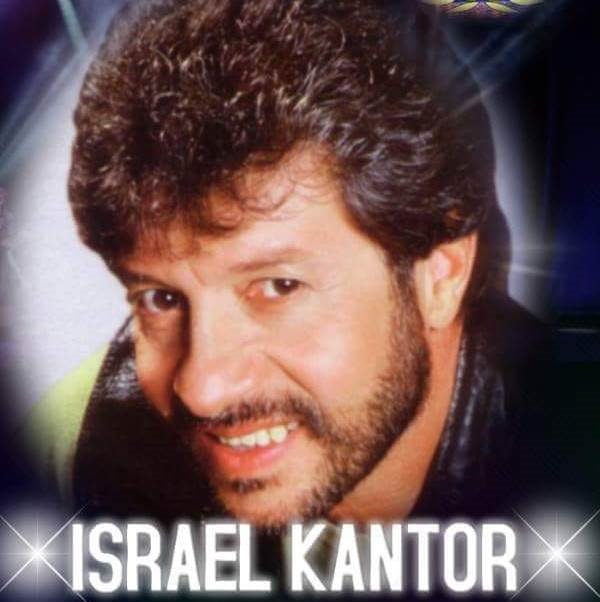
israel kantor
HE BECOMES A PROFESSIONAL

Israel Sardiñas improvised on the sonos with astonishing ease, and he is not exactly what you would call an interpreter “by ear”, or empirical. 

In fact, he played the bass before singing, and it was precisely his condition of bassist and arranger that made Meme Solis discover him in 1975 and took him and his group to work in the shows he was then directing in tourist centers on the beaches east of Havana.

“One night, at the dance show they were doing at the Hotel Atlántico, in Santa María del Mar, Israel took the microphone, I think because the group’s singer was not there,” Meme Solís recalls now.  “I saw him and told him: ‘But how well you sing!’ When I put on another show I gave him two numbers, and from then on people began to follow him”.

“I began to study Carlos Embale, Miguelito Cuní, Raúl Planas, Roberto Faz and Beny Moré,” he said, referring to the time when he stopped playing bass to devote himself to singing.  “There is everything that is Cuban music: guaracha, son, rumba. What I did was to listen to them and transfer them to the staff to understand how they moved their voices.

The one I liked the most was Raúl Planas; he was the one who rubateaba the most, the one who broke the syncopation the most.

Cuní had a good timbre, but always in time. Planas had a deeper timbre, and the sonero’s timbre must be metallic”.

That was the beginning of his professional career, which in Cuba would take him to the groups Ireson, Neoson, Los Yakos and Los Reyes 73. In 1979, he joined the Cuban group Los Van Van, founded and directed by bassist and composer Juan Formell (Juan Clímaco Formell Cortina was born on August 2, 1942 in Havana, Cuba).  As vocalist of the famous group, Israel became popular in Cuba for his vocal technique and his “sonear” style, which aroused great interest in the musical media, especially in popular music.  With the Los Van Van Orchestra he participated in the recording of the albums “Juan Formell y Los Van Van” in 1981 and “El Baile Del Buey Cansa’o” in 1982, both in the Egrem label of Cuba.  It was with this group that the artist became known, and left his stamp on the interpretation of the song “Seis Semanas”.

From that time on, he began to make musical arrangements.

After several international tours with Los Van Van he decided to leave them in Mexico in 1983, in search of greater freedom and possibilities for his career.

A month later he was already in Miami after crossing the border.  “I wanted to go to Grupo Afrocuba, but the bureaucracy wouldn’t let me,” he said on one occasion. “Van Van is very good, but Afrocuba came with a very strong force. I also wrote, I made arrangements, I had other ideas, and Afrocuba suited me better, because it was more jazzy”.  In an interview for a news agency years ago, he said: “I had a great school before being with Los Van Van. After traveling a lot with them, I was very anxious to see the world and the third time we were in Mexico, I decided not to return to Cuba”.
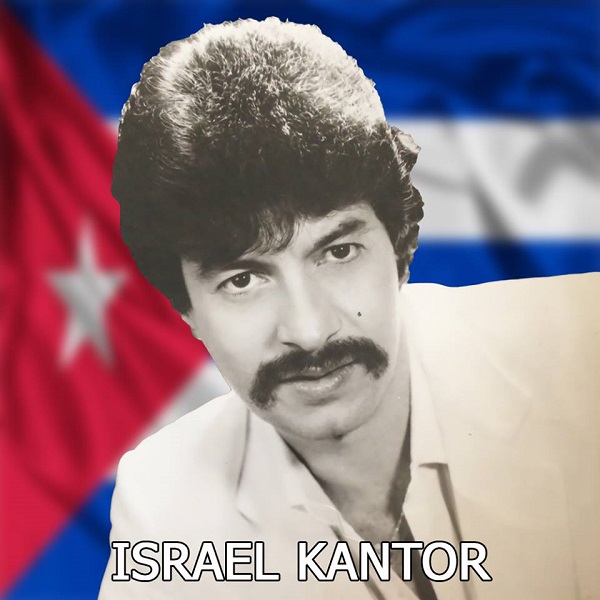
SUCCESS IN EXILE

When he arrived in New York in April 1984, he was still Israel Sardiñas, but when Johny Pacheco, the legendary director of the Fania All Stars, took him to an anniversary party of the group at the Cheetah two months later, the late “singer of singers”, Héctor Lavoe, heard him improvising and stopped the orchestra: “I want to baptize him right now as Israel Cantor”, said Lavoe.  The only thing left to do was to change the c for the k, spend two months with Lavoe’s band, and in October create his own, which he called La Verdad.

Thus, in 1984, he released the album “Israel La Verdad” with the production of Larry Harlow, on the Bacán Records, Inc. label. All the numbers were written and composed by Israel Kantor.

As its name indicates, La Verdad was a constellation of excellent musicians: Sonny Bravo on piano, Salvador “Sal” Cuevas on bass, Tony Barrero and Pedro “Pouchi” Boulong on trumpets, Barry Rogers on trombone, Mario Rivera on saxophone, Karen Joseph on flute, Frankie Malabé on congas and Nicolás “Nicky” Marrero on bongo among others.  Justo Betancourt and Adalberto Santiago collaborated on backing vocals, with Justo doing a duet track: “Rumberos De Nueva York”.  Other numbers on the album that deserve attention are: “La Verdad”, “Tu Lindo Pasado”, “María Antonia” and “A Mis Idolos”.

That same year he is invited to sing on the album by Ñico Rojas y su Orquesta entitled “Paso La Vida Pensando: ‘En Tí'”, on the Kanayón Records label, three songs: “Juan Ramón (El Chichón)”, which was popularized by José “Cheo” Feliciano when he was part of Joe Cuba’s group, “Por Encima Del Nivel”, which had the arrangements and piano of Luis Quevedo, in which he performs a superb piano solo, and in “Lo Voy A Matar”, composition by Tony Pabón and arrangements by maestro Kenny Gómez.

In 1986, he is the lead vocalist of the group Salsa Latina in the album “De Aquí . . Pa’ Lante!”, on the Coa Records label, which was produced by Isidro Infante and Israel Kantor himself and in which he composed half of the eight songs that make up the album.  The most outstanding numbers are: “En Honor A La Verdad”, “Se Acabó El Material”, “Saca Aserrín, Mete Madera”, “A La Mitad Del Camino” and “El Palo De China” (Composition by Raúl Marrero).

He temporarily left Miami to try his luck in Puerto Rico, Mexico and Italy until 1996, when he settled permanently in Miami.  He performed on various stages of the music scene: he inaugurated the Mamá Rumba Club in the Mexican capital, made arrangements for the orchestra of the Sábado Gigante program on Channel 23 in Miami, participated in a Cuban Jam Session at the Lincoln Center in New York, among others.

For more than two decades Kantor was the protagonist of important musical projects both in Latin America and Europe.  He recorded eight solo albums and six guest albums with orchestras such as those of Johnny Pacheco and Juan Pablo Torres.  Among his recordings are “Un Señor Kantor” for the BMG record label; a tribute album to Los Van Van for Sony Music and “Llegó La Música Cubana”, an album that took him on tour in Europe.

In 2003 he collaborated in the solo work of arranger and composer Jesús “El Niño” Pérez with Orquesta Sensación (not to be confused with the former group of Cuban Abelardo Barroso) entitled “Cuba y Puerto Rico Son De Un Pájaro Las Dos Alas”, in which Israel Kantor’s voice stands out over those of the other two singers: Danny Rojo and Rogelio Rente, as well as demonstrating his abilities to improvise on the soneo, in the number “Pa’ Puerto Rico” (which Jesus “El Niño” Perez composed for the album, “La Amistad” by Johnny Polanco).
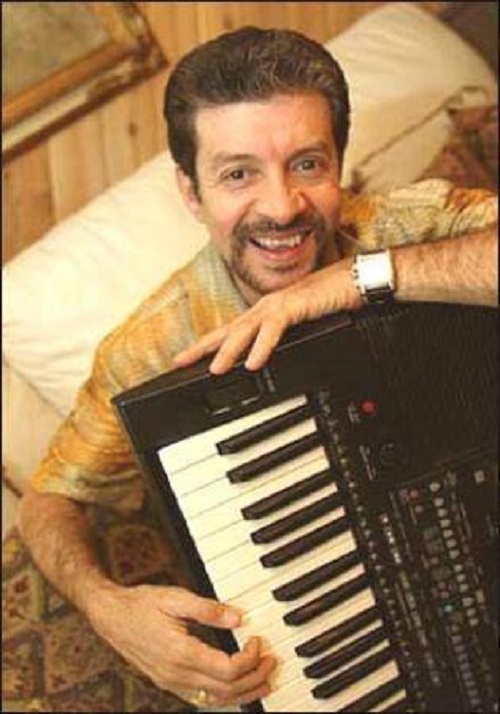
His last great work, in 2003, was a tribute to Benny Moré his permanent artistic inspiration- entitled “To ‘El Bárbaro Del Ritmo'”, a live recording with the Tropicana All Stars orchestra, produced by Regu Records, owned by Recaredo Gutiérrez. 

The orchestra, made up of 22 musicians, mostly Cubans living in Miami, led by Israel Kantor, was nominated for a Latin Grammy Award in the traditional music category in 2004, and two other nominations for an Anglo-American Grammy.

The project, which consisted of a live show, recorded on DVD and seven albums, led them to share the stage with legendary figures such as Paquito D’Rivera, Marco Antonio Muñiz and Generoso “El Tojo” Jiménez, among other glories.

The Tropicana All Stars orchestra was made up of a large number of extraordinary musicians, all of them renowned and of the highest quality: Paquito Echevarría on piano, Cuban musician who has collaborated for a number of important singers such as Gloria Estefan, Rey Ruiz among others; Venezuelan Ramses Colón on bass, a virtuoso musician and desired in any band, Adalberto “Trompetica” Lara on first trumpet, possessor of a very Cuban technique when playing and improvising, he has been a musician of Irakere, Super Cuban All Stars, NG La Banda among others; Kiwzo Fumero on the second trumpet, comes from the conservatory “Alejandro García Caturla” of Cuba, since his beginnings he expressed his great interest in the instrument to which he has dedicated part of his life, he dominates the high notes with mastery for which he has been recognized by great masters of the genre; Lenny Timor on the third trumpet, participated with Los Sobrinos Del Juez for 14 years; Mario Del Monte on fourth trumpet, has been a member of prestigious orchestras such as Roberto Faz, Pacho Alonso, Tito Gómez among others; Alfredo Salvador on baritone sax, has been present in recordings for Celia Cruz, Paquito D’Rivera and Arturo Sandoval; José “Pepe” Vera on tenor sax, his resume includes recordings with the Tropicana Orchestra, Benny Moré, among others, Manuel Valera on alto sax; Juan Carlos Ledón on tenor sax, he has played with Orquestas Cubanas, Roberto Torres, Willy Chirino, Andy Montañéz, among others; Bayron Ramos on trombone, he has been a musician with Albita Rodríguez’s band and Fania All Stars; Braily Ramos on trombone, he has recorded with Gloria Estefan and Miami Sound Machine, Alejandro Sanz and others; Leonardo Timor Sr. on trombone; Leonardo García on timbales, has accompanied Luis Enrique, José Luis Rodríguez “El Puma”, Alexandre Pires, among others; Michael Gerald on percussion; Edwin Bonilla on congas, one of the best percussionists today who needs no further introduction; Juanito Márquez on arrangements, production and musical direction; Germán Piferrer is the musical director and arranger, and as very special guests Juan Pablo Torres, Roberto Torres, Generoso “Tojo” Jiménez, Carlos “Patato” Valdéz, Alfredo “Chocolate” Armenteros and Cándido Camero.

The vocal responsibility fell on Israel Kantor, who was emerging as one of the contemporary Cuban singers with the greatest international projection.  His voice can be heard in the twelve songs that made up the first musical volume: “Santa Isabel De Las Lajas”, “Oh! Vida”, “Maracaibo Oriental”, “Fiebre De Ti”, “Mata Siguaraya”, “Amor Fugaz”, “Bonito y Sabroso”, “Camarera Del Amor”, “Mucho Corazón”, “Yiri Yiri Bon”, “Perdón” and “Francisco Guayabal”, the cover was made by Cuban painter Andrés Puig.

Kantor’s love for his homeland turned his career into a constant homage to Cuban music.

“Over time, one assimilates growing up far from your homeland, not being able to return to stay connected to your roots, but time heals the wounds,” he said a short time ago.

“Inspiration is like a spring,” Kantor said, referring to the improvisations he made as a sonero singer.  “It’s born from the heart; ideas are constantly flowing to you. That’s why a sonero always sings the same song differently.

Cuban music is the continuity of what the singer generates: although the first thing is the vocal conditions, what you have to have is, above all, the clave; knowing how to play with the phrasing so as not to go against the clave”.

Kantor said, “You can train a vocalist to become a sonero, but if his relationship with the genre is not natural, from the heart, he will always end up giving clichés in his inspirations”.

He had no shortage of job offers, even though he was rarely heard on the radio in Miami.  When he was not performing with the Tropicana All Stars, he was performing with his group Havana Son -violin, flute, piano, bass, timbal and conga- in different stages both in the United States and internationally: at the Tropicana Hotel in Las Vegas; the Lincoln Center in New York (in 2003); at the Casa Cuba in Ponce, Puerto Rico, and on tours to the cities of Nicaragua, Lisbon, Oporto and Vigo, in Portugal and Spain, where he shared with other Cuban exiled stars like Willy Chirino and Albita Rodriguez.

Israel Kantor passed away on Saturday, July 1, 2006 at 11:00 p.m. at his residence in southwest Miami, victim of cancer, at the age of 57.  The artist, who had been suffering from liver problems for some time, had already undergone surgery in 2001 for colon cancer.  He is survived by his wife Rosalia Perez, aunts, uncles and cousins.  His body was laid to rest on Wednesday, July 5 at Caballero Rivero Funeral Home, 3344 SW 8th Street, in Miami, and buried the following day at Woodland Park Cemetery, located at 3260 SW 8th Street, in Miami.

“He always worked as if it was the first day,'” recounted his wife Rosalìa as she recalled the artist’s musical enthusiasm.  “He was never satisfied. He had a great hunger to play, to sing and to give people everything he had.”

REACCIONES POR SU MUERTE

 “Israel se hizo en Los Van Van. Tuvo una etapa muy brillante”, señaló Juan Formell, fundador de Los Van Van, ayer desde La Habana a El Nuevo Herald. “Está entre los cantantes más importantes con los que he trabajado. Para nosotros es una pena la pérdida de Israel”.

“Fue una de las voces más representativas de la música cubana de los últimos años”, dijo Adolfo Fernández, amigo personal y publicista de Kantor.  A su juicio, con la muerte del famoso sonero desaparece “una personalidad única y una manera de cantar irrepetible”. “El color de voz de Kantor era único”, destacó.

“Ha muerto uno de los mejores soneros que ha dado Cuba, y uno de los soneros auténticos, de los cuales no quedan muchos. Tenía una voz privilegiada, un ritmo y un sabor muy auténticos”, anotó la cantante Albita Rodríguez tras conocer la noticia de su deceso.

Fuente: herencialatina.com

Junito Albino and his collaborations with many orchestras

How Junito Albino began his career

Junito Albino is one of those artists who has been influenced by some of the greatest artists in Latin music and that has led him to become what he is today. Julio Junito Albino was born in New York in 1962 and got curious about the same music at the age of 11, after which he joined the school band of San Germán until he graduated from high school. When he was still a teenager, he began to play timbales with the first group to which he belonged, whose name was Orquesta La Crítica and belonged to director and trumpeter Fernando Vega. 

When he attained the proper age, he began to study music education at the Interamerican University of Puerto Rico in 1980, when he would be a part of the Orquesta Kachende de Mayaguez whose direction was by Gilberto Gili Toro. With this group of musicians, he released his first record production. By that time, he met singer-songwriter Antony Martínez, with whom he would have a great friendship. 

Julio Albino
Renowed timbalero Julio Junito Albino

In 1983, he went to live in New York City and began collaborating with the Orquesta de Los Hermanos Colón, with whom he wasted no time in returning to the Island of Enchantment to do some live performances. With this same group, he recorded his second album Ámame Un Poquito Más, which was directed by Sergio George. 

Some of the orchestras with which Albino worked

Another of the most important society that Albino achieved realizing during his career was with Joe Quijano’s orchestra and his Conjunto Cachana, with whom he had the opportunity to share the stage with La Guarachera de Cuba Celia Cruz, The King of Timbales Tito Puente, Latin Grammy winner Ray Santos, talented pianist Charlie Palmieri and many others.   

In 1986, he was fortunate to accompany some of the greatest artists from Latin genres such as Paquito Guzman, Marvin Santiago, Hector Tricoche and many more. One of the greatest unions that he would give tangible shape to would be with Moncho Santana’s Orchestra, former vocalist of Grupo Niche, with whom he chalked up enormous successes and demonstrated all his talent. However, collaborations would not stop there. 

Junito also came to be part of the orchestra of Tito Nieves and that of Ramon Rodriguez. The latter was directed by pianist Gilberto Colón, Jorge González (bongo) and Willie Romero (conga). With all his accumulated experience at this point in his life, it was not difficult for him to find a place in the Orquesta Tártaro led by Franke Ruíz. 

When he moved back to Puerto Rico, he was also in other orchestras in the country such as Puerto Rican Power, Jorge Carrión, Luisito Escobar and many more. In addition to the foregoing, he has managed to work as a producer and musician in a large number of independent groups collaborating with percussion, timbales, bongo and other instruments.   

After a successful career in other groups, he decided to create his own orchestra, Secreto A Voces, in which genres such as salsa and Latin jazz stand out. His first album was called Báilalo and contained songs of his own that were big hits in some European countries such as Italy. His second album was entitled Haciendo Ruido and included the participation of artists such as Nino Segarra, Jaime Rivero, among others.  

Salsa Superior Award won by Secreto A Voces in the category of musical quality


By: Johnny Cruz correspondent of International Salsa Magazine in New York City, New York

Choco Orta The Queen of Flavor

Choco Orta: “The Queen of Flavor and the Diva of Puerto Rico”

Virgen Milagros Orta Rodríguez is the first name of “La Reina Del Sabor”: Choco Orta, as this Puerto Rican actress, percussionist and singer-songwriter is internationally known. She was born in Santurce, a traditional neighborhood in San Juan, the capital city of La Isla Del Encanto.

Choco Orta The Queen of Flavor and the Diva of Puerto Rico
Choco Orta Diva of Puerto Rico

Choco is the only female daughter in a home formed by the brothers Tomás Jr., Jaime, Gilberto (her twin) and Ismael; fruits of the union of don Tomás Orta Abad and doña Andrea Rodríguez Rivera. By the way, the brothers are mostly percussionists, among amateurs and professionals.

The father, Don Tomás, is an excellent guitarist and Mrs. Andrea, the mother, has a privileged voice. We could say, then, that Choco Orta’s talents are “purebred”.

In Santurce, specifically in the area known as El Chícharo, Choco’s childhood, adolescence, and youth are present.

The blackness of this neighborhood cradled and nursed her, imprinting on her a deep imprint that she knew how to capitalize on and externalize in her artistic development.

Choco still remembers and celebrates the improvised musical meetings in her neighborhood with neighbors and friends, in which to the rhythm of percussion instruments they recreated the famous rumbas that blacks and blacks of the Caribbean turned into one of the most recognized standards of their culture.

This activity led her to become interested in her musical training, which she did in a self-taught manner first and then alongside renowned musicians from the patio such as Giovanni “Mañenguito” Hidalgo, Anthony Carrillo, and Angel “Cachete” Maldonado.

Recognized teachers of the Conservatory of Music of Puerto Rico offered him knowledge of Theory and Solfeggio, and great cultivators (men and women) of classical and popular dance also contributed to mold the artist that we know today.

In the academic field Choco Orta, she is a graduate of the University of Puerto Rico.

She has a Bachelor of Arts degree after graduating with honors (Cum Laude) from the Theater Education Program of the Rio Piedras campus of this prestigious University.

Choco’s academic formation, oriented to the teaching of Theater in schools, was not capitalized as such; however, it allowed her to venture into the stage by staging diverse plays in Puerto Rico such as “La Verdadera Historia De Pedro Navaja”, “El Bombón De Elena”, etc.; she even mounted her own show: “Choco, Mambo Y Algo Más” (at the end of the ’80s), through which she musically recreated the golden ages of the ’40s and ’50s.

We finish the current appearance of this brilliant artistic career of Choco Orta with the celebration of its 30 years in music
She was born in Santurce, a traditional neighborhood in San Juan, the capital city of La Isla Del Encanto

Television programs such as “La Tiendita De La Esquina” (comedy) and “Latino” (musical program), also record Choco’s talent. As if that weren’t enough, the seventh art: the cinema, also knew about the talent of this complete artist. “Bala Perdida”, “Dios Los Cria” and “Assassins 1995” are proof of Choco Orta’s talent and versatility.

Her entrance to the recording rooms is produced by the hand of the famous trombonist and conductor Julio “Gunda” Merced, who on one occasion enjoyed an improvised presentation of Choco with the Giants of the South.

That night, Gunda Merced made the approach to Choco, and some months later the musical production AND SOMETHING MORE! (Gunda Merced Y Su Salsa Fever) included the songs “Huracán” in Choco Orta’s voice and “El Baile Del Buey Cansao” (Choco Orta in duet with Raquel Velázquez). The year was 1987.

The first years of the 90’s present us with a multifaceted Choco Orta: always in music and accompanied by diverse formations: trios, quartets, etc.; also doing jingles and commercials for radio and television, but also internationalizing her work with various participations in the Club Hammou (southeast of France known as French Riviera or Costa Azul) and as it corresponds in an artist avid of knowledge: nourishing herself with the people and their culture.

By 1997 -always under the guidance of Julio “Gunda” Merced- with the support of the record label Musical Productions (MP) of the late but always remembered Tony Moreno, Choco Orta published his debut album. It was titled SENTIMIENTO Y SABOR (Feeling and Flavor) and presented us with 10 very well achieved cuts that quickly placed themselves at the top of the Latin music charts (Basta, Y Qué De MI, Yo Perdí El Corazón, El Hombre Que Yo Amo, etc.).

By the way, this production was presented at the MIDEM Convention for Latin America, which is why Choco Orta recorded an official video clip of the song “El Hombre Que Yo Amo”. MIDEM is the chapter for music professionals of Reed MIDEM: a professional market organizer founded back in 1963.

SENTIMIENTO Y SABOR was also featured in PULSE Magazine! (USA) and Choco would later be invested as Ambassador of Puerto Rican Culture in Tampa, Florida. He also obtained the Farándula Award (Puerto Rico) as best salsa singer and made an extensive and acclaimed tour in the Dominican Republic, performing in various Dominican stages including television sets.

She is remembered -also- until today, her ovation and applause with La Universidad De La Salsa, El Gran Combo de Puerto Rico, for the 16th edition of the National Salsa Day (1999) in the Juan Loubriel Stadium in Bayamón.

In 2001, Choco Orta received an invitation from Banco Popular de Puerto Rico to be part of their famous annual production entitled RAÍCES. Here Choco performs two songs with the accompaniment of two important musical institutions from the patio, the Orchestra of Maestro Lito Peña (Para Los Boricuas Ausentes) and the Orchestra of Maestro William Cepeda (Melitón Tombé).

That same year, it was part of the production of the Borinquen quartet player José Antonio Rivera Colón, better known as “Tony Mapeyé”, with the title VIEQUES, TIERRA PARA LA PAZ. Here he prints his vocal record in the songs Ni Bala Inerte Ni Viva and Plegaria Por Vieques.

Then to round off a great year, the release of his second production is made official: this one would be titled LA REINA DEL SABOR and from that record label, we continue enjoying the quality and flavor of songs like La Nueva Reina Del Sabor, Que Pague, Se Acabó Y Punto, etc. In this production, the tribute paid to “El Rey Del Timbal” stands out: Ernesto “Tito” Puente, who was the one who nicknamed Choco as “La Nueva Reina Del Sabor” (The New Queen of Flavor), a theme that is also Choco’s incursion into composing.

The repercussion of the song was such that Choco Orta briefly established himself in New York where he performed in renowned venues such as the Copacabana, to offer successful presentations, accompanied by orchestras such as that of the famous Dominican pianist and arranger Ricky González.

At this time of year, we also highlight her journey through various cities of the Major Island: Cuba, where she was loudly applauded during her participation in the Fifteenth International Festival of Golden Boleros and distinguished as the Favorite Daughter of Christ, a community near Santiago (Cuba).

The years between 2001 and 2009, allowed Choco to record in three recognized collaborations:

– HIJOS DE LA SALSA GORDA: published in 2004 under the concept of La Mundial De La Salsa with the direction of the pianist and arranger Willie Sotelo. Here Choco Orta performs the song “Me Saludas A La Tuya”.

– Cuando Hay Amor” is another of Choco’s well-achieved songs that includes his profuse record of collaborations. This number is part of the production EL CORTE PERFECTO (2004) with the Orquesta Sueño Del Caribe.

– In 2006, Mr. Afinque Willie Rosario publishes his production LA BANDA QUE DELEITA in which he invites Choco to bring to life with his voice the song “Lo Que Más Yo Quiero”, a song -by the way- that is a must in Choco’s personal presentations.

We arrive to the year 2009, musically speaking, and Choco Orta of the hand of “El Caballero De La Salsa” Gilberto Santa Rosa, as well as of Charlie Donato (both in the executive production and choirs) and Rei Peña (in the musical direction), publishes its third discographical plate. This one is entitled AHORA MISMO, a production of nine successful songs among which “Ahora Mismo”, “Por Accidente”, “Marido Majadero”, etc. stand out. We highlight in this production the duet with Moncho Rivera -his guest on the album- to evoke and pay tribute to the remembered union between Celia Cruz & Ismael Rivera for the song “Cúcala”.

Choco Orta
Choco Orta What’s Yours is a Lie

In 2011, Choco delighted us with a new production entitled CHOCO SWING. This work was considered among the 20 Best Productions of 2011 by the National Foundation for Popular Culture. On this plate we find again Rei Peña as a musical producer, Choco’s pen stands out represented by the excellent theme Homenaje A Las Soneras, a tribute made a song with which Choco highlights the presence of women in the musical world; additionally, you can enjoy compositions of Gino Meléndez and Raúl Marrero, among others; having magnificent arrangements of musicians of the height of Ricky Zayas, Guillermo Calderón, Ernesto “Tito” Rivera, Carlos Torres, etc.

The next seven years (2011 – 2018) have been prolific in collaborations and here is a synthesis of these:

– Ralphy Santi y Su Conjunto (2012): The Puerto Rican musician (Ponce) invites Choco Orta to be part of his extensive discography. The musical production is entitled HOMAGE TO THE DANCER and there he performs the song “Sin Clave Y Bongó No Hay Son”.

– Orquesta Guayacan (2013): The popular Colombian group celebrated at that time its 25 years of institutional musical trajectory, for which they publish the production 25 YEARS, 25 SUCCESSES, 25 ARTISTS, in which Choco is responsible for the theme “Como Una Hoguera”.

– Kambalache Negro (2014): Group led by Peruvian percussionist Robert “El Chino” Bolaños, an “old” acquaintance of Choco as he integrated and is part of Choco’s musical staff for his presentations at the Iron Babel: New York. In this production titled POR FINAL EN LA CALLE, Choco performs the song “Añoranzas”.

– La Orquesta Del Solar (2017): Orchestra whose musical epicenter is the Spanish capital: Madrid and is composed of musicians of various nationalities (Peruvian, Colombian, Venezuelan, Spanish, etc.) and led by Ecuadorian Julio Mena. In this production entitled BACK TO MY ROOTS, several of the singers that the group usually accompanies when they perform in Spain are invited. Choco Orta is the voice of the song “No Insistas Más”.

– Medley Soledad Bravo” song that will be part of the production LEGACY OF WORLD SALSA of the outstanding Venezuelan musician and arranger Mauricio Silva. In this medley, Choco Orta participates with Marianella (Venezuela) and Mélida Trujillo (Panama). Choco interprets the song “Son Desangrado” by Silvio Rodríguez and his colleagues the song “Déjala Bailar” by Chico Buarque.

– Noel Quintana & The Latin Crew (2018): Recent musical work by percussionist Noel Quintana who has invited a series of renowned singers to this production. Choco Orta gives life to Pedro Jesús’ composition “Qué Viva La Salsa”, a tribute this time to the dancer, an important element of this artistic binomial: dance-music. The production is entitled NOEL QUINTANA & THE LATN CREW VOL. 1.

– Abran Paso Orchestra: The Abran Paso Orchestra is getting ready to launch its new musical production soon. For this musical work, Choco has been invited to interpret a theme of the French musician and composer Paul Mauriat that, for the Latin environment, decades ago La Lupe adapted and interpreted (in Spanish) for our enjoyment. Its title: “Si Vuelves Tu”.

We should also refer to some singles that were recorded by Choco Orta, as is the case here:

– Chico Is The Man (2010): Adaptation of the song that José Feliciano (Chico And The Man) popularized, aimed at celebrating the arrival of the young Mexican soccer player Javier Hernández Balcázar known as “Chicharito” to England when he was hired by the English soccer team Manchester United.

– Killing Me Softly (2013): Crossover of the theme “Killing Me Softly With His Song” by Charles Fox and Norman Gimbel, based on Lori Lieberman’s poem “Killing Me Softly With His Blues”. Lori was his first performer but became notorious in the early ’70s with Roberta Flack. Choco gives this song a characteristic feeling when performed in its original language.

– Bomba Lamento Para Oscar López Rivera (2015): Interpreted to the rhythm of bomba, this song by Choco Orta demanded the immediate release of the now free Oscar López Rivera: a Puerto Rican politician who defended the independence of the island and who served 35 years in prison in the United States.

– Tofu Sin Lechón (2016): This song is based on the lifestyle of its composer and performer who has had a vegan lifestyle for approximately 30 years.

We round up and finish the present semblance of this brilliant artistic career of Choco Orta with the celebration of her 30 years in music. An event also marked by the publication of the musical production entitled CHOCO ORTA: 30 AÑOS REPARTIENDO SABOR.

At the beginning of 2017, he published the song “Te Perdí La Fe” by the notable Elizabethan composer (Puerto Rico) Johnny Ortiz, with which he began the recordings of his fifth personal musical work. He then recorded in Colombia an inspiration of the late poet Petronio Álvarez, “Mi Buenaventura”.

It continues with a theme of the also disappeared composer Palenque, that made very popular Ismael Rivera with Cortijo y Su Combo: “Severa”, here Choco Orta correctly “improvises” vindicating in first person Severa as a black woman and although humble, beautiful and intellectual.

It was March of that year when Puerto Rico received waves of media and fans of the salsa movement and their representatives, who from different parts of the planet attended the “National Salsa Day” organized by the Z-93 radio company.

The festivities begin in the days before the central (usually the third Sunday of the month) and for the past year, Choco Orta took advantage of the occasion and captivated the attendance of the dance of its 30th Anniversary in The Latin Roots, a local located in El Viejo San Juan.

The presence in Puerto Rico of José Alberto “El Canario”, one of the guests of the National Day, made possible the recording in the studios of Maestro Ángel “Cucco” Peña of the song “Sé Que Tú”, an event to which a good part of the international press had access.

Lino Iglesias, Choco’s friend and ad honorem advisor, composed the song “Choco Orta: 30 Años De Sentimiento Y Sabor”, a musical portrait of The Queen of Flavor is recorded before her trip to Cuba with the purpose of recording the songs “Canta Choco Canta” by the Cuban singer-songwriter living in Puerto Rico Juan José “Juanchi” Hernández and the bolero “Miénteme” (“Chamaco” Domínguez) under the arrangements of the Cuban guitarist and composer Reinaldo “Rey” Montesinos Muñoz and a pleiad of musicians from La Isla Mayor.

He includes in this production a theme of his own authorship and that he interprets together with Ismael “Maelo” Ruiz; by the way, a theme of the daily life and of necessary listening and analysis. Finally, he closes his production with the invitation of his musical brother, the great Herman Olivera, with whom he performs the song “Otro Amor”.

The production, although it should have been published at the end of last year, only saw the light in March of this year due to the circumstances that were lived after the passage of the hurricanes Irma and Maria (of this last one especially), that paralyzed all type of activity in Puerto Rico.

Weeks prior to this natural phenomenon, Choco Orta performed under the concept of The Last Fania Legends, which brought together in a much-applauded concert the still existing and former members of the Fania Machinery with a group of renowned guest musicians and singers, a concert of approximately four hours made the Rubén Rodríguez Coliseum in Bayamón vibrate. For this show, Choco Orta paid a well-deserved tribute to Queen Rumba Celia Cruz, through three of her popular songs: Kimbara, Yerbero Moderno, and Bemba Colorá, whose performance brought the respectable audience to its feet.

To round out the faena, cutting “tail and ear”, Choco Orta joined the legendary duo Richie Ray & Bobby Cruz, interpreting with them in a majestic way the theme “Cuando Me Digas Si”.

We return then to the launch of their recent production, the same one that is of great acceptance in Puerto Rico; Colombia, Peru, New York, and other countries and cities that pride themselves in being salsa musicians. He has been positioning himself with several of the themes that integrate this production, especially “Choco Orta: 30 Años De Sentimiento Y Sabor”, “Te Perdí La Fe” and “Otro Amor”.

It is also necessary to highlight the facet of Choco Orta as a woman who fights for the interests of her country and for a greater presence of women in the music industry; this through panels and talks in academic spaces and by sponsoring and promoting attendance at vegetarian and vegan restaurants, as well as diverse businesses.

We celebrate the trajectory of this great representative of Puerto Rican culture and her musical trail, which has been captured in acclaimed productions of her own and prestigious collaborations. The maturity is notorious and the feeling and flavor has also aged. Congratulations because we need and will have Choco for a while, we are sure of that.

Choco Orta, virtual concert, Saturday November 21st 7pm. From My Home to the World 3
Choco Orta of my House to the World

Home

  • « Go to Previous Page
  • Page 1
  • Interim pages omitted …
  • Page 10
  • Page 11
  • Page 12

International Salsa Magazine (ISM) is a monthly publication about Salsa activities around the world, that has been publishing since 2007. It is a world network of volunteers coordinated by ISM Magazine. We are working to strengthen all the events by working together.