• Skip to primary navigation
  • Skip to main content

International Salsa Magazine

  • HOME
  • Previous editions
    • 2026
      • ISM / March 2026
      • ISM / February 2026
      • ISM / January 2026
    • 2025
      • ISM / December 2025
      • ISM / November 2025
      • ISM / October 2025
      • ISM / September 2025
      • ISM / August 2025
      • ISM / July 2025
      • ISM / June 2025
      • ISM / May2025
      • ISM / April 2025
      • ISM / March 2025
      • ISM / February 2025
      • ISM / January 2025
    • 2024
      • ISM / December 2024
      • ISM / November 2024
      • ISM / October 2024
      • ISM / September 2024
      • ISM / August 2024
      • ISM / July 2024
      • ISM / June 2024
      • ISM / May 2024
      • ISM / April 2024
      • ISM / March 2024
      • ISM / February 2024
      • ISM / January 2024
    • 2023
      • ISM / December 2023
      • ISM / November 2023
      • ISM / October 2023
      • ISM – September 2023
      • ISM – August 2023
      • ISM July 2023
      • ISM Edition June 2023
      • ISM – May 2023
      • ISM April 2023
      • ISM March 2023
      • ISM February 2023
      • ISM January 2023
    • 2022
      • ISM December 2022
      • ISM November 2022
      • ISM October 2022
      • ISM September 2022
      • ISM August 2022
      • ISM July 2022
      • ISM June 2022
      • ISM May 2022
      • ISM February 2022
      • ISM January 2022
    • 2021
      • ISM December 2021
      • ISM November 2021
      • ISM October – 2021
      • ISM September 2021
      • ISM August 2021
      • ISM July 2021
      • ISM May 2021
      • ISM April 2021
      • ISM June 2021
      • ISM March 2021
      • ISM February 2021
      • ISM January 2021
    • 2020
      • ISM December 2020
      • ISM November 2020
      • ISM October 2020
      • ISM September 2020
      • ISM August 2020
      • ISM July 2020
      • ISM June 2020
      • ISM May 2020
      • ISM April 2020
      • ISM March 2020
      • ISM February 2020
      • ISM January 2020
    • 2019
      • ISM December 2019
      • ISM November 2019
      • ISM October 2019
      • ISM Septembre 2019
      • ISM August 2019
      • ISM July 2019
      • ISM June 2019
  • Spanish
  • Download Salsa App
    • Android
    • Apple

Search Results for: Tropical

XXXIX National Zalsa Day March 19, 2023 Hiram Bithorn Stadium in San Juan Puerto Rico

Celebrates 150 years of history with a posthumous tribute to Tito Puente, Típica 73 and Ismael Miranda

National Zalsa Day 2023

This year the privilege of conducting the Super Orchestra of the National Zalsa Day 2023 is for Maestro Isidro Infante, March 19 at the Hiram Bithorn Park in San Juan, Puerto Rico.

For many years the most important salsa event in Puerto Rico and internationally. Thanks to Z-93 and the entire SBS family. Mr. Alarcón, Víctor Roque, El Cacique and all the executives involved in such an important event.

We will also have Buho Loco and El Hachero, among others.

Celebra 150 años de historia con un póstumo homenaje a Tito Puente y Típica 73 e Ismael Miranda

The radio station Zeta93FM and its sister company, LaMusica.com, announce the thirty-ninth edition of the National Zalsa Day; an award-winning concert, which, on this occasion, will pay a special tribute to the 50th anniversary of one of the most recognized orchestras in the world, La Típica 73.

Known as the pioneers in performing the famous “Descargas musicales”, Adalberto Santiago, José Alberto “El Canario”, Tito Allen and Johnny “Dandy” Rodríguez, have already confirmed their participation and we are proud that the members of this legendary band, which left such a deep mark on the salsa genre, have decided to join us in this celebration.

XXXIX Día Nacional de la Zalsa 19 de Marzo 2023 Estadio Hiram Bithorn en San Juan Puerto Rico

On April 20, 2023, the 100th anniversary of the birth of legendary timbalero Tito Puente, his son.

Tito Puente Jr., along with great guest artists such as Orestes Vilato, Nicky Marrero, Endel Dueño, Frankie Figueroa, Frankie Morales, John “Dandy” Rodríguez and José Madera celebrarán playing on stage the greatest hits of the “King of Latin Music”, among which are: “Oye como va”, “Ran Kan Kan” and “Para los Rumberos”.

“Puente’s legacy of more than 50 years, known as ‘The King of the Timbal’, ‘The composer and musician of the eternal smile’ and ‘The godfather of Latin jazz and salsa’, will be exalted in front of more than 20,000 people at DNZ2023 and we are sure that all salseros will enjoy this presentation,” said announcer Marcos Rodríguez “El Cacique”.

Póstumo Homenaje a Ismael Miranda

In April 2000, the third Sunday of March was instituted as National Zalsa Day under Law #100 of the Senate of Puerto Rico.

History

National Zalsa Day was created in 1984 by Pedro Arroyo, Programming Director of Z-93, who always wanted to celebrate an event that would recognize the talent of popular salsa music, its composers and performers, to present it to the great public who love this tropical genre.

Since its first year, the great event took hold of an audience eager to enjoy this music live.

The support was total and it immediately positioned itself as the annual concert of the people of Puerto Rico and visitors from other countries.

From its beginnings, National Zalsa Day was dedicated to a figure of this genre, as a recognition of his talent and rootedness in the public.

1984 – Dedicated in life to Sonero Mayor, Ismael Rivera

1985 – Rafael Ithier of the Gran Combo de Puerto Rico

1986 – Tito Puente and Santitos Colón

1987 – Héctor Lavoe

1988 – Andy Montañez and Gilberto Santa Rosa

1989 – Celia Cruz and Sonora Ponceña

1990 – Willie Colón and Tite Curet Alonso

1991 – Bobby Valentín, Oscar D’León and composer Gloria González.

1992 – To the Best 5 trumpets of Puerto Rico: Elías Lopés, Charlie Sepúlveda, Juancito Torres, Mario Ortiz and Luis “Perico” Ortiz.

1993 – Celebration of the Tenth Anniversary of National Zalsa Day, dedicated to the Salsa People

1994 – Ray Barreto and Adalberto Santiago

1995 – “Duels at sunset”.

1996 – Dedicated to the reunions: Conjunto Clásico, Tito Nieves, Luis “Perico” Ortiz and Rafael De Jesús, El Gran Combo; Andy Montañez and

Roberto Rohena; Sonora Ponceña with Luigi Texidor and Yolanda Rivera.

1997 – To the salsa people

1998 – Jerry Masucci

1999 – Cheo Feliciano

2000 – Richie Ray and Bobby Cruz

2001 – Eddie Palmieri

2002 – Ruben Blades

2003 – Johnny Pacheco and Roberto Rohena

2004 – Quique Lucca, Papo Lucca and Willie Rosario

2005 – Tommy Olivencia and Roberto Angleró

2006 – Los Hermanos Lebrón and posthumous tribute to Charlie Palmieri, Tito Rodríguez and Ray Barretto

2007 – Ismael Miranda, Ramón Rodríguez, Raphy Leavitt and Sammy Marrero

2008 – Larry Harlow and Manny Oquendo

2009 – Celebration of the release of Tite Curet Alonso’s work on Puerto Rican radio. Dedicated to Louis Garcia.

2010 – Johnny Ortiz. Special recognition to Héctor Maisonave and Ángel Luis Córdova García “Paleco”.

2011 – Elvin Torres of Costa Brava, Luisito Ayala of Puerto Rican Power, Paquito Guzmán, Tito Allen and Luigi Texidor.

2012 – Posthumous tribute to Frankie Ruiz. Dedicated to Orquesta Zodiac and La Corporación Latina.

2013 – Posthumous tribute to Pedro Arroyo, former director of Z-93. Special recognition to Edwin Morales of La Mulenze, Pedro Brul, Pedro Conga of Orquesta Internacional and Cano Estremera.

2014 – El Gran Combo, Joe Rodríguez of La Terrífica, Justo Betancourt and Meñique.

2015 – Gilberto Santa Rosa receives the first National Zalsa Day Star Award. Dedicated to Sammy “Rolo” González, Mickey Cora, Nacho Sanabria.

2016 – Eddie Palmieri receives the second National Zalsa Day Star Award. Dedicated to Lalo Rodríguez and Tito Rojas.

2017 – Zeta 93 announced on the program of its director Néstor Galán, el Buho Loco, that the artists participating in the 34th edition of National Salsa Day are el Gran Combo, José Alberto el Canario, Andy Montañez, la India, Don Perignón y la Puertorriqueña, Grupo Niche, Víctor Manuelle, Luisito Carrión, Guillo Rivera, Camilo Azuquita, Raúl Marrero, Carlos D’ Castro, Juan Pablo Díaz, Orquesta DNZ2017 and Orquesta Canario.

2018 – Dedicated To The People Of Puerto Rico!

Domingo Quiñones, Maelo Ruiz, Chamaco Rivera, Pupy Cantor, Oscar de León, Orquesta Canela (Cali, Colombia), Tribute to Tito Nieves and Yolanda Rivera, La Orquesta del Día Nacional de La Salsa, Pete Pererignon y la Generación del Presente, El Maestro Sammy Velez with Nino Segarra, Héctor Tricoche y Simón Pérez, Víctor García y La Sonora San Juanera and Willie Otero y su Orquesta.

2019 – Los Reencuentros will be

Conjunto Clásico with Tito Nieves, Luis Perico Ortiz with Roberto Lugo, Orquesta Mulenze with Pedro Brull, Don Perignon y la Puertorriqueña with Víctor Manuelle, Frankie Vázquez, Pedro Bermúdez Big Band, Charlie Aponte, Pichie Pérez, Yolanda Rivera, Pedro Arroyo, Conjuno Chaney, Pirulo y la Tribu, Manolito Rodríguez.

2020 – Oscar D’ León, Eddie Palmieri, La India, Tito Rojas, Lalo Rodríguez, La Sonora Ponceña, Ray de la Paz, Ismael Miranda, Tony Vega, Orq. Del Día Nacional (directed by Louis García).

2022 – The gathering was Richie Ray & Bobby Cruz, Víctor Manuelle, Willie Rosario, Bobby Valentín, La Sonora Ponceña, Andy Montañez, Apollo Sound, La Mulenze, from Panama come to Puerto Rico the winners of the contest in which hundreds of salsa orchestras competed, Luis Lugo y La Orquesta 507, the women’s orchestra Son Divas, La Tribu de Abrante and Luis Vázquez,” said Marcos Rodríguez,

Sunday, March 19, 2023 – 9:00am

Hiram Bithorn Stadium, San Juan

On stage:

– – José Alberto “El Canario”

– Adalberto Santiago

– Tito Allen & Johnny el Dandy Rodriguez

– Luis Figueroa

– Pirulo

– India

– Charlie Aponte

– Maelo Ruiz

– Yolanda Rivera

– Luigi Texidor

– Pichie Perez

– Isidoro Infante

– Alex D’ Castro

– Tributes to Tito Puente, Típica 73 and Ismael Miranda

Prices:

Early Bird : $10.00 + ivu & c.s (Limited quantities) SOLD OUT

Presale: $15.00 + ivu & c.s (Limited quantities) SOLD OUT

GENERAL – $20.00 + ivu & c.s

V.I.P. – $75.00 + ivu & c.s. (Includes numbered seat and preferred entrance)

PLATINUM – $225.00 + ivu & c.s. (Includes food, open bar, official t-shirt and preferential entrance)

Information and Tickets: 787-200-7110 or [email protected]

Ticket office open from 2 hours before the start of the event.

Read Also: “Mambo Night in Miami Beach” celebrates the 100th anniversary of the birth of “El Inolvidable”, our own Tito Rodriguez

Opening of the 28th edition of…

Tempo Latino Social Club presents:

Ana Tijoux,

ANA Tijoux, emblematic figure of Latin rap, joins us at the opening of the festival! A strong and committed French-Chilean artist born in her native Lille to Chilean parents exiled by the dictatorship, ANA has bult her musical style on the fundamental rhythms of Rap and the Chilean folkloric colors of her origin.

Her background, influences and temperament give her an indomitable stage strength to tackle political issues wildly. From Europe to Latin America, singing in Spanish with humor and rebellion has led her to consolidate her presence in the international scene of the Latin Rap wave and win Grammys.

After opening for Iggy Pop, the iconic Stooges figure said that “she knows what she’s doing!”

The Tempo Latino Social Club welcomes her into their circle of shared values with proudly and respectfully.

Tempo Latino

The Conga sets the TEMPO!

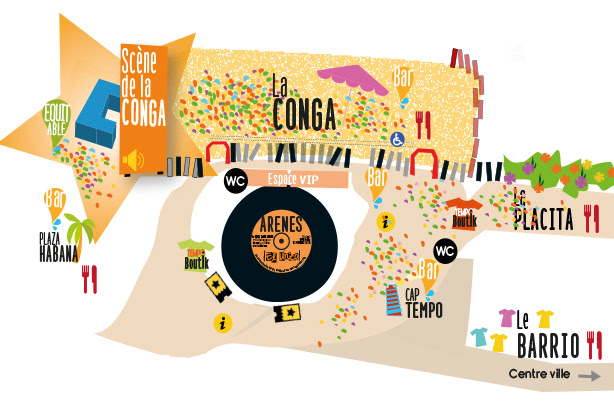
Between psychedelic palm trees, tropical white sand and the first day’s frenzy, we’ll meet at 19h on the Conga stage to embark on the 28th edition.

Imagined in 2022… the Tempo Latino Social Club*, born from our associative, voluntary and committed structure, brings us together to share our values of cultural and musical mestizaje…

*This evening does not cover the pass for the Tempo Arena concert.

Tempo Latino

Immediate boarding for the Tempo Latino 2023 ¡El Único!

Tempo Latino

Partenaires Tempo Latino

THANKS
Public… Artists… Technicians… Partners… Professionals…
Tempo VOLUNTEERS

XXXIX National Zalsa Day March 19, 2023 Hiram Bithorn Stadium in San Juan Puerto Rico

Celebrates 150 years of history with a posthumous tribute to Tito Puente, Típica 73 and Ismael Miranda

National Zalsa Day 2023

This year the privilege of conducting the Super Orchestra of the National Zalsa Day 2023 is for Maestro Isidro Infante, March 19 at the Hiram Bithorn Park in San Juan, Puerto Rico.

For many years the most important salsa event in Puerto Rico and internationally. Thanks to Z-93 and the entire SBS family. Mr. Alarcón, Víctor Roque, El Cacique and all the executives involved in such an important event.

We will also have Buho Loco and El Hachero, among others.

Celebra 150 años de historia con un póstumo homenaje a Tito Puente y Típica 73 e Ismael Miranda

The radio station Zeta93FM and its sister company, LaMusica.com, announce the thirty-ninth edition of the National Zalsa Day; an award-winning concert, which, on this occasion, will pay a special tribute to the 50th anniversary of one of the most recognized orchestras in the world, La Típica 73.

Known as the pioneers in performing the famous “Descargas musicales”, Adalberto Santiago, José Alberto “El Canario”, Tito Allen and Johnny “Dandy” Rodríguez, have already confirmed their participation and we are proud that the members of this legendary band, which left such a deep mark on the salsa genre, have decided to join us in this celebration.

XXXIX Día Nacional de la Zalsa 19 de Marzo 2023 Estadio Hiram Bithorn en San Juan Puerto Rico

On April 20, 2023, the 100th anniversary of the birth of legendary timbalero Tito Puente, his son.

Tito Puente Jr., along with great guest artists such as Orestes Vilato, Nicky Marrero, Endel Dueño, Frankie Figueroa, Frankie Morales, John “Dandy” Rodríguez and José Madera celebrarán playing on stage the greatest hits of the “King of Latin Music”, among which are: “Oye como va”, “Ran Kan Kan” and “Para los Rumberos”.

“Puente’s legacy of more than 50 years, known as ‘The King of the Timbal’, ‘The composer and musician of the eternal smile’ and ‘The godfather of Latin jazz and salsa’, will be exalted in front of more than 20,000 people at DNZ2023 and we are sure that all salseros will enjoy this presentation,” said announcer Marcos Rodríguez “El Cacique”.

Póstumo Homenaje a Ismael Miranda

In April 2000, the third Sunday of March was instituted as National Zalsa Day under Law #100 of the Senate of Puerto Rico.

History

National Zalsa Day was created in 1984 by Pedro Arroyo, Programming Director of Z-93, who always wanted to celebrate an event that would recognize the talent of popular salsa music, its composers and performers, to present it to the great public who love this tropical genre.

Since its first year, the great event took hold of an audience eager to enjoy this music live.

The support was total and it immediately positioned itself as the annual concert of the people of Puerto Rico and visitors from other countries.

From its beginnings, National Zalsa Day was dedicated to a figure of this genre, as a recognition of his talent and rootedness in the public.

1984 – Dedicated in life to Sonero Mayor, Ismael Rivera

1985 – Rafael Ithier of the Gran Combo de Puerto Rico

1986 – Tito Puente and Santitos Colón

1987 – Héctor Lavoe

1988 – Andy Montañez and Gilberto Santa Rosa

1989 – Celia Cruz and Sonora Ponceña

1990 – Willie Colón and Tite Curet Alonso

1991 – Bobby Valentín, Oscar D’León and composer Gloria González.

1992 – To the Best 5 trumpets of Puerto Rico: Elías Lopés, Charlie Sepúlveda, Juancito Torres, Mario Ortiz and Luis “Perico” Ortiz.

1993 – Celebration of the Tenth Anniversary of National Zalsa Day, dedicated to the Salsa People

1994 – Ray Barreto and Adalberto Santiago

1995 – “Duels at sunset”.

1996 – Dedicated to the reunions: Conjunto Clásico, Tito Nieves, Luis “Perico” Ortiz and Rafael De Jesús, El Gran Combo; Andy Montañez and

Roberto Rohena; Sonora Ponceña with Luigi Texidor and Yolanda Rivera.

1997 – To the salsa people

1998 – Jerry Masucci

1999 – Cheo Feliciano

2000 – Richie Ray and Bobby Cruz

2001 – Eddie Palmieri

2002 – Ruben Blades

2003 – Johnny Pacheco and Roberto Rohena

2004 – Quique Lucca, Papo Lucca and Willie Rosario

2005 – Tommy Olivencia and Roberto Angleró

2006 – Los Hermanos Lebrón and posthumous tribute to Charlie Palmieri, Tito Rodríguez and Ray Barretto

2007 – Ismael Miranda, Ramón Rodríguez, Raphy Leavitt and Sammy Marrero

2008 – Larry Harlow and Manny Oquendo

2009 – Celebration of the release of Tite Curet Alonso’s work on Puerto Rican radio. Dedicated to Louis Garcia.

2010 – Johnny Ortiz. Special recognition to Héctor Maisonave and Ángel Luis Córdova García “Paleco”.

2011 – Elvin Torres of Costa Brava, Luisito Ayala of Puerto Rican Power, Paquito Guzmán, Tito Allen and Luigi Texidor.

2012 – Posthumous tribute to Frankie Ruiz. Dedicated to Orquesta Zodiac and La Corporación Latina.

2013 – Posthumous tribute to Pedro Arroyo, former director of Z-93. Special recognition to Edwin Morales of La Mulenze, Pedro Brul, Pedro Conga of Orquesta Internacional and Cano Estremera.

2014 – El Gran Combo, Joe Rodríguez of La Terrífica, Justo Betancourt and Meñique.

2015 – Gilberto Santa Rosa receives the first National Zalsa Day Star Award. Dedicated to Sammy “Rolo” González, Mickey Cora, Nacho Sanabria.

2016 – Eddie Palmieri receives the second National Zalsa Day Star Award. Dedicated to Lalo Rodríguez and Tito Rojas.

2017 – Zeta 93 announced on the program of its director Néstor Galán, el Buho Loco, that the artists participating in the 34th edition of National Salsa Day are el Gran Combo, José Alberto el Canario, Andy Montañez, la India, Don Perignón y la Puertorriqueña, Grupo Niche, Víctor Manuelle, Luisito Carrión, Guillo Rivera, Camilo Azuquita, Raúl Marrero, Carlos D’ Castro, Juan Pablo Díaz, Orquesta DNZ2017 and Orquesta Canario.

2018 – Dedicated To The People Of Puerto Rico!

Domingo Quiñones, Maelo Ruiz, Chamaco Rivera, Pupy Cantor, Oscar de León, Orquesta Canela (Cali, Colombia), Tribute to Tito Nieves and Yolanda Rivera, La Orquesta del Día Nacional de La Salsa, Pete Pererignon y la Generación del Presente, El Maestro Sammy Velez with Nino Segarra, Héctor Tricoche y Simón Pérez, Víctor García y La Sonora San Juanera and Willie Otero y su Orquesta.

2019 – Los Reencuentros will be

Conjunto Clásico with Tito Nieves, Luis Perico Ortiz with Roberto Lugo, Orquesta Mulenze with Pedro Brull, Don Perignon y la Puertorriqueña with Víctor Manuelle, Frankie Vázquez, Pedro Bermúdez Big Band, Charlie Aponte, Pichie Pérez, Yolanda Rivera, Pedro Arroyo, Conjuno Chaney, Pirulo y la Tribu, Manolito Rodríguez.

2020 – Oscar D’ León, Eddie Palmieri, La India, Tito Rojas, Lalo Rodríguez, La Sonora Ponceña, Ray de la Paz, Ismael Miranda, Tony Vega, Orq. Del Día Nacional (directed by Louis García).

2022 – The gathering was Richie Ray & Bobby Cruz, Víctor Manuelle, Willie Rosario, Bobby Valentín, La Sonora Ponceña, Andy Montañez, Apollo Sound, La Mulenze, from Panama come to Puerto Rico the winners of the contest in which hundreds of salsa orchestras competed, Luis Lugo y La Orquesta 507, the women’s orchestra Son Divas, La Tribu de Abrante and Luis Vázquez,” said Marcos Rodríguez,

Sunday, March 19, 2023 – 9:00am

Hiram Bithorn Stadium, San Juan

On stage:

– – José Alberto “El Canario”

– Adalberto Santiago

– Tito Allen & Johnny el Dandy Rodriguez

– Luis Figueroa

– Pirulo

– India

– Charlie Aponte

– Maelo Ruiz

– Yolanda Rivera

– Luigi Texidor

– Pichie Perez

– Isidoro Infante

– Alex D’ Castro

– Tributes to Tito Puente, Típica 73 and Ismael Miranda

Prices:

Early Bird : $10.00 + ivu & c.s (Limited quantities) SOLD OUT

Presale: $15.00 + ivu & c.s (Limited quantities) SOLD OUT

GENERAL – $20.00 + ivu & c.s

V.I.P. – $75.00 + ivu & c.s. (Includes numbered seat and preferred entrance)

PLATINUM – $225.00 + ivu & c.s. (Includes food, open bar, official t-shirt and preferential entrance)

Information and Tickets: 787-200-7110 or [email protected]

Ticket office open from 2 hours before the start of the event.
Read Also: “Mambo Night in Miami Beach” celebrates the 100th anniversary of the birth of “El Inolvidable”, our own Tito Rodriguez

Vicentico Valdés “The elastic voice” of Bolero in Cuba and the Caribbean

“The earrings that the moon lacks I have kept to make you a necklace”.

Vicente Valdés was born in the neighborhood of Cayo Hueso, Havana, on January 10, 1921. He was the younger brother of Alfredito Valdés (1908-1988), a versatile singer who performed with numerous sones groups, ensembles and orchestras in Cuba until, around 1940, he settled outside Cuba, mainly in New York and Mexico, where he continued his artistic career.

Vicente Valdés Una Vez

Two of Vicente’s other brothers, Marcelino and Oscar, stood out as percussionists, and the latter also as a singer in the Irakere group.

Also known as “La voz elástica” Vicentico is one of the most celebrated interpreters of the bolero with a great interpretative strength and dramatization in his performance for the benefit of couples in love who enjoy his songs to this day.

Valdés was part of “El Septeto Nacional”, the orchestra of Cheo Belén Puig, “La Cosmopolita”, the orchestras of Noro Morales, Arturo Núñez and Tito Puente,

In 1937, recommended by Alfredo, Vicentico sang for a short time with the Segundo Septeto Nacional, a group that had been founded to share the multiple artistic commitments that the renowned Septeto Nacional of Ignacio Piñeiro received at that time. He was also a member of the sones sextet Jabón Candado.

Vicentico Valdés La voz elástica del Bolero en Cuba

Later, he replaced Alfredo as a singer in the orchestra of Cheo Belén Puig, one of the most famous Cuban groups of the charanga format. Later, he joined the jazz band Cosmopolita, led by Vicente Viana and later by pianist and composer Humberto Suárez.

Together with Marcelino Guerra Rapindey and Cristóbal Dobal, among others, he was part of the sextet Los Leones.

In the mid-1940s, due to the difficult economic situation in Cuba after World War II, Vicentico, like many other Cuban artists of the time, went to Mexico to explore new horizons for his work in music.

In the Mexican capital he performed with Humberto Cané’s conjunto Tropical, and the orchestras of Arturo Núñez, Rafael de Paz and Chucho Rodríguez, with whom he later recorded with Benny Moré. In those years he received his first ovations on the stage of the Follies.

In Mexico, between 1946 and 1947, he made recordings for the Peerless label, backed by the orchestras of the Mexican Rafael de Paz and the Cuban Absalón Pérez.

The repertoire chosen for these records consisted almost entirely of guarachas, afros and sones montunos, which had been popularized in Cuba by Orlando Guerra Cascarita with the Orquesta Casino de la Playa.

Vicente Valdés
Vicente Valdés

Vicentico was hired as a singer of the musical group of the Puerto Rican pianist Noro Morales in New York at the end of 1947. In that city he had a successful season at the Hispanic Theater which, according to the chronicles of the time, “consecrated him in the taste of the Latin community”. He also performed at the Million Dollars, Park Plaza and Puerto Rico theaters.

In 1948 he joined Tito Puente’s orchestra as a singer, along with his brother Alfredo. With Puente he recorded his first boleros (among them “Quiéreme y verás”, by José Antonio Méndez) for the Seeco label. Until then he had been used mainly as an interpreter of upbeat numbers. With Tito Puente he made numerous recordings throughout his career.

In 1953, the Seeco record company promoted a group of recordings with the Sonora Matancera, which had great repercussion in Cuba, where he was hardly known, and in other Caribbean countries.

Among the pieces recorded in Havana in November of that year were two boleros (“Una aventura”, by Elisa Chiquitica Méndez and “Decídete mi amor”, by José Antonio Méndez), a genre in which he achieved the greatest triumphs of his career.

From then on, in New York, with great studio orchestras conducted by René Hernández, Joe Cain, and later Charlie and Eddie Palmieri, he made new recordings that were quickly distributed throughout Latin America.

Their repertoire during this stage (early 1960s) included boleros and songs by authors of different tendencies and styles; the Cubans René Touzet, Javier Vázquez, José Antonio Méndez, Piloto y Vera, Pepé Delgado, Juan Pablo Miranda, Marta Valdés and the Rigual brothers; the Puerto Ricans Silvia Rexach, Myrta Silva and Rafael Hernández; the Dominicans Rafael Solano and Manuel Troncoso; and the Mexicans Manuel Prado, Luis Demetrio and Armando Manzanero.

Vicente Valdés y La Oquesta de Bobby Valentin

La Sonora Matancera among others no less important. He also excelled in other genres such as Mambo, Guaguancó, Son and Guaracha.

He was an exceptional singer with a particular style that set the standard and also spread the best Latin American bolero composers, particularly those of the Cuban Feeling, of which he was a valuable promoter at an international level. His career as a soloist was impeccable.

He died in a New York hospital on the morning of June 26, 1995, according to a heart attack.

Source: En Caribe

Sonora Matancera

Read also: La Sonora Matancera musical congregation of long trajectory and its sound quality, is one of the most popular in the Caribbean island “Cuba”

Javier Cabanillas and his Cabanijazz Project

It has been a privilege for International Salsa Magazine to talk to Mexican bandleader, professor and musician Javier Cabanillas, who told us in detail about his life from the day he started in music until today, when the fruits of all the hard work and great talent are seen.

Javier Cabanillas playing the conga

Interesting beginnings

Javier begins by speaking of his beginnings in the world of music on the streets of Tijuana, in his native Mexico. He tells us that he used to work in San Diego, USA, and Tijuana is a border city, so he had to cross the border every day in order to fulfill his professional commitments.

On his days off, he often went to what is known colloquially as ”sobremesas” or ”tianguis”, which are closed streets where vendors set up their stands to offer their goods to passersby. In those places, he played the conga, as he felt that this was a space where he could freely express his art in front of an audience, although his dream was to do it on stage. What he did not know was that sooner or later it would come true.

Javier did not think he could walking down a red carpet in Los Angeles, since his activity was completely informal. He was just looking to blow off some steam and drain daily stress. I felt very comfortable playing the conga as I did, but over time, I began to professionalize myself in the musical area and that is how I have gradually achieved what I have set myself out to do,” says the artist.

Although it is a long time ago, Javier remembers very fondly those years because that gentle scene and that communication with people on the street helped him to develop the warmth an artist needs to connect with the audience.

Javier Cabanillas and his Cabanijazz Project at the 62nd Monterrey Jazz Festival

How have your Latin roots affected your career in the United States?

As to how his roots have affected his career, Javier says that he had to learn most things on the go, but always ramaining respectful toward all cultures in which his music was involved. He mentions this as his origins are focused on northern Mexico where the typical thing is to listen to norteño and banda music, but he did not choose those genres for his career, but jazz and Afro-Cuban rhythms. ”I had a lot of respect for that culture because I felt that it was not completely mine, which led me to be much more responsible and respectful when experimenting with this market,” he said.

When talking about learning to play an instrument or genre that does not belong to his culture, he said that there are always some limitations because musical language will always vary. In his case, the kind of musical language comprehensible to him is that of mariachi or banda music, making easier for him to identify certain elements. When he went to live in San Francisco, he spent time with musicians from all nationalities and could realize that they were not able to do many of the things that were not proper from their countries of origin. This makes learning more complicated, but not impossible.

In that sense, Cabanillas says there are some useful techniques to learn to play instruments and rhythms we did not grow up with, so there is a revolution of percussionists and musicians who have managed to break that mold. The Internet has played an extremely important role in all this, as artists of all kinds can access content that helps them improve and develop professionally. In his particular case, YouTube and these online tools did not exist, so he could only count on his ear and imitate what he heard to learn.

Cabanillas' music is based on jazz and Afro-Cuban rhythms
Cabanillas’ music is based on jazz and Afro-Cuban rhythms

The Grammy

One of the great victories in Cabanillas’ artistic life was the Grammy he won with the Pacific Mambo Orchestra. Since the members of the group did not have the necessary funds to produce an album, they turned to other financing options supported by the community through an online fundraising campaign. The intention was that anyone could make a donation or even buy the album in advance.

30 days later, they achieved their goal and recorded the album. Javier was one of the 36 musicians who participated in the production and his role was to be in charge of percussion with his congas. The orchestra was not supported by any major label, so they did everything independently. This gave them more control over what they wanted to offer to the audience, since they were not subject to what any management wanted from them. This meant that the process of preparing the material was very organic and spontaneous.

When the album came into competition in the ”Best Tropical Album of the Year” category, it managed to be among the five best nominees along with Marc Anthony, Carlos Vives, Los Ángeles Azules, Sergio George, Oscar D’ León and many more. Three of them were working with Sony Latin Music, so they had great chance chances to win because they worked with such a big label, while Pacific Mambo did not have all that machinery behind them, not even close.

Javier Cabanillas with the Grammy he won with the Pacific Mambo Orchestra

That’s how we were invited to Los Angeles, walked down the red carpet like the rest of the artists and took a huge surprise to win the Grammy in our category. At that moment, I felt that all my effort was worthwhile” the conguero said excitedly. He confesses that he and his orchestra fellows did not expect the win because they were the least popular nominees in the category. Fortunately, the judges focused their attention on the quality of their work and not on their popularity at the time.

Cabanijazz Project

As noted, the name of the group is a play on words between the artist’s last name and the word ”jazz”. The whole idea came up in Tijuana, where he was clear that he wanted to start a project in which he would not limited to a single rhyming scheme. He did not want to use something as generic and worn-out as ”Javier Cabanillas Y Su Orquesta”, so he started to play with other elements to obtain an original name that would capture the essence he wanted to show. This is how the name ”Cabanijazz Project” was born.

The project started as a quintet that played in several festivals and events, achieving some success in a short time. Later, he added more musicians until having eight. When he started working in San Francisco, he began studying more and absorb the culture around him for a few years. Some time later, he restarted his project again with Bay Area musicians and started uploading his material to music platforms such as ITunes and Spotify.

Among the instruments used by his group, the trombone, the tenor saxophone and the baritone cannot be left out. They are the three largest wind instruments in the brass range, so they were the ones that achieved the sound Javier was looking for in his orchestra.

Another important detail is that the music they play is entirely original and they only change their repertoire a little when they play live.

San Francisco Salsa Festival 2023

One of the group’s upcoming performances will be at the annual San Francisco Salsa Festival to be held in March 2023. Cabanillas says that one day he received an email from the event organizers informing him that Cabanijazz Project was the choice to play there. They were recommended by several of Javier’s friends and colleagues who assured the organizers that the band was the best choice for its quality.

They have already played three times at the festival before the pandemic resulted in the suspension of the event, so the artist and his musicians already have a lot of experience entertaining the tough Bay Area audience. Cabanijazz Project will be the opening band for the festival and will perform along with two other local groups that will also offer their talent to the attendees.

Read also: Tribute to Eddie López for his career

  • « Go to Previous Page
  • Page 1
  • Interim pages omitted …
  • Page 25
  • Page 26
  • Page 27
  • Page 28
  • Page 29
  • Interim pages omitted …
  • Page 49
  • Go to Next Page »

International Salsa Magazine (ISM) is a monthly publication about Salsa activities around the world, that has been publishing since 2007. It is a world network of volunteers coordinated by ISM Magazine. We are working to strengthen all the events by working together.