• Skip to primary navigation
  • Skip to main content

International Salsa Magazine

  • Home
  • Previous editions
    • 2025
      • ISM / November 2025
      • ISM / October 2025
      • ISM / September 2025
      • ISM / August 2025
      • ISM / July 2025
      • ISM / June 2025
      • ISM / May2025
      • ISM / April 2025
      • ISM / March 2025
      • ISM / February 2025
      • ISM / January 2025
    • 2024
      • ISM / December 2024
      • ISM / November 2024
      • ISM / October 2024
      • ISM / September 2024
      • ISM / August 2024
      • ISM / July 2024
      • ISM / June 2024
      • ISM / May 2024
      • ISM / April 2024
      • ISM / March 2024
      • ISM / February 2024
      • ISM / January 2024
    • 2023
      • ISM / December 2023
      • ISM / November 2023
      • ISM / October 2023
      • ISM – September 2023
      • ISM – August 2023
      • ISM July 2023
      • ISM Edition June 2023
      • ISM – May 2023
      • ISM April 2023
      • ISM March 2023
      • ISM February 2023
      • ISM January 2023
    • 2022
      • ISM December 2022
      • ISM November 2022
      • ISM October 2022
      • ISM September 2022
      • ISM August 2022
      • ISM July 2022
      • ISM June 2022
      • ISM May 2022
      • ISM February 2022
      • ISM January 2022
    • 2021
      • ISM December 2021
      • ISM November 2021
      • ISM October – 2021
      • ISM September 2021
      • ISM August 2021
      • ISM July 2021
      • ISM May 2021
      • ISM April 2021
      • ISM June 2021
      • ISM March 2021
      • ISM February 2021
      • ISM January 2021
    • 2020
      • ISM December 2020
      • ISM November 2020
      • ISM October 2020
      • ISM September 2020
      • ISM August 2020
      • ISM July 2020
      • ISM June 2020
      • ISM May 2020
      • ISM April 2020
      • ISM March 2020
      • ISM February 2020
      • ISM January 2020
    • 2019
      • ISM December 2019
      • ISM November 2019
      • ISM October 2019
      • ISM Septembre 2019
      • ISM August 2019
      • ISM July 2019
      • ISM June 2019
      • ISM May 2019
      • ISM April 2019
      • ISM March 2019
      • ISM February 2019
      • ISM January 2019
    • 2018
      • ISM December 2018
      • ISM November 2018
      • ISM October 2018
      • ISM September 2018
      • ISM August 2018
      • ISM July 2018
      • ISM June 2018
      • ISM May 2018
      • ISM April 2018
      • ISM March 2018
      • ISM February 2018
      • ISM January 2018
    • 2017
      • ISM December 2017
      • ISM November 2017
      • ISM October 2017
      • ISM September 2017
      • ISM August 2017
      • ISM July 2017
      • ISM June 2017
      • ISM May 2017
      • ISM April 2017
  • Download Salsa App
    • Android
    • Apple
  • Spanish

Search Results for: Trumpet

Samuel del Real was an excellent pianist, orchestra conductor, arranger and educator

Born on August 22, 1953 in Barranquilla, Colombia, he was a well-known pianist, orchestra conductor, arranger and educator.
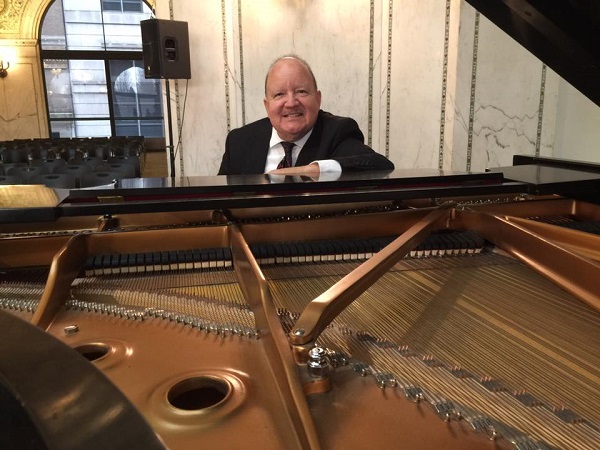
Samuel del Real was an excellent pianist, conductor, arranger and educator.Samuel del Real was an excellent pianist, conductor, arranger and educator.
Samuel del Real was an excellent pianist, conductor, arranger and educator.

He was part of renowned orchestras such as Pacho Galán, La Dimensión Latina and El Trabuco Venezolano and participated in a series of record productions in Caracas, Venezuela.

In 1983 he recorded his first album with his own band. His first hit “Ella No Baila Sola” became the theme song in every night club in Colombia, Venezuela, Peru, Panama, USA among other countries.

In 1985, Samuel moved to Chicago, USA, where he quickly formed his orchestra with members of different nationalities resulting in a mixed sound for his music.

Since then Samuel del Real and his orchestra participated in many festivals, concerts, private events in cities such as Chicago, London, New York, Minneapolis, St. Paul, Detroit, Indianapolis, Miami and more. “Piano Caliente”, ‘Piano Jamboree’ and ‘Piano Navideño’ are the most recent albums that include selections from his extensive Latin jazz repertoire, as well as new interpretations of Afro-Cuban classics from his album entitled Piano Caliente.
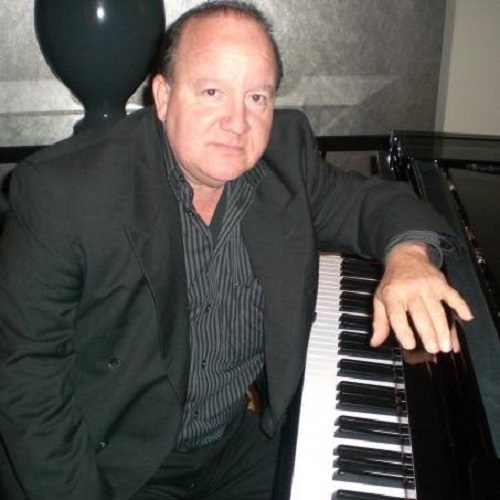
Samuel In 1985, Samuel moved to Chicago, U.S.A.

Samuel has ventured not only into the salsa genre, but also into Latin jazz that surprises even those who don’t know him.

It doesn’t take much to realize that Samuel was “El Maestro del Buen Ritmo” and that his music is here to stay.

Samuel del Real: the artist from Barranquilla who triumphed in the United States.

He trained musically and academically, open to the idea of expanding his artistic horizons.

“I began my musical studies in Fine Arts, among my teachers I remember Günther Renz.

In Venezuela I attended the Juan José Landaeta Conservatory and the Caracas Philharmonic Conservatory with the pianist Paul Rosenbloo.

I studied harmony and counterpoint. With maestro Antonio Lauro, composer and guitarist, I completed my academic training”.

At the age of 15 he began his professional career as a pianist in the Pacho Galán Orchestra. There he learned the tricks of popular dance music of the Colombian Caribbean, and the possibilities of sharing with national musicians opened up for him.

DiegoDel Real, my first piano teacher, my advisor, my partner in producing, arranging and recording music.

With him I learned the routine of Caribbean music, he had a very positive attitude towards me. He would summon me before rehearsals to teach me how to play, he would take the score and sit with me at the piano: ‘Play like this’, he would tell me, and ‘play the acor-des this way, this is the tumbao, this is the phrasing’, all with a lot of patience”, he recounted.

“There was Pi¬chirilo on bass, Jorge Pérez on timbales and drums; and Joaquín Pérez on congas. Chicho Sarmiento, Clí¬maco Sarmiento’s son, played the alto saxophone; Pacho Aragón played the tenor saxophone. On trumpets Armando Galán, Raúl Lastra and Chino Acosta.

Rosendo on trombone. Maestro Pacho Galán would arrive to conduct the first set and then he would leave, Armando would be in charge of the orchestra. That’s when my interest in Caribbean folklore began.

I did not record with Pacho’s orchestra because he did not record in that period, but I played a lot of his music and I still play it in Latin jazz.

“For me it was a great school,” he said.

Although he has lived outside the country for many years, when he returns to Barranquilla it is as if he had never left.

It shows in his confidence to walk the streets, to visit places, to call friends, to exchange anecdotes with people he barely knows.

He is a man who lives for music, to which he has dedicated a contagious enthusiasm. That is why when he comes, it is a pleasure to review his career.

“I come to take a little hot temperature and to bring my latest albums for the local public to get to know them,” he said.

In 1975 he formed an orchestra in Venezuela with which he worked at the Hotel Tamana¬co Internacional, while at the same time he was a pianist, administrator and producer of various musical projects in the recording industry of that country.

In 1979 he joined Dimensión Latina, an aggregation with which he recorded Di¬mensión desconocida (1979), el número uno con la núme¬ro uno (1980), Para siempre (1980), Combinación latina Nº 4 (1980), and Cuerda para rato (1981).

“In Dimensión Latina I spent three years with Andy Montañez, Argenis Carruyo and Gustavo Carmona, then I started the orchestra project with my name.

I also recorded with Andy Montañez as a soloist, and made arrangements in recordings for Velvet de Venezuela”.

Samuel also participated in the extraordinary Trabuco Venezolano, led by drummer Alberto Naranjo.

“With Trabuco Venezolano I participated in many concerts in Venezuela.

With them I recorded Irakere and Trabuco, in a live performance at the Poliedro de Caracas. I also recorded Imágenes Latinas.

The Flor y Nata, themes: No me engañes, Rosa de la Noche, Brujería, Almas Blues, Desilusión, (there I do a piano solo that has been highly praised), a pesar de Usted, Orquesta de moda, No quiero Confusión. Retrospectiva del Trabuco Venezolano Vol. 2 (1977- 1984)”.

El Trabuco Venezolano – La Flor y Nata 1984

In 1983 he recorded his first album with his orchestra, the hit was the song Ella no baila sola, which became his letter of introduction.

In 1984 he recorded his second album, repeating his success with the song Cara de Domingo, by the niuyorrican flautist Lou Perez.

The third album with his orchestra was produced in 1987, when he was already living in Chicago.

“When I left Dimensión Latina, Gustavo Cardona, Oscar D’León’s bass player, encouraged me to start my own orchestra.

One of the numbers was Ella no baila so¬la, and when it was played, people stopped to dance. That is why we decided to record that song.

I brought Frankie Paz, a boy from Maracaibo who had auditioned with Dimensión Latina as a replacement for Argenis Carruyo, but César Monje didn’t like it.

I told the boy, I’m going to have my orchestra soon and I’m going to bring you with me”.

Referring to his piano influences, Samuel recalls Noro Morales, Eddie and Charlie Palmieri, Richie Ray and Lino Frias.

Others such as Bud Powell, Thelonious Monk and Oscar Peterson, shaped his vision.

“I liked Noro Morales a lot, I had only one record of his, ‘Maria Cervantes’, which caught my attention since I was a child. One day I decided to arrange it a little differently. I still play it in my Latin concerts.

Del Real took up residence in Chicago in 1985. There he has continued his work moving between Latin dance music and Latin jazz.

I’ve been living there for 32 years, I have my orchestra, I give Latin jazz concerts, and I’ve also worked for other organizations in other cities like Minneapolis and Cleveland.

We do salsa and different Latin American rhythms. The music business has changed, it’s a big investment to make a record, and you have to project it to the singer, limiting the possibility of moving.

That’s why I decided to make Caribbean Latin jazz instrumentals; with that I expose my music without the need to write ten arrangements for a singer with whom you run the risk of him leaving”.

His recent recordings include the Pianos del Caribe series, which includes the discs Piano caliente, Piano jamboree and Piano navideño.

“The first disc of the series, Piano Caliente, brings songs from the 50’s such as Mata Siguaraya, El que siembre su maíz, Besitos de coco…. I made the themes a little more progressive with jazz, but preserving their essence.

I subtly changed the harmonic structures, without distorting them. There the singer is the piano.

Then came Pia¬no Jamboree, with some of my own themes. I do more complex things, trying to penetrate Latin jazz, looking for a space for my musical identity.

It is an interesting work that I would like music lovers from Barranquilla to listen to.

The third album also in the same series is entitled Piano Navideño,

“The first album in the series, Piano Caliente, brings songs from the 50’s like Mata Siguaraya, El que siembre su maíz, Besitos de coco…. I made the themes a little more progressive with jazz, but preserving their essence.

I subtly changed the harmonic structures, without distorting them. There the singer is the piano.

Then came Pia¬no Jamboree, with some of my own themes. I do more complex things, trying to penetrate Latin jazz, looking for a space for my musical identity.

It is an interesting work that I would like music lovers from Barranquilla to listen to.

The third album also in the same series is entitled Piano Navideño, I took as a reference the themes of Christmas. Christmas is very important to me. I am a lover of that celebration.

I took several themes from the international Christmas repertoire and put them in Latin jazz”.

No one doubts that Barranqui jazz or the International Carnival of the Arts would be the perfect setting for his work. Plus, it would be a homecoming in style.

“I think it would be a great opportunity to showcase my music in my city. I am glad that in Barranquilla they are creating spaces like the Carnival of the Arts and the Caribbean Cultural Park, so that people have access to that part of the culture that is music”.

He passed away at the age of 67 on December 10, 2020.

Samuel del Real, who suffered from diabetes, died in Chicago, United States, where he had settled 35 years ago.

Also Read: Thank you Rafael for all you have done for Salsa. Without you many of us would not be salseros


Source and Collaboration By: Marino de Jesus (15889 of Historia Salsera
Republica Dominicana

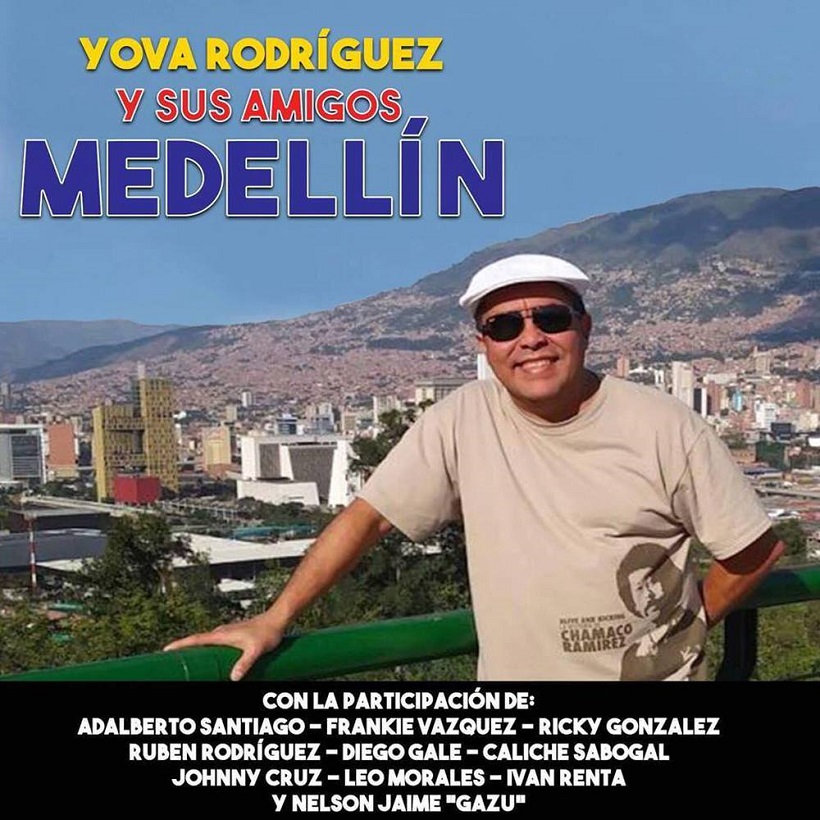
Yova Rodríguez

Latin America / Puerto Rico

Yova Rodríguez. The jibarito of Mayagüez.

Giovanni Yova Rodríguez Ruiz, was born in Mayagüez, being the youngest of six siblings, raised alone by his mother Doña Delia Ruiz Crespo. At the age of 7 he started in music singing Christmas bonuses and influenced by his maternal uncle José Ruiz Crespo ¨Pipo El Indio¨ and his great-uncle Antonio ¨Toño Ruiz who played Puerto Rican cuatro.

Yova Rodríguez
Yova Rodríguez

At the age of fifteen, he began his studies at the Ernesto Ramos Antonini Free School of Music in Mayagüez, Puerto Rico.

It is here that he began his singing career and minor percussion and at the age of 16 he became the singer of the school band. In 2004 the project ¨Yova Rodríguez & his group Sakao – Akà, Homage to Polo Montañez¨ began.

Since the release of her musical work, Yova Rodríguez, the ensemble Sakao – Akà, has become one of the most sought-after ensembles in Puerto Rico, Colombia, Venezuela and New York, since 2010 she has resided in The Big Apple, La Babel de Hierro N.Y. working on the musical composition for singers of the stature, Danny Rivera, Herman Olivera, Marcial Isturiz, Orquesta Boricua Legends, and the great Andy Montañez among others and to mention a few and traveling through several Latin American countries along with most of the artists already mentioned.

Yova Rodríguez - Photo
Yova Rodríguez – Photo

In 2016 he starts with his promotional song ¨Me Quedaré¨ with arrangements by trumpeter Nelson Jaime Gazu, a song dedicated to the thousands of Boricuas who have left their beloved Puerto Rico.

In 2017 he composes the song ¨Mi Barrio¨ dedicated to his native neighborhood and was presented in Mayagüez, at the same time Mayor José Guillermo Rodríguez gives him the keys to the city and a recognition, in the same year he composes the song ¨ Borinquén se Rivanta¨ where great luminaries of La Salsa participated in New York such as:

El Pulpo Colon, Jhon Benítez, Luis Mangual, José Dávila among others and by the hand of the Cuban trumpeter and arranger Agustín Someillan Garcia, in January 2018 it is presented in Medellín-Colombia in the prominent venue Son-Habana, returns to New York and composes the theme Medellín, it is presented on June 23 with a resounding total success in the event one day of Salsa for Medellín.

Yova Rodríguez himself informs me that he is already preparing his fourth record production by the hand of the pianist, arranger Arturo Ortiz. And at the same time he belongs to the board of directors of the Galería de La Salsa in Spanish Harlem in New York.

Yova Rodríguez - flyer
Yova Rodríguez – flyer

Rumberos del Callejón bring their new hit “Me Tienes Loco” Ft. Gilberto Santa Rosa

Northeast – Middle Atlantic – New York

Rumberos del Callejón New Single “Me Tienes Loco” Ft. Gilberto Santa Rosa is already here!!!

Rumberos del Callejón brings to the Salsero musical market their new promotional single “Me Tienes Loco” with the special guest, Gilberto Santa Rosa “El Caballero de la Salsa”. This third track of the album “Celebrando” presents contemporary salsa with a fresh and avant-garde touch.

Rumberos del Callejón New Single “Me Tienes Loco”

The musical arrangements of “Me Tienes Loco” were in charge of Alberto Crespo, while Carlitos Padrón was responsible for the musical production. This third single of nine in total of “Celebrando” Volume 1 was recorded between Caracas – Venezuela and the capital of the World, New York.


In this CD, celebrating the anniversary for the 10 years of the orchestra you can listen the interpretation of the most famous artists of the Salsa genre, such as: the Puerto Ricans Tito Nieves, Gilberto Santa Rosa, and Maelo Ruíz, Domingo Quiñones, and for Venezuela there are the singers: Luis Fernando Borjas, Rodrigo Mendoza, Wilmer Lozano, Angel Vallenilla, Veruzca Verdú, Gonzalo Díaz and Memo Arroyave.

Rumberos del Callejón

“Celebrando” Volumen 1 is available on all digital platforms.


Release Date: June 28th, 2018


Credits:
Javier Vásquez Lyric
Alberto Crespo Arrangements
Gilberto Santa Rosa Lead Vocal
Alberto Crespo Piano
José Tabares Bass
Carlitos Padrón Congas, Bongos & Timbales
Larry Flint Minor Percussion
William Rada Trumpets
Pedro Moya Trombone
José Fariña Baritone
Rodrigo Mendoza, Wilmer Lozano, Leo Gruber, Ángel Vallenilla Chorus
Rumberos del Callejón 10th anniversary

Vídeo: https://youtu.be/Ewcil67kjyQ

Luis J. Cruz H. – Puerto Rican Trombonist

North America / USA / New York

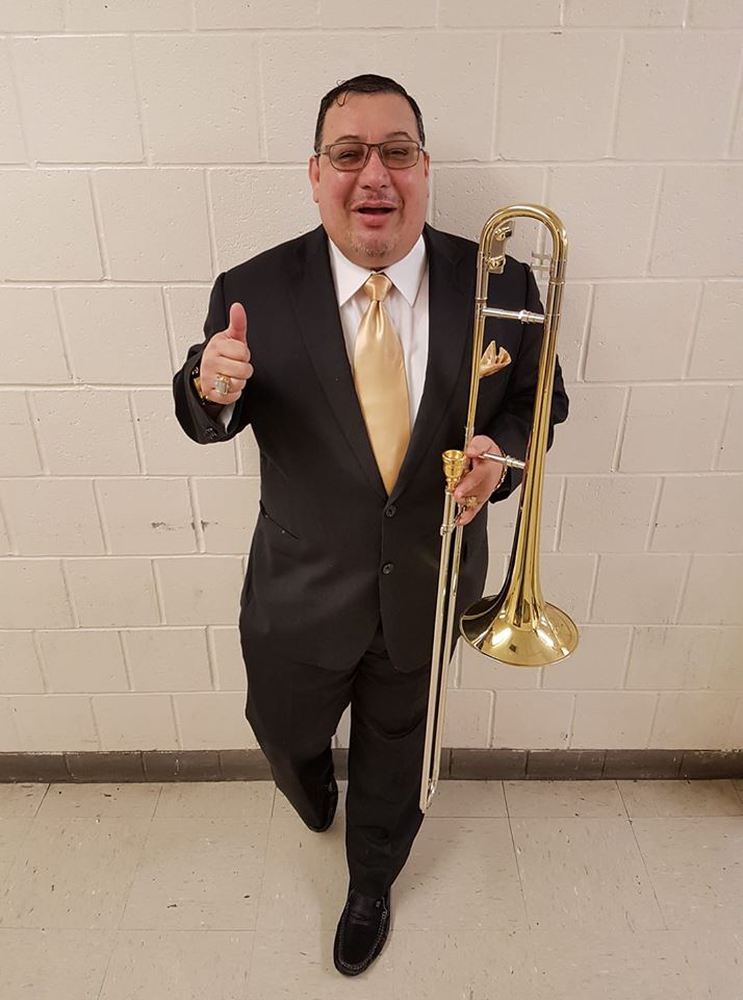
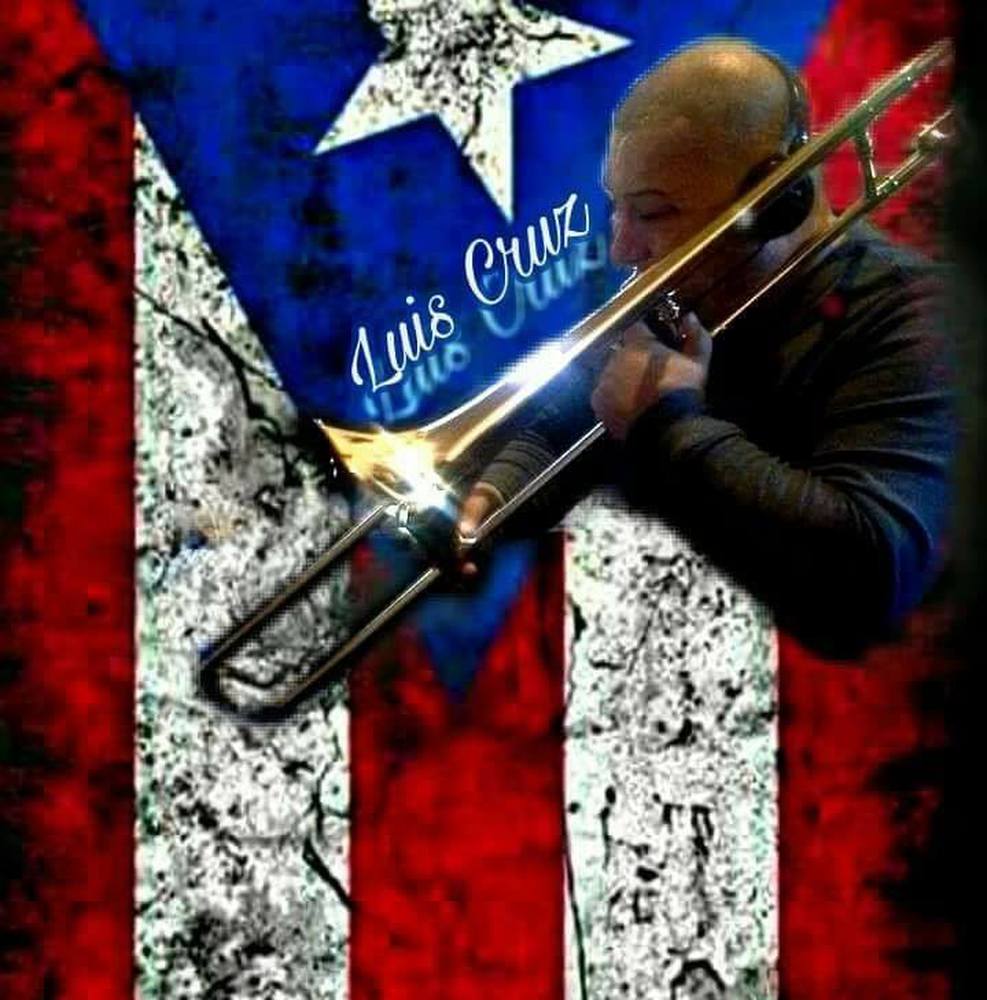
Luis J. Cruz H. They recognize the Puerto Rican Trombonist

The Puerto Rican Trombonist Luis J. Cruz H.

The sound of the trombone sings a seductive melody that fuses the Antillean archipelago into a single town united by strong historical-cultural ties.

The sons and daughters of the Caribbean have left their mark on universal culture, but the libertarian struggles established an umbilical cord that established the dream of an Antillean confederation that has resisted the divisionism that conquering partisans have sown for more than a century.

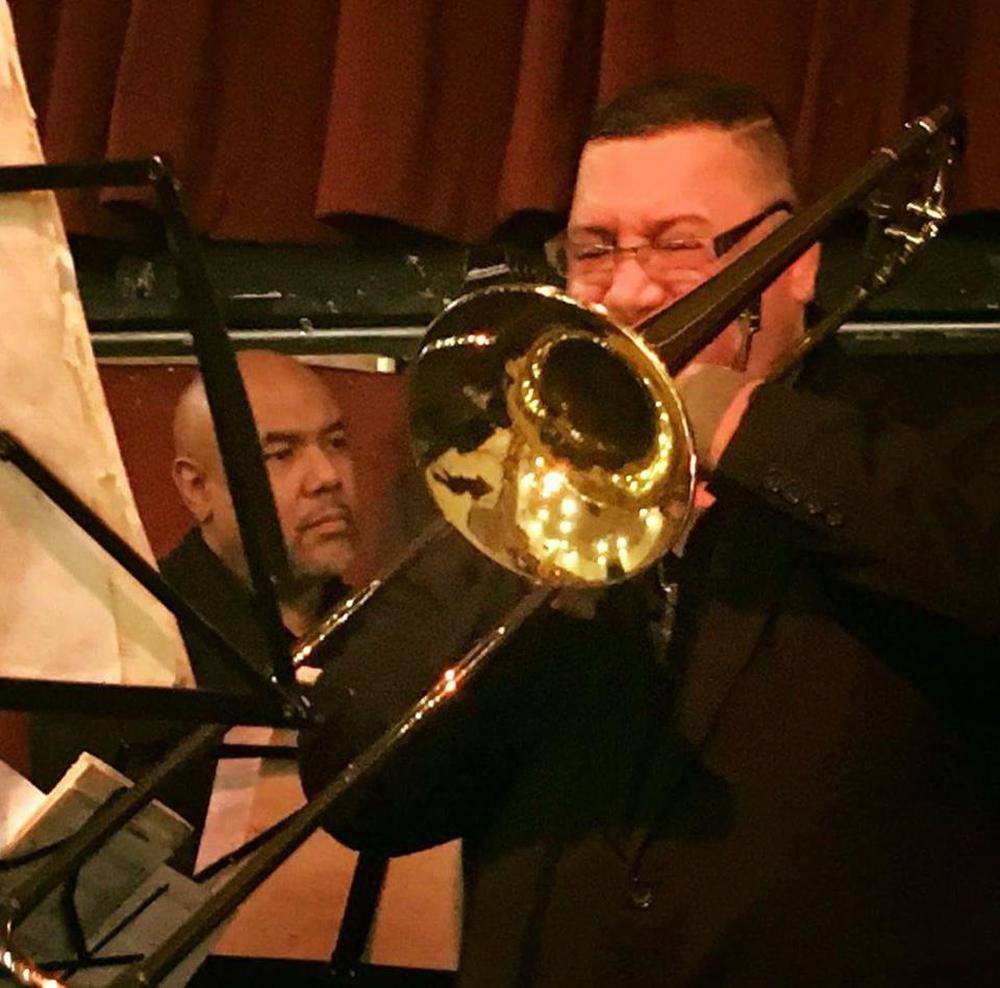
Luis J. Cruz H playing the trumpet

Luis J. Cruz H, an academic musician from Catañes based in New York with more than thirty-seven years of artistic life, recognized as the Steel Lips Trombone by legendary musicians such as Ángel ¨Papo¨Vazquez (Founder of the Manny Oquendo Free Group of New York, the Baracumbele Experimental Group of Puerto Rico).

Cruz got her start in music at the age of fourteen, when she took an optional music course in middle school. He discovered that he had talent, loved music and wanted to be a musician. The teachers advised him to enroll in the Escuela Libre de Música de Hato Rey in Puerto Rico.

Photo of Luis J. Cruz H.

¨I was privileged. I had excellent teachers at the Ramón B. López, Rafael Cordero and Onofre Carballeira schools. They encouraged me to study and listen to the call of my heart. My parents, Luis A. Cruz Vega and Carmen M. Huertas Santiago, were fundamental. My mother has been my greatest source of support and two educators, teacher Edgardo Correa and teacher Antonio Salcedo, are the people who have most influenced my professional development¨ recalls Cruz Huertas.

The love between the trombone and Cruz was one at first sight. ¨I heard the trombone and I fell in love with its sound. Then I petted him. I reach my soul. It’s been more than thirty seven years since I married my trombone and we became one.

Puerto Rico -  Luis J. Cruz H.
Puerto Rico – Luis J. Cruz H.

He has participated in several orchestras such as José Alberto el Canario, Celia Cruz, Frankie Ruiz, Willie González, Eddie Santiago and is currently the first trombone of the legendary group Boricua Legends of Pedro Pocholo Segundo in New York.

In the coming days of the month of August, he will visit us in Caracas-Venezuela, to participate in a master class on techniques, use and execution of the slide trombone at the facilities of the National Center for Social Action for Music.

Luis J. Cruz H.
Luis J. Cruz H.

The son montuno was born in the area of Santiago de Cuba

It was constituted by a mixture, in perfect harmony, of the African sonorous roots with the metric and the style of versification of Spanish origin. Although it presents a rhythmic base similar to the son, they do not have a common origin.

This rhythm is a product of the same phenomenon of transculturation that other genres of the Cuban traditional music have undergone by the hybridization of cultures.

Uncertainties about the origin of son montuno

According to Fuentes Matons himself, he is only a compiler of the verses and the authors were the sisters Micaela and Teodora Ginés, who wrote the lyrics in Santiago de Cuba around 1560.

The son montuno was born in the area of Santiago de Cuba

But this story does not have sufficient evidence, and may be the result of the author’s modesty, the oldest son montuno that is collected is that of Ma’Teodora, from 1893.

Many authors assure that the real author is Fuentes Matons, in an attempt to validate the musical roots of the Island. What is certain is that the expansion of this rhythm from the 18th century in Cuba was very fast.

In addition, due to the migration of Caribbean people to Cuba, the mixture with sonorities coming from Haiti, Santo Domingo and Puerto Rico became more and more frequent Haiti, Santo Domingo and Puerto Rico.

Evolution and popularity of son montuno in the 20th century.

From the 19th century onwards, migration from East to West was significant.

This was due to the wars of independence that had taken place in the eastern part of the island.

This migration brought as a consequence that the rhythm also expanded and mixed with the rhythms that already existed in the West.

In the western provinces, mainly in Havana and Matanzas, there was the concept of a band composed of six or seven members, which favored the new genre.

Arsenio Rodríguez (1911-1970), known as “el ciego maravilloso” (the wonderful blind man), was one of the great musicians who brought this sonority to the forefront.

Among his most popular works are “Papa upa”, “Mami, me gustó”, “La vida es sueño”, “La yuca de Catalina”, among many others.

The lyrics are characterized by the picaresque jocularity, the simplicity of the message, the easy to memorize refrains and the exchange with the public in occasional interpretations.

The orchestra, on the other hand, does perform complex improvisations and virtuoso musical combinations. Arsenio Rodríguez popularized the rhythm worldwide, opening a space for traditional Cuban music in the 1950s.

Arsenio Rodríguez (1911-1970), known as “el ciego maravilloso”, was one of the great musicians who brought this sonority to the forefront.

Legacy of Son montuno

The legacy of this Cuban rhythm is present in genres such as Latin salsa, mambo, Latin jazz, timba and chachachá. Some outstanding musicians kept its rhythmic base and incorporated their own melodic creations.

Among these are: Benny Moré, Pío Leyva, Roberto Faz, among many others.

The primitive instruments of the Cuban son are the Cuban tres, the bongo, the maracas, the claves and the marimbula.

The Cuban tres is a kind of guitar with three pairs of strings. The bongo constantly improvises. The maracas and claves accompany the guitar and the bongo.

The marimbula was used as a bass in the traditional Cuban son.

Later, other instruments such as the guitar, double bass, trumpet and timbales were added.

What kind of instruments did the African slaves bring to Cuba?

Among the typical instruments we find the chekeré, the güiro and the batá drums. The chekeré in Cuba is also known as ágbe.

The basic instrumental ensemble is made up of a series of string instruments (jarana, requinto or son guitar, leona) and percussion instruments (pandero, quijada de burro, marimbol, tarima for zapateado), to which other instruments have been added in recent experiments (violin, double bass, cajón, etc.).

What is the national instrument of Cuba?

The Cuban BongóThis small double drum is considered by many to be the most characteristic instrument of Cuba
The Cuban Bongó
This small double drum is considered by many to be the most characteristic instrument of Cuba

The Cuban bongo

This small double drum is by many considered the most characteristic instrument of Cuba.

It is easy to identify the bongo at first glance as it has been used and popularized in countless celebrations until it has become an indispensable instrument.

Also Read: Israel “Cachao” López Sobrado en fama y respeto en los años setenta se dedicó a mantener la tradición a nivel supremo

  • « Go to Previous Page
  • Page 1
  • Interim pages omitted …
  • Page 15
  • Page 16
  • Page 17
  • Page 18
  • Page 19
  • Interim pages omitted …
  • Page 55
  • Go to Next Page »

International Salsa Magazine (ISM) is a monthly publication about Salsa activities around the world, that has been publishing since 2007. It is a world network of volunteers coordinated by ISM Magazine. We are working to strengthen all the events by working together.