• Skip to primary navigation
  • Skip to main content

International Salsa Magazine

  • Home
  • Previous editions
    • 2025
      • ISM / November 2025
      • ISM / October 2025
      • ISM / September 2025
      • ISM / August 2025
      • ISM / July 2025
      • ISM / June 2025
      • ISM / May2025
      • ISM / April 2025
      • ISM / March 2025
      • ISM / February 2025
      • ISM / January 2025
    • 2024
      • ISM / December 2024
      • ISM / November 2024
      • ISM / October 2024
      • ISM / September 2024
      • ISM / August 2024
      • ISM / July 2024
      • ISM / June 2024
      • ISM / May 2024
      • ISM / April 2024
      • ISM / March 2024
      • ISM / February 2024
      • ISM / January 2024
    • 2023
      • ISM / December 2023
      • ISM / November 2023
      • ISM / October 2023
      • ISM – September 2023
      • ISM – August 2023
      • ISM July 2023
      • ISM Edition June 2023
      • ISM – May 2023
      • ISM April 2023
      • ISM March 2023
      • ISM February 2023
      • ISM January 2023
    • 2022
      • ISM December 2022
      • ISM November 2022
      • ISM October 2022
      • ISM September 2022
      • ISM August 2022
      • ISM July 2022
      • ISM June 2022
      • ISM May 2022
      • ISM February 2022
      • ISM January 2022
    • 2021
      • ISM December 2021
      • ISM November 2021
      • ISM October – 2021
      • ISM September 2021
      • ISM August 2021
      • ISM July 2021
      • ISM May 2021
      • ISM April 2021
      • ISM June 2021
      • ISM March 2021
      • ISM February 2021
      • ISM January 2021
    • 2020
      • ISM December 2020
      • ISM November 2020
      • ISM October 2020
      • ISM September 2020
      • ISM August 2020
      • ISM July 2020
      • ISM June 2020
      • ISM May 2020
      • ISM April 2020
      • ISM March 2020
      • ISM February 2020
      • ISM January 2020
    • 2019
      • ISM December 2019
      • ISM November 2019
      • ISM October 2019
      • ISM Septembre 2019
      • ISM August 2019
      • ISM July 2019
      • ISM June 2019
      • ISM May 2019
      • ISM April 2019
      • ISM March 2019
      • ISM February 2019
      • ISM January 2019
    • 2018
      • ISM December 2018
      • ISM November 2018
      • ISM October 2018
      • ISM September 2018
      • ISM August 2018
      • ISM July 2018
      • ISM June 2018
      • ISM May 2018
      • ISM April 2018
      • ISM March 2018
      • ISM February 2018
      • ISM January 2018
    • 2017
      • ISM December 2017
      • ISM November 2017
      • ISM October 2017
      • ISM September 2017
      • ISM August 2017
      • ISM July 2017
      • ISM June 2017
      • ISM May 2017
      • ISM April 2017
  • Download Salsa App
    • Android
    • Apple
  • Spanish

Search Results for: Trumpet

Virgilio Martí participated as aVirgilio Martí participated as a vocalist in the Grupo Folklórico Experimental Newyorkino in which he composed the song “Cuba Linda”

Virgilio Martí, born in the year 1919 Havana, Cuba, Rino Rumbero, Singer, Composer, Arranger, Percussionist, Actor and Orchestra Director, well known since the late 40’s, especially as a guaguancó singer.

He began touring the world in 1949 and met his later wife in 1960 in Peru.
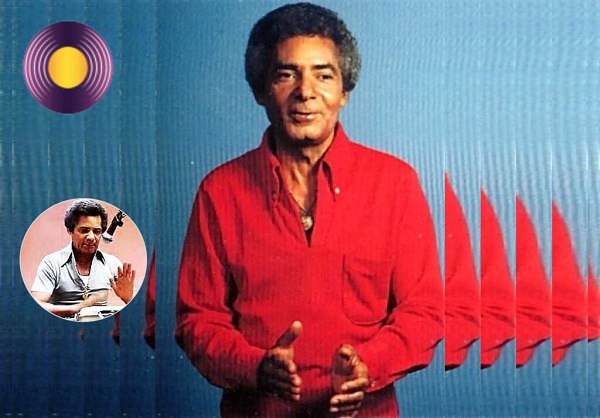
Virgilio Martí participated as a vocalist in the Grupo Folklórico Experimental Newyorkino in which he composed the song "Cuba Linda".
Virgilio Martí participated as a vocalist in the Grupo Folklórico Experimental Newyorkino in which he composed the song “Cuba Linda”.

That same year, he settled in New York, participating in the local scene.

He participated in the LP “Patato y Totico” in 1967, he also participated with his brother Eloy Martí, in a Quintet accompanied by Gene Golden, for the year 1979.

Israel López (Cachao), Arsenio Rodríguez, Héctor Cadavieco, Francisco Valdés, Papaíto, Tony Mayari and Mario Cadavieco also worked on that album.

He participated in the “Grupo Folklórico Experimental Newyorkino”, where he was their vocalist and percussionist, in 1975. During his stay with them, he composed the song “Cuba Linda”.
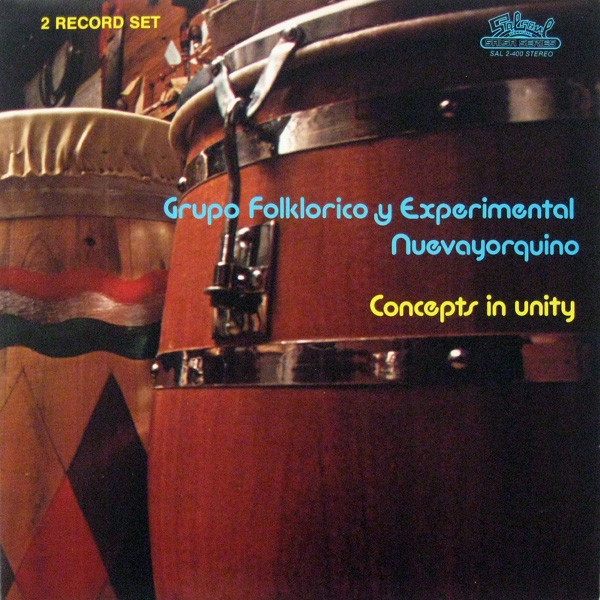
"Grupo Folklórico Experimental Newyorkino, donde fue vocalista y percusionista del mismo, en 1975
“Grupo Folklórico Experimental Newyorkino, donde fue vocalista y percusionista del mismo, en 1975

Another work of Martí of great remembrance is the album entitled: “Saludando A Los Rumberos”, published by the Caimán label in the early 80’s and in which the Cuban acts as vocalist and main star. In it, Martí is involved with talents such as: Tony Cofresí, Andy and Jerry González, Yomo Toro, Paquito Pastor, Ray Romero, Claudio Roditti and Ignacio Berroa, among others.
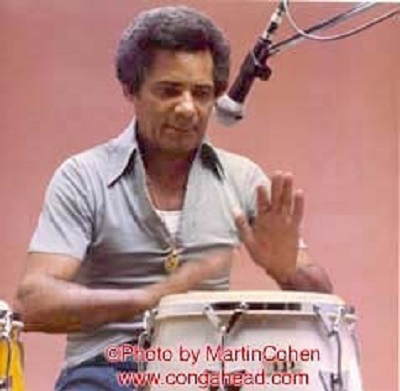
Virgilio Martí, born 1919 Havana, Cuba.

“Iya Modapue”, constitutes in itself, a guaguancó with open rumba being at the same time the favorite number of the “Grupo Folklórico”, and even the first groove that was recorded.

The levels of experimentation and the freedom to unload several rhythms in a single musical performance are the factors producing the attraction of the musicians for “Iya Modupue” (which means Thank You Mother).

The vocal part is in the hands of Virgilio Martí. The trumpet of “Chocolate” Armenteros, the trombones of José Rodríguez and Reinaldo Jorge, the flute of Gonzalo Fernández and the percussion of Frankie Rodríguez stand out.

“Se Me Olvidó” – a bolero by Lolita de la Colina – but adapted in guaguancó to the style of the Grupo Folklórico, which, by the way, turned out to be the piece with the greatest radio airplay in the tropical environment and, therefore, the one that would open the doors to the group. The song was performed by Virgilio Martí, who also plays the congas. In “Se Me Olvidó”, the violin of Cuban Alfredo de la Fe, the quinto of Julito Collazo, the street redoblante of Jerry González and a Mexican marimba played by Andy González in counterpoint to the notes of the double bass, also played by Andy, stand out.

Here it is worth mentioning that Alfredo de la Fe is a virtuoso violinist and among his many performances, I remember his work with Eddie Palmieri, Larry Harlow (the wonderful Jew), the Fania All-Stars and the avant-garde Típica 73.

In the early 80’s he formed a band with brothers Andy and Jerry González, and percussionist Ignacio Berroa.

It is worth mentioning Virgilio Martí’s 1985 performance in the film by Cuban filmmaker León Ichaso entitled: “Crossover Dreams” (Sueños truncados). In it, the Havana native plays the role of “Cheo Babalú” and sings the song “Llora Timbero”.

In this film production made in New York City, the actor Rubén Blades, who plays the role of “Rudy Veloz”, also participates. There they sing the song “Todos Vuelven”.

In 1990, he contributed to the “Soundtrack” of the movie Azúcar Amarga.

He maintained a great skill in converting songs from other genres into rumba arrangements. We can mention the adaptation of the song by Brazilian composer Jorge Ben, “Más Que Nada”, which appears on the LP with Patato y Totico. Martí died on October 17, 1995. (Tom Data “Facebook”)
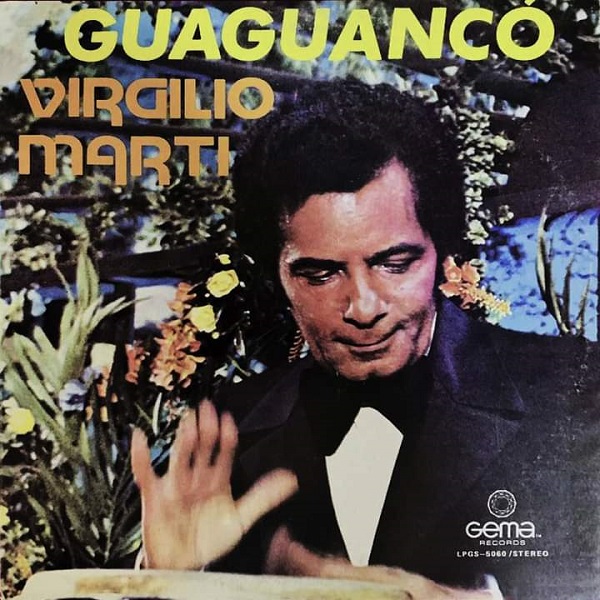
Virgilio Marti - Guaguanco (1979)
Virgilio Marti – Guaguanco (1979)

Virgilio Marti – Guaguanco (1979)

Tracks:

  1. Amanecer (Armando Manzanero)
  2. Todos vuelven (Rafael Otero)
  3. A tus pies (D.R.) (Agustin Lara)
  4. My childhood (Laureano Martinez)
  5. Saluting the rumberos (Manolo Albo)
  6. I’m going to divide it (R. Livi)
  7. Acanapon (D.R.)
  8. The little handkerchief (D.R.)
  9. Que susto (Virgilio Marti)
  10. Odiame (Rafael Otero)

Information realized (June 1, 2024)

Sources:

DiscoGS

Spotify Virgilio Marti

Virgilio Marti Youtube

Also Read: Justo Betancourt Querol Cuban sonero and singer famous for his interpretation of the song “Pa’ bravo yo”

Exclusive with tres player Iván Camblor from the group Pellejo Seco

Cuban musicians have always found the way to stand out in the entertainment world thanks to their talent and commitment and one of those examples is Ivan Camblor, tres player and vocalist with whom we have had the privilege to talk about his career and what was achieved with the group led by him right now, which is Pellejo Seco. 

During the conversation, the artist elaborated on a few topics we found relevant to discuss and we were pleased to hear some of the most important data of one of the most important Cuban son groups in the Bay Area today.   

Ivan playing the tres
Cuban musician Iván Camblor playing the Cuban tres live

Iván Camblor’s beginnings in music   

As is the case of many other artists of his kind, Ivan showed a very early interest in music, specifically since he was at school in his hometown, Havana, Cuba. He defines himself as a self-taught composer who began his musical learning on the street, while he attended classes like any child his age.   

From a very young age, many veteran musicians saw in him the enormous potential he had for music, so they began teaching him all they knew, leading him to the path of Cuban son and traditional Cuban music. Today, these genres is still his north after so many decades. 

The Felix Varela School of Music 

When he was old enough, Iván attended the Félix Varela School of Music, where he studied music appreciation theory, but unfortunately the island’s economic situation affected that part of his learning. Over time, the conditions of the institute started to worsen, making many teachers resign and leave students without chances to continue their studies, including Ivan, who could not see the classes he wanted because of the lack of staff. 

Being unable to study what he wanted, Ivan decided to continue learning on his own with the musical groups he had contact with and that is how it continued until today. 

His singing, composition and ability to play the Cuban tres came with the experience he acquired on the street and with friends who knew more about music than he did. He refers to guitarist and tres player Octavio Sánchez ”Cotán” and El Niño Rivera as his greatest teachers and influences.   

With the experience gained, he had the opportunity to go through all the Cuban music companies, since there were not many tres players at that time and tres teaching was very new.  

Ivan with Chucho Valdez
Pellejo Seco vocalist Sulkary Valverde, Cuban pianist Chucho Valdez, and Iván Camblor

Music composed by Iván for films 

Just as Iván was in several groups, he also had the opportunity to compose original music for films and such was the case of the film ”Hacerse El Sueco” directed by his great friend Edesio Alejandro, who contacted him to support him in the musical part of the production.   

It is then when he proposed him to write four or five original tracks to be used for the film, but Ivan did not mind getting credit, but helping his great friend with his project, so all the material is under his label Orula Music.    

However, he is grateful for the experience and the opportunity to help a good friend who needed his talent at that moment.   

Ivan’s coming to the United States   

Ivan remembers his coming to the United States as one of the most difficult things he had to do, since it is not easy to leave his roots and everything he knows to seek a different kind of future in other lands.   

At first, Ivan was not at all convinced of this decision, but his then partner and mother of his only son made him see that it was the best for them to leave Cuba and go to the United States to try their luck, to which the artist finally agreed.    

For many years, the tres player thought the worst of his host country because of the ideas the he grew up with in Cuba, but upon arrival, he found that the reality was very different from the propaganda he was bombarded with in his childhood and youth.   

Once he was there, he started working on the area of music that he liked most since he was in Cuba, composition. It was then that the idea of forming his own musical group started going round his head.    

Iván creó el Pellejo Seco
Iván Camblor conceived Pellejo Seco as a Cuban son and traditional Cuban music group

How the group Pellejo Seco was created   

Ivan conceived Pellejo Seco as a project in which he would pay homage to the Cuban community, so he tried to find the best musicians for the task. One of them was Cuban trumpeter Marcos Diaz, Puerto Rican Hector Lugo, trumpeter Mario Silva, Liban Montoya, Mexican singer Rogelio Maya and singer German Donatien. This is the original group with which the artist started his band, but others have already joined other orchestras or have started something on their own.   

That was more than 20 years ago and, today, Pellejo Seco has managed to consolidate itself as one of the main Cuban music groups in the Bay Area. Now, it is the most required traditional Cuban music sextet in the area. 

As for the name of the band, Ivan chose the name ”Pellejo Seco” as a tribute to the Cuban peasants whose skin is hard and dry as leather due to the sun and the working conditions that they are exposed to. 

Read also: Israel Tanenbaum from The Latinbaum Jazz Ensemble in ISM 

Toñito Laya

Latin America / Venezuela / Caracas

On this occasion we have the privilege of meeting the new Venezuelan talent Toñito Laya (singer), son of Maestro Antonio “20 DEDOS” Laya, who was one of the most significant conga players in the Venezuelan salsa movement in the 1980s, director of the “ Banbankere Orchestra” of Petare with two musical productions; giving him more than enough reason to grow in Latin music, such as “el Son”, “la Rumba”, “la Guaracha”, “el Danzón“, “Boogaloo”, “la Timba” and “la Salsa” being This is the beginning of his artistic and musical career.

Starting in the 90s, he entered the Bigott Foundation where he had the opportunity not only to learn the various rhythms in Afro-Venezuelan percussion, but also developed as a dancer in one of the most important groups in Venezuela when it comes to popular traditions. “Vasallos del Sol”, eventually becoming “Vasallos de Venezuela” in 2016, where he had 16 concerts, productions, albums and national and international tours; Colombia, Mexico, United States, South Korea and Japan, among others.

In 2006, a project called “Comprehensive School of Latin Tradition Dance 100% Tumbao” began, where many dancers were trained in the Cuban Salsa Casino genre, combining this training with Venezuelan traditions, making them understand that traditions come first. Venezuelans. Then they participated in the most important events and competitions in Venezuela, they even became Latin American Champions of “CUBAMEMUCHO 2009” in the city of Caracas-Venezuela, thus managing to represent the country in the grand final to be held in the city of Munich-Germany, 2010 .

Toñito Laya
Toñito Laya

He also tells us that in 2009, they were invited to participate in a new project but this time not to dance, but to “sing” in a group that by then had no name but a particular genre such as “Son Cubano” . From that moment Toñito began his musical career to develop in a somewhat unexpected way, he was a founder and assumed the commitment of being in charge of this group as one of its leading singers for more than 7 years, where the themes arose:

To me that, La Ruñidera, Bilongo, El Jamaiquino, I hear a drum, among others; They were part of his first musical repertoire. With two record productions together with the already structured band “La Séptima Bohemia” he consolidated his musical career as a singer, going through a training process with different teachers and vocal coaches such as:

Ronald González, Fanny Olano, Gustavo Gerardo and Marcial Istúriz, among others. others, who would help him develop in the middle of music. National tours, award nominations and concerts allowed him to share the stage alongside large-scale national and international groups such as:

Francisco Pacheco, Canelita Medina, Alexander Abre y su Habana de Primera, Manolito y su Trabuco, El Septeto Santiaguero, José Alberto “El Canario” to mention a few. Toñito records for the year 2012, the song “She takes me”, a song that in turn would be the title of the second album becoming an icon of parties, dances and social events not only in Venezuela but in many salsa and salsa dancing countries. casino in the world.

In the year 2016 Toñito Laya arrives in Aztec land to embark on a new path, he begins by residing in the city of Cancun-Mexico to sing in some local groups and participate in various projects such as: Los Panas.com, La Formula Perfecta, Grupo Swing Latin among others.

This new stage as an artist prompts him to consider a new musical challenge but this time as a solo singer with a well-defined and focused vision, his pleasant experience as a dancer motivates him to dedicate his first promotional single “ABRE QUE VOY”, this being the complement of an orchestra, for the musicians and their singers “EL BAILADOR”.

“ABRE QUE VOY” is the result of the work of talented and renowned Venezuelan musicians who give an important plus to this Musical production of “Maurice Melo”, this first single is created, performed by Toñito Laya, in the company of the Venezuelan talent of the following musicians:

  • Piano and arrangement: Joel Uriola.
  • Bass: Jesús Torres “Mandinga”
  • Percussion: Yomar Méndez “Caballo”
  • Trombone: Jhonal Rivero.
  • Trumpet: Edward Platter.
  • Baritone sax: Michel Peña.
  • Choirs: William “Wywy” Buznego, Carlos Guzmán and Ramfis Fajardo.
  • Recorded in the studio: A Tempo Records by Heyzer Cabrera.
  • Mixing and Mastering: Heyzer Cabrera.

Caracas – Venezuela 2018

If you want to meet or contact Toñito, you can follow him through:

●      E-mail: [email protected]

  • Facebook: https://www.facebook.com/tonito.laya
  • YouTube: https://www.youtube.com/channel/UCUkjU7SFnPc_W-XJDlMMzRg
  • Twitter: https://twitter.com/negrolaya


Meet the Carlos Rodríguez Quintet

Latin America / Venezuela / Caracas

There are many Latin music orchestras worldwide, and our duty is to know and recommend the best orchestras, whether they are known or new talents. On this occasion we had the opportunity to interview Carlos Rodríguez and his orchestra who were playing Jazz, Latin Jazz, Salsa and various mixes of Latin rhythms at the “Café Mi Cosa” located in City Market, Caracas, Venezuela.

Carlos Rodríguez Quintet

At this meeting in the cafe, there was the Carlos Rodríguez Quintet, who make it up: Antonio Davicenzo (Drummer), Darwin Manzi (Trumpet), Pancho Santangelo (Piano), Cesar Bolivar Changu (Percussion) and lastly Carlos himself as soloist.

Carlos mentions that his orchestra has in its themes and/or songs a mixture of Venezuelan music with jazz, Afro-Venezuelan, begin bolero, merengue with a bolerito, among others. Currently for the time they demand the search for new rhythms and stay stuck with the current rhythms, seeking to satisfy and enjoy the public and something that impacts them.

In his first album that was based on Jazz, he made several combinations with various Latin rhythms, such as: Guaguacom, Afro, Bolero, Jazz with Latin rhythm, Jazz with Venezuelan rhythm and other fusions.

It started a long time ago, he tells us that he was with the “National Philharmonic Orchestra”, where he learned and gained experience in the area of ​​music. Of course he not only works with them but with other orchestras and/or artists.

Later he won an international award in Colombia as the best bassist, and his project is to be known as a soloist in his orchestra and not just another accompanist of another orchestra; however, he continues to work with a wide variety of musicians since that is the world of music, living from music not only as his profession but as his greatest passion.

The Carlos Rodríguez Quintet

His recommendation for new talents is that there is always a certainty in their musical career, discipline, gain and perseverance to progress and move forward since the road is hard and with obstacles, therefore one should not be discouraged and continue fighting and progressing to so be recognized.

For more information:

  • Instagram: https://www.instagram.com/carlosrodriguezfalcon6/ @carlosrodriguezfalcon6
  • E-mail: [email protected]
  • Phone: +58 414-2037324


Gilberto Santa Rosa

Latin America/ Puerto Rico / Puerto Rico

Gilberto Santa Rosa – The Salsa Knight

Gilberto Santa Rosa (Santurce, 1962) Puerto Rican singer. Nicknamed El Caballero de la Salsa, he has been one of the most prominent performers of the genre, particularly since the 1990s. From an early age his love of music manifested itself, which led him to organize his first amateur ensemble.

Gilberto Santa Rosa
Gilberto Santa Rosa

At only fourteen years old, he already recorded his first songs, thanks to the trumpeter and orchestra director Mario Ortiz. His first group as a professional singer was the Orquesta Grande; Later, as a result of a performance in 1980 in homage to Eddie Palmieri, he joined Tommy Olivencia’s band. Later he sang for a time with Willie Rosario’s orchestra, with which he would record six albums.

Gilberto Santa Rosa

In 1986 he began his solo career at the head of his own orchestra within the Combo Records record company, owned by producer Ralph Cartagena. His first solo album was titled Good Vibrations. This was followed by three more jobs with the same label, which he left in 1990 to sign with CBS Records (later Sony Records).

Gilberto Santa Rosa in concert

That same year, Punto de vista was published, a romantic salsa album that went platinum and number one on the Latin charts thanks to its successful songs Vivir sin ella and Perdóname. The album also earned him the award for best Latin singer awarded by Billboard.

Photo by Gilberto Santa Rosa

In 1991 his album Perspectiva confirmed a brilliant artistic career and opened up new markets for him. In May of this year he made his debut in Spain in a series of concerts in which he shared the stage with Pete Rodríguez, Johnny Pacheco and Roberto Torres, also from the Caribbean, and in September he made an equally successful Central European tour.

Gilberto Santa Rosa singing at the concert

In 1992 he recorded an album in tribute to the singer Tito Rodríguez entitled A dos tiempo de un tiempo. This work was followed by Born Here (1993) and Facing the Wind (1994), which would be his business card in Japan, a country he visited in 1995.

Photo of Gilberto Santa Rosa in concert

After the publication of Esencia, in 1996, and De corazón, the following year , in 1999 came his successful Expresion, an album that consolidated his position in the international Latin music market and that included hits like Déjate Quiero and especially Que somebody dice me, number one on Billboard for several weeks.

Santa Rosa was one of the first performers to fuse salsa music with classical music, with results such as his well-known work Salsa Sinfónica, which he presented at the Center for Fine Arts on his native island accompanied by the Puerto Rican Symphony Orchestra.

Gilberto Santa Rosa live

In addition to this historic performance, the concerts given by Santa Rosa at New York’s Carnegie Hall in 1995 (which would be included on the live album The Man and His Music) are well remembered; his performance at the I President Festival of Latin Music (Santo Domingo, June 1997); or the presentation at the Lincoln Center in New York with his compatriot Andy Montañez in July 1997.

Also of note are his performances at the Anayansi Theater in Panama in September 1997; at the Teresa Carreño Theater in Caracas, in February 1998; the concert at the Roberto Clemente Coliseum in San Juan; and his 1998 European tour with performances in London, Milan and Rome. Apart from his facet as a singer, he showed his qualities as an actor in the play The Uneven Couple (1990), together with Luis Vigoreaux Jr. and Rafo Muñiz.

Gilberto Santa Rosa
Gilberto Santa Rosa
Gilberto Santa Rosa
Gilberto Santa Rosa
  • « Go to Previous Page
  • Page 1
  • Interim pages omitted …
  • Page 17
  • Page 18
  • Page 19
  • Page 20
  • Page 21
  • Interim pages omitted …
  • Page 55
  • Go to Next Page »

International Salsa Magazine (ISM) is a monthly publication about Salsa activities around the world, that has been publishing since 2007. It is a world network of volunteers coordinated by ISM Magazine. We are working to strengthen all the events by working together.