• Skip to primary navigation
  • Skip to main content

International Salsa Magazine

  • Home
  • Previous editions
    • 2025
      • ISM / November 2025
      • ISM / October 2025
      • ISM / September 2025
      • ISM / August 2025
      • ISM / July 2025
      • ISM / June 2025
      • ISM / May2025
      • ISM / April 2025
      • ISM / March 2025
      • ISM / February 2025
      • ISM / January 2025
    • 2024
      • ISM / December 2024
      • ISM / November 2024
      • ISM / October 2024
      • ISM / September 2024
      • ISM / August 2024
      • ISM / July 2024
      • ISM / June 2024
      • ISM / May 2024
      • ISM / April 2024
      • ISM / March 2024
      • ISM / February 2024
      • ISM / January 2024
    • 2023
      • ISM / December 2023
      • ISM / November 2023
      • ISM / October 2023
      • ISM – September 2023
      • ISM – August 2023
      • ISM July 2023
      • ISM Edition June 2023
      • ISM – May 2023
      • ISM April 2023
      • ISM March 2023
      • ISM February 2023
      • ISM January 2023
    • 2022
      • ISM December 2022
      • ISM November 2022
      • ISM October 2022
      • ISM September 2022
      • ISM August 2022
      • ISM July 2022
      • ISM June 2022
      • ISM May 2022
      • ISM February 2022
      • ISM January 2022
    • 2021
      • ISM December 2021
      • ISM November 2021
      • ISM October – 2021
      • ISM September 2021
      • ISM August 2021
      • ISM July 2021
      • ISM May 2021
      • ISM April 2021
      • ISM June 2021
      • ISM March 2021
      • ISM February 2021
      • ISM January 2021
    • 2020
      • ISM December 2020
      • ISM November 2020
      • ISM October 2020
      • ISM September 2020
      • ISM August 2020
      • ISM July 2020
      • ISM June 2020
      • ISM May 2020
      • ISM April 2020
      • ISM March 2020
      • ISM February 2020
      • ISM January 2020
    • 2019
      • ISM December 2019
      • ISM November 2019
      • ISM October 2019
      • ISM Septembre 2019
      • ISM August 2019
      • ISM July 2019
      • ISM June 2019
      • ISM May 2019
      • ISM April 2019
      • ISM March 2019
      • ISM February 2019
      • ISM January 2019
    • 2018
      • ISM December 2018
      • ISM November 2018
      • ISM October 2018
      • ISM September 2018
      • ISM August 2018
      • ISM July 2018
      • ISM June 2018
      • ISM May 2018
      • ISM April 2018
      • ISM March 2018
      • ISM February 2018
      • ISM January 2018
    • 2017
      • ISM December 2017
      • ISM November 2017
      • ISM October 2017
      • ISM September 2017
      • ISM August 2017
      • ISM July 2017
      • ISM June 2017
      • ISM May 2017
      • ISM April 2017
  • Download Salsa App
    • Android
    • Apple
  • Spanish

Search Results for: Trumpet

José Antonio “Maceo” Rodríguez was a faithful cultivator of Son Cubano and participated in the Afro Cuban All Stars project

José Antonio “Maceo” Rodríguez was born on April 17, 1950 in Holguín, Cuba.

Famous sonero voice leader of the group Sierra Maestra, he began his career at the beginning of the eighties of the last century with the group Sierra Maestra, integrated by former students of the Polytechnic University José Antonio Echeverría, of Havana, with which he won a televised contest of new musicians.

José Antonio Maceo Rodríguez was a faithful cultivator of Son Cubano and participated in the Afro Cuban All Stars project.

He died at the age of 55 on November 6, 2005 in Copenhagen, Denmark, of a heart attack, after giving a concert with his group at the end of a tour of Europe.

He was born on April 17, 1950 in a modest country house in the vicinity of the Antonio Maceo Sugar Mill, in Cacocun, in the eastern province of Holguin.

Relatives and neighbors say that since he was a child he loved art, music, pirouettes and attracting attention.

October 20, 1976 in Havana, together with his classmates at the José Antonio Echevarría University Center, he founded the musical group Sierra Maestra, called at that time Grupo de Sones de la Facultad de Ingeniería Eléctrica.

Those young dreamers performed in the popular contest “Todo el Mundo Canta”, where they took off on a spiral of success in Cuba and the world.

They traveled to many countries promoting Cuban music. They participated in Festivals of international relevance in Australia, Bosnia, Canada, Croatia, Cyprus, United Kingdom, Greece, Ireland, Israel, Italy, Macedonia, Mexico, Portugal, Puerto Rico, Singapore, Slovenia, Turkey, Yugoslavia and the United States.

A faithful cultivator of Son, Rodríguez participated in the Afro Cuban All Stars project, nominated for a Grammy in 1998 and parallel to the Buena Vista Social Club.
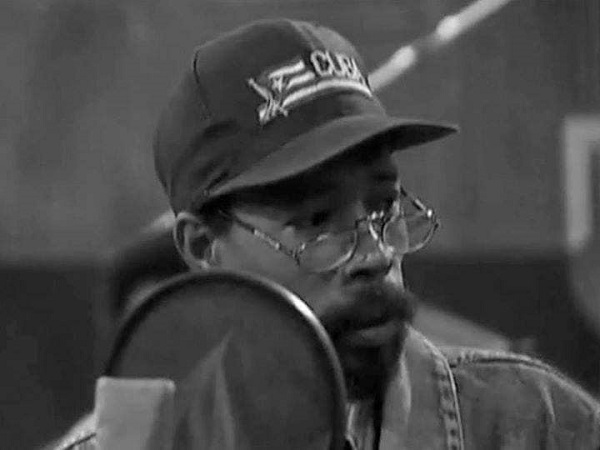
José Antonio Maceo Rodríguez

His excellent voice, comparable according to critics to that of the great cultivators of the genre, was one of the emblematic of the current Cuban dance music scene.

She began recording in 1981 her first album, “Sierra Maestra Llegó con El Guanajo Relleno”, was a silver disc and received excellent reviews. He participated in the Afro Cuban All Stars project, and parallel to the Buena Vista Social Club.

The trumpet player José Alemañy, Cubanisimo, and Juan de Marcos González, founder of the Buena Vista Social Club, were his partners in the group for years, and together they undertook the task of recovering the tradition of famous sones and soneros, revitalizing the genre at a time when other musicians were opting for salsa and more commercial rhythms.

According to the Cuban composer, José Antonio Rodríguez not only possessed a very special voice, “he also had the courage and human qualities to remain faithful to that style, the son style, which is the mother of Cuban music”.

The repertoire of Rodriguez, known as Maceo among his friends and admirers, included, in addition to the great classics of traditional son, pieces that became very popular in his voice, such as Dame un traguito ahora or Esa mujer lo que quiere es que la miren.

Maceo, although small in stature, was an immense man, someone who could not conceive where to keep the torrent of voice he displayed without ostentation, so much musicality, intonation and love for Cuban music.

José Antonio was not only a great musician, he was a great person, very loved by his closest friends and in general by the people whose affection and admiration he won since the participation of Sierra Maestra in the Adolfo Guzmán contest and that thanks to his special way of interpreting the Cuban son, great musicians such as Ignacio Piñeiro’s Septeto were born again in the popular taste.
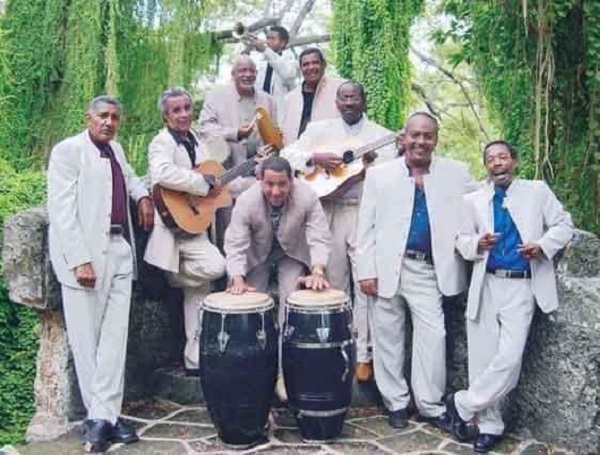
José Antonio Maceo Rodríguez y su Grupo

The singer died on November 6, 2005, just a few hours after finishing the European tour of Sierra Maestra with a concert at the Amager concert hall in Copenhagen.

With this presentation, the popular band put an end to the performance of all the Cuban artists who participated in the First International Latin Music Festival of that capital. The sonero’s remains were repatriated to Cuba, where he was buried.


Also Read: Bamboleo de Lázaro Valdés is another of those exquisite Cuban products, as well as sweet rum and mild cigars

Rey Ruiz’s ‘Contigo’ concert at the Coca Cola Music Hall in Puerto Rico was Phenomenal.

As part of his Contigo tour, Rey Ruiz returned to what he considers his musical homeland: Puerto Rico. Since August 1992, when his first album (Rey Ruiz) was released, he has not stopped singing. He affirms that from the beginning he longed for a concert on Puerto Rican soil like the one he finally achieved on March 23, 2024 at the Coca Cola Music Hall.

Rey Ruiz's 'Contigo' concert at Coca Cola Music Hall in Puerto Rico phenomenal
Rey Ruiz’s ‘Contigo’ concert at Coca Cola Music Hall in Puerto Rico phenomenal

Before the concert, we were counting on hearing the songs that the salsero’s fans turned into hits. Certainly, the Coca Cola Music Hall witnessed how the euphoria with which Rey Ruiz catapulted in the early 90’s was revived. We knew we would hear the usual hits, such as ‘No me acostumbro’, ‘Si me das un beso’, ‘Amiga’, ‘Si te preguntan’, ‘Mi media mitad’, ‘Luna negra’ and ‘Creo en el amor’. To these were added ‘El Rey del mundo’, ‘Mal momento’, ‘El hombre de tu vida’, ‘Así se compone un son’, ‘Es difícil de explicar’ and a medley that included ‘Miénteme’, ‘Estamos solos’ and ‘Eso digo yo’.

An emotional Rey Ruiz sang ‘Cuba y Puerto Rico’, a song of his own authorship, arranged by Papo Lucca, which was included in his 4th album (Destino, 1996). For this special performance he was accompanied by the Puerto Rican cuatro player Prodigio Claudio. The concert was brought to a close with a tasty rendition of ‘Mañana por la mañana’.

Rey Ruiz, whose battle cry also gave the title to one of his musical productions: Fenomenal (2000), clarifies that he is a composer by muse, and that he does not consider himself a composer by trade. However, he is a singer-songwriter by definition, and the composition that best defines him is ‘Si me das un beso’, a song that highlights the Caribbean spark that characterizes his lyrics and interpretations.

Rey Ruiz was one of the soloists who firmly established himself in the salsa scene when salsa romántica was taking over the changing spaces of Latin music. Salsa dura was evolving to give way to the new trend we know today as salsa romántica.  With the repertoire with which Tommy Villariny’s production and Jorge Luis Piloto’s pen were shaping the salsa artist’s career, the success was epic. That great takeoff in the career of the icon of salsa romántica was given with the impulse of the person Rey Ruiz calls “the daddy of the chicks”, his promoter: Edgardo Barreras.  During the concert, Rey Ruiz made a stop to thank Edgardo and the late Tommy Villariny, who was represented by his son Oscar, for the success of his career.

Rey Ruiz
Rey Ruiz

The performance at the Coca Cola Music Hall of the production by Rosalis Torres exceeded all expectations.  It had been anticipated that there would be “a unique experience, a magical night with Rey Ruiz as part of his Contigo tour.  The promise of an evening with the incomparable energy of Rey Ruiz on stage was fulfilled.  Indeed, Rey Ruiz is a legend.  His voice is unique, soft and romantic. However, that “softness” does not detract from his vocal strength, which he managed to show off accompanied by a large orchestra and symphonic sound.

The super orchestra that accompanied Rey Ruiz included Erick Castañeda on congas and musical direction, Elías Lopés, Jr. on timbales, Idelfonso Correa on bongo, Sergio Munera on bass, Héctor Ortiz on piano; Iván Odio, Mario Ortiz and Alfredo Pérez on trumpets; Alexander Zapata and Ramón Benítez on trombones; as well as Alain García, Laura Ruiz and Juan Carlos Gonzales on backing vocals. For the symphonic sound, the chamber orchestra featured Sarli Delgado on double bass and conducting the string ensemble; Leticia Medina, Olga Juliá, Stephanie Berríos Carla Berríos, Mariel Pagán and Emily Reyes on violins; Chrystal Villalongo and Gina Flaz on violas; and Keren Torres and Ruth Brin on cellos.

Rey Ruiz’s more than 30-year musical career confirms that Cuba and Puerto Rico are one bird with two wings. Rey Ruiz is the pride of Cuba and is also the pride of Puerto Rico, his home of always.

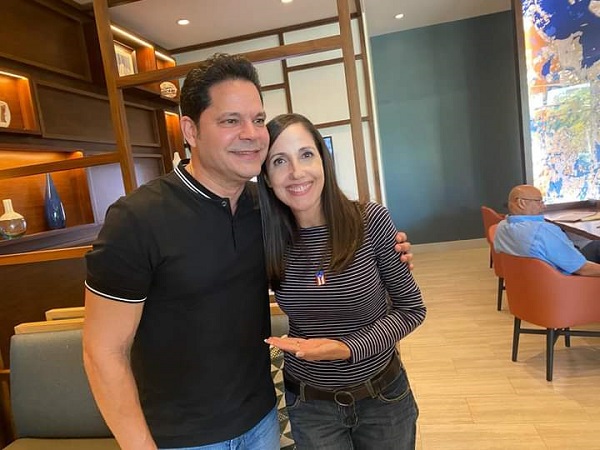
Rey Ruiz y Bella Martinez

Bella Martinez Puerto Rico


Also Read: Jerry Ferrao says in salsa key: “My life is a drum”.

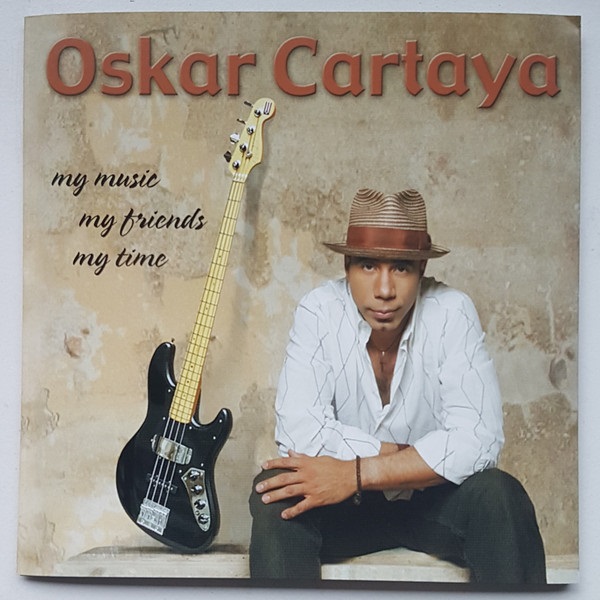
Oskar Cartaya “My Music, My Friends, My Time” He counted with the collaboration of illustrious friends such as Eddie Palmieri, Giovanni Hidalgo, Dave Valentín and Justo Almario.

Friendship and personal relationships seem to have always played a key role in Oskar Cartaya‘s recording career.

This was demonstrated Cartaya in his first recording, “My Music, My Friends, My Time” (2004) in which he had the collaboration of illustrious friends such as Eddie Palmieri, Giovanni Hidalgo, Dave Valentín and Justo Almario.

Bajista, arreglista, compositor y productor neoyorquino de nacimiento y bayamonés

This is also demonstrated by the second one, “Lifetime Friends”, which he co-led with trumpeter Humberto Ramírez and which was chosen as one of the best Puerto Rican productions of 2015.

For the bassist, arranger, composer and producer – born in New York and raised in Bayamon – connections with other people are a vital element for the development of any musician.

Those connections coupled with the tenacity Cartaya has always shown to continually improve himself as a musician allowed him to be part of the legendary progressive jazz-rock group Spyro Gyra for five years, produce albums for Willie Colón or Herb Alpert, and play with a long list of stars including Jennifer López, Christina Aguilera, Rubén Blades, Héctor Lavoe, Tito Nieves, Tania María, Arturo Sandoval, Steve Winwood and Randy Brecker, among others.

To all of them he has lent the sound of his electric bass, able to insert itself with total naturalness in modern jazz, Cuban rumba, Spanish flamenco or Brazilian cadences, but without ever losing its funky essence, which gives rhythmic impulse to the musical genre before him. For Cartaya, music is not a profession, but a passion of life.

That passion manifested itself at a very early age, when he told his Cuban-born father that he wanted to be a musician when he was just 10 years old. He completed his initial studies at the Escuela Libre de Música de San Juan, which he remembers with pride and affection.

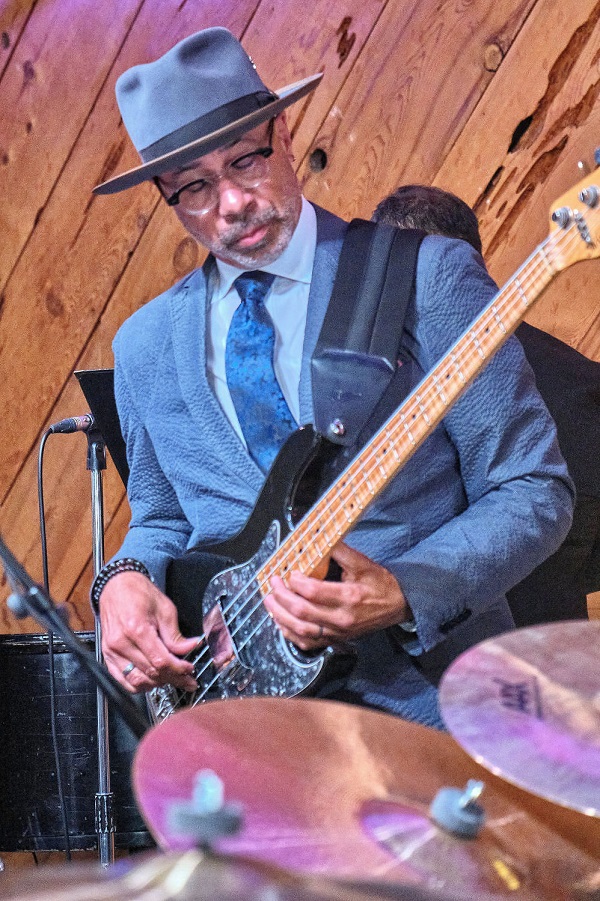
Oskar Cartaya
Oskar Cartaya

However, he has affirmed that his first real musical school were the records of Willie Colón and Héctor Lavoe, which he listened to at full volume in his room.

At the Escuela Libre de Música he was able to meet teachers and classmates who today are great masters of Latin music and colleagues of his, such as Humberto Ramírez himself. He also studied at the Conservatorio de Música de Puerto Rico.

Cartaya recalls that, although he studied chamber music in school, his real passion was Latin music…until he discovered jazz, thanks to an album by the great bassist Stanley Clarke. A new world opened up to his ears.

“I found a freedom in jazz that I didn’t find in Latin styles,” the musician said in an interview. “In salsa, for example, the maximum is when you are playing as part of a unit. Unlike jazz, whose pinnacle is when all the musicians improvise and go crazy playing, but everyone knows what they are doing.”

At 18, Cartaya moved to Los Angeles, where he began studying at the Musicians Institute of Technology. There he practiced for 15 hours a day, a devotion that brought him his first recognition: being accepted as a professor at the prestigious institution, two years after graduating from it.

However, his restless spirit and continuous desire to improve led him to make what he has described as the best decision of his life, moving to New York City. In the Big Apple – the place many consider the jazz capital of the world – he had the privilege of playing and recording with the late Argentine pianist Jorge Dalto; with Willie Colón and Rubén Blades; Celia Cruz, Tito Puente and Dave Valentín.

“I learned a lot, matured and saw firsthand what it was like to be on my own,” the bassist said in an interview about this period of his life. “If the opportunity was going to be given to me, it wasn’t going to come to my house. I would have to look for it.” And so he did.

At that time he also had the opportunity to meet the late rock icon Prince, at his Paisley Park, Minneapolis studios, and to become a member of Spyro Gyra. By being accepted into that group over 10 other bass players auditioning for the position, Cartaya realized that success belongs to those who work hard and have faith in themselves.

“I was able to show a lot of people that there’s nothing worse than feeling bad about yourself if you don’t try,” he said in an interview. “All the nights I played for free or for five bucks to earn a chance were well worth it.”

In 1997, the bassist produced the “Passion Dance” recording project for veteran trumpeter Herb Alpert, an experience he has described as a new learning experience in his career, as well as a chance to expose himself to a wider audience.

“My Music, My Friends, My Time,” released in 2004, is a fusion of Latin, Brazilian, American and Flamenco rhythms that was very well received by critics.

“My Music, My Friends, My Time”

“I wanted to do a project that would fill that gap that exists between Latin music and the world. I truly believe that the world needs to know that Latin musicians can do countless things within music, without throwing away their roots,” Cartaya said of the recording.

“Lifetime Friends,” produced alongside Ramirez, was described upon its release in 2015 as “an album of a cohesive and jubilant band,” in which all participating musicians – representatives of the new jazz generation in Puerto Rico – have a chance to stand out. “It’s the album we always wanted to make… to describe almost 40 years of friendship,” Cartaya and Ramírez indicated.

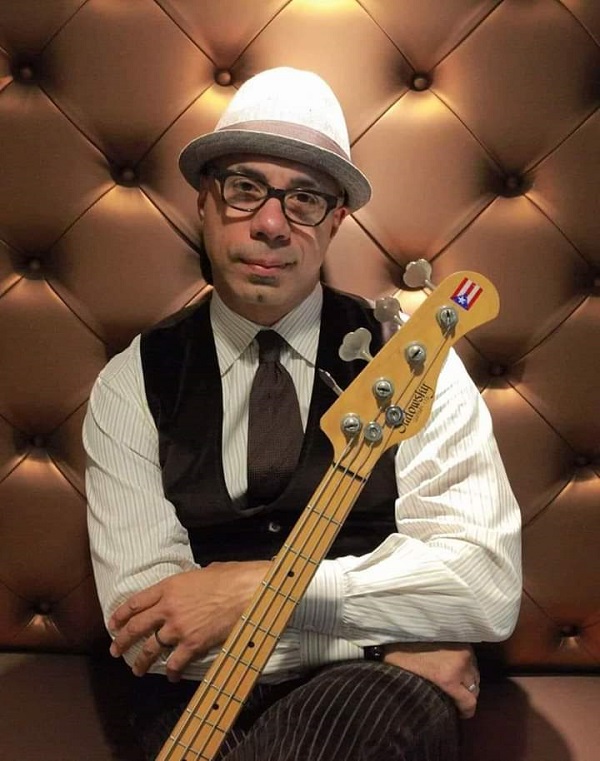
Cartaya
Cartaya

In 2017, Oskar presented the production “Bajo mundo” in tribute to the great Cuban bassist Israel “Cachao” López. This intense, exuberant album, with a multiplicity of rhythms, colors and guest musicians was distinguished as one of the most outstanding productions of the year by the National Foundation for Popular Culture.

It also won a Latin Grammy Award nomination in the category of Best Latin Jazz Album.

Source: Rafae Vega Curry

National Foundation for Popular Culture

“This biography is part of the archives of the National Foundation for Popular Culture. In our interest to disseminate knowledge about our great figures, it may be cited as a basis for research studies or as an assignment for pedagogical purposes, as long as credit is given to the Foundation and its author, if indicated. All rights reserved. The reproduction of the same in any printed, technical or mass media, with or without commercial purposes, is not authorized without prior written request to the Foundation and its consequent approval”.

Also Read: “The Sun of Latin Music” the first Grammy Award for Salsa Eddie Palmieri’s historic album

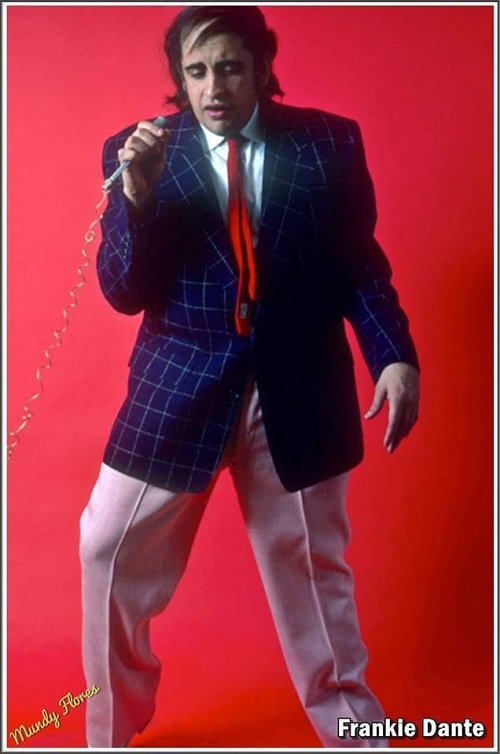
Lenin Francisco Domingo Cerda, better known as Frankie Dante, the “Underground” and “Irreverent” of Salsa in New York in the 60’s and 70’s.

“Cerda If I were president, if I were a president, there would be no armed forces, wars would end, the boys would go home where they belong.”

Lenin Francisco Domingo Cerda, mejor conocido como Frankie Dante el “Underground” e “Irreverente” de la Salsa en New York

Lenin Francisco Domingo Cerda, known as Frankie Dante, was born in Santo Domingo, Dominican Republic, on September 15, 1945.

He traveled to New York City in search of the sound of the barrio, influenced by Willie Colón and Eddie Palmieri with his Orquesta La Perfecta.

Frankie Dante, always characterized for being an authentic sonero, who interpreted the stories of the Latin barrio.

In 1968 under the label Cotique he appears in the album “Los Coquetones”, where Ismael Quintana also participated, the great influence in his development as a vocalist, this album is produced by Mr. George Goldner.

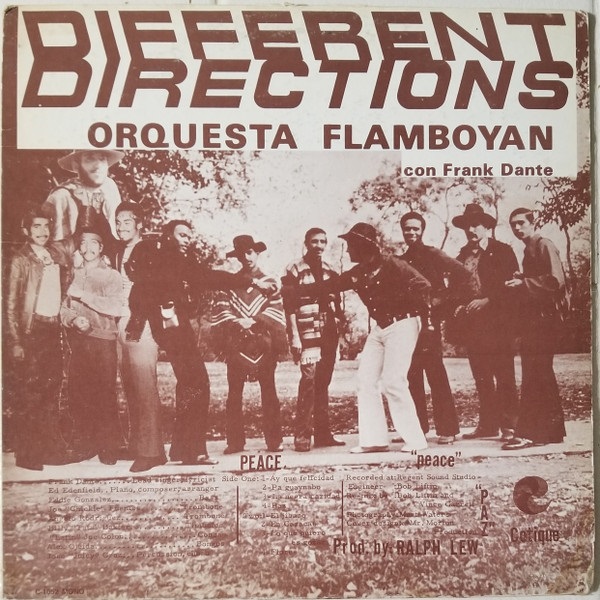
Cerda records a second production with La Orquesta Flamboyán, entitled: “Different Directions”, following the line implemented by maestro Eddie Palmieri with La Perfecta, where he continues the emphasis on social issues, raised in his first musical work, this time with the production of Ralph Lew.

Orquesta Flamboyan Con Frank Dante Different Directions1970
Orquesta Flamboyan Con Frank Dante Different Directions
1970

Launches the album: “Se Viste de Gala”. Resuming his social commitment, he includes the piece “Venceremos”, accompanied by the electric guitar played by Harry Vigianno, who also plays the tres in this production.

In 1972, Frankie Dante is invited by Larry Harlow to produce a new album entitled: “Orquesta Flamboyán Con Larry Harlow”.

Here Frankie achieved hits such as: “La Cuna del Son”, “Yo Te Seguiré”, “Vive La Vida Hoy” and “Presidente Dante”.

The album featured the participation of Larry Harlow on piano and musical production, Ray Romero and Jerry Gonzalez on Congas, Ismael “Pat” Quintana and Milton Cardona on backing vocals.

This album is considered as a recognition of Frankie Dante’s talent when he was asked by the “Wonderful Jew”, Larry Harlow to record together.

Frankie shows all his irreverence by substituting the montuno for a political speech in the manner of a candidate.

As a representative of the Underground current, Dante prefers to perform in a bohemian way in Clubs such as: El Caborrojeño and the Cheetah.

While in these clubs he meets pianist Marcolino Demond and they release the historic album: Beethoven’s V.

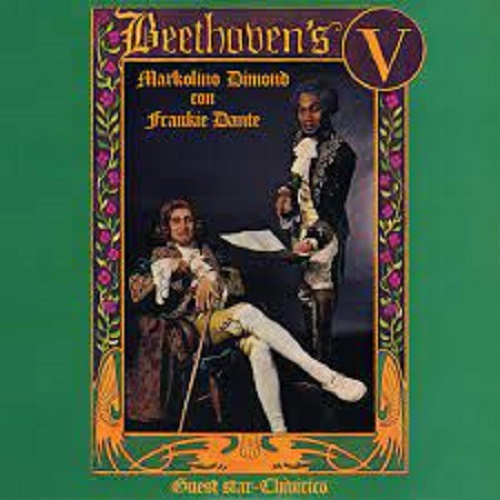
One of his best productions was with the extraordinary musician and pianist Markolino Dimond, who had played with Willie Colón, the album was titled: Markolino Dimond Con Frankie Dante Beethoven’s where in addition to his extravagances he imposed a different way of playing.

The album included five compositions by Marcolino Dimond: “Sabrosón”, “Camarones”, “El Quinto De Beethoven”, “Maraquero” and “Ahora Sí”, two songs with reserved author’s rights: “Los Rumberos” and “Yo No Tengo Amigo” and the hit “Porque Adore” by maestro Tite Curet Alonso.

Markolino Dimond Con Frankie Dante Guest Star Chivirico* Beethoven's V
Markolino Dimond Con Frankie Dante Guest Star Chivirico* Beethoven’s V

Dante and Marcolino were a duo without precedents, taking into account that both had the stigma of rebelliousness.

The album features Frankie Dante and Chivirico Davila on vocals and Yayo “El Indio”, Pete “El Conde” Rodriguez and Ismael “Pat” Quintana on backing vocals.

Other great musicians that participated in the band are Nicky Marrero – Timbales, Bongos; Pablito Rosario – Bongos; Barry Rogers – Trombone; Mike Collazo – Timbales, Eddie “Guagua” Rivera – Bass; Lewis Kahn – Trombone; Reinaldo Jorge – Trombone and Frank Malabé – Congas.

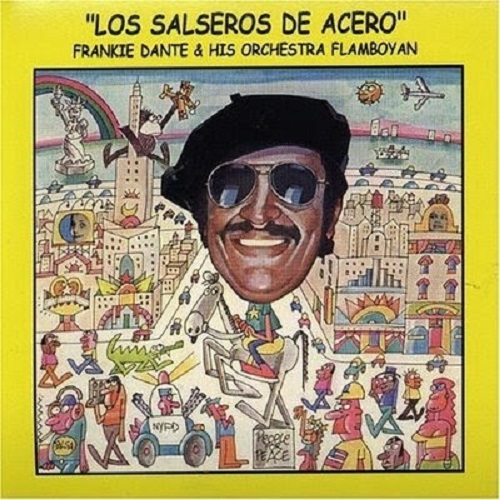
 In 1976, again with Marcolino, he released: “Los Salseros de Acero”, in an attempt to reunite the original line-up of Los Flamboyán with Joe “Chickie” Fuentes on trumpet, Ángelo Rodríguez on trombone and Alex Ojeda on timbales, plus the participation of stars of the moment such as: Charlie Palmieri, Tito Puente and Ricardo Marrero, in what was called: Flamboyán All Star Band.

Frankie Dante & His Orchestra Flamboyan Los Salseros De Acero

Among the songs on the album were “Ciencia Política” by Frankie Dante and “Chupa El Pirulí” composed by the wonderful Ciego Arsenio Rodríguez.

That year he published his seventh album “The Flamboyán All Star Band Frankie “Be Bop” Dante”, also recorded for Cotique Records, which included songs such as: “El Pipón”, “Son Retozón” and “Mumbo Jumbo”, compositions by Frankie Dante himself and a version of the song “María Cervantes” by the Puerto Rican Noro Morales.

Sonny Bravo, Norberto Cruz and Marty Sheller participated in the arrangements; Charlie Palmieri – Arrangements and Director and Mr. Ralph Lew as Producer.

The album also counted with the participation of other great musicians of the salsa movement such as: Leopoldo Pineda – Trombone, Ray Maldonado – Trumpet, Frankie Malabé – Congas, Orestes Vilató – Timbales, Ronnie Cuber – Sax and Flute, Willie Colón – Chorus and Tito Allen – Chorus.

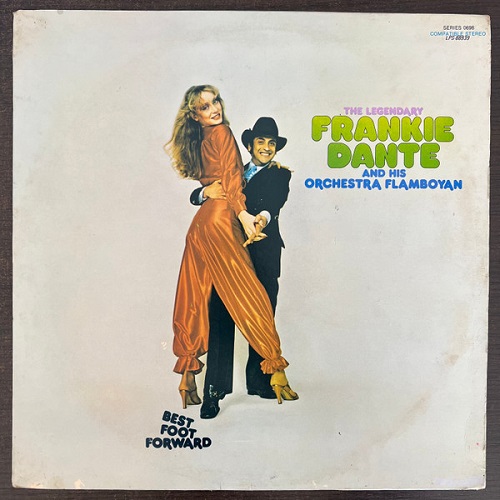
One of Cotique’s recordings was entitled “Frankie Dante and his Orquesta Flamboyán Best Foot Forward”, a compilation album with Frankie’s hits such as: “Paz”, “Los Rumberos”, “Presidente Dante”, “Venceremos” and the well known song “Yo Te Seguiré” written by the great Catalino Tite Curet Alonso.

The Legendary Frankie Dante And His Orchestra Flamboyan Best Foot Forward

His last recording appearance would happen in 1979 with the release of “Los Rebeldes”, where he decided to name his group: Frankie Dante Y Los Rebeldes.

This album has songs such as: “Los Congresistas” by Frankie Dante, a version of the song “Semilla De Caña Brava” by Cuban Luis Martinez Griñan “Lily” and “Vuelve El Rumbero” by Puerto Rican Johnny Ortiz.

Also participating in the recording were: Sal Cuevas – Bass, Louie Cruz, Marty Sheller, and Louie Ramirez in the Arrangements, Alberta Dering – Artistic Director, Ralph Lew as Producer and Milton Cardona as Musical Director.

Dominican Frankie Dante developed his musical career in New York City, where he died of cancer on March 1, 1993.

Dante, emulating his compatriot Johnny Pacheco, settles in the city of skyscrapers and takes with his “precursor” lyrical talent in terms of social conscience in salsa. With good artistic sense he perceives that the sound of the neighborhood and its hurtful musical style will be the main axis of the new concept that is born in the land of Uncle Sam.

“He recognizes in the almost adolescent Willie Colón a style to follow, he is enormously attracted to that “sour” way of arranging the songs, the maestro Eddie Palmieri and his Orquesta La Perfecta (already in full swing) also influence the young Dante as well as Ismael “Pat” Quintana’s way of interpreting, a style that Frankie incorporates immediately in his first production in 1968 under the Cotique label (Ref. CS-1043) titled Los Coquetones”.

Sources and Bibliography:

  • http://www.megaupload.com/pt/?d=FR6AAPU0
    • http://ww.malianteo.com
    • http://www.salsajazz.com/i
    • http://apostolsalsero.soy.es/frankie-dante-la-orquesta-flamboyan/
    • Latinastereo 100.9 FM nuestra música

Also Read: Nicky Marrero is an innovator, timbalero and bongo player, living legend of our Afro-Latin and Caribbean music.

Birdland announces the new Latin Live Jazz Shows this February

North America / USA / New York

The famous Latin Jazz’s Nightclub brings to their stage four renowned artists of the New York Jazz scene to present their biggest hits during this month

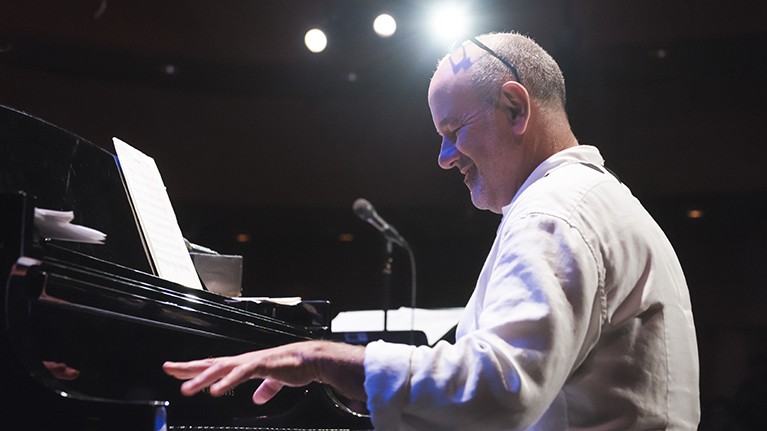
Birdland kicks off the New Latin Live Jazz Shows with  Arturo O’Farrill, a modern composer and pianist. He combines European harmony and instruments with those from India, Africa, and the Caribbean to bring a never heard ensemble sound to bear.

Arturo O'Farrill
Arturo O’Farrill

“Resist” comprises a weaving together of different influences into a new fabric, partly rough-textured, but with an internal dialogue that honors of each musical idea. There is the combination of flute (Alejandro Aviles) and tuba (Earl McIntyre) – two ends of the tonal and pitch spectrum, in duet with one another plus trumpet (Adam O’Farrill).

Sometimes they play the same notes, only octaves apart, and sometimes in counterpoint with one another. Latin percussion (Carlos “Carly” Maldonado) combines with African drums (Neil Clarke) and drum set (Zack O’Farrill), held together by the bassist Bambam Rodriguez. Special guest slam poet Baba Israel is also featured.

  • DATE: Sunday, February 3rd
  • SHOW: 9:00PM & 11:00PM
  • PRICE: $40 General Seating

Continuing with the Live Jazz entertaiment in this famous Nigthclub will be Claudia Acuña, celebrating the release of her album “TURNING PAGES”. This new album is an exquisite reintroduction to a singer who has thrived at the cusp of jazz and Latin American music.

Slated for release on February 1st, 2019, the project captures an artist in the process of reinventing herself, with a program of strikingly melodic original songs expressing her singular vision. Please, visit her Facebook Page: https://www.facebook.com/pg/Claudiaacunamusic/

  • DATES: From Wednesday, February 6th to Saturday, February 9th
  • SHOWS: 7:00PM & 9:45PM
  • PRICE: $20 – $30
Claudia Acuña
Claudia Acuña

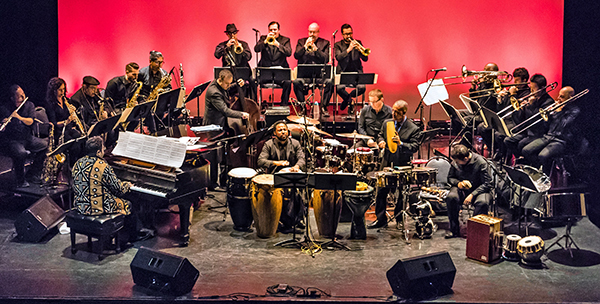
The third important Latin Orchestra that will be present in this venue during two Sundays in February is: THE AFRO LATIN JAZZ ORCHESTRA, which is the resident large format ensemble of the nonprofit Afro Latin Jazz Alliance (ALJA) founded by Arturo O’Farrill in 2007 and dedicated to preserving the heritage of big band Latin jazz, supporting its performance for new audiences. For more information about the orchestra and other ALJA initiatives, please visit them at www.afrolatinjazz.org

  • DATES: Sunday, February 10TH & Sunday, February 17TH
  • SHOWS: 9:00PM & 11:00PM
  • PRICE: $40 General Seating

And finally, the Grammy nominated Argentine pianist, composer and bandleader Emilio Solla has chosen Birdland for the official premiere of his brand new TANGO JAZZ ORCHESTRA on February 24th, a 17 piece band that incorporates many of the best NY jazz players.

SOLLA has written music for and recorded/performed with Paquito D’Rivera, Arturo O’Farrill, Edmar Castañeda, and many others tango and Latin Jazz genius, and his album “Second Half” was nominated for a 2015 Grammy Award as Best Latin Jazz Album. For major information please, visit www.emiliosolla.com

  • DATES: Sunday, February 24TH
  • SHOW: 6:00PM
  • PRICE: $30
Emilio Solla
Emilio Solla

Birdland Details:

  • $10 food/drink minimum per person
  • Dinner is served between 5:00PM – 1:00AM
  • Venue: 315w 44th St, NY, New York 10036
  • Website: birdlandjazz.com
Afro latin jazz orchestra: Birdland
Afro latin jazz orchestra
  • « Go to Previous Page
  • Page 1
  • Interim pages omitted …
  • Page 19
  • Page 20
  • Page 21
  • Page 22
  • Page 23
  • Interim pages omitted …
  • Page 55
  • Go to Next Page »

International Salsa Magazine (ISM) is a monthly publication about Salsa activities around the world, that has been publishing since 2007. It is a world network of volunteers coordinated by ISM Magazine. We are working to strengthen all the events by working together.