• Skip to primary navigation
  • Skip to main content

International Salsa Magazine

  • Home
  • Previous editions
    • 2025
      • ISM / November 2025
      • ISM / October 2025
      • ISM / September 2025
      • ISM / August 2025
      • ISM / July 2025
      • ISM / June 2025
      • ISM / May2025
      • ISM / April 2025
      • ISM / March 2025
      • ISM / February 2025
      • ISM / January 2025
    • 2024
      • ISM / December 2024
      • ISM / November 2024
      • ISM / October 2024
      • ISM / September 2024
      • ISM / August 2024
      • ISM / July 2024
      • ISM / June 2024
      • ISM / May 2024
      • ISM / April 2024
      • ISM / March 2024
      • ISM / February 2024
      • ISM / January 2024
    • 2023
      • ISM / December 2023
      • ISM / November 2023
      • ISM / October 2023
      • ISM – September 2023
      • ISM – August 2023
      • ISM July 2023
      • ISM Edition June 2023
      • ISM – May 2023
      • ISM April 2023
      • ISM March 2023
      • ISM February 2023
      • ISM January 2023
    • 2022
      • ISM December 2022
      • ISM November 2022
      • ISM October 2022
      • ISM September 2022
      • ISM August 2022
      • ISM July 2022
      • ISM June 2022
      • ISM May 2022
      • ISM February 2022
      • ISM January 2022
    • 2021
      • ISM December 2021
      • ISM November 2021
      • ISM October – 2021
      • ISM September 2021
      • ISM August 2021
      • ISM July 2021
      • ISM May 2021
      • ISM April 2021
      • ISM June 2021
      • ISM March 2021
      • ISM February 2021
      • ISM January 2021
    • 2020
      • ISM December 2020
      • ISM November 2020
      • ISM October 2020
      • ISM September 2020
      • ISM August 2020
      • ISM July 2020
      • ISM June 2020
      • ISM May 2020
      • ISM April 2020
      • ISM March 2020
      • ISM February 2020
      • ISM January 2020
    • 2019
      • ISM December 2019
      • ISM November 2019
      • ISM October 2019
      • ISM Septembre 2019
      • ISM August 2019
      • ISM July 2019
      • ISM June 2019
      • ISM May 2019
      • ISM April 2019
      • ISM March 2019
      • ISM February 2019
      • ISM January 2019
    • 2018
      • ISM December 2018
      • ISM November 2018
      • ISM October 2018
      • ISM September 2018
      • ISM August 2018
      • ISM July 2018
      • ISM June 2018
      • ISM May 2018
      • ISM April 2018
      • ISM March 2018
      • ISM February 2018
      • ISM January 2018
    • 2017
      • ISM December 2017
      • ISM November 2017
      • ISM October 2017
      • ISM September 2017
      • ISM August 2017
      • ISM July 2017
      • ISM June 2017
      • ISM May 2017
      • ISM April 2017
  • Download Salsa App
    • Android
    • Apple
  • Spanish

Search Results for: Trumpet

Justo Betancourt Querol Cuban sonero and singer famous for his interpretation of the song “Pa’ bravo yo”

Heir to the solid musical tradition of his family, Justo Betancourt was an incomparable sonero, possessing a unique personal style, He began his career at a very early age in his native Cuba, where he participated with orchestras and bands.
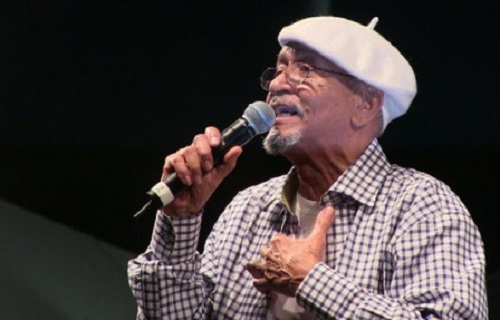
Justo Betancourt Querol Cuban sonero and singer famous for his interpretation of the song Pa' bravo yo.
Justo Betancourt Querol Cuban sonero and singer famous for his interpretation of the song Pa’ bravo yo.

In the 1960s, he arrived in New York, where he launched a new and brilliant stage of his career, singing vocals for the legendary and inveterate group, La Sonora Matancera, which was already established in the city. Betancourt stayed with the group for five years.

In later years, he was a member of the chorus of several groups, including those of Eddie Palmieri and Ray Barretto.

At the end of 1976 Justo settled in Puerto Rico, fleeing the limitations of the New York environment and separating himself from the tours and recordings of Fania All Stars, to enter the modern and freer scene projected by groups such as Sonora Ponceña, Willie Rosario, Bobby Valentín and Roberto Roena, among others, from the island.

With young musicians including vocalists Sammy Gonzalez and Tito Rojas, he created his own orchestra which he called “Borincuba”, a name to reflect the mixture of Puerto Rican and Cuban artists.

In 1976 Johnny Pacheco in his interest to maintain the successful formula of the modernization of the sound of the Sonora Matancera as the typical sound of his group (the Tumbao Añejo), unites the voice of Justo Betancourt with that of his compatriot Celia Cruz, it was the first time that this duo of Cubans in exile was reunited, in the album “Recordando El Ayer” and in which the young pianist Papo Lucca was presented in a big way. Justo’s voice was recorded in the songs “La Equivocada” (a duet with Celia), “Ahora Sí” and “Guíllate”.
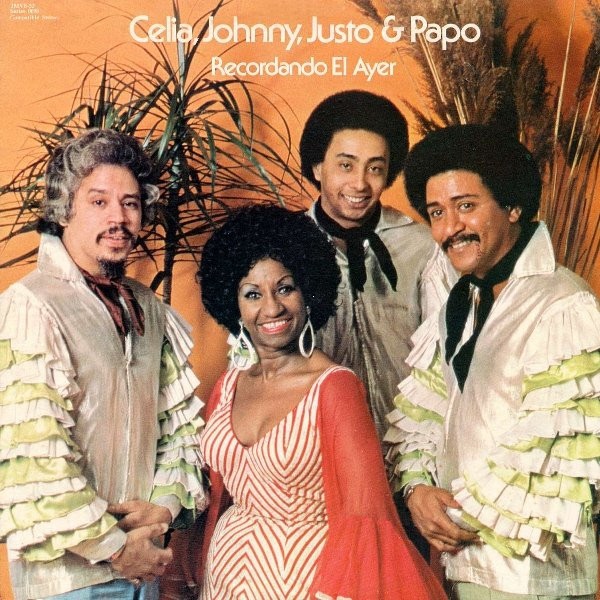
Celia, Johnny, Justo & Papo Recordando El Ayer 1976


That same year 1976, Justo is part of the ten vocalists that the Fania All Stars summons for his first production in a recording studio in the project “Tribute To Tito Rodriguez”, in which he performs the song “Cara De Payaso”, (the other vocalists were Santos Colón, Bobby Cruz, Cheo Feliciano, Héctor Lavoe, Ismael Miranda, Ismael Quintana, Pete “Conde” Rodríguez, Rubén Blades (his first recording with Fania All Stars) and Chivirico Dávila (his only recording with the group).
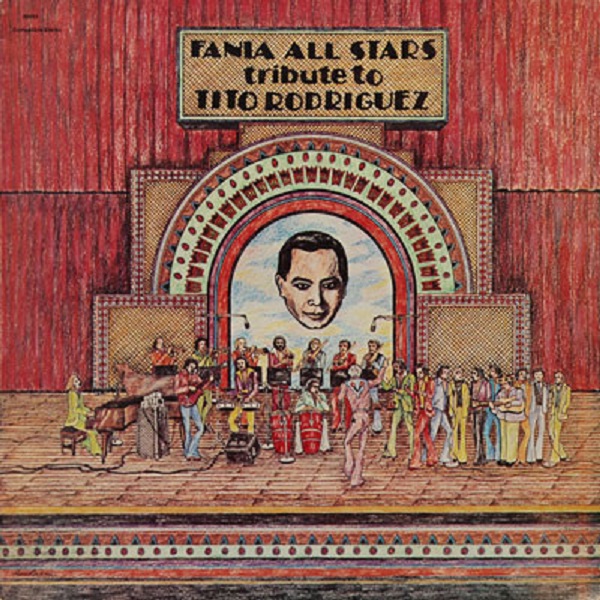
Fania All Stars Tribute To Tito Rodriguez 1976

To complete this productive year, Justo Betancourt joins percussionist Mongo Santamaría as the lead vocalist for the musical work “Ubane”, with the production of Marty Sheller, one of the important experimental albums of the salsa boom, a work that recovers the saxophone for the Salsa and bembé orchestra in the old Cuban Guaracha of the 50’s, and in which a constellation of New York, Cuban, Puerto Rican and Colombian musicians participate.
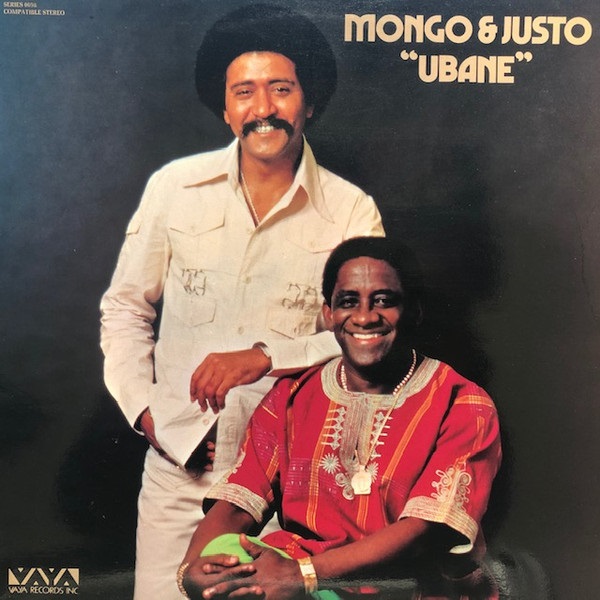
Mongo y Justo Ubane 1976.

However, the album did not succeed in definitely catching on with the public and ended in the most unjust failure.

With his new orchestra, he recorded four albums, of which he recorded as lead singer in only two albums: “Distinto Y Diferente” (1977) which includes the songs: “No Estás En Nada”, “Distinto Y Diferente”, “Soy Profesional” and “Óyela”; and “¡Presencia!” (1978) which includes a tremendous new version of the bolero “Psicología” and the song, composed by Catalino “Tite” Curet Alonso, “Camarón”. Justo was always among the best and remained oblivious to the decadence of the industrial boom of New York Salsa at the end of the decade.
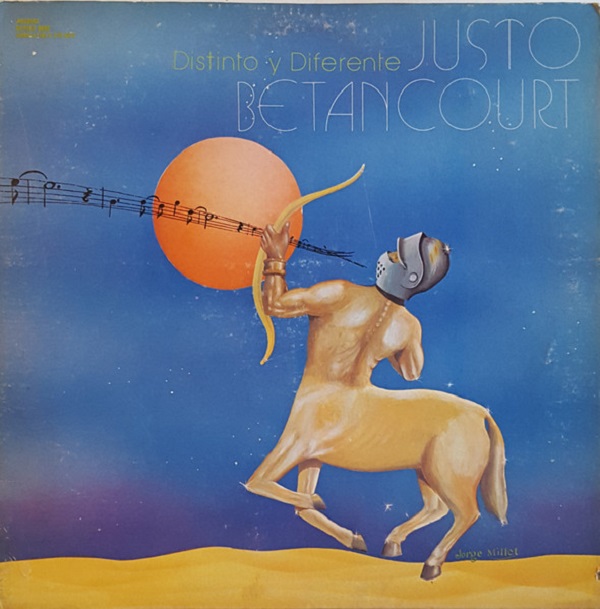
Justo Betancourt Distinto Y Diferente 1977

His secret was to remain bravo by performing authentic Caribbean music without the commercial additives imposed by Salsa.

The young singer who performed in the chorus and Justo’s student in Borincuba, Tito Rojas, became the lead singer in the following album “Con Amor” (1978), which Betancourt conducted and participated in the chorus.

Tito Rojas’ last work before splitting from Borincuba to start his solo career was the album titled only as “Borincuba”, in which Justo also served as musical director and backing vocalist.
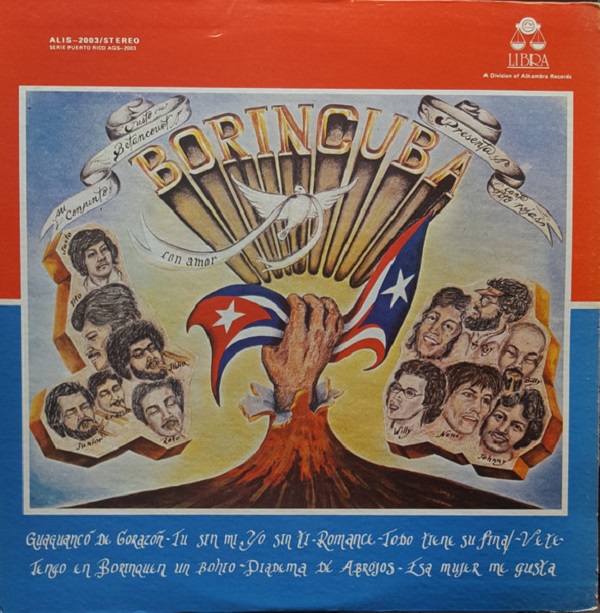
Justo Betancourt Presenta Su Conjunto Borincuba Canta Tito Rojas Con Amor 1978

So in 1979, when Tito inherited the band, he started his solo career changing the name to Tito Rojas y el Conjunto Borincano¸ which had a short existence.

After a series of his own albums, he became the lead vocalist of the Puerto Rican Power Orchestra and appeared on their first two albums (1987 and 1989).

In 1990, Tito Rojas embarked on his solo career with the romantic salsa album “Sensual” which reached first place in the Latin Music Hit Parade in April.

In the following years, Betancourt, residing between New York and San Juan, continued in the inertia of the Fania contracts. In March 1979, when the Fania All Stars were part of the group of musicians who traveled to the island of Cuba to participate in the “Havana Jam Festival”, a musical exchange between the United States and Cuba organized by CBS and held at the Karl Marx Theater in Havana, Justo Betancourt and his compatriot Celia Cruz, for obvious political reasons, could not travel with the group; for this reason Justo decided to leave the All Stars.

Nevertheless, his contract with the Fania company remained in force, and that year he released another album titled “Justo Betancourt” (1979), produced by himself and Louie Ramirez, which included the songs “Yo Sin Ti” and “Qué Más Quieres De Mi”, among others.

In 1981, Betancourt returns to record again with the Sonora Matancera in an album entitled “Sonora Matancera Con Justo Betancourt”, produced by Javier Vásquez and recorded on the Bárbaro label, a subsidiary of Fania and owned by Jerry Masucci. On this album, four guest musicians appear for the first time to record with the Sonora: Pedro “Puchi” Boulong: on trumpet, José Daniel: on the tumbadora, Elpidio Vásquez Jr. (son of the bassist): on second bass, and Mario Hernández: on tres.

From this work the hit “Mala Pata” and a new version of the bolero “Hoy Sé Más” stand out.

In 1982, he recorded his last work on the Fania Records label “Leguleya No” (1982), with his own production company RMQ and with the arrangements and musical direction of Ray Santos and Javier Vásquez.

From 1982 onwards his appearances were variable, he participated in Israel Sardinas’ LP, “Israel, la Verdad” (1984), and participated in Celia Cruz and Tito Puente’s album “Homenaje A Benny Moré Vol. 3” in 1985, in one of the songs: “Tú Solo Tú”.

Except for these participations, he made no recordings between 1983 and 1989.

And so, there were plenty of reasons for Justo Betancourt, despite so many successes, to end up in virtual anonymity and indifference. He gradually withdrew from the world of the studios, although he continued to perform sporadically.

After years of recording silence, he returned in 1990 with his style with the album “Regresar” on his own label RMQ, of which he was the producer, director and did half of the arrangements written by Eric Figueroa.

In 1992 he released the album “El Bravo De Siempre”, for Rafael Viera’s RV Productions label, which featured the participation of Cuban percussion legend Carlos “Patato” Valdes, among other great Puerto Rican musicians.

In 1994 he participated in the project of Puerto Rican producer and musician Frank Ferrer called “Descarga Boricua”, alongside more than 30 experienced local and international musicians such as Ismael Miranda, Jerry Medina, Papo Vázquez, Juancito Torres, Alex Acuna, Mario Rivera, Pedro Guzmán and Ángel “Cachete” Maldonado, among others. There, and in several songs, he resorted to his superb vocal resources as in his good times. In the second work of the Descarga Boricua, edited in 1996, he participated briefly with some soneos in the song “Abrázate a Puerto Rico”, as well as in the third album of the reunion of the virtuous Puerto Rican musicians.

He returned to the recording studios again in 1998 with the CD “Mató” for the El Paso label in Puerto Rico, and from which the song “El Lema Del Guaguancó” stands out in the most vigorous style of Arsenio Rodríguez, composer of the song.

He also made his return as guest singer of the Fania All Stars for the concert of April 29, 2000 in Puerto Rico, a return that he made together with Ismael Miranda and Luigi Texidor to the group.

Justo Betancourt has participated as a backing vocalist in the recordings of many Latin music orchestras and works of renowned artists, such as La Conspiración de Ernie Agosto, Celia Cruz, Johnny Pacheco, Roberto Roena, Willie Colón, Eddie Palmieri, Willie Rosario’s orchestra, Héctor Lavoe, Adalberto Santiago, Kim De Los Santos, Van Lester and the Puerto Rican Power orchestra, among others.

In 2002 he participated for pianist Papo Lucca in the musical project “Festival de Boleros” with the song “En Cada Beso”, along with a constellation of Boricua singers and musicians.

Sources:

Por: Jose Ramon Tremaria
Ecued

Fania Stars

Also Read: Nicky Marrero is an innovator, timbalero and bongo player, living legend of our Afro-Latin and Caribbean music.

Yilian Cañizares, an excellent Cuban musician, studied in her hometown in the strictest tradition of the Russian school of violin

Yilian Cañizares is a Cuban and Swiss musician. She has lived in Switzerland since 2000.

Born in Havana, Yilian Cañizares began studying violin in her hometown, in the strictest tradition of the Russian violin school.

At the age of 14 she obtained a scholarship in Caracas and in 2000 she moved to Switzerland to complete her studies at the Freiburg Conservatory.

Soon after, the main orchestras in the area began to contact her and once settled in Lausanne, she collaborated for six years with different ensembles.

Yilian Cañizares excellent Cuban musician

In Switzerland, she opened up to jazz and decided to embark on a new musical path, including singing in her career as a professional artist.

It was during this period that the artist decided to form a quartet with musicians from Germany, Venezuela and Switzerland (and later Cuba), and the group “Ochumare” was born, with which, just six months after its creation, in 2008, she won the prize of the Montreux Jazz Festival Competition.

From that moment on, his career has been growing steadily. In recent years, she has shared the stage with Ibrahim Maalouf, Omar Sosa, Youn Sun Nah, Richard Bona, Chucho Valdés, Roberto Fonseca, Dhafer Youssef, the Lausanne Chamber Orchestra and El Comité.

She also teaches violin at the Ecole de jazz et de musique actuelle de Lausanne (EJMA).

The success of her albums “Ochumare”, an independent production released in 2013, followed by “Invocación”, under the direction of Alê Siqueira (who has collaborated with Roberto Fonseca, Omara Portuondo), has consolidated her notoriety as an innovative artist, capable of venturing and transcending musical boundaries.

Yilian Cañizares, an excellent Cuban musician, studied in her hometown in the strictest tradition of the Russian school of violin.

She was listed by the French weekly Le Nouvel Observateur as “revelation artist of the year” for her great virtuosity and charisma with which she is able to sing and play the violin.

“My sound reflects the richness and mix of cultures that I carry with me to this day and represents who I am: woman, Cuban, musician and citizen of the world”, said the artist.

Her second album “Invocación” reached the top of the Qobuz – World Music chart and was re-released in a Deluxe edition.

“Aguas”, the album produced in collaboration with Omar Sosa, saw the light of day in October 2018.

Accompanied by another compatriot, Inor Sotolongo on percussion, the duo created an intimate and personal album that reflects the views of two generations of Cuban artists living far from their homeland.

This album is a mix of energetic rhythms and emotional ballads that clearly reflect the unparalleled musical chemistry that exists between the two artists.

It constitutes a powerful and unique fusion of Afro-Cuban roots, classical music and jazz.

On November 15, 2019 was released the new album “Erzulie”, with its new formation Yilian Cañizares & The Maroons and dedicated to the Haitian deity of love and freedom.

This album was recorded in New Orleans and features the participation of numerous guests such as Christian Scott (trumpet), Michael League (double bass), Bill Laurance (piano), Bobby Sparks (organ) and Justin Stanton (keyboards).

Yilian Cañizares es una música cubana y suiza. Vive en Suiza desde 2000.

His style reflects the variety of his influences, with touches of jazz, classical music, Cuban music, with a large space left to improvisation.

The French magazine Les Inrockuptibles speaks of a jazz orchestration mixed with Yoruba ritual percussions.

She sings in Spanish, Yoruba and French and one of her distinctive features is that she sings and plays the violin at the same time.

There are so many influences on this album; Cuban, jazz, Venezuelan, Swiss, that it is difficult to pinpoint in each song which track falls into which category. In fact, they don’t.

Today it is too easy to want to pigeonhole music into one category: this is jazz; this is soul; this is funk. Yilian Canizares, in this wonderful album, breaks the stereotypes and that is why it is a pleasure to listen to it.

Sweet musical outbursts, explosions of improvisation that jump all over the place. He even finds a place to rap on “Iya Mi” and, obviously, it’s brilliant!

If we had to put a label on it, which I’m not thrilled about, I’d say this is a warm jazz album with Latin infused touches and tricks.

The meandering melody of “Beroni Abebe Osun”, the first track on the album, is a good indicator of this.

The throbbing bass, the heartbeat of the track, with its plucked violin, the blood pumping through his veins.

Cañizares is also a linguist, in case that wasn’t enough for us all to admire her.

The way he transitions from Spanish to perfect syllable-perfect French in his version of Edith Piaf’s “Je Ne Regrette Rien” (a beautiful version, by the way) is seamless and you could be forgiven for thinking it’s his first language.

It’s not easy to cover songs as big as Piaf’s classic, but Cañizares does it with style, class and, most importantly, grace.

Anything less than grace in a song like this makes it a bad version. It could be its own track, the strings perfectly light to complement the calmness of the voice and the ease with which Piaf’s lyrics take the weight of the world off our shoulders. I don’t regret a thing.” So simple. Yilian Canizares, we salute you.

And we’ll be on the lookout for the next album. 

(kreolmagazine)

Yilian Cañizares – Invocación (2015).

Musicians:

Yilian Cañizares (Violin and vocals).

Daniel Stawinski (Piano)

David Brito (Double bass and electric bass)

Cyril Regamey (Drums and percussion).

Guests:

Akua Naru on Iya Mi

Gabi Guedes Gã & atabaques Rum, Pi, lé

Blaise Lambelet English horn on Laïla

Caxeiras do Divino da Família Menezes, Graça Re Reis & Bartira Menezes Caxeiras & Bartira Menezes &

Brazilian choir in Beroni

Julia Stuller, Gàbor Barta, Ivan Zerpa strings in Non je ne regrette rien

Luis Carbonell Voice in Canciòn de cuna para dormir a un negrito (Lullaby to put a little black boy to sleep)

Juan Carlos Toca Voice in Mapucha

All the songs by Yilian Cañizares except Beroni Abebe Osun (traditional/ Y. Cañizares) and

Non je ne regrette rien (Vaucaire/Dumont)

String arrangement (Non je ne regrette rien ) by André Mehmari

Cyril Regamey uses exclusively Istambul cymbals, Vater drumsticks and Aquarian drumheads.

Information provided (December 30, 2023)

New CD AfroCuban & World Music HABANA BAHIA YILIAN CAÑIZARES 2023 2024

Yilian Cañizares

Also Read: José Alberto “El Canario” and his orchestra enjoy a great international reputation in the Latin music scene.

Arranger, composer and pianist Carlos Ordiano

Carlos Ordiano is a talented arranger, pianist and composer who has given us the honor of talking to us and telling us a bit about his career.   

Carlos was born in Southern California and was raised in a family of Latino parents who have always loved the music of their roots, which led the artist to be continuously exposed to these rhythms from an early age. 

With a consolidated career, his specialty is Latin jazz piano and he has a long list of collaborations with big names in the California music industry.  

pianist Carlos Ordiano
This is arranger, composer and pianist Carlos Ordiano

Carlos’ beginnings in music 

After thanking the invitation to this interview, Carlos told us a little bit about how his interest in music began since he was a child. He told us that no one in his family was engaged in music professionally, but one day an uncle of his gave him a toy piano when he was five years old.   

He loved the gift so much he told his father he wanted to devote himself to music as a young child, which led him to hire a piano instructor for his son so that he could learn to play the instrument as soon as possible. The problem was that the child only learned by watching his instructor’s hands, so he never learned to read music. The day came when the teacher gave up and told Carlos’ father to find someone else, since he could do nothing for the boy. 

After that disappointment, Carlos stopped playing for a year until he resumed his interest in music and again took piano lessons, obtaining much better results than the last time.   

During his learning process, he played a little bit bass and trumpet, but no instrument ever became as important as the piano.   

His brothers Ruben and Oscar were also taking music lessons in parallel and decided to follow the path of music like Carlos. Ruben is a bass player and Oscar is a guitarist.  

When he was 19, he went to study recording engineering at Golden West College, but he found this career very boring, so he decided to learn to read and compose music, since he did not have much experience with these areas yet. This is how he started playing in a Latin jazz band in which he learned a lot more about music in general and got a lot of support from the band leader and, of course, from his parents.  

Carlos Ordiano on stage
Carlos Ordiano performing live on stage

Groups 

Carlos has participated in several groups from various genres and the first one was formed by him and his uncles when he was a child. The music they made consisted of cumbias and rancheras back then. 

When he arrived at school, he began to focus his attention on Latin jazz, salsa, son montuno and other Latin genres, which led him to participate in groups based on these rhythms. In fact, he also began to be a replacement in several salsa groups when a member was missing. This is how he gained the experience he needed to work with other artists and orchestras in different areas. 

Such is the case of the jazz-funk group Modern Time, with which he plays in a small Californian club every Wednesday and Sunday. From time to time, he also plays with his brother Rubén in Santa Ana and, on these occasions, they call themselves The Ordiano Brothers.   

Another important group he became involved with was La Santa Cecilia. La Marisoul, their lead singer, had a big band project and wanted his friend Carlos to arrange some of their new songs, which gave a unique touch to the chords of each piece of music.   

Carlos Ordiano and La Marisoul
La Marisoul from La Santa Cecilia performing with Carlos Ordiano

Santa Ana Community College  

As for his time at Santa Ana Community College, Carlos confesses that he was not a very good student, since he had no interest in subjects such as English or mathematics. He was only interested in music and that is what he focused all his attention on. This caused him to take a long time to graduate and obtain the academic degree he was opting for.   

After searching many institutes, he finally obtained a scholarship at Cal State Long Beach College thanks to which he studied things like orchestration for big bands and small groups. During his studies at this school, he only had to pay for parking and textbooks he needed. His stay at this school helped him create many important connections in the industry until finally graduating in 2010 and earning his bachelor’s degree in jazz piano. 

To clinch the matter, Carlos has pointed out that the academic part is important to have more specialized vocabulary in music and build links with other colleagues, but at the end of the day, this is not necessary for a musician to be good. In fact, he said that many of the musicians he most admires do not have any formal academic training, so it is not strictly necessary to have a university degree in that field. 

Read also: Large projects of Mexican pianist and composer Irving Flores 

Large projects of Mexican pianist and composer Irving Flores

It is always a pleasure for us to talk with important figures from the Latin music industry in the United States and today it was the turn of the incredibly talented producer, arranger, composer and pianist Irving Flores, who has been kind enough to connect via Zoom and talk a little about his career and personal life. 

After the usual greetings and introductions, Irving started talking about what inspired him to get started in music which, in his case, was his father.   

Pianist Irving Flores
Mexican producer, arranger, composer and pianist Irving Flores

Irving’s father as a source of inspiration 

Irving’s first important contact with music was his father, who was a professional saxophonist in the 60’s and even worked for a big band in Tamaulipas, Mexico, the artist’s native country. 

He was his first musical maestro and the one who helped him take his first steps in this complicated world, to the extent that Irving also started playing the saxophone encouraged by his father. The young man always wanted to learn how to play piano, but the high level of salinity in the city of Tampico damaged this type of instruments. It is then that he chose the organ which, being electronic, withstood the weather conditions, but he never discarded the instrument he was most passionate about. 

Once he began his career as an orchestrator and arranger, he was exploring all wind instruments such as the saxophone, trumpet, and trombone and string instruments such as the guitar. He played the saxophone professionally for some years, studied at the National Conservatory of Music and received private music lessons to strengthen his knowledge.  

Roles as a producer, an arranger and a composer 

So, as was the case with many other Latin musicians, Irving perceived music as a job in which experience has been much more important than the academic part. In fact, he told us that, as a child, he saw his father sitting writing music and making arrangements, which led him to imitate him and do the same.  

When he has beraly 15, he was perfectly capable of arranging at a professional level, an experience that served him well in Mexico City when dealing with the best composers of his native country, such as Luis Demetrio, Vicente Garrido, Eugenia León and maestro Armando Manzanero. He was also Paulina Rubio’s musical director for many years. 

For years, Irving spent three or four days each week in a studio, which gave him the necessary experience to prepare for what was to come in his professional future.  

Irving worked with many figures
Irving has worked with many important figures in the music industry

San Diego 

Irving married a U.S. citizen and had a daughter with her, which made it much easier for him to get a visa to travel to the United States. After he split up with his wife, he specifically chose the city of San Diego because his daughter lives here and he wanted to see her grow up.  

Although that was the primary reason for his move there, he immediately noticed that there was much scope for him to work on his own stuff and make many contacts. One of them was Dave Scott, thanks to whom he was able to write music for the San Diego Symphony Orchestra. 

The artist assures that, regardless of the place he used to live, he never lost his way and never stopped learning everything he could about music. 

One of the greatest experiences he had in this city had to do with taking the place of Oscar Hernandez in the Spanish Harlem Orchestra. It turns out that Hernandez lost his luggage and passport on a flight, so someone had to take his place in the concert the band would have the next day in Mexico City. It was then that Gilbert Castellanos recommended Irving for this task.  

Hernandez and Irving met, each one put their terms and reached an agreement. The founder of the orchestra bought the artist a plane ticket and went to assume the role of pianist that Hernandez could not take that night and the result could not be better. Since then, Irving and the orchestra has been on excellent terms and both he and the world famous pianist became good friends.   

Irving and his piano
Irving next to his greatest passion, his piano

Working for great artists 

According to Irving, one advantage Latin musicians have is that they are able to play all styles of music, which gives them a greater range of action compared to other artists. We are also influenced by Latin music, Afro-Antillean music and Afro-Cuban music. These elements help us a lot to do our job. American musicians tupically specialize in a single context or genre, but Latinos don’t have those limitations,” Irving said on the subject.   

Although the pianist specializes in makings arrangements for jazz, the above mentioned shows that he is perfectly capable of entering any other genre, which has led him to work with great artists with many styles.   

One of the most interesting cases was Luis Miguel. One of his most important producers, Alejandro Carvallo, spent some time in Los Angeles, where he and Irving met and forged a friendship. That is how he started writing arrangements for ”El Sol de Mexico” and had a very good experience working for him and his team.  

In the case of the San Diego Chamber Orchestra, a composer working for the institution (and Irving’s friend) named Dave Scott needed an urgent arrangement at that time, but they did not have the budget for the relevant work. So, he asked Irving what they could do, to which he replied that he needed a few days to write a new arrangement. The following two weeks, the pianist had no time even to sleep, but he achieved the goal and wrote ”A Tribute to Frank Sinatra”. According to Irving himself, this has been one of the most important projects he has had in his entire career.  

Irving worked with Luis Miguel
Irving worked with many talented Mexican artists such as Luis Miguel and Paulina Rubio

American Citizen 

In the year 2021, Irving became an American citizen, which is certainly a great honor for anyone who lives in that country and also a great responsibility. The artist seems to know this very well.   

When we asked Irving about this topic, his answer was not so much based on the artistic aspect, but on everything that involves the acquisition of citizenship as a Latino. In this sense, the artist emphasized that the cultural and even judicial environment in which we grew up in most of our countries are completely different from those of the United States, so adapting to this country is a real challenge, but well worth it.   

In his case, the pianist also says that he was as disciplined as possible in each of his decisions to be able to get to the point where he is now. In that sense, he has always done his best to exercise his career as a musician with excellence, but always respecting U.S. laws at all times. He said this because he knows many talented people who were unfortunately imprisoned or deported for making mistakes in this regard.  

On the same subject, he also said that it is very important to follow the rules for American society to accept you as a member and give you all the opportunities you are given as a citizen with all the letters. 

Musically speaking, having a U.S. passport has provided him with the possibility to travel and tour anywhere in the world without any problem, which is extremely important for the growth of an artist’s career. 

Read also: The Rumba Madre and its roots in Basque culture 

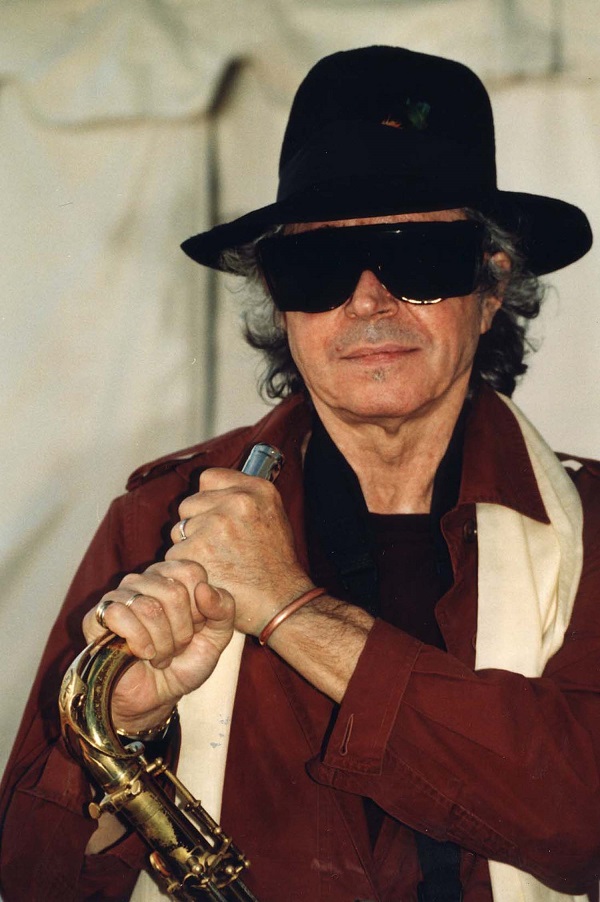
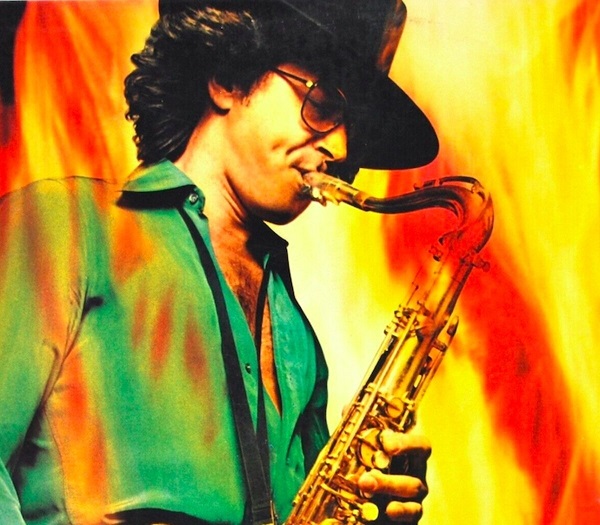
Gato Barbieri was an excellent and virtuoso Argentine saxophonist par excellence

The Argentine musician takes us on a journey through his illustrious career.

Gato Barbieri

Editor’s note: Famed saxophonist Leandro “Gato” Barbieri passed away on Saturday, April 2, 2016, in New York City. He was 83 years old.

In 2015, the Latin Grammy Award for Musical Excellence was presented to Argentine composer Gato Barbieri, one of the most deserving musicians to be honored for his extensive career, throughout which he created a bridge between Latin music and an international audience.

In love with jazz since his formative years in the city of Rosario, Barbieri trained playing with great figures of American jazz during the 1960s.

The eternal radiance of Gato Barbieri

But his heart never left his Latin American sensibility. When he came to fame as a soloist and leader of his own group, he sold millions of records, forging a personal language that draws inspiration from tango, Brazilian cadences, the sounds of the Andes and South American folklore.

Over the past few years, Barbieri, who turns 83 on November 28, has suffered several health complications. From his home in New York, the musician spoke with remarkable sincerity about this new stage of his life, now far from his youth, but full of acceptance and hope.

You recently performed at the Blue Note club in New York and sold out. How does it feel to be a jazz legend at the age of 80-something?

When I play here at the Blue Note, people come from Russia, from Europe, from everywhere, because people identify with what Gato has done.

Now, I’m a little sick and it’s hard for me to walk. I don’t like that. I have to do exercises and things like that. I’m going to be 83 years old and it’s necessary to do these things that put me in a horrendous mood [laughs].

Life is like that, it has nice things and ugly things, and you have to keep walking, walking, walking…It’s like a tango. If you pay attention, tango talks about beautiful things: people, siblings, loves, the sweet details of existence. To this day, there are some tango songs that I find incredible.

What memories do you cherish from the beginning of your career?

When I started playing with the Casablanca orchestra, when I was 17. We played bebop music, which for me was something incredible. We used to perform at carnivals in the provinces of Argentina.

He is the most influential Argentine saxophonist in the global jazz scene.

I also have fond memories of playing in Europe with trumpeter Don Cherry, because I learned so much. He never said anything; he didn’t talk to us or explain anything about the music we were going to play. When we played together, we improvised, and he never stopped changing his compositions. It was a great thing.

And then, in 1972, came the music for Last Tango in Paris, which brought you international fame. What was it like to write the soundtrack for such a controversial film?

It was a magical thing, because Bernardo [Italian director Bernardo Bertolucci] is an incredible guy, an incredibly talented director. I was in good spirits, but it wasn’t an easy job because there were 50 moments in the film that needed music.

I remember we took a piano up to Pepito Pignatelli’s [owner of a legendary jazz club in Rome] house, which was on the fifth floor. Doing something like that 50 years ago was not easy, but when we recorded it, it was a beautiful thing. Sometimes the difficult things are the most beautiful.

And that unforgettable main theme, which is repeated throughout the film, how did it come about?

Bernardo called me and asked me to present him with several melodies, and that they should be as beautiful as possible. We had just gone to Italy to play some concerts, and we met Bernardo. I played him three or four tunes, and he immediately chose one and said: “This is the theme from The Last Tango in Paris”.

What do you think has been the secret of your success?

Gato Barbieri
Gato Barbieri

From 1970 onwards, I recorded about 45 records. That’s a lot. I was a guy who was always doing something, for me that lifestyle was a great satisfaction. As for the sax, I never knew much about chords. I make up my own chords, put one thing on top of them… and that’s it.

It’s hard to explain why I made the artistic choices I did. I wanted to do a little bit of everything, play an Argentine chacarera, or record with an Italian singer like Antonello Venditti [the hit ballad “Modena”, in 1979]. I always chose to play music from many different countries, and people identify with that.

Undoubtedly, you have lived a privileged life….

Yes, in a certain way, yes. Michelle [his first wife, who died in 1995] helped me a lot. She’s always in my heart, because she was incredible. She knew about film, art, so many things. In that sense, I learned a lot from her. And now I am living with Laura, my wife, who is a great person.

She has given me my only son, who is now 17 years old. He is tall and very intelligent, although a bit lazy, as I was myself at his age. It must be hereditary [laughs].

EL PAMPERO (1971)

After El Gato left his native Argentina, but before becoming a Latin jazz star, Gato Barbieri spent the second half of the 1960s collaborating with great, avant-garde musicians: trumpeter Don Cherry, vibraphonist Gary Burton and bassist Charlie Haden, among others. Capping a career for Barbieri as the leader of his own group, El pampero is an album recorded live at the Montreux Jazz Festival. Four tracks with extensive improvisations, steeped in South American nostalgia.

Gato Barbieri Album Caliente 1976

Gato Barbieri: Latin ‘jazz’ with a touch of pop and South American folklore.

By: Ernesto Lechner

Also Read: Irakere was a Cuban group that developed an important work in Cuban popular music and Latin Jazz under the direction of Chucho Valdés

  • « Go to Previous Page
  • Page 1
  • Interim pages omitted …
  • Page 21
  • Page 22
  • Page 23
  • Page 24
  • Page 25
  • Interim pages omitted …
  • Page 55
  • Go to Next Page »

International Salsa Magazine (ISM) is a monthly publication about Salsa activities around the world, that has been publishing since 2007. It is a world network of volunteers coordinated by ISM Magazine. We are working to strengthen all the events by working together.