• Skip to primary navigation
  • Skip to main content

International Salsa Magazine

  • Home
  • Previous editions
    • 2025
      • ISM / November 2025
      • ISM / October 2025
      • ISM / September 2025
      • ISM / August 2025
      • ISM / July 2025
      • ISM / June 2025
      • ISM / May2025
      • ISM / April 2025
      • ISM / March 2025
      • ISM / February 2025
      • ISM / January 2025
    • 2024
      • ISM / December 2024
      • ISM / November 2024
      • ISM / October 2024
      • ISM / September 2024
      • ISM / August 2024
      • ISM / July 2024
      • ISM / June 2024
      • ISM / May 2024
      • ISM / April 2024
      • ISM / March 2024
      • ISM / February 2024
      • ISM / January 2024
    • 2023
      • ISM / December 2023
      • ISM / November 2023
      • ISM / October 2023
      • ISM – September 2023
      • ISM – August 2023
      • ISM July 2023
      • ISM Edition June 2023
      • ISM – May 2023
      • ISM April 2023
      • ISM March 2023
      • ISM February 2023
      • ISM January 2023
    • 2022
      • ISM December 2022
      • ISM November 2022
      • ISM October 2022
      • ISM September 2022
      • ISM August 2022
      • ISM July 2022
      • ISM June 2022
      • ISM May 2022
      • ISM February 2022
      • ISM January 2022
    • 2021
      • ISM December 2021
      • ISM November 2021
      • ISM October – 2021
      • ISM September 2021
      • ISM August 2021
      • ISM July 2021
      • ISM May 2021
      • ISM April 2021
      • ISM June 2021
      • ISM March 2021
      • ISM February 2021
      • ISM January 2021
    • 2020
      • ISM December 2020
      • ISM November 2020
      • ISM October 2020
      • ISM September 2020
      • ISM August 2020
      • ISM July 2020
      • ISM June 2020
      • ISM May 2020
      • ISM April 2020
      • ISM March 2020
      • ISM February 2020
      • ISM January 2020
    • 2019
      • ISM December 2019
      • ISM November 2019
      • ISM October 2019
      • ISM Septembre 2019
      • ISM August 2019
      • ISM July 2019
      • ISM June 2019
      • ISM May 2019
      • ISM April 2019
      • ISM March 2019
      • ISM February 2019
      • ISM January 2019
    • 2018
      • ISM December 2018
      • ISM November 2018
      • ISM October 2018
      • ISM September 2018
      • ISM August 2018
      • ISM July 2018
      • ISM June 2018
      • ISM May 2018
      • ISM April 2018
      • ISM March 2018
      • ISM February 2018
      • ISM January 2018
    • 2017
      • ISM December 2017
      • ISM November 2017
      • ISM October 2017
      • ISM September 2017
      • ISM August 2017
      • ISM July 2017
      • ISM June 2017
      • ISM May 2017
      • ISM April 2017
  • Download Salsa App
    • Android
    • Apple
  • Spanish

Search Results for: Trumpet

La Sonora Matancera musical congregation of long trajectory and its sound quality, is one of the most popular in the Caribbean island “Cuba”

It was founded in Matanzas in 1924 under the name of La Tuna Liberal.

Its first members were: Valentín Cané, director and tres player, Manuel Valera, guitar and second voice, Manuel Sánchez (Jimagua), timbal, Ismael Governa, cornetín, Pablo Vázquez Govín (Bubú), double bass, Domingo Medina, guitar, Ismael Goberna, cornetín, Julio Govín, guitar, José Manuel Valera, guitar, Juan Bautista Llopis, guitar.

In 1926 Carlos Manuel Díaz Alfonso (Caíto), falsetto voice and maracas, and Rogelio Martínez Díaz (El Gallego), guitar, joined the group and it adopted the name Sexteto Soprano.

On January 12, 1927, under the name of Estudiantina Sonora Matancera, they moved to Havana. In November of that year they recorded their first two recordings for the Victor label: Fuera, fuera, chino, by José Manuel Valera, and El porqué de tus ojos, by Valentín Cané.

With the definitive name of Conjunto Sonora Matancera, it began its transmissions on the radio station El Progreso Cubano (later Radio Progreso). At that time it appeared on Radio Atwater Kent; in 1932, at the suggestion of Rogelio Martínez Díaz, it took the name of Sonora Matancera, and began its performances in the Havana Sport dance academies, and later in Marte and Belona, and later became part of the cast of CMQ Radio. In 1935, trumpeter Calixto Leicea joined the group; in 1939, composer, pianist and orchestrator Severino Ramos, who gave the Sonora its distinctive sound with his orchestrations.

La Sonora Matancera congregación musical de larga trayectoria y su calidad sonora, es una de las más populares en la isla caribeña “Cuba”

In 1944 pianist Lino Frias and trumpeter Pedro Knight Caraballo joined the group, who with Calixto Leicea formed the most interesting trumpet duo in the history of Cuban ensembles; in 1945 singer Bienvenido Granda Aguilera; in 1948, Angel Alfonso Furias (Yiyo), tumbadora. At this time the Sonora Matancera was formed by Rogelio Martínez Díaz, director, guitarist and chorus; Pablo Vázquez Govín (Bubú), double bass; José del Rosario Chávez (Manteca), timbal; Ángel Alfonso Furias (Yiyo), tumbadora, who replaced Valentín Cané; Calixto Leicea, first trumpet; Pedro Knight Caraballo, second trumpet; Lino Frías, pianist; Carlos Manuel Díaz Alfonso (Caíto), falsetto voice and maracas; Bienvenido Granda, singer and claves; and Celia Cruz, who soon became the stellar singer we knew and the mainstay of the Sonora Matancera hits. Thus began a period that critics have called the golden age of the Sonora.

In 1950, with the advent of television, the Sonora Matancera was one of the first musical groups to perform on this medium. It also signed a contract with the Seeco record company, with whose recordings it made a name for itself in the international market. In 1952, Raimundo Elpidio Vázquez replaced his father, Pablo Vázquez, on double bass (when Rogelio Martínez Díaz died in 2001, he took over the leadership of the group).

In 1926, it changed its name to “Septeto Soprano”. That same year, Carlos M. Díaz “Caíto” accompanied Eugenio Pérez in the choir.

Later in 1927, on Caíto’s recommendation, Rogelio Martínez joined the group and the name of the group was changed to Estudiantina Sonora Matancera.
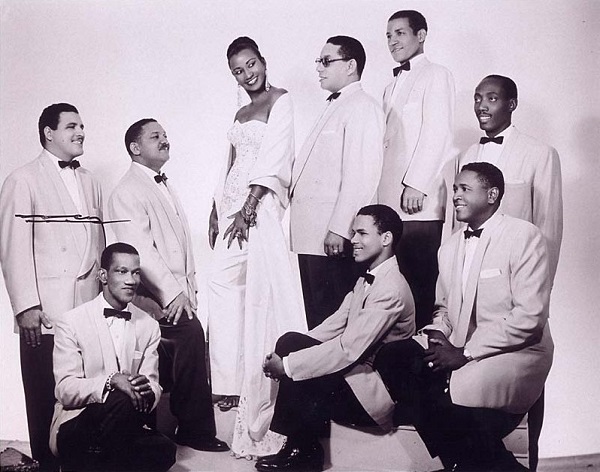
Sonora Matancera
Sonora Matancera

With a great desire to improve the group travels to Havana where they get in touch with the record company “RCA Victor” and make their first recording on January 12, 1928.

At the beginning of the thirties, the group began to adapt to the new rhythms that were appearing at that time as well as adapting new instruments, such as the grand piano, which was played for the first time in the group by Dámaso Pérez Prado, who years later would become the “King of the Mambo”.

But it was in 1935 when the group took the name La Sonora Matancera, and with this change it introduced a new trumpet player: Calixto Leicea, who replaced Ismael Goberna, who died a few months later due to health problems.

The unforgettable José Rosario Chávez “Manteca”, who replaced the resigned “Jimagua”, also joined the band. Humberto Cané joined the group playing the tres and his father Valentín Cané began playing the tumbadora.

In 1938, Dámaso Pérez Prado retired and left the vacant piano position to Severino Ramos, who soon after became the musical arranger of the group.

During the first years of the forties they made presentations in dance academies, cabarets and in Radio Progreso Cubano, they also included in their repertoire: guarachas, montunos.

On January 6, 1944, two musicians from Arsenio Rodriguez’s group joined the group: Lino Frias (author of the popular song Mata Siguaraya) who began to play the piano and Pedro Knight who became the second trumpet player of the Sonora Matancera.

In the month of December, Bienvenido Granda enters the band recommended as vocalist, being his first recording “La Ola Marina” by Virgilio González, and with him they sign a contract with the nascent record label Panart Records. Valentín Cané, Israel del Pino, Caíto and Humberto Cané made recordings with this label.

In the middle of 1946 the founder Valentín Cané suffers asthmatic problems that force him to leave the group, dying two years later. Before the group joined Panart Records, it recorded other songs for the “Varsity” label, without the name of the Sonora Matancera appearing on the labels, here the first version of “Se Formó la Rumbantela” by Pablo Cairo, “Tumba Colorá”, “El Cinto De Mi Sombrero”, Bienvenido Granda and Humberto Cané participated in these numbers.
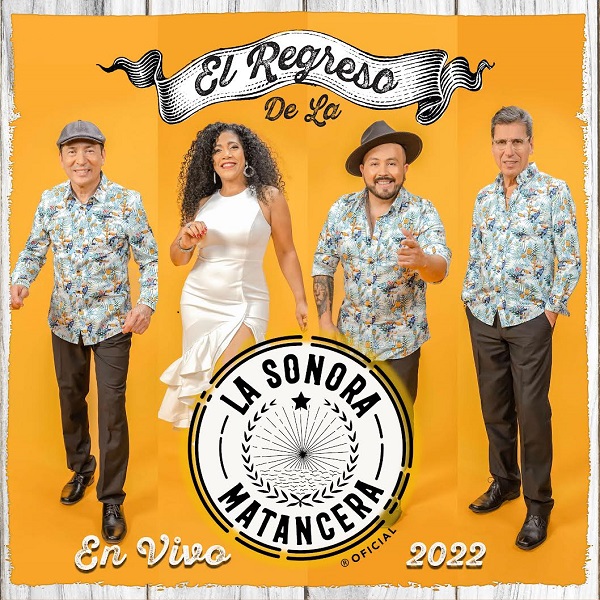
El Regreo de La Sonora Matancera 2022 2023

Members

Trumpets: Calixto Leicea and Pedro Knight

Double Bass: Elpidio Vázquez, replacing his father Pablo Vázquez, “Bubu”.

Piano: Lino Frías

Timbales, Bongó and Campana: José Rosario Chávez “Manteca” Chávez

Tumbadora: Ángel Alfonso Furias “Yiyo”.

Guitar and Choir: Rogelio Martínez

Maracas and Chorus: Carlos Díaz Alonso “Caíto”.

Claves and Choir: Bienvenido Granda.

Last January 13, 2023 they turned 99 years old and are still going strong from generation to generation.

Source:

Enrrique “Culebra” Iriarte, Venezuelan pianist, arranger and orchestra conductor.

Bibliography: Ecured Cuba

La Sonora Matancera 

You can read: Carlos “Patato” Valdés one of the best percussionists in the history of Latin Jazz
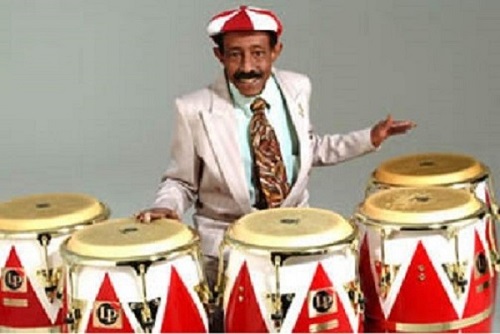
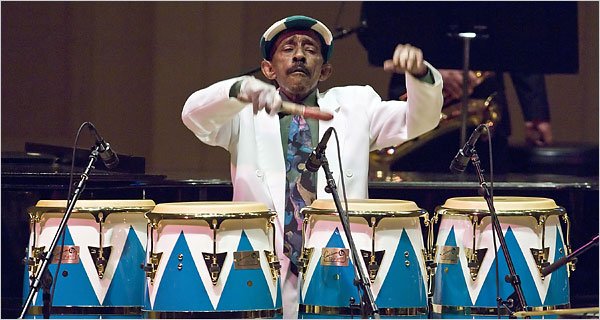
Carlos “Patato” Valdés one of the best percussionists in the history of Latin Jazz.

On November 4, 1926 in the Los Sitios neighborhood of Havana, Cuba, Carlos “Patato” Valdés was born. Known as Patato, he is, quite simply, one of the best percussionists in the history of music.

Patato was born into a very santera and very musical family, his father was a tres player of Los Apaches, the port germ of two illustrious sonera groups: the Sexteto Habanero and the Sexteto Nacional.

He learned to play the tres and the botijuela before turning to percussion, first on the cajones and finally on the congas.

He was an extraordinary percussionist of outstanding participation with the “Conjunto Kubavana”, “La Sonora Matancera”, “Conjunto Casino” and the “Orquesta de Tito Puente”, among other groups, both Son and Latin Jazz.

Formed in rumbero gatherings and carnival groups, Valdés became a professional in the early forties, after trying his luck as a boxer and dancer.

Carlos “Patato” Valdés uno de los mejores percusionistas en la historia del Jazz Latino

He played with Conjunto Kubavana, La Sonora Matancera and El Conjunto Casino. He accumulated nicknames: Zumbito (for his performances at the Zombie Club), Pingüino (for a dance he did on television) and Patato (for his small size), and in those days, dedicating oneself to music in Cuba guaranteed hardship. Besides, Patato wanted to experiment and that was not possible playing for dancers or tourists.

In 1954, he emigrated to New York, like his leather friends: Cándido Camero, Armando Peraza, Mongo Santamaría and the pioneer Chano Pozo (murdered there in 1948).

He immediately began working with Tito Puente. His first recording in the United States was the album Afro-cuban, by trumpeter Kenny Dorham, which opened with the intoxicating Afrodisia. Those were good times for tropical music.

He was the first percussionist to improvise “Solos” with 3 or more Congas at the same time. In addition, he was the creator of the “Congas Afinables”, instruments on which he would ride to dance making them sound rhythmically.

Patato Valdes was an excellent musician, an unforgettable person. Nervous and diminutive, he spoke with an impenetrable Cuban accent; he dressed elegantly, hiding the necklaces and bracelets of Changó and other “orishas”. He looked like a living caricature, but when he hit the percussions he became a divine creature: he had power, spectacularity, sense of melody.

Those skills made him an ambassador of Afro-Cuban rhythms in the jazz world, although he will also go down in history for his extraordinary rumba recordings.

In 1956, Patato appeared in the film Y Dios creó a la mujer, teaching the dances of his homeland to Brigitte Bardot. A great moment, although an implacable Guillermo Cabrera Infante criticized the actress’s movements: “she seems to commit suicide by dancing a cross between mambo and chachachá, a really toxic cross between mambo and chachachá”.

A flexible musician, Valdés sounded as comfortable playing with Machito’s big band as with Herbie Mann’s group. However, he felt indebted to the “rumba de solar” and in 1968 he recorded a revolutionary album with his friend Eugenio Arango, alias Totico.

The exuberant Patato & Totico had genuine Havana flavor, but enriched the basic percussion instrumentation with Cachao’s contrabass and Arsenio Rodriguez’s tres.Patato expanded the creative possibilities for percussionists by playing with three or more congas.

He also made their lives easier by developing a tunable conga: fed up with the traditional method (heating the leather over fire), he installed a metal hoop and keys for tensioning.

Carlos "Patato" Valdés
Carlos “Patato” Valdés

The LP company mass-produced his model, which was to become the standard for conga players. To promote it, he formed the Latin Percussion Jazz Ensemble with Tito Puente, Jorge Dalto and Alfredo de la Fé, among others, an orchestra that would end up becoming Puente’s big band in the early 80s.

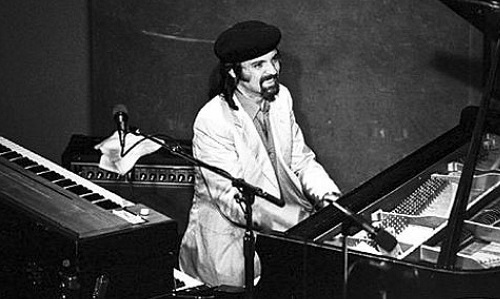
It was during this period with Dalto that the album we have chosen for today began to take shape. It was titled “Patato, Master Piece” and it synthesizes all of Patato’s genius.

“Masterpiece” is an album that travels first class through tango, jazz, descarga, guaguancó and bolero, always in a masterful way and with a luxury crew made up of names like Jorge Dalto, Artie Webb, Michel Camilo, Jerry and Andy González, Nicky Marrero, Ignacio Berroa, Joe Santiago, Néstor Sánchez, Vicentino Valdés, and Sabú Martínez, among others.

The Art of Flavor.

Unfortunately Dalto had already passed away when in 1993 the project was released by the venerable German label Messidor, the same label that had already financed some impressive sessions of Patato with Mario Bauzá or Bebo Valdés, with whom he would later record the famous El Arte del Sabor.

Jorge Dalton
Jorge Dalton

In fact, the great Argentine pianist had to be replaced for the last recording sessions that were made 6 years ago since his illness was too advanced, but he left us some incredible arrangements that were kept in the great majority of the themes.

Dalto left us in 1987 when he was only 39 years old. His replacement was nothing more and nothing less than a very young Michel Camilo.formed by 9 cuts among which we especially want to highlight the huge versions of Cute and Nica’s Dream, Masterpiece is an essential album for all lovers of Latin-jazz with capital letters and that is why we wanted to share it on a day as special as today.

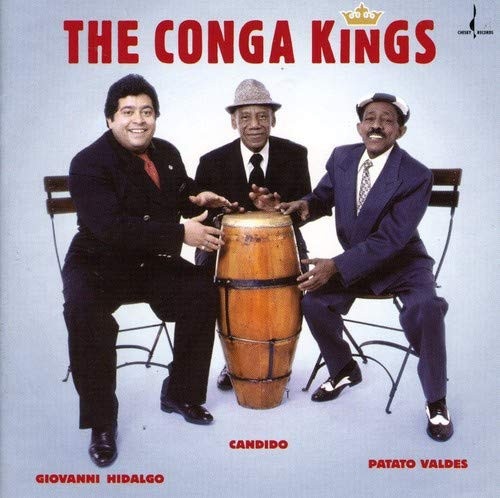
Already recognized as a legend, Patato became more visible in the last 25 years: he had his own band, Afrojazzia, although The Conga Kings, with Cándido and Giovanni Hidalgo, turned out to be more popular.

The Conga Kings Giovanni Hidalgo, Cándido Camero y Patato Valdez

He even made his way onto the modern dance floors, with a remix of San Francisco tiene su propio son. Just as he was returning from playing in California with the Conga Kings, his breathing began to fail.

The plane he was on had to make an emergency landing in Ohio to admit him to a hospital. The 81-year-old percussionist, a heavy smoker, was on his way to his beloved New York, but he would never get there. According to his relatives, he held out until December 4, the day of Santa Barbara, the Afro-Cuban equivalent of Changó, when the cables and tubes that kept him alive were removed.

Valdés died in Cleveland, USA, on December 4, 2007.

Fuentes: http://www.herencialatina.com/Patato/Patato_Valdes.htm

Imágenes: Martin Cohen de Congahead.com

Carlos “Patato” Valdés

You can read: Irakere was a Cuban group that developed an important work in Cuban popular music and Latin Jazz under the direction of Chucho Valdés

Salsa singer Angel Rumba and what he has to say

Interview with Angel Rumba

Angel Manuel Ramos Sanchez, better known as Angel Rumba, is a New York singer of Puerto Rican descent with whom we had the great opportunity to talk about several issues of importance such as the beginning of his career with Pancho Bongó Y Su Orquesta, his debut as a soloist, the meaning behind his lyrics, among other things. It is a pleasure for us to have talked with this Latin talent and to bring the story to all our readers of International Salsa Magazine.

Angel Rumba tells us his story

His beginnings

Ramos Sanchez was born in New York City in the 1980s, when there was a well-established salsa movement in New York City and the United States in general. Evidently, little Angel could not be left out of this trend, especially if we take into account that through his veins ran Latin blood.

In addition, his father was a singer, musician and guitarist, so he always listened to salsa, merengue, bolero and other genres at home. It was at the age of seven when he started playing güiro, bongo and conga due to the curiosity generated by his father’s work, who spent a lot of time teaching his son to play as many instruments as possible.

In 1992 when Angel was 12 years old, he started playing with an orchestra called Projecto 3 in the city of Allentown, which represented his first opportunity to be on stage and show his face to an audience waiting to see what he could offer. It could be said that this was the beginning of what would become his life’s work.

Moving to California and Pennsylvania

Given that Angel’s father was a truck driver, the family had to move around a lot until 2003, the year in which he moved to Puerto Rico and lived there for three years. In 2006, he moved permanently to Pennsylvania, where he has been living until today.

Angel Rumba performing on stage

Release as a solo artist

When asked about his release as a solo artist, Angel stated that ”my beginnings were with merengue, but salsa always fascinated me because I really liked soneros such as Ismael Rivera, Gilberto Santa Rosa, El Canario and many more. I saw them improvising on stage and I always wanted to do the same.”

In 2014, he was given the chance to belong to the group Pancho Bongó Y Su Orquesta, which he was a member of for more than seven years until he wanted to make his own project in 2020. He felt he had the experience and took all the necessary stages to get to that point. In addition to that, being subject to command of a musical director greatly limits the creativity of the artists and the New Yorker singer no longer felt comfortable with what he was doing at that time.

The singer is also a composer and was not allowed to play his own music with the orchestra, which also led him to seek new horizons and, in turn, record his first solo track.

While acknowledging that this was no easy decision, he says that he has no regrets about it and all that he has been given from then until now has been a blessing for him and his family.

Obstacles during his solo career

On this subject, he confessed that many of his orchestra fellows were not happy with his decision to leave the group and he even felt that certain figures tried to put obstacles in his way so that he would not succeed in the way he wanted to. This is one of the reasons why he prefers not to show so much about his work and future projects to the public to avoid problems.

Angel Rumba in a photo shoot

”Mi sentimiento En Rumba”

The process of making this album was not easy, since the artist had to knock on many doors until making contact with Rafael Lozano, who arranged the first song ”Sin Un Amor”. This was a cover of a song by Los Panchos, so we can say that it is a tribute to the group in a totally different genre.

We went looking for musicians from several countries to work with u among whom was Angel Guzman, who plays trombone, baritone, saxophone, trumpet and many more. He also told us about sound engineer José Guerrero, who makes the mixing and mastering of the songs.

The album includes six songs composed by Angel himself and three that were adapted such as ”Perfidia” in a bolero version as a gift for fans of musical trios.

In total, the whole project has two merengues, two boleros and the rest are salsa songs.

Angel Rumba's last album ‘’Mi Sentimiento En Rumba’’
Angel Rumba’s last album ‘’Mi Sentimiento En Rumba’’

Salsa in a market dominated by trap and reggaeton

”Every genre has its audience and every artist has his fans” was what the singer answered when asked about the challenges facing a salsa singer in these times. With this, he shows that it does not bother him in the least that there are more popular genres than salsa and that every artist could have a strong fan base without this meaning involving damage to another one. He says that he will continue to create music with his favorite rhythms in spite of passing trends.

One thing he did emphasize is that there should be more artists who focus on writing and creating original music instead of doing so many covers. A lot of creativity is needed.

The importance of continuing to promote romantic love in the lyrics

The salsa exponent says that it is very important that music continues to promote romantic love and bring positive messages because unfortunately there are many genres focused on negative stuff such as disrespect for women, drugs, violence and much more. The salsa singer seeks to make his contribution to creating a better society in these hard times.

”The lyrics of the songs have always influenced society because their meanings anchor in the minds and the message endures” said Angel about this issue.

Read also: Are we really what we listen to?

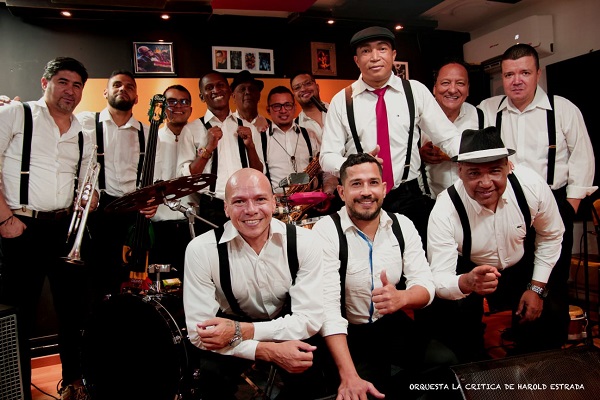
From Cali, Colombia, “La Crítica Orquesta” by Harold Estrada

With a unique, impacting, dynamic sound and with an explosion of musical energy, “La Crítica Orquesta” of Harold Estrada comes to us in this delivery, directly from the city of Cali, Colombia; who presents to the world, a different proposal with a clear and forceful message of much social sense in his interpretations. In a brief conversation we had with its director Harold Estrada, a young musician of great experience with Colombian Orchestras, he shared with us aspects of this successful group from Caleña.

Welcome Harold to International Salsa Magazine “The Only Salsa Magazine in the World”. First of all, tell us: since what date does “La Crítica Orquesta” come out? Thank you Professor Carlos Colmenárez, for the wonderful invitation that you make us from your city Barquisimeto, in our sister Venezuela, with a fraternal greeting and thus let us know a little more through you and this prestigious media; because let me tell you friend, that the Orchestra begins to sound since 2012, with an enterprising, constructive, quality and very professional work, in search of an authentic sound that identifies it and allows it to take its rightful place in the salsa environment here in Colombia and internationally.

De Cali, Colombia, “La Crítica Orquesta” de Harold Estrada

And in these 10 years of trajectory, have you had important participations in events and festivals? Indeed Professor Carlos, we had the honor of being present at the World Salsa Festival 2012 and also in the fairs of Cali, likewise several departments of the country have witnessed this magnificent evolution, seeking to remember the essence and expression of salsa Caleña with that characteristic sound and Orchestras that left their mark on the Afro-Caribbean and Colombian music.

Harold friend I understand that you develop a social and musical work in the city of Cali, tell us… Yes, our orchestra is developing and forming a “Collective of salsa to the street”, which is a program that is ready to rescue the Caleña culture, with the purpose of safeguarding the salsa in the city.

Which international artists have been accompanied so far by “La Crítica Orquesta”. Carlos, we have had the privilege of accompanying here in Colombia salsa artists of the stature of: Rafu Warner, Luigi Texidor, Chamaco Rivera, Ruben Sierra, Julio Lopez, Manny Fuentes, and more, demonstrating the musical support of the group.

What is the mission of “La Crítica Orquesta”? We are convinced that our mission is to make quality music for the enjoyment of the people, for the delight of the dancer and the ear of the music lover, but especially, music to free the spirit and cheer the soul.

Who are the members of the Orchestra? “La Crítica Orquesta”, is conformed by: Harold Estrada (conductor and conguero), Oscar Eduardo González (Trumpeter), Cruz Ramón Mayora (Bongos player), Andrés Holguín (Trumpeter), Ramiro Lennis (Singer), Leo Bonilla (Trombonist), Andrés Felipe Silva (Bassist), Marco Felipe Ramírez (Timbalero), Carlos Alberto Cruz and Harrison Muñoz (Singers), Mauricio Bastidas (Saxophonist), Jerry Alejandro Figueroa (Pianist), Gregorio Gómez (Singer), by the way our bongos player, is Venezuelan, born in the city of Naiguatá, but since he was a child he lives in the city of Barquisimeto, to which soon will be back, the experienced and excellent musician Cruz Ramón Mayora Medina.

La Critica Orquesta de Harold Silva
La Critica Orquesta de Harold Estrada

As for productions, have you already recorded some? Yes Professor Carlos, we already have several songs and even videos on Youtube for the knowledge of all. And these are the titles, composers, arrangers and performers: “Cannabis”, this is the most recent single recorded just a month ago, with lyrics by: Einar Flores and in the arrangements Andrés Silva, both Colombians. “Canallón”, lyrics by Einar Flores (Colombia) and arrangements by Pedro Cruz, (Dominican Republic). “Dale Duro”, composer and arranger Luis Cabezas (Venezuelan), the interpreters are: Carlos Cruz, Harold Aguirre and Adrián Barragán, respectively.

Excellent friend Harold and the social networks of the Orchestra. On Youtube you can reach us as: Orquesta la Crítica de Harold Estrada, Instagram: lacriticadeharoldestrada and Facebook: lacriticaorquestacali; for bookings you can contact us at: +573147800543.

Upcoming concerts or events? We will be present God willing at the “Concierto Circulación”, on November 26 and also at the Cali Fair.

Thank you for accepting the invitation, brother and friend Harold Estrada and the whole Orchestra, for us it was an honor to have you in International Salsa Magazine salsagoogle.com, and from here we wish the greatest success to “La Crítica” of Colombia, a group that undoubtedly, is putting well in high the Salsa made in Cali.

The privilege is ours, Professor Carlos Colmenárez, and from Colombia, we will transmit you the best wishes of the Orchestra and the whole country, so that you continue to make known the salsa talent of your beloved Venezuela as well as of all the Salseros in the world. Thank you a thousand times for the support you give to “La Crítica Orquesta”, and on behalf of all its members, we send you blessings and wish you many successes and long life. You, the social communicators are a key factor to promote and publicize the musical work for Salsa made with quality and international flavor for the dancers and connoisseurs of the genre.

Until next time and we continue salseando…!

Carlos Colmenarez

You can read: Henry Valladares, a brilliant, versatile, and disciplined percussionist

Christmas songs in salsa format from Puerto Rico to the world

International Salsa Magaine presents by Bella Martinez the Irreverent writer of La Salsa.

Julito Alvarado compone, arregla, produce “La marquesina”

Julito Alvarado composes, arranges, produces, complements on backing vocals and plays his trumpet on the recently released Christmas single entitled La marquesina.  For this, he invites Luisito Carrión and Prodigio Claudio to be part of the song conceptualized in a traditional septet format.  Before looking at the credits, I thought I heard Henry Santiago in the chorus singing: “Tú pones la marquesina y te traigo lo que te gusta” (You put up the marquee and I’ll bring you what you like) between pregón and pregón.   Indeed, I located his name in the credits.

In the first minute, Julito harmonizes with his characteristic trumpet solo.  At the second minute, we are treated to the Puerto Rican cuatro solo by Prodigio, shortly after Luisito Carrión brings out his commercial announcer’s voice, announcing the solo.

In addition to the above mentioned, the musicians responsible for such sonority are: Jerry Rivas and Julito Alvarado, along with Henry Santiago on backing vocals; Efraín Hernández on bass; Pedro Bermúdez on piano; Omar Hernández on timbales and bongo set; Tommy Lee Ramos on tumbadoras and Neftalí Ortiz on güiro.

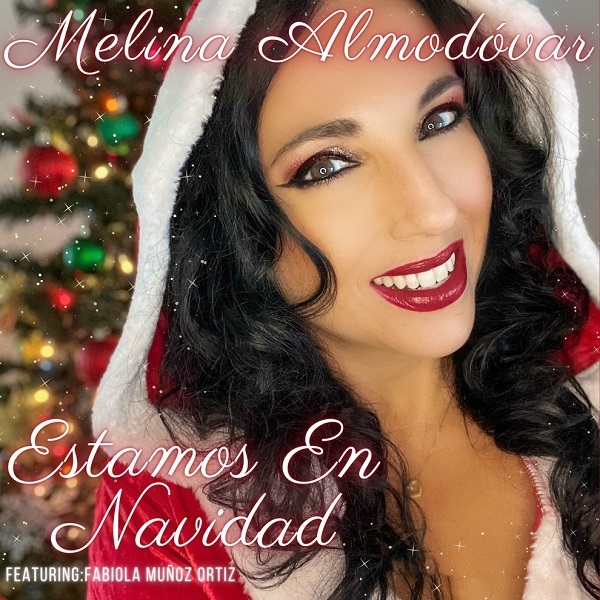
Melina Almodóvar “Estamos en Navidad”

Melina Almodóvar brings us Estamos en Navidad, written by Luigi Flores, who also made the musical arrangement and played the piano.

The song starts in Melina’s voice, announcing that we are in Christmas and that a new year is coming.  “Oh, what an emotion and blessing that we are in Christmas…” she announces the good wishes chanting, between soneos: “have a lot of prosperity and that your dreams come true”.

Before the first minute, Fabiola Muñoz Ortiz’s Puerto Rican cuatro takes center stage.  During the second minute, the guest of honor adds Puerto Rican spice to the longest Christmas in the world with her Puerto Rican cuatro solo, after Melina gives way with a resounding: “Tell Fabiola, how Christmas is heard in Puerto Rico”.

Melina also sings about the coquito, the Christmas menu and everything else that might suggest a Puerto Rican Christmas in full swing.  I love the positive message, whose lyric assures us that the best is yet to come.  It is one of the few contemporary Christmas songs -if not the only one- in that line of positive and motivational inspiration, without being a religious or sacred lyric.  Anyway, the Christmas salsa song is great. It is very tasty.

The musicians responsible for accompanying Melina on this recording are as follows:  Alex Zapata on trombones, Daniel Silva on bass, Caliche Sabogal on all percussion, our beloved musical genius -Luis Aquino- on trumpets. Henry García, Melina Almodóvar and Ángel Vallenilla complement from the choirs.

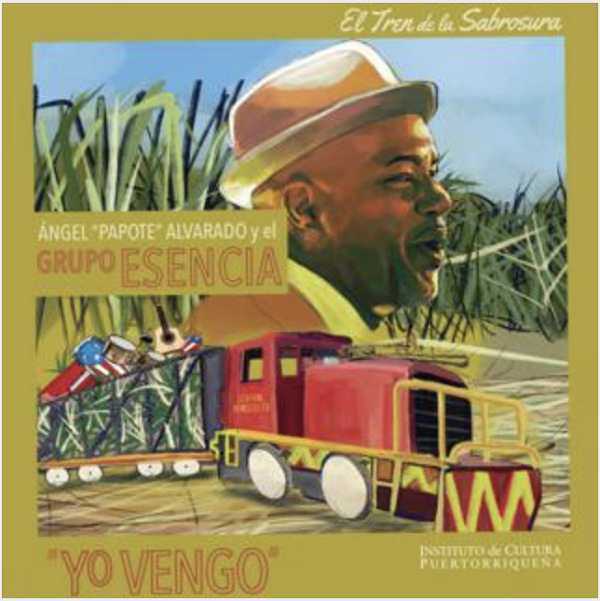
Ángel “Papote” Alvarado y su Grupo Esencia “Yo vengo”

Angel “Papote” Alvarado and his Grupo Esencia bring us the single entitled Yo vengo.  The song takes off and “takes a trip” from the first bars, affirming with forcefulness between trombones and tambourines: “I come from a truly powerful race, very deep roots and unparalleled culture”.  The pen and accordion of Ricky Martinez affirm in the voice of Papote: “My homeland is a jewel and in the world is unique, my people and my flag, are national treasure …” declaring patriotic pride and cultural responsibility, between soneos that embrace the chorus: “I come, I come, I come …”.

Motivating to move forward with the well known “pa’ lante boricua”, an honorable mention is given by saying a musical farewell to the late plenero Tito Matos, shortly before José Eduardo embellishes the theme with his Puerto Rican cuatro, so present during the Christmas season.  This is the song that awakens Puerto Rican patriotism and motivates it to flourish.

Statements like: “how happy I feel with my flag held high” and “Puerto Rico my homeland, the queen of my loves, for its people and my people, the most beautiful of flowers” while listening to the brothers Toñito and Victor Vazquez guapear with their trombones; synchronize our hearts to the rhythm of patriotic pride that only the Puerto Rican Afro-Caribbean essence understands.

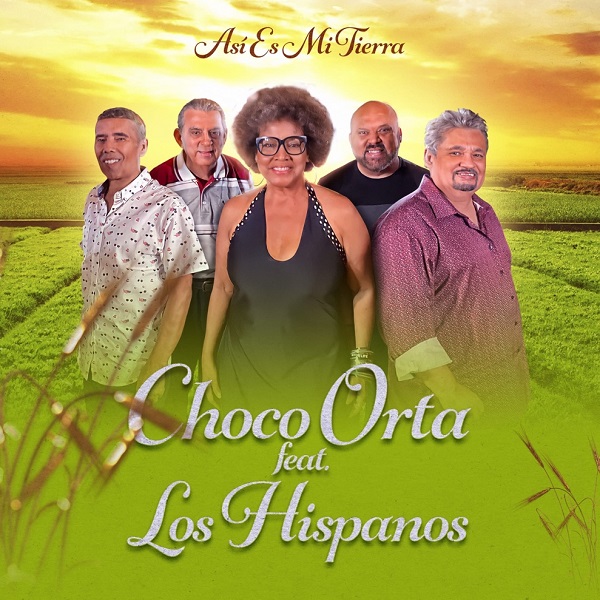
Choco Orta  “Asi es mi Tierra”

In keeping with the Puerto Rican concept of celebrating Christmas as early as September, as soon as the gentle breezes of our tropical Christmas season begin to be felt, Choco Orta released this Christmas classic. From the pen of our own Gloria Gonzalez, Choco Orta produced, directed and released this all-time hit.

It is worth mentioning that this song has already consolidated as a classic, originally popularized by the quartet Los Hispanos. In this way, Choco celebrates with Los Hispanos the 70th anniversary of the longest running quartet in existence, in addition to his 35 years of artistic career.

Choco Orta considers the Los Hispanos quartet “one of the great pearls and treasures of our Puerto Rican soil.  Currently, the members of the Los Hispanos quartet are Wisón Torres, Tato Díaz, Rafy Torres and Nino Segara.

For the production of this single, Choco had the collaboration of Nino Segarra in the arrangement, musical direction and keyboards. Musicians of the stature of Julio Loyola on trumpets; Moisés Cancel on trombones; Hilton Mercado on baritone saxophone; Ceferino Cabán on piano; Alexis Pérez on bass; Manny Trinidad on cuatro and guitar and Javier Tito Álvarez on tumbadoras, bongo and timbales delivered such perfection.

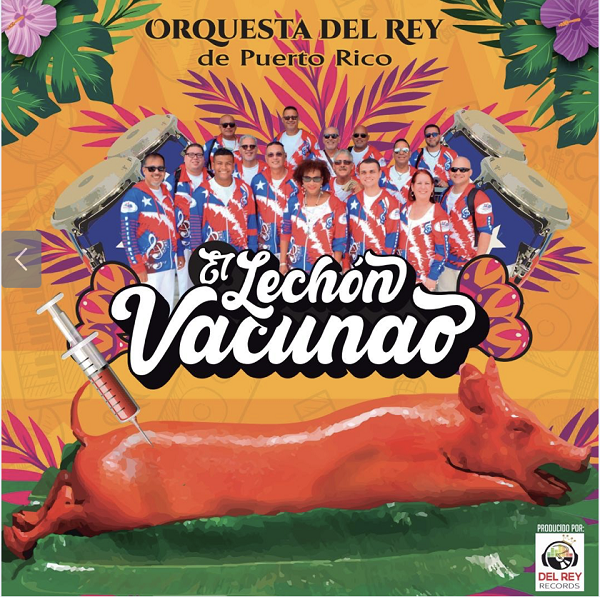
La Orquesta del Rey de Puerto Rico “El lechón vacunao”

The Orquesta del Rey de Puerto Rico brings us El lechón vacunao, from the pen of Miguel García. The composer manages to inject jocularity into the return of the Puerto Rican Christmas celebration with all the trappings of the law, after having been inhibited from celebrating Christmas in person because of COVID-19.

Néstor Ramos Zavala interprets the nice song.  He is accompanied by: Michael Colón and David Irurita on trombones; Harel Orengo, José Claudio and Eduardo Alvelo on trumpets; Juan Ramos on bongo; Gary Rodríguez on tumbadoras; Javier González on timbal; Benjamín Vázquez on bass; Sebastián Alicea on piano; Israel Santana on Puerto Rican cuatro; Cándido Reyes on güiro; Millie Smith, Luis Martínez and Jorge Agosto on backing vocals; Ezequiel Colón is the voice of Don Seco.


By Bella Martinez, ISM Correspondents, San Juan, Puerto Rico

  • « Go to Previous Page
  • Page 1
  • Interim pages omitted …
  • Page 32
  • Page 33
  • Page 34
  • Page 35
  • Page 36
  • Interim pages omitted …
  • Page 55
  • Go to Next Page »

International Salsa Magazine (ISM) is a monthly publication about Salsa activities around the world, that has been publishing since 2007. It is a world network of volunteers coordinated by ISM Magazine. We are working to strengthen all the events by working together.