• Skip to primary navigation
  • Skip to main content

International Salsa Magazine

  • HOME
  • Previous editions
    • 2026
      • ISM / March 2026
      • ISM / February 2026
      • ISM / January 2026
    • 2025
      • ISM / December 2025
      • ISM / November 2025
      • ISM / October 2025
      • ISM / September 2025
      • ISM / August 2025
      • ISM / July 2025
      • ISM / June 2025
      • ISM / May2025
      • ISM / April 2025
      • ISM / March 2025
      • ISM / February 2025
      • ISM / January 2025
    • 2024
      • ISM / December 2024
      • ISM / November 2024
      • ISM / October 2024
      • ISM / September 2024
      • ISM / August 2024
      • ISM / July 2024
      • ISM / June 2024
      • ISM / May 2024
      • ISM / April 2024
      • ISM / March 2024
      • ISM / February 2024
      • ISM / January 2024
    • 2023
      • ISM / December 2023
      • ISM / November 2023
      • ISM / October 2023
      • ISM – September 2023
      • ISM – August 2023
      • ISM July 2023
      • ISM Edition June 2023
      • ISM – May 2023
      • ISM April 2023
      • ISM March 2023
      • ISM February 2023
      • ISM January 2023
    • 2022
      • ISM December 2022
      • ISM November 2022
      • ISM October 2022
      • ISM September 2022
      • ISM August 2022
      • ISM July 2022
      • ISM June 2022
      • ISM May 2022
      • ISM February 2022
      • ISM January 2022
    • 2021
      • ISM December 2021
      • ISM November 2021
      • ISM October – 2021
      • ISM September 2021
      • ISM August 2021
      • ISM July 2021
      • ISM May 2021
      • ISM April 2021
      • ISM June 2021
      • ISM March 2021
      • ISM February 2021
      • ISM January 2021
    • 2020
      • ISM December 2020
      • ISM November 2020
      • ISM October 2020
      • ISM September 2020
      • ISM August 2020
      • ISM July 2020
      • ISM June 2020
      • ISM May 2020
      • ISM April 2020
      • ISM March 2020
      • ISM February 2020
      • ISM January 2020
    • 2019
      • ISM December 2019
      • ISM November 2019
      • ISM October 2019
      • ISM Septembre 2019
      • ISM August 2019
      • ISM July 2019
      • ISM June 2019
  • Download Salsa App
    • Android
    • Apple
  • Spanish

Search Results for: Van+Van

Ignacio Piñero Septeto Nacional has played an important role in Cuba’s music for more than seven decades

Founded by Havana-born bassist and vocalist Ignacio Piñero in 1927, the Septeto Nacional De Ignacio Piñero has played an important role in Cuba’s music for more than seven decades.
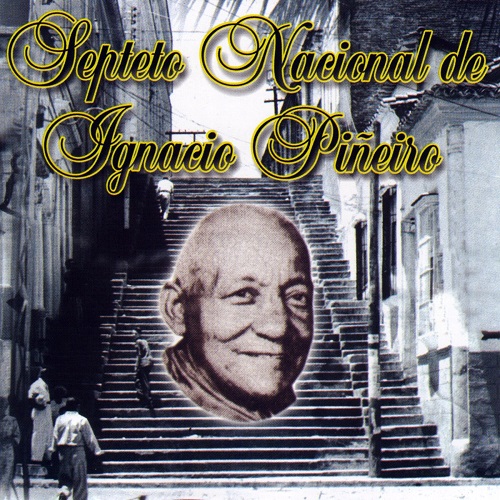
Fundado por el bajista y vocalista nacido en La Habana Ignacio Piñero en 1927

Pioneers of son, a rhythmic blend of African and Cuban music that evolved into salsa, mambo and Latin jazz, the group was the first son band to incorporate the trumpet as the main instrument.

Ignacio Piñero’s Septeto Nacional gained worldwide recognition with its performance at the 1928 Universal Exposition in Seville, and was reportedly the first group to mention “Salsa” in a song “Echale Salsita” recorded in 1933. The song composed by Piñero, was adapted by George Gershwin for the opening theme of his “Cuban Overture”.

Since Piñero’s death in 1968, after 41 years at the helm of the band, the Septeto Nacional De Ignacio Piñero has been led by a series of leaders.

Guitarist and composer Rafael Ortiz, who took over after Piñero’s death, bequeathed the position to vocalist Carlos Embale in 1982.

After leaving the group due to illness in 1998 Embale’s leadership was inherited by guitarist Richard Aymee Castro. True to their original musical roots, Ignacio Piñero’s Septeto Nacional continues to offer a danceable blend of montano, merengue, bolero, rumba and cha cha cha. Craig Harris.

Ignacio Pineiro
Ignacio Pineiro

Ignacio Piñero was one of the Pioneers of Son Cubano

In 1906 he already knew and had assimilated the different toques of the African cabildos that existed in the neighborhood of Pueblo Nuevo, which he later incorporated into some of his creations.

He began his artistic career with the group claves and guaguancó El Timbre de Oro, later he directed Los Roncos de Pueblo Nuevo, in which he developed as a decimist and director, at the same time he took his first steps as a composer.

From this stage are: Cuando tú, tu desengaño veas, Dónde estabas anoche, El Edén de Los Roncos, Mañana te espero, niña. Later he joined the group Renacimiento de Pueblo Nuevo.

To the folkloric values that Piñeiro cultivated in these groups, he contributed a wider melodic-harmonic development and a greater depth and poetic flight.

In 1926 he was one of the founders, together with María Teresa Vera, of the Sexteto Occidente, with which he made his first tour to the United States in order to record an album with this group.

In 1927 he founded the Sexteto Nacional, formed by Ignacio Piñeiro, director and double bass; Alberto Villalón, guitar; Francisco González Solares, tres; Abelardo Barroso, lead vocals; Juan de la Cruz, tenor; Bienvenido León, baritone and maracas, and José Manuel Carrera Incharte (El Chino), bongo; that same year trumpeter Lázaro Herrera joined the group. With this septet he traveled to New York, where he recorded his first works.

In 1929 he participated with the Septeto Nacional in the Fair-Exposition of Seville, Spain; in that country they were hired as exclusive artists by the company SEDECA, and toured other cities of that country: Vigo, La Coruña, Santander, Madrid and Valladolid; in addition, they performed in the theaters Torero, Jovellanos, the Cine-Teatro Grado, and the cabaret Maicú, all in Madrid. In 1930 he was one of the founders of the National Association of Cuban Soneros.

Pioneros del son, una mezcla rítmica de música africana y cubana

They performed at the Sans-Souci cabaret (1930); in 1931 they performed at the Lavín and CMCG radio stations; in 1932, at the Dos Hermanos Hotel, he premiered Buey viejo; that same year the American composer George Gershwin came to Havana, at the CMCJ radio station he listened to Piñeiro’s son Échale salsita, from which he later used the theme played on the trumpet in his Cuban Overture.

In 1933 he performed at the Fair-Exhibition A Century of Progress, held in Chicago, United States.

In 1934 Piñeiro retired from the septet, which from 1935 was directed by trumpeter Lázaro Herrera. In 1954, Piñeiro reappeared as leader of the septet, with which he appeared on the television program Música de Ayer y de Hoy.

As a composer, Ignacio Piñeiro broke, although he took elements from the form of the oriental son, in which its creators used the quatrain and the tenth; an example of this break is his son Buey viejo, from 1932:

Carretero no maltrates a ese pobre buey tan viejo, que ya doblbla la cabeza por el peso de los tarros, y por senda de guijarros va tirando la carreta, y nunca llega a la meta, término de su dolor.

Piñeiro was one of those synthesis cases that managed to capture, develop and express the full richness of the son.

The structural modifications, the cadence, the rhythm and the use of refined melodies and lyrics, achieved by this creator and interpreted by the Septeto Nacional, make it possible to say that the work of this singular artist, although he did not mark the boundaries of son (which corresponded to the Sexteto Habanero), he did turn it into a son that today we can call classic, which became a model for its further development.

When Ignacio Piñeiro founded the Septeto Nacional, his purpose was to be a high exponent of the Cuban son and its various variants, he himself made use of those variants, composing guajira-son, canción-son, afro-son, so he worked with the elements offered by the oriental son, to which he gave a broader treatment, both musically and literary.

According to Miriam Villa: “If we analyze the organization of the literary text, we observe in his work the formal use of metrically heterogeneous links subjected to rhythm, characterized by the presence of accented and unaccented elements within the system of units that are repeated at intervals between them.

Piñeiro must not have been concerned about the meter in the text as a pattern, since through the rhythm of the composition he achieves the contrast relations, making the change of meter express a change in the thematic movement, either from intermittences or accentuations or sometimes both, which give it different semantic nuances and alternations of tensions and distensions.

And elsewhere Villa states: “Another aspect that in relation to the literary text is reflected in Piñeiro’s creative work is that of the thematic contents; these are shown from a diversification with greater scope in relation to his contemporaries.

His work can be divided into multiple themes among which are love, homeland, philosophical reflection, politics, the bucolic, the infantile, expressed in a variety of forms: satirical, apologetic, humorous and with greater depth than in the sonorous production that preceded him and even with which he shared.

With the Septeto Nacional, Piñeiro appears in the musical short El frutero, and in the film Nosotros la música, by director Rogelio París.

Ignacio Piñeiro Septeto Nacional
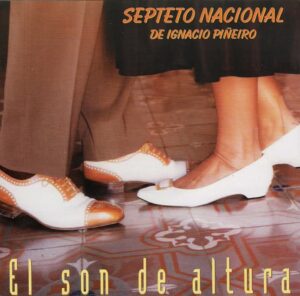
Septeto Nacional de Ignacio Piñero El Son de Altura

El Son de Altura (1998)

Tracks:

  1. Mayeya – No Juegues Con Los Santos (Son) (I. Piñeiro)
  2. Bardo (Bolero-son) (I. Piñeiro)
  3. Lejana Campiña (Guajira-son) (I. Piñeiro)
  4. Canta La Vueltabajera (Guajira-son) (I. Piñeiro)
  5. Guanajo Relleno (Guaracha-son) (I. Piñeiro)
  6. Esas No Son Cubanas (Son) (I. Piñeiro)
  7. Suavecito (Son) (I. Piñeiro)
  8. Alma Guajira (Guajira-son) (I. Piñeiro)
  9. Castigador (Son) (I. Piñeiro)
  10. Échale Salsita (Son-pregón) (I. Piñeiro)
  11. EI Viandero (Son-pregón) (Ernesto Muñoz)
  12. Son De La Loma (Son) (Miguel MGllamoros)
  13. Trompeta Querida (Boleró-son) (Lózoro Herrera)
  14. La Mujer De Antonio (Son) (Miguel Matamoros)
  15. La Cachimba De San Juan (Son) (l. Plñeiro)
  16. EI Alfiler (Son) (l. Plñeiro)
  17. Noche De Conga (Son) (l. Plñeiro)
  18. EI Paralitico (Son) (Miguel Matamoros)

By:

EcuRed

Dj. Augusto Felibertt

L’Òstia Latin Jazz

Also Read: From Cuba El Septeto Son de Nipe vienen Abriendo Caminos

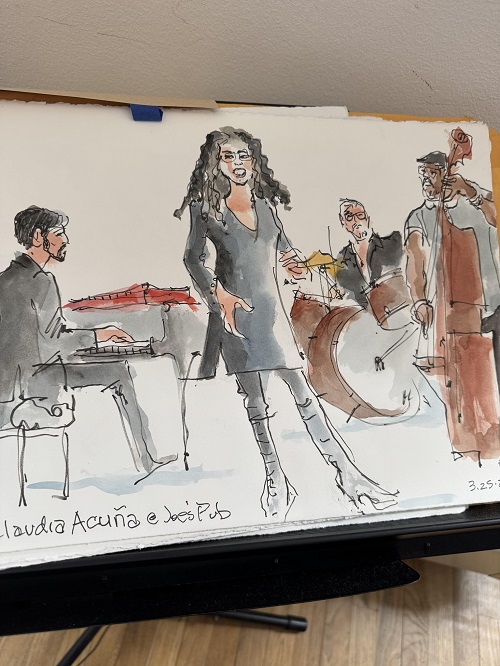
Claudia Acuña She is mainly known for singing jazz standards, ballads, and bossa nova

Claudia Acuña (Santiago de Chile, July 31, 1971) is a Chilean jazz singer considered the most successful Chilean jazz artist of all time. Since 1995 she has lived in New York, USA.

Photo by Hollis King dress by Anthony Manfredonia back stage at Carnegie Hall

She is known mainly for singing jazz standards, ballads, and bossa nova, as well as for developing and promoting Chilean folklore in the United States and the jazz world.

Abandoning the traditional jazz standards she covered in her two works for Verve, Chilean vocalist Claudia Acuña reveals a more contemporary Latin sound, with R&B influences, in her Maxjazz debut.

Undoubtedly Acuña’s most personal work to date, Luna once again displays her immense gift for delicately passionate vocals and interesting arrangements. While still using the smooth, sensitive Fender Rhodes keyboards of longtime collaborator Jason Lindner, Acuña sings more in Spanish on his third disc only Lindner’s “Yesterday You and I” is sung in English and eschews any straight-ahead jazz style for an almost fusion approach.

This is not to say it is jazz-pop, but the delicate melodies are reminiscent of 1970s Airto Moreira and the best Al Jarreau.

Claudia Acuña Se destaca principalmente por cantar jazz standards, baladas, y bossa nova

Although there are few jazz improvisations (most tracks are less than five minutes long), the music remains complex, cultured and sophisticated, with deep harmonies that should please jazz lovers and Latin music enthusiasts alike.  Matt Collar.

Claudia Acuña, born in 1971 in Santiago, Chile, is one of the most representative voices of contemporary Latin American singing.

Her music, which fuses elements of jazz and Chilean folk music, has captured the attention of audiences both nationally and internationally.

Claudia has managed to position herself as a key figure in the diffusion of Chilean culture through her art.

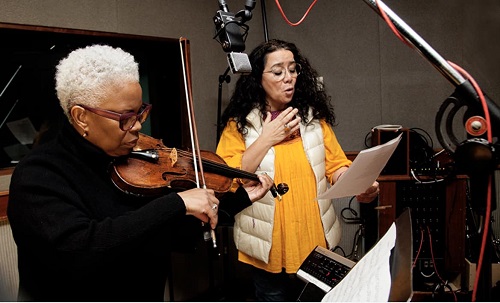
Regina Carter y Claudia Acuña

Early years and formation

From a very young age, Acuña showed interest in music. She grew up in an environment where Chilean musical traditions were part of everyday life. In her childhood, she began to learn about the guitar and piano, which led her to develop her vocal talent. Claudia Acuña trained in the musical field in various institutions, where she cultivated her love for jazz, a genre that would profoundly influence her throughout her career.

Successes and trajectory

Claudia Acuña’s debut in the music world was well received, which opened the doors to a series of presentations in festivals and concerts in Chile and other Latin American countries.

Her debut album, which includes a fusion of traditional Chilean rhythms and rhythms from other cultures, was acclaimed by critics and audiences alike, propelling her career to new heights.

Throughout her career, Claudia has collaborated with leading musicians and participated in important international festivals. Her ability to perform not only Latin American music, but also jazz standards, has made her versatility recognized by her peers and followers.

The albums she has released throughout her career reflect her love for music and her commitment to creating a unique sound that represents her cultural identity.

Cultural Impact

Claudia Acuña is not only a talented singer, but also a fervent advocate of Chilean culture. Through her music, she seeks to preserve and promote the traditions of her country, and often incorporates elements of folklore in her interpretations.

Her presence on international stages has allowed many people to discover and appreciate the richness of Chilean music.

In addition, she is known for her charisma and energy on stage, which makes her a memorable performer in each of her presentations.

Claudia has inspired generations of young musicians in Chile and abroad, encouraging others to explore their cultural roots and express themselves through music.

Recognitions and awards

Throughout her career, Claudia Acuña has been honored with several awards and recognitions, both nationally and internationally. These awards not only highlight her artistic ability, but also her impact on the music community. Claudia continues to work actively in the industry, collaborating with new artists and participating in musical projects that promote Chilean talent abroad.

Conclusions

Claudia Acuña is a Chilean singer who has left an indelible mark on Latin American music. Her music and her commitment to her country’s culture have established her as a unique artist in the contemporary music scene. As she continues her career, her influence is likely to continue to grow, bringing Chile’s rich musical heritage to new audiences around the world.

Claudia Acuna - Luna 2004
Claudia Acuna – Luna 2004

Claudia Acuna – Luna (2004)

Temas:

  1. Esta Tarde Vi Llover (Armando Manzanero)
  2. Yesterday You and I (Jason Lindner)
  3. Tu, Mi Delirio (Cesar Portillo de la Luz)
  4. Arrimate Mi Amor (Pedro Green & Jorge Diaz)
  5. Historias (Claudia Acuña & Jason Lindner)
  6. Chorado (Guinga)
  7. A Meditation On Two Chords (Jason Lindner)
  8. Oceano (Djavan)
  9. Yo No Llevo La Razon (Antonio Restucci)
  10. Lilas (Djavan)
  11. Carita De Luna (Claudia Acuña & Jason Lindner)

Musicians:

Claudia Acuña (Vocals)

Jason Lindner (Acoustic Piano and Fender Rhodes)

John Benítez (Double Bass and Electric Bass)

Gene Jackson (Drums)

Luisito Quintero (Percussion)

Jimmy Greene (Soprano Sax)

By:

Dayhist

Dj. Augusto Felibertt

L’Òstia Latin Jazz

Also Read:  From Chile Nairoby and La Casa del Ritmo with their project “Vinyl Plater Productions”


This is Indiana composer, arranger, music teacher, and trumpet player David Hardiman

Our interviewee today is very special because of the talent and the enormous academic background he has, so we are very pleased to have been able to talk with him. We are talking about the arranger, composer, trumpeter, pianist and music teacher David Hardiman, whom we welcome to International Salsa Magazine.

This is David Hardiman
Music teacher and musician David Hardiman holding his trumpet

A little bit of David’s story

The artist from Indianapolis, Indiana, began his tale telling us a little bit about how he started getting interested in music, which was when he was in fourth grade. That is when he started learning to play the trumpet and piano, taking advantage of the fact that he had one at home.

Unlike other children and young people who find other interests and hobbies besides music, David never stopped and kept playing the trumpet until high school, during which time he played in the marching band, the orchestra, the jazz band and the concert band of the institution.

Years later, he attended Indiana University where he also played in the marching band and concert band. He received his bachelor of music education through which he obtained a lot of classical training that he would later apply to his artistic career, but he did not stop there, as he also began to participate in ensembles with which he played R&B and jazz.

When he returned to his hometown Indianapolis, he was hired by a band with which he started playing blues, tap and jazz at parties, weddings and other events of this type.

In addition to that, he also taught instrumental music for over 11 years at the elementary level. He also taught flute at the fourth grade level and prepared children of those ages to be introduced to instruments until their formation in high school, something very similar to his case when he got started in this world.

The young musician already wanted to expand his horizons and thought about leaving the nest and moving from his home state to try his luck elsewhere, but first he obtained his master’s degree in music education in 1970. This was the final step that would make him realize that he was ready to take flight farther away from home.

David playing the trumpet
David Hardiman playing the trumpet live

Berkeley

In 1971, David went to Berkeley, California, where he began to teach at King Junior High School, which he describes as an excellent experience that taught him a lot about music at the educational and practical level. His teaching specialized in the orchestral and symphonic part of classical-oriented music. At the same time, he spent much of his time playing for clubs and private parties with various orchestras and bands. 

One of his fellow teachers at King Junior High School named Grey Gomez taught at the elementary level and was a trombone player. Gomez told David that he needed a trumpet player for a group called ‘’The Aliens’’, so he proposed him to join the band and play with him at The New Yorker club. This would be the first time the musician played Latin music, more specifically salsa.

Introduction to Latin music in San Francisco

By then, David was looking for new challenges, so he decided that he could not teach at low levels at King Junior High School for life, so he began working part-time at the City College of San Francisco. Parallel to this, he played with another band for various basketball and soccer games during breaks.

Soon after, the musician began directing the big band in the aforementioned institution and teaching at the middle college level outside of San Francisco. When he became a full-time professor at the City College, he was much more exposed to Latin music and genres, which was contrasted with his hometown, as Indiana is not known for its large number of Latin orchestras and musicians. 

David at 12 years old
Young David Hardiman playing the trumpet at 12 years old

In the Bay Area, he began to have much more contact with people from other nationalities and cultures, especially Latinos, which made him listen to various Latin music groups and play with others. He even opened up for great artists such as Celia Cruz and the Fania All Stars.

He also played with the group Café Canela, whose genres are a very interesting combination of salsa, chá chá chá and many more.

San Francisco All Star Big Band 

About 50 years ago, parallel to what he did with other orchestras, he created his own big band named San Francisco All Star Big Band, with which he has played for all kinds of events such as festivals, university parties, religious services, weddings, birthdays, charity balls, nightclubs, among others. 

With this orchestra, he has a few albums which can be found on YouTube and other similar platforms and they are ‘’It’ll be alright’’, ‘’Portrait of David Hardiman’’, and ‘’Music Around The World’’.

Portrait of David Hardiman
Cover of the album ”Portrait of David Hardiman”

Read also: Puerto Rican singer Max Rosado and what he had achieved in Washington DC

Liz Rojas and John Narvaez share their experience with the San Francisco Salsa Festival

The San Francisco Salsa Festival is one of the most important Latin music events in The Bay Area and California in general, so we could not miss it. Eduardo Guilarte, senior editor of International Salsa Magazine attended on our behalf to witness firsthand everything that happened over the three days of the festival, as in previous years. 

To learn a little more about the most important facts related to the festival, Elizabeth Rojas and John Narvaez have made room in their busy schedule to talk with us and relate some elements and details of this fifteenth edition, which we are infinitely grateful. 

John, Liz, and Angie at the festival
John Narvaez, Angie Seminario y Liz Rojas

How was the 15th edition of the San Francisco Salsa Festival organized? 

Liz tells us that the organization of this edition started last year immediately following the previous festival to avoid wasting time and handle contingencies as soon as possible. Whenever they complete an edition, they immediately start to organize the next one, since all the details to keep in mind are too many to leave them for another time.

Liz and John always have to confirm orchestras and artists in advance, but they have a very efficient team of friends and partners to help them with everything related to the event. For this reason, every year it has become easier to make the preparations faster and more efficiently.

Novelties compared to other years

As for the novelties of this edition compared to other years, it could be shown that there was much more influx of people wanting to enjoy the activities offered. In addition to that, the dancers made sure that the program included more guests for classes, dance workshops on Friday, shows and competitions, which in turn helped to attract more interested public.

Another innovative detail was the invitation to local teachers in order to attract their students and people from their academies in general.

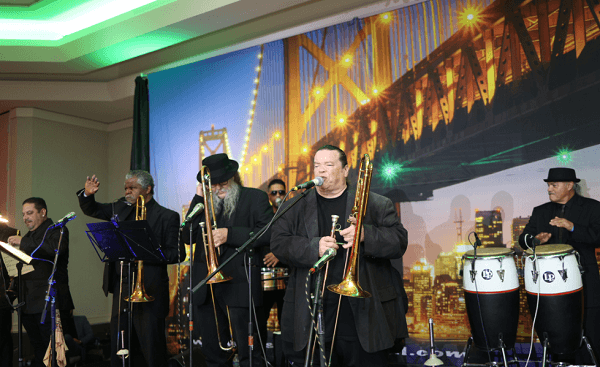
Latin Rhythm Boys at the festival
The Latin Rhythm Boys playing at the San Francisco Salsa Festival

Adding to all this, Liz and John sought to take much more into account the bachata dancers and artists in order to offer a little more variety in terms of musical genres and not just salsa.

Situation with the Orquesta La Máxima 79

No matter how majestic an event can be, there are always facts that can tarnish a little the satisfaction of organizers with all that has been achieved. This not so pleasant situation was the regrettable absence of the orchestra La Máxima 79, which was unable to travel to the United States at the last minute because of visa related issues.

John described how the days went by and the visas for the members of the group were not issued, to the point that the immigration department had not even conducted the first interviews. Because of this, they began to consider the possibility that La Máxima might not perform their show as planned. 

However, this didn’t stop them from having a card up their sleeve, so replacing La Máxima 79, they hired the amazingly talented Ray de La Paz, whose concert was amazing and delighted the audience with his fabulous show. They had to do much more publicity in the last few days due to the unforeseen change, but fortunately, it was all worth it.

They met Ray de La Paz in Hong Kong in 2004 during one of his shows where they were dancers on stage with him. Although they did not know him at the time, they really liked how he sang, so they called him up for the festival. They proposed to him to participate through Javier Cabanillas, another musician hired for the festival, who was a friend of his and kindly provided them with his contact information to invite him.

Ray at the festival
Ray de La Paz on the red carpet at the San Francisco Salsa Festival

When we wanted to know how the organization deals with last-minute inconveniences, Liz commented that they already had a plan B for such an eventuality. The main organizer of the event, Angie Seminario, and John had already talked about what to do in a situation of this kind. Likewise, they did not wait for the last moment to replace the missing orchestra, but acted quickly and worked on an alternative in parallel. At this point, John highlighted the importance of cultivating good connections and relationships with many musicians, so that they can count on them in emergencies.

Despite everything, they do not give up and will do whatever it takes to bring La Máxima to the festival next year. They are already working on this issue with the company’s lawyer.

The hardest thing to organize the San Francisco Salsa Festival

Together with last-minute absences, another problem which Liz and John face when organizing the festival is the hotel booking process for the time planned. Booking for the selected days and times of the festival and the multiple activities to be developed can turn to a headache, even more so than the organization of the workshops and concerts.

Also, the economic and time requirements can be very complex depending on what an event needs. The fines imposed by the government on venues that exceed the time limits with their events are well known, so planning failures should be avoided at all costs. 

John also added that it is always very complicated to deal with people and the selection process of the best staff to work with is not always easy. ”We always look for people who are equal or better than us. We make sure to surround ourselves with people who are even smarter and more capable than us so that they can see what we can’t” said the dancer and entrepreneur.

John, Anfie, Liz, and Ray at the festival
John Narvaez, Angie Seminario, Liz Rojas, and Ray de La Paz

How John and Liz feel now in comparison to the first festival

When compared this latest edition with the first one, John says that both he and Liz are extremely proud of what has been achieved so far. The artist assures that for him it is a great honor to be able to have Liz by his side, then thanks her for accompanying him and making the festival and the rest of the things they have achieved possible. 

Meanwhile, Liz fully agrees with her partner and also said she feels very proud of what they have accomplished all these years. Since we have seen other artists doing big dance events, John and I set out to achieve the same thing someday and we are very proud to have been able to make it possible” said the dancer ending her speech.

Julio at the festival
Julio Bravo playing the maracas during Ray de La Paz concert

Read also: Kiki Valera and his talented and special family’s great legacy

Anya Kasetvman

North America / USA /  New York

Anya Kasetvman. One Life with Latin Passion

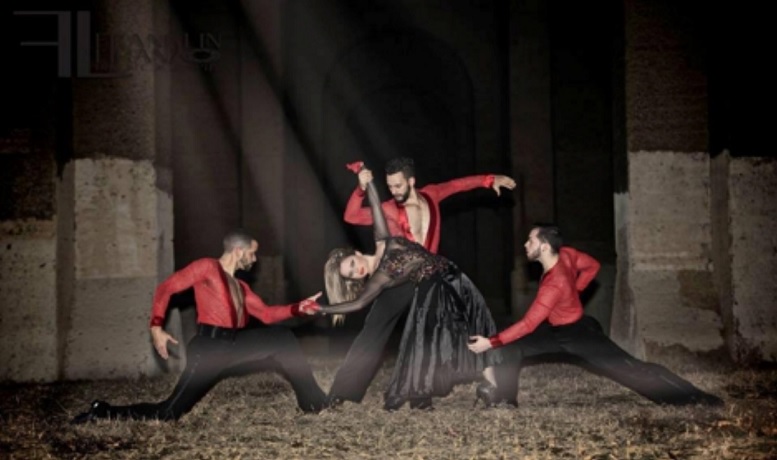
Winner of two consecutive years, 2010 and 2009 of the Salsa World Championship in the division ON 2, kind, thoughtful, genuine, and I would add a touch of mystery in her look; so Anya Kasetvman is defined as: a dancer by profession and with a Latin passion for conviction.

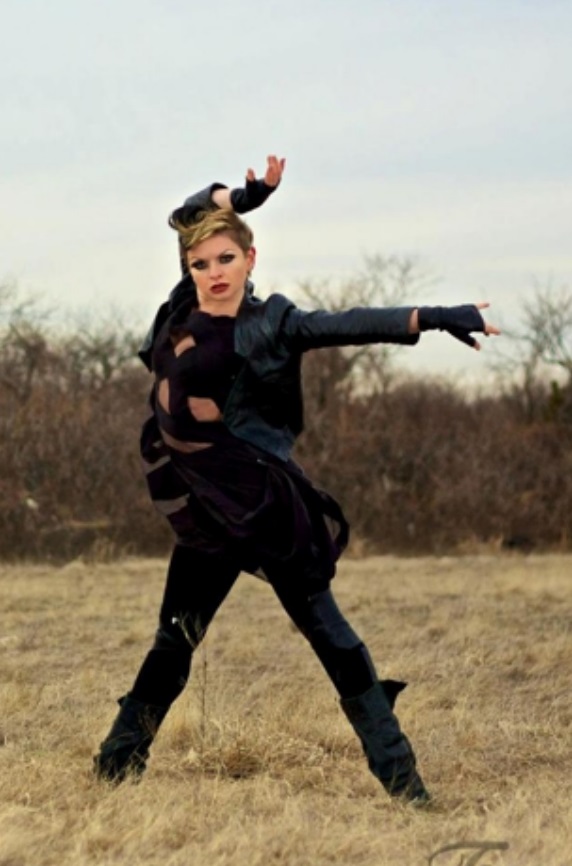
Anya Kasetvman - Photo 1
Anya Kasetvman – Photo 1

Coming from Ukraine, this young artist tried to conquer the world of dance very early and, VAYA, that she did it: championships (many), congresses (a lot), fashion design (uf!) And education (at all levels), these are all the awns in which Anya has been very successful always with the unconditional support of her brother and her family, thus catapulting her American dream: to be the Queen of the Salsa dance floors in the world!

She was born on August 26th, 1984 in Ukraine; this nice Virgo brought to North American lands at the age of 8th was to embark on her way to conquer dance.

Anya Kasetvman - Photo 2
Anya Kasetvman – Photo 2

Grown up in Brooklyn since 1993, her childhood was relatively easy, she did not have her Ukrainian roots rooted in so she had an adaptation to her new environment much faster, although she experienced a certain degree of racism for her Russian origin, it was nothing that her parents and she couldn’t overcome. I started dancing pretty soon after we immigrated so it was easy to shut out normal life and focus on my special dance life that I had and many others didn’t.

Finding dance for young people was a hardship however. There was no ballroom dancing for children in America at the time so I am grateful that my brother Eugene katsevman helped develop and grow that industry for me to partake in, said Anya.

Anya Kasetvman - Photo 3
Anya Kasetvman – Photo 3

Her brother Eugene, an outstanding dancer, has been her main ally and model to follow in terms of her learning to confront the different vicissitudes of life and in the professional field of dance: He is my teacher above all else. I learned everything I know from him some things directly some things by example and just being in his life and knowing him. He is in many ways my true role model and the one person I can always count on being a step ahead so I always have something to learn, told me Anya.

Anya Kasetvman - Photo 4
Anya Kasetvman – Photo 4

She spent great part of her adolescence between happy moments and a lot of dance preparation. Being a model student for her excellent qualifications, Anya had to make the most important and transcendental decision in her life so far, which by that time could have changed her future: to decide to make a living through her passion for dancing or to follow a university career.

I would say the hardest part of my life would be the pivotal point between deciding my future whether I was good enough to make a living as a dancer or could find passion in academics which I never did although… It was very difficult to leave college and have an unknown future until I found salsa and a new path for my dance career. Commented Anya.

Anya Kasetvman - Photo 5
Anya Kasetvman – Photo 5

This young dreamer entered the world of salsa fortuitously thanks to her great friend and dance partner then Luis Aguilar, a talented dancer who worked with her teaching international Latin ballroom dance at a popular dance school in Manhattan. I encouraged him to compete and make a career out of dance in return he taught me salsa so we could partner together. The dance industry seemed very open minded at the time and accepting of all race cultures and dance abilities I also saw teaching opportunities and a place for myself because of my ballroom knowledge and what I had to offer as a teacher to this new environment, said Anya.

Anya Kasetvman - Photo 6
Anya Kasetvman – Photo 6

In 2007 was their first participation in a prestigious Congress of Salsa that took place in the city of New York, where they went up to the podium and occupied the surprising position of second place among a total of 10 competitors with recognized trajectories. During that same year Anya continued to participate in different state, local and world competitions, finishing that year in the fourth place among the best dancers in the world. It was a great experience for me to be an unknown dancer who could achieve success with my abilities alone without an established reputation something unheard of in the ballroom circuit. That made me fall in love with salsa. Anya Kasetvman.

Anya Kasetvman - Photo 7
Anya Kasetvman – Photo 7

However, it wasn’t enough for Anya and her partner who continued obtaining titles at the different Salsa World Congresses, which they attended by taking first place in December 2009, in Florida, thanks to the precision of their steps, the cadence of their movements of shoulders and hips, multiple turns, perfect execution and technique, besides an almost perfect coordination and deep connection with his dance partner Luis Aguilar.

Anya Kasetvman - Photo 8
Anya Kasetvman – Photo 8

I feel like I trained my whole life for that moment so it was truly a very special unexpected accomplishment… The second time we won was 2010. We ranked 3rd into the final so winning in 2010 felt like an even bigger surprise and accomplishment. It was truly magical coming in from 3rd place and beating the couple that dominated our division for many years before us. At that moment, I knew it was time to retire from competition because nothing could ever live up to achieving my dreams two years In a row, despite all of these obstacles. So I retired competing in 2010 and began judging shortly thereafter, said Anya.

Anya Kasetvman - Photo 9
Anya Kasetvman – Photo 9

With 23 years of training and artistic career, Kasetvman is also dedicated to teaching and it’s because she possesses a unique gift that unselfishly shares with future generations of salseros of different levels that make her proud of her work and with great enthusiasm describes it in the following way: I’m blessed to share my gift of dance on many platforms and I feel very humbled to be considered amongst the top dancers in the world and performing truly makes me happy; being able to create art and share it with others, is truly a blessing.

Anya Kasetvman - Photo 10
Anya Kasetvman – Photo 10

However, I feel in that field I am amongst very many and that gift is subject to many opinions and tastes. When I am teaching, coaching or directing I feel I have more reach and value on a higher level in the lives of others, even if it’s on a smaller scale. Teaching is such an important job and I truly see it as an incredible responsibility.

Anya Kasetvman - Photo 11
Anya Kasetvman – Photo 11

Living my own dreams is of course an exceptional gift, but being able to help people achieve theirs and reach heights they never thought possible, truly makes me feel honored. I feel fortunate that I have learned so many different elements of dance and styles and had so many different experiences sharing those with others and helping them in their journeys no matter what they are, give me a higher sense of purpose and accomplishment. Of course I wouldn’t have been able to be the teacher I am without the stage experiences and competition results, but teaching is where I truly feel I excel and have a lot to offer a vast variety of individuals.

Kasetvman, who currently resides in Queens, NY, teaches and directs big teams of professionals, beginners, amateurs, and competitors from all areas of dance in New York city during the week and on weekends she teaches salsa lessons in other cities in the United States. The main purpose of these classes has always been to teach their students to achieve their own dreams, regardless of the obstacles they have to overcome along the way.

Anya Kasetvman - Photo 12
Anya Kasetvman – Photo 12

Likewise, and in addition to this kind of personalized instruction, Anya also offers an option of instruction to student to their comfort through educational – explicative DVDs that show the mechanic of the body and how it works, technical information, mechanical association, performance and presence stage dance that allows you to understand dance skills, good habits and discipline that help give dancers a sense of style and musical performance that they can see, practice and implement instantly. A niche neglected in dance and that Anya provides with all the passion that characterizes her.

Anya Kasetvman - Photo 13
Anya Kasetvman – Photo 13

This passionate and talented girl also acted for the ex-president of the United States, Barack Obama, starring in the documentary “La Época” and taught at the United Nations, great achievements that she obtained thanks to her determination, perseverance and whose work ethic was fundamental because it led her to achieve great opportunities that did not come alone, but the hand of kind people who saw in Anya the necessary professionalism of dance to carry them out and that she also took advantage of and value their years of preparation in search of excellence.

Anya Kasetvman - Photo 14
Anya Kasetvman – Photo 14

With a height of 5.3, Kasetvman has achieved everything that set out to do; her foray into fashion has been a success. Her creations have been made with great imagination, elegance, mesh and luxury that accentuate the waist, provide sensuality, mobility, comfort and flexibility that increase fantasy and eroticism in the dance. When I was growing up as a ballroom dancer, it was impossible not to fall in love with the fashion and the necessity to develop a style on the dance floor.

I began designing my own dresses and enjoying the creative process along with a sense of development and identity that it provided me in the process. Ultimately, a few years later after achieving some success with my ever changing looks and many encouraging words from great dress makers and role models, I began designing for others. I have to give most credit to my brother and his dance partner. And to Vesa Hietala the premier ballroom dress maker in the world. One day he encouraged me and told me I have what it takes and I never looked back, commented Anya.

Anya Kasetvman - Photo 15
Anya Kasetvman – Photo 15

Romantic, simple and addicted to all forms of beauty, talents, dreams and aspirations, Anya has made it clear that the key to success is to believe in you; surround yourself with people who support your visions and achievements, but mainly work hard for it, and never give up on your objectives and goals.

I think believing in yourself is the hardest, yet most important step to any success story. Do what you must to build confidence and earn what you want so you can feel good about it once you have it. No dream is too small or too big, if you couldn’t achieve it you would have never dreamed it. So, do what it takes get the help you need and don’t be afraid to succeed.

Anya Kasetvman - Photo 16
Anya Kasetvman – Photo 16

Each personal circumstance may teach us the lessons we need to prepare us for the future. Aim to be a better version of you, every day and stay focused on you. Everyone has their own path and their own track. Also think it is very important to remain open minded; often, our dreams come true, just not always as specifically as we had planned, so being able to recognize that you are getting what you wanted. I think helps us achieve success in the long run.

I never imagined I would be dancing Salsa when I was training to be a ballroom dancer, yet here I am living the dancers dream and working with my biggest passion in life; I wish that for everyone. ANYA KASETVMAN If you want to contact Anya or buy her DVDs visit her website www.anyakasetvman.com or follow her on Facebook www.facebook.com/anyakasetvman/

Anya Kasetvman - Photo 17
Anya Kasetvman – Photo 17


  • « Go to Previous Page
  • Page 1
  • Interim pages omitted …
  • Page 26
  • Page 27
  • Page 28
  • Page 29
  • Page 30
  • Interim pages omitted …
  • Page 135
  • Go to Next Page »

International Salsa Magazine (ISM) is a monthly publication about Salsa activities around the world, that has been publishing since 2007. It is a world network of volunteers coordinated by ISM Magazine. We are working to strengthen all the events by working together.