• Skip to primary navigation
  • Skip to main content

International Salsa Magazine

  • HOME
  • Previous editions
    • 2026
      • ISM / March 2026
      • ISM / February 2026
      • ISM / January 2026
    • 2025
      • ISM / December 2025
      • ISM / November 2025
      • ISM / October 2025
      • ISM / September 2025
      • ISM / August 2025
      • ISM / July 2025
      • ISM / June 2025
      • ISM / May2025
      • ISM / April 2025
      • ISM / March 2025
      • ISM / February 2025
      • ISM / January 2025
    • 2024
      • ISM / December 2024
      • ISM / November 2024
      • ISM / October 2024
      • ISM / September 2024
      • ISM / August 2024
      • ISM / July 2024
      • ISM / June 2024
      • ISM / May 2024
      • ISM / April 2024
      • ISM / March 2024
      • ISM / February 2024
      • ISM / January 2024
    • 2023
      • ISM / December 2023
      • ISM / November 2023
      • ISM / October 2023
      • ISM – September 2023
      • ISM – August 2023
      • ISM July 2023
      • ISM Edition June 2023
      • ISM – May 2023
      • ISM April 2023
      • ISM March 2023
      • ISM February 2023
      • ISM January 2023
    • 2022
      • ISM December 2022
      • ISM November 2022
      • ISM October 2022
      • ISM September 2022
      • ISM August 2022
      • ISM July 2022
      • ISM June 2022
      • ISM May 2022
      • ISM February 2022
      • ISM January 2022
    • 2021
      • ISM December 2021
      • ISM November 2021
      • ISM October – 2021
      • ISM September 2021
      • ISM August 2021
      • ISM July 2021
      • ISM May 2021
      • ISM April 2021
      • ISM June 2021
      • ISM March 2021
      • ISM February 2021
      • ISM January 2021
    • 2020
      • ISM December 2020
      • ISM November 2020
      • ISM October 2020
      • ISM September 2020
      • ISM August 2020
      • ISM July 2020
      • ISM June 2020
      • ISM May 2020
      • ISM April 2020
      • ISM March 2020
      • ISM February 2020
      • ISM January 2020
    • 2019
      • ISM December 2019
      • ISM November 2019
      • ISM October 2019
      • ISM Septembre 2019
      • ISM August 2019
      • ISM July 2019
      • ISM June 2019
  • Spanish
  • Download Salsa App
    • Android
    • Apple

Search Results for: Van+Van

Legacy of the Cepeda family after eight generations

As all our readers may know, this is a space devoted entirely to the promotion of salsa and other derivative styles, but that does not mean we should leave out other Latin genres that also deserve to be promoted and recognized worldwide. Such is the case of bomba and plena, which we are going to talk about in the next lines.  

Bomba and plena are two Puerto Rican musical genres that initially became popular at the local level, but little by little, they have received international notoriety thanks to certain groups of Puerto Ricans who have devoted considerable effort to take their culture to as many places as possible in the world. This is how we get to the theme of the Cepeda family and all that its members have done for bomba and plena.  
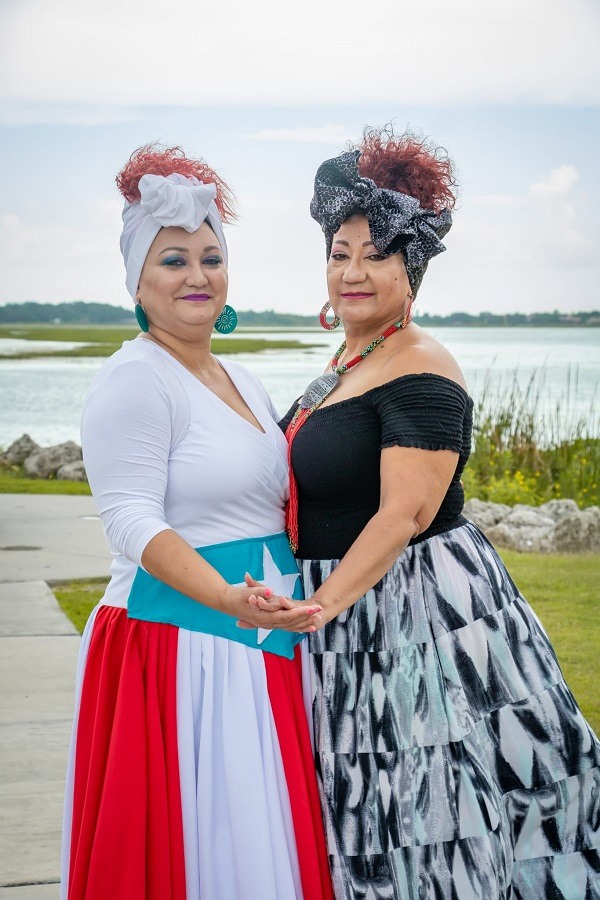
Bárbara and Margarita
Bárbara Liz Ortiz Sánchez and his mother Margarita ”Tata” Cepeda

The Cepeda Family  

The Cepeda family is a cultural institution that has been given the task of promoting bomba and plena for eight generations, so that they can be heard and danced all over the world. Don Rafael Cepeda Atiles, a professional musician and composer with an extensive career who has left a great legacy thanks to his hard work during his lifetime, which keeps current thanks to his descendants. 

When he married Caridad Brenes Caballero, he involved her in all his artistic activities and became a fundamental support for the musician in his work. The lady became a professional bomba and plena dancer, costume designer, and choreographer, which made her shine with her own light in every project directed by her talented husband.  

During his career, Don Rafael created several musical groups and, over the years, he and his wife involved their children and other family members to collaborate in what would become a renowned family business. 

One of the artist’s greatest achievements was the development of a cultural movement around the rescue and preservation of local traditions related to bomba and plena, which were thought to be lost. He was also decorated with the Smithsonian Institute’s National Endowment for the Arts Fellowship for his contributions to music. 

All this legacy remained in the hands of Don Rafael’s family and one of the first to do something about it was his son Modesto, who founded the Escuela de Bomba y Plena Don Rafael Cepeda in Santurce, Puerto Rico. This institution was created in order to teach bomba and plena in the areas of dance and percussion. 

Those who would follow these steps would be Margarita ”Tata” Cepeda, granddaughter of Don Rafael and Caridad, and Barbara Liz Ortiz Sanchez, great-granddaughter of Don Rafael and Caridad. Margarita currently runs the Escuela de Bomba y Plena Doña Caridad Brenes de Cepeda and her daughter, Barbara Liz, runs the Escuela de Bomba y Plena Tata Cepeda in the state of Florida. It was precisely the latter with whom we had the pleasure to talk about this project and the plans she has for the future.  
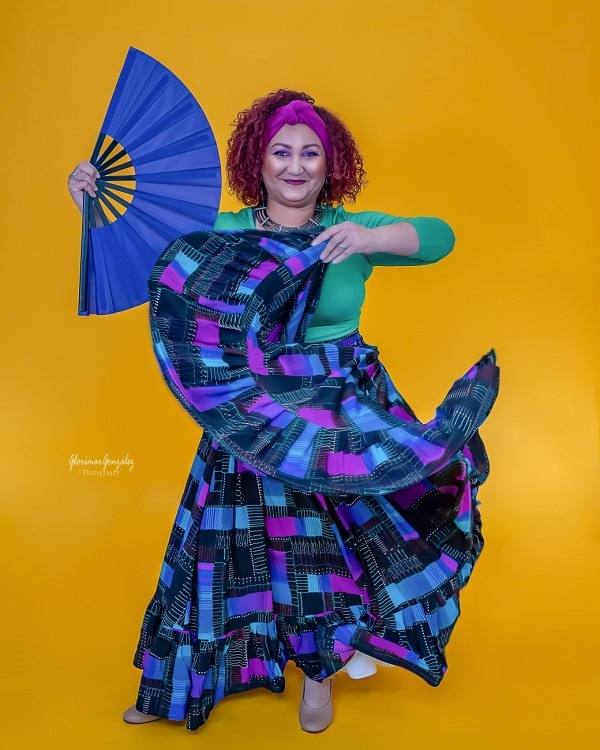
Bárbara and her bomba custome
Bárbara Liz wearing her bomba attire

Barbara Liz from the Escuela de Bomba y Plena Tata Cepeda 

Barbara Liz belongs to the seventh generation of the Cepeda family and her children, who also dance bomba and plena, would belong to the eighth generation. She says that each family member has tried to endorse Don Rafael’s legacy in their own way. In her particular case, she has spent five years running the Escuela de Bomba y Plena Tata Cepeda in Florida, which she decided to baptize with his mother’s nickname, which is Tata, to pay tribute to her in life.   

Although the operation of her school and his mother’s are different, they usually work together in cases that require it. For example, if for some reason a student cannot pursue his education here because he is going to Puerto Rico, he can continue studying at the school located on the Island of Enchantment without any problem.   

”We didn’t have a curriculum or educational program to follow to teach bomba and plena, but my mom was responsible for creating one so that we could teach dance and percussion with a clearer methodology,” said Bárbara Liz. 

As a result of Hurricane Maria, many Puerto Rican families went to live in Florida due to the loss of their properties and material things, so the students of the school in Puerto Rico became able to enroll in the Florida school instead. It can be said that they are sister schools working together towards the same goal.   

Percussion and dance in bomba and plena  

Something Bárbara Liz wanted to highlight about this point is that many girls are enrolling in her school to learn to play percussion, something that did not happen very often. 

At other times, it was believed that percussion in bomba and plena was exclusively for men and dance for women. In more conservative versions of these genres, women only sang and men were responsible for dancing and playing instruments. 

That has been changing over time. Nowadays, there are many guys who are setting their sights on dancing and many girls are having an interest in the percussion part. Every day, the female part is becoming more and more relevant in the different areas of bomba and plena.  

In addition to all this, the institution’s teachers also teach quite a bit about the emergence and history of these two genres, so that their students are not just dedicated to playing and dancing, but also know the origin of everything they learn now.   

Differences and similarities between bomba and plena 

When we wanted to know a little about the differences and similarities between bomba and plena, Bárbara Liz explained to us that both genres were very different from each other. The rhythms, the instruments used and the ways of dancing have many differences in both.   

In the case of bomba, this is the oldest musical genre and dance in Puerto Rico and is born from a barrel-shaped instrument, which is one of its most representative elements. It is also known as the ”first sung newspaper”.  

Similarly, it is the dancer who sets the pace for the percussionist, not the other way around. The musician should be guided by the footsteps of the dancer, which often gives rise to completely new rhythms.   

Plena was born a few years later with certain variants of bomba and is called the ”second sung newspaper”. It was plena that inspired several of the Cepeda family members to create their own groups such as the Grupo Gracimá (a variant of bomba), which originated in the school owned by Margarita in Puerto Rico.  

In contrast, Bárbara Liz named her professional group Kalindá in honor of one of the most popular variants of bomba. 
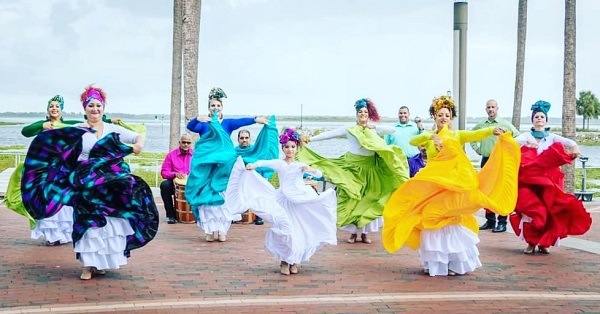
Bárbara and Kalindá
Bárbara Liz and her professional group Kalindá

Tributes 

Something that makes Bárbara Liz very proud is that both she and her mother had the opportunity to go to the Smithsonian National Museum in March to pay tribute to their ancestors and the genres that her great-grandfather promoted so much in life. 

At the time, Don Rafael donated some items related to bomba and plena such as barrels, a güiro and barrels However, some bomba costumes were missing to complete the collection, which were given by Bárbara Liz and Margarita to be exhibited in the institution, so anyone interested in learning more about Puerto Rican genres and musical culture can visit the place and cherish these valuables. 

Read also: Yani Borrell ‘‘El Elegante de La Salsa”

North America / November 2023

Bomba and plenaLadama

Lengaïa Salsa Brava

Patricio Angulo and Rumbaché

Pichie Pérez

Thumbnail about the salsa museum

Las Maracas promo

Martinez attorney

Canada flag

CANADA

DIRECTORY OF NIGHTCLUBS

Dirty Martini
2075 Winston Park Dr Oakville, ON, Canada L6H 6P5

El Rancho
430 College St Toronto, ON, Canada M5T 1T3

LULA LOUNGE
1585 Dundas West Toronto, ON, Canada M6K1T9

Marlowe Restaurant and Bar
155 York Blvd Richmond Hill, ON, Canada L4B 3B4

Sahara Restaurant
1855 Dundas St E, Mississauga ON L4X 1M1

Smokeshow BBQ & Brew
744 Mt Pleasant Rd Toronto, ON, Canada M4S 2N6

Mangos Kitchen Bar
744 Mt Pleasant Rd Toronto, ON, Canada M4S 2N6

Baza
Baza Dance Studios
1304 Seymour Street Vancouver
BC, Canada V6B 3P3
+1 778-379-2292

Studio Nightclub
919 Granville street Vancouver, BC, Canada V6Z 1L3


United States flag

UNITED STATES

DIRECTORY OF NIGHTCLUBS

CALIFORNIA FLORIDA  ILLINOIS
MICHIGAN NEW JERSEY NEW YORK
 OHIO PENNSYLVANIA TEXAS
VIRGINIA WASHINGTON


NOVEMBER 2023 FESTIVALS

California US circular flag
CALIFORNIA
San Francisco SBK

San Francisco SBK Congress 2023

Nov 17 / 19, 2023

1333 Old Bayshore Hwy, Burlingame

CA, United States, 94010

Georgia US, circular flag
GEORGIA
Atlanta Love Bachata

Love Bachata Congress 2023

Nov 23 / 27,2023

165 Courtland St NE, Atlanta

GA, United States, 30303

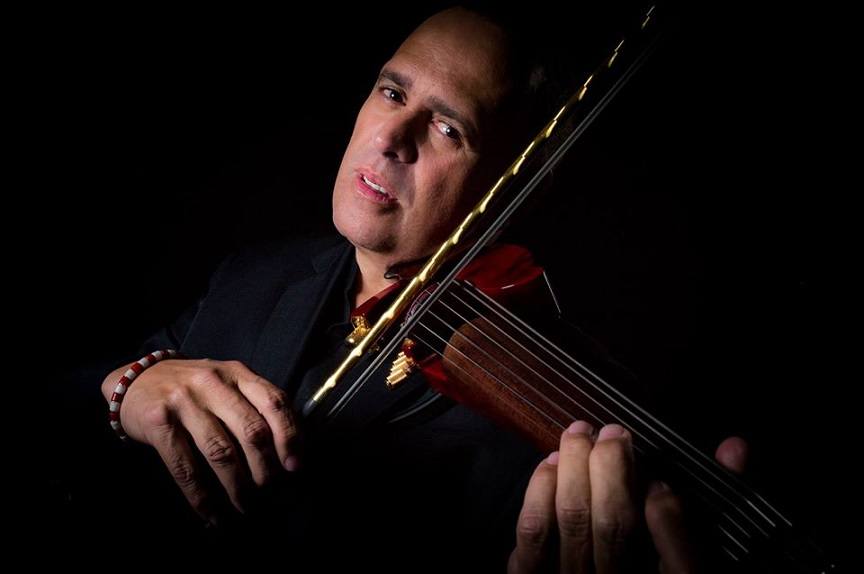
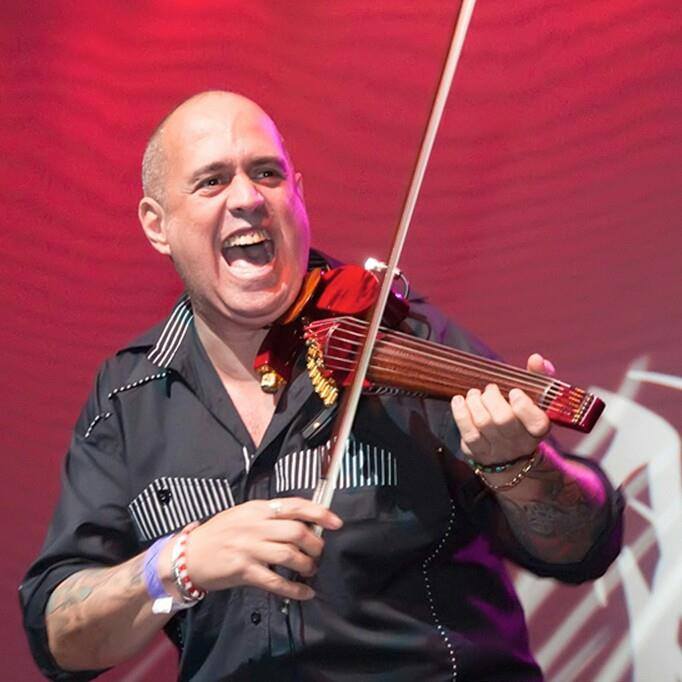
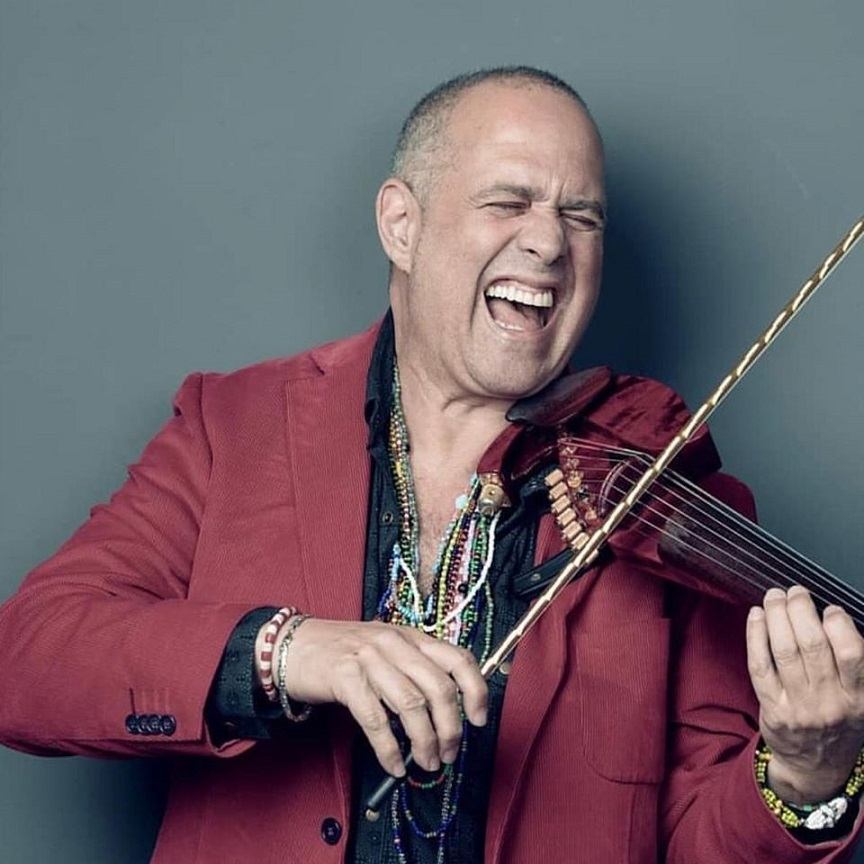
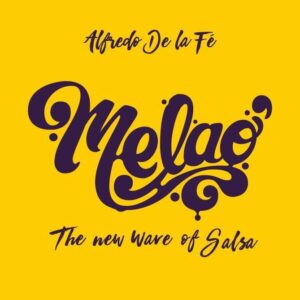
Alfredo De La Fe, is responsible for transforming the violin for Latin Music

Latin America/ Colombia/ Cali

Alfredo de la Fe is a Cuban-American violinist based in New York, who also lives in Colombia.

He is responsible for transforming the violin into a sound much more suitable for Salsa and Latin music, as well as having manufactured and patented his own violin. De la Fe began studying the violin at the Amadeo Roldán Conservatory in Havana in 1962.

Two years later, he receives a scholarship to enter the Warsaw Conservatory, in Poland.

In 1965, he soloed compositions by Mendelssohn and Tchaikovsky with the Metropolitan Opera Orchestra at Carnegie Hall.

Alfredo De La Fe playing the violin

A scholarship at Juilliard opened new doors for him. De la Fe began his professional career, at the age of twelve, when he switched from classical music to Salsa, and accepted an invitation to join charanga legend José Fajardo’s Orchestra.

In 1972, he joined the Eddie Palmieri orchestra. He was a member of the group for a very short period, temporarily moving to San Francisco, where he met Santana. Returning to New York, De la Fe joined Típica ’73 in 1977. Two years later, he released his debut solo album, Alfredo.

In 1980, De la Fe signed with the Fania All-Stars, and produced thirty-two albums for Fania Records. His second solo album, Charanga ’80, was released in the same year.

In 1981, De la Fe became musical director of Tito Puente’s Latin Percussion Jazz Ensemble.

The following year, he confirmed his solo career, signing with Taboga, for whom he recorded the album Triunfo. He settled in Colombia in 1983, and signed with Philips; As a result of this, he released three albums: Made in Colombia, Dancing in the Tropics and Alfredo de la Fe Vallenato, at the end of the 80s.

In 1989, De la Fe signed with Discos Fuentes. Although he was one of the members of the Fania All-Stars for 1995, De la Fe continued his solo career.

He signed with Sony Music in 1997. Two years later, he toured with his own orchestra, appearing at festivals in Denmark, the Netherlands, France, Turkey, and Belgium, and reuniting with Eddie Palmieri and his orchestra for a European tour.

In 2002, after several years in Europe, Alfredo moved back to New York and visited the US with his New York band, led by pianist Israel Tanenbaum.

Alfredo De La Fe
Alfredo De La Fe

Other musicians including bassist Máximo Rodríguez, percussionists Tony Escapa and Johnny Pequeño Rivero, and autistic Andrea Brachfeld.

Discography Solo albums

  • 1979 : “Alfredo”
  • 1980 : “Alfredo de la Fe y la charanga 1980”
  • 1981 : “Para África con amor”
  • 1982 : “Triunfo”
  • 1984 : “Made in Colombia”
  • 1985 : “Alfredo de la Fe Vallenato”
  • 1990 : “Salsa”
  • 1990 : “Los violines de Alfredo de la Fe”
  • 1992: “Los violines de Alfredo de la Fe vol. 2: Sentir de Cuba”.
  • 1993 : “Con toda la salsa Alfredo de la Fe”
  • 1995 : “La salsa de los dioses”
  • 2000 : “Latitudes”
  • 2006 : “Alfredo de la Fe y Fruko (La Llave de Oro)”
Alfredo De La Fe - Photo
Alfredo De La Fe – Photo

Session Artist and Collaborations:

    • 1973 : “The Sun de música latina” por Eddie Palmieri & Amigos Con Lalo Rodríguez
    • 1976 : “De ti depende” por Héctor Lavoe
    • 1977 : “Selecciones clásicas” por José Fajardo
    • 1977 : “El Baquine de Angelitos Negros” por Willie Colón
    • 1978 : “Comedia” por Héctor Lavoe
    • 1979 : “Típica 73 en Cuba – Intercambio cultural” por Típica 73
  • 1979 : ” Necesito tú” por Sylvester
  • 1980 : “Charangueando con la Típica 73” por Típica 73
  • 1980 : “Señor Charanga” por José Fajardo
  • 1982 : “Encima Broadway” por Tito Puento
  • 1997 : “Bravo” por Fania Todo-Estrellas
  • 2001 : “Diferente” por José Alberto (El Canario)


Melao
Melao

Mario Bauza

North America / United States / New York

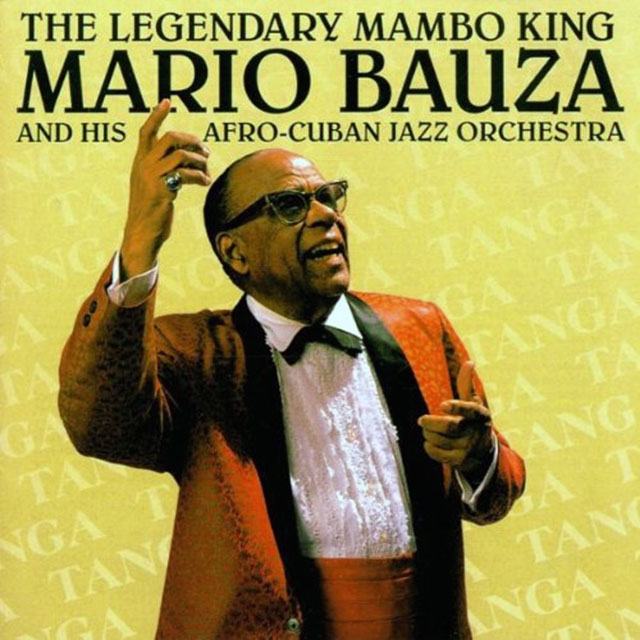
Mario Bauza, Pioneer of Afro-Cuban jazz in New York, Clarinetist, saxophonist, trumpeter and arranger

Mario Bauzá (Havana, April 28, 1911 – Manhattan, July 11, 1993) was a Cuban saxophonist, clarinetist, trumpeter, arranger and composer.

Known above all for having been the musical director of the Machito orchestra (of whom he was also a brother-in-law), he was a pioneer of what is now known as Afro-Cuban jazz.

Mario Bauza The Legendary Mambo King
Mario Bauza Pioneer of Afro-Cuban jazz in New York

Bauzá played the clarinet in the Havana Philharmonic Orchestra. However, after traveling to New York in 1927 with the Antonio María Romeu orchestra, he was so impressed by the Big Bands of Paul Whiteman, Fletcher Henderson and Tommy Dorsey, and by the Harlem music revues, that in 1930 he decided to emigrate definitively to USA.

During the trip, he became friends with Antonio Machín. Mario Bauzá would return on the same boat in which Don Aspiazu’s orchestra was travelling, who immediately began the arrangements to record El manisero.

Upon arriving in New York, Bauzá went to live in Harlem with his cousin, the trumpeter René Endreira. Bauzá began playing the saxophone at house parties with pianist Lucky Roberts and began to absorb African-American culture.

Mario Bauza
Pioneer of Afro-Cuban jazz in New York

Between 1930 and 1931, he was a trumpeter in the Antonio Machín quartet and made important recordings with this group in New York City. Anecdotally, it is said that he had learned to play the trumpet in just two weeks.

His first jobs were with the orchestras of Cass Carr, Noble Sissle and Sam Wooding.

In 1933 he entered Chick Webb’s orchestra as first trumpet, where he ended up as music director. He then worked with Don Redman and Fletcher Henderson, eventually landing Cab Calloway.

Being in that band, Mario brought the young trumpeter Dizzy Gillespie to the orchestra.

Bauzá married Estela Gutiérrez, sister of Francisco Raúl Gutiérrez Grillo, known as Machito.

On December 3, 1940, he debuted with Machito at the Park Plaza, a dance hall, with the Afro-Cubans, later working for almost four years at the La Conga club.

Bauzá works for Machito as artistic director, taking care of the arrangements and hiring the musicians.

The style of the Afro-Cubans mixes the son montuno of Cuba with features of swing bands.

Mario Bauzá Pioneer of Afro-Cuban jazz in New York

Thanks to this, musicians like Dizzy Gillespie or James Moody introduced Afro-Cuban rhythms into jazz, starting in 1947.

He became interested in jazz when he heard Frankie Trumbauer play the saxophone performing Rhapsody in blue with the Paul Whiteman orchestra.

In the forties, Mario will develop the sound of Afro-Cuban jazz. His work as a clarinetist, trumpeter, saxophonist and arranger in the Machito orchestra constitutes one of the main pillars in the emergence and development of that Cuban genre.

Master Timbalero Luisito Quintero

North America / United States / New Jersey

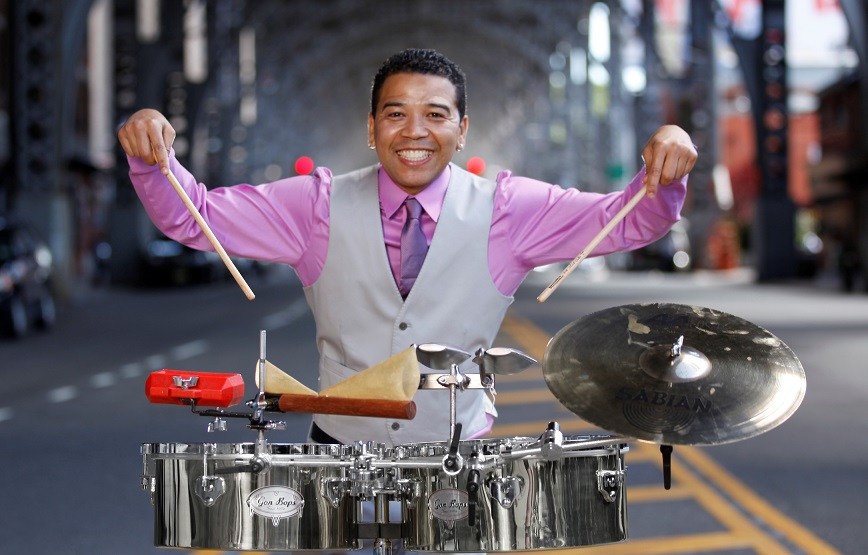
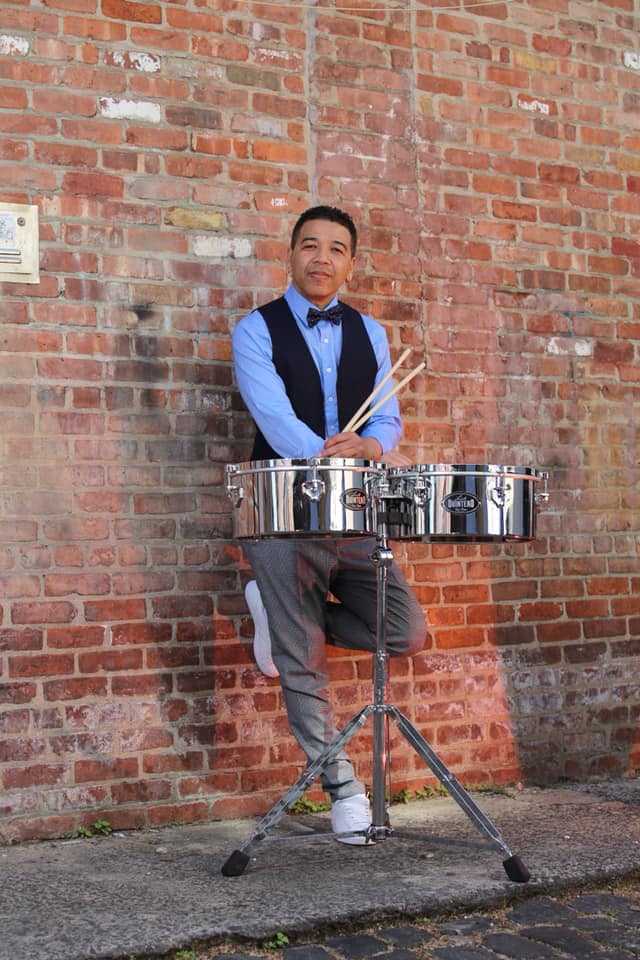
Master Timbalero Luisito Quintero hails from Caracas, Venezuela.

Where his father, a respected percussionist in his own right, tutored and encouraged his son to become one of music’s best percussionists.

Luisito comes from a long line of outstanding musicians including his uncle, Carlos Nene Quintero and cousin Robert Quintero.

He studied at the respected Orquesta Sinfonica de Venezuela (The Symphonic Orchestra of Venezuela) and his percussion technique soon garnered attention from his colleagues.

Master Timbalero Luisito Quintero
Master Timbalero Luisito Quintero – Photo

Luisito joined the popular music ensembles Grupo Guaco and Oscar D’Leon, where he enjoyed worldwide acclaim.

Luisito Quintero has worked and recorded with many of music’s legends including The Rolling Stones, Vanessa Williams, Paul Simon, Santana, Jack De Johnette, David Sanborn, George Benson, Joe Sample, Bill Cosby, the late Celia Cruz and Tito Puente, Cachao, Eddie Palmieri, Marc Anthony, Gloria Estefan, Richard Bona, Ravi Coltrane, Nathalie Cole, Diana Krall, Giovanni Hidalgo, Toshiko Akiyoshi, Spanish Harlem, Willie Colon and countless others.  One of his recent projects finds him as musical director for Louie Vega and the Elements of Life Band, as well as extensive work with Jack DeJohnette’s Latin Project.  He has also had the privilege to tour and record with the Tony & Grammy award winning Jazz artist, Dee Dee Bridgewater.

Quintero himself has earned more than thirteen Grammy certificate awards for his participation in numerous recordings.

Luisito Quintero has two solo projects under Vega Records/BBE, entitled “Percussion Maddness” and “Percussion Maddness Revisited”.

Timbalero - Luisito Quintero
Master Timbalero Luisito Quintero – Photo

Scheduled for release in the spring of 2013, his upcoming production entitled “3rd Element”, features guest artists Gato Barbieri, Oscar Hernandez, Doug Beavers, Richie Flores, Steve Khan, Reynaldo Jorge and his cousin Roberto Quintero.  Currently, Luisito is the touring & recording percussionist for the legendary jazz pianist Chick Corea and for Spanish Harlem.

  • « Go to Previous Page
  • Page 1
  • Interim pages omitted …
  • Page 62
  • Page 63
  • Page 64
  • Page 65
  • Page 66
  • Interim pages omitted …
  • Page 135
  • Go to Next Page »

International Salsa Magazine (ISM) is a monthly publication about Salsa activities around the world, that has been publishing since 2007. It is a world network of volunteers coordinated by ISM Magazine. We are working to strengthen all the events by working together.