• Skip to primary navigation
  • Skip to main content

International Salsa Magazine

  • HOME
  • Previous editions
    • 2026
      • ISM / March 2026
      • ISM / February 2026
      • ISM / January 2026
    • 2025
      • ISM / December 2025
      • ISM / November 2025
      • ISM / October 2025
      • ISM / September 2025
      • ISM / August 2025
      • ISM / July 2025
      • ISM / June 2025
      • ISM / May2025
      • ISM / April 2025
      • ISM / March 2025
      • ISM / February 2025
      • ISM / January 2025
    • 2024
      • ISM / December 2024
      • ISM / November 2024
      • ISM / October 2024
      • ISM / September 2024
      • ISM / August 2024
      • ISM / July 2024
      • ISM / June 2024
      • ISM / May 2024
      • ISM / April 2024
      • ISM / March 2024
      • ISM / February 2024
      • ISM / January 2024
    • 2023
      • ISM / December 2023
      • ISM / November 2023
      • ISM / October 2023
      • ISM – September 2023
      • ISM – August 2023
      • ISM July 2023
      • ISM Edition June 2023
      • ISM – May 2023
      • ISM April 2023
      • ISM March 2023
      • ISM February 2023
      • ISM January 2023
    • 2022
      • ISM December 2022
      • ISM November 2022
      • ISM October 2022
      • ISM September 2022
      • ISM August 2022
      • ISM July 2022
      • ISM June 2022
      • ISM May 2022
      • ISM February 2022
      • ISM January 2022
    • 2021
      • ISM December 2021
      • ISM November 2021
      • ISM October – 2021
      • ISM September 2021
      • ISM August 2021
      • ISM July 2021
      • ISM May 2021
      • ISM April 2021
      • ISM June 2021
      • ISM March 2021
      • ISM February 2021
      • ISM January 2021
    • 2020
      • ISM December 2020
      • ISM November 2020
      • ISM October 2020
      • ISM September 2020
      • ISM August 2020
      • ISM July 2020
      • ISM June 2020
      • ISM May 2020
      • ISM April 2020
      • ISM March 2020
      • ISM February 2020
      • ISM January 2020
    • 2019
      • ISM December 2019
      • ISM November 2019
      • ISM October 2019
      • ISM Septembre 2019
      • ISM August 2019
      • ISM July 2019
      • ISM June 2019
  • Spanish
  • Download Salsa App
    • Android
    • Apple

Search Results for: Van Van

EUROPE / November 2023

Calibrated maracasBill Martinez

fRANCE FLAG
FRANCE
DIRECTORY OF NIGHTCLUBS

Salsabor
Salsabor Paris
31 rue Chapon 75003
Paris, France
+33 1 42 71 61 61

Selsero
salseroparis
9 Rue du Petit Pont, 75005
Paris, France
+33 6 50 16 74 76

La Peña
La Peña Saint Germain
3 passage de la Petite Boucherie 75006
Paris, France
+33 1 46 33 19 89

Cubana
Cubana Café
47 rue Vavin 75006
Paris, France
+33 1 40 46 80 81

Canela
Canela Club Latino Paris
77 Rue du Faubourg du temple 75010
Paris, France
+ 33 6 46 78 28 35

Balajo
Le Balajo
9 rue de Lappe 75011
Paris, France
+ 33 01 47 00 07 87

La Pachanga
La Pachanga Officiel
8, rue vandamme 75014
Paris, France
+33 1 40 47 63 69

Pachamama
Pachamama PARIS
46 rue du Faubourg Saint Antoine 75012
Paris, France
+33 1 55 78 10 00

Cuba Compagnie
Cuba Compagnie Café
48 BD Beaumarchais 75011
Paris, France
+33 1 48 06 07 11

O'Sullivans By The Mil
O’Sullivans Backstage By The Mill
92 Boulevard de Clichy 75018
Paris, France
+33 1 53 09 08 49

Germany circular Flag
GERMANY
DIRECTORY OF NIGHTCLUBS

Clärchens
Clärchens Ballhaus
Auguststraße 24
10117 Berlin, Germany
+49 30 555785440

Havanna
Havanna Berlin
Hauptstr. 30
10827 Berlin-Schöneberg, Germany
49 30 78899655

SODA
Soda Club Berlin
Schönhauser Allee 36
10435 Berlin, Germany
+49 30 44056071

Zapatissimo
Zapatissimo Dance School
Kolonnenstrasse 29
10829 Berlin, Germany
+49 176 20470772

Brotfabrik
Brotfabrik Frankfurt
Bachmannstr. 2-4
60488 Frankfurt, Germany
+49 69 24790800

Latin Palace Changó
Latin Palace Changó
Münchener Strasse 57
60329 Frankfurt, Germany
+49 69 27220807

Cascadas
Cascadas
Ferdinandstr. 12
20095 Hamburg-Mitte, Germany

Spain Flag
SPAIN
DIRECTORY OF NIGHTCLUBS

ACM City
ACM CitY
Carrer Can Pallarès, 2, 08290 Cerdanyola del Vallès
Barcelona, Spain
+34 675 30 26 64

Antilla
Antilla Barcelona
C/ d’Aragó, 141
08015 Barcelona, Spain
+34 610 90 05 58

Mojito
Mojito Club
Rosselló, 217
08008 Barcelona, Spain
+34 654 20 10 06

Morena
Morena Barcelona
calle 11 num.29
08860 Castelldefels, Spain
+34 691 46 57 72

Que Chimba
¡Qué Chimba!
Av. del Vallès, 117, 08223 Terrassa
Barcelona, Spain

Seven Dance
Seven Dance (Dio Club)
Carrer del Perill 10 08012
Barcelona, Spain
+34 934 51 61 18

Azucar
Azúcar SalsaDisco
Calle de Atocha, 107 28012
Madrid, Spain
+34 639 64 29 06

El Son
Discoteca El Son
C. de la Victoria, 6, 28012
Madrid, Spain
+34 671 05 67 91

Prisma Discoteca
Discoteca Prisma
C. de Alcalá, 192, 28028
Madrid, Spain
+34 638 92 16 98

Sala Olvido Madrid
Sala Olvido
C/ Olvido 15 28026
Madrid, Spain
+34 619 22 29 19

The Host Madrid
The Host
C/ Ferraz nº 38 28008
Madrid, Spain
+34 918 05 36 48

Disco Bar Cuba Live
Cuba Live
Ramón y cajal número 2 07011
Palma de Mallorca, Spain
+34 618 86 78 20

Discoteca El Edén Boliviano
El Edén Boliviano
Carrer Gremi de Tintorers, 49A, 07009
Palma, Illes Balears, Spain
+34 676 64 68 26

United Kingdom circular flag
UNITED KINGDOM
DIRECTORY OF NIGHTCLUBS

Rosies
Rosies Birmingham
259-262 Broad St B1 2HF
Birmingham, UK
+44 121 632 4936

Revolucion de Cuba
Revolucion de Cuba Leeds
64-68 Call Lane LS1 6DT
Leeds, UK
+44 113 350 6556

All Stars Salsa
All Stars Salsa Fridays
122 Oakleigh Road North N20 9EZ
London, UK
+44 7956 941172

Salsa Soho
Bar Salsa Soho
96 Charing Cross Rd WC2H 0JG
London, UK
+44 20 7379 3277

Salsa Temple
Bar Salsa Temple
Victoria Embankment, Temple WC2R 2PH
London, UK
+44 20 7395 3690

Earl's Court
Earl’s Court Salsa & Bachata Club
Earl’s Court Salsa & Bachata, St Philips Church, Upper Grand Hall, Earls Court Road W86QH
Earl’s Court, UK
+44 7831 715368

Juju's
JUJU’s Bar & Stage
Ely’s Yard 15 Hanbury Street E1 6QR
London, UK
020 7770 6109

LightHouse
The LightHouse Bar & Club
62 Rivington Street EC2A 3AY
London, UK
+44 20 3325 9745

Wimbledon Salsa Bachata
Wimbledon Salsa & Bachata Club
Drake House, 44 ST George Road, SW19 4ED
Wimbledon, UK
+44 7831 715368


NOVEMBER 2023 FESTIVALS

fRANCE FLAG
FRANCE
Providance Afro Latin Festival

Providance Afro latin Festival

Nov 24 2023 – Nov 26 2023

Résidence Club Odalys Les Océanides
395 Bd Plage de l’Argentière

Londe-les-Maures, France, 83250

Hungary flag
HUNGARY
All Stars

All Stars Festival

Nov 02 2023 – Nov 06 2023

The Aquincum Hotel
Árpád fejedelem útja 94,

Budapest, Hungary, H-1036

Ireland flag
IRELAND
Carnaval Dance

Carnaval Dance Festival

Nov 17 2023 – Nov 19 2023

Liffey Trust Studios, 117-126 Sheriff Street Upper, North Dock

Dublin, Ireland, D01 HW96

ITALY
A toda cuba

A Toda Cuba Festival

Nov 17 2023 – Nov 19 2023

Hotel Delta Florence
Via Vittorio Emanuele 3

Florence, Italy, 50041

Poland flag
POLAND
El Sol

El Sol Salsa Festival

Nov 09 2023 – Nov 13 2023

MCK International Congres Center in Katowice
Plac Sławika i Antalla 1

Katowice, Poland, 40-163

Romania Flag
RUMANIA
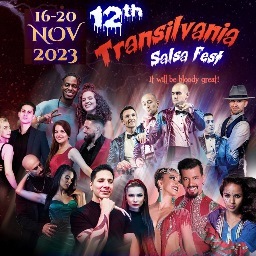
Transilvania

Transilvania Salsa Fest

Nov 16 2023 – Nov 19 2023

Grand Hotel Napoca
Str. Octavian Goga nr.1.

Cluj-Napoca , Romania, 400698

Spain Flag
SPAIN
Shine Mambo

Shine Mambo Madrid

Nov 24 2023 – Nov 26 2023

La Princesa Sercotel Hotel
Ctra, M-506, Km. 9

Madrid, Spain, 28921

Asia / November 2023

Calibrated maracasBill Martinez

Japan circular flag
JAPAN

DIRECTORY OF NIGHTCLUBS

Bar Mirage
Bar Mirage
5F VORT Roppongi Briller, 3-14-14 Roppongi, Minato-ku
Tokyo 106-0032, Japan
+03-5860-6946

Fiesta
Fiesta Latin Spot Bar
3F, 1 Chome-14-6 Kabukicho, Shinjuku City
Tokyo 160-0021, Japan
+81 90-1086-2878

El Cafe Latino Tokyo
El Cafe Latino
3 Chome-15-24 Roppongi, Minato City
Tokyo 106-0032, Japan
+81 3-3402-8989

JBA
Studio JBA
11-8 HAT Chuo-ku
Chuo City, Tokio 103-0011, Japan
+81 3 62310638

jsdc
Japan Social Dance Club
1-19-5-705 Shibuya-ku,
Tokyo 150-0042, Japan
+81 3-5939-7262

Studio Pepe
Studio pepe
7-17-12 Minato-ku
Tokyo106-0032, Japan
+81 090-4705-715

La Tropi Azabu
La Tropi Azabu
3F Roppongi Azelea Bldf. 1-3-6 Nishi-Azabu, Minato-ku
Tokyo1060031, Japan
+81 3-6804-5776

Latin Club Leon
Latin Club Leon
5-17-6 B1 Shinjuku, Shinjuku-ku
TOKYO 160-0022, Japan
+81 90-6474-5638

Hong Kong `circular flag
HONG KONG
DIRECTORY OF NIGHTCLUBS

PCL
Petticoat Lane
8F, California Tower, 30-32 D’Aguilar Street, Central
Hong Kong, Hong Kong
+852 2808 2893

DANCETRINITY
Dancetrinity
8/F, Fung Woo Centre, 279-281 Des Voeux Road Central
Hong Kong, Hong Kong
+852 9634 9770

Sole Mio Restaurant
Sole Mio
Upper Ground Floor, 51 Elgin Street, Soho. Central
Hong Kong, Hong Kong
+852 5508 8244

Solar LKF
Solar LKF
+2F, Ho Lee Commercial Building, 38-44 D’Aguilar Street
+Central District, Hong Kong 0000
+852 65467339

After Work Salsa Party
Pong, 1st Floor, Ho Lee Commercial Building, 38-44 D’Aquilar Street, Lan Kwai
Fong Central & Western District, Hong Kong
+852 6389 6213

ISRAEL

DIRECTORY OF NIGHTCLUBS

Havana Music Club
Havana Music Club
Yigal Alon St 126
Tel Aviv-Yafo, Israel
+972 3-562-3456

Salsa Carlos
Salsa Carlos
Yegi’a Kapayim St 10, Tel Aviv-Yafo, Israel
+972 54-573-7173

Thailand circular flag
THAILAND
DIRECTORY OF NIGHTCLUBS

bAFROS lOUNGE
Bafros
Sugar Club Complex Sukhumvit Soi 11, Bangkok 10110
Bangkok, Thailand
+66 63 039 8700

Havana Social Cocktail Bar
Havana Social
1/1 Sukhumvit Rd. Soi 11
Bangkok, Thailand
+66 2 821 6111

MillionSpace
MillionSpace Rooftop Bar & Bristro
Soi Sukhumvit 32, Khlong Tan, Khlong Toei
Bangkok 10110, Thailand
+66 83 898 9939
ASIA FESTIVALS IN NOVEMBER 2023

Nepal circular flag
NEPAL
nEPAL lATIN dANCE

Nepal Latin Dance Fiesta

Nov 16 2023 – Nov 19 2023

United World Trade Center
Tripureshwore

Katmandu, Nepal, 44600

Thailand circular flag
THAILAND
Salsa Bangkok Fiesta 2023

Salsa Bangkok Fiesta

Nov 02 / 05 2023

Quaint Bangkok : Brasserie Bar Venue 23 soi sukhumvit 61 Klongton-nuea Wattana

Bangkok, Thailand


Lengaïa Salsa Brava is killing it in Montréal

Latin talent can be found where you might least expect it and, this time we found it in the city of Montreal, Canada, a place that is cultivating an increasingly large and vigorous Latin music scene. On this occasion, we were thrilled to be able to talk to Giany-Frantz Huyghues-Despointes, who is the leader and founder of the orchestra Lengaïa Salsa Brava.

Lengaïa Salsa Brava is a 12-member salsa orchestra that was created in 2012 by Giany, who was also a trombonist and had some experience in the world of music before daring to create his own group. 

The effort of all its members has enabled them to collaborate with great performers of the genre and win important awards such as the Canada Latin Awards in the category of ”Salsa Group of the Year” in a row in 2017 and 2018 respectively. 

Lengaïa Salsa Brava has also performed approximately 30 concerts a year since its foundation and has participated in important festivals such as Toronto Salsa Festival, Festival Nuit Blanche de Montreal, Nuits d’Afrique, among others. The group was greatly helped by the fact that its members come from different countries such as French Guyana, Cuba, Colombia, Peru, Quebec, Spain and Venezuela. 

This interesting journey shows us how hard this group has worked to achieve a place within the industry and all the potential they have to achieve much more than what was obtained. Today, Giany, its founder, shares a little more about himself and his orchestra Lengaïa Salsa Brava.

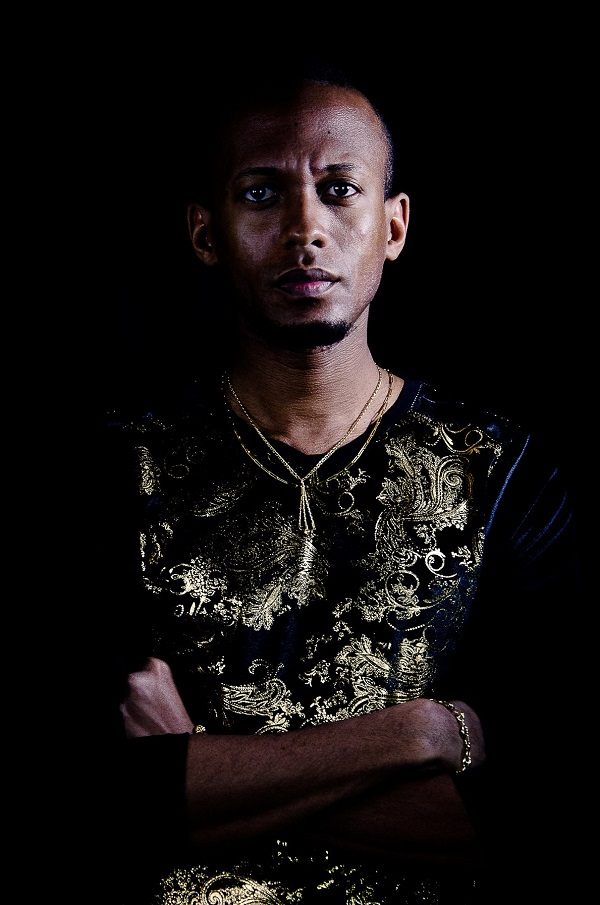
Giany, founder of Lengaïa Salsa Brava
Giany Huyghues Despointes, director and founder of Lengaïa Salsa Brava

Giany’s beginnings as a musician

Although the trombone is the instrument for which Giany is known, he started playing the trumpet from 10 years of age, which is when he began his interest in this branch of the art.

An important point is that in French Guyana, the country where Giany was born, salsa is not a predominant genre, since the most played by the French Guyanese is the mazurka, which is very similar to the Haitian compas. In the case of Giany’s family, they listened to a bit of everything, including salsa.

A turning point for the artist was watching Celia Cruz singing on tv one day. The musician had never heard the Cuban singer before and it was an incredible experience for him, as her deep voice, colorful outfit and wig caught his attention at the time. 

Because of her deep voice, he thought she was a man, but his mother explained to him who Celia was and, months later, took him to a concert to see her live. That performance of ”La Guarachera de Cuba” marked him so much that he would begin to lean towards music in the future. Today, he says that Celia is a spiritual mother to him, as she was his great inspiration. 

Along with being a fan of the Cuban singer, he wanted to learn to play instruments and initially opted for the piano and the guitar, but that changed when his Spanish teacher at school gave him a trumpet and he discovered that he really liked to play it.

Some time later, he graduated from the national school of music in his country and, by the time he turned 18, Giany noticed that his musical skills excelled more with the trombone than the trumpet. This is how he decided to choose the trombone as his main instrument and so it has been to the present time.

He started playing classical music with that instrument but soon discovered that he wanted to return to the genre that captivated him when he was just a child, so he dared to create a group in France, where he studied aviation. The thing is that he went to live in Canada six months later and had to abandon the plans he had at that time.

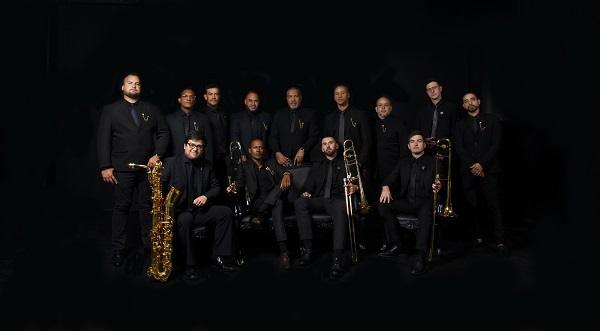
Lengaïa Salsa Brava
The whole orchestra Lengaïa Salsa Brava

Founding of Lengaïa Salsa Brava

Giany arrived in Canada with the vision to create another group in his new country of residence, but he did not know any musicians yet, so he moved into action and started placing ads on social networks and other virtual means to communicate with artists who were interested in joining his project. 

The results were amazing and there were many musicians who contacted Giany because of their interest in the concept proposed by him. With this group, he started assembling the orchestra in order to give form to what Lengaïa Salsa Brava is today. The orchestra has six years with the same staff and format it presents to the public today.

Huge number of nationalities in Lengaïa Salsa Brava 

As for the large number of nationalities living in the orchestra, Giany has said that all ”are part of a big family” hinting that national origins have not been a problem for the smooth development of the group. In addition to that, the salsa brava is a genre widely known worldwide, so the members of the orchestra knew in advance what they were getting into.

To what we must add that these guys work or have worked in other salsa brava orchestras, so they were pretty much steeped in everything related to this beautiful music. 

Giany says it is very easy to work with his musicians because they always know how to perfectly interpret what he wants.

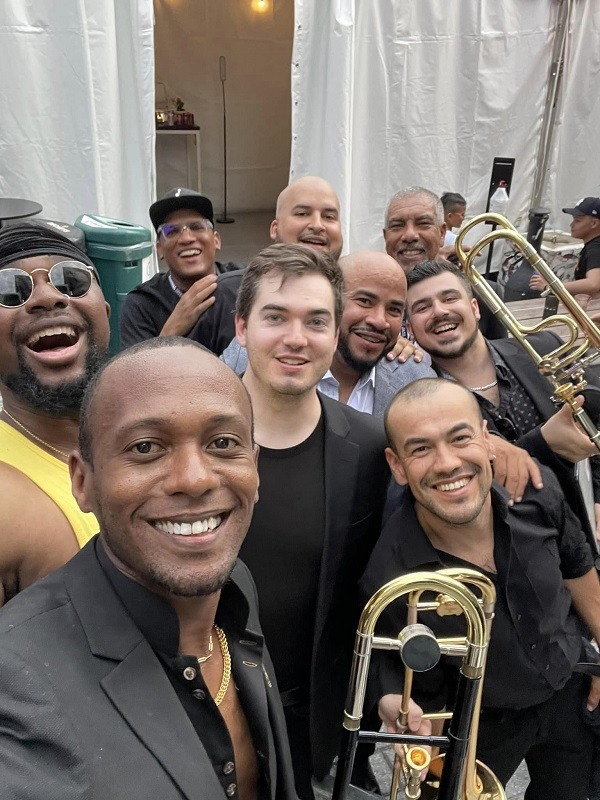
Lengaïa at one of its concerts
Lengaïa Salsa Brava at one of its concerts

Origin of the name Lengaïa Salsa Brava

When Giany was looking for a name for the group, he wanted something different and not very Latin sounding. He also wanted people to ask what the name meant, so we have fallen into the trap. 

The musician explained that he wanted something that refers to how explosive, energetic and aggressive his music is, so he chose the name inspired by a Tanzanian volcano called Ol Doinyo Lengaï that spews black lava. ”When you see a volcano exploding, you imagine something explosive and aggressive at the time. That’s what we want to reflect with our music”. Also, the fact that its lava is black is something different from other volcanoes, as is the group’s orchestration and technique,

Activities outside Lengaïa Salsa Brava

Giany wanted to emphasize that all the members of Lengaïa Salsa Brava have other jobs and work activities outside the orchestra. In his particular case, he works as a commercial pilot, but in his spare time, he devotes himself as much as he can to his great passion which is music. 

So far, Giany and the other members of the orchestra are unable to live solely on music, but they do their best to keep the group together and are there to fulfill Lengaïa Salsa Brava whenever necessary.

Although the orchestra has been a second employment option, it is undeniable that this is their great vocation and the engine that moves his life, so there will always be space for it.

Read also: John Narváez and Elizabeth Rojas from Salsamania

Four nationalities united in Ladama

Talent can come from the most amazing and unexpected origins and more when we are talking about music, a branch of art from which always emerges people with a lot of potential who can completely break our schemes. This leads us to introduce the topic of a group of four young musicians and singers who joined their skills despite their apparent differences. They are the musical group Ladama.

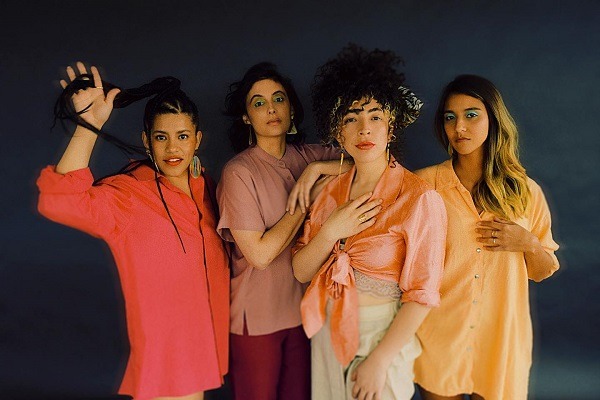
Ladama is an alternative Latin music band composed of four members of different nationalities: Venezuelan Maria Fernanda Gonzalez, Brazilian Lara Klaus, Colombian Daniela Serna and American Sara Lucas. 

Three of the four members of the group spoke exclusively with International Salsa Magazine and this report will show some of the topics covered during this pleasant conversation. 

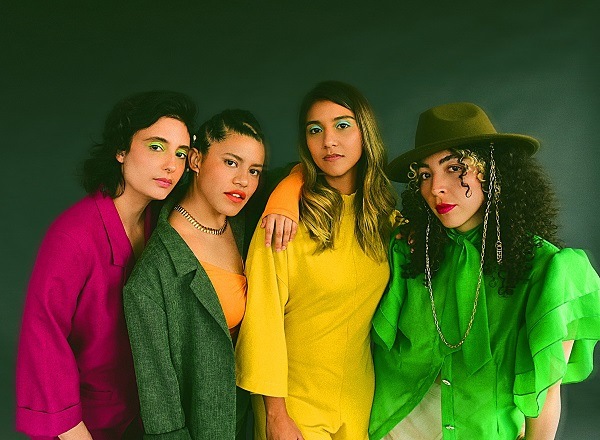
Sara, María, Lara, and Daniela from Ladama
From right to left, Sara Lucas, María Fernanda González, Lara Klaus and Daniela Serna

Origins of Ladama as a group 

The conversation was started by Lara and Dani, who explained a bit about the rise and concept of the band. The group was created in 2014 while the girls were doing an artistic residency known as OneBeat, which was sponsored by the U.S. Department of State. They were selected to represent their respective countries, which led them to socialize with each other and discover the great chemistry between them because of the language and genres they played. 

Since OneBeat was an initiative towards cultural exchange between artists and offered the necessary technical equipment to record music, they took full advantage of this space to get to know each other’s styles and see what they could do together. 

Once the month-long residency was over, each went their way, but they kept in touch via Skype a year after having met. The motivation to create a project that would encompass a musical band and teaching classes to minority communities remains intact.

They wanted to create an initiative in which community, creativity, social impact and cultural exchange would be the fundamental pillars of Ladama. It was always clear that they not only wanted to make music, but also do something that would positively impact upon society and they think they have succeeded so far. 

As for the name Ladama, it is simply a combination of the first two letters of the names of each one: ”la” comes from Lara, ”da” comes from Dani and ”ma” comes from María Fernanda. At the same time, ”La dama” in Spanish means ”The lady”, which also refers to the fact that it is an all-women group.

Ladama in a residency called OneBeat
They first met in an artistic residency known as OneBeat

How did these different origins coexist in Ladama? 

We were very impressed by the fact that all Ladama members came from different countries, so we wanted to know how this impacted the group. Lara answered that the only thing they needed was the desire to play together and move this initiative forward, which means that the origin of each one was not a problem to found the group.  

Just like every other band, each one had her own ideas and they discussed them together to know which one to choose or not. 

Their major test was given during the Rec-Beat Festival in Brazil. They arrived only a few days before the event, so they could barely rehearse and set up the repertoire. Despite the haste, they feel that everything went very fluidly, as they spent time meeting with each other and writing some songs for an occasion like this.

Given that Lara, Dani and Maria Fernanda come from Latin and tropical countries, there are certain rhythms that sound so much alike, which they took advantage of to unify them and create completely new rhythms that sound good at the same time. Lara also pointed out that these mixes are in constant change and they always try not to get stuck in the same styles.  

In addition to that, Ladama has left traditional music behind a little bit and has focused on alternative music and other genres such as pop, soul and R&B. 

Dani addressed the topic of genres by saying that they do not follow a plan in which they have something specific to play or mix. Any of their songs can go from Dominican merengue and Colombian cumbia to trap and reggaeton without any problems. They do not like to limit themselves and always seek to reach all audiences.   

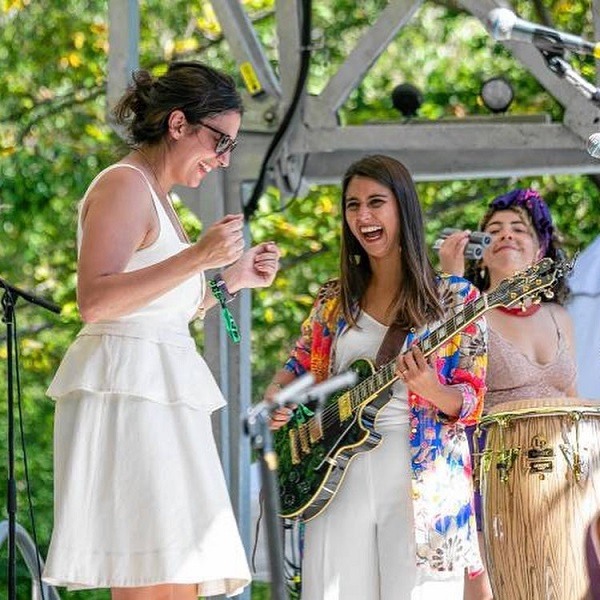
Ladama live
Ladama performing live

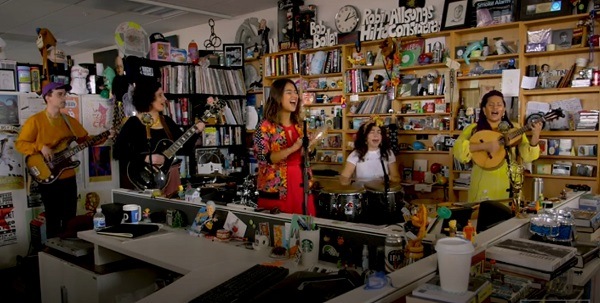
Ladama in a Tiny Desk concert series

Playing on Tiny Desk (a series of live concerts organized by the radio program All Songs Considered in the United States) is always a prestige for any artist or group that performs on that platform, which is inviting Latin singers more frequently every time.  

The girls were at a festival in Albuquerque, New Mexico, where they had the opportunity to meet the curator of Tiny Desk, who would invite Ladama to record their session in Washington D.C. shortly thereafter.

Lara considers that this was a great opportunity to spread their work due to the large number of people who always tune in to Tiny Desk, in addition to the many artists they knew after their appearance on the platform. 

For her part, María Fernanda commented that, on that same occasion, they took the opportunity to bring instruments from their own countries so that the Tiny Desk audience could get to know them. She also stressed that this session will be an important audiovisual document for history that will serve as an inspiration for other musicians in the future.

It was a great achievement after all that hard work.

Ladama on Tiny Desk
Ladama performing on Tiny Desk

Music classes for the community

The members of Ladama have also been focusing on music classes for the community at large, mostly in schools and universities. In their four countries, they have given workshops of all kinds related to music in the languages they speak, which are, English, Spanish and Portuguese. 

the artist emphasized that they always try to do this type of activities together in the very countries where they offer live performances. They have total freedom to do things separately, but they prefer to carry out these activities supporting each other.

Although they offer classes to anyone who is interested, Latino children are a very important group for Ladama, as many of them often have some problems of identity and adaptation to the United States. When they arrive at school in this country, they often disguise or even hide their Latino roots in order to fit in with their peers, so these classes are an opportunity for them to reconnect with that identity they begin to leave behind. 

These workshops and classes also serve as additional income for the group, as they can not only support themselves through tours and festivals. These educational activities are another way to diversify their earnings and have more stable inflows of money.

Read also: Juan Antón ”El Blanco” from La Clave Del Blanco

Legacy of the Cepeda family after eight generations

As all our readers may know, this is a space devoted entirely to the promotion of salsa and other derivative styles, but that does not mean we should leave out other Latin genres that also deserve to be promoted and recognized worldwide. Such is the case of bomba and plena, which we are going to talk about in the next lines.  

Bomba and plena are two Puerto Rican musical genres that initially became popular at the local level, but little by little, they have received international notoriety thanks to certain groups of Puerto Ricans who have devoted considerable effort to take their culture to as many places as possible in the world. This is how we get to the theme of the Cepeda family and all that its members have done for bomba and plena.  

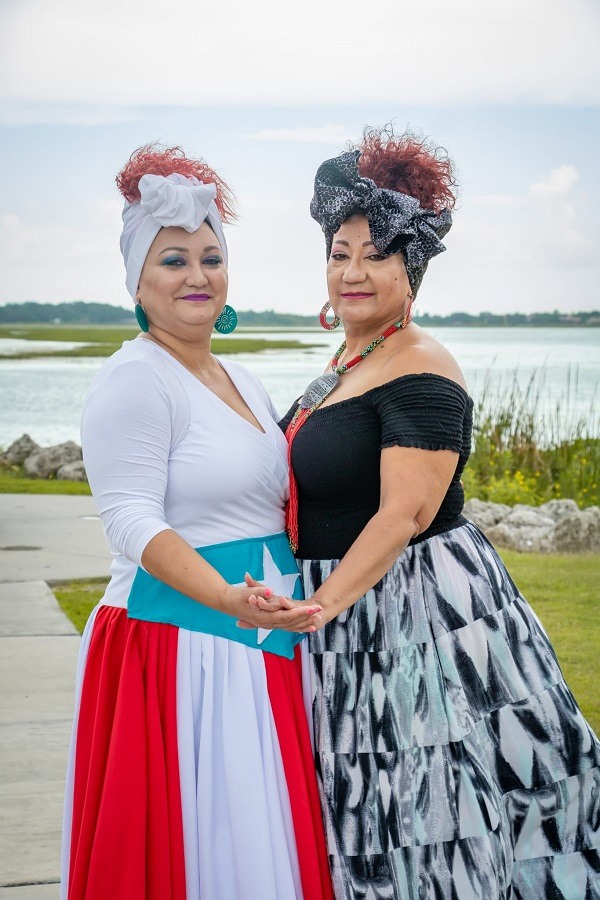
Bárbara and Margarita
Bárbara Liz Ortiz Sánchez and his mother Margarita ”Tata” Cepeda

The Cepeda Family  

The Cepeda family is a cultural institution that has been given the task of promoting bomba and plena for eight generations, so that they can be heard and danced all over the world. Don Rafael Cepeda Atiles, a professional musician and composer with an extensive career who has left a great legacy thanks to his hard work during his lifetime, which keeps current thanks to his descendants. 

When he married Caridad Brenes Caballero, he involved her in all his artistic activities and became a fundamental support for the musician in his work. The lady became a professional bomba and plena dancer, costume designer, and choreographer, which made her shine with her own light in every project directed by her talented husband.  

During his career, Don Rafael created several musical groups and, over the years, he and his wife involved their children and other family members to collaborate in what would become a renowned family business. 

One of the artist’s greatest achievements was the development of a cultural movement around the rescue and preservation of local traditions related to bomba and plena, which were thought to be lost. He was also decorated with the Smithsonian Institute’s National Endowment for the Arts Fellowship for his contributions to music. 

All this legacy remained in the hands of Don Rafael’s family and one of the first to do something about it was his son Modesto, who founded the Escuela de Bomba y Plena Don Rafael Cepeda in Santurce, Puerto Rico. This institution was created in order to teach bomba and plena in the areas of dance and percussion. 

Those who would follow these steps would be Margarita ”Tata” Cepeda, granddaughter of Don Rafael and Caridad, and Barbara Liz Ortiz Sanchez, great-granddaughter of Don Rafael and Caridad. Margarita currently runs the Escuela de Bomba y Plena Doña Caridad Brenes de Cepeda and her daughter, Barbara Liz, runs the Escuela de Bomba y Plena Tata Cepeda in the state of Florida. It was precisely the latter with whom we had the pleasure to talk about this project and the plans she has for the future.  

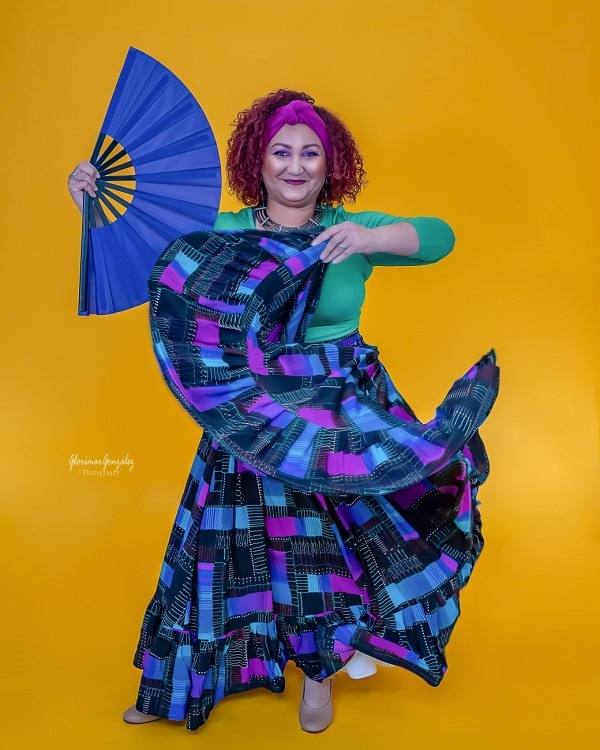
Bárbara and her bomba custome
Bárbara Liz wearing her bomba attire

Barbara Liz from the Escuela de Bomba y Plena Tata Cepeda 

Barbara Liz belongs to the seventh generation of the Cepeda family and her children, who also dance bomba and plena, would belong to the eighth generation. She says that each family member has tried to endorse Don Rafael’s legacy in their own way. In her particular case, she has spent five years running the Escuela de Bomba y Plena Tata Cepeda in Florida, which she decided to baptize with his mother’s nickname, which is Tata, to pay tribute to her in life.   

Although the operation of her school and his mother’s are different, they usually work together in cases that require it. For example, if for some reason a student cannot pursue his education here because he is going to Puerto Rico, he can continue studying at the school located on the Island of Enchantment without any problem.   

”We didn’t have a curriculum or educational program to follow to teach bomba and plena, but my mom was responsible for creating one so that we could teach dance and percussion with a clearer methodology,” said Bárbara Liz. 

As a result of Hurricane Maria, many Puerto Rican families went to live in Florida due to the loss of their properties and material things, so the students of the school in Puerto Rico became able to enroll in the Florida school instead. It can be said that they are sister schools working together towards the same goal.   

Percussion and dance in bomba and plena  

Something Bárbara Liz wanted to highlight about this point is that many girls are enrolling in her school to learn to play percussion, something that did not happen very often. 

At other times, it was believed that percussion in bomba and plena was exclusively for men and dance for women. In more conservative versions of these genres, women only sang and men were responsible for dancing and playing instruments. 

That has been changing over time. Nowadays, there are many guys who are setting their sights on dancing and many girls are having an interest in the percussion part. Every day, the female part is becoming more and more relevant in the different areas of bomba and plena.  

In addition to all this, the institution’s teachers also teach quite a bit about the emergence and history of these two genres, so that their students are not just dedicated to playing and dancing, but also know the origin of everything they learn now.   

Differences and similarities between bomba and plena 

When we wanted to know a little about the differences and similarities between bomba and plena, Bárbara Liz explained to us that both genres were very different from each other. The rhythms, the instruments used and the ways of dancing have many differences in both.   

In the case of bomba, this is the oldest musical genre and dance in Puerto Rico and is born from a barrel-shaped instrument, which is one of its most representative elements. It is also known as the ”first sung newspaper”.  

Similarly, it is the dancer who sets the pace for the percussionist, not the other way around. The musician should be guided by the footsteps of the dancer, which often gives rise to completely new rhythms.   

Plena was born a few years later with certain variants of bomba and is called the ”second sung newspaper”. It was plena that inspired several of the Cepeda family members to create their own groups such as the Grupo Gracimá (a variant of bomba), which originated in the school owned by Margarita in Puerto Rico.  

In contrast, Bárbara Liz named her professional group Kalindá in honor of one of the most popular variants of bomba. 

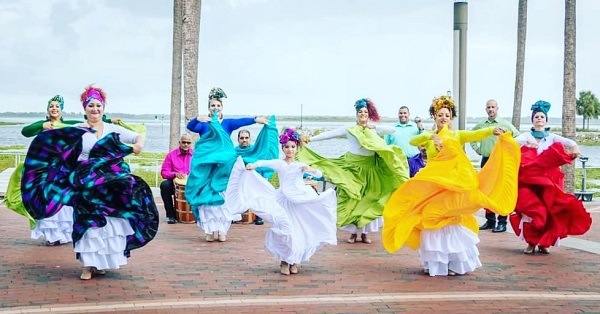
Bárbara and Kalindá
Bárbara Liz and her professional group Kalindá

Tributes 

Something that makes Bárbara Liz very proud is that both she and her mother had the opportunity to go to the Smithsonian National Museum in March to pay tribute to their ancestors and the genres that her great-grandfather promoted so much in life. 

At the time, Don Rafael donated some items related to bomba and plena such as barrels, a güiro and barrels However, some bomba costumes were missing to complete the collection, which were given by Bárbara Liz and Margarita to be exhibited in the institution, so anyone interested in learning more about Puerto Rican genres and musical culture can visit the place and cherish these valuables. 

Read also: Yani Borrell ‘‘El Elegante de La Salsa”

  • « Go to Previous Page
  • Page 1
  • Interim pages omitted …
  • Page 66
  • Page 67
  • Page 68
  • Page 69
  • Page 70
  • Interim pages omitted …
  • Page 135
  • Go to Next Page »

International Salsa Magazine (ISM) is a monthly publication about Salsa activities around the world, that has been publishing since 2007. It is a world network of volunteers coordinated by ISM Magazine. We are working to strengthen all the events by working together.