• Skip to primary navigation
  • Skip to main content

International Salsa Magazine

  • HOME
  • Previous editions
    • 2026
      • ISM / March 2026
      • ISM / February 2026
      • ISM / January 2026
    • 2025
      • ISM / December 2025
      • ISM / November 2025
      • ISM / October 2025
      • ISM / September 2025
      • ISM / August 2025
      • ISM / July 2025
      • ISM / June 2025
      • ISM / May2025
      • ISM / April 2025
      • ISM / March 2025
      • ISM / February 2025
      • ISM / January 2025
    • 2024
      • ISM / December 2024
      • ISM / November 2024
      • ISM / October 2024
      • ISM / September 2024
      • ISM / August 2024
      • ISM / July 2024
      • ISM / June 2024
      • ISM / May 2024
      • ISM / April 2024
      • ISM / March 2024
      • ISM / February 2024
      • ISM / January 2024
    • 2023
      • ISM / December 2023
      • ISM / November 2023
      • ISM / October 2023
      • ISM – September 2023
      • ISM – August 2023
      • ISM July 2023
      • ISM Edition June 2023
      • ISM – May 2023
      • ISM April 2023
      • ISM March 2023
      • ISM February 2023
      • ISM January 2023
    • 2022
      • ISM December 2022
      • ISM November 2022
      • ISM October 2022
      • ISM September 2022
      • ISM August 2022
      • ISM July 2022
      • ISM June 2022
      • ISM May 2022
      • ISM February 2022
      • ISM January 2022
    • 2021
      • ISM December 2021
      • ISM November 2021
      • ISM October – 2021
      • ISM September 2021
      • ISM August 2021
      • ISM July 2021
      • ISM May 2021
      • ISM April 2021
      • ISM June 2021
      • ISM March 2021
      • ISM February 2021
      • ISM January 2021
    • 2020
      • ISM December 2020
      • ISM November 2020
      • ISM October 2020
      • ISM September 2020
      • ISM August 2020
      • ISM July 2020
      • ISM June 2020
      • ISM May 2020
      • ISM April 2020
      • ISM March 2020
      • ISM February 2020
      • ISM January 2020
    • 2019
      • ISM December 2019
      • ISM November 2019
      • ISM October 2019
      • ISM Septembre 2019
      • ISM August 2019
      • ISM July 2019
      • ISM June 2019
  • Download Salsa App
    • Android
    • Apple
  • Spanish

Search Results for: Venezuela

Adrian Suarez Composer, arranger, trombonist and percussionist

Trombonist Adrian Suarez’s musical career began when he was very young at a music school.

“From the age of five they put us to study theory and solfège, and four years later I managed to get my hands on an instrument.”

However, once he was able to play an instrument, he took a break to dedicate himself to baseball. “It was at the age of 14 that an uncle took me to some Latin percussion lessons and soon after that I started with the trombone.”

On April 23, 1969, in Caracas, Venezuela, Adrian Suarez was born.

Excellent composer, arranger, trombonist, percussionist and researcher.

Bachelor of Arts (UCV-1994), he studied music, trombone and composition at the Escuela Superior José Ángel Lamas.

He also studied Afro-Caribbean percussion and Afro-Venezuelan percussion (1985-1990). He was a researcher and advisor for the foundation of ethnomusicology and folklore, fundef, between 1993 and 1995.

Adrian Suarez Composer, arranger, trombonist and percussionist

He studied composition at the Cátedra Latinoamericana de Composición Antonio Estévez, with maestro Juan Carlos Núñez from 1994 to 1996. In Germany he obtained a master’s degree in composition.

As a professional, he has collaborated with the Papel Musical Magazine (1992); he has been a researcher and advisor for the Foundation of Ethnomusicology and Folklore (FUNDEF) under the direction of Dr. Isabel Aretz; and he has worked as a documentary advisor for visual arts exhibitions.

He studied composition with Helmut Lachenmann and Marco Stroppa. In 2001 he received his master’s degree in composition from the Staatliche Hochschule für Musik und Darstellende Kunst in Stuttgart, Germany.

Since 1999 he has been a founding member of the international group of composers Aspect, based in Germany, and since 1991 of the Musikós Association in Caracas. He participated in the Latin American Composition Chair Antonio Estévez, under the direction of Juan Carlos Núñez (1994-1996).

He has received numerous awards, including the Unique Prize of the Manuel Enrique Pérez Díaz National Composition Competition (CONAC, Caracas, 1998) for his work “Soledades”, “Hommâge à Octavio Paz”, for two guitars and harp, the Municipal Music Prize (Caracas, 2002 and 2017), the National Culture Prize (2010) as well as the Prize of the Ibero-American Composition Competition for Symphonic Band Ibermúsicas-Oaxaca (2016).

El 23 de abril de 1969, en Caracas, Venezuela, nació Adrian Suarez

He has worked as author and director of musical-dramaturgical shows in Venezuela, including titles such as: “Lamas siempre” (1995), “Proyecto Música e Hipótesis Aleatorias” (1997), “Atavismos del Sol y de la luna” (2000), “Maithuna” (2009), “Watunna” (2010), “Meñé Ruwa, los dueños del canto” (2011) the first musical theater play in the continent for instrumental ensemble and two shamans and “La salsa es trombón” (2012, 2015, 2017).

He led a band integrated by a group of the best musicians of the salsa scene nationwide: Tuky Torres, on piano; Carlos Rodríguez, bass; Víctor Cardona, on timbal and bongo; Freddy Rivas, congas; Johan Muñoz, trombone; Eliel Rivero, trombone. Special guests included soneros Edgar Dolor Quijada, Reinaldo Torcat, as well as a group of batá drummers.

Creator of the Ensemble Lux Aeterna, dedicated to the interpretation of spiritual and sacred works of all times. He is also founder of the Akoustikos New Music Festival in 2009.

As a trombonist, he has cultivated popular music from all over the continent, with special emphasis on Venezuelan and Caribbean music. His work as a researcher, composer and performer has allowed him to take his work and music to several countries in the Americas, Europe, Africa and Asia.

La carrera musical de Suárez inició desde cuando era muy joven en una escuela de música

“It won’t be a master class in history,” says Venezuelan musician and composer Adrián Suárez with a chuckle; in reality it is a musical show, with hints of theater and dance, that will show the public the evolution of the trombone, and its relationship with the salsa genre from prehistoric times to contemporary times.

Adrián Suárez brings sacred sounds and turns them into music.

Suárez won the Second Iberoamerican Composition Contest for Symphonic Band Ibermúsicas, in the Mexican city of Oaxaca, with his work Aerofanía, retumbos místicos para banda sinfónica.

Salsa is trombone, Suárez assures, “It is a beautiful show that is not only educational, but also seeks to inspire the audience through the values and feelings it promotes”.

The artist and researcher’s expectation is that his audience will be completely involved with the sound and ambience: “To completely move the energy, since it is not only music to dance to, it is to sit down and listen to it carefully”.

Víctor Porfirio Baloa Díaz, more commonly known as Porfi Baloa
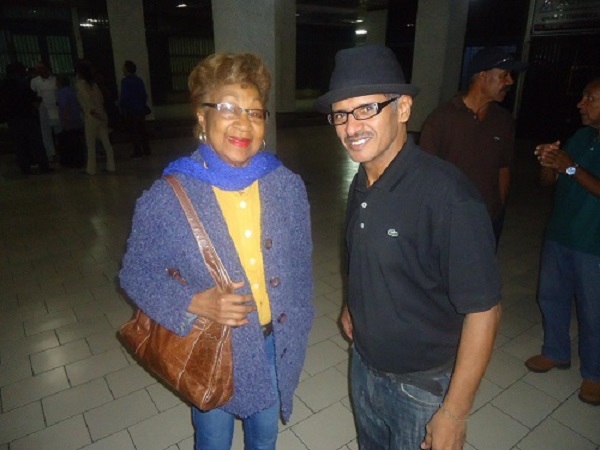
Adrián Suárez

“Canelita Medina” Caribbean popular music loses one of its best exponents

Canelita, the Venezuelan sonera, died on Tuesday, July 4, 2023. It was recently announced that the singer had to undergo surgery to implant a hip prosthesis.

The 84 year old artist was the mother of Venezuelan interpreter Trina Medina.

Canelita Medina y Dj. Augusto Felibertt

Rogelia Medina, popularly known as “Canelita” and nicknamed by the media as “La sonera de Venezuela” and “La sonera del Caribe”, leaves today at the age of 84 after having delighted the Caribbean and her country like birds, with all the strength of her tenderness.

Songs such as: “Tanto, tanto, tanto” “Besos brujos” “Lágrimas negras” among others will remain forever in our hearts.

Canelita, la sonera de Venezuela

She had an unmistakable voice, both for her timbre and her sweetness, for that particular way of intoning with such a sweet strength, because she never wanted to impose herself. She was always herself, with a gift for people, and a truly unforgettable charisma.

What Venezuela, the Caribbean and Latin American popular music have just lost is not little, because she also represented effort, prudence and that femininity that dictated a lesson, even in the choice of her repertoire.

Life

She was born on March 6, 1939 in La Guaira, in the central Venezuelan coastline that she truly loved. Whether it was in the area of El Playón, near Caraballeda, or in the town of Anare or towards Catia de la Mar, Rogelia experienced the joy of the sea air and the way of being of those born on the coast, with drums, joy, cadence and music always. They have their own codes.

She is not the most Cuban of the Venezuelan women, as some media erroneously affirm. No and no. She is the greatest Venezuelan interpreting the Cuban son and much beyond, because she interpreted other Caribbean and Venezuelan genres with extraordinary solvency.

She always knew, and soon the rest of her countrymen knew, that she was born to sing. The musical environment at that time was not very favorable for women, much less in son or guaracha. Like many other women in Venezuela and the Caribbean, she started on the radio.

“Canelita Medina”
“Canelita Medina”

This is what she told researcher Jairo Aponte, from Puerto Cabello. When asked about her first contact with show business, Rogelia answered: “It was because of some friends I had who knew that I liked to sing. There was a program on the radio station Ondas Populares called Buscando Estrellas (Looking for Stars) and they insisted.

They encouraged me so much that I went to the program. The first time I was bleeped, the audience bleeped me, but the second time in the same program the accompanying orchestra was the Sonora Caracas and they suggested me to rehearse before competing again.

Then, hidden, we rehearsed “Saoco” sung by Celia Cruz. I returned the following week and won the contest, and best of all, from that moment on I stayed with the Sonora Caracas, with whom I stayed for eight years”. It was 1957.

In 2022 a tribute was made to him at the Museum of Afro-American Art located in San Bernardino, Caracas. Trina Medina, Betsayda Machado and Juan José “el Indio” Hernandez participated in the meeting.

Peace to his soul, God receive you in a beautiful place.

Great you are Canelita.

When it comes to compositions, Luis “Tata” Guerra is widely known internationally

Read Also: Trina Medina

Joel Uriola

Latino America / Venezuela / Caracas

Joel Uriola “I am the best, because I surpass myself”

Very soon the theme will be released, Cuidadillo there ok

This Venezuelan pianist, arranger and musical producer was born on January 4, 1963 in Caracas, in the popular parish of Antímano, the same one that saw the birth of Sonero del Mundo Oscar D´ León, by chance or his destiny was already written and en route. towards a dream that over the years would come true; be the best and that your work is recognized both nationally and internationally.

In our gathering, Joel tells us that when he is classified as the best, he has nothing to do with competing with others or with airs of greatness, but with surpassing himself in everything he proposes, he tells us that “my path is longer, but I came as Joel Uriola”, his name is a seal that ensures quality work.

With 38 years of musical career, Joel Uriola has plenty of talent, level and experience, in each production he uses the best group of Venezuelan musicians and continues to be at the forefront of music, all this is demonstrated in the more than 1000 musical productions in which he has participated as a performer, director or musical producer, with national and international artists.

Joel Uriola
Joel Uriola

Joel Uriola The best?

“That’s right, metaphysics says that you can’t talk about yourself in a negative way, you can’t sell a product if you don’t have good marketing, you must see beyond, be your own manager, most record companies are in the hands of ignorant people. the music that drive the artist’s work”. “Artists have the obligation to cultivate themselves, learn and not only be musicians, we must project ourselves in a big way”.

How did your childhood develop and what was the atmosphere of the time like?

“I had a good education in my home, with values, a grandmother with character, who told me that no matter where you lived, your behavior would make a difference, she always motivated me, just like my mother who also instilled in me to prepare myself, my grandmother was an enterprising woman, my father was a rumba guitarist and a professor at the Católica”. “I remember that I saw the debut of the Trabuco Venezolano in the CC Propatria, as fate would have it, my mother had an office there, as did the people of the Latin Dimension.”

At what age did you start in music and with which orchestras did you take your first steps?

“My musical beginnings took place at the “Prudencio Esáa” School of Music, starting professionally at the age of 17 with a group called Galaxia, I was the conga player, it was a Son group and we rehearsed at the observatory”. “Then I became part of the Caracuchos of Joseito Rodríguez from 1977 to 1979, whom I met thanks to Jesús “Totin” Rebolledo, later with the Latin Dimension from 1979 to 1980, from Cesar Monges I learned a great deal, and from 83 to 87 with Oscar D´ León.

And why is there that change from the conga to the piano?

“Due to the noise I made in the house when I was rehearsing and the equipment turned on at full volume, my mother subliminally gave me an organ, it was less noise, and then I began to imitate what the pianists did in a self-taught way, I remember the theme of Pete Rodríguez… What things life has, life, life”. “Then my mother bought me a piano and took me to audition at the School of Music and I stayed, I was a student of teacher Tiero Pezzuti, Gerry Well and Samuel del Real”. “In the nightclubs of El Rosal I did many substitutions, there I polished myself, I had a good preparation and some great teachers who are my friends”.

Joel Uriola - piano
Joel Uriola – piano

What anecdotes do you have about your experience of working alongside Oscar D´ León, and about that piano solo on the song “Cuídate bien”, did you ever think that being so young, almost 20 years old, your name would remain forever on the mind of the salsero?

“The time with Oscar was glorious, I got to know many places, we toured for 3 and 4 months, we enjoyed ourselves but we also had a lot of fun, I learned a great deal and disciplined.” “I had the blessing of meeting many musicians that I admired such as Eddie Palmieri, Salvador Cuevas, Barry Rogers, among others, with Domingo Quiñones I made a great friendship.” “As for improvisation, I feel great pride, it was something that came out at that time, I don’t know if it will come out again -laughs-“.

Which musician has been your biggest influence?

Markolino Diamond, Eddie Palmieri, Papo Lucca.

A pianist you admire?

“Markolino Diamond is my idol, a lot of what I do has to do with this guy, if he were alive he wouldn’t exist…”. “He was irreverent, crazy, he broke the schemes.”

How do you see the response of the salsa audience with your productions?

“There will always be admirers and detractors, with the level of awareness that you gain, it doesn’t bother you that there are people who don’t like your work, I make music for everyone”. “Public opinion can kill you if you are not prepared for it, but you must believe in what you do.”

How do you see the support of the media to spread your music?

“Thank God the record companies disappeared, those who knew the least about music controlled them, they decided that it was commercial and that it was not, in the alternative media there is response and support, however, social networks allow you to reach in a matter of seconds many places and you can do your own marketing”.

What do you think about the fusions that you are doing with salsa, for example, salsa and reggaeton?

“It works perfectly, it’s urban salsa, reggaeton with its lyrical content has improved a lot, they’ve softened it, reggaeton artists have great economic and communication support.” “The good things are guaranteed, reggaeton is seen as Salsa was seen in its beginnings, with bad eyes, but you see, Salsa is worldwide even the Chinese dance it, people consume what the radio puts on it, even if it’s bad, there’s room for everyone”.

As a music teacher, what have you contributed to the country?

“Train the next generation, in values ​​and discipline, and that seed continues to germinate, help people regardless of how they sometimes pay you.”

Why musician and not another profession?

“I wanted to be Disip (Venezuela’s intelligence corps), but when one is born marked for something, that’s what goes… My destiny is music.”

How do you see the music industry right now?

“Everyone is recording with their own effort, you make a song, you upload it to the networks, we have that powerful tool in our favor; the record companies limited you, hardly any albums are recorded anymore”.

Can you live from music?

“Well… Thank God I can do it, every day I get up like a conuquero to work, I can live from music.”

Of the 9 productions under your belt, which do you think is the best or the most important for you?

“Babalawo (2009), the best achieved, the best worked in all aspects, was sold in all religious houses.”

What motivated you to form your own orchestra?

“I’ve always been a leader, that’s why I decided to form my own orchestra, everyone has their moment”.

Isn’t it a difficult job to compose and arrange?

“You are born for this, it is not difficult, you must study and prepare yourself, my muse can arrive at 3 a.m., I get up and add or season my music in my own way, I listen to traditional Cuban music, jazz that inspire me.”

What is Joel Uriola doing right now?

“Currently I dedicate myself to producing for other artists of the Salsero genre, always offering quality, the most recent is the work with the Mercadonegro Orchestra with the theme Rumba Negrito”.

You are the arranger of the 3 songs that made the Bailatino orchestra known internationally, you have been the Producer and arranger in five songs of “Rumberos del callejón”, among other Venezuelan artists. What does it feel like to contribute so that other Venezuelans are successful?

“At the moment you do things, you do it with the best intention, and that is the greatest satisfaction, helping others grow regardless of how they pay.”

Do you feel that unity and camaraderie are lacking in the salsa guild?

“Totally, without unity nothing is achieved.”

What do you think of copying, imitating and not creating?

“He who imitates is destined to fail, one must have personality, you must not cling to something foreign to survive, what you do has more value, you must have creative capacity”.

Future plans or present?

“I am recording two songs, Cuidadillo there ok composition by Maurice Melo, a salsa with tasty rhythmic elements, timba and hard sauce, and the second song You are the teacher has a Christian connotation, with the Praise Orchestra, the song is my own. , a cool sauce with Christian sauce”.

Joel reaffirms us “My road is long, but I arrive as Joel Uriola, I am who I am, I am the best”.

Steven Brezet. The Dutch influenced by African percussion

Europe / Holland / Róterdam

Steven Brezet. The Dutch influenced by African percussion

Through his mother’s interest in African dance, Steven Brezet grew up hearing African percussion. At the age of six he attended a gig at Podium Grounds in Rotterdam, where he watched Senegalese percussionist Aly Ndiaye Rose play a duo show together with Lucas Merwijk. Ndiaye Rose played on five drums at once, fascinating to such a little boy, and so began a lifelong love of percussion.

Steven Brezet
Steven Brezet

Right then and there, he asked his mother for lessons and they set up classes with Aly Ndiaye Rose.

Steven took djembe lessons with Ndiaye Rose and soon began expanding to other percussive instruments, including sabar, congas, bongos, timbales, timbal and others.

He worked on his skills as a musician not only by taking many different classes, but also by traveling to countries with different musical styles, including Senegal, Guinea, Curacao, Maroc and Brazil.

This broadened Steven’s musical passion from African percussion to include Brazilian and Latin music.

At home in the Netherlands, Steven played with people of many nationalities, of learning by playing in the streets.

Steven Brezet
Steven Brezet in a concert

Venezuelan percussionists Roberto Quintero and Orlando Poleo inspired him in this genre and taught him the importance of practice and structure.

Combining this methodological approach to percussion with practical, street-wise learning makes Steven’s technique remarkable and the broad range of instrumental knowledge adds impressive depth.

Currently, Steven is recording and touring with the band KOFFIE, but for the past two years he has also performed with bands like Banda Magda (USA), The Re:Freshed Orchestra (NL),  The Bill Laurance Group (UK) and Grammy Award winning band Snarky Puppy (USA).

Steven can be heard on the Snarky Puppy album We like it here for which he recorded as a guest musician in Kytemans studio.

This work with Snarky Puppy led to broad recognition, while the KOFFIE album Huntu gave way to performances at many music festivals, bringing Steven’s percussion sounds to a wider audience. Jazzism described Huntu as outstanding album.

These projects and collaborations made Steven into the versatile percussionist he is today. Steven values innovation and tries to mix different styles and rhythms throughout all his musical endeavors.

Steven Brezet
Steven Brezet playing drumms

At the moment Steven is recording his own music. A salsa album will be upcoming in the end of 2017.

And finally Steven will release his first album which was recorded in Kytopia Utrecht. It is a mix of Afrobeat and Funk.

Francisca’s

North America/ United State / California

Francisca’s. An Italian-Venezuelan Restaurant with Trendy Style

For several years Francisca’s has been in the heart of the Mission district in the San Francisco city. Its peculiar style and the combination of European and South American foods make it one of the trendiest restaurants nowadays.

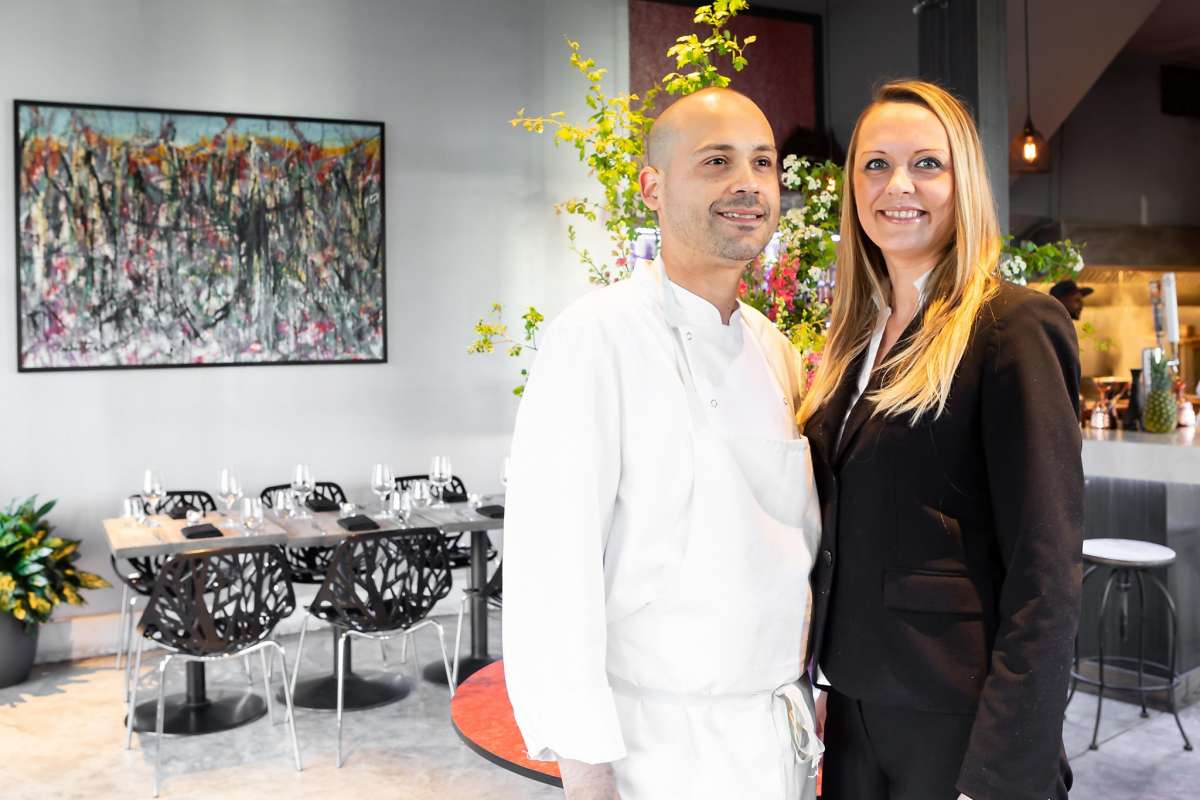
Francisca's Restaurant - Manny and Katherine
Francisca’s Restaurant – Manny and Katherine

The owners: Manny and Katherine, whose partnership between them is revealing and innovative, it creates an atmosphere of hospitality with personalized attention that projects the value and story of each of the dishes that stand out in its menu.

Manny, a tireless Venezuelan chef with wide experience prepares each different dish daily in his tasting menu that you can try for $39 and if the whole table participates you pay $65. This menu is based on four-courses that this culinary art enthusiast prepares, undeniable, with a lot of dedication, imagination, and skill that have allowed Francisca’s to be positioned as one of the sure destinations to visit in San Francisco when delighting the most demanding palates is the point.

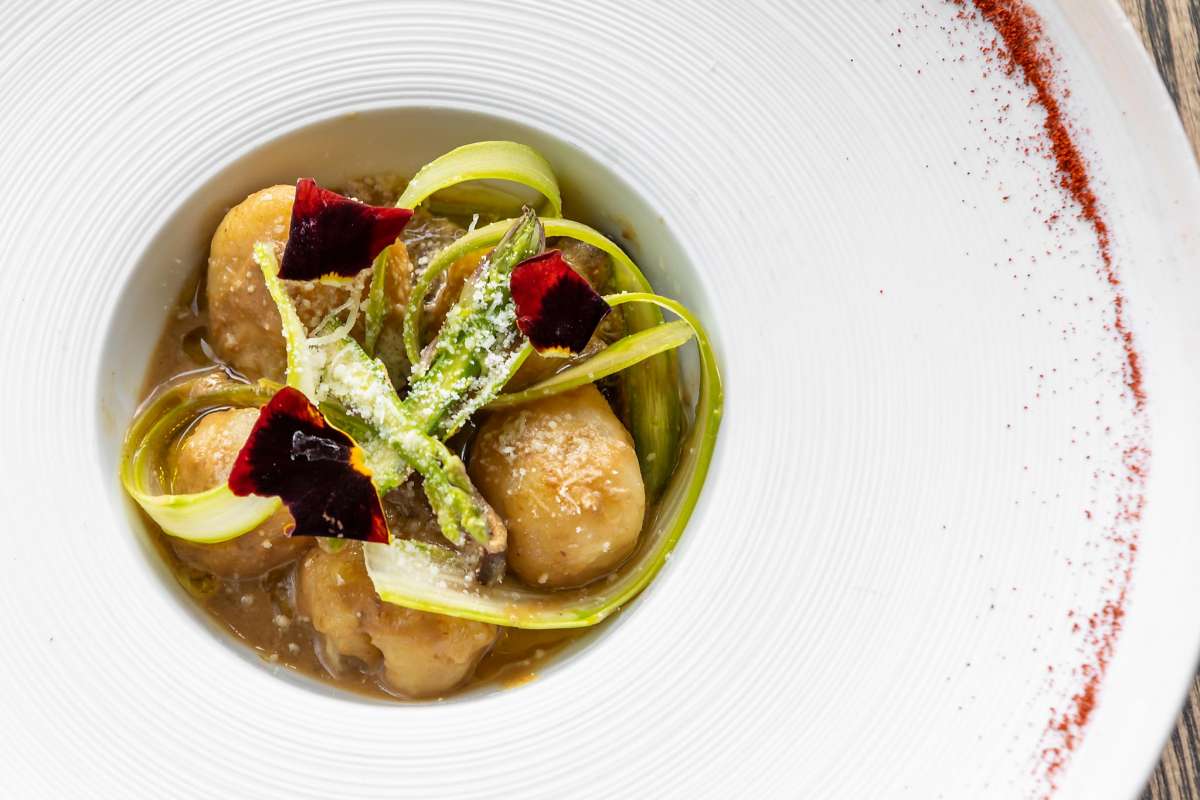
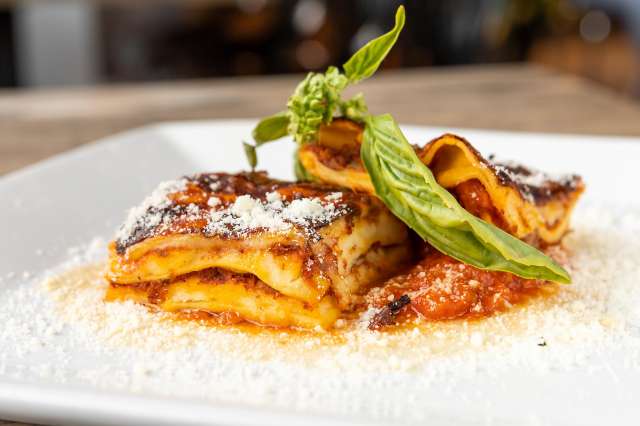
Although his first and powerfully popular restaurant was Mr. Pollo in 2010, it’s Francisca’s that has managed to surface this new trend of mixing Italian foods with traditional Venezuelan ingredients. It’s for that we can find in this restaurant seductive and hypnotic dishes such as Plantain Lasagna (Dish of greater receptivity) and Yuca Gnocchi. While the traditional Venezuelan breakfast “Arepas” is always present in the recommendations of Manny and Katherine for their visitors.

Francisca’s is attended by around 30 people daily to taste an affordable price the visual show of artistic decoration to make things more beautiful and then eat them. In addition to not being able to resist their cocktails duly identified with the origin country.

This restaurant with the inspiration of high cuisine, unique concept and mixture of sounds typical of a famous place for the quality of its food with fresh ingredients purchased directly at the San Francisco’s farmers market (Ferry Building) keeps alive the spirit of Latin American cuisine within of the trends recipes of European cuisine.

“Being a chef for me is everything.” Manny Torres

History

The ingenious idea of ​​putting a woman’s name on the restaurant was Manny. Francisca is the name of his grandmother and his main influence to dedicate to the fascinating world of culinary art. She taught him the true value of obtaining fresh ingredients in the farmers market, as well as making him aware of the true importance and passion for hospitality.

But, let’s go a few years back. Before Francisca’s, Manny had four restaurants, one of them was “The Palace”, which had a considerable number of loyal visitors, however, a raging fire destroyed the venue in 2015. Nonetheless, Manny reopened this space after a complete remodeling and having undergone the corresponding inspections, and we know it as Francisca’s now.

For some time, Manny and Katherine were traveling on two continents. They visited countries such as Aruba, France, Spain, and Italy. And Eureka! From there derived his inspiration for the creation of his exotic and exquisite dishes. After him seeing a different perspective of the kitchen and its formulas for the preparation of the recipes, Manny obtained the main ingredient for the preparation of his Menu in Francisca’s; he had the creativity to make the perfect and successful combination in all his meals.

“In the United States, European food is cooked with so many rules. There are rules for everything. In Europe, there aren’t rules. No one follows the rules and it’s more relaxed”, Manny told an American digital media.

Venue: 3047 Mission Street, San Francisco, CA 94110

Contact: 415.374.5747

Francisca´s opens:

Tuesday – Saturday Dinner: 5:30pm-10:00pm

Saturday Vegetarian Brunch: 10:30am -3:30pm

Sunday Regular Brunch: 10:30am-3:30pm

Manny’s Curiosities:

  • He studied at the Engineering School in Columbus, Ohio.
  • He arrived in the U.S. in 2001.
  • The names of Manny’s four restaurants are: Mr. Pollo, Roxy’s Cafe, The Palace, and Coco Frio.
  • He loves washing

4-course Tasting Menu:

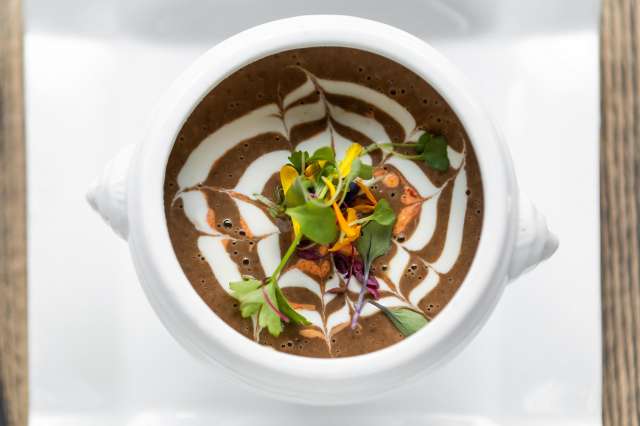
First course: Soup or Salad

Second course: Appetizer or Pasta

Third course: Entree Protein-based, Vegetarian or Pescetarian dish

Fourth course: Dessert

Francisca´s Offers:

  • Capacity: Max seated: 29 people/ Max standing: 75 people
  • Noise Level: Moderately High
  • Accessibility: gender-neutral bathrooms
  • What to ask for: Arepas, Yuca Crispy, Tasting menu (without everyone at the table needing to participate), Plantain Lasagna and Yuca Gnocchi
  • Vegetarian Options: Three appetizers and tacos of vegetables available
  • Drinks: a full bar with wines available to buy
  • Reservations can be made

For more information, please visit: https://www.FRANCISCASSF.com/

SOCIAL CHANNEL:  https://www.facebook.com/FRANCISCASSF/

  • « Go to Previous Page
  • Page 1
  • Interim pages omitted …
  • Page 51
  • Page 52
  • Page 53
  • Page 54
  • Page 55
  • Interim pages omitted …
  • Page 94
  • Go to Next Page »

International Salsa Magazine (ISM) is a monthly publication about Salsa activities around the world, that has been publishing since 2007. It is a world network of volunteers coordinated by ISM Magazine. We are working to strengthen all the events by working together.