Argentina – Buenos Aires
 |
 |
 |
 |
 |
Bolivia
 |
 |
 |
Brasil
 |
 |
 |
 |
 |
 |
 |
 |
|
Chile
 |
 |
 |
 |
 |
 |
 |
 |
 |
Argentina – Buenos Aires
|
|
|
|
|
Bolivia
|
|
|
Brasil
|
|
|
|
|
|
|
|
|
Chile
|
|
|
|
|
|
|
|
|
The Oldest Latino Festival In India Returns With More Salsa Immersion

Latin Festival Madras started in 2014 and is the only one of its style in Chennai
The largest and oldest ten-day Latin gathering in Chennai (India) will bring the Maestro Jimmy Bosch “El Trombonista Criollo” and one of the best timbaleros in Europe today, Joaquín Arteaga live at the five-star hotel, Vivanta Chennai It Expressway located at 309, Old Mahabalipuram Road, Shollinganallur Chennai, Tamil Nadu, India 600119.
In this ninth edition of the festival, you will also find carefully designed Salsa, Bachata, and Kizomba workshops, special training camps with instructors with more than a decade of teaching experience at festivals around the world, performances by national and international dancers (Korea, Japan, Malaysia, Canada, Vietnam, China, and Russia) acclaimed worldwide, also social dancing in the company of the seven best DJs from Asia, pool party, theme parties, surfing, buffet lunches, and dinners with a luxury stay that characterizes this event as the only one of its kind in Madras, currently known as the Chennai city, capital of the Tamil Nadu state.
Friday, September 2nd will be the opening of the Latin Festival Madras https://www.latinfestivalmadras.in/ at Surf Turf beach, where you can dance all day long with delicious local food, and if you prefer a little more excitement you can surf in the Bay of Bengal with your fellow dancers. But, if you don’t know this sports discipline, don’t worry because there will be instructors on-site to perform this water sport with the correct technique.

7 DJs will participate in this Latin event from Malaysia, Japan, Canada, Thailand, and India.
On Saturday, September 3rd, and Sunday, September 4th, all the activities (workshops, camps, shows, and parties) will take place at the Taj Vivanta hotel, a five-star venue to have a luxurious, memorable, and family experience.
Two of the peculiarities of this Festival are the parties before to the Latin event (August 29th – September 1st) and the getaway after the closing of the festival (September 5th – September 6th). The event’s organizers have planned to visit Pondicherry through Mahabalipuram for two days, the latter place a UNESCO World Heritage Site.
In Pondicherry they will be able to taste the typical dishes, dance, and do a guided exploration of the ruins and historical sites of the town.
On the second day, you will explore the old Franco-Tamil city. During the day they will visit the old Auroville community located 10 km from Pondicherry and during the night they will dance at the pool party at Anandha Inn Convention Center and Suites. And on Wednesday, September 7th, will be the big farewell to Chennai.
But, before leaving the city of Chennai, we must talk about the live music that will be present at this Latin event in India. The greatest exponents of the Trombone and the Timbal will say here, the maestro Jimmy Bosch and the creator of the hard Salsa orchestra Tromboranga, Joaquín Arteaga.

The objective of this festival is to provide a memorable experience and exposure to the educational value for future talents, artists, and instructors.
Jimmy Bosch is an exceptional Latin Music Trombonist acclaimed in more than 70 countries and has 11 Grammy Awards and more than 100 recordings in the Salsa and Latin Jazz genres. “El Trombonista Criollo” has worked with the FANIA All-stars, Eddie Palmieri, Ruben Blades, Ray Barretto, Machito, Cachao, and more. He has participated in Salsa conventions and Latin and Jazz music festivals around the world, as well as performed in clubs in Asia, Europe, America, and Oceania.
On the other hand, the second artist to perform on this special evening is the Leader, Director, and Timbalero of the Tromboranga salsa orchestra, Joaquín Arteaga. This Venezuelan timbalero based in Barcelona (Spain) has been part of the Gerardo Rosales Orchestra (2004) and has toured Europe accompanying international artists such as Andy Montañez, Andrés Cepeda, Jhon Lozano, Venezuelan Masters Orchestra, and Bloque 53, among many others.
Since 2009 he has been a sponsor of the prestigious Latin Percussion LP brand. Joaquín has produced and recorded nine albums for Tromboranga and has toured extensively throughout Latin America, North America, Europe, Australia, and Asia. This Venezuelan composer has also organized and taught salsa percussion workshops in Spain, Japan, Australia, Colombia, the USA, France, the UK, Morocco, Lebanon, Thailand, and South Africa, among many other countries.
The Full Passes for the event are USD 140 (travel to Pondicherry and Mahabalipuram is not included). The online sale ends on August 31st, and the prices of the passes increase every two months.
The most influential tropical artist of the 21st century will offer a series of concerts in Spain, London, Holland, France, Italy, Switzerland, and Germany

Otra Nota (1993) was Marc Anthony’s first solo album
Si hay una fiesta pa’llá voy. Si hay una rumba, pa’llá voy. Con buena música y alcohol, cuando me llamen, pa’llá voy. With this nice choir of the song Pa’llá Voy that gives its name to the 2022 tour, Marc Anthony begins the series of concerts in Europe.
The versatile Salsa artist with the record for the most albums sold worldwide begins a series of 17 concerts on Saturday, June 4th at the OVO Arena Wembley in London (United Kingdom) with a capacity for 12,500 people. His next stop will be in the Rotterdam city (Netherlands) in Ahoy, which can hold 15,818 salsa souls, followed by Paris (France), Assago (Italy), Zurich (Switzerland), Cologne (Germany), ending his tour in 11 cities from Spain (Cornellá de Llobregat, Santiago de Compostela, Madrid, Seville, Fuengirola, Calvia, Oviedo, Valencia, Murcia, Cadiz, and Las Palmas de Gran Canaria). In this last city, the capital of Gran Canaria, Marc Anthony will step onto the stage of the Granca Live Fest that will take place on July 8th at the stadium of this cosmopolitan city with a capacity of 31,250 people.
This same tour, postponed due to the pandemic in 2020, was initially called “Opus Tour” and a year later it changed to “World Tour” now it is titled “Pa’ lla voy Tour” the homonymous name of the thirteenth album of the singer of Puerto Rican descent released on March 4th, 2022.
Pa’lla Voy was recorded during the pandemic period in Miami (United States), the place of residence of Magnus, the company of the singer awarded the Order of the Golden Sphinx by Harvard. This studio album is made up of nine Salsa pieces (Pa’llá voy, Yo le mentí, No se quita, Nada de nada, Amor no tiene sexo, Mala, Gimme some more, El que te amaba y Si fuera fácil).
“When we got to the studio to record this album, I was full of inspiration. I had time to absorb these songs, fall in love with them, and create what you can now hear.” The artist wrote on his Facebook account on March 4th.
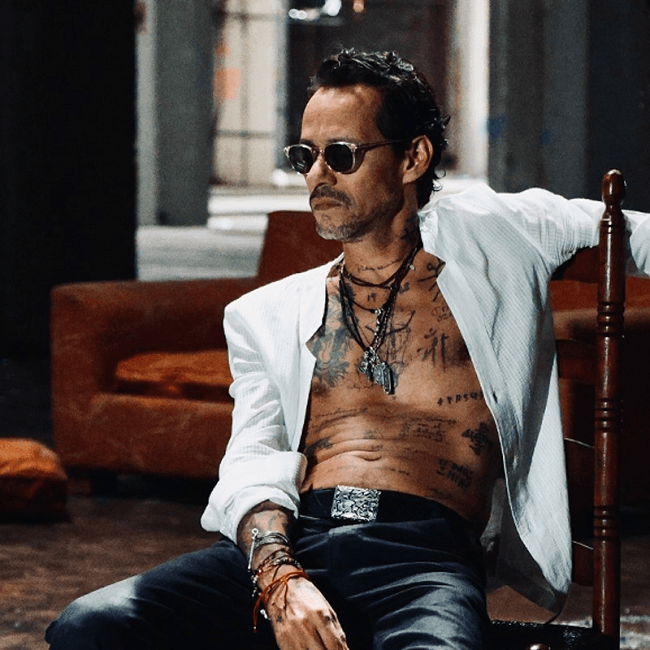
You don’t need to carry out any additional management or expense if you purchased the tickets in 2020
Anthony, with almost three decades of trajectory, has released two singles from this new production, “Mala” co-authored by Lenier and under the production of Sergio George (producer of his first hits), and co-produced by Motiff, recognized for his work with Víctor Manuelle, Gente de Zona, Natalia Jiménez among many others.
In the same way, “Pa’lla Voy” was released this year, his most important single, and that gives life to the tour. This first track of the album was written by the Venezuelan singer-songwriter brothers San Luis (Luigi and Santiago Castillo). Another piece of information that we can provide you is about the participation of the only woman on this album, the Venezuelan singer Elena Rose, co-writer of the song “Yo Le Mentí”. Andrea Elena Mangiamarchi, known by the artistic name Elena Rose, is known for working with urban singers like Becky G, Rauw Alejandro, Tini, and CNCO.
Tickets for this long-awaited tour are between 40 Euros and 140+ Euros. The tickets purchased for the suspended tour in 2020 are valid.
Don’t miss out on this opportunity to sing and dance on Pa’lla Voy Tour, https://www.marcanthonyonline.com/gira/ and enjoy this new salsa jewel live and listen to his greatest hits such as “Valió la pena” or “Vivir mi vida”, the latter ranked 46th among the category of the 50 most important Latin songs of the American magazine specialized in music, Rolling Stone.
Barquisimeto, is well known as the musical capital of Venezuela and in this opportunity we will make special mention to the musician José Jesús Mosquera Cañizales, born in our city in the Antonio María Pineda Hospital, on May 23, 1969, son of Rafael Mosquera and Juana Cañizales, married to Yolanda García and from this union were born their children Yolanda José and Luis José.
Mosquera was always inclined to music since he was a child, participating in the musical activities of his school “Ciudad Bolivar”, located on Carrera 13 and 48th Street, in Barquisimeto, singing and playing the cuatro in a self-taught way and with the help of his father who taught him to improve his playing.
At the age of 8 he studied at Pablo Canela’s academy, at the age of 10 he learned to play guitar, also with the support of his father and his cousin Carlos Romero.
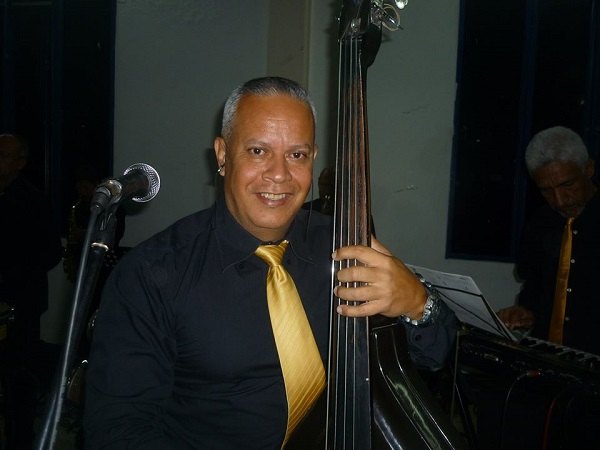
At the age of 11 he participates in the musical groups of the Christian church, standing out as a guitarist, drummer and timbalero. When he turned 15, he became interested in playing the bass guitar and during his high school studies at the Ezequiel Bujanda Combined Cycle, he met Jesús Rincón, also a musician, and joined the ranks of the “Obeligaitas” bagpipe group, where he began his career as a bass player.
When he turned 18 years old, he was part of the staff of the group “Tecnogaitas” of the Tecnológico Antonio José de Sucre and simultaneously he was bassist of the band “La Salle”. Afterwards, he is recommended to Alí Rojas and auditions to be the bassist of the “Sonora de Alí”, where he remains for 3 years.
Alí Rojas gave him the responsibility of being the bassist of the dance orchestra “Sensación”, where he remained for 15 years. In 1992, he began working as a music instructor for the Fundación del Niño until 1996.
Mosquera, besides being an excellent bass player, plays string instruments such as the cuatro, guitar and requinto.
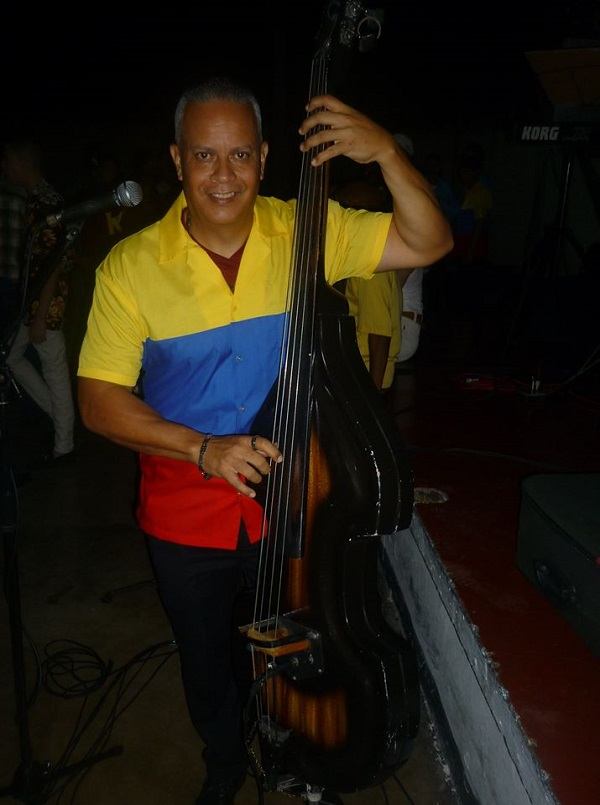
In 1993, Mosquera turned to romantic music and created the duet “Génesis” with his friend and compadre Carlos Enrique Prince, performing in nightclubs and private parties. In 1997, he joined the Poliboys Orchestra of the General Command of the Lara State Police as a bass player, where he currently works. In 2004 he began his musical studies at the Vicente Emilio Sojo Conservatory and graduated as an academic musician in 2009 with excellent grades. José has performed on regional television stations demonstrating his qualities in various prestigious programs and in 2016, he won 3rd place in the Police Voice Festival.
Mosquera, at what date do you become interested in salsa as a musical genre?, Professor Carlos in 2007 I start playing the baby bass and in 2011 I join the K’dencia Latina Orchestra of Carlos Sanchez and also had the privilege of accompanying Benjamin Rausseo “El Conde del Guácharo”, performing with his band and with K’dencia Latina, accompanied the late Willy Rodriguez, and vocalists of national and international renown: Hildemaro, Pibo Márquez, Charlie Guzmán, Alejandro Mayora, Mariana “La Sonera de Venezuela” and the official doubles in Venezuela of Rubén Blades (Jhony Heredia) and Celia Cruz (Ibrahíma Rondón).
Mosquera finally told us that musical excellence is achieved through perseverance and dedication.

Finally we wish the best of success on behalf of International Salsa Magazine, to the excellent musician José Mosquera “The bodybuilder and elegant bass”.
See you next time and let’s keep on salsaing!
José Mosquera “The bodybuilder and elegant”.
A graduate of Berklee College of Music, with his college degree in hand, the young bassist returned home to make his homeland in salsa time.
Jesús Algarín is a Puerto Rican bassist who, at the age of 25, landed in the salsa scene to make music his life project. The young musician already walks with a firm step accompanied by the forceful interpretation of his bass, leading his own orchestra with confidence.

From the time he was born, according to what his parents told him, they used to party, so it was not surprising that at the age of 8 he was already the one who was the one who was livening up the parrandas while playing the Puerto Rican cuatro. Algarín, who was born and raised in the heart of Puerto Rico (Caguas), candidly tells us that as a child, he discovered through our very own parrandera tradition, that music -which he refers to as a wonderful art- had a healing and restorative power.
Well advised by the adults in his family, he recounts that his uncle explained to him early in his life that if he failed to ignite his audience at the Choliseo during a parranda, it would become more difficult for him. Once he understood the advice, he applied it to himself. Today he concludes that it is necessary to dominate every stage, from a marquee to a public square, and to take it one step at a time.
Through Puerto Rican folk music, studying and interpreting the seis, the aguinaldo, the bomba, and the plena, he was entering into what without planning it became his life project. Later, playing the Puerto Rican cuatro purely by ear, he was able to enter the “magical” world of music, as he himself describes it.
Already in the sixth grade of elementary school, he began his formal apprenticeship at the Escuela Libre de Música de Caguas. Before that time, he played the cuatro but did not read music. Once he learned to read music, he decided to continue growing musically in his instrument.
Six years later, in grade 12, about to finish high school, he took part in the camps that Berklee College of Music brings to Puerto Rico every year. He auditioned for the Puerto Rican cuatro. However, at the time, he did not achieve his goal of positioning himself. Determined not to give up, the following year he returned to the Berklee camp but changed tactics. He showed up to the workshops with a bass because he understood that the cuatro was not a good fit. When he filled out the registration form for the workshops, he reported that his bass playing was at the advanced level, even though he knew it wasn’t true. This adolescent idea, which added a good deal of pressure and stress to his musical performance, helped him get into the ensembles he aspired to qualify for. Today he admits that at that time, which today seems far away, he could not handle the bass because, as an instrument, it was still unknown to him.
In any case, Algarín qualified because, as we know, you have to take your chances with life. The rest is history.

With the bass as his main instrument, Algarín got Berklee to give him a scholarship and after four years in Boston, Massachusetts he graduated with a degree in Music Business. In other words, he spent four years making music while learning to see music as a business.
The young bass player confesses that he had not planned to be a musician nor had he thought he would make a living from music. He did not see music as a possibility, since although it was always an integral part of his life, music was a hobby or a way to serve God in the church. And that’s what he limited himself to until he came to Berklee’s summer workshops. Before that, he saw himself as a lawyer and when it was his turn to enter college, he initially enrolled at Ana G. Mendez University. There he attempted to complete a bachelor’s degree in accounting. However, from the very first accounting class he knew that accounting was not for him.
Algarín capitalized on what he learned, and has been able to stick to music as a way of life; from a more realistic and less idealistic perspective. Of course, all without losing the artistic focus of musical interpretation. Along with his musical training, he has been preparing himself in legal issues, maintaining business awareness, focusing on the protection of music and copyrights. He has also been responsible for making other musicians aware of the importance of registering their music with the Library of Congress and thus making the most of their work. There is no doubt that Algarín knows his worth as a musician and from his space he has decided to serve and guide his counterparts to protect their work.
Before entering the studio to record his project, Algarín had recorded with Manolito Rodríguez. During his student years in Boston, he was a musician in the Eric German Orchestra, the orchestra that accompanies visiting solo singers in the New England area.
Today, his main instrument is the bass, double bass, baby base or electric bass.
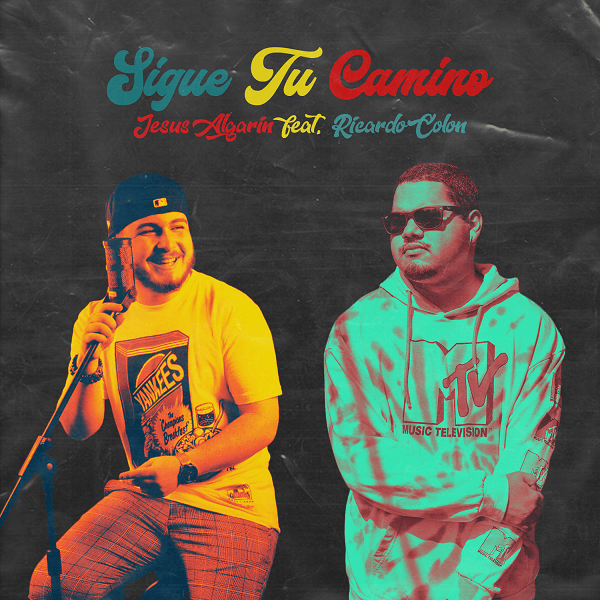
The bassist, a native of Caguas and graduate of Berklee College of Music, class of 2020, returned to Puerto Rico to lead his own musical project.
Two years after Algarín’s return home, the orchestra is already promoting its first production entitled “Dímelo Algarín”, which is part of his project “Jesús Algarín”. The format of the base orchestra of the project is as follows: winds (trumpet, trombone and baritone saxophone), bass, piano, conga, timbal, bongo and bell; backing singers and choirs. This, his first production, contains 5 songs, with contemporary themes in its lyrics. This lyric, however, embraces the nostalgic sonority of the sextet, complementing some of the songs with the Cuban tres. The bassist leader of his project arranged and composed these 5 unreleased tracks, which are merged in a production for which Jesús Algarín is also responsible.
The production is available in digital format on all platforms. The promotional cut is Sigue tu camino performed by Ricardo Colón, who also sings in the Willie Rosario Orchestra. The other four tracks included in the production are: Playita, Cadencia y sabor and La calle se prendió; performed by vocalist José Luis De Jesús and Caribeña, in the voice of Marisabel Vázquez Varela.
The recording studio musicians who participated in the production are from the Caribbean. Puerto Ricans, Cubans and Venezuelans merge in a salsa embrace; as is to be expected.
Vocals: José Luis De Jesús, Ricardo Colón and Marisabel Vázquez Varela.
Backing vocals: Jorge Yadiel Santos, Carlos García, Ricardo Colón, José Luis De Jesús, Manolo Ruiz and Carloscar Cepero.
Bass: Jesús Algarín
Piano: Aníbal Cruz and Juan Rivera
Tres: Renesito Avich
Percussion: Miguel Martínez
Trumpets: Luis Arnaldo Ramos, Angel Segarra y Nicolás Benítez
Trombone: Johan Escalante y Carloscar Cepero
Baritone saxophone: Efraín Martínez
Cuatro: Jesús Algarín.
As the son of documentary filmmaker Juan Félix Algarín, Jesús considers himself blessed to have been mentored by a father with first-hand knowledge. His father always instructed him to be aware of music as a business in the entertainment world. Jesus knows his worth and has kept himself informed as to the costs of production and is clear as to the rates of his work. He identifies himself as a Puerto Rican and Caribbean musician. He is in every sense of the word, a music worker.
As it is, we are still in salsa. Yes, salsa lives! The effort, discipline and talent -in that order- of this young bandleader attest to that. Congratulations, and may you continue to “catch the ride”.

For bookings, Ángel Ilarraza: 787-347-4662 or e-mail: [email protected]