• Skip to primary navigation
  • Skip to main content

International Salsa Magazine

  • Home
  • Previous editions
    • 2025
      • ISM / November 2025
      • ISM / October 2025
      • ISM / September 2025
      • ISM / August 2025
      • ISM / July 2025
      • ISM / June 2025
      • ISM / May2025
      • ISM / April 2025
      • ISM / March 2025
      • ISM / February 2025
      • ISM / January 2025
    • 2024
      • ISM / December 2024
      • ISM / November 2024
      • ISM / October 2024
      • ISM / September 2024
      • ISM / August 2024
      • ISM / July 2024
      • ISM / June 2024
      • ISM / May 2024
      • ISM / April 2024
      • ISM / March 2024
      • ISM / February 2024
      • ISM / January 2024
    • 2023
      • ISM / December 2023
      • ISM / November 2023
      • ISM / October 2023
      • ISM – September 2023
      • ISM – August 2023
      • ISM July 2023
      • ISM Edition June 2023
      • ISM – May 2023
      • ISM April 2023
      • ISM March 2023
      • ISM February 2023
      • ISM January 2023
    • 2022
      • ISM December 2022
      • ISM November 2022
      • ISM October 2022
      • ISM September 2022
      • ISM August 2022
      • ISM July 2022
      • ISM June 2022
      • ISM May 2022
      • ISM February 2022
      • ISM January 2022
    • 2021
      • ISM December 2021
      • ISM November 2021
      • ISM October – 2021
      • ISM September 2021
      • ISM August 2021
      • ISM July 2021
      • ISM May 2021
      • ISM April 2021
      • ISM June 2021
      • ISM March 2021
      • ISM February 2021
      • ISM January 2021
    • 2020
      • ISM December 2020
      • ISM November 2020
      • ISM October 2020
      • ISM September 2020
      • ISM August 2020
      • ISM July 2020
      • ISM June 2020
      • ISM May 2020
      • ISM April 2020
      • ISM March 2020
      • ISM February 2020
      • ISM January 2020
    • 2019
      • ISM December 2019
      • ISM November 2019
      • ISM October 2019
      • ISM Septembre 2019
      • ISM August 2019
      • ISM July 2019
      • ISM June 2019
      • ISM May 2019
      • ISM April 2019
      • ISM March 2019
      • ISM February 2019
      • ISM January 2019
    • 2018
      • ISM December 2018
      • ISM November 2018
      • ISM October 2018
      • ISM September 2018
      • ISM August 2018
      • ISM July 2018
      • ISM June 2018
      • ISM May 2018
      • ISM April 2018
      • ISM March 2018
      • ISM February 2018
      • ISM January 2018
    • 2017
      • ISM December 2017
      • ISM November 2017
      • ISM October 2017
      • ISM September 2017
      • ISM August 2017
      • ISM July 2017
      • ISM June 2017
      • ISM May 2017
      • ISM April 2017
  • Download Salsa App
    • Android
    • Apple
  • Spanish

Search Results for: Willie Colón

From Peru and based in France we have Wálter Antonio Rebatta Hinostroza is a brand new and spectacular percussionist.

We are honored to present in this new release, one of the most outstanding figures of Latin music, representing the brother country of Peru, who has put the name of the musicians born in Inca lands very high in the world.

With you, directly from France, we have as a special guest Wálter Antonio Rebatta Hinostroza, a brand new and spectacular percussionist, who was born on September 14, 1973, in Bella Vista, Callao, Peru, being artistically known as “El Chato”.

Welcome Wálter to Salsa Escrita “La Columna Salsera de Barquisimeto, Venezuela”. It is a great pleasure to have you as a special guest in International Salsa Magazine, www.SalsaGoogle.com.

Thank you very much to you, my friend, Professor Carlos, for the invitation to your well read and recognized column and I take this opportunity to give a sincere greeting to all Venezuelans who are like my brothers.

How did you start in music? Well, teacher in my neighborhood called Ventanilla, in Peru, I grew up and since I was a child I breathed musical air, where at the age of 6 years old I was already playing “El Cajon”, traditional Peruvian Creole instrument, under the tutelage of my older brother Kike Rebatta, who took me later to learn other percussion instruments and prepare me with music theory, and then enter the music school of the renowned teacher Edelmi Chavez, and thus join the ranks of the most renowned orchestras in my country, such as: La Iniciativa, Orquesta la Grande, Banana Latin Jazz, among others.

Wálter, which international orchestras and artists have you accompanied? I have accompanied and worked with “Los Hermanos Colón” from Puerto Rico and among many groups, I have had the honor of being on stage with my Venezuelan brothers, Hildemaro “El Sonero del Amor”, with whom I have a great friendship, as well as with the master timbalero Alfredo Villamizar, from whom I have learned a lot and from whom I must thank through his column Salsa Escrita. “Chato”, you are currently based in the French city of Grenoble and we would like to know how is the salsa movement, especially in Europe. In fact, professor, in 1995, I came to Europe with the “Orquesta Salsa Perú” and I met Mr. Rodolfo Guerra, with whom a great friendship was born and I became part of the “Orquesta Sincopa Latina”, directed by him, being present in his productions: Salsa que te pasa, Demasiado corazón, Mi bachata, Puerto Rico, Todo, Escándalo, Mi silencio, Mi toque, Habla conmigo and Azafata. Wálter, I have heard that you have accompanied great salsa artists in their presentations, tell me who? I have had the honor of accompanying the late Tito Gómez, Willie González, Luisito Carrión and the great Venezuelan sonero Orlando José Castillo “Watussi”.

Also, let me tell you professor, that I have worked in the Italian television Media Set, in the very popular program “Notte Vola”, also in 2002, I participated in the Tour of the Queen of Salsa, Celia Cruz, along with the orchestra of the prestigious world famous violinist Alfredo de La Fe.

Likewise, my friend Carlos, in 2004, I performed in numerous events with Latin jazz groups, among them “El Royal Cuba”, of the Cuban musician and singer Eduardo Céspedes.
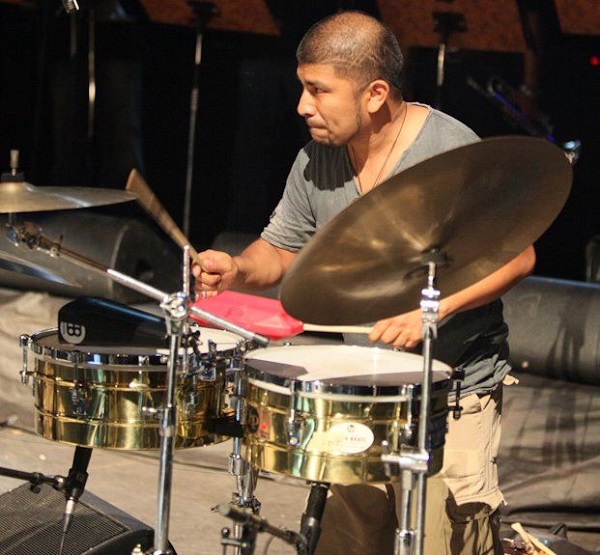
In 2007, I participated in the prestigious and famous festival of San Remo with the singer Daniele Silvestri, with whom I have recorded in his productions. In 2009, I participated in the Italian tour “Terromotati Dil Abruzzo”, conducted by the famous singer Laura Pausini and later that same year I participated again in a tour in the United States for charity with Pausini again.

Excellent Wálter, and what can you tell us about the orchestra you are currently working with and what are your future projects? Professor Carlos, at present I am an official musician of the renowned orchestra “Mercadonegro” and in relation to my projects, is to form my own group and perhaps dabble in bachata, but without leaving aside the salsa, since living in Europe I have met many bachateros. And something very important, my friend Colmenárez, I am also working on the project of my Venezuelan compadre, the musician Edwin Sanz, whom I would like you to interview at some point.

Very good Wálter, congratulations for your career, what are your contacts on digital platforms?  My Facebook is: Wálter Antonio Rebatta Hinostroza and my whatsapp: +41 77 5122633.

We want to wish you the best on behalf of Salsa Escrita “La Columna Salsera de Barquisimeto” and that you continue to put the name of Peru on high in all the stages of the world.

Thank you a thousand times, Professor Carlos Colmenárez, for taking me into account and thus make my career known and offer my greetings, thanks and respect to all the salseros of the world through International Salsa Magazine, www.SalsaGoogle.com and long live salsa, Peru and Venezuela, united forever…!

Junito Albino and his collaborations with many orchestras

How Junito Albino began his career

Junito Albino is one of those artists who has been influenced by some of the greatest artists in Latin music and that has led him to become what he is today. Julio Junito Albino was born in New York in 1962 and got curious about the same music at the age of 11, after which he joined the school band of San Germán until he graduated from high school. When he was still a teenager, he began to play timbales with the first group to which he belonged, whose name was Orquesta La Crítica and belonged to director and trumpeter Fernando Vega. 

When he attained the proper age, he began to study music education at the Interamerican University of Puerto Rico in 1980, when he would be a part of the Orquesta Kachende de Mayaguez whose direction was by Gilberto Gili Toro. With this group of musicians, he released his first record production. By that time, he met singer-songwriter Antony Martínez, with whom he would have a great friendship. 

Julio Albino
Renowed timbalero Julio Junito Albino

In 1983, he went to live in New York City and began collaborating with the Orquesta de Los Hermanos Colón, with whom he wasted no time in returning to the Island of Enchantment to do some live performances. With this same group, he recorded his second album Ámame Un Poquito Más, which was directed by Sergio George. 

Some of the orchestras with which Albino worked

Another of the most important society that Albino achieved realizing during his career was with Joe Quijano’s orchestra and his Conjunto Cachana, with whom he had the opportunity to share the stage with La Guarachera de Cuba Celia Cruz, The King of Timbales Tito Puente, Latin Grammy winner Ray Santos, talented pianist Charlie Palmieri and many others.   

In 1986, he was fortunate to accompany some of the greatest artists from Latin genres such as Paquito Guzman, Marvin Santiago, Hector Tricoche and many more. One of the greatest unions that he would give tangible shape to would be with Moncho Santana’s Orchestra, former vocalist of Grupo Niche, with whom he chalked up enormous successes and demonstrated all his talent. However, collaborations would not stop there. 

Junito also came to be part of the orchestra of Tito Nieves and that of Ramon Rodriguez. The latter was directed by pianist Gilberto Colón, Jorge González (bongo) and Willie Romero (conga). With all his accumulated experience at this point in his life, it was not difficult for him to find a place in the Orquesta Tártaro led by Franke Ruíz. 

When he moved back to Puerto Rico, he was also in other orchestras in the country such as Puerto Rican Power, Jorge Carrión, Luisito Escobar and many more. In addition to the foregoing, he has managed to work as a producer and musician in a large number of independent groups collaborating with percussion, timbales, bongo and other instruments.   

After a successful career in other groups, he decided to create his own orchestra, Secreto A Voces, in which genres such as salsa and Latin jazz stand out. His first album was called Báilalo and contained songs of his own that were big hits in some European countries such as Italy. His second album was entitled Haciendo Ruido and included the participation of artists such as Nino Segarra, Jaime Rivero, among others.  

Salsa Superior Award won by Secreto A Voces in the category of musical quality


By: Johnny Cruz correspondent of International Salsa Magazine in New York City, New York

Dj. Elvis Abello “El de la Salsa Dura en Caracas”

Since 2021, he has been vice-president of the Olimpiada Salsera Internacional de Venezuela Foundation.

He was born on July 3, 1982, in the city of Caracas, with only eight years old, and led by the hand of his father Carlos Abello, his uncles, Hector Diaz, Jhon Abello, Ali Abello, would discover his love for salsa, surrounded by acetates, parties, and stereo.

At the beginning of the 89’s, at his grandmother Crucita’s house, the whole family and friends would gather to share and dance a good salsa, his father would place a plastic box so that it could reach the turntables since at that time his father used vinyl.

Elvis, feeling attracted by the rhythm, already knew some singers, looked for the songs and musicalized those parties, being this way his debut in the world of salsa.

He was born on July 3, 1982, in the city of Caracas, with only eight years of age, and led by his father Carlos Abello, his uncles, Hector Diaz, Jhon Abello, Ali Abello, he would discover his love for salsa, surrounded by acetates, parties and music equipment.
Elvis Alberto Abello Guerrero (El de la Salsa Dura)

In 1996, as a teenager, he began his foray into the music scene in the company of his friend and compadre Jesus Manuel Diaz Mendez, the product of brotherhood and the interest that united them mutually for salsa decided to venture into the world DJ, formed a mini-teque called “Eskpe Display”, They formed a miniteca called “Eskpe Display”, making it known in several popular areas of the capital, especially in the “Paramoconi Park” located in San Bernardino, Caracas, where the popular matinees were held, with a mixed audience from the west of the city, this project would give them the recognition of the dancers and salsa fans in several parishes of Caracas, for several years.

ELVIS, dedicated several years of his life influenced by his family, in this case by his cousins; Ivan Guerrero and Julio Fernandez, to collect discography of his favorite artists, such as: Gilberto Santa Rosa, Ruben Blades, Lalo Rodriguez, Alex de Castro, Tito Allen, Luis Enrique, Hildemaro, Rey Ruiz, Roberto Roena, Cano Estremera, Domingo Quiñonez, Luisito Quintero, Orlando Poleo,Kenny Cruz, Pimi Cruz, Rafael de Jesus, Paquito Guzman, Tito Nieves, Celia Cruz, Oscar de León, Alfredo Naranjo, Marcial Isturiz, Pupy Santiago, Carlos de Castro, Yomar Caballo Mendez, Adalberto Santiago, Jhonny Colón, The Lebron Brothers, Natividad Martínez, Tommy Olivencia, Pete Conde, Sonora Ponceña, Orqueta Tokun, Orqueta O. S, Orqueta Pumaband, Orqueta Mulenze, Wichy Camacho, Pedro Brull, Dimensión Latino, among others. He was a faithful dancer at La Asunción, City Day, Rumbero, Status, Extremo Latino and a fan of the events organized by Betty Zapata together with Juan Carlos Ríos, such as La Noche del Bronx, Orquesta de Willie Rosario, Charanga 90, La Negramenta, Bobby Valentín, among others, always getting infected and betting on the salsa scene.

Thank you for being part of this project ? In this link you will find all the information: https://bailopinto.com/esta-salsa-me-gusta-dj-edition/ Guest Dj @elvisaag Best regards! Saul Delhom @bailopinto
Dj. Elvis Abello “Esta salsa me gusta – DJ’s Edition”.

During the stage of the beginning of the pandemic, a new boom was born for live broadcasts on Instagram Live and Facebook Live, being this an opportunity for Elvis Abello (El de la Salsa Dura) to work as a musicalize in the events of Salsa Dura, known in Venezuela as salsa guateque.

Hand in hand with great DJs such as; Manolo Mariño, Luis Flores, Ruben Arias, Jeferson Parra, Jesus Manuel Diaz, Dervy Palace, Zulay Millan, Susana Calderin, Augusto Felibertt, Edward Alberto, Francisco The Dj Latino, Alan Marriaga, Jaime Guanipa, Rey Salsamania, Edgar Mendoza, Carlos El Latino, Alfredo Lozada, Sol Graffe, Franklin Espinoza, Jheison Parra, Chachito Blanco, Junior Oriak, Kituku Sanchez, Roberth Hidalgo, Nery Jones, David Ferrer, Jesus Jaspe, Felix Valderrama, Andres Hernandez, Cesar Sonero, Jordan Moreno, each one of them, gives their best on stage so that the Salsera nights in Venezuela are of excellent quality.

Since the year 2021, he is vice president of the Olimpiada Salsera Internacional de Venezuela Foundation, this foundation works to project the different DJs and Musicalizadores existing in the whole world, through digital platforms, such is the case of Instagram and Facebook, in the same way the foundation delivers donations in order to help those most in need.

Since October 26th of this year, Saul Delhom and bailopinto.com publishing house, has invited Elvis Abello and several DJs to participate in the digital project called, “Esta Salsa me Gusta- DJ^s Edition”. The book contains a selection of songs associated with tastes, stories, and anecdotes told by each of the interviewees. It is worth mentioning and taking advantage of the essence of this book that talks about the melody as an anchor in certain moments of life; Elvis recalls moments lived with his daughter Madeleine Abello with the song “Al Pasar Los Años” by the Mulenze Orchestra, and his son Samuel Abello, with the song “Y Vuelvo a Fallar” by the same orchestra.

DJ Elvis Abello, for his professionalism, creativity, and charisma, has led him to be recognized as “El De la Salsa Dura”, in various clubs and discotheques in the capital.  At the present time, Resident DJ of Café Latino, in the city of Caracas and Director of EA Productions; taking the best Salsa events throughout Venezuela.

Facebook: Dj. Elvis Abello

Article of Interest: Saúl Delhom “Esta Salsa me gusta” one of the things I like the most is to learn, create and share

Luisito Ayala and his Puerto Rican Power ¡Somos el Poder!

Luis César Ayala, known as Luisito Ayala is a native of Humacao, Puerto Rico.

His beginnings in music date back to his fifteenth year, performing as a trumpet player and director of the student group “Combo Estudiantil”.

At the age of sixteen, he began as a professional trumpet player in the Orquesta Panamericana, Willie Rosario, and Willie Rodriguez.

In the early 70’s the bassist and first director Jesús “Chuy” Castro founded the Puerto Rican Power Orchestra. Chuy was studying medicine and decided to dissolve the orchestra.

Luis César Ayala, known as Luisito Ayala, is a native of Humacoa, Puerto Rico.
Luisito Ayala and his Puerto Rican Power ¡Somos el Poder!

In 1978 Luisito Ayala acquired the rights of the orchestra and became its new director and trumpet leader.

This new stage and for six consecutive years the Puerto Rican Power Orchestra accompanied all the Fania Records artists that visited the enchanted island of Puerto Rico, among these famous stars were: Celia Cruz, Cheo Feliciano, Pete “El Conde” Rodríguez, Vitìn Avilés, Santitos Colon, Ismael Miranda, Héctor Lavoe, Paquito Guzmán and others.

By 1983 Luisito incorporated to his orchestra the quoted singer Tito Rojas “El Gallo salsero” as lead vocalist, from that moment the history changed. Puerto Rican Power became one of the most powerful orchestras in the salsa scene.

At the end of the 80’s, it became the stellar orchestra when it joined the cast of the record label Musical Productions (MP).

It was so successful that later the company decided to launch Tito Rojas as a soloist.

His time with Musical Productions and the Puerto Rican Power Orchestra spanned 9 years where he recorded great and important productions such as: Puerto Rican Power, Con más Poder, Con todo el Poder, El Da más Poder, and Poderoso pero Diferente.

Tracks such as “Noche de Bodas”, “Quiéreme tal como Soy”, “Juguete de Nadie”, “A Donde Irás”, “Emergencia de Amor”, and “Quiero Volver Contigo” have taken him around the world with his music.

The release of the album Con todo el Poder, in 1992, had a monumental impact on the public, the song “A dónde Iras?” led them to obtain local and international awards such as La Campana de Oro, El Combo de Oro, El Buho de Oro, Diplo’s, Paolis, Tu Música and nominated to the prestigious Billboard Awards.

In 1999 he became part of the record label J&N Records.

Luisito Ayala and his Puerto Rican Power ¡Somos el Poder!
In 1978 Luisito Ayala acquired the rights to the orchestra and became its new director and trumpet leader.

He continues with his overwhelming success with the productions: Men in Salsa, Wild Wild Salsa, Salsa Another Day and Éxitos Más, spreading with intensity the songs “Tu Cariñito”, “Me Tiene Loco”, “Doctor”, “Si Pero Na”, “Pena de Amor”, “Cuando me faltas Tú”, “Mi Mujer es un Policía” among others.

Another important production for the Puerto Rican Power Orchestra was “Salsa of the Caribbean”. a conglomerate of rhythm and flavor that got everyone dancing.

In 2009, Luisito Ayala takes another successful step in his musical career by presenting the recording “Luisito Ayala y La Puerto Rican Power…¡30 años de Power! A compilation of his most acclaimed live hits available in DVD and CD formats, this tour of famous songs includes 13 tracks including: “Quiéreme Tal Como Soy”, “Noche de Bodas”, “¿A dónde Iras?”, “Tu Cariñito” and Juguete de Nadie”.

In 2009, Luisito Ayala took another successful step in his musical career by presenting the recording "Luisito Ayala y La Puerto Rican Power...¡30 años de Power!
“Luisito Ayala y La Puerto Rican Power…30 years of Power!

His next musical work under the Latin Word Records label entitled A Otro Nivel! with the musical direction of maestro Julio “Gunda” Merced with his hit “Tengo Miedo” in the voice of the legendary Jose Feliciano.

The production shined with the participation of the outstanding voices of Fania’s Niño Bonito Ismael Miranda, Javi Marrero, Kittin Santiago, and Luisito Ayala Jr.

For 2014 and Luisito Ayala y la Puerto Rican Power returns with a masterpiece of modern Puerto Rican salsa entitled “Somos el Poder” is a mix of romantic and danceable material that sets a standard in the tropical genre.

That said the album highlights the common threads of salsa with a lot of swing and a Big Band sound, the first single titled “Dímelo Tu” in the youthful voice of Joshua Marcell, has become an anthem in Puerto Rico.

Marcell and the other singers Norberto “Gazu” Millón and Luisito Ayala Jr. come in with a new outfit and a new style for the group.

Another highlight of this album is the stellar posthumous tribute to Luisito’s son Braulio Ayala with Tony Vega, Tito Rojas, Ismael Miranda, Pedro Brull, Tito Nieves, and other salsa stars.

Once again Ayala presents us with a production of great variety and commercial appeal… ¡Somos el Poder!

For 2019 Ayala and the Puerto Rican Power bring us their most recent production titled 40 años de Poder.

Para el año 2019 Ayala y la Puerto Rican Power nos traen su producción titulada 40 años de Poder.

Contact:

Mambiche Records

Luisito Ayala Tel: 787-649-4440

Email: [email protected] / Wed: www.puertoricanpower.com

Article of Interest: Celso Clemente Torres is considered one of the best-sounding bongos in the world.

Know everything about Oscar Hernádez and Spanish Harlem Orchestra

Spanish Harlem Orchestra and its beginnings

Spanish Harlem
Logotype of Spanish Harlem Orchestra

Spanish Harlem Orchestra is for many one of the best Latin jazz and salsa bands in the world due to its long career, impressive relevance and numerous awards throughout its 19 years of existence. This Latin music orchestra based in the United States was created by producer Aaron Levinson and producer, composer and arranger Oscar Hernandez, who gave birth to a legendary group, which was Grammy winning twice and whose style has differentiated it from many others of its kind. 

It all started with a call from Levinson to Hernandez to offer him the opportunity to join an ambitious project he had in mind, which consisted of the creation of a Latin jazz orchestra with a very peculiar sound and style. The producer could not resist such a proposal, so he agreed to lend his talent to the nascent initiative. This is how they debuted their first album Un Gran Día en el Barrio in 2002, thanks to which they received their first Grammy nomination for Best Salsa Album. After their first singles, the new group began to garner major success and to offer great performances all over the world. 

One of the main objectives of the members of the band is to set for themselves is to keep salsa dura alive in order to be lasting and to reach as many lovers of good music as possible. This is how the Spanish Harlem Orchestra, or SHO as its fans affectionately call it, has managed to preserve the best of traditional salsa, but from a fresh and innovative perspective.   

Its centerpiece Oscar Hernandez 

This is Oscar Hernández
Oscar Hernández playing the piano

Its most famous member Oscar Hernandez got his taste for music in the vicinity of Harlem’s Latin Quarter, where he spent his early childhood that would mark his professional future. As a young boy of 12, he became a trumpet player, but it would not be long before he decided to switch to the piano. He spent much of his adolescence playing with many Latin Jazz artists of the time. One of those great stars with whom Hernández had the opportunity to explore his talents was Rubén Blades, for whom he worked as a producer, arranger and pianist. 

In the 90’s, the musician produced the album Dance City, for which he received good reviews in the New York Times and was called by singer and composer Paul Simon for his Broadway show. 

Today, we are fortunate to have the pleasant presence of Oscar Hernádez to tell us about his beginnings and the path he had to take to join the project for which he is best known today by many of his fans, Spanish Harlem Orchestra   

Mr. Hernandez, reading your story, we noticed that Spanish Harlem started with a call from Aaron Levinson in 2000, could you tell us a little about that? 

Aaron Levinson is the producer. I did not know him. I have to make it clear that he is not a musician, but a DJ with a lot of connections and was called to make a record with the Warner Bross label with a specific concept. They thought he was the right person for that. He called me to help him with the musical part. Everything related Spanish Harlem Orchestra I owe to him because that is how I joined the project. That was what had to happen in terms of my fate. That is how God told me to wake up and understand that this was what I had to do. Until such time, I had only been a producer, arranger and pianist, so Levinson came to me and I accepted. We talked about the tracks and he picked some that I did not want to do. To make a long story short, we recorded the album, but Warnes Bross said they did not want to release it, so they gave it back to Aaron. A year and a half later, he sold it to a small company whose owners were friends of his and it was nominated for a Grammy. Since then, I started with the orchestra in 2002. The orchestra is almost 20 years and has been a great blessing for me. It was intended that he called me to put my personal stamp on that record with my brain and my heart, so I could create all the music that I have made these 20 years. Aside from that, we have gotten incredible reviews all over the world and won three Grammys. People know how good the orchestra is and how good the concepts we have recorded are because it is all documented. Listen to any of the albums and you will immediately note our quality, integrity, professionalism and musical concept. Obviously, I have very good musicians helping me, but final decisions start and end with me.  

After you decided to carry out the project, how did you combine what you already had with Spanish Harlem Orchestra? 

It was a moment in time that things were changing. I did not have anything stable at that time, as I had just finished working with Paul Simon in a stage play which was quite a large process. I was freelancing, so I was working for whoever called me. The perfect time came when I had the chance to create the orchestra and it was not easy because I had no ambitions for a career as a bandleader. It was not something I wanted to do, but I had to learn a lot of things after I became one like dealing with people, with musicians and with situations that were not easy. During that process, I had to get rid of a lot of people because I realized that I had good intentions, but that is not enough. You have to have willpower and be clear about the concept musically and in terms of business. I always try to deal with musicians in the best way because I was one before anything else. I try to be transparent and understand all situations, but there are also selfish people who want to enjoy all the advantages for themselves and I am not in that plan. My plan is to look for what is in the best interest of all of us as a group. At my age, I do not have time for anything but high quality and professionalism. I lasted seven years with Ray Barreto and recorded six albums. I lasted 12 years with Rubén Blades and we also recorded six or seven albums. What do I say? I have already worked with many people like Juan Luis Guerra, Paul Simon and many others who have left an important mark on me as a musician and as a director.

Oscar with his piano
Oscar Hernández next to his piano

What do you consider to be the most valuable thing you have learned from the artists you have worked with? 

I think all these people have love for music, which is the most important thing. I remember my times with Barreto, who listened to all the mixes we made and drove musicians crazy in search of perfection. Like Rubén Blades, who was a transparent person and always wanted to do his best as a musician. It is not just one thing I have learned, but several because they are all important. I believe that love, professionalism and willingness to work with musicians. I remember that Rubén was the bandleader, but he always considered our views as musicians. I was even the arranger and my musical value was respected from the beginning. I respect my musicians very much and I give them all the value they deserve. 

You told me earlier that you were on tour in New York. Could you tell us how it went? How did the audience respond? How did it feel to be back on stage after such a long time? 

It was incredible. Our first concert with the orchestra was in the very heart of of New York City on 42nd Street in Manhattan. There is a place called Brian Park and there were about 10,000 people there, as the event was free to the public. It filmed live and virtually streamed. I mentioned to the audience that this was the first time we played live and that we had only one rehearsal the day before. It was an amazing experience because I felt that musicians were in the best position to make a first-rate performance and they did. The audience warmly and gratefully applauded. When you do something all your life and suddenly it stops for a year and a half, you realize many things.   

What other events are you going to do? Are you planning on touring outside the United States? 

We are scheduled to have a tour in June in Europe, but it remains to be seen what will because COVID is still present and countries are evaluating how things are going to go in the next few months to specify dates and cities. In December, we will have four shows, two in Santa Fe, one in Albuquerque (California) and one in Costa Mesa (California). We are no longer touring as such, we are doing dates. It had been years since we have toured like we used to. The new album is done and sounds amazing. Last week, we were in New York finishing the vocals with the three singers, who are some of the best and it was a pleasure for me to share with them. They are clear that they have to do their part in what is going to be another great record.  

Oscar with his Grammy Award
Oscar Hernández with his Grammy Award

Questions from a lifelong admirer of Oscar Hernandez   

Augusto Felibertt, international director at International Salsa Magazine, professional DJ and collector, asked Oscar Hernandez some very interesting questions to learn more about his past as a musician.  

I want to know your feeling about your time with Grupo Libre de Manny Oquendo and Grupo Folklorico y Experimental Nuevayorquino. 

Associating with Andy and Jerry Gonzalez was an incredible experience for me as a young musician in New York. They were an important part of my development. They were a little older than me, but I remember Andy came up tome and presented himself when I was playing with Ismael Miranda in a club. He told me it was nice to meet me and that we sounded great. Since then, we became friends and he invited me to his house. When I arrived, it turned out he lived with Jerry in an apartment below his father’s and had an incredible record collection. We would spend many hours listening to music I had never heard and arguing about musicians. We would debate about who was the most important, who else we liked. It was a very nice time from which Conjunto Libre de Manny Oquendo emerged. I was the founding pianist of the group that recorded the first three albums. The image of Grupo Folklorico y Experimental Nuevayorquino also emerged. That group composed of of Andy, Jerry and René López became larger with other musicians who joined later such as Alfredo Chocolate Armenteros, Virgilio Martí, Heny Álvarez, Willie García, Milton Cardona, among others. There were so many musicians that the image of what a jam was (a spontaneous concert in which an artist or group performs before a small group of spectators) was expanded.  

Ray Barreto’s album Reconstrucción, a musical jewel for the salseros of the world. I want to know about your experience on that recording. 

Reconstrucción was one of the most important recordings of that time because the elements that Rey used to design the concept resulted in something incredible. I am very proud of that record with more than 40 years old. I was 25 years old when we made it and it went down in history. I am very grateful to Ray Barreto because he gave me the opportunity to work as a pianist and arranger on that recording. Even today, many musicians tell me that they listened to that album every day and were inspired by it.  

I would like to know about your time with Carabalí. 

Carabalí was the group of Raúl Primo Alomar, who was a conguero, and percussionist Rey Colón, who was a bongo player. They wanted to make a septet and called me to join as a producer. He was the producer of the two albums. I am very proud of that experience because I can be anywhere in the world and people still call me Carabalí wherever I go. Aris Martinez, the singer of the group, was about 20 years old at the time and I kept correcting him in the studio all the time. Nowadays I listen to him and he sings very well. However, it got to the point where we had a disagreement, so I left the group and wished them luck.   

You recorded an album entitled Como Nunca with Orlando Watussi, could you tell me a little about it? 

I do not remember much about the details, but Watussi has always been in the music business and has been considered one of the best singers. We don’t talk much, but he is a great person and a lifelong friend. That was a great opportunity for us and another example of how I have done my bit in the music scene with what I feel in my heart. 

Oscar Hernández with friends
Oscar Hernández, Rubén Blades, Eddie Montalvo, and Ralph Irizarry
Oscar Hernádez and his las recording
Oscar Hernández’s last recording entitled Visión

Link to Spanish Harlem Orchestra’s official website: https://www.spanishharlemorchestra.com/

  • « Go to Previous Page
  • Page 1
  • Interim pages omitted …
  • Page 22
  • Page 23
  • Page 24
  • Page 25
  • Page 26
  • Go to Next Page »

International Salsa Magazine (ISM) is a monthly publication about Salsa activities around the world, that has been publishing since 2007. It is a world network of volunteers coordinated by ISM Magazine. We are working to strengthen all the events by working together.