• Skip to primary navigation
  • Skip to main content

International Salsa Magazine

  • HOME
  • Previous editions
    • 2026
      • ISM / March 2026
      • ISM / February 2026
      • ISM / January 2026
    • 2025
      • ISM / December 2025
      • ISM / November 2025
      • ISM / October 2025
      • ISM / September 2025
      • ISM / August 2025
      • ISM / July 2025
      • ISM / June 2025
      • ISM / May2025
      • ISM / April 2025
      • ISM / March 2025
      • ISM / February 2025
      • ISM / January 2025
    • 2024
      • ISM / December 2024
      • ISM / November 2024
      • ISM / October 2024
      • ISM / September 2024
      • ISM / August 2024
      • ISM / July 2024
      • ISM / June 2024
      • ISM / May 2024
      • ISM / April 2024
      • ISM / March 2024
      • ISM / February 2024
      • ISM / January 2024
    • 2023
      • ISM / December 2023
      • ISM / November 2023
      • ISM / October 2023
      • ISM – September 2023
      • ISM – August 2023
      • ISM July 2023
      • ISM Edition June 2023
      • ISM – May 2023
      • ISM April 2023
      • ISM March 2023
      • ISM February 2023
      • ISM January 2023
    • 2022
      • ISM December 2022
      • ISM November 2022
      • ISM October 2022
      • ISM September 2022
      • ISM August 2022
      • ISM July 2022
      • ISM June 2022
      • ISM May 2022
      • ISM February 2022
      • ISM January 2022
    • 2021
      • ISM December 2021
      • ISM November 2021
      • ISM October – 2021
      • ISM September 2021
      • ISM August 2021
      • ISM July 2021
      • ISM May 2021
      • ISM April 2021
      • ISM June 2021
      • ISM March 2021
      • ISM February 2021
      • ISM January 2021
    • 2020
      • ISM December 2020
      • ISM November 2020
      • ISM October 2020
      • ISM September 2020
      • ISM August 2020
      • ISM July 2020
      • ISM June 2020
      • ISM May 2020
      • ISM April 2020
      • ISM March 2020
      • ISM February 2020
      • ISM January 2020
    • 2019
      • ISM December 2019
      • ISM November 2019
      • ISM October 2019
      • ISM Septembre 2019
      • ISM August 2019
      • ISM July 2019
      • ISM June 2019
  • Spanish
  • Download Salsa App
    • Android
    • Apple

Search Results for: Willie Colon

Broadcaster and host of Con Sabor Y Amor Latino Tatiana Mezarina

We talked with announcer Tatiena Mezarina

The world of broadcasting is of utmost importance to the promotion of Latin music and today we are talking to one of its greatest exponents. We are talking about Peruvian broadcaster and host of the show ”Con Sabor Y Amor Latino” Tatiana Mezarina, who very kindly agreed to talk to us about her career and current projects.
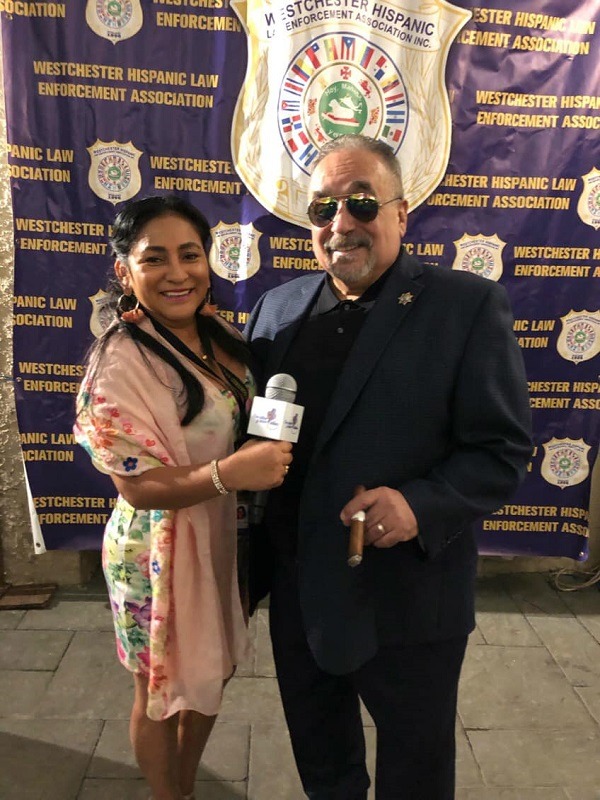
Tatiana Mezarina next to Willie Colón

Tatiana began by thanking us for inviting her and telling us how she became interested in the world of radio. All this enthusiasm for this interesting world of communication began since she was very little in her native Peru, at which time she worked as a school correspondent for one of the most famous newspapers in Latin America, ‘‘El Comercio”. On the radio, she began on the radio station Radio Libertad, specifically in a program show ”Viva Juventud”.

Since a very early age, Mezarina was very involved on all types of media, both print and audiovisual. Then, she had the opportunity to work in television with a show dedicated to music called ”El Mañanero”, which was in charge of broadcasting all kinds of artists and rhythms in her country.

When he started working for ”Canal Global”, he received a scholarship to study Communication Sciences in Germany and worked in German media such as Deutsche Welle and Berlin Channel. Both there and in the United States, she has had many shows linked to social causes and dedicated to informing her listeners about important issues.
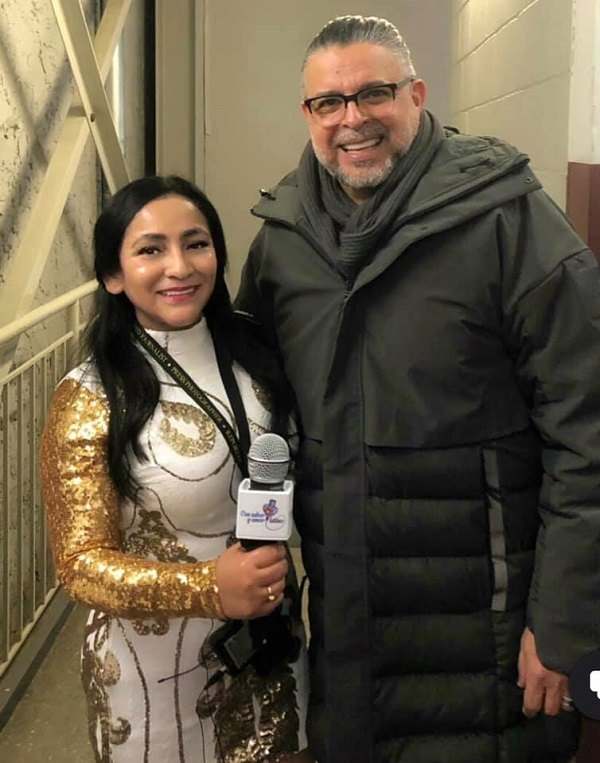
Tatiana Mezarina talking to Luis Enrique

How ”Con Sabor Y Amor Latino” started

In the case of her most recent project ”Con Sabor Y Amor Latino”, Tatiana wanted to work on all these issues and give a friendly voice to help Latinos living in the United States so that they know that we are the largest ethnic minority in this country, so we should not be harassed by anyone. At the beginning, this show sought to keep the Latino community informed, but as time went by, it also wanted to offer good music. This is how Tatiana began inviting Latin artists from all over the world and of all musical genres, but she always had a special tendency to salsa because it is her favorite type of music.

In September 2019, the announcer decided to create ”Con Sabor Y Amor Latino”, a name inspired by how delicious Latin food is and how loving much of us Latinos are. This was her first project of this type since arriving in New York and arose from the need for Latinos to have a window through which they could communicate in their native language and feel comfortable to express themselves.

Music has been very important as dancing and joy are part of our identity. Music is part of our DNA and salsa has always identified with the Latino.

Is academic training important for communication?

Mezarina states that she has no problem with communicators without any training long as they do this job responsibly. However, she also argues that a person with training tends to offer a higher quality work, but this is not always the norm.

The communicator confesses that she herself took a radio and television course there in New York, which was aimed at people who had never done radio before, but wanted to learn about this profession. This is how she became interested in this branch of communication and is the one she currently works in.

”There can be all kinds of communicators, but it’s up to to everyone to decide who to follow and what to listen to,” says the announcer.
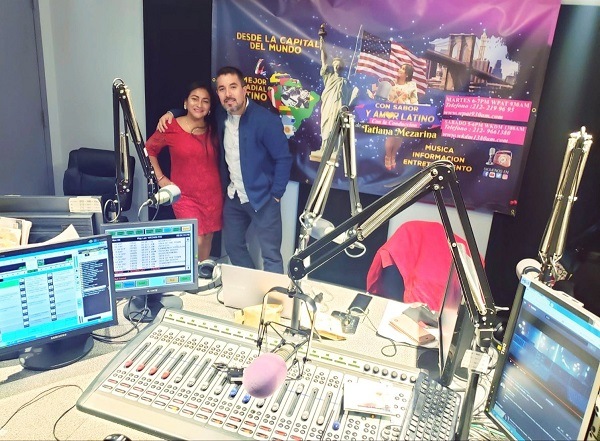
Tatiana Mezarina with Grammy-nominated Colombian percussionist Samuel Torres

Non-recommendable behaviors in communicators

When asked what behaviors which no communicator should have, Tatiana says that ”unverified information should never be disseminated. When we stand at a microphone, we have the responsibility to be careful with what we say because we reach thousands of people in a matter of seconds. If things are not done right, we confuse people and do not honor the truth.”

Future projects

As for her future projects, the communicator has said that she would never want Con Sabor Y Amor Latino to be cancelled, as she considers that much remains to be done from that platform. Unfortunately, she has been unable to dedicate 100% of her time to the radio show, but she hopes to be able to do so in the future. Similarly, he also hopes his content will be broadcast on one of the major television networks in the United States.

Meanwhile, the goal of Mezarina and her team is to keep the community informed on everything a Latino in the United States need to know to avoid inconveniences and to give publicity to artists from all genres who are unable to make their talent public through traditional radio stations and channels.
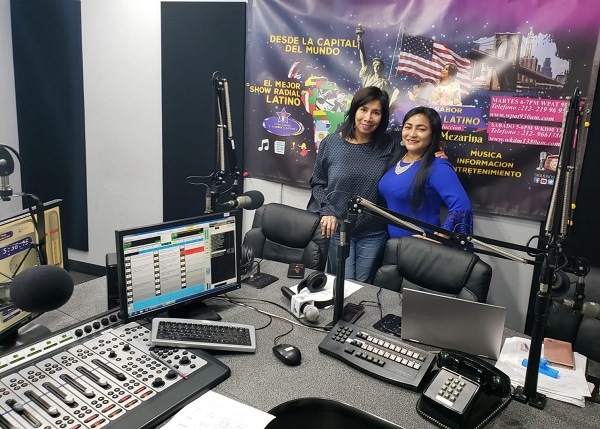
Tatiana Mezarina with commissioner of the NYC Department of Consumer and Worker Protection Lorelei Salas

Read also: The multifaceted artist Yamila Guerra and all her projects
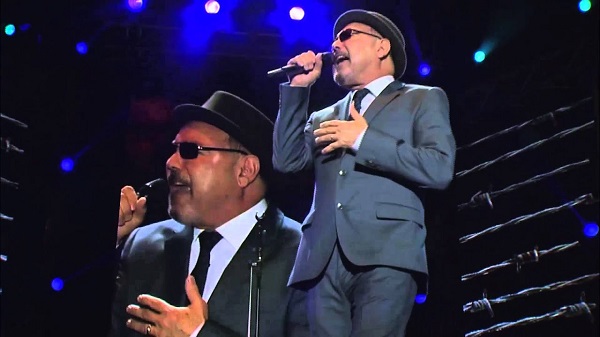
Synthesis on the song “El Cazanguero” written by Rubén Baldes for the album The Good, the Bad, the Ugly

“It is the lament of the cazanguero in Coiba at dawn, hurry up Chino Juan, they are already calling the line, the guard says not this time, don’t fall so far behind”.

“Whether it is sunny or raining hard, you have to take care of the sowing; don’t let the hunanga come to spoil your effort”.

In 1974, El Malo del Bronx, after 8 years of touring with El Jíbaro de Ponce, decided to take some time off, he did not attend the presentation of Fania All Star in Africa and dedicated himself to solving personal problems and producing.

He was working on his next album with Yomo and Hector, he remembered that there was a Panamanian boy he had met in 1969 at a carnival in Panama, whom he had invited to come on stage to sing with Hector in several of the presentations in clubs in the Big Apple.

This guy was already part of Barretto’s band and had given songs to luminaries of the genre that became hits, such as Guaguancó Triste to Richie and Bobby, Las Esquinas to Niño Bonito and Amor Pa’ que to Conjunto Candela.

These songs put him on Willie’s radar who asked him for a song to complete his next album. Ruben, who was that Panamanian boy, happy for El Malo’s request, writes his first song while living in New York.

Ruben arrives at the studio where that song was being recorded and Hector approaches him and tells him that he would not record it because he didn’t understand it, he didn’t feel it and that’s why it wouldn’t sound right.

Ruben is disappointed by what Hector said, but Willie really liked the song and asks Ruben to record it himself.

Ruben reminds Willie that he is part of the band El de Las manos Duras and that it would be a problem, Willie replies that he would fix it, which he did, obtaining don Masucci’s permission.

This marked the end of Ruben with Barreto and the beginning of what would become the duo that would dominate Salsa for the next 6 years.

This song we are talking about is El Cazanguero,

It is the lament of the cazanguero in Coiba de madrugá’. Hurry up Chino Juan, they’re already calling the line, the guard says not this time, don’t fall so far behind”.

“Whether it is sunny or raining hard, you have to take care of the sowing, so that the cazanga does not come to spoil your effort”.

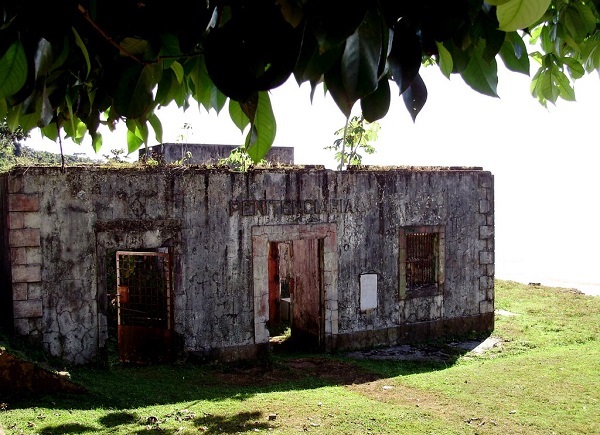
Part of Coiba’s history as a penal colony, for 74 years, is described in El Cazanguero, a song by Rubén Blades that began to be heard in 1975.

The song describes who the cazangueros were, some of the punishments to which inmates who broke the rules were subjected, and the sadness of being far from their families, with the uncertainty and fear of an enemy attack, in an open penal system like Coiba.

Although the main value of the island is in its natural wealth, it is also important its history and the history of the prisoners it housed, the anecdotes of those who paid long sentences for going against the laws and the rights of others.

How many cans of gravel are there from here to Catival?” Blades ask in his song. The rubble, which is everywhere in Coiba, was used to fill the holes in the roads, to fill land or in construction”.

The Cazangueros were the inmates who chased away the cazanga, a climbing bird of the parrot family, green in color, with a blue head and neck, black beak and legs, which killed, like a plague, any planting it found in its path.

“The cazanga would come down from the mountains by the thousands, in the early morning, and the hunters had to scare them away by ringing empty oil cans and shouting. Sometimes they had to make dolls in human shapes to win the battle against the birds”.

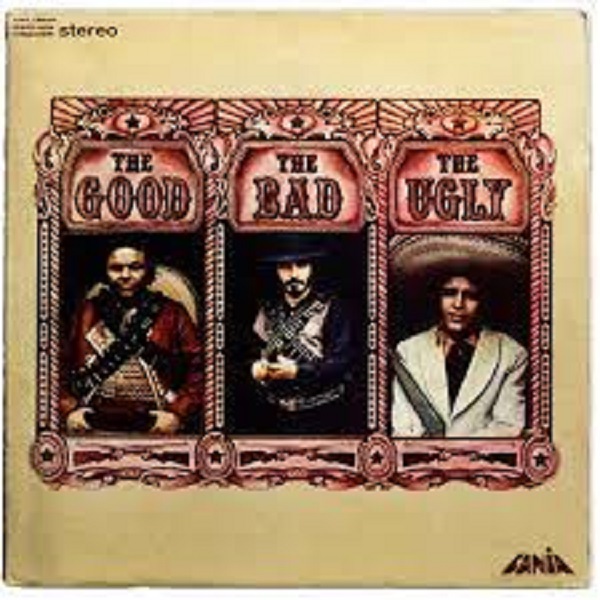
As mentioned above, El Cazanguero was the first song Ruben wrote in the United States. To write it, he was inspired by his trip to the penal island of Coiba where he wrote his law degree thesis. It seems that this song was placed as filler on the 1975 album “The good, the bad, and the ugly” featuring Willie Colon, Hector Lavoe and guitarist Yomo Toro on the cover. However, it was “El Cazanguero” that sold the acetate record.

“El Cazanguero” was cut 6 of the album “The good, the bad & the ugly” which was recorded in 1974, at Good Vibrations studios. It was the last album in which Willie Colón and Héctor Lavoe collaborated.

It contained 3 instrumental tracks, three sung by Colón in his first appearance as a solo singer on record (“Toma”, “Cua cua ra, cua cua” and “Guaracha”, 2 with Lavoe’s solo voice (“Popurri III” and “Que bien te ves”) and “El Cazanguero” written and sung by Blades.

Hablemos de EL CAZANGUERO

You can read: Louie Ramírez «El Quincy Jones de la Salsa» y su talento progresivo un Genio escondido de La Fania All Stars

Earl Miranda and Ric Feliciano talk about the Latin Rhythm Boys and its history

Here we have Miranda and Feliciano

Good afternoon, we have here Earl Miranda, musical director of the Latin Rhythm Boys, and Ric Feliciano, writer and arranger for the group. Nice to meet you guys. It’s a pleasure to have you here.

Hi, Karina. It’s great to see you. We’re doing great.

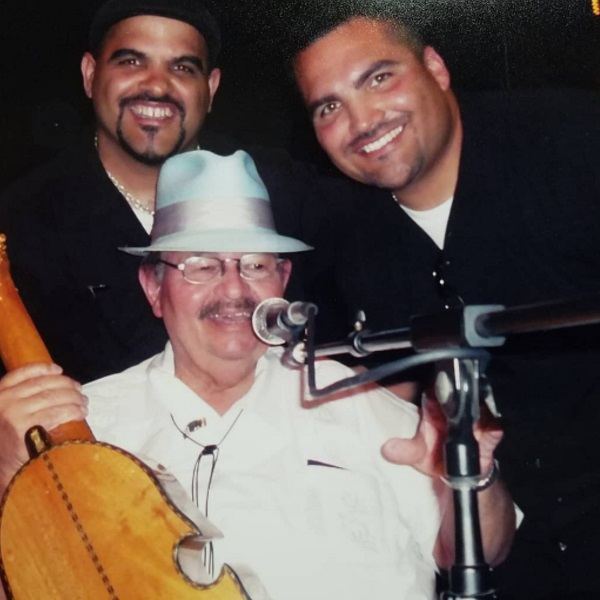
Earl Miranda, Henry Miranda, and Yomo Toro

Okay, wonderful. This project began with your father, Mr. Miranda, who was at the head of the group. What did you and your brother Henry learn the most from your father? How did you develop a love for music?

This all started when we were just kids. We had a lot of family celebrations like Christmas and my father’s band always came and play until three or four o’clock in the morning. My mother made food. Music was always very important to all of us from the beginning. When my father died in 1969, my brother started playing for some bands and I started working as a DJ until it got to the point where we got together and decided to start this whole project together.

Around 2003 or 2004, we contacted our cousin Ric Feliciano to ask him to join us. We started to develop a new salsa style. Ric came with the salsa flavor, while we had the jíbaro flavor, so we brought those two things together to start making music.

Mr. Feliciano, do you have anything to add?

Yes, I am a Boricua from New York, that is to say, a Nuyorican as people say here. Back in the 80’s and 90’s, I grew up listening to the music of Hector Lavoe, Mon Miranda, Willie Colón, among others. I am a trombonist and also like trombanga, which is the music of Mon Rivera and Willie Colón which involves placing trombones at the front of the group so that the sounds are very heavy. That is the style of the Latin Rhythm Boys, which seeks to look to the future, but honoring the stars of yesterday. Since we have three or four trombones and a very particular singing style, many people say we sound like La Fania, including Hector Lavoe’s timbalero, who tells us that our style reminds him a lot of the 70’s and 80’s.

When I listen to your music, it sounds a lot like old school salsa. Why choose that specific style?

For me, that style represents the story of which we come from. My family and his father come from Puerto Rico and moved to Hawaii. In 1963, my father made his life in the United States, California, but he actually started his band in 1957, which was called Junior Miranda and The Latin Rhythm Boys. Then, my brother called it The Latin Rhythm Boys Orchestra.

We have added certain elements to make our music more modern, but many of the arrangements are typical of old school salsa.

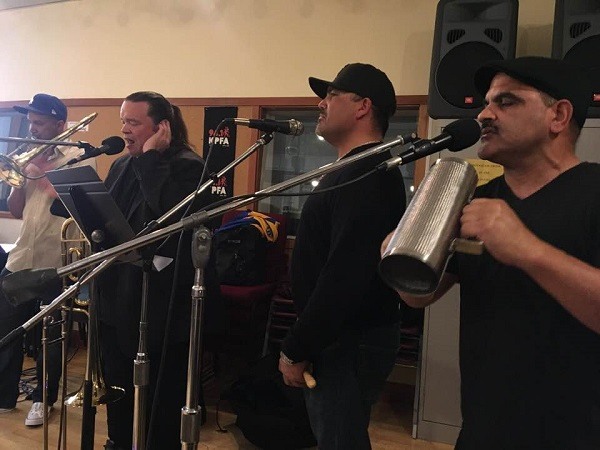
Earl Miranda, Henry Miranda and other members of the band

How Earl, Henry, and Ric work together

Mr. Miranda, you are the musical director of the Latin Rhythm Boys and your brother Henry is the music producer. How do you work together?

(Mr. Feliciano answers the question) Well, I’m the arranger, so what we do is Earl and I write all our lyrics together. My family comes from a long line of jíbaros, but we also love salsa. That’s why we are what we are today.

(Earl Miranda’s answer) We are a great team because I have a lot of ideas and Ric applies them in a phenomenal way. Things work out even better than when I thought of them.

We’ve been invited to awards shows and films to make soundtracks in Hollywood. We’ve done some jingles for certain Hollywood and Netflix films.

Mr. Miranda, you said in an interview that jibaro is more like heart and soul, what did you feel when you listened to jibaro music as a child? Why is jibaro music so important to you?

This taste for jibaro music started when I was a child. This reminds me of when I was with my family, my uncles, my aunts, my cousins and other members. It is in my soul. However, we knew we had to evolve into something more relevant. That’s how we created the group and decided to mix new with old. We look to the future, but honor the past.

There are many family members in the orchestra. Would you say this is a family project?

I would say that myself, Henry, Ric and Ricky Castillo are part of the same family. Certainly, there are many members of the family, but many things change over time and members get older, so they withdraw from group. There are also many members who are not family, but they become family and become very necessary for the band.

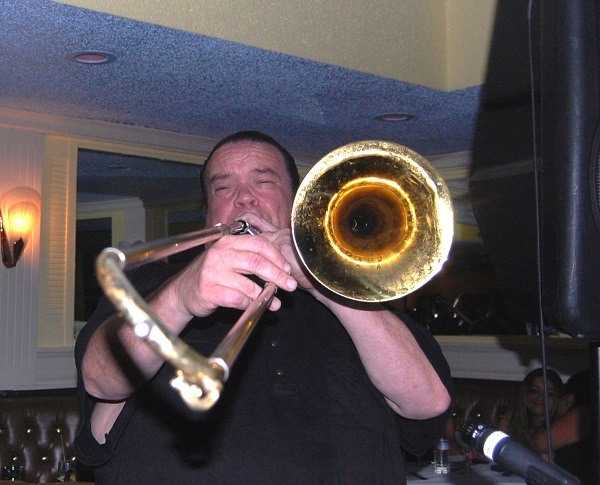
Ric Feliciano playing the trombone

This question is for Mr. Feliciano. I understand that you joined the orchestra in 2003. How did you join the Latin Rhythm Boys?

I came to California in the 90’s and was part of a few bands here, but I was looking for something that might take me back to my roots. That’s when I heard about the Latin Rhythm Boys (laughs) and decided it was a project I could work on. It brought me get back to my family roots, but we also achieved a new sound.

Music is very important to the family. You have always listened to Jíbara and Puerto Rican music. Would you say that education and training is important for musicians?

Yes and no. Musical training is important on the one hand, but on the other hand I think that music just flows. For example, I’m not very good at reading music, but it’s here in my heart. I could perceive it, even if I don’t have a lot of training around it. I think that’s part of the beauty of it all. Well, Ric is a teacher, so he can offer you another view on this subject.

(This is Mr. Ric Feliciano) Indeed, I am a teacher and I’ve been teaching music for over 30 years, but I must tell you something. Education is not enough to be a good musician because there is a connection that cannot be taught through a class. I’ve had many students who do everything right in technical terms, but they don’t have the necessary flavor. Not everybody has that. I think there needs to be a balance between feeling, flavor and education.

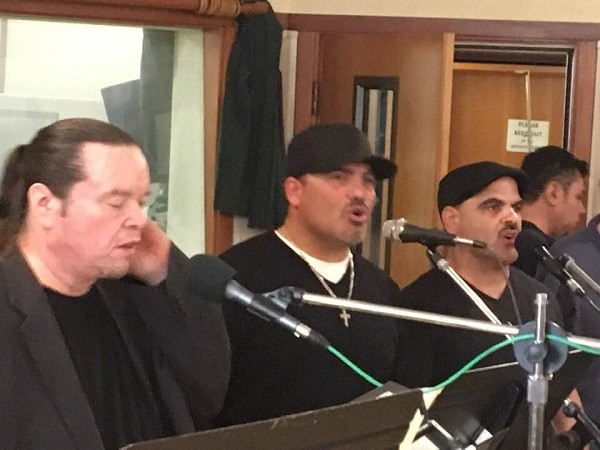
Ric, Earl, and Henry singing and playing

Do you have to be Latino to have that flavor?

We have some guys in the band who aren’t Latino, but they get the swing. We can work with anyone regardless of their ancestry, as we’ve had Americans and Europeans who have everything we’re looking for. We give them the sounds and they have no choice but to imitate them (laughs).

Do you consider it more important to make original music than to do covers?

Absolutely. If you have the talent and vision in your head, everything flows. I think if a person has a song in his/her head, he/she is going to want to translate into reality that idea and play it for an audience to see its reaction. If the reaction is good, you think you’ve done something right.

(This is Mr. Feliciano) What we usually do is to play our own songs at 90 per cent and covers at 10 per cent to please the audience. In fact, many people ask us for certain songs that they think they’re not ours, when, in reality, they are our hits from many years ago.

Ric, Earl, and Henry performing

Versatile multi-instrumentalist, producer and arranger, Taylor Aranguren

In Barquisimeto, a city catalogued as the musical capital of Venezuela, there are musicians of excellent quality and one of them is the versatile multi-instrumentalist, producer and arranger, Taylor Eduardo Aranguren García, a young man born in the aforementioned city on August 2, 1991.

Taylor plays piano, bass and trumpet to perfection. His musical beginnings were in 2003 and in 2005 he had the great honor of joining the Lara State Symphony Orchestra, accompanying the “Sonero del mundo” Oscar D’León in a concert held at the “Coliseo Hípico” of the twilight city of the country.

Then in 2005, he makes artistic life in Puerto la Cruz, Anzoátegui state; in 2007 he moves to Colombia, in 2009 he returns to Caracas as a member of the Staff of the television program “Súper Sábado Sensacional”; then in 2010 he travels to Beijing to perform musical works, later in 2012 he accompanies Maelo Ruiz on a tour of Venezuela, later he is contacted by the Band of Benjamin Rausseo, humorist known as “Er Conde del Guácharo”.

In 2014 he joins Óscar Arriaga and Néstor Rivero ex-vocalists of “Los Adolescentes”, directing them as musician and arranger and additionally they record with the musicians: Diego Galé, Ytúrvides Vìlchez, Franco Lemus and Freddy González, achieving successful concerts in countries such as: Dominican Republic, Peru, Colombia, Chile, Ecuador, Panama, United States, Mexico, Italy, Germany and Spain.

And with this preamble of his artistic career, consequent readers, we welcome again, to the column “Salsa Escrita” to one of the best musicians of our country.

Greetings Taylor, it is an honor to have you as a special guest in International Salsa Magazine, “the Only Salsa Magazine in the World”.

Thank you Professor Carlos, for giving me the opportunity to be in your well read column “Salsa Escrita”, through this prestigious media and to be able to interact with all readers nationally and worldwide, making known my projects and part of my artistic life.

Taylor to begin with, we want you to tell us about your role as an arranger and to which artists you have done your musical works?

Ok my friend Carlos, let me tell you that I was arranger and musician in the production “Quintero Salsa Proyect” with the Quintero brothers (Luisito and Roberto Quintero) on that occasion with the song “Chamito Candela”, performed by Gustavo Aguado and Luis Fernando Borjas of Guaco, I also had the pleasure of arranging the song “No lo Beses” in the voice of my uncle Jorge Luis Suarez (former singer of Oscar D’Leon), also the song “Chismoso” by Marcial Isturiz; “Te Quedas” interpreted by José Alberto “El Canario”, in the same way “Te amo y punto” with Óscar Arriaga, I also made arrangements for the last movie of “Er Conde del Guácharo” and many more that at the moment do not come to my memory.

Very good Taylor, Congratulations, but we are curious to know in which facet you feel better, as a musician or as an arranger?

Professor, it is different to feel as an arranger, it is cool because it is a work or a child that comes out of your guts, it is something that you create, it comes from you and you enjoy it a lot, but playing live is a feeling in the moment, you know, enjoy the stage, the musicians, but I like the recording more, both for me are super important.

Excellent, now which singer, arranger and percussionist would you like to record and play live with?

Well, as a singer would be Oscar Arriaga, in percussion, Luisito Quintero and arranger I would like to share with Oscar Ivan Lozano, a great brother from Colombia, director and arranger of “Grupo Niche”.

Taylor, can you tell us about the work you have been doing with the ex-vocalists of Adolescentes Orquesta?

Actually I am working sporadically with some of them and right now I am in alliance with former teenagers from Venezuela who are currently based in Bogota and God willing at the end of July we will be touring throughout Colombia.

My friend Taylor, do you have planned this year some shows where you accompany as a musician to some recognized artist?

Well yes brother, in mid-July I will be accompanying Andy Montañez and Maelo Ruiz in Buenos Aires – Argentina and then I’m going to Uruguay with my project Taylor Aranguren to a concert in the city of Montevideo.

And in relation to the recording of the video, “Taylor Aranguren and his Venezuelan salsa” which would be captured for DVD format and would be recorded in Barquisimeto and where they would be invited figures such as: Luisito Quintero, Roberto Quintero, Edward Montoya, (Willie Colón’s trombonist), Rónald Borjas, Rónald Gómez, Jorge Luis Suárez, Wilmer Lozano, Toñito León “El Bebé Salsero”, Marcial Istúriz, Hildemaro, Mariana “La Sonera de Venezuela”, among others; it is still standing? Tell us:

Let me tell you professor Carlos that for reasons of the pandemic everything was suspended and thanks to God I already have almost certain date between November and December of this year 2022 and we will record it in the city of Sol Miami – Florida and the reason for the change of city is because of the ease that almost all the artists and musicians are there and the logistics and sponsorship is broader, many producers have been interested and for that reason, it is less expensive and after that recording I am committed to do a concert with them in the city of Barquisimeto.

My friend Carlos, I take this opportunity to tell you that in August I have a tour in Europe with Maelo Ruiz and David Pabon but I am waiting for the confirmation of my friend also from Lara, Yomar “Caballito” Mendez and for my album that will be released with God’s favor at the end of the year, Rónald Borjas has already recorded, Óscar Arriaga, Néstor Rivero, Benjamín Rausseo, Erick Franchesky, Luis Matheus from Colombia, Rodrigo Mendoza, Sócrates and soon Oscar D’León, and I am also making some arrangements for Luis Fernando Borjas ex Guaco.

Excellent Taylor, we would like to know your social networks and also wish you the best of success and many blessings for exalting and putting up the name of our country outside our borders, demonstrating your quality as a musician; you know that you always have our support in all projects you undertake in your artistic career.


Thanks a thousand, my friend Professor Carlos Colmenárez and INTERNATIONAL SALSA MAGAZINE through www.SalsaGoogle.com for giving me the support not only to my person, but also to many artists of Venezuela that day by day we work for our Latin music, also on behalf of this server Taylor Aranguren, I wish you the greatest success in your work and continue to make us known worldwide, to finish you can follow me through @Taylorarangurenpiano.

Hasta la próxima y sigamos salseando!

Article by Correspondent: Carlos Colmenarez

On March 19, 1928, in Guaynabo, Puerto Rico, Rafael Viera Figueroa was born.


Excellent Music Promoter. Remembered for promoting the LP Siembra by W Colón and R Blades. He founded Viera Discos, “Cathedral of Latin Music”.

He was considered one of the main disseminators of salsa in Puerto Rico, Rafael Viera, also creator of Viera Discos, one of the most important points of the movement until 2016, year in which it was closed.

Viera Figueroa was, from the late sixties to the eighties, Fania’s representative on the island. Why? He was the one who brought the music of the label founded by Pacheco and Masucci to the land of Ismael Rivera, when it was mainly distributed in the United States.

He was the promoter of the first Fania All Stars concert in Puerto Rico in 1973 and was in charge of bringing to Puerto Rico the films ‘Our Latin Thing’ and ‘Salsa’, which packed the local theaters in the seventies. According to Primera Hora, he was the one who inaugurated the Roberto Clemente Coliseum in San Juan.

In 2014 Viera suffered a stroke that kept him in intensive care. On that occasion his son, Richie Viera, gave these words to the aforementioned media: “I am a man of faith, and in God I trust that Dad will recover and will be able to continue with us for many more years, offering us his wisdom, his anecdotes and promoting and collaborating so that new talents will have a place in Latin music”.

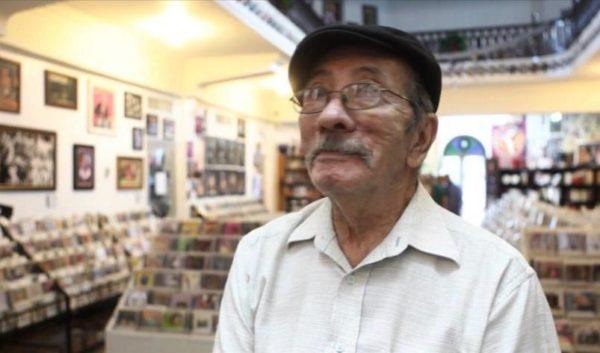
Viera was known for the famous Casa del Coleccionista store, which he ran for more than 60 years in Santurce, for Viera Discos and for the Catedral de la Música.

He was also one of the driving forces behind the salsa boom at the time of Fania Records, where he worked as producer and promotion manager of the conglomerate of record labels; Fania Records, Vaya Records, Tico Records, Alegre Records, Cotique Records, Éxito Records, International Records and Música Latina, among others.

He was also involved in the success of the careers of artists such as Willie Colón, Larry Harlow, Cheo Feliciano, Richie Ray and Bobby Cruz, Celia Cruz, Ismael Miranda, Sandro, Sabú, Willie Rosario, Miki Vimari, Sonora Ponceña, Tommy Olivencia, La Lupe, Tito Puente, Eddie Palmieri, Ismael Quintana, Justo Betancourt, Héctor Lavoe, Tito Rojas, Frankie Ruiz, Corporación Latina, Junior Toledo, Viti Ruiz, Guillo Rivera, Ray Barreto, Willie Rosario, Orquesta La Terrífica, Roberto Roena y su Apollo Sound, Johnny Pacheco, Pete “El Conde” Rodríguez, Impacto Crea, Ismael Rivera, Raphael, Wilkins, Trio Los Condes, Joan Manuel Serrat and the most important conglomerate of musicians in the history of Latin music known as Fania All Stars, among others. In 1973, he was the promoter of the first Fania All Stars concert in Puerto Rico, which inaugurated the Roberto Clemente Coliseum in San Juan.

In the field of cinema, Viera brought to Puerto Rico the film “Our Latin Thing” and Salsa, films that crowded the local movie theaters.

He passed away on January 13, 2019 in Puerto Rico, may he rest in peace and eternal glory to Rafael Viera!


By Bella Martinez, ISM Correspondents, San Juan, Puerto Rico


  • « Go to Previous Page
  • Page 1
  • Interim pages omitted …
  • Page 13
  • Page 14
  • Page 15
  • Page 16
  • Page 17
  • Interim pages omitted …
  • Page 27
  • Go to Next Page »

International Salsa Magazine (ISM) is a monthly publication about Salsa activities around the world, that has been publishing since 2007. It is a world network of volunteers coordinated by ISM Magazine. We are working to strengthen all the events by working together.