• Skip to primary navigation
  • Skip to main content

International Salsa Magazine

  • HOME
  • Previous editions
    • 2026
      • ISM / March 2026
      • ISM / February 2026
      • ISM / January 2026
    • 2025
      • ISM / December 2025
      • ISM / November 2025
      • ISM / October 2025
      • ISM / September 2025
      • ISM / August 2025
      • ISM / July 2025
      • ISM / June 2025
      • ISM / May2025
      • ISM / April 2025
      • ISM / March 2025
      • ISM / February 2025
      • ISM / January 2025
    • 2024
      • ISM / December 2024
      • ISM / November 2024
      • ISM / October 2024
      • ISM / September 2024
      • ISM / August 2024
      • ISM / July 2024
      • ISM / June 2024
      • ISM / May 2024
      • ISM / April 2024
      • ISM / March 2024
      • ISM / February 2024
      • ISM / January 2024
    • 2023
      • ISM / December 2023
      • ISM / November 2023
      • ISM / October 2023
      • ISM – September 2023
      • ISM – August 2023
      • ISM July 2023
      • ISM Edition June 2023
      • ISM – May 2023
      • ISM April 2023
      • ISM March 2023
      • ISM February 2023
      • ISM January 2023
    • 2022
      • ISM December 2022
      • ISM November 2022
      • ISM October 2022
      • ISM September 2022
      • ISM August 2022
      • ISM July 2022
      • ISM June 2022
      • ISM May 2022
      • ISM February 2022
      • ISM January 2022
    • 2021
      • ISM December 2021
      • ISM November 2021
      • ISM October – 2021
      • ISM September 2021
      • ISM August 2021
      • ISM July 2021
      • ISM May 2021
      • ISM April 2021
      • ISM June 2021
      • ISM March 2021
      • ISM February 2021
      • ISM January 2021
    • 2020
      • ISM December 2020
      • ISM November 2020
      • ISM October 2020
      • ISM September 2020
      • ISM August 2020
      • ISM July 2020
      • ISM June 2020
      • ISM May 2020
      • ISM April 2020
      • ISM March 2020
      • ISM February 2020
      • ISM January 2020
    • 2019
      • ISM December 2019
      • ISM November 2019
      • ISM October 2019
      • ISM Septembre 2019
      • ISM August 2019
      • ISM July 2019
      • ISM June 2019
  • Spanish
  • Download Salsa App
    • Android
    • Apple

Search Results for: Willie Colon

Nicky Marrero one of the best timbaleros of all time.

North America / USA / New York

Nicky Marrero, an Award Winning Master Percussionist, Innovator and Educator.

Nicky Marrero born in the Bronx, in 1950; recorded his first album “El Malo” with Willie Colon in 1967.

Still in High school, he joint Eddie Palmieri, performed and recorded with the Fania All Stars, Dizzy Gillespie, Machito, Ringo Starr amongst so many more.

His unique talent left a mark on sound in style through his creativity and boldness of breaking with tradition and creating his own to this day.

The most recorded, versatile and dynamic Puerto Rican Percussionist of his time.
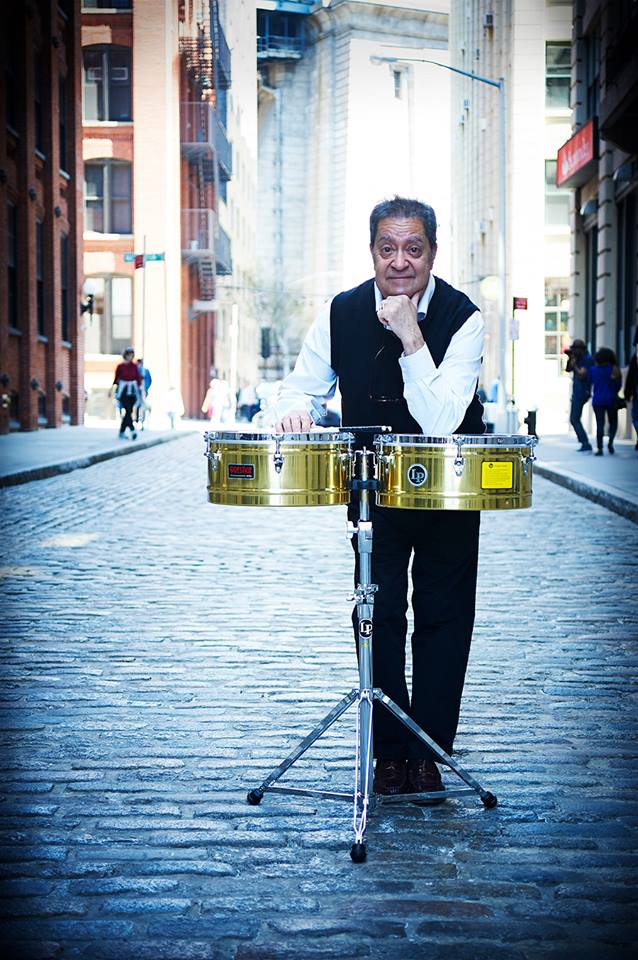
Nicky Marrero
Nicky Marrero

Exciting News!!
Latin Master Percussionist Nicky Marrero is taking on a few more private students.
How about you?

Do you share the passion and dedication to reach a higher level as a professional, student and or serious hobbyist with one of the best?

So email your details to [email protected] do not  miss out on this unique opportunity to broaden your knowledge and advance your own skill and technique under the guidance of a true, World class Award winning Master of his Craft.
https://www.facebook.com/NickyMarreroOfficialPage

https://www.facebook.com/NickyMarreroOficial/

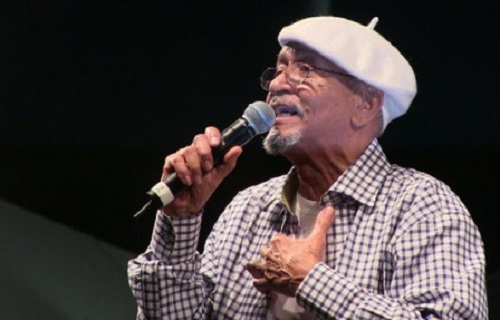
Justo Betancourt Querol Cuban sonero and singer famous for his interpretation of the song “Pa’ bravo yo”

Heir to the solid musical tradition of his family, Justo Betancourt was an incomparable sonero, possessing a unique personal style, He began his career at a very early age in his native Cuba, where he participated with orchestras and bands.

Justo Betancourt Querol Cuban sonero and singer famous for his interpretation of the song Pa' bravo yo.
Justo Betancourt Querol Cuban sonero and singer famous for his interpretation of the song Pa’ bravo yo.

In the 1960s, he arrived in New York, where he launched a new and brilliant stage of his career, singing vocals for the legendary and inveterate group, La Sonora Matancera, which was already established in the city. Betancourt stayed with the group for five years.

In later years, he was a member of the chorus of several groups, including those of Eddie Palmieri and Ray Barretto.

At the end of 1976 Justo settled in Puerto Rico, fleeing the limitations of the New York environment and separating himself from the tours and recordings of Fania All Stars, to enter the modern and freer scene projected by groups such as Sonora Ponceña, Willie Rosario, Bobby Valentín and Roberto Roena, among others, from the island.

With young musicians including vocalists Sammy Gonzalez and Tito Rojas, he created his own orchestra which he called “Borincuba”, a name to reflect the mixture of Puerto Rican and Cuban artists.

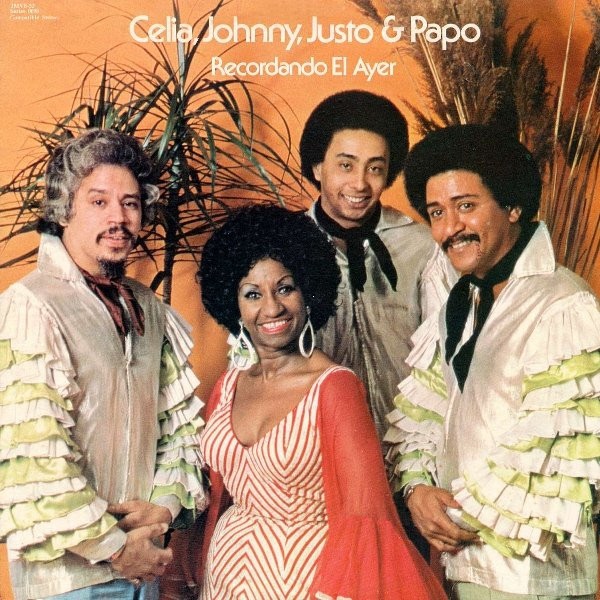
In 1976 Johnny Pacheco in his interest to maintain the successful formula of the modernization of the sound of the Sonora Matancera as the typical sound of his group (the Tumbao Añejo), unites the voice of Justo Betancourt with that of his compatriot Celia Cruz, it was the first time that this duo of Cubans in exile was reunited, in the album “Recordando El Ayer” and in which the young pianist Papo Lucca was presented in a big way. Justo’s voice was recorded in the songs “La Equivocada” (a duet with Celia), “Ahora Sí” and “Guíllate”.

Celia, Johnny, Justo & Papo Recordando El Ayer 1976


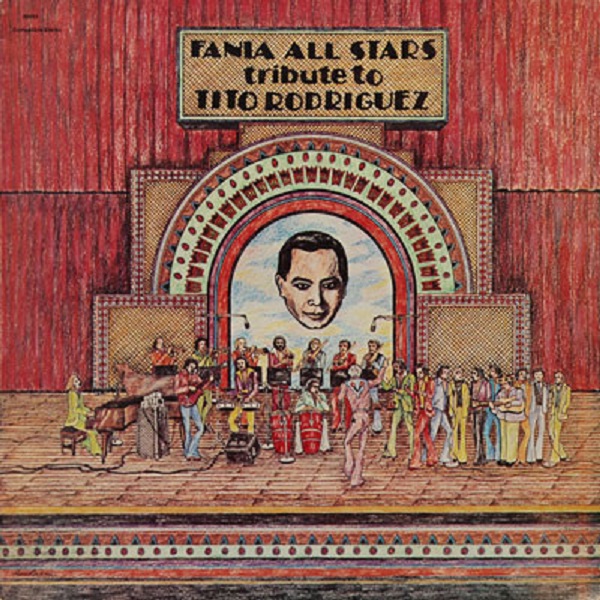
That same year 1976, Justo is part of the ten vocalists that the Fania All Stars summons for his first production in a recording studio in the project “Tribute To Tito Rodriguez”, in which he performs the song “Cara De Payaso”, (the other vocalists were Santos Colón, Bobby Cruz, Cheo Feliciano, Héctor Lavoe, Ismael Miranda, Ismael Quintana, Pete “Conde” Rodríguez, Rubén Blades (his first recording with Fania All Stars) and Chivirico Dávila (his only recording with the group).

Fania All Stars Tribute To Tito Rodriguez 1976

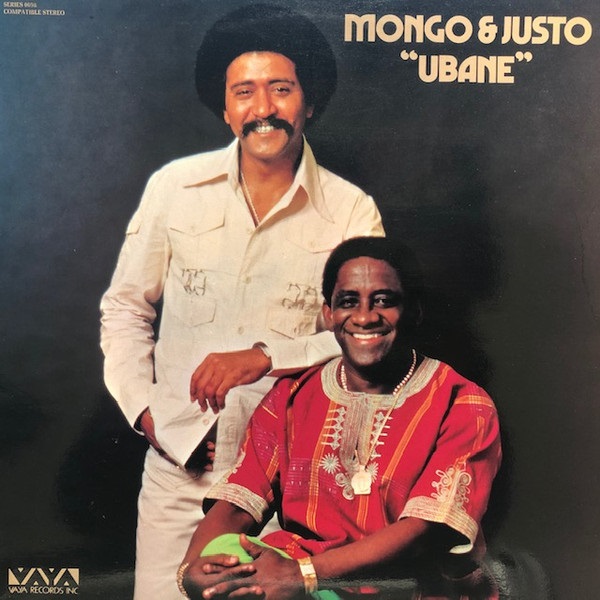
To complete this productive year, Justo Betancourt joins percussionist Mongo Santamaría as the lead vocalist for the musical work “Ubane”, with the production of Marty Sheller, one of the important experimental albums of the salsa boom, a work that recovers the saxophone for the Salsa and bembé orchestra in the old Cuban Guaracha of the 50’s, and in which a constellation of New York, Cuban, Puerto Rican and Colombian musicians participate.

Mongo y Justo Ubane 1976.

However, the album did not succeed in definitely catching on with the public and ended in the most unjust failure.

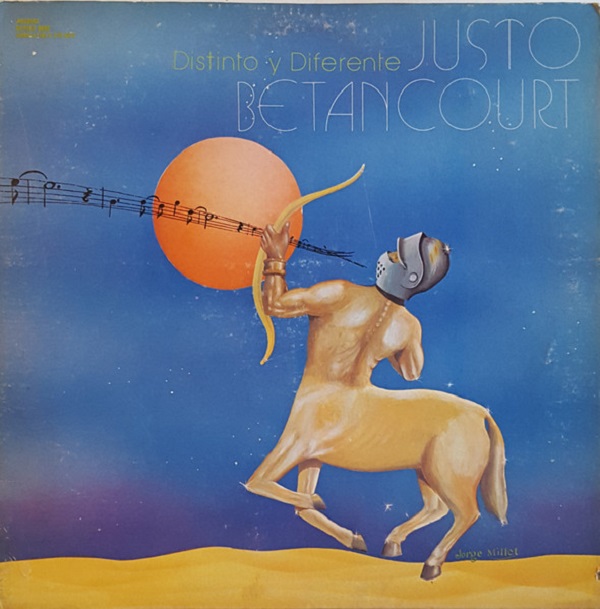
With his new orchestra, he recorded four albums, of which he recorded as lead singer in only two albums: “Distinto Y Diferente” (1977) which includes the songs: “No Estás En Nada”, “Distinto Y Diferente”, “Soy Profesional” and “Óyela”; and “¡Presencia!” (1978) which includes a tremendous new version of the bolero “Psicología” and the song, composed by Catalino “Tite” Curet Alonso, “Camarón”. Justo was always among the best and remained oblivious to the decadence of the industrial boom of New York Salsa at the end of the decade.

Justo Betancourt Distinto Y Diferente 1977

His secret was to remain bravo by performing authentic Caribbean music without the commercial additives imposed by Salsa.

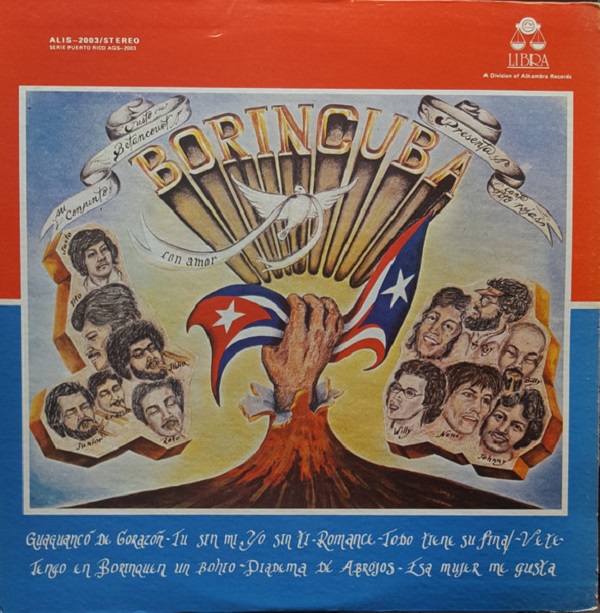
The young singer who performed in the chorus and Justo’s student in Borincuba, Tito Rojas, became the lead singer in the following album “Con Amor” (1978), which Betancourt conducted and participated in the chorus.

Tito Rojas’ last work before splitting from Borincuba to start his solo career was the album titled only as “Borincuba”, in which Justo also served as musical director and backing vocalist.

Justo Betancourt Presenta Su Conjunto Borincuba Canta Tito Rojas Con Amor 1978

So in 1979, when Tito inherited the band, he started his solo career changing the name to Tito Rojas y el Conjunto Borincano¸ which had a short existence.

After a series of his own albums, he became the lead vocalist of the Puerto Rican Power Orchestra and appeared on their first two albums (1987 and 1989).

In 1990, Tito Rojas embarked on his solo career with the romantic salsa album “Sensual” which reached first place in the Latin Music Hit Parade in April.

In the following years, Betancourt, residing between New York and San Juan, continued in the inertia of the Fania contracts. In March 1979, when the Fania All Stars were part of the group of musicians who traveled to the island of Cuba to participate in the “Havana Jam Festival”, a musical exchange between the United States and Cuba organized by CBS and held at the Karl Marx Theater in Havana, Justo Betancourt and his compatriot Celia Cruz, for obvious political reasons, could not travel with the group; for this reason Justo decided to leave the All Stars.

Nevertheless, his contract with the Fania company remained in force, and that year he released another album titled “Justo Betancourt” (1979), produced by himself and Louie Ramirez, which included the songs “Yo Sin Ti” and “Qué Más Quieres De Mi”, among others.

In 1981, Betancourt returns to record again with the Sonora Matancera in an album entitled “Sonora Matancera Con Justo Betancourt”, produced by Javier Vásquez and recorded on the Bárbaro label, a subsidiary of Fania and owned by Jerry Masucci. On this album, four guest musicians appear for the first time to record with the Sonora: Pedro “Puchi” Boulong: on trumpet, José Daniel: on the tumbadora, Elpidio Vásquez Jr. (son of the bassist): on second bass, and Mario Hernández: on tres.

From this work the hit “Mala Pata” and a new version of the bolero “Hoy Sé Más” stand out.

In 1982, he recorded his last work on the Fania Records label “Leguleya No” (1982), with his own production company RMQ and with the arrangements and musical direction of Ray Santos and Javier Vásquez.

From 1982 onwards his appearances were variable, he participated in Israel Sardinas’ LP, “Israel, la Verdad” (1984), and participated in Celia Cruz and Tito Puente’s album “Homenaje A Benny Moré Vol. 3” in 1985, in one of the songs: “Tú Solo Tú”.

Except for these participations, he made no recordings between 1983 and 1989.

And so, there were plenty of reasons for Justo Betancourt, despite so many successes, to end up in virtual anonymity and indifference. He gradually withdrew from the world of the studios, although he continued to perform sporadically.

After years of recording silence, he returned in 1990 with his style with the album “Regresar” on his own label RMQ, of which he was the producer, director and did half of the arrangements written by Eric Figueroa.

In 1992 he released the album “El Bravo De Siempre”, for Rafael Viera’s RV Productions label, which featured the participation of Cuban percussion legend Carlos “Patato” Valdes, among other great Puerto Rican musicians.

In 1994 he participated in the project of Puerto Rican producer and musician Frank Ferrer called “Descarga Boricua”, alongside more than 30 experienced local and international musicians such as Ismael Miranda, Jerry Medina, Papo Vázquez, Juancito Torres, Alex Acuna, Mario Rivera, Pedro Guzmán and Ángel “Cachete” Maldonado, among others. There, and in several songs, he resorted to his superb vocal resources as in his good times. In the second work of the Descarga Boricua, edited in 1996, he participated briefly with some soneos in the song “Abrázate a Puerto Rico”, as well as in the third album of the reunion of the virtuous Puerto Rican musicians.

He returned to the recording studios again in 1998 with the CD “Mató” for the El Paso label in Puerto Rico, and from which the song “El Lema Del Guaguancó” stands out in the most vigorous style of Arsenio Rodríguez, composer of the song.

He also made his return as guest singer of the Fania All Stars for the concert of April 29, 2000 in Puerto Rico, a return that he made together with Ismael Miranda and Luigi Texidor to the group.

Justo Betancourt has participated as a backing vocalist in the recordings of many Latin music orchestras and works of renowned artists, such as La Conspiración de Ernie Agosto, Celia Cruz, Johnny Pacheco, Roberto Roena, Willie Colón, Eddie Palmieri, Willie Rosario’s orchestra, Héctor Lavoe, Adalberto Santiago, Kim De Los Santos, Van Lester and the Puerto Rican Power orchestra, among others.

In 2002 he participated for pianist Papo Lucca in the musical project “Festival de Boleros” with the song “En Cada Beso”, along with a constellation of Boricua singers and musicians.

Sources:

Por: Jose Ramon Tremaria

Ecued

Fania Stars

Also Read: Nicky Marrero is an innovator, timbalero and bongo player, living legend of our Afro-Latin and Caribbean music.

Eric Duffau and his 26-year Tempo Latino’s legacy

North America / USA / New York

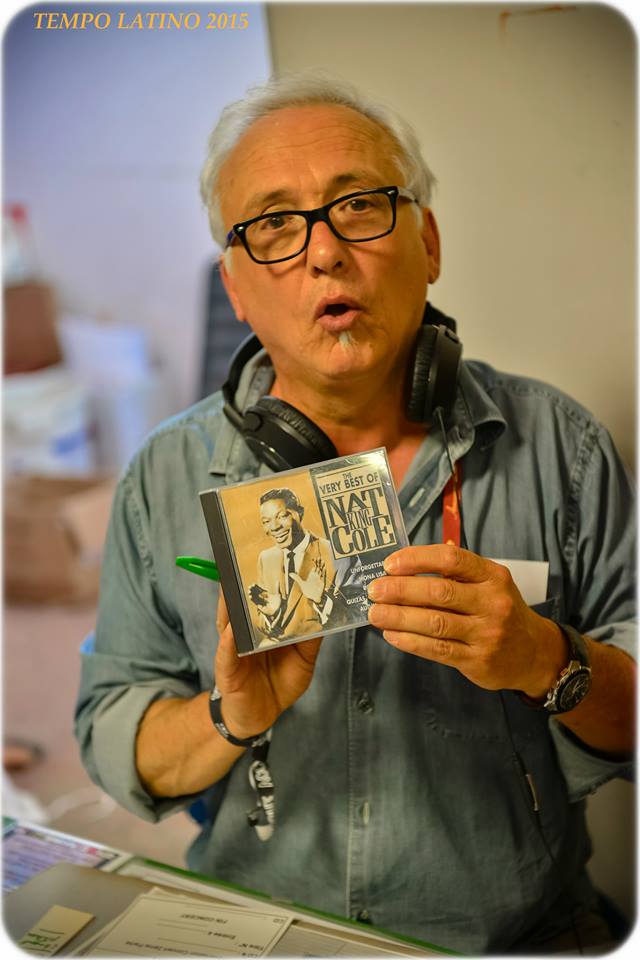
The biggest festival in Europe reaches its twenty-sixth edition and its founder told us how this journey began. International Salsa Magazine met with Eric Duffau and was able to talk about the beginning of the festival and the history behind the event that houses more than 60,000 people each year.

Tempo Latino Festival

Tempo Latino Festival is “The only one”. For 25 years has kept its artistic approach in the heart and around Afro-Cuban and Latin Music. Its region, “Occitanie”, in the department of Gers, opens up internationally by supporting the cultural adventure. A beautiful project built south pride and prize of risks to produce all these artists.

Eric Duffau is a music lover in all its splendour. He arrived in Paris in 1982, from his small village Vic-Fezensac to devote himself to the formal study of music. He studied classical music, medieval music, jazz, and at the same time, he met Mambo, Cha-Cha-Cha, Salsa and Latin Jazz. With his formal apprenticeships, he met the Temp, and with his learning in the streets of Paris, he met a range of Latin rhythms that were combined divinely to form what we nowadays know as Tempo Latino.

Eric Duffau
Eric Duffau

With this idea, he put together a 6-page project and in 1993 he returned to his village to seek the support of all those who wanted to collaborate. This is how in 1994 the first edition of the festival was held with 100 volunteers, becoming known among journalists, the public in France, Europe and the world.

The first edition was attended by 3,500 people with paid entrance, over the years the capacity of this arena up to 7,000 people paying every day, plus those who attend the other locations throughout Vic-Fizensac. Today, more than 60,000 travel to this small village to dance for 4 days in every corner.

To Vic-Fezensac, that has 3,700 habitants, is preparing itself during the whole year to welcome to a mixed race public and traveler, essential artists or to discover, proposing a festival under the heat of the end of July where everyone will have the freedom to go to the meeting of rhythms, people, flavors and other shared pleasures.

The Tempo Latino’s team is a well-oiled team that leads several projects of front and in which everyone knows what to do. All members of this team are passionate and possess very strong skills and a spirit of solidarity mark.

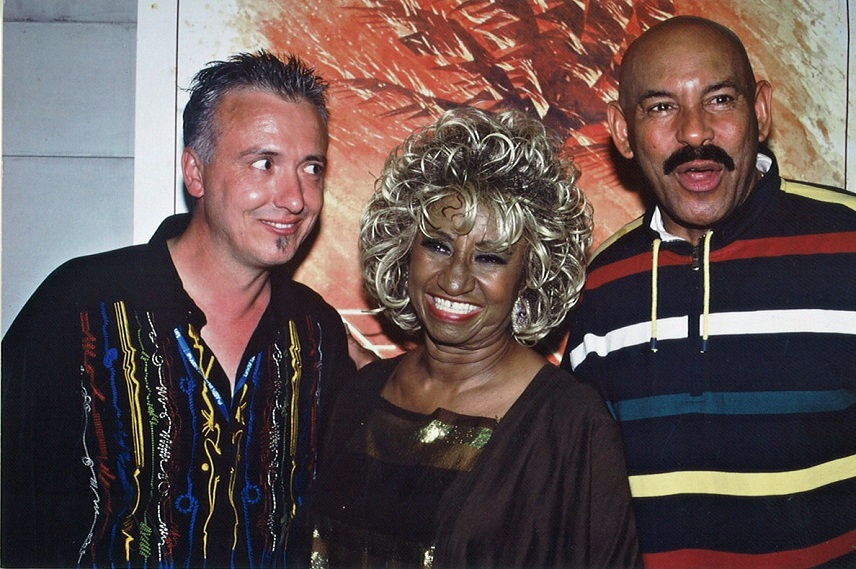
Eric Duffau, Celia Cruz y Oscar D Leon

To pay attention to every detail the festival count with:

7 members of the board | 2 employees

500 volunteers | 22 commissions

2 months of editing before festival

From this year, Mr. Jean-François Labit, will replace Mr. Eric Duffau as president of the Festival.

Some of the great figures in the world of Latin music who have passed through Arènes Joseph Fourniol in 15 avenue Edmond Berges, 32190 Vic-Fezensac are:

Israel López “Cachao”

Celia Cruz

Jimmy Bosch

Ósar D’Leon

Yuri Buenaventura

Willie Colon

Ernesto «Tito» Puente

Richie Ray & Bobby Cruz

And hundreds more in 26 years…

Eric Duffau, Wilile Colon, Eric Jimmy Bosch 1999

Where is Vic-Fezensac?

Vic in Fesensac in Occitan, is a town and commune in France, located in the Midi-Pyrénées region, department of Gers, in the district of Auch and canton of Vic-Fezensac. Is one of the last towns in France which still showcases bullfighting. The main feria takes place over the Pentecost weekend. On this occasion, tens of thousands of people gather all night long over the weekend in the tiny streets of the city. It is the first big “feria” of the year in Southwestern France. Small bodegas crowded with people are open until the morning comes, “bands” (bands of popular Basque or Gascon music) goes on the streets.

At the end of July, the Tempo Latino salsa festival takes place. Night markets (“Marchés de Nuit”) are also held in summer.

If you are in USA and want to go to the biggest Salsa Festival, you can fly with some cheap options that International Salsa Magazine finds for you:

Frenchbee:

San Francisco  – Paris

$500 round trip

www.frenchbee.com

La Compagnie:

New York – Nice

$1065 round trip in Business Class

www.lacompagnie.com

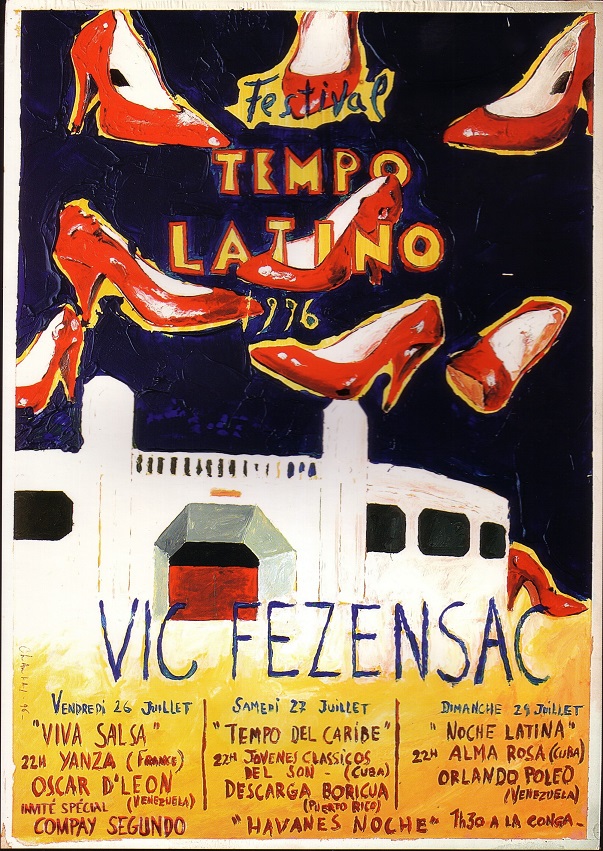
Tempo Latino Festival 1996 Jean-Paul Chambas flyer

Find them everywhere:

Web: http://tempo-latino.com

Facebook: https://www.facebook.com/tempolatino/

Twitter: https://twitter.com/tempo_latino?lang=fr

Instagram: https://www.instagram.com/tempolatino

Youtube: https://www.youtube.com/channel/UCRjFUG_yf9EgX-5FAPZwJGg

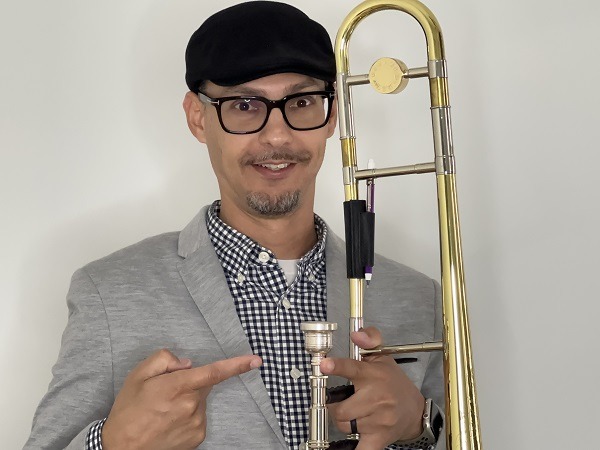
We bring trombonist Félix O. Rodriguez from Santurce to ISM

The beautiful island of enchantment Puerto Rico has always given birth to many of the best salsa exponents of all time and the source of talent that has come out of that place has been inexhaustible. It is always a pleasure to be able to talk with a boricua of those who continue to leave their Latin heritage on high and, this time, it was the turn of the arranger, composer, sound engineer and trombonist Félix O. Rodríguez from Santurce. 

It was very kind of the artist to give us a few minutes of his time to answer some questions for International Salsa Magazine and then we will be elaborating a bit on the topics we discussed with the salsa exponent.   

Félix from Santurce
Trombonist and sound enginer Félix O. Rodríguez from Santurce

Félix’s beginnings in the music world 

Félix’s first contact with music was at home, as his parents listened a lot to salsa, merengue, bachata and Latin music in general. While listening to this music, one of the things that attracted him the most was the sound of the trombone, especially in artists such as Willie Colón, Oscar D’ León, Gilberto Santa Rosa and many others. 

Once he reached the seventh grade in school, he decided to take music lessons and chose that instrument to start his training due to his fascination with it, something that today he does not complain about because he assures that he has done very well.   

In this learning process, noticing Félix’s interest in the trombone, his father, who was a professional orchestra musician, invited him to rehearsals so that he could soak up this whole atmosphere from an early age. It just so happened that the trombonist of this orchestra could not attend a rehearsal, so they gave the opportunity to the young boy to take his place for that night.   

After two or three shows, Félix was selected as house trombonist when he was only thirteen years old. Although he was not old enough to enter nightclubs, he was allowed to be present because he was part of the orchestra that would play there.  

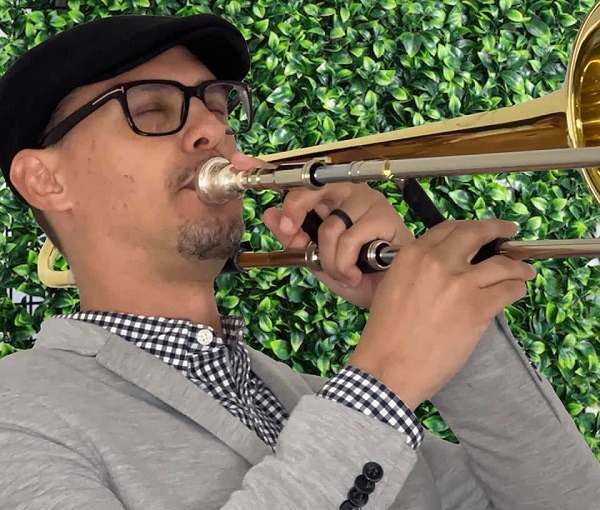
Félix playing
Félix playing the trombone

Orquesta Innovación and musical arrangements 

When he entered high school, Félix began to study a bit about music theory and related topics such as chords, writing for a specific instrument, percussion and other subjects. 

The young man worked so hard to train that, at only 15 years old, he was already perfectly capable of making musical arrangements, starting with transcriptions of music existing so far and copying notes from those songs. After several years on it, he finally started writing his own original music.  

In fact, he went on to record a couple of songs with Orquesta Innovación (the second orchestra he was in), a couple of original songs that unfortunately were never released, but served as experience for what would follow.   

University of South Carolina 

Félix acknowledged with laughter that this was the only university he applied to, so it was almost an obligation for him to be admitted. Fortunately for him, it was. 

He had to perform some tests with instruments and show examples of material of his own authorship to prove his musical skills. Everything he had learned so far was mostly based on salsa.   

Thanks to his effort and dedication in previous years, he was admitted to the University of South Carolina, where he studied music theory and trombone for five years. While there, the musician learned everything necessary about the historical aspects of all variants of classical music, jazz, marching band, orchestral symphony and many more. 

The formation obtained in his studies is still useful to Félix in the arrangements he makes today. However, he made it clear that his passion was and still is salsa and Latin music in general.   

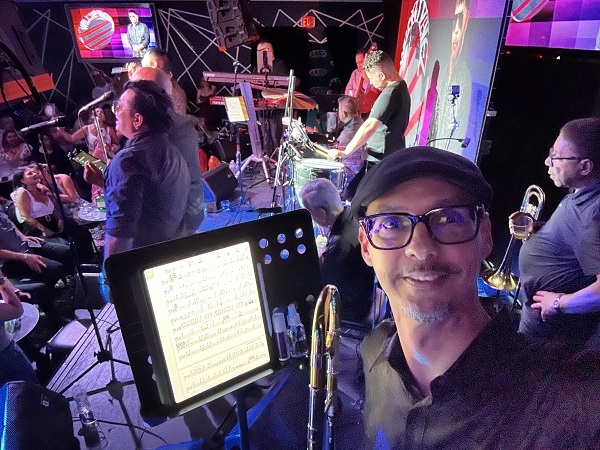
Félix during a performance
Félix during a live performance

Military life and musical activities during those years 

Upon graduating from the university, Félix was commissioned as an officer in the U.S. Army, following his father’s example, who was perfectly capable of meeting his obligations in the military and continuing to exercise his passion for music without having to give up either.   

As fate would have it, the artist met up with a former colleague from Orquesta Innovación, which led them to revive their passion for music and to create Orquesta Ideal, with which he spent eight years at Fort Bragg (U.S. military installation), North Carolina, his first stop as an officer.   

Over the years, he was assigned to units in Spain, Germany and Korea. It didn’t matter where he went because there were always Puerto Ricans and Latinos eager to get together to make music, which Felix took advantage of to be in touch with music, whether as a trombonist or a DJ. 

When asked if these events in which he was involved in were open to the public, he said yes in most cases, as military bases allowed entry to anyone, but unfortunately that changed with the Twin Tower Bombings on 9/11.  

Berklee College of Music 

During the last years of his military career, Felix studied production, mixing and remastering at Berklee College of Music in order to go preparing for his return to music once his retirement was official.   

In addition to playing the trombone and arranging, the musician also loved production, editing, mixing and mastering, so he wanted to learn much more about all of these areas and thus have more control over his own work.   

Given that the Covid-19 pandemic was starting at that time, his hours at the military base where he worked were significantly reduced, which he took full advantage of to dedicate more time to school and continue growing as a professional musician.  

Félix recording
Félix in a recording studio

‘‘Con La Música Por Dentro’’ 

In the year 2021, Felix released his first EP titled ”Con La Música Por Dentro”. In a world still hit by the pandemic, the artist found it very difficult to record and promote his first solo musical work. 

He wanted to record with live musicians, but because of this same situation, it was not possible, so there were endless backing vocals he had to do and instruments he had to play himself in order to make the EP happen, so his name is the one that predominates in almost all the credits of the material.   

Fortunately, he succeeded to establish a recording studio at home and was supported his friend and singer João José, who recorded voices, piano and bass for the three tracks that make up the EP.   

Atlanta 

When we wanted to know why he chose Atlanta as his final destination to settle permanently, he told us that he did it to support his wife, who has got a good job in that city. He remembered the time when he started in the army and his wife and daughter always followed him wherever he traveled for his military duties, so he considered that it is time to return everything his partner has done for him and decided to follow her this time. 

He had to look a little to meet musicians and re-weave those connections in the industry and the Latino community in Atlanta, so he had to start from scratch in that sense. The good thing is that everything worked out for him and, as soon as he arrived in Atlanta, he was contacted to play with Willie Gonzalez. The bandleader liked his skills as a musician and offered him to continue playing with them, and so it has been to this day. 

Read also: Four nationalities united in Ladama 

Christmas salsa albums to listen to this December

Christmas albums 

Christmas is one of the best times to celebrate with family and friends and a very important element of any celebration is music, especially in Latin countries and communities.   

Because we are in December, we thought it would be a great occasion to relive some of the most iconic salsa albums of all time with which our dear readers can enjoy this wonderful month at the rhythm of the most joyful Latin music from some of the best exponents of the genre.  

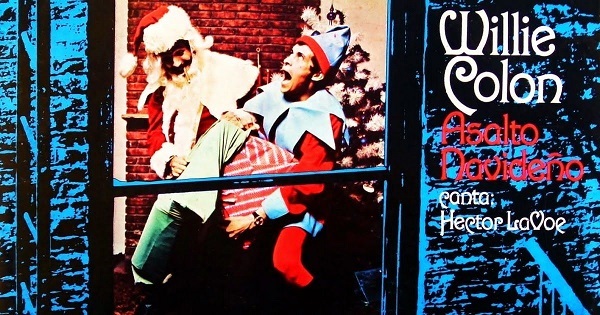
Asalto Navideño Vol. 1 

This album should never miss in a list of this type and it could not be in another way, since it is part of the incredible path traveled by the New York orchestra Willie Colón & Héctor Lavoe. The material is the group’s sixth studio album and was recorded during the first week of December 1970.  

Prior to this, the boom that was taking the orchestra in those years made Jerry Masucci and Johnny Pacheco suggest to the artists that they take advantage of the fame they had harvested so far to create an album dedicated to Christmas, which they both gladly accepted.  

It is then when they got hands on and invited the talented musician Yomo Toro to participate in the album. The artist was not well known by the fans, but he ended up occupying a very important place in the final result. 

Although at first, the material was focused on honoring Puerto Rico, but ended up embracing the Latin community living in the U.S., which had been the main responsible for the strengthening of salsa in the liking of the people and the profit received the Fania Records label. 

The album was recorded in the studios of Fania Records in New York and had a total of 12 songs dedicated to the most beautiful time of the year. Aires de Navidad” and ”La Murga” are among the most successful tracks of the album and the most listened to so far. 

album Asalto Navideño
Cover of the album ”Asalto Navideño Vol. 1”

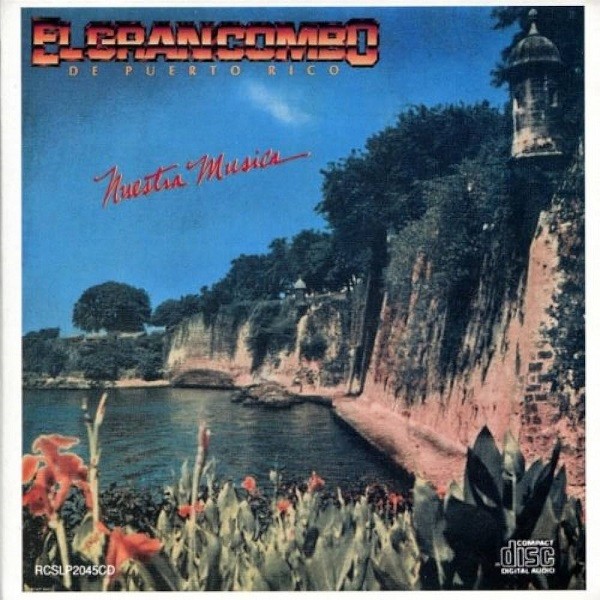
Nuestra Música 

El Gran Combo de Puerto Rico never disappoints and certainly did not do it with its Christmas production ”Nuestra Música”, with which it seeks to pay tribute to this wonderful time and put everyone on dance in their homes during the Christmas holidays.   

The album was released in 1985, the year in which salsa was going through a very challenging time, since merengue was gaining a lot of momentum, displacing the aforementioned genre to some extent. However, this was no impediment for the orchestra to demonstrate, contrary to what many believed, that salsa was more alive than ever.   

The album’s release was surprising as well as exciting for the fans of El Gran Combo de Puerto Rico, which managed to rescue much of the holiday spirit that was lost and gave life to hits such as ”La Fiesta de Pilito”, ”Desenfunda”, ”Arbolito” and ”No Hay Cama Pa’ Tanta Gente”. 

album Nuestra Música
Cover of the album ”Nuestra Música”

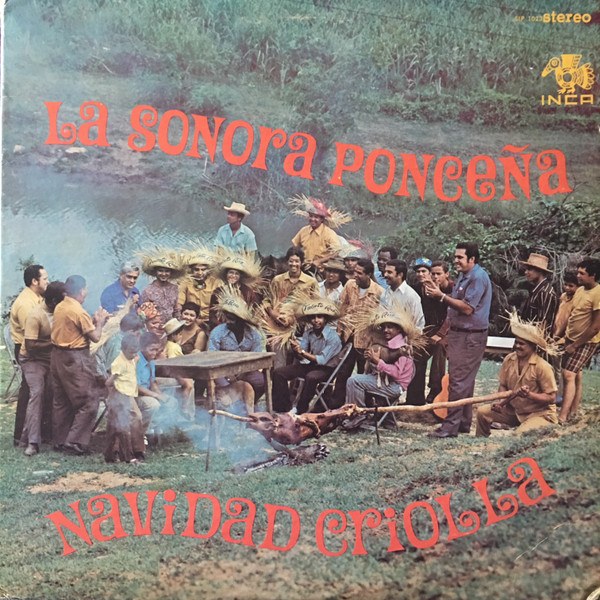
Navidad Criolla 

Another great recor production that could not miss in this list is ‘‘Navidad Criolla’’ by La Sonora Ponceña. A very particular and different thing about this Christmas album is that, instead of using the typical Christmas aguinaldos, salsa dura is the predominant genre. However, the vocalists and musicians do their best to maintain the essence of Christmas at all times. 

The album was released in 1978 and includes the unmistakable voices of Luigi Texidor and Tito Gómez, who add an exciting and cheerful touch to the music with the power of their vocal cords. In addition to that, Adalberto Santiago and Yayo El Indio participated on backing vocals along with the talented musicians of the group.   

The album includes songs such as ”Aguinaldo Antillano”, ”De Noche Buena”, ”Canción de Navidad”, ”Vamonos Pa’l Campo”, among others.  

album Navidad Criolla
Cover of the album ”Navidad Criolla”

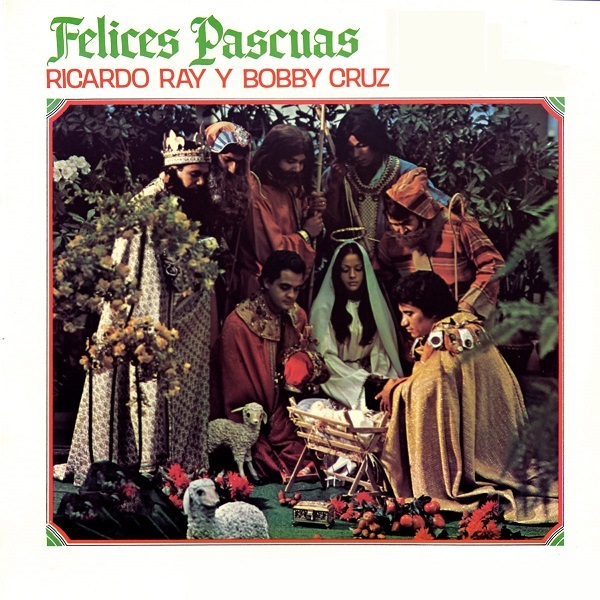
Felices Pascuas 

Ricardo Ray and Bobby Cruz delighted the public during the December holidays in 1971 with this extraordinary musical work with which they conquered the public one of those countless times they did it.  

Ricardo delighted the duo’s fans from the piano and musical arrangements, while Bobby was on voice and backing vocals. Both artists were accompanied by Miki Vimari on voice and backing vocals, Ismael Cocolia Rodríguez and Ismael Rivera on trumpet, Manolito Gonzales on bongos, José Hidalgo on conga, Charlie Cotto on timbales and Plito Huertas on bass.   

Among some of the best-known tracks of the album, we can mention ”Bomba en Navidad”, ”Mi Niñez”, ”Aguinaldo Navideño”, ”Kyrie Eleison”, ”Sinfonia To Cantata No, 29”, and so on. 

album Felices Pascuas
Cover of the album ”Felices Pascuas”

Read also: Legacy of the Cepeda family after eight generations 

  • « Go to Previous Page
  • Page 1
  • Interim pages omitted …
  • Page 5
  • Page 6
  • Page 7
  • Page 8
  • Page 9
  • Interim pages omitted …
  • Page 27
  • Go to Next Page »

International Salsa Magazine (ISM) is a monthly publication about Salsa activities around the world, that has been publishing since 2007. It is a world network of volunteers coordinated by ISM Magazine. We are working to strengthen all the events by working together.