• Skip to primary navigation
  • Skip to main content

International Salsa Magazine

  • HOME
  • Previous editions
    • 2026
      • ISM / March 2026
      • ISM / February 2026
      • ISM / January 2026
    • 2025
      • ISM / December 2025
      • ISM / November 2025
      • ISM / October 2025
      • ISM / September 2025
      • ISM / August 2025
      • ISM / July 2025
      • ISM / June 2025
      • ISM / May2025
      • ISM / April 2025
      • ISM / March 2025
      • ISM / February 2025
      • ISM / January 2025
    • 2024
      • ISM / December 2024
      • ISM / November 2024
      • ISM / October 2024
      • ISM / September 2024
      • ISM / August 2024
      • ISM / July 2024
      • ISM / June 2024
      • ISM / May 2024
      • ISM / April 2024
      • ISM / March 2024
      • ISM / February 2024
      • ISM / January 2024
    • 2023
      • ISM / December 2023
      • ISM / November 2023
      • ISM / October 2023
      • ISM – September 2023
      • ISM – August 2023
      • ISM July 2023
      • ISM Edition June 2023
      • ISM – May 2023
      • ISM April 2023
      • ISM March 2023
      • ISM February 2023
      • ISM January 2023
    • 2022
      • ISM December 2022
      • ISM November 2022
      • ISM October 2022
      • ISM September 2022
      • ISM August 2022
      • ISM July 2022
      • ISM June 2022
      • ISM May 2022
      • ISM February 2022
      • ISM January 2022
    • 2021
      • ISM December 2021
      • ISM November 2021
      • ISM October – 2021
      • ISM September 2021
      • ISM August 2021
      • ISM July 2021
      • ISM May 2021
      • ISM April 2021
      • ISM June 2021
      • ISM March 2021
      • ISM February 2021
      • ISM January 2021
    • 2020
      • ISM December 2020
      • ISM November 2020
      • ISM October 2020
      • ISM September 2020
      • ISM August 2020
      • ISM July 2020
      • ISM June 2020
      • ISM May 2020
      • ISM April 2020
      • ISM March 2020
      • ISM February 2020
      • ISM January 2020
    • 2019
      • ISM December 2019
      • ISM November 2019
      • ISM October 2019
      • ISM Septembre 2019
      • ISM August 2019
      • ISM July 2019
      • ISM June 2019
  • Download Salsa App
    • Android
    • Apple
  • Spanish

Search Results for: World Salsa

Latin Saoko The Latin Corner Of The World

Latin America/ Buenos Aires / Argentina

Latin Saoko. The salsa and timba radio station in South America continues to make progress in its project of making anyone in all corners of the world dance.- Latin Saoko

Saoko Latino is the fastest growing Internet radio station in America, from its transmission headquarters in Buenos Aires in Argentina and to its master control in Tenerife Spain, its two creators continue betting on this great musical initiative that for more than 3 years they continue growing.

Latin Saoko The Latin Corner Of The World

This Latin-Caribbean genre station produces interactive programs with top-of-the-line speakers, music professionals who venture into designing proposals with ideal content for Latin music lovers. Among its main objectives is to create a space dedicated to the public that loves these Caribbean genres, strengthen Caribbean music and culture worldwide, extend the horizons of Latin radio in the world, among so many lines of development that seek to impact being the number 1 in the ranking of stations on the internet.

Their work reaches your hands through their web portal www.saokolatino.com or through their App available under the name Saoko Latino, from these channels they can delight you with their great musical content, available 24 hours a day, 7 days a week. of the week, without interruptions so you don’t stop listening to it.

From this month of April they venture into a new program called Timba timbero by the hand of its great moderator Ronny Peinado, the famous @DjTimbao. The aforementioned program seeks in 2 hours to address issues of great importance in the timba world, the spectacular Cuban musical genres, from where they delight their listeners with premieres of the most recognized artists of the Cuban arena, the newest representatives of this musical line, development of opinion, informative and many more topics, all developed with the sole intention of making you enjoy what we like the most, Cuban music.

Daily from 3:00 p.m. Colombia time, 9:00 p.m. Spain and 5:00 p.m. Argentina you can tune in to this great program, be part of the participation through its live chat through its website or its App, in the same way you can locate them through Itunes for the followers of the Apple line, everyone can have access to the musical initiative of the moment on the web.

Now don’t hesitate to tune in and get carried away by its great musical content, it’s time to enjoy the best music.


By Jose Perez, ISM Correspondent, Caracas, Venezuela


La Dimensión Latina is a Venezuelan salsa group founded in 1972 and still going strong today

The original members Oscar D’ León, César Monges “Albóndiga”, José Antonio Rojas “Rojitas” , José Rodríguez “Joseíto”, Elio Pacheco Jesús “Chuito” Narváez (R.I.P). And later Carlos Guerra.

César Monge, trombone player, after graduating from the Escuela de Bandas Militares, was part of the orchestras “La Tropicana de Eldy Tor” and “Los Mundiales” and “Swing Latino”.

Victor Cuica, a saxophone player, knew him from those musical steps.

Oscar León had just bought a car with which he used to be a cab driver, but with a great love for music.

León wanted to create a musical group and gave Cuica the task of recruiting musicians from the Escuela Superior de Música, where Cuica was studying.

La Dimensión Latina es una agrupación de salsa venezolana fundada en 1972 y sigue vigente

That orchestra was called “Oscar y sus estrellas”. César Monge played in that orchestra for a while, until musician Federico Betancourt, director of his group “Federico y su Combo”, hired him.

From there, Monges moved on to the orchestra “Los Dementes” of musician Ray Pérez and later to “Los Satélites” of “Cheché” Mendoza.

While playing with this orchestra, in the Caracas night club La Distinción in the urbanization El Rosal, a disagreement arose between the owner of the orchestra and the owner of the club.

León took advantage of the incident and decided, together with Cuica and Monge, to reestablish his group. Cuica, inspired by the name of the successful American group The 5th Dimension, suggested calling it Dimensión Latina.

La Dimensión Latina es una agrupación de salsa venezolana

Then León took a square and drew the logo with which the group was launched.

It was formally created on March 15, 1972 in a first rehearsal in La Guaira, at the home of the pianist Enrique (Culebra) Iriarte. It was formed by Iriarte on piano, César Monge (Albóndiga) and José Antonio Rojas (Rojitas) on trombones, José (Joseíto) Rodríguez on timbales and bongo, Elio Pacheco on tumbadoras and Oscar León, renamed Oscar D’León on bass and in the role of singer.

They made their debut as Dimensión Latina at the same venue La Distinción. The repertoire was based on songs by Mon Rivera, Eddie Palmieri and Willie Colón.

Several nights the establishment was frequented by Victor Mendoza, singer and musician founder of Trio Venezuela and by then hired as music producer by the Top Hits record label, who had a band called “El Clan de Victor”, which had to produce an album per year. Mendoza motivated the musicians and they did two musical auditions.

José Rodríguez, who had some money saved due to his work as a musician and motorcyclist, arranged for the recording at Estudios Fidelis with a song by Elio Pacheco and another by Oscar León. These tests were not to the liking of the label owner.

This discouraged Enrique Iriarte, who promptly left the group. His place was taken by pianist Jesús “Chuíto” Narváez. Despite the label’s refusals, Víctor Mendoza wanted to record them and decided to include them in his production of “El Clan de Víctor” in 1972.

Dimensión Latina Patrimonio Nacional

The sextet’s first hit was “Pensando en ti”. Mendoza then suggested Oscar León the artistic name of Oscar D’León.

During 1973 they recorded their second album, called “Dimensión Latina” where he gained recognition and participated in important events, such as tours of Curacao and the carnival of Maracaibo, launching their third album “Triunfadores” from which the second hit of the orchestra “Qué Bailen Tós” was released.

In 1974 the bolerista from Caracas Wladimir Lozano joined the orchestra, who had been working in night clubs in Caracas along with the harpist Ramón Hernández.

Wladimir gave the group more interpretative depth, achieving the duo Oscar and Wladimir, which gave birth to important interpretations and commercial successes that earned the band international recognition.

The highlight of Lozano’s entrance was “La Piragua”, a song that reached the top of the radio charts.

By 1975, La Dimensión Latina enjoyed the support of the public, who enjoyed their performances on television and being the image of commercial products.

A new album arrived, “Dimensión Latina ’75”, and with it came their consecration, for some critics the most successful and iconic. It included songs of extraordinary commercial success such as “Taboga”, “Parampampam”, “Mi Adorada”, “Cañonazo”, and a song by Oscar that was included as filler but would become the best-selling single in their history, “Llorarás”.

This album catapulted the orchestra’s career and gave it a place of recognition in the salsa world that, at that time, was almost reserved for the orchestras of the New York salsa boom.

Musician Carlos Guerra joined the orchestra on trombone, increasing the number of trombonists to three.

Subsequent productions included new commercial and interpretative achievements such as “Dolor cobarde”, “El frutero” and “Dormir contigo”. After their presentation in the United States, La Dimensión produced the album “La Dimensión Latina en Nueva York” (1976), which would be the seventh and last album of the orchestra with Oscar D’León, who would leave the group to start a successful solo career.

In the absence of Oscar, La Dimensión Latina calls, at the suggestion of Joseíto Rodríguez, the well-known guarachero and gaitero from Zulia Argenis Carruyo, who had been a member of Super Combo Los Tropicales and Guaco, for the recording of the album “La Dimensión Latina ’77 Internacional” and bassist Gustavo Carmona.

That same year, thinking of continuing to blaze trails abroad, they thought of a voice of international stature, and it was the Puerto Rican musician Roberto Roena who suggested the famous Puerto Rican singer Andy Montañez, lead singer of the Gran Combo de Puerto Rico.

Montañez was tempted by an extraordinary contract. Along with Montañez, the Zulian singer and sonero Rodrigo Mendoza joins the band and for the first time La Dimensión has three voices in its cast.

On November 11, 1977, La Dimensión Latina headlines the “Salsa International” festival at Madison Square Garden in New York, organized by Ralph Mercado and with the presence, among others, of Wilfrido Vargas and Cheo Feliciano.

Andy Montañez remained with the orchestra until 1980, recording eight albums, including hits such as “El Eco de un Tambor” by maestro Tite Curet Alonso, “Linda Minerva” sung as a duet with Argenis Carruyo, “Ave María Lola”, “Por el Camino”, “Mi Bombolaye”, and Puerto Rican contributions such as “Cantante Errante” by composer Johnny Ortiz and “Quisiera Saber”.

Rodrigo Mendoza managed to create hits such as “Fanfarrón”, “Córreme guardia” and “Suena el cuero”.

The orchestra also included Colombian pianist Samuel del Real, percussionists Carlos (Pacusso) Guillén and Luís Machado and the voices of Cheo Valenzuela, Alexis Martínez, Luis Arturo Guaramato and Alex “Mostaza” Vargas.

Cuatro décadas después y unidos por la salsa el Reencuentro del año Oscar D’ León y La Dimensión Latina

Four decades later and united by salsa, the reunion of the year Oscar D’ León and La Dimensión Latina.

Poliedro de Caracas

Only Invershow makes it possible

Venezuela this May 12, 2023 we will live something “HISTORIC”, and you can be present at this iconic reunion.

From seeing them together again to dancing and singing to the rhythm that only they can achieve.

It will be an unprecedented concert, don’t let them tell you about it and buy a ticket to live it YOU.

Será Un concierto sin precedentes, no dejes que te lo cuenten y compra una entrada para vivirlo TÚ

“The important thing is to maintain the style of the orchestra. The singer here has to adapt to the orchestra, not the orchestra to the singer. Whoever comes to sing has to adapt to the repertoire and to our way of doing salsa, which is very peculiar. We have a unique sonority”. 

César Monge, Albóndiga.

Visit: La Dimensión Latina S.R.L

Read also: Freddy de Jesús Ortega Ruiz “Coco & su Sabor Matancero”

Fanny Almenara better known in the salsa environment as “La Sonera del Callao”

Sonera of Callao, who maintains an impeccable musical career, loving music and recording numerous songs as a soloist and with various singers of first order of the Afro Latin Caribbean genre.

The salsa singer named Fanny Almenara, better known in the music scene as the Peruvian Sonera, was born in Callao, daughter of Don Hector Almenara and Carmen Barreto, the second of 9 siblings.

Fanny studied singing thanks to her mother, she met the best teacher, Mrs. Ana Maria Parodi and entered music at a very early age in the lyrical genre.

Juan Canevello: Percusionista, Antonio Cartagena: Cantante, Fanny Almenara: Cantante y Oscar Huaranga Bajista y Productor Musical

Her salsa collector father made her listen to the best of the best exponents such as Justo Betancourt, La Lupe, Candido Fabre, Benny More, Ismael Rivera, Los Papines, Irakere, Luis “Perico” Ortiz, etc.
At the age of 16 she fell in love with the genre called salsa and had the honor of singing with Junior Gonzales for the first time and alternated Grandes with Peruvian Orchestras such as Peru Salsa de Beto Villena, Las Estrellas de la Máquina de Boris Gómez, HIt Parade Latino del Callao, La Nueva Generación de Franco Crovetto.
She was chosen as the best new voice of the salsa genre in the 80s.

La cantante de salsa llamada Fanny Almenara mejor conocida en el ambiente como la Sonera Peruana

She made recordings for different groups, and also recorded an unpublished song of her own entitled “Yo te Espero”.

Between the 70s and 80s came to Peru Las Leyendas Latinas with Ray Barreto and Adalberto Santiago, gave him the great opportunity to sing with them Quítate la Máscara.

Then with Linda Caballero (lLa India), the song Mi Primera Rumba, then with the pharaoh of salsa Oscar D’ León the song Toro Mata, also with the great Hermanos Lebrón the song sin negro no hay guaguancó.
With the owner of Soneo Carlos “El Cano” Estremera the theme Ámame en Cámara lenta, with Frankie Vázquez the theme Cuarto de Tula, with Yolanda Rivera the theme Rumba en el Patio, Vity Ruiz brother of Frankie Ruiz the theme La Cura, with Aldalberto Santiago the theme Nadie se salva de la rumba.

Primera sonera del Callao, que mantiene una carrera musical impecable

And so with her imposing voice Fanny captivated the attention of the greats of salsa, representing Callao and for which the people of Chalaco named her “La Sonera del Callao” (The Sonera of Callao).
For her vast artistic career she was awarded by different musical associations and by the company Pilsen Callao.
(H3) Asocosalsa Peru (Tite Curet Ceremony, Hector Lavoe Bust, Charlie Palmieri and 25th anniversary of artistic life (Okonkolo Association).
Fanny Almenara, continues her impeccable musical career, loving music and recording a song entitled Amor de Mis Amores, salsa version with the Orquesta Ng del Callao director Franco Crovetto.
Although she was in a halt due to the pandemic, she recorded a Challenger “El Virus Se Mata Con Musica” invited by a Cuban musician, which was also recorded by Cuban artists in different parts of the world.

Fanny Almenara
Fanny Almenara

After her voice reached Cuban websites such as “Benny More” “Un Millón De Adalsoneros” “Al Son Del Pinar Del Rio” she was invited to the “Son 8 de mayo” days led by the gentleman of the son Adalberto Alvarez.
Then she also recorded a song written by the King of merengue Milly Quezada “Gracias A Ti” dedicated to those who are always on the front line as doctors and nurses in the Covid 19 and the last thing she has recorded the production of the song La Sitiera Tribute to the diva of Cuba Omara Portuondo in which in that production participated Nelson Gonzales in the tres: Eddie Montalvo on congas, Nohelia Zambrano on violin and Luis Perico Ortiz on trumpet.

Website: Fanny Almenara Oficial

How Jacira Castro and Salsa Power changed the Latin music scene

How did Salsa Power start?

Latin culture, specifically the musical part, has had a large group of unconditional allies who have promoted it worldwide through their work and platforms, being Chilean-American Jacira Castro one of the best known. Jacira is a salsa casino-style salsa teacher and web designer who had the dream of spreading the typical rhythms of our countries, but she did not figure out how until she came up with a revolutionary idea: Salsa Power. 

Salsa Power was born in 1999 as part of an initiative created by Castro and graphic designer Julian Mejia, who practically became her partner until the moment when the page stopped working. From that year on that the dance instructor began to generate contacts and develop human networks with people inside and outside the world of music, especially from the salsa genre. A particularity of this system devised by Jacira was that it was fed by the information received from people from anyqhere in the world about everything related to concerts, festivals, press conferences, autograph signings and much more.

Jacira Castro - Salsa Power
Dance instructor and web designer Jacira Castro – Salsa Power

How did this project work?

Thanks to the technology that was advancing little by little in all this time, there were many more contact ways and social media came along to facilitate these activities. The website grew to such an extent that it came to have more than 300 correspondents in over 60 countries, many of whom did not even have professions or occupations related to music, but wanted to strive to make the initiative successful and Latin artists and orchestras have a dependable space to promote their work.

Contrary to what many readers may have thought, everyone involved in this project never received a single cent or publicity in return for all the work being done. In fact, it was Jacira herself who had to pay for all the expenses related to Salsa Power such as plane tickets, travel, lodging, food, wardrobe, among other things. Not to mention the website maintenance and other hosting costs for the domain to work properly.

Fortunately, all that effort and money were worth it because Salsa Power rose to become the largest salsa website on the internet and a true reference for any independent media planning to do anything remotely like that. Much of the fruits harvested by this beautiful project can still be found on the internet and consist of articles, interviews, event coverage, videos and many other things.

The name Salsa Power was so respected that you could not talk about the Latin salsa scene in the United States without mentioning it, especially in South Florida, a place where competition for the first places was at its higuest. This competition was not only between artists and musical groups, but also between media, associations and academies, triggering some inconvenience and regrettable situations like the one experienced by Jacira and Julián a few years ago.

Jacira paid for all the expenses related to Salsa Power

Controversies

Jacira has had run-ins with some important personalities of the Latin music community in Florida because of her political positions, which went against the current of a large number of Latin artists and dancers at that time, especially those who are part of the Cuban exile. Her attitudes towards the political situation in Cuba have been highly controversial, mainly those related to the U.S. economic embargo on the Caribbean country and the limitations on free cultural exchange between both nations. Both Castro and other leaders of the entertainment industry were opposed to the decades-old blockade, which has been maintained until today.

This caused the dance teacher to make some enemies in the Miami music scene, which led to the hacking of Salsa Power with the caption ”This is a communist website” in big red letters along with a message whose author calls Jacira ”communist” and ”pro-Fidel Castro”. Obviously, she got worried and immediately called Julian to bring down the page.

As they began to diagnose the issue and its possible causes, they concluded that those responsible were part of an association composed of a dozen dance schools in Miami and its sorroundings called Salsa United. Around the same time, this organization had just created its own website, which published content very similar to that of Salsa Power, so much so that its principal spokesperson Jolexy Hurtado and Jacira came to have some arguments and run-ins due to how much alike the interviews were in both websites. The conflict reached at such a level that Jacira states that Hurtado told her she was messing with the wrong guy.

Undoubtedly, this whole situation was a big headache for the web designer, but has never let any of this daunt her or make her feel inadequate. On the contrary, she has grown before adversities and has faced them with the gallantry that has always characterized her, since she knows what her work is worth in terms of quality and globality.

However, there comes a point when the effort and time invested are not enough, so it is time to be realistic and assume that everything has its end, as the great Héctor Lavoe would say.

Jacira and Larry
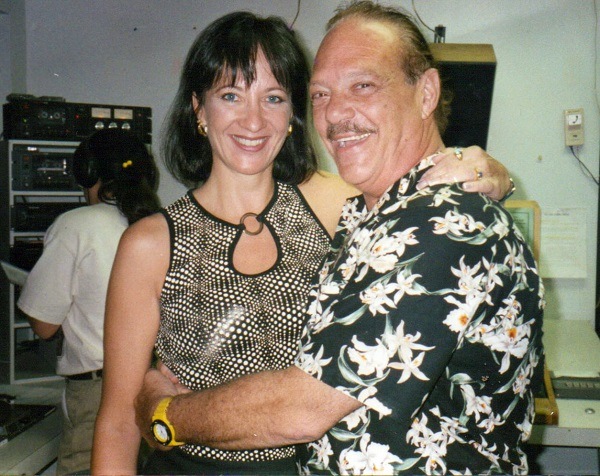
Jacira Castro with producer, composer, and pianist Larry Harlow

Farewell to Salsa Power and Jacira’s current life

After 22 years of operation of the Salsa Power project, many of the correspondents who provided information for the page got married, had children, studied, moved and pursued other professional opportunities that did not allow them to continue their work. For the same reason, Jacira had no choice but to terminate the project that was her life for more than two decades and publish a farewell message thanking all her readers for their support over the years and assuring that she will continue to travel and enjoy salsa and dance.

In spite of abandoning her duties as administrator of Salsa Power, the great impact of the Chilean-American’s work on those who have come to know her and collaborate with her cannot be denied. On her LinkedIn profile, there plenty of favorable reviews about her professionalism and commitment in every activity she makes.

From International Salsa Magazine, we wish her the greatest success in every project she undertakes and that she enjoys all the stages that are to come.

Read also. Pacifica Radio, history, shows and controversy

Maelo y su Klan want to bring tropical rhythms to the whole world

Maelo y su Klan is the latest project, and one of the dreams, of the producer with more than twenty years of experience, Johnny Ysmael Salaverria Dicurú. The popular “Maelo” as his dearest friends call him, continues his career by working and pouring his heart into this project. With them the first genre fusion between Son and Kizomba is known. In the following lines we will talk about Maelo and his most beloved project.

Who is Maelo?

Johnny Ysmael Salaverria Dicurú was born in San Juan parish, in Caracas, capital city of Venezuela, where he spent his childhood surrounded by the joy of the Caribbean “soneros and salseros”. He was a child when he first expressed his interest in one of the most popular tropical Caribbean rhythms, salsa. Part of his influences came from his uncle, Héctor Bruno Dicurú.

Ysmael D´La O, is his artistic name on stage and producing, but his closest friends call him “El Tiburón de la Salsa”. He left with $80, and a luggage full of dreams, to look out for adventures abroad. His destiny was Tenerife, where he quickly earned the love and respect of the natives, and was embraced as an adopted son.

Maelo as a producer has worked with renowned soloists and groups, from all over the world. To name a few: Nicky Jam, El Binomio de Oro, Tito Rojas, Oscar D’León, Porfi Baloa, Tony Vega, La Dimensión Latina, Ray Sepúlveda, Guayacán, El Grupo Niche. As a promoter and producer of events, one of his greatest achievements was El Gran Combo De Puerto Rico who celebrated their 50th anniversary, and visited Europe hand in hand with him.

We can call Maelo, the cultural ambassador of Caribbean rhythms, making more than 30 countries listen and enjoy them. He was the first Latin American to have 100 continuous virtual conversations during the pandemic, a time when creativity was the escape of many artists.

Among his awards and recognitions is being nominated as International Producer of the Year in 2020, Producer and Promoter of the Virtual Euro Festival in the 20/21 edition. But soon more will come, since Maelo’s talent is infinite.

Defining Maelo and his Klan

The band stands out in danceable rhythms such as: Son, Charanga, Guaguancó, Salsa, Tropical, Latin Jazz and a lot of fusion with an original sound, which is inspired by African rhythms. Of course, with the influences of great masters of the old tropical school. In this way, a combination is created that generates a modern sound, worthy of the new generation. But what most characterizes this Klan is the creation of the fusion of the genres between Son and Kizomba.

The works of Maelo y su Klan have the collaboration of the renowned arranger and director of Billo’s Caracas Boys, the Venezuelan Julio Cesar Estrada. Also by Paquito Barón, ex-member of the Orquesta Bronco of Venezuela, in the musical production.

The Klan has all the merits and the support of the Anglo-Saxon and Asian public. One of his productions entitled ¡Cultura viva! Fusion is positioned as the new sound in Afro-Caribbean music. Maelo not only puts his talent for the band, but also puts all his knowledge of the tropical rhythms of Latin America, as well as its movements through Europe and Asia. Let’s hope that the journey of Maelo y su Klan will be a very long one, full of great successes, so that they can continue to please the public that loves these tropical rhythms.

  • « Go to Previous Page
  • Page 1
  • Interim pages omitted …
  • Page 20
  • Page 21
  • Page 22
  • Page 23
  • Page 24
  • Interim pages omitted …
  • Page 186
  • Go to Next Page »

International Salsa Magazine (ISM) is a monthly publication about Salsa activities around the world, that has been publishing since 2007. It is a world network of volunteers coordinated by ISM Magazine. We are working to strengthen all the events by working together.