• Skip to primary navigation
  • Skip to main content

International Salsa Magazine

  • HOME
  • Previous editions
    • 2026
      • ISM / March 2026
      • ISM / February 2026
      • ISM / January 2026
    • 2025
      • ISM / December 2025
      • ISM / November 2025
      • ISM / October 2025
      • ISM / September 2025
      • ISM / August 2025
      • ISM / July 2025
      • ISM / June 2025
      • ISM / May2025
      • ISM / April 2025
      • ISM / March 2025
      • ISM / February 2025
      • ISM / January 2025
    • 2024
      • ISM / December 2024
      • ISM / November 2024
      • ISM / October 2024
      • ISM / September 2024
      • ISM / August 2024
      • ISM / July 2024
      • ISM / June 2024
      • ISM / May 2024
      • ISM / April 2024
      • ISM / March 2024
      • ISM / February 2024
      • ISM / January 2024
    • 2023
      • ISM / December 2023
      • ISM / November 2023
      • ISM / October 2023
      • ISM – September 2023
      • ISM – August 2023
      • ISM July 2023
      • ISM Edition June 2023
      • ISM – May 2023
      • ISM April 2023
      • ISM March 2023
      • ISM February 2023
      • ISM January 2023
    • 2022
      • ISM December 2022
      • ISM November 2022
      • ISM October 2022
      • ISM September 2022
      • ISM August 2022
      • ISM July 2022
      • ISM June 2022
      • ISM May 2022
      • ISM February 2022
      • ISM January 2022
    • 2021
      • ISM December 2021
      • ISM November 2021
      • ISM October – 2021
      • ISM September 2021
      • ISM August 2021
      • ISM July 2021
      • ISM May 2021
      • ISM April 2021
      • ISM June 2021
      • ISM March 2021
      • ISM February 2021
      • ISM January 2021
    • 2020
      • ISM December 2020
      • ISM November 2020
      • ISM October 2020
      • ISM September 2020
      • ISM August 2020
      • ISM July 2020
      • ISM June 2020
      • ISM May 2020
      • ISM April 2020
      • ISM March 2020
      • ISM February 2020
      • ISM January 2020
    • 2019
      • ISM December 2019
      • ISM November 2019
      • ISM October 2019
      • ISM Septembre 2019
      • ISM August 2019
      • ISM July 2019
      • ISM June 2019
  • Spanish
  • Download Salsa App
    • Android
    • Apple

Search Results for: club

6 artists who helped make Latin Music successful in the United States

The success of Latin Music in the United States

Some artists have taken Latin music to another level. They fell in love with the public on American borders and helped shape the market as we know it today. We will tell you more details!

Latino immigrants who made their way into the United States gave way to Hispanic music as it is known today.

The Argentine tango, for example, was a success in the US in 1930 and is considered the first Latin genre to have participation on American soil. As you can imagine, from then on a movement was born that is here to stay. At the end of the 90s, this musical boom finished exploding. The numbers were increasing and more and more artists were honoring their Latin roots.

Currently, the industry numbers give prominence to Latin artists, having a greater incidence when they present their songs in Spanish. Also, there are a large number of versions that have been translated into English and are heard in renowned venues. In fact, it is enough to go to a nightclub or a Latin concert in iconic venues such as Madison Square Garden, located in New York or American Airlines Arena in Miami to check acceptance by the public. How much ground have they gained to have a leading role in the most powerful country in the world?
La Guarachera del Mundo - Latin America
Celia Cruz is well known all around the latin world

The road has not been easy, it has been marked by countless artists who, little by little, were making known the rhythms of Caribbean countries. Salsa, for example, was one of the most popular rhythms at the time. Starting in 1960, it was catapulted into the United States, paving the way for Latina artists who are now considered legends of the genre. Celia Cruz, Willie Colón, Héctor Lavoe, Rubén Blades, Johnny Pacheco, among others, marked a before and after in the industry.

Today we want to talk about some famous singers who set the tone and promoted the careers of other Hispanics.

6 Latino artists who paved the way for new generations

Emilio Estefan, Cuba

The Cuban was born in 1953 and arrived in the United States at the end of 1960, from Spain. Estefan always had musical interests. Although, in principle he had to work in other areas. He formed the band “Miami Latin Boys”, which would later be called “Miami Sound Machine”. Thanks to his different presentations, he met Gloria Fajardo, today known as Gloria Estefan, who accompanied them as vocal reinforcement. No one imagined that this singer would become their life partner.

Despite the success of the group, it is other achievements of the artist that place him in this category. Emilio Estefan soon established himself as a producer for Latin American artists and contributed to Gloria Estefan’s success as a soloist. He quickly became known within the industry, working with artists such as Charliee Zaa, Cristian Castro, and Carlos Vives.

In 2002, Estefan became a producer for the Latin Grammy Awards, an annual event that awards artistic excellence for productions in Spanish, Portuguese or other languages ​​of Hispanic countries.

Emilio Estefan and his wife have been awarded the Presidential Medal of Freedom from the United States, the highest honor in the country, due to their work in the training of artists and projection of Latin music in the world.

Celia Cruz, Cuba

Celia Cruz, began her career in her native Cuba. She excelled in tropical music and was known as “The queen of salsa.” During her first years of career, she stood out in her country, and later ventured into Mexico and the United States. She moved to the US and at the end of the 70s she joined the Fania All-Stars, along with other artists, fully joining salsa. In 1987, her star was debuted on the Hollywood Walk of Fame.

Cruz is part of a legacy that will continue throughout history. Her songs remain current and are part of the heritage of Latin America. She was nominated for two Grammys and three Latin Grammys.

The Postal Service of the United States included it in a selected group of five stamps, destined to the greats of Latin music; together with Selena, Tito Puente, Carmen Miranda and Carlos Gardel.

Selena, Mexico

The singer was born in the United States and was of Mexican descent. Her genre leaned toward ranchera, Mexican cumbia, and ballads. Selena is known as “the queen of Latin music” and has exceeded 70 million records worldwide.

In the 1990s, the US Billboard magazine named her “the most influential and best-selling Latin artist.” In addition, she is credited with catapulting Latin music in the United States and the world. Selena featured five albums ranked on the Billboard 200 at the same time. Her album Live (1993) won a Grammy for best Mexican-American music album, leaving behind the paradigms of those who considered the Tejano musical style as exclusive to men.

Selena was murdered in 1995. A great loss to show business. Her fans still regret her departure and imagine what she could achieve thanks to your talent. However, it leaves a very broad legacy for Latinos. After her death, she continues to be an example and inspiration for those who want to enter the market.

Juan Luis Guerra, Dominican Republic

The Billboard Winner Juan Luis Guerra
An Artist who help the genre in USA

Juan Luis Guerra is one of the most recognized Latin artists in the world. In the United States, he has been the recipient of 24 Latin Grammys, three Latin Billboard Awards and two American Grammys. He has recorded in Portuguese, English and, of course, in Spanish.

She trained at the largest private music college in the world, Berklee College of Music, in Boston. Earning a degree in jazz composition.

Guerra has made different tours of the US obtaining a box office record. He is a recognized exponent in the genre of merengue and bachata. In 2015, he collaborated with the financing of the Juan Luis Guerra Scholarship, presented by the Latin GRAMMY Cultural Foundation for a low-income student.

The singer is of Dominican origin and today he works as a composer, arranger, musician and producer.

Héctor Lavoe, Puerto Rico

Considered one of the best salseros of all time. He is credited with helping to bring about the genre’s golden age in New York. In addition, to expand the popularity of salsa in the 60’s, 70’s and 80’s.

In New York City, he takes his first steps as a bolero vocalist to make his way in what would be a great musical career. The Puerto Rican’s success kept on rising, he sang with the famous Willie Colón and together they toured different stages. Lavoe was also part of the Fania All Stars, a salsa and Latin music group. The Singer, as he was also baptized, died on June 29, 1993. He left an unforgettable musical legacy in the United States and the world; his songs and style are inspiration for many salsa performers today.

Marc Anthony, United States

For many, it could come as a great surprise that an American artist has such a marked and extraordinary Latin musical rhythm. However, his parents are Puerto Rican and he grew up with part of this culture. Marc Anthony is a singer of ballads, pop, salsa and bolero; ambassador of Latin music and culture.

When he began his career, many doubted whether he would be successful in Latin music.

“My career was not easy at first, because I neither looked nor sounded like the ‘typical salsero’. My sound was not considered usual for purists, ”he told The Associated Press.

The singer and actor has sponsored young talents such as Luis Figueroa, a Latino who was just beginning his career in the artistic medium. In addition, it has sold more than 30 million records around the world. Received 2 Grammys and 7 Latin Grammys. Marc Anthony has many fans worldwide. However, Latinos have a very special appreciation for him. In 2012, he started the Maestro Cares Foundation, to raise funds to build orphanages in Latin America.

If we wanted to mention those musicians to whom the expansion of Latin music is due, the list would be endless. Infinity of people who overcame cultural barriers to carry the name of their country, its rhythms and culture high. Currently, the city of Miami is considered as the starting point. The first contact of the young musicians, before venturing to the rest of the country. In addition, the same experts call it “the epicenter of the Latin industry.” This is due to the number of media, producers, multinationals and locals that are willing to open their doors to them and boost their talent.

Latin music represents an industry that does not stop, is profitable and is taking more and more space in the United States. Therefore, a decline is not expected in the coming years.


Home

Los Angeles salsa and its origins

Salsa and its origins

Salsa is a musical genre of Latino origin that has become very popular around the world thanks to the enormous number of artists who have been responsible for spreading it far and wide. Neither salsa or any of the other genre remains static in time and this is because all the transformations and combinations suffered at the years begin to pass. This has given rise to a number of new styles that have also been spreading to many countries thanks to those interested in learning to dance them.

How Los Angeles Salsa Originated

Los Angeles salsa and how to dance it
Two people dancing Los Angeles salsa

One of those styles is Los Angeles salsa, which is named after the city where it was born. In Los Angeles, United States, a family of Mexican origin was directly involved in the origins of this style of salsa. Francisco Vásquez, who spent a significant part of his life in Los Angeles, was delighted with the way many of the greatest dancers of those years danced in nightclubs.

Around this time, this man began to mimic the movements made by these dancers, to perfect them and to add other Hollywood dance steps. After all this process experienced by Francisco, he gave rise to what would later be known as On1. Sometime later, Francisco would teach his brothers what he learned in these clubs, which gave origin to what would become a family business known as Los Rumberos. These brothers were real important in the expansion of this salsa style, but there were many other professional dancers and lovers of Latin culture who have created other companies focused on promoting many musical styles from Latin America.

A very important thing to say about this salsa style is that it was neither the only nor the first salsa rhythm to become famous around the world, as New York salsa has also become very popular in recent years and includes some of the sounds present in tango, jazz, among others.

The presence of Los Angeles salsa in Europe

Los Angeles salsa in Europe
A couple dancing Los Angeles salsa

A type of salsa that only emerged at the local level has become one of the most sought-after musical styles by European music festivals to give them a privileged place in their respective programs, which implies that Latin music has already expanded in its multiple variants to every corner of the Old Continent.

One of the most important reasons why this style has become so famous is the richness of its steps and the varied movements in relation to other typical dance forms of salsa. If Europeans were already very interested in Latin rhythms, such a diversity of rhythms and styles makes them even more curious about our musical culture.

These competitions and festivals held around Europe are very striking and prestigious, as they invite locals to learn to dance different rhythms in order to be eligible for one of the luxurious prizes offered therein. The best of all this is that these competitions include all levels, so you don’t have to be a professional dancer to have a good time and gain one or another recognition.

Home

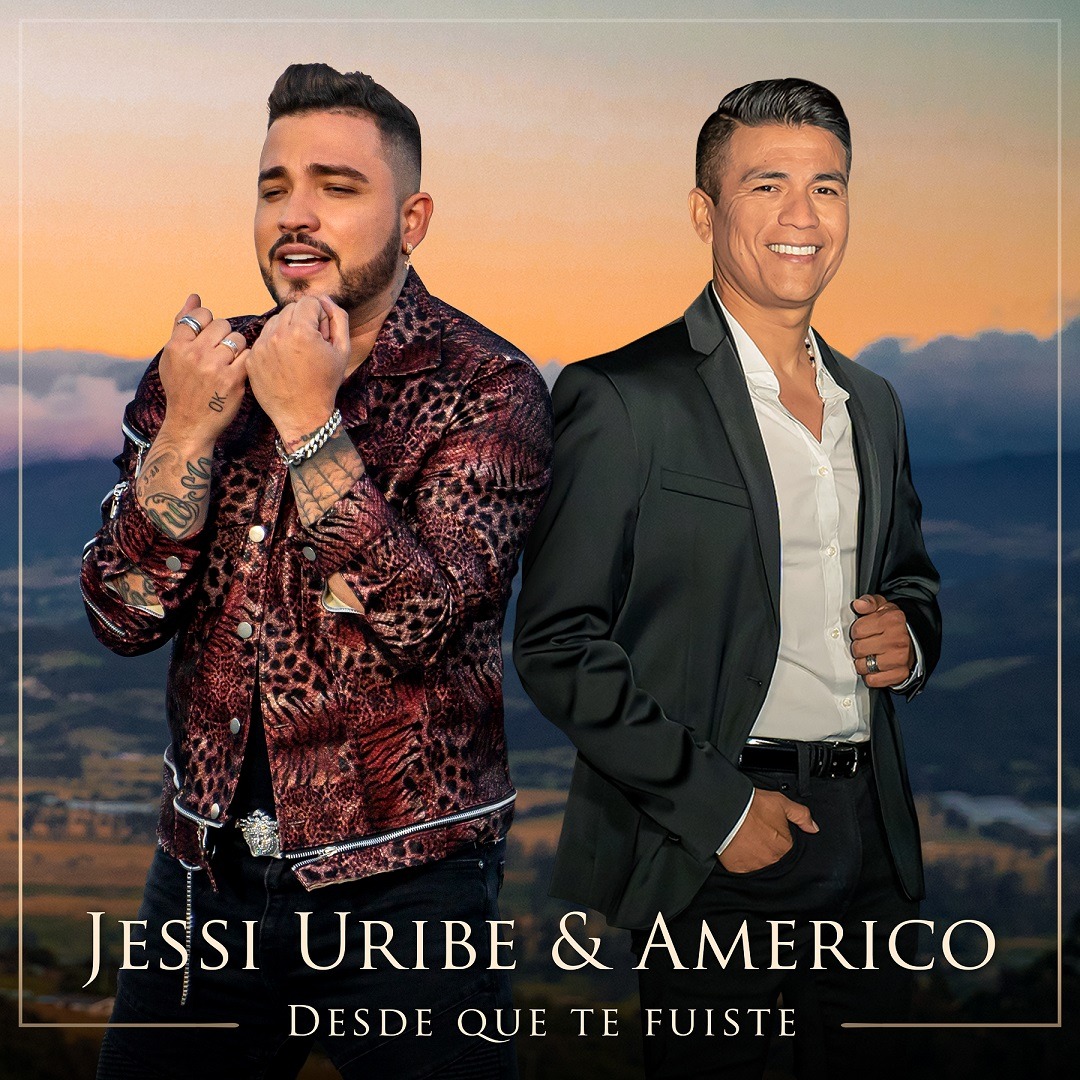
Jessi Uribe and Americo

Two great exponents of Latin American music come together in “Desde que te fuiste”

Jessi Uribe and Americo, two great exponents of Latin American music come together in “Desde que te fuiste”; Yesid Eduardo Uribe Ordoñez, better known as Jessi Uribe, is a Colombian singer and musician, recognized mainly for his participation in the realities “La Voz Colombia” and “A otro Nivel del Canal Caracol”, he was born in Bucaramanga on March 22, 1987, from Very young he grew up in a musical environment since his father “Fernando Uribe”; who is a mariachi musician, who took him to several of his presentations in a famous nightclub in the city; He began to sing from a very young age in different stages where he obtained his taste for the popular and ranch genre, currently becoming a singer of these musical genres.

Americo better known as Domingo Johnny Vega Urzua, was born in Arica, Chile, on December 24, 1977, he is a Chilean singer of is a singer of ballads and tropical cumbia who lives in Miami since 2018, he is currently the exponent of tropical music most important in South America, with a trajectory of more than 15 years of artistic career, which has taken him to great stages worldwide.

Jessi Uribe and the renowned Chilean artist Americo come together to present their musical tea “Desde Que Te Fuiste”, a production that is already emerging as a great success in Latin America. Americo is one of the greatest exponents of tropical music on the continent, for this reason “Desde Que Te Fuiste”; is a production that has both singers very happy, who are very proud to be able to unite their native countries, Chile with Colombia.

Jessi Uribe and Americo, two great exponents of Latin American
Jessi Uribe y Americo celebrating

“Recording with Americo is one of the most beautiful experiences I have had throughout my career, it is having the opportunity to meet and share with someone you admire and to share two cultures from two countries as close as Colombia and Chile. We had fun recording both the video and the song and I hope that in the future there will be another opportunity to work with him”; Jessi Uribe “Desde Que Te Fuiste” is a song with lyrics of spite and tropical sounds, which talks about a man who is sorry for having lost the love of his life.

The official video was recorded several months ago on the Bogotá sheet, the story shows two men who were left by their partners and who cannot bear their absence. The filming was done under the production of In victory Films and direction by Christian Silva.

Jessi Uribe recently celebrated more than 2 million subscribers on YouTube, in addition to his recent Tour La Conquista 2020, it was a great success nationally and internationally. Currently the Colombian artist is preparing for a new surprise that will soon be released.

Listen to his musical themes through his YouTube channel “Jessi Uribe 3” and listen to his songs such as “Desde Que Te Fuiste” by Jessi Uribe; Americo https://youtu.be/mAJWV9EcniI

Jessi Uribe y Américo come together in "Desde que te fuiste"

If you want to know more about their musical themes or about Jessi Uribe y Americo, you can consult information through:

Facebook: https://www.facebook.com/jessiuribemusic

Instagram: @ jessiuribe3

Twitter: https://twitter.com/jessiuribe3

YouTube: https://www.youtube.com/channel/UC8Ef_5RvcZb3KxI3J5r5Sxg

What makes sensual bachata so popular

Why sensual bachata is popular

With the passage of time, music has undergone such a big transformation that it looks no longer as what it was a few decades ago. Just as new musical genres with very modern rhythms have emerged lately, the old ones have continuously adapted to consumers’ changing tastes of this era. Such is the case of bachata, which has progressively succumbing to the sensual fashion that has spread to a good part of current genres. 

Nowadays sensual bachata has gone on to become one of the favorite musical styles for both young and not so young. The best proof of this is that each day there are more radio stations and nightclubs that include in their repertory this music to appeal to the public who support it. 

What has made sensual bachata become so famous? 

This genre from the Dominican Republic and Puerto Rico has always stood out for its waste of romanticism and sensuality, which has made it very famous in the rest of the world. One of the most important characteristics of bachata is the deep connection that should exist between the members of the dance couple in order to infect the audience with magnificent energy and an intimacy out of this world. 

Sensual bachata has become one of the favorite variants for most people, which has expanded enormously thanks to a large number of dancers who have dedicated themselves to seeking new horizons and setting aside traditional styles from previous years. This style has had plenty of promoters, which was the reason it has become so popular in a pretty quick period of time. 

The role of women in sensual bachata 

Why sensual bachata is so popular
Young couple dancing sensual bachata

Without any doubt, women have acquired a leading role in bachata in recent years as it is the female part of the dance that performs the most sensual movements of the choreography. On top of this, there are a more or less intense touch of eroticism and a very vivid interpretation of the music to give the result that the dancers are looking for. After professional dancers started adding these ingredients to their choreographies, there was the emergence of a set of rhythms that reinvented itself and won the support of the public. 

One of the reasons why sensual bachata has gained so much popularity lately is the role played by women during the dance. 

This genre shows us a woman who should be able to take advantage of all her femininity and be very sure of herself at all times. Every part of her body must move to the rhythm of the music without neglecting the load of eroticism needed at any time. 

The best of all this is that every day there are more and more women who want to bring out this sensual side that all women have, so they choose to enroll in dance classes where they are taught to dance these types of rhythms in a professional manner or not so much. A large part of these classes is aligned toward learning delicate body movements, cadence, and much more. 

Home

From Italy Albert Giorgio Giovanni DJ. Lindo Salsa and Bachata

Albert Giorgio Giovanni Fiorentu Dj Lindo is an Italian and Latin music producer (Salsa and Bachata).

Albert Giorgio Giovanni Fiorentu aka Albert Lindo or DJ. Lindo is an Italian DJ. and producer of Latin music (Salsa and Bachata).

Born in Udine, Italy in 1989, he started his career as a dancer in 1997.

In 2008 he graduated as a dance teacher.  In 2011 he moved to Austria (until today) and in 2014 he started working as a dance teacher at the school Conny & Dado in Graz.

In the same year he started his career as a DJ and in 2017 as a producer.

Dj Lindo is an Italian DJ and producer of Latin music (Salsa and Bachata).
Albert Giorgio Giovanni Fiorentu to Dj Lindo producer of Latin music (Salsa and Bachata).

In 2019 (after the first 2 unfortunate productions) the first world production “The Phantom” is released, helped by the pianist and composer Marco Ronca.

In 2020 he obtained his second diploma as a dance teacher and also launched his new single “No Te Detengas” always with Marco and in collaboration with several recognized artists.

Between the end of 2020 and the beginning of 2021, 4 new productions will be ready, a bachata and three salsas (a romantic salsa, a hard salsa and a Cuban salsa) with the collaboration of many recognized artists.

Currently Dj Lindo is part of the record label located in Milan (Italy) Alosibla Music Group and Downbridge Publishing, which each year presents the famous compilation.

Albert Giorgio Giovanni Fiorentu aka Albert Lindo or Dj Lindo is an Italian DJ and producer of Latin music (Salsa and Bachata)
Italian DJ and Latin music producer (Salsa and Bachata)

“SALSA IT”

Did you know the origin of the DJ…

The 9th of March is World DJ Day, thanks to the initiative of the ‘Worl DJ Fund’ and the NGO ‘Nordoff Robbins Music Therapy’. But, do you really know the history of these music mixing artists?

For 16 years this day has been celebrated as a tribute to this sector of music that is so in vogue in our time, which take advantage of his ‘birthday’ to donate what they charge these days to charitable causes.

The initiative was carried out in 2002 by the ‘Worl DJ Fund’ and the NGO ‘Nordoff Robbins Music Therapy’, and has been active for over a decade. But the history of the DJs has a few more years.

For those who still do not know what is behind the acronym DJ, a ‘disc jockey’ is a musician who creates, selects and plays before an audience music of his own or composed by other artists. There are several types, including radio and club DJs.

The first DJ in history

It was Ron Diggins, a British radio engineer who in 1947 built the famous Diggola
Ron Diggins first ever DJ

It was Ron Diggins, a British radio engineer who in 1947 built the famous Diggola, considered the first “mixing table” in the history of music. This home-made portable table included two turntables, lights, microphones, an amplifier and a dozen speakers. And it was made on a coffin wood base.

If we mention Ron Diggins, many of us won’t know who I’m talking about, because this British and radio engineer is considered the first DJ in history.

Many others before Diggins moved in with their records and equipment to cheer on the soldiers but he was the creator of “La Digolla”.

He himself built the first mixer in 1945, although it wasn’t until 1947 that the invention became official.

It was a portable table made of wood, worthy of any party room, it included two plates, lights, microphones, an amplifier and a dozen speakers.

As a curiosity, the wood with which Diggins made the first mixing table in history was casket wood.

Six weeks was the time it took the engineer to build the famous portable table.

Ron Diggins’ dream was to travel all over the UK with his van and “La Digolla”, so he could play his favorite songs.

This pioneer during his professional career was severely criticized by countless musicians who did not approve that the DJ would mix songs without their consent.

Diggins retired in 1995 after playing at 20,000 parties.

In his hard beginnings, traveling kilometers and full of criticism, he would never imagine what he had done, he had invented a profession. A job that would be paid for, more than he could have thought.

The first Disc Jockey in history, died at the age of 90 and in his long life he made 6 “Diggiolas” Some of them were auctioned off at more than $40,000.

“I haven’t invented anything, I just put the same things to a different use, that’s all.

On his 90th birthday, the first disc jockey confessed that, when he started to tour cities and towns with his invention, he received hundreds of criticisms from musicians who did not approve of him mixing their songs without their consent. Diggins retired in 1995 after playing at 20,000 parties.

The big DJ explosion

In the 60s and 70s, with the expansion of the discotheques in Europe and the USA, the creation of a specific technology for this figure of the music began, like the mixer ‘CMA-10-2DL mixer’. It was also the time of the birth of ‘hip-hop’ and ‘disco’ music.

In the 80’s we get the first big names, considered cult DJs, as Larry Levan who played in the ‘Paradise Garage’ in New York, or Frankie Knuckles, with its mixtures of ‘disco’ and ‘synth pop’ led to music ‘house’ in the ‘Warehouse Club’ in Chicago. At the same time, in Detroit, techno was born.

They were years of great impact for the DJs, who saw the birth of their first magazine specifically for professionals, the ‘DJ Times’ in 1988 and held for the first time an exclusive event for DJs of electronic music dance, the ‘Winter Music Conference’ in 85 in Florida.

The DJs of the digital era

The arrival of the ‘rave’ movement in the 90s radically changed the image of DJs and these artists began to project themselves as superstars or ‘Diva DJs’ who establish particular sounds and brands.

These new ‘DJs’ have arrived to our days, taking advantage of the technological innovations of the digital era, and there we have famous names such as the French David Guetta, Armin Van Buuren, Tiesto or Bob Sinclar, who travel the world with their mixes.

Source: https://culturizando.com/


Home

  • « Go to Previous Page
  • Page 1
  • Interim pages omitted …
  • Page 121
  • Page 122
  • Page 123
  • Page 124
  • Go to Next Page »

International Salsa Magazine (ISM) is a monthly publication about Salsa activities around the world, that has been publishing since 2007. It is a world network of volunteers coordinated by ISM Magazine. We are working to strengthen all the events by working together.