|
|
|


|
|
|
North America / United States / New York
Mario Bauzá (Havana, April 28, 1911 – Manhattan, July 11, 1993) was a Cuban saxophonist, clarinetist, trumpeter, arranger and composer.
Known above all for having been the musical director of the Machito orchestra (of whom he was also a brother-in-law), he was a pioneer of what is now known as Afro-Cuban jazz.
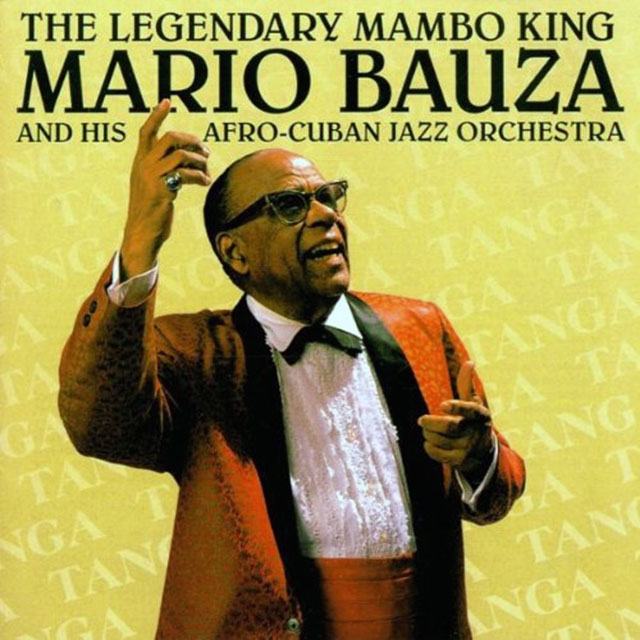
Bauzá played the clarinet in the Havana Philharmonic Orchestra. However, after traveling to New York in 1927 with the Antonio María Romeu orchestra, he was so impressed by the Big Bands of Paul Whiteman, Fletcher Henderson and Tommy Dorsey, and by the Harlem music revues, that in 1930 he decided to emigrate definitively to USA.
During the trip, he became friends with Antonio Machín. Mario Bauzá would return on the same boat in which Don Aspiazu’s orchestra was travelling, who immediately began the arrangements to record El manisero.
Upon arriving in New York, Bauzá went to live in Harlem with his cousin, the trumpeter René Endreira. Bauzá began playing the saxophone at house parties with pianist Lucky Roberts and began to absorb African-American culture.

Between 1930 and 1931, he was a trumpeter in the Antonio Machín quartet and made important recordings with this group in New York City. Anecdotally, it is said that he had learned to play the trumpet in just two weeks.
His first jobs were with the orchestras of Cass Carr, Noble Sissle and Sam Wooding.
In 1933 he entered Chick Webb’s orchestra as first trumpet, where he ended up as music director. He then worked with Don Redman and Fletcher Henderson, eventually landing Cab Calloway.
Being in that band, Mario brought the young trumpeter Dizzy Gillespie to the orchestra.
Bauzá married Estela Gutiérrez, sister of Francisco Raúl Gutiérrez Grillo, known as Machito.
On December 3, 1940, he debuted with Machito at the Park Plaza, a dance hall, with the Afro-Cubans, later working for almost four years at the La Conga club.
Bauzá works for Machito as artistic director, taking care of the arrangements and hiring the musicians.
The style of the Afro-Cubans mixes the son montuno of Cuba with features of swing bands.

Thanks to this, musicians like Dizzy Gillespie or James Moody introduced Afro-Cuban rhythms into jazz, starting in 1947.
He became interested in jazz when he heard Frankie Trumbauer play the saxophone performing Rhapsody in blue with the Paul Whiteman orchestra.
In the forties, Mario will develop the sound of Afro-Cuban jazz. His work as a clarinetist, trumpeter, saxophonist and arranger in the Machito orchestra constitutes one of the main pillars in the emergence and development of that Cuban genre.
|
|
|
|
|
|
|
|
|
|
|
|
|
|
|
|
|
|
|
|
|
|
|
|
|
|
|
|
|
|
|
|
|
|
|
|
|
|
|
|
|
|
|
|
|
|
|
|
|
|
|
|
|
|
|
|
|
After anything we have yet witnessed in the Latin music scene of the United States, we can say that it is undeniable that Cuba is an endless source of talent and passion for music, so this island can never be missing in International Salsa Magazine. On this occasion, it was the turn of producer, musical director, arranger, composer and trombonist René Latin Soul.
René is a talented Cuban who has managed to gain a very important place in the music industry in this country and we wanted to know how he managed to get there. Do not miss the fascinating conversation we had with the artist.
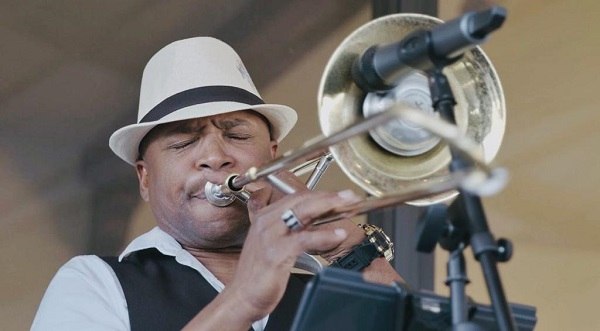
René Amet Campos Artigas was born in the province of Camagüey, specifically in the municipality of Nuevitas. He came to music from a very early age, as many of his relatives are musicians, including his father and grandfather. This led him to enroll in the music conservatory when he was only 10 years old.
He confesses that he always knew he wanted this to be his profession and had no other career in mind for tomorrow, so he always did his best to excel as much as he could in the music business.
Once he finished school, René entered the military for mandatory service and was part of the general staff band. He was always intended to move to Havana in order to make himself known as an artist and he finally did it to stay for a while and see how he was doing.
During this time, he was working for several nightclubs that offered live music, but he did it with the trombone given by the army when he was in the staff band, since he just did not have enough money to buy one of his own.
Unfortunately, the time of the ”Special Period” arrived and this crisis forced him to return to his native Camagüey. However, this was not the end of his dream.
Upon returning, both René and his father started an artistic project which they named ”Valentín y Los del Caribe” and started working in tourism, specifically in a company called El Cuartón Club which had hotels in Acapulco, Puerto Vallarta and Ixtapa, Mexico.
Canada and the United States
While working with El Cuartón, René spent a long spell touring in the Aztec country, which gave him the opportunity to get to know other territories and other ways of doing things. In one of these trips, he made the decision not to return to Cuba and try his luck on new horizons.
He lived in the capital of the aforementioned country for more than 12 years, during which time he worked as an instrumentalist and worked with several artists belonging to the salsa guild such as La India, Jerry Rivera, Grupo Niche, Oscar D’ León, Los Adolescentes, among many others.
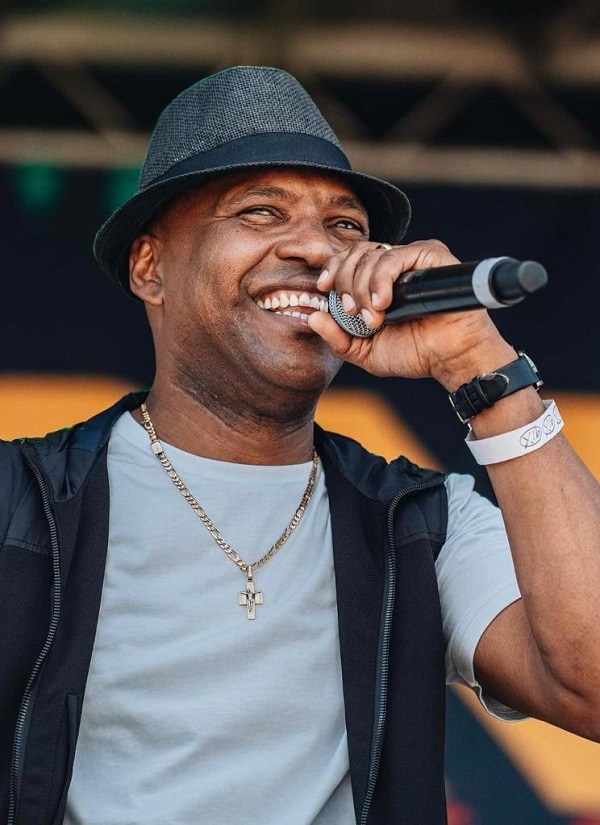
When he met the woman who became his wife, they started their romantic relationship and began making plans of life in common, between which Mexico fell a long way short, so it was time to put down roots elsewhere. At first, this new place would be Canada, but plans changed and the couple ended up leaving to the United States of America.
René and his wife spent about eight months living in Canada, but immigration issues became very difficult for them from one moment to another, so it did not take long for them to relocate to the United States.
René never thought to live here, since the Cuban government instilled an absolutely negative view of what this country represents in children from a very young age and he was no exception. However, all those opinions changed once the musician began to really get to know this nation. Today, he feels he has adapted perfectly and has been here for about six years, when he moved to this country to establish his family and career.
Once René arrived in the United States with his wife, his situation was very complex as any immigrant’s, so he had to work on things that had nothing to do with music. In fact, he recalls he spent more than a year without playing the trombone because he could not devote himself to music at that time.
That was it until he started playing trombone with the Kimbalai Orchestra, which he left in December 2021 and went to live in the city of Murrieta, one hour from San Diego. Once there he met Michael Mora, a friend who advised him to exploit the features of the city to start a solo project, which led him to start a solo career, which he finally did.
As he made a name for himself, he was able to include other musicians in his project, which allowed him to build the quartet he has today. Although René is very happy with what he has accomplished so far, he plans to have a much bigger salsa band in the future.
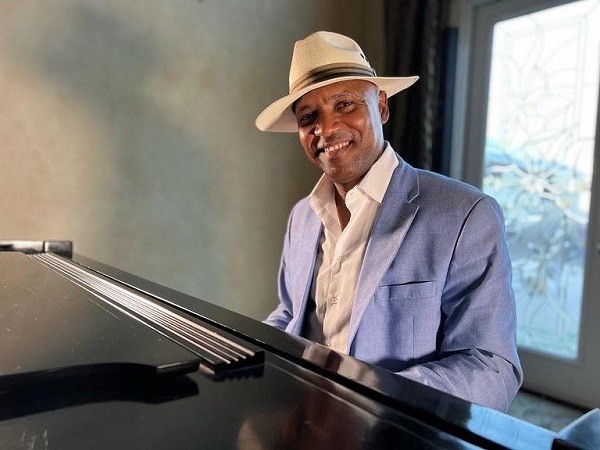
A very important part of René’s work with music is teaching and this was a point we found interesting to discuss.
When asked if talent was natural or developed, he said natural. The artist thinks that the ability to play an instrument is innate in the musician, so this person only requires academic training to educate those gifts at a professional level.
He finishes by saying that ”there is a very particular way of feeling the music and, if you don’t feel it that way, you can’t play it correctly. Time, tuning and melody are essential for anyone who wants to be a professional musician.
According to one of the descriptions provided by René’s website, the artist is one of the figures who demonstrates the virtuosity of Cuban-born musicians. Of course, considering that the island does not live the same normality as most countries in the world.
About this, René said that ”clothes don’t make man. The most important thing to a talented person with an instrument is to focus on what he or she has to do and not look at anything around. There may be vicissitudes and shortages, but if you are focused on something you love, you have to find a way to improve and develop yourself in spite of everything”.
In his case, the musician tells us that he had friends with travel opportunities who brought the most recent findings made in music and he was always interested in knowing these things to apply them to his own technique.
Read also: Sizzling Summer Nights at the Autry Museum Of The American West