• Skip to primary navigation
  • Skip to main content

International Salsa Magazine

  • HOME
  • Previous editions
    • 2026
      • ISM / March 2026
      • ISM / February 2026
      • ISM / January 2026
    • 2025
      • ISM / December 2025
      • ISM / November 2025
      • ISM / October 2025
      • ISM / September 2025
      • ISM / August 2025
      • ISM / July 2025
      • ISM / June 2025
      • ISM / May2025
      • ISM / April 2025
      • ISM / March 2025
      • ISM / February 2025
      • ISM / January 2025
    • 2024
      • ISM / December 2024
      • ISM / November 2024
      • ISM / October 2024
      • ISM / September 2024
      • ISM / August 2024
      • ISM / July 2024
      • ISM / June 2024
      • ISM / May 2024
      • ISM / April 2024
      • ISM / March 2024
      • ISM / February 2024
      • ISM / January 2024
    • 2023
      • ISM / December 2023
      • ISM / November 2023
      • ISM / October 2023
      • ISM – September 2023
      • ISM – August 2023
      • ISM July 2023
      • ISM Edition June 2023
      • ISM – May 2023
      • ISM April 2023
      • ISM March 2023
      • ISM February 2023
      • ISM January 2023
    • 2022
      • ISM December 2022
      • ISM November 2022
      • ISM October 2022
      • ISM September 2022
      • ISM August 2022
      • ISM July 2022
      • ISM June 2022
      • ISM May 2022
      • ISM February 2022
      • ISM January 2022
    • 2021
      • ISM December 2021
      • ISM November 2021
      • ISM October – 2021
      • ISM September 2021
      • ISM August 2021
      • ISM July 2021
      • ISM May 2021
      • ISM April 2021
      • ISM June 2021
      • ISM March 2021
      • ISM February 2021
      • ISM January 2021
    • 2020
      • ISM December 2020
      • ISM November 2020
      • ISM October 2020
      • ISM September 2020
      • ISM August 2020
      • ISM July 2020
      • ISM June 2020
      • ISM May 2020
      • ISM April 2020
      • ISM March 2020
      • ISM February 2020
      • ISM January 2020
    • 2019
      • ISM December 2019
      • ISM November 2019
      • ISM October 2019
      • ISM Septembre 2019
      • ISM August 2019
      • ISM July 2019
      • ISM June 2019
  • Spanish
  • Download Salsa App
    • Android
    • Apple

Search Results for: dance

You will hallucinate with these 4 Salsa clubs in Spain

Barcelona is the second destination city with the major Salsero movement in the Iberian Peninsula

After the Spanish capital, Barcelona, ​​Galicia, and Alicante are the main cities with the greatest salsa identity.

During the 90s this tropical rhythm began to be adopted in the territory and the first cities to put aside the prejudice toward Latin music were Madrid, Murcia, Cádiz, and Galicia, although Salsa was always heard in the Canary Islands but that is a story that we will tell later.

Currently, Barcelona is the second city with the most salsa movement and there are many options where you can enjoy an amazing dance experience in combination with tropical music and amplified energy. So, we will give you a guide to four clubs that have left their mark in Spain with Latin rhythms and which we assure you that you will love a lot.

Mojito Club

Mojito Club is 100% Salsa & Bachata on Thursdays and Sundays

If there is a place where you can go dancing Salsa and enjoy an unforgettable night out, that place is Mojito Club. Indeed, this club is a reference for Salsa in one of the fascinating cities in Spain with architectural landmarks and where more people like this Caribbean rhythm, Barcelona. On its dance floor, you can have a great time until dawn. Thursdays are from 11 PM with the usual Salsa and the most current Latin sounds with local DJs. Does it surprise you? Wait, there is still more to celebrate. On Fridays and Saturdays, they play the most international Latin music and on Sundays, it’s student day from 8 PM.

Mojito Club also has a dance school where they teach classes of Salsa and Bachata to start or improve. These lessons are entertaining, educational, and fun. Each course is 10 hours long and the lessons are from Monday to Friday. It’s not necessary to attend as a couple. Registration is free and costs € 29 per month.

The charm of Mojito Club https://mojitobcn.com/ is located at Rosellón Street, 217. 08008 Barcelona.

Sabor Cubano Sarrià

Luis Alberto Díaz “El Negri” plays the big hits of traditional Cuban music on salsa nights

It’s true Barcelona is almost the cradle of Salsa in this European country. Sabor Cubano Sarrià is one of the town’s Salsa clubs. This Night Club offers live music with the virtuous Cuban pianist, Luis Alberto Díaz “El Negri” also you can dance to the melodies of Cuban Salsa, International Salsa, Bachata, and urban rhythms with DJs. Here, you will find Salsa and Bachata teachers who give free lessons for beginners at 8 PM every Sunday with minimum consumption. Sabor Cubano Sarrià https://www.facebook.com/saborcubanoclub is one of the clubs where you can have fun with the two most widespread Latin dances in the world. It opens its doors from 7 PM to 12:30 AM and you can find it at Calle Marià Cubí 4. 08006 Barcelona.

Baby’Oh

Baby’Oh is a meeting point for lovers of Salsa, Bachata, and Kizomba

Baby’Oh is another fantastic club to enjoy Salsa and is easy to locate in Alicante at Calle Sabadell, 16, 03203 Elx. It is characterized by having a large room to dance and slide with quick movements and turns. It has a terrace for smokers, V.I.P and Reserved areas, as well as Table Service. Additionally, Baby’Oh https://www.facebook.com/babyohelche/ offers monthly events, workshops (Saturdays), and live performances with stars and emerging Salsa and Bachata artists.

Salason
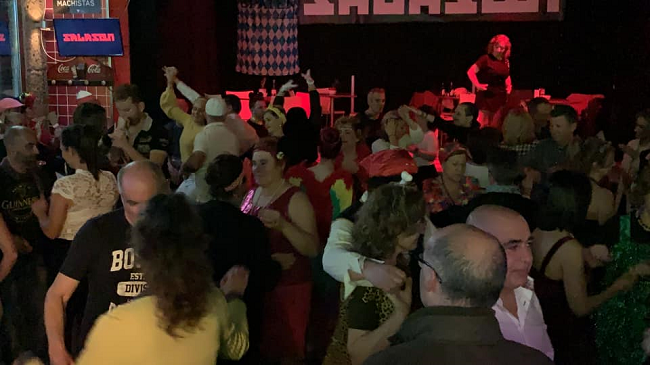
This cultural platform is designed with exceptional acoustics and cutting-edge technology.

The last stop in this guide with the four Salsa clubs in Spain with which we assure you that you will hallucinate is Salason. Of course, you will learn Cuban-style Salsa and Rueda Casino as well as traditional Bachata lessons with maximum fun, coordination of movements, and body language.

You can practice on Tuesdays in two groups: Students (intermediate level), the Salsa lessons start at 8 PM, and the Bachata group starts at 8:30 PM.

Thursdays are classes for beginners with two choice times: 8 PM and 9:30 PM.

Salason https://salason.es/ is a structured building with three independent rooms but complementary to each other and is located in the northwest of the country at Calle Lirio, 30 Cangas Do Morrazo, 36940, Galicia.


La Sonora Ponceña Returns To Salsa County

The only performance with Yolanda Rivera & Mario “Mayito” Rivera will be at the Lehman Center

The name “La Sonora Ponceña” is in honor of the Cuban band La Sonora Matancera and its hometown (Ponce – Puerto Rico)

La Sonora Ponceña “National Treasure of Puerto Rico” together with its leader Enrique Arsenio “Papo” Lucca returns to Salsa County (The Bronx) with the special guests Yolanda Rivera and the Cuban singer Mario “Mayito” Rivera (former member of Los Van Van) onstage at one of New York’s leading non-profit performing arts centers, Lehman Center.

This unique presentation, long-awaited by its fans, will be on Saturday, May 14th at 8 PM at the Lehman Center for the Performing Arts located at 250 Bedford Park Blvd West, Bronx, New York 10468 and the online price per ticket ranges from between $45 – $100. https://www.lehmancenter.org/sonora-poncena

La Sonora Ponceña gained popularity in 1960 during its trip to New York City to give a series of presentations and established itself as one of the most demanded orchestras among Hispanics.

The legendary band, for more than 65 years, has made uninterrupted performances and has been recognized as one of the best Salsa orchestras for its fusion of traditional Cuban sounds with the modern style of Latin Jazz.

In 1967, under the direction of Papo Lucca, they released the first LP Hachero Pa’ Un Palo with the Inca label (a subsidiary of Fania). This album was an overwhelming success in New York as well as its second record production Fuego en el 23 (1969). The famous band from Puerto Rico recorded 29 more albums for this record label, including eight with the singer Yolanda Rivera, La Ceiba with Cuban singer Celia Cruz (1979), and in 1980 New Heights from which they began to establish the internationalization of the orchestra.

Musical Hegemony consists of 8 tracks including Caminando Con Mi Padre, Nadie Toca Como Yo, and Borrachera

This last year (2021), during the pandemic period, La Sonora Ponceña launched two new record productions: Hegemonía Musical (June 2021) and Christmas Star (November 2021).

The last one is the fourth Christmas-themed album in his career. “Thirteen years after our last Christmas production, we seek to present a record work that is a true reflection of the sound and musical quality that we always want to offer our audience”, Papo Lucca told digital media.

While “Salsa Que Cura To” is the first single taken from their most recent album Hegemonía Musical and whose authorship and interpretation is by Jorge Nicolai Avilés (vocalist of the band) with musical arrangements by Papo. Musical Hegemony, nominated in the Tropical Album of the Year category at the Billboard 2021 awards, was made with great dedication and professionalism as indicated on its official social media. “…We thank the public for the support they have been giving to this latest album that was worked with much love and dedication to the memory of our always remembered Enrique “Quique” Lucca Caraballo (RIP) and all our dear followers… And we will continue working as we have been doing for 67 years to place in your consideration what best of our music, soul, perseverance, and professionalism that seek to bring joy and enjoyment to all our dancers… Thank you very much!”

The song “Borinquen” (1980) with Sonora Ponceña becomes her a famous Salsa star

Yolanda Rivera will also perform at this event. She was born in Ponce (Puerto Rico) and moved to New York City with her family during her childhood. Her first opportunity as a singer was in 1969 in Willie Rosario’s band. In 1975 she returned to Puerto Rico and performed in several orchestras, including Joe Rodríguez’s La Terrifica. Her career reached its peak when she joined La Sonora Ponceña in 1977. The song “Borinquen” from the album Unchained Forcede (1980), a musical tribute to her native country (Puerto Rico), made her a Salsa star. Yolanda Rivera is considered one of the main and most famous singers of La Sonora Ponceña with songs like “Rumba en el Patio” and “Madrugador”. Her repertoire includes Salsa, Plena, Bolero, Guaguancó, Son Montuno, and Guaracha.

Mario “Mayito” Rivera (El Poeta de La Rumba)

The second special guest tonight will be Mario “Mayito” Rivera. His vocal skill and masterful interpretation of Cuban music in modern and traditional styles earned him the nickname “El Poeta de La Rumba”. Mayito was born in Pinar del Río (Cuba) and has training degrees from the National School of Art and the Higher Institute of Art. After his educational training in Cuba, he joined the band of the Cuban singer Albita Rodríguez and played bass in the Moncada group. From 1992 to 2011, Mayito was the lead voice and face of the successful Cuban band, Los Van Van, earning a Latin GRAMMY® and two nominations with them.

Current news in the San Francisco Bay Area

What is happening now?

Tito Garcia-The Doctor of Salsa, the renowned colorful bandleader and timbalero of Tito Garcia y Orquesta Internacional passed away on Saturday, April 23rd after a long battle with cancer.  Tito has performed Salsa and Charanga in the 1970’s with the seminal SF based bands Ritmo 74 and later Charanga Rene Del Mar. He later spearheaded the band “Orquesta Salsa Dulce” in the late 1980’s which morphed into the first edition of his band La International featuring a young Julio Bravo on coro in the early 1990’s.  La Internacional were remembered for their explosive performances by dancers and aficionados.

Tito was a staple at the late, famed salsa palace Cafe Cocomo with his monthly “Mambo Saturdays” during the early 2000’s. I often was the DJ during those hot nights. His band featured fine musicians and vocalists such as former Batachanga vocalist Ricky Rangel, congueros Eddie Borrero and Sandy Perez of Los Muñequitos De Matanzas and keyboardist Coto Pincheira who relocated to New York.

Tito García had been fitghing against, cancer, which took his life at the end

Tito resurfaced after his bout with Cancer in 2020 to relaunch La Internacional but the comeback was short lived due to his health issues. He later hosted some outdoor rumba sessions near his new home of Vallejo but those dates were limited due to COVID restrictions. He relapsed during his recent trip to Costa Rica and died due to complications with his recovery.  He will be sorely missed.

Don’t forget coming up on Friday, May 6th at 8 pm with be the tremendous Cuban music double bill of “El Tren De Cuba”…Los Van Van and Alexander Abreu y Havana d’Primera at the UC Theatre, 2036 University Avenue in Berkeley. Two of the powerhouses of Cuban Popular music are appearing together for the first time in the US and on only certain dates of the tour…SF Bay Area residents are blessed to have this double bill play here!  DJ Antonio will spin in-between sets.  I will be your MC for the evening. Run to get your tickets because they’re going fast!  For more information, go to jaffeevents.com

Salsa superstar Oscar D’Leon and his orchestra will visit the SF Bay on Saturday, May 21 at Roccapulco, 3140 Mission St. in San Francisco. Oscar is still one of the dynamos to watch perform live…a tremendous show!  Guayacan Orquesta from Colombia will also play on Friday, May 13 at the Mission Street hot spot.  Also coming to Roccapulco Sat. June 11th…the Homenaje A La Musica Cubana featuring Mayito Rivera, Alain Perez, Yeny Valdes, Lily Hernandez “La Amaona” and Julio Cesar “JC Five” plus DJ Walt Digz (SF) and DJ Jimmy Rumba (LA) and on Thursday, July 7th…the explosive sounds of Pupy Y Los Que Son Son direct from Cuba.

Oscar D’ León will be in the San Frrancisco Bay Area on 21 May

SF JAZZ and the San Francisco Jazz Festival are featuring an impressive array of Salsa, Cuban and Latin Jazz starting Wednesday June 8 with Pacific Mambo Orchestra.  Followed by Gonzalo Rubalcaba and Grammy nominee Aymee Nuviola 6/9; Chucho Valdes with Dianne Reeves and Joe Lovano 6/12; Changui Majadero 6/13, Danilo Perez Global Messengers 6/14; Issac Delgado’s Con Tumbao Project w/Miguel Zenon, Oscar Hernandez, Pedrito Martinez, Alain Perez, Tony Succar and more 6/18.  SF JAZZ and Stanford University co-presents Eddie Palmieri and Arturo Sandoval at Stanford’s Frost Amphiteater on July 23.  Info: www.sfjazz.org.

The Yerba Buena Gardens Festival will begin Saturday, May 7th from 1 to 2:30 pm with a free concert featuring local treasure Jesus Diaz y Su Habana Afro-Cuban Ensemble featuring a lineup of heavyweights from Cuba and the SF Bay including Ariacne Trujillo Duran, Leider Chappotin, Raul Pineda, Roberto Junior Vizcaino, Karl Perazzo, Jeff Cressman, Melecio Magdaluyo and Julio De La Cruz.  The Yerba Buena Gardens is located on Mission Street between 3rd and 4th Streets in San Francisco.  Visit ybgfestival.org for more information.  There will also be an after party featuring Jesus Diaz and the Habana Afro-Cuban Ensemble and DJ Carlitos Way at the Elbo Room, 311 Broadway in Oakland.

The San Francisco Carnaval and much more

The annual Carnaval San Francisco is back on the streets of San Francisco on Sat, May 28 and Sun. May 29th with the theme Colores De Amor.  The two day festival will take place on Harrison between 17th and 22nd Streets from 11 am to 6 pm.  The grand parade will take place on Sunday, May 29th starting at 9:30 am on 24th and Byrant Streets.  Scheduled to perform will be Jesus Diaz y Su QBA, Momotombo, Sambada, Javier Navarette & His Socially Distant Friends, Dos Four, Puro Bandido, Namorados da Lua, Annette Aguilar & West Coast Stringbeans, Susanna y Orquesta Adelante, Magna Fresq, Los Allegres Callejeros, Aqua Pura, Mariachi Juvenil, Azul Latino and more.  Headliners TBA.  Food, Beer, Crafts, DJ areas and Cannabis gardens on the grounds.  Free!   For more information: carnavalsanfrancisco.org.

There is a new Salsa scene happening on Thursdays starting May 12th at Charley’s LG, 15 N Santa Cruz Ave, Los Gatos presented by your friends at International Salsa Magazine.  Opening night at this state of the art club will feature the swinging sounds of the multi-talented vocalist/conguero Edgardo Cambon and Candela.  I, Luis Medina from KPFA/WSR and International Salsa Magazine will be your DJ.  World Salsa Radio DJ El De La Clave will also be in the house. Dance lessons by Migi & Angel starts at 8:00 pm.  Music starts at 9 pm.  The upcoming schedule is the following: Julio Bravo and Salsabor 5/19, Manny Martinez and La Rebeldia 5/26 and the Charanga sounds of Orquesta La Moderna Tradición 6/2.  Thursday nights just got hotter in the South Bay…be there!!

Edgardo Cambón at The Seahorse Restaurant, Sausalito

The Ramp at 855 Terry Francois Blvd in San Francisco continues to present Salsa orchestras on Saturday afternoons starting at 5 pm.  The night is closed on June 7th for a private event, The Ramp’s first Salsa festival featuring 2 bands: Gary Flores y su orquesta Salsa Caliente and Eric Rangel and Orquesta America 5/14, The Latin Rhythm Boys 5/21 and Louie Romero and Mazacote on May 28th.  DJ Mendy spins in-between sets and after the live music from 9 to 11 pm.   The Ramp has a great patio overlooking the SF Bay and serves food and drinks.

The Seahorse located at 305 Harbor Drive in Sausalito features live music plus KPOO-KPFA DJ Jose Ruiz on Saturday and Sundays.   Sat, April 30th features La Clave Del Blanco, Rene Escovedo Salsa Band with Ric Feliciano Sun 5/1; Edgardo Cambon & Candela Sun, 5/8; Orquesta Timbalero Sat, 5/14; Louie Romero & Mazacote Sun, 5/15; Susanna y Adelante Sat, 5/21; Orquesta La Original w/Alexis Guillen 5/22; Pepe Y Su Orquesta Sat. 5/28; and Orquesta Taino Sun. 5/29.  Enjoy the fine Italian cuisine, beer, wine and ambiance both indoors and the outdoor patio at this scenic spot just crossing the bridge to Marin County.

The Cigar Bar, 850 Montgomery St. in San Francisco is a favorite spot to dine, have drinks, enjoy a cigar in the courtyard and dance to hot Salsa music.  The calendar for May includes Manteca 5/6, Orquesta Timbalero 5/7, Somos El Son 5/13, Josh Jones Latin Jazz Ensemble 5/14, N’Rumba 5/20, Edgardo y Candela 5/21, Orquesta Taino 5/27 and La Clave Del Blanco 5/28.

René Escovedo will perform at the Seahorse Restaurant, Sausalito, on May 1

DJ Walt Digz has a hot Wednesday night Cuban scene “El Timbon” happening at the Slate Bar, 2925-16th Street in San Francisco.  Digz also hosts his own livestream called “El Timbon” featuring the latest Timba, Cuban Salsa and Cubaton videos every Tuesday night from 7 to 9 pm on Twitch.  He also keeps busy by hosting the monthly Fresquecito Saturday nights at La Furia Chalaca in Oakland and the outdoor El Timbon En El Callejon Sundays from 3 to 8 pm at Vida Cantina, 56 Belden Place in San Francisco.  Digz also continues his original Friday La Tropi-Cal monthly at Il’ Pirata in SF with Añejo Productions now going on their 21st year!

Berkeley’s Ecology Center will present the Berkeley Farmer’s Market Salsa Festival on Saturday, May 21 from 10 am-5 pm.  This free event will feature Christian Pepin and Orquesta Bembe, Afro-Cuban and Afro-Peruvian keyboardist Erick Peralta and Band, Berkeley High School Youth Ensemble and the Latin Jazz Youth Ensemble.  Dance performance and Dance lessons by Rebecca Galindo.  Food, crafts and more. For more information, visit www.ecologycenter.org. 

Don’t forget to check out my radio programs: Con Sabor now in it’s 25th Anniversary Year on KPFA 94.1 FM every Saturday night from 9 to 11 PM PST and Sabiduria Con Tumbao every Wednesday night 5 to 7 pm PST on WorldSalsaRadio.com.

That’s it for this month!  Ciao 4 now!

Izis La enfermera de La Salsa talks about her passion for music and nursing

This is our interesting conversation

Right now we are talking to Izis La Enfermera de La Salsa Good afternoon, Izis, how are you today?

I’m super happy and feel very blessed. I believe that being healthy is already a great blessing.

One of the things about you that has caught my attention the most is the name you chose. Why are you called Izis La Enfermera de La Salsa?

I have been a military nurse for the last 15 years. I mean, I’m a soldier in the United States Army. I work for the army as a nurse.

La Enfermera de La Salsa

So you use that name because of your first profession.

That’s correct. I loved the name because I believe that music has the power to cure, distract and heal. So, I think that mix was perfect. The fact remains that the name comes from my profession, but I also use music as part of the cure for my patients.

You come from a musical family. Evidently, that also influenced the path you took later on. What did you like most about the musical world while still a child?

I was born in Puerto Rico and my parents are Puerto Rican, but I moved out because my dad served in the army, so I followed in his footsteps. Indeed my family is musical and specialized in jíbaro music, which is very typical in Puerto Rico. I think this was the connection with my native island and my family, so to speak. When I listened to their songs, it inspired me to follow this path and, in particular, salsa was the genre with which I have made the strongest conection. My parents listen to a lot of salsa music and I fell in love with it. Since I was a child, I always wanted to be involved in these activities of dance and song.

Your first instrument was the flute. Do you play any other instruments?

I play a little bit of cuatro, which is the Puerto Rican string instrument, but I focus more on the flute and the vocal part. I used to play flute in classical music when I was in school, but I never thought I would use it in salsa. It’s the perfect combination.

How have you managed to combine your facets as a singer and a nurse?

That’s the question my family, friends and co-workers always ask me. My answer is that my profession requires 12 hours, but the advantage I have is that I don’t have to work every day. I take advantage of my spare time to pursue my other passion which is music; that’s why I always tell people that music is like my baby. Those who have children know that you have to make many sacrifices for them. That’s the same thing I do for music. Sometimes, it may happen that I don’t sleep or eat well, but I pour all that passion into music.

When asked how I combine both facets, I think I use my two passions to serve others. What feeds my heart and soul is to serve, so I serve my nation as a nurse and soldier. As a singer, I serve my community and anyone who listens to my music. That’s what fills me with energy.

Izis playing the flute

Salsa as a medicine

I recently interviewed Jérôme Martin, a Frenchman who runs an Internet site called La Salsa Es La Cura. When asked why he uses that name, he replied that salsa and music heal everything, whether it’s a physical or emotional pain, do you agree with that statement?

I totally agree. Karina, I began my career as a general nurse, but there came a point where I had the opportunity to specialize as a labor and delivery nurse. However, I felt I was missing something and that’s where I made the change for mental health. It is in this field that I have seen results related to music.

Although I was not a psychiatric nurse, I have had moments in which I have cared for patients with pills as I have mentioned in other interviews, but I felt they needed something more. When I started singing to them, I started noticing physical and mental changes. I remember a comatose patient who, when she came back, told me that all that she remembers was my voice. So, I myself have seen and experienced what music can do for your health.

Psycho-oncologist Argelia Melet states that the physical part won’t improve unless the mental part is well. In fact, she uses music in several of her therapies. It has much to do with what you are telling me.

That’s is absolutely true. If you don’t feed your body and your mental health, you are going to fail in many things.

Izis performing on stage

How was your musical activity during the pandemic?

As a soldier, at that time, the army had sent me to a town in the middle of the desert and that’s when I knew that I would not be able to have so much musical activity because I was far away from everything. I did events for the military community here and there, but all that is over because of Covid.

At that time, I started recording and connecting with other people through a virtual initiative called Corro Con Salsa with which people can listen to this genre from anywhere and at the same time. The point of the show is to exercise with music and that project combines everything I believe in, that is, the physical, mental health and music. That made me cheer myself up a bit, as I was a little sad not to see my audience. As artists, the audience is our fuel.

During the pandemic, I got connected to my musical roots, that is to say, my uncle, my aunt and my cousins. We join together to make a song together online, which I don’t believe we could have done without Covid due to our occupations.

Let’s talk about your new album and the genres in which it focuses on.

You know that my passion is salsa, but I sing anything. I usually record salsa, but I have also recorded several bachata songs and one or another merengue song. However, I am no longer focused on albums because the release of a full album is not like it was before. Now, what I’m doing is releasing one song at a time. I’m releasing a Madonna song in a salsa version called Like A Prayer. I have been releasing songs in English because I live in the United States, so if I want Americans to understand me and feel the same passion for salsa, we have to have something in common, that’s where the language comes into play.

Besides music and nursing, what other passions do you have?

I love to paint. I paint on hats, shirts and many other things. This passion for art is like an extension of my passion for music and my way of connecting with the public because, oftentimes, I perform on stage and then I go to my sales kiosk where I interact with my fans, sign autographs, paint hats, among other things.

Almost all of my designs are related to music. In fact, many important artists have used them such as Larry Harlow, La Sonora Ponceña, El Gran Combo, and so on. Almost all my designs include musical notes, maracas, drums, among other musical elements.

One of the hats where Izis has painted

Cuban singer Daymé Arocena and her pride of being Afrocuban

This is our conversation

Here we are with Cuban artist Daymé Arocena who lives now in Canada. How are you, Daymé? Nice to meet you and great to have you here today.

Hello, nice to meet you. Thank you very much for the invitation. It is my pleasure to be here talking to you.

I understand that your musical career started at the age of eight. What made you start walking this path? What was the experience that made you make that decision?

I never made the decision to become a musician. I think it was part of the package. I never said that this is what I wanted to do because I’ve always done it. From the age of eight, my parents began taking me to music lessons and preparing me to came to the art and music school and the conservatory of music. I started singing with the choir in the community of 10 de octubre, where I came from. That’s how I started performing and getting up on stage as a soloist of a choir.

Daymé Arocena was born in Havana, Cuba

Considering that you come from a musical family and that music was always present at home, I imagine that also influenced your interest in making a career of it.

My family is profoundly musical, but they are not professional musicians. My dad is a music lover, but he is not a musician. My mother is a health care worker, qualified as a child cardiovascular surgeon. Actually, these are people who have a very nice sensibility for music, but they are not professionally dedicated to it.

I grew up in an intense environment. My house had many people; when I was born, there were already 22 people living at home, but some of them found more comfortable spaces to move and we became a family of 14. I was born in the 90’s, which was when the big crisis occurred and big power cuts were more frequent. There were electricitiy for very few moments during the day, so we couldn’t listen to the radio or TV. Then, my uncles and cousins kept singing, so I grew up watching the family sing and dance. In fact, several of my cousins today are folk musicians who went on to play in various traditional musical groups. It was a deeply spontaneous issue. I saw people enjoying and trying to alleviate the sufferings and shortages they were experiencing.

I imagine that musical and artistical growth in this context was very difficult. What challenges did you face in Cuba in becoming the artist you are today?

The mere fact of being born in Cuba is a challenge, but I had to face things beyond the fact that I was born on an island ruled by a dictatorial regime and all that that means. There was a lot of deep racism and a way to slyly to deal with social classes. For all these years, I have tried to purge my energy of resentment and pain caused by the situation and turn all these feelings into light and creativity. In my case, A lot of things happened like feeling uncomfortable in my own skin and not knowing how to deal with my skin color, my hair and my race. Today, I am deeply proud of my blackness and defend it to the death, but I went through a very hard and aggressive process before that.

The young and not so young prople have to know that you can make art and music through your own essence without having to please the eyes of a few.

So you would say that those things that were an obstacle are now part of your cover letter.

Totally. And proudly, too.

Daymé is deeply proud of her blackness

After leaving Cuba

When you left Cuba, what kind of support did you receive? What was the hardest moment?

Although I’ve spent years touring and working for years, I made the decision to leave Cuba a couple of years ago. I received a lot of international support that made my music visible, but it started playing long before I left my country. In Cuba, there is a control mechanism for artists consisting on a permit issued by the minister of culture to be able to practice that profession.

You can graduate from art school with full honors in the world, but that’s irrelevant because you graduate to be a music teacher, not a musician as such. In order to go on stage and get paid for your work, you need a permit issued by the Minister of Culture himself. To get it, you have to go through a lot of bureaucratic barriers such as commissions, auditions, among others. I didn’t have that permit to sing and profit from my singing when I met the record label that launched me as an artist. One day, I was singing in a deeply underground space without anyone’s permission. When I started to sneak into those spaces, my mom always told me to sing with energy because I never knew who was going to listen to me.

One day of those, a person named François Renié was watching me from the audience. This man was the creative director of the Havana Cultura platform. At that moment, they asked me to make a record with international DJs and singers. They invited me to do a casting, I showed up there, was selected and recorded the album despite not having permission to sing. When I was invited to the realease of the record in England, I showed them the music I Wrote and they offered me to sign with them officially.

You have been compared to Celia Cruz, Nina Simone and other artists of this stature because of your style, what do you have to say?

I had no idea who Celia Cruz was and it’s something I’m ashamed of. When I was compared with Celia Cruz, I wondered who she was. I think I really knew her following those comparisons.

Daymé thinks new generations have to know who Celia Cruz was

I think it has to do with that idea of homogenizing Cuban music into one thing. It was when I was compared with Celia that I started to find out about her and knew that she was the most universal of Cuban artists. She had a phenomenal way of petforming, transmitting, impacting and being as authentic. Musicians who do have access to Celia must do their utmost to let the new generations know who she was. If they can’t listen to her on the radio or TV, they can go online to listen to her and find out who La Guarachera de Cuba was.

How do you think Canadians perceive your music? 

I have done very few concerts in Canada as a soloist. In fact, I’m not even there at the moment, but in Puerto Rico. I can’t provide an overview of how Canadians perceive me, but I do think that they are super friendly, docile and open to all kinds of music. They appreciate, dance and enjoy whatever you play. I must thank my ancestors for the expansion of my music beyond the Canadian framework, so I don’t rely on that market for a living.

Do you plan to stay in Puerto Rico permanently?

I came to Puerto Rico to record my next album. I’m super happy and honored to be able to do it on this island so similar to mine because it has so much culture and colorful art. Here, I found the industrialization and visibility that Cuba doesn’t have. I still don’t know if I’m going to stay here for the rest of my life, since Canada enters into my plans in some way, but this is the stage I must live now.

Daymé Arocena is now living in Puerto Rico and recording her new album

  • « Go to Previous Page
  • Page 1
  • Interim pages omitted …
  • Page 120
  • Page 121
  • Page 122
  • Page 123
  • Page 124
  • Interim pages omitted …
  • Page 165
  • Go to Next Page »

International Salsa Magazine (ISM) is a monthly publication about Salsa activities around the world, that has been publishing since 2007. It is a world network of volunteers coordinated by ISM Magazine. We are working to strengthen all the events by working together.