
Search Results for: dance
Larry Harlow and Ismael Miranda: beginning of the so-called “Salsa Arseniana” in honor of the music of Arsenio Rodriguez, the creator of Son Montuno and “King of Guaguanco”
Extracted from the book called: “El origen y la creación de la Salsa”; creator: Mon Rivera, promoter: Al Santiago.
For sale on Amazon kdp, by clicking on the following link:
With which is attached a complete summary of the musical work of Larry Harlow with Ismael Miranda from its creation in 1966 to 71.
At the end is the original song of Arsenio: “Oiga mi Guaguanco”, with the fabulous musical arrangement of Harlow himself in “Salsa Clasica”, with the exquisite singing of the “Niño Bonito de Puerto Rico” Ismael Miranda.
Larry Harlow and Ismael Miranda: 1966 – 1971 with trombones.

Lawrence Ira Khan, better known in the music scene as Larry Harlow, affectionately known as “The Wonderful Jew”, was born in Brooklyn, New York, on March 20, 1939 and died in New York on August 20, 2021, American musician, orchestra conductor, pianist, composer, musical arranger, producer, creator of the so-called “Latin Opera”, in 73 he was one of the most important disseminators of Afro-Cuban Jazz, “Arseniana” Salsa and Classical Salsa, confirming at the highest level the use of the trombone and the USA instrumental technique, corroborated as the two most important characteristics that identify the new American Musical Movement.
The beginning of Larry’s musical work must be analyzed from his return from Cuba in 1959, after having traveled to the island in the mid 50’s, to know and study Cuban music in its different rhythms, but because of the Revolution he had to return to New York; finding the boom and enthusiasm produced by the Pachanga spread by Charlie Palmieri, Pacheco, Quijano, Orlando Marin, Mon, Eddie Palmieri, Ray Barretto, Richie, among others.
At the end of 65 he forms his orchestra with trombones and application of the instrumental technique of Jazz; he signs a contract with the “Fania” label and plans to record his first album.
In 1966 he recorded his first album called “Heavy Smokin” with Felo Brito’s vocals; L.P. little known, in which stand out: “Tu Tu Ratan”, “Maria la O”, “Rica Combinación”, “Mi Guaguancó”, “Orchestra Harlow” and “Adios Mamá”.
In the same year he recorded his second album called “Gettin’ Off” or “Bajándote”, sung by Ramón Quian: “Monguito” el Unico, an excellent full-length album that was a great success.
Some of the highlights are “Bajandote”, “Guarachita”, sung by Vickie; “Tu no lo creas”, “Meta y Guaguancó”, “Coco May May” and “Cienfuegos”.
In ’66, a young teenager appears singing in Andy Harlow y su Sexteto’s group.
Andy gave him to his friend Joey Pastrana at the beginning of 67 to record the album “Let’s Ball”, in which the young singer Ismael Miranda had his first hit with the song “Rumbón Melón”.
Larry Harlow who lacked a good singer, offered the job to Ismael, who without hesitation accepted it immediately; and debuted with Larry on his third album in 67 called “El Exigente” and thus began the WONDERFUL DUPLE OF LARRY HARLOW AND ISMAEL MIRANDA, who together formed a sensational duet, amazing and impressive, in the History of Classical Salsa.
In “El Exigente” with the debut of the “Niño Bonito de Puerto Rico”, the songs “El Exigente”, “Las luces”, “Rumba me llaman” and “El Mejor” stand out. The following year, in 1968, he recorded the album, “Orchestra Harlow presenta a Ismael Miranda”. With this unsurpassable combination, the Classic, Brava and Hard Niuyorquina Salsa begins in the unique style of the “Judío Maravilloso” with the singing of the fabulous Ismael Miranda, one of the most attractive, fine and sharp voices in the history of Salsa, in which stand out the songs: “La Contra- ria”, “Jaguey”, “Yo me voy”, “Lamento Cubano”, “Bobby’s Boo-galoo, ‘Rumba a la vida’ and ‘Mi Guajira si’.
In 1969 he recorded his fifth album and third with Ismael Miranda, called “Mi Mono y Yo”, in which he continues the teaching of Classical Salsa with Afro-Cuban Jazz fusion, in which almost all the songs stand out: “El Malecón”, “Voy para la luna”, “Amorcito Ven”, “Jovenes del Muelle”, “Ven Rumbero Ven”, “Para donde tu vas”, “Mi Madre” and “Traigo Guajira”. With these last two albums, Larry with Ismael had achieved the expected success; and they had become the favorite orchestra in all the Salsa Concerts that had already become customary in the weekends of the Big Apple. In ’69, the author witnessed for a month these Salsa Dance Concerts that were usually given in the halls of the Hotels of the New York districts.

In 1970, Larry introduces the electric piano in his orchestral format; this motivates him to title his album of the same year: “Electric Harlow”. With the recording of this album really begins the so-called “Salsa Arseniana” of Larry, coinciding with the last year of life of the great Cuban musician Arsenio Rodriguez, the father of Son Montuno and “King of Guaguancó”, Legend and undisputed genius of the development of Cuban music; but, however, having been the most important Cuban musician of the twentieth century, for his contribution of having created the Son Montuno and the modernization of Guaguancó, has NOTHING TO DO WITH THE CREATION OF SALSA: BUT YES; FOR HIS VALUABLE CONTRIBUTION, WITH THE DEVELOPMENT OF THE MOVEMENT CREATED BY MON.
In “Electric Harlow” stand out: “La Revolution”, the wonderful Salsa arrangement of “Oiga mi Guaguancó”, by Arsenio Rodríguez, “Guasasa”, “Con Dulzura”, “Donde va Chichi” and “Tu Cosita Mami”. In 71 he recorded his album “Abran Paso”, and here we have to refer to Ismael Miranda as a singer-songwriter; because if from his first album recorded with Larry: “El Exigente”; he had already shown his composer’s fiber, having composed some songs together with Harlow; in this 71 album: “Abran Paso”, he confirms and ratifies his conditions as a singer-songwriter, composing five themes of his authorship, successfully distinguishing the theme of the same name of the album: ‘Abran Paso’, ‘Donde lle- vas el Son’, ‘Abandonada fue’, ‘Oigan bien mi Guaguancó’ and ‘Dolor y Amor’. Other highlights include: “Se casa la Rumba” and ‘Vengo Virao’, by Tite Curet Alonso.

Having died the penultimate day of 70 Arsenio Rodriguez, Larry Harlow, a few months later had the idea of offering him a posthumous tribute, which materialized with the recording in 71 of an album “Homenaje Póstumo”, which was called “Tribute to Arsenio Rodriguez”, including four hit songs by Arsenio: “Tumba y Bongo”, ‘No me llores’, ‘Sueltala’ and ‘El Terror’; ‘Arsenio’, Harlow’s theme with Ismael Miranda and ‘Saludos a todos los Barrios’, by Lázaro Prieto. The Harlow Orchestra in the last two albums was integrated with: Conductor and piano: Larry Harlow; Singer: Ismael Miranda; Trumpets: Larry Spencer and Ralph Castrello; Trombones: Lewis Khan, Leopoldo Pineda and Sam Burtis; Bass: Lydio Fuentes; Congas: Frankie Rodríguez; Bongó: Manny Oquendo; Timbal: Phil Newsum; and Tres y Cuatro: Yomo Toro, in “Abran Paso”.
Finally, Larry Harlow participated as pianist in “Red Garter”; and also as pianist and producer in “Chee-tah”. Ismael Miranda did it as a singer in the two concerts of the “Fania All Stars” in ’68 and ’71.
Diplomat of Peru Minister (R), Musical Historian. Author of a book on the Creation of Salsa.
Also Read: Larry Harlow ”El Judío de la Salsa”: innovative and irreverent
Milonga’s contribution to Latin music in general
There are many Latin genres that have managed to find a place in the USA music scene thanks to the constancy of many of its great exponents, salsa being the genre we talk about the most. However, today we want to change the subject a little bit and analyze what is milonga and how popular it has become in recent years.

Definition of milonga
The milonga can be defined as a folkloric musical genre coming from the Rio de la Plata region, which is usually performed with a guitar accompaniment in 6/8 time. Usually, it is divided in two modalities that are the milonga campera (the genre in its purest form) and the city milonga (style subsequent to the milonga campera).
Etymology of ”milonga’’
Although the musical genre is known for being originally from Argentina, Uruguay and certain parts of Brazil, ”milonga” means ”word” in the Quimbundu language (a language of Angolan origin that corresponds in several expressions with Portuguese). It is important to mention that this is the language used by some tribes from Angola, which was a colony of Portugal, and that many of the slave population of those lands was transported to Brazil, Uruguay and Argentina.
According to information received from some scholars, after the defeat suffered by the Argentine founding father Juan Manuel de Rosas in Caseros at the hands of Entre Rios Governor Justo José de Urquiza, the Brazilian soldiers caught the porteños off guard while singing guajiras in mockery, at the same time that the porteños sang milongas.
In the ears of Brazilians, these songs sounded like gibberish they could not understand. In the end, as a result, the term had such an impact that locals began referring to their own creolized guajiras as milongas.

A little history of milonga
Milonga is known for its joy, speed and sensuality at the time of being performed by its dancers. Its binary rhythm is of great simplicity, so it is in stark contrast to the four beats of the guitar that gives the melody to the dance and is usually accompanied by lyrics occasionally.
It has always been closely related to paya and tango. In the case of paya, milonga used some of its elements specifically for the dance, while tango uses some details of the rhythm and the melody in milonga for its own dance. Today, the three genres are considered a very important part of the Rio de La Plata music scene and each of them has their own characteristics that distinguish one from another.
Milonga had much to do with the birth of tango, but at the same time, it evolved and maintained its independence. In fact, there is some sort of mix of the two called tango milonga that is almost extinct, although it is known that many musicians wanted to use it to give the rhythm of the tango more strength and sustainability.
As for the places where milonga could be danced, the genre used to be found in neighborhood clubs, dance halls, tearooms and boites. The music used was usually recorded, although the venue owners hired small bands occasionally to change the modality. The popularity of these groups was so great that several of their musicians managed to join highly recognized orchestras at the time.
Couples who went to milonga clubs to dance ballroom tango and outskirts tango. The first only consisted of beat and elegance, while the second had beat, elegance and figure. Among the most famous places to dance milonga that remain active to this today, we can mention El Barracas Central, Unidos en Pompeya, El Sunderland and many others.

Milonga at present
Today, milonga has become a genre of big importance for people eager to learn to dance things other than salsa, bachata or merengue. This genre offers them the opportunity to try something completely different thanks to which they can connect with others in ways they would not have imagined due to its peculiar rhythm and overflowing sensuality.
In addition to that, every day there are more and more events also called milongas, which consist of massive dances where couples show their best moves to the rhythm of various genres, such as milonga, tango, and vals criollo. In general, the scheduling of a milonga is divided into blocks of three, four or five dances that are separated by short pieces of light music. Apart from that, each block contains a sort of rhythm that is grouped by orchestra, singer or composer.
These events were very typical in Argentina, but have been gradually spreading throughout various parts of the world, including the United States. Nowadays, it is fairly common to find restaurants, night clubs and academies that offer this kind of entertainment to their attendees such as Alberto’s Night Club (San Francisco), The Tango Room (Los Angeles), Milonga La Paz Tango Club (San Francisco), Tango De Rey (San Diego), Tango La Nacional (New York), Fairmont Tango Club (Philadelphia), Dance Fire Studio (New York), and many more.
Read also: The best marimba band found in Los Angeles
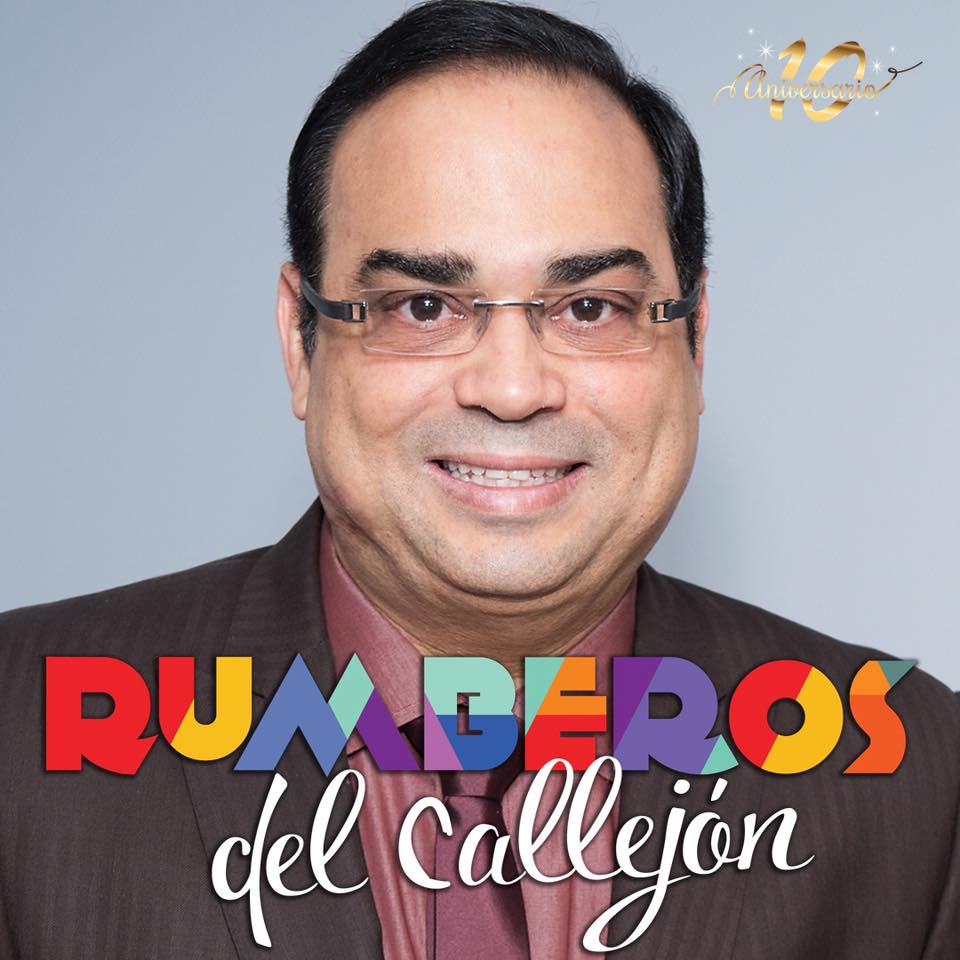
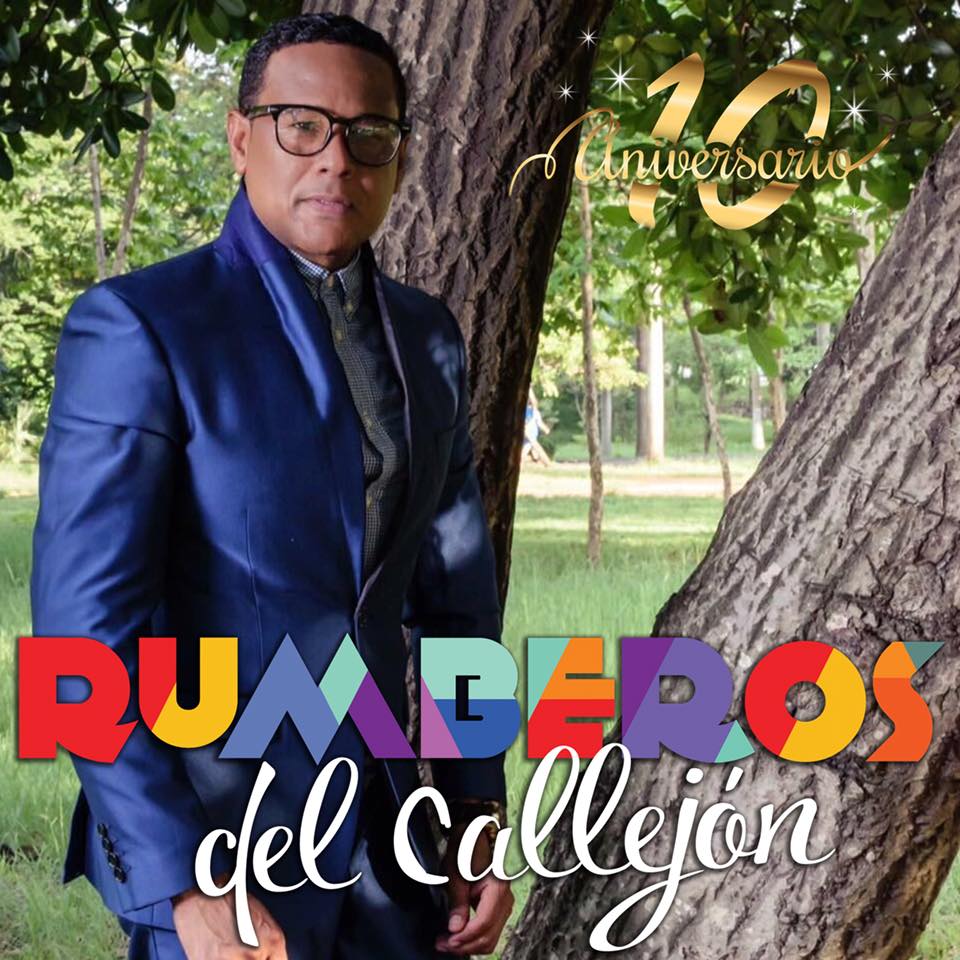
Rumberos del Callejón
North America / USA
Rumberos del Callejón “Celebrando” The Salsera Culture
After 11 years of trajectory, Rumberos del Callejón return with their third record label “Celebrando” for Salseros lovers from all continents. An album that since its inception has gained great acceptance by the public knowledgeable of this Tropical genre.


“Celebrando” will feature several unpublished tracks that highlight the evolution of this orchestra created in Caracas – Venezuela in 2007. These singles will be interpreted mostly by guest artists of the current movement, internationally recognized for their extensive and successful musical career.

Celebrando will have a modern and emblematic sound effect, since it has the outstanding voices of: Tito Nieves, Maelo Ruiz, Gilberto Santa Rosa, Domingo Quiñonez, Sixto Yorente “El Indio”, Luis Fernando Borjas, Wilmer Lozano and with the already prestigious vocal harmonies, members of this musical group: Rodrigo Mendoza, Gonzalo Díaz, Angelito Vallenilla, Memo Arroyave and their new musical bet, the young singer, Veruzka Verdú.

This group that owes its name to the San Pedro alley located in the popular Catia area, west of the Venezuelan Capital managed to obtain the collaboration of these international guest artists on their album not only thanks to the current avant-garde technology, but also to the printed constancy and always present in the director Carlitos Padrón, who took up the challenge with his father Carlos Padrón (founder of the orchestra) to produce “Celebrando”, which also had the privileged pens in the composition of the songs by Rodrigo Mendoza and Angelito Vallenilla.

“ For me Salsa is a way of life. It’s passion and culture. Carlitos Padrón “
This album with almost 4 years of production was recorded in the main cities of the American continent: Caracas, Santo Domingo, Cuba, Miami, Orlando and mainly in the recording studio “Chongo Records” belonging to the director, founder, composer and percussionist of the band, Carlitos Padrón, in New York.

“Celebrando” has the participation of important Venezuelan arrangers of the tropical genre, such as: Alberto Crespo and Willie Melo, who along with Carlitos Padrón took care of all the sound material of the production to get to the music market with a lot of “modernism and melao”, commented Carlitos Padrón. Currently, Celebrando is in the final phase of remastering and mixing so that dancers from the 5 continents are able to enjoy this new record proposal that Rumberos del Callejón will offer them soon.
“… We have international guests of great trajectory, which are a bit difficult to get but with the Grace of God, today, I think we have an Artwork”. Carlitos Padrón

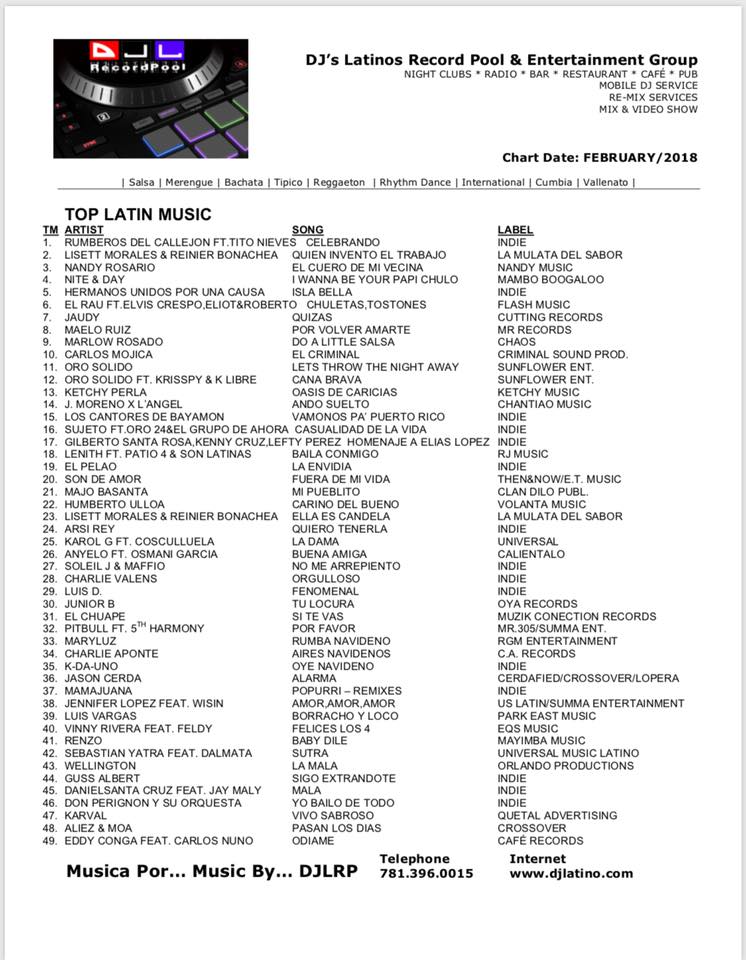
Recently, “Celebrando” whose name also titles the album, was the first single released by the group in November 2017 on all digital platforms and radio stations worldwide, and which last February managed to reach # 1 on the DJs chart.
The theme “Celebrando” has the participation of the Salsero Puerto Rican singer, Tito Nieves and the composition of the Venezuelan Angelito Vallenilla. The musical performance was in charge of the excellent Latin American musicians:
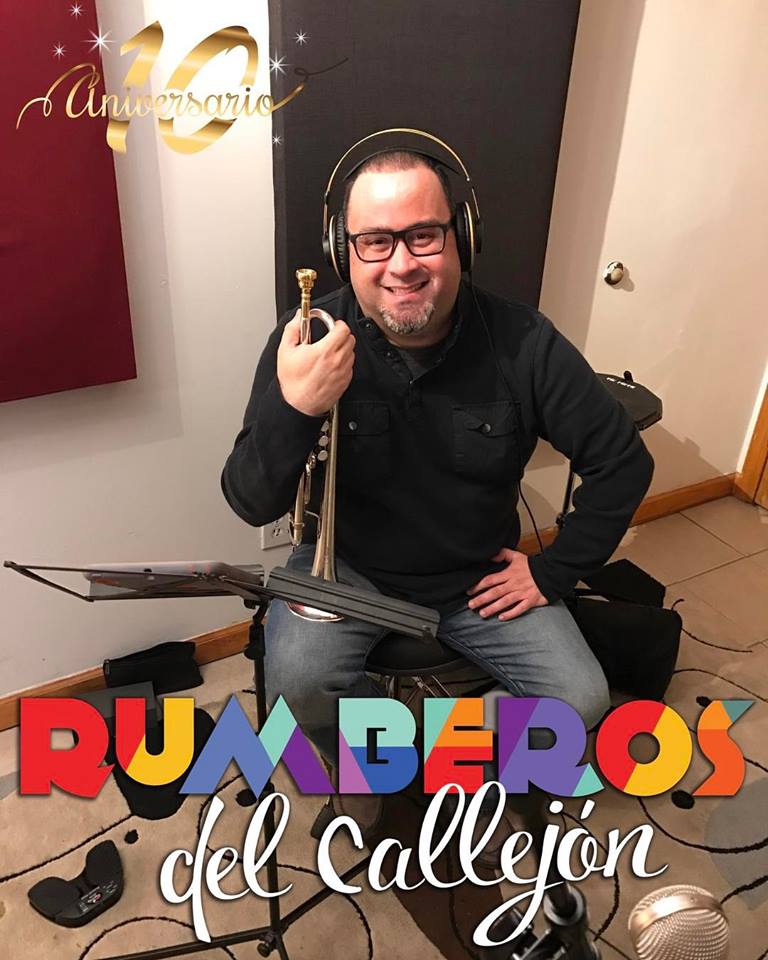
José Tabares (bass), Carlitos Padrón (Timbal), Alberto Crespo (piano), Marc Quiñones (conga), Bobby Allende (bongó), Manuel Maneco Ruiz (trumpets), Pablo Santaella (trombone), José Antonio Fariñas Gutiérrez (baritone), and in the choir: Rodrigo Mendoza, Leo Gruber, Wilmer Lozano and Angelito Vallenilla.
With this third record production product of the celebration of their 10th Anniversary, Rumberos del Callejón, hope to take their music to every corner on the planet and continue betting on the support and integration of new generations in salsa music.

“For me, the biggest success is to be able to say that I have in my production the biggest salsa singers of today, nationally and internationally.” Carlitos Padrón
Rumberos del Callejón’s Discography:
In order to rescue the golden age of Salsa in the 70s, 80s and 90s, the Orchestra Rumberos del Callejón was created with a total of 13 members at the beginning, currently, they are 12 members. Their great musical proposal was captured in their first record production titled “De la Nada” (2008) under the label Callejón Música. This album is composed of 11 songs, including: Aquí Se Puede, Pa ‘Lante Otra Vez, Chechere Guma by Justi Barreto, among many others.

After 4 years, they release their second album “Construyendo” (2012) with such emblematic songs as “Cuando te toque llorar” by Puerto Rican balladeer José Feliciano, likewise, the production of “Constuyendo” was in charge of the director, timbalero and composer, Carlitos Padrón with arrangements made by the renowned Puerto Rican producer, Ramón Sánchez.

And Finally, for the musical performance Padrón decided to gather the best musicians from the NY area: Isidro Infante (Piano), José Tabares (Bass), Pablo Santaella (Trombone), Ray Colón (Bongó), Nelsón Jaime “Gazú” (Trumpet) , Manuel Ruiz (Trumpet), Iván Renta (Saxo Baritone) and Robert Quintero (Congas).

For more information, follow them at:
- Facebook: https://www.facebook.com/pg/rumberosdelcallejon1
- Instagram: @rumberos_del_callejon
- The Official Accounts on YouTube and Soundcloud: Rumberos del Callejón.

Nicaraguan composer and pianist Donald Vega’s hard-luck story
The character’s story we are going to talk about today is extremely fascinating, since the challenges he has had to endure did not prevent him from becoming the great musician he is now. We are talking about Donald Vega and the inspiration he is for those who believe their dreams and goals impossible to achieve.

Donald Vega and his interesting story
Donald Vega is a composer and jazz pianist born in Masaya, Nicaragua, whose family has had musicians for several generations. His grandfather, Don Alberto Gutiérrez Laguna was a composer and multi-instrumentalist and had a love for music that was passed down through his children as they grew older. This was the case of his uncle, Tránsito Gutiérrez, who was honored in 2022 at the Rubén Dario National Theater for his great artistic career.
Tránsito was one of the great inspirations for his nephew to become interested in music and play the piano at the tender age of three, guided only by his ear. His grandfather Alberto, seeing this, wanted to teach his grandson Donald to read music and prepare him as well as possible for the future. As part of this preparation, he attended the conservatory to study the greatest exponents of classical music such as Beethoven, Chopin and Mozart.
Unfortunately, his parents quickly understood that the country was not safe for their son to pursue his dreams.
Challenges of adolescence
At that time, 15- and 16-year-olds were forced to join the Nicaraguan army, so his mother left the Central American country to find a way to get him and his siblings out of there and give them a better future far from armed conflict. Something that struck him at that time was that there were many wakes in his neighborhood where the body was not even present, but some parts of the military uniform such as the helmet or boots. This led his mother to want to get her son out of the country, so she got him a visa to go to Mexico so he could cross the land border into the United States with his godmother.

His first stop was Los Angeles, where he joined his mother and applied for political asylum. At that moment, he did not have any resources to buy instruments, but he received a scholarship at a conservatory where he got much support to train properly despite the want of money.
While in school, a music teacher heard him play the piano and invited him to participate in a national music competition in Los Angeles where he won first place and was given 5000 dollars and a piano as a gift. It can be said that this was his official start in the world of music, so he is very grateful to have participated in the competition.
Sometime later, he received a scholarship to study at the Manhattan School of Music in New York and the Juilliard School of Music, of which he is now a music teacher.
Golden Striker Trio
The opportunity to belong to the Golden Striker Trio is described by Donald as incredible, since it has been a fascinating experience with an interesting beginning.
It all started when a Ron Carter’s student at Juilliard, with whom Donald made a recording together in New Orleans to be shown to Professor Carter to determine what aspects needed to be improved. Carter was so fascinated with Donald that he asked to meet him and talk with him to learn more about his work.
When they met, the professor proposed the artist to watch him live in one of his performances. After that, he had him come to his home to tell him that he was giving him the opportunity to participate in his Golden Striker Trio as a pianist, since the previous one wanted to dedicate more time to his own group. Donald has been working with Carter and his group for more than 15 years and is very grateful for what he has achieved and learned.

Backcountry Jazz
Backcountry Jazz is a non-profit organization that seeks to support talented youngsters with limited resources to achieve their dreams in the music industry. Donald has become part of this noble initiative motivated by the teachings of his parents, who have always told him to be generous and give of his time to others. It is for this same reason that he also teaches at the Juilliard School of Music, since sharing his time and knowledge with others gives him an incredible satisfaction.
Due to the situation he himself experienced with lack of money and instruments in order to get ahead in his passion, he understands perfectly how children and young people who do not have the resources to be successful with music feel, so he seeks to give them a hand through this organization and his mentoring.
Grammy Nomination for As I Travel
Donald talks about ”As I Travel” as a description of the path he had to pass to become the musician he is today. He was also inspired by his journey across more than 44 countries he has visited with different musicians including, of course, Ron Carter.
The whole album is inspired by his experiences. An example of that is ”Baila! Dance Like No One’s Watching”, which is inspired by the happiness of those around him, especially his son, his biggest inspiration for writing the song. It is a celebration of life, family and his countrymen in Nicaragua.

Another example worthy of mention is ”I Know I can Fly”, which was inspired by the host of challenges he faced upon arrival to the United States and the whole process of adapting to the country, its lifestyle, its climate and its language. It was also inspired by his determination to succeed despite all the challenges he faced along the way.
Read also: Cuban pianist Daniel Amat achieves his dream abroad