Search Results for: dance
Europe / November 2024
Gustavo Collazos
Latinoamerica / Colombia / Cali
Gustavo Collazos tells us. Its history and its Salsa Caleña
Did you know that in the beautiful city of Cali, Colombia, the rhythm that prevailed both musically and commercially and culturally of all the Latin rhythms that came to the country was Salsa? A musical style from the Caribbean, which over time achieved an evolution, giving rise to Salsa Caleña, a new and different style of composing and dancing Salsa that is characterized by being a very fun, cheerful, fast dance by the dancers who dance it. they dance.
Well this time we have the opportunity to meet Gustavo A. Collazos, founder and director of the Academia Fiebre Latina, who tells us his story as a dancer and lover of Salsa Caleña:
Gustavo Collazos, has been a lover of Salsa since he was 8 years old, from his 14 years he dedicated himself to teaching salsa dance to the children of the sector since it was something that he was passionate about.

With the passage of time, he formed the “Latin Fever” Academy in Colombia, thanks to the support of his brother and partners, including “Carlos Ceballo” director of “Salsa Pura”, a company dedicated to teaching foreigners in Cali, ” Francy Barahona” based in Paris, pioneer of Salsa Caleña in Europe, “Eduardo Alban” with Anfitriones, who trains new talents to give continuity to the process.
With the aim of creating a brand that would be different in the musical world, they began to merge acrobatics, rhythms and techniques from other dance disciplines of all genres but based on Salsa Caleña, placing them in a competitive and show format creating an unstoppable fever.

Currently the Fiebre Latina Academy has not had a headquarters for 3 years, so Gustavo dedicated himself to expanding Salsa in the USA as artistic director of “Cali Salsa Miami”; He is known and considered by his students and/or followers to be a teacher, due to his career and contribution to salsa. For now, he has toured Colombia, Switzerland, Miami and India (currently living there) expanding his culture as a dancer, workshop facilitator and choreographer. , letting people know how spectacular is.. Salsa

Now I start a project in “Casa Latin”, where they bring the experience of living Latin dance, especially Salsa Caleña, the festivity and joy in India, making them the pioneers in Asia and under the support of their brand and experience to position their culture there.

He had the opportunity to be a finalist in the Reality Colombia has talent version of “Got Talent” where he contributed the knowledge of recognizing salsa as a significant element in high-performance shows.
To learn with the “Casa Latin” Academy, it is not necessary to have experience, that is, you can start from scratch according to your dance goal, participating in the classes. Gustavo mentions that “Dancing is not just exercise, dancing frees you, leads you to set goals, to achieve them, to enjoy the melody of music, to meet cultures, people and make new friends”…
“dancing is a profession like any other, we are dreamers who leave everything they have learned in their life in a person, and it remains eternally in their being, we not only teach to dance we give emotions, moments, life. Once you start dancing you can’t stop. It is you, your partner, the music and the world put into a melody”.

For more information:
WebSite:
- Fiebre Latina: https://www.fiebrelatinacolombia.com/
- Casa Latín: http://casalatin.com/
Facebook:
- Gustavo A. Collazos: https://www.facebook.com/fiebrelatinacol
- Fiebre Latina: https://www.facebook.com/fiebrelatinacolombia/?timeline_context_item_type=intro_card_work&timeline_context_item_source=100000181341290
- Casa Latín: https://www.facebook.com/CasaLatin/
Instagram:
- Fiebre Latina:
- Casa Latín: https://www.instagram.com/casalatin/
Twitter:
- Fiebre Latina: https://twitter.com/fiebrelatinacol?lang=es
- Casa Latín: https://twitter.com/casalatin
YouTube:
- Fiebre Latina: https://www.youtube.com/fiebrelatina
- Casa Latín: https://www.youtube.com/channel/UCTIUEsU50MX8TT_EsXS6Inw
Teléfono:
- Casa Latín: +91 87929 23775 / +91 73491 52846
Europe – June 2018
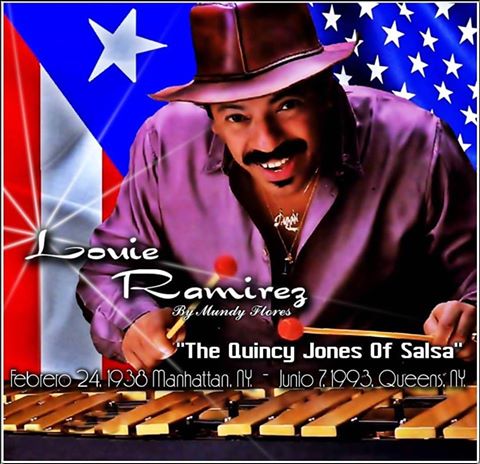
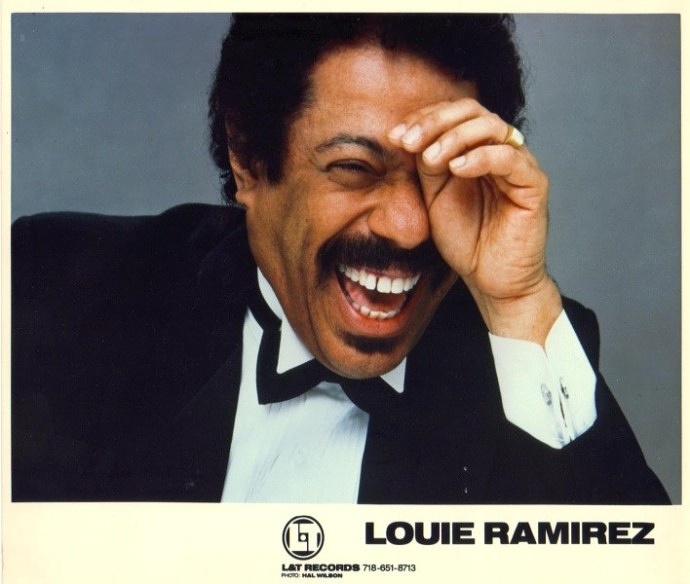
Louie Ramírez. The Hidden Talent of Salsa Ahead of its time
North America / USA / New York
Louie Ramírez.
Music often requires characters who are always behind the scenes and support the work of singers and performers with their talent, who are ultimately the ones who “put on their face” and become popular. Sometimes, however, these anonymous characters rise to fame in order to perform their own work and even become more popular than any popular singer.
In the case of Pop, this character is called Quincy Jones, of whom it is enough to say that he has been an arranger for Frank Sinatra and a producer for Michael Jackson. A nobody”. In the case of Salsa, these characters have been symbolized by Jones’ emulator, a guy named Louie Ramírez who has done everything with everyone.

One afternoon in 1994, Ramírez was driving his car down the highway that would take him to Variety Studios in New York. It was going to be a quick session since he only needed one song to complete his 20th album as conductor. Perhaps that was why he was nervous and that filled him with anxiety. Minutes later he couldn’t resist the feeling and had to pull over to the side of the car. He had not finished doing it when a cardiac arrest ended his life.

Louie Ramirez was a genius. The classic man to whom everyone turns for advice and solutions to their problems. It didn’t matter if they were young or old musicians. The fact was, Louie had the answer, and visiting him was like rubbing Aladdin’s lamp. That was a characteristic that always accompanied him, from that first recording “Conozca a Louie Ramírez” in 1963.
He was 20 years old at the time and had already stood out for composing some pachangas and arranging for Pete and Tito Rodríguez’s orchestras. The commentator Dick Sugar then presented it like this: Ramírez breaks the image of the director of a group that uses the talent of other composers and becomes a follower of a rhythm. No, Louie Ramírez is a creator in his genre.

That talent did not go unnoticed by the new Czar of Latin music in New York, Jerry Masucci, who hired him as a star for Fania Records and at the same time, as an arranger for the orchestras and ensembles that belonged to the record company. Ramírez was soon involved in work and was only able to record two albums during the sixties, “Good news” and “Alí Babá”.
On that last album appeared the hit that allowed him to be a famous artist, El Títere, a true Salsa classic. The theme was sung by Rudy Calzado, the third of the soneros that Louie had used without finding the ideal. That was a burden that accompanied him as a director during the seventies, when he used singers of the stature of Pete Bonet, Tito Allen, Jimmy Sabater, “Azuquita” Rodríguez, Adalberto Santiago, and even Rubén Blades.

It was with Blades, precisely, that he made an anthological album, “Louie Ramírez and his friends”, in which the song Paula C was included, with an arrangement of those that deserve -hats off-. By then, Ramírez was considered in New York as the most progressive arranger that Salsa had, thanks to the brilliant work done for the Fania All Stars. An excellent job had been the instrumental arrangement of Juan Pachanga, to be sung by Blades, of Canta Canta for a performance by Cheo Feliciano, and of the entire album “Algo nuevo” that Tito Rodríguez sang with Louie’s orchestra.
But the high point of Ramírez’s career came in 1980 when Joni Figueras, representative of the K-Tel International label, hired him to arrange the ballads Todo se derrumbó and Estar Enamorado de Manuel Alejandro. The album, which included these and other tracks, was released two years later under the title “Hot Night” and was recorded by Louie’s own orchestra.

This is how the Salsa-ballad or Salsa-romántica was born in a job that Ramírez continued until his death, making attempts at Latin Jazz from time to time, which he loved. That is why he recorded an album in tribute to Cal Tjader, where Louie was director, producer, composer and arranger, in addition to playing the timpani and his favorite instrument: the vibraphone.
Louie Ramírez was a genius in arranging, in a career where those of Guantanamera and Isadora stand out for Celia Cruz, El Guiro de Macorina for Johnny Pacheco and El Caminante for Roberto Torres. Apart from this, there are his works for the Alegre and the Cesta All Stars. Regarding this profile of Ramírez, the critic Eleazar López defined it very well:

It is not easy to arrange for a dance band, especially when it comes to a group that cultivates the hot tropical genre. Many musicians feel influenced by Jazz and the result of their orchestrations leaves a void in the dancer. Others arrange simple, but so simple that they repeat and copy themselves, and the result is tiresome music, without any degree of creativity: music that says nothing, that leaves nothing. Louie Ramírez has found the perfect balance… that’s why he always stays current.