• Skip to primary navigation
  • Skip to main content

International Salsa Magazine

  • HOME
  • Previous editions
    • 2026
      • ISM / March 2026
      • ISM / February 2026
      • ISM / January 2026
    • 2025
      • ISM / December 2025
      • ISM / November 2025
      • ISM / October 2025
      • ISM / September 2025
      • ISM / August 2025
      • ISM / July 2025
      • ISM / June 2025
      • ISM / May2025
      • ISM / April 2025
      • ISM / March 2025
      • ISM / February 2025
      • ISM / January 2025
    • 2024
      • ISM / December 2024
      • ISM / November 2024
      • ISM / October 2024
      • ISM / September 2024
      • ISM / August 2024
      • ISM / July 2024
      • ISM / June 2024
      • ISM / May 2024
      • ISM / April 2024
      • ISM / March 2024
      • ISM / February 2024
      • ISM / January 2024
    • 2023
      • ISM / December 2023
      • ISM / November 2023
      • ISM / October 2023
      • ISM – September 2023
      • ISM – August 2023
      • ISM July 2023
      • ISM Edition June 2023
      • ISM – May 2023
      • ISM April 2023
      • ISM March 2023
      • ISM February 2023
      • ISM January 2023
    • 2022
      • ISM December 2022
      • ISM November 2022
      • ISM October 2022
      • ISM September 2022
      • ISM August 2022
      • ISM July 2022
      • ISM June 2022
      • ISM May 2022
      • ISM February 2022
      • ISM January 2022
    • 2021
      • ISM December 2021
      • ISM November 2021
      • ISM October – 2021
      • ISM September 2021
      • ISM August 2021
      • ISM July 2021
      • ISM May 2021
      • ISM April 2021
      • ISM June 2021
      • ISM March 2021
      • ISM February 2021
      • ISM January 2021
    • 2020
      • ISM December 2020
      • ISM November 2020
      • ISM October 2020
      • ISM September 2020
      • ISM August 2020
      • ISM July 2020
      • ISM June 2020
      • ISM May 2020
      • ISM April 2020
      • ISM March 2020
      • ISM February 2020
      • ISM January 2020
    • 2019
      • ISM December 2019
      • ISM November 2019
      • ISM October 2019
      • ISM Septembre 2019
      • ISM August 2019
      • ISM July 2019
      • ISM June 2019
  • Download Salsa App
    • Android
    • Apple
  • Spanish

Search Results for: flute

Sonora Ponceña and her 1982 álbum “Determination”

A production that placed “Yambeque” on its first song

Enrique Arsenio Lucca Quiñones (Ponce, Puerto Rico, April 10, 1946), known as Papo Lucca, is a pianist and multi-instrumentalist of salsa and Latin jazz.

An arranger and virtuoso of his instrument, he was co-founder with his father, Enrique “Quique” Lucca Caraballo, of La Sonora Ponceña. He has also performed and recorded with the Fania All-Stars, Willie Colón, Celia Cruz, Johnny Pacheco, Bobby Valentin, Ismael Quintana, Gloria Estefan, Adalberto Santiago, Andy Montañez, Pablo Milanés and Rubén Blades.

La Sonora Ponceña is a Puerto Rican orchestra of Afro-Caribbean music founded by “Quique” Lucca in 1954.

Directed by the son of “Quique”, Papo Lucca, it is one of the most important groups of the musical genre

This time we highlight the album “Determination” from 1982, a production that placed “Yambeque” on its first song

Sonora de Ponce, Papo Lucca, Los Gigantes del Sur, Determination
Sonora Ponceña and their 1982 album “Determination”.

A melody from Regla de Ocha to the orishas that brings a rumba within its particular style of salsa and excelling in a solo he “little” Johnny Rivero and the interpretation “Toñito” Ledee.

On the song “Soledad,” it was Yolanda Rivera‘s turn, along with Miguelito Ortiz and Toñito Ledee, where they sing about loneliness and its peculiarities and dangers.

In “Creo en ti,” the arrangement of the ninths and suspended chords on the trumpet harmonies stood out, very well complemented by Yolanda Rivera’s interpretation of this bolero.

The song “Herida cerrada en falso”, lyrics and interpretation provided by Toñito Ledee, where we enjoy the vocal style of this great singer.

The melody that followed on this album was “Date cuenta“: a call to young people who go around playing with hearts.

In “Si la ven”, where the piano solo turned the main line of the melody into a Classical Music Minuet and where we enjoyed the harmonies that were used in the trumpets and flute horn by Juancito Torres.

In “Joldo” Maestro Papo Lucca makes Jazz taking this melody to a more accentuated Latin plane.

In “Aunque te quiero” Songo with Salsa was employed for a sense of harmony and dance-driving, where this melody reflects the heart of the true and full romantic lover, who regrets the love that does not return to him.

In this production we have wanted specially to detail that we counted on Enrique Quique Lucca like Musical Director; to Enrique Papo Lucca like Producer, Arranger, choir and piano; vocalists to Yolanda Rivera, Miguelito Ortiz and Toñito Ledee; in the choir to Edwin Rosas and like guest also in choirs Mr. Adalberto Santiago.

We were fortunate and honored to have lyrics by Adalberto Alvarez, Jose A. Mendez, Toñito Ledee, Francisco Alvarado, Roberto Anglero, Joseito Gonzalez and one with DRA.

This album continued to mark the musical line that we brought and continued to have the privilege of the favor and acceptance of each of our fans, who to this day continue to fully enjoy each of the melodies present in this production.

We say goodbye to you and thank you for your attention, and we will return soon with another release for all of you.

Facebook: Sonora Ponceña

Yambeque

Home

Yalil Guerra and the musical roots of his talent

Who is Yalil Guerra?

Yalil Guerra Soto is a classical guitarist, composer, arranger, producer, and sound engineer born in Cuba on April 27, 1973. He is the son of the famous Cuban vocal duo Rosell y Cary. The talented musician’s early musical studies began at the National School of Arts (ENA) in his hometown. In 1991, he graduated as a classical guitar performer and professor.  

After winning the Classical Guitar Festival in Poland, he traveled around several Polish cities and began his career as a composer, producer, and arranger a year before graduating from music school. Later on, Guerra studied classical guitar for a few years with some of the largest professionals of his land and moved to Spain, where he earned a master’s degree in classical guitar in the Conservatory of Music in Madrid.   

At present, the artist is dedicated to composing classical and popular music and creating soundtracks for various American television channels, highlighted among them Disney, CBS, PBS Networks, and Univision. In addition, he works as a university professor and music producer.  

He is the producer of the work of his sister, fellow artist Yamila Guerra, and his parents (Rosell y Cary), which demonstrated a close relationship to family and professional level.  

We received him in Internacional Salsa Magazine to know a little more about this very talented Cuban and some details of his brilliant artistic career. 

Yalil Guerra with a microphone and his recording studio
Yalil Guerra with his recording studio on his back

I am very happy to have a very special guest today. This is the producer, arranger, composer, and classical guitarist Yalil Guerra. How are you today, Yalil?  

Hello, Karina. It gives me enormous pleasure to have the opportunity to be in what will be a wonderful interview for International Salsa Magazine. I thank you with all my heart, so all is very well in the city of Los Angeles, but I am a little cold. But yes, it is all right. I am a producer, composer, arranger, and lover of good music.   

All right, Yalil. We wish to start this conversation by talking about your musical beginnings and your background. How did you get interested in music? When you started your career? When one can say that you started pursuing this path of music? What kind of music you listened to and what inspired you were a kid?  

Well, basically, that is a very simple thing. I had the great joy and the fortune of being born in a musical family. My parents, duo Rosell y Cary, were very popular in the ’70s and ’80s in Cuba. Thanks to this influence, both my sister Yamila Guerra and I (she is a singer and I am the producer of all her music) have been involved in these musical processes from a very early age, I mean, our house was a circle of constant visits of artists and musicians in Cuba, mainly in Havana, which was the city where we used to live. Thanks to this influence, my curiosity about learning the art of music was aroused that is so abstract, but at the same time, so infinite in what is the knowledge for all that I have to learn. In fact, I continue to study and never stop studying because it is too big. 

These influences come mainly from popular music, as well you know. Not from traditional music, but from popular music, as my parents sang in this style, romantic music was a little influenced by the music coming from Spain, pop from the ’60s and ’70s. At the same time, living in Havana means opening the window and hearing Afro-Cuban music or eventually listening to a song on the radio, a filin (a word derived from Feeling to define a popular song fashion that emerged in Cuba with extensive American roots), a bolero, a rumba or a guaguancó. In other words, it is all a  hybrid of influences that obviously wake up child to start studying music. Seeing my father play the guitar encouraged me to choose that instrument as a first option and, well, that is how the journey in the world of music started.   

Yalil Guerra with a part of his family
Yali Guerra with his parents and his sister

All right. Obviously, you come from a musical family. Your parents are both musicians and your sister is also a musician. It is not difficult to assume that this was what influenced a bit your chosen path, but, besides your parents, what other musicians that also influenced and were important in your decision to dedicate yourself to this in the future could you mention?  

Well, my first influence came from the family. After that, when you start listening and discovering the world of music, you start doing it without having strong knowledge of what you are listening to at first. Just, I like it or not and this I like it was what made me start studying music. I had the joy of being accepted at the prestigious National School of Arts in Havana, where I graduated in 1991 and, later, I studied at the Superior Art Institute for two years. I am very grateful for this nice opportunity I was given in my country. It is something incredible. Then, I had very good music, guitar, different music subject teachers. In this school, I got the chance to learn about classical music and to have the influence of the music of Europe. There I discovered Johann Sebastián Bach, Wolfgang Amadeus Mozart, Ludvig van Beethoven, Richard Strauss, Arnold Schoenberg, Igor Stravinski, Alban Berg, and all the great masters. That opens up a world of knowledge and development of musical taste that is when your education begins and start telling: I like this composer more than the other one. 

Parallel to this, as I have been studying classical music, I continued to work with my parents in popular music because I got to work with them. This path next to them helped me to understand the repertoire of Cuban traditional music, which was not taught in the art schools in Cuba and allowed me to enter into this world and to develop both worlds: classical and popular music. That allowed me to mix both worlds in the work I am doing in both classical and popular music today. 

Regarding the composers of great influence in classical music, I can tell you about Johann Sebastian Bach (who is key in the contrapuntal development of everything that has to do with the development of musical motifs), Mozart for his melodic development, Brahms, Tchaikovsky, Debussy, Maurice Ravel, Richard Strauss, and Rachmaninoff from Russia (he is also very important and I love his work). There are great artists and composers who left behind a wealth heritage. In the case of popular music, of course, we have the greatest. That is, there are so many composers, artists, and musicians who have influenced my development that it would be a little unfair to leave anyone behind, and for that reason, sometimes I have trouble mentioning some of them because I would have to mention the full history. The result of what I am today is simply the story of everything I have listened to, what I could learn, and life experiences. The knocks, the joys, the sorrows are the things that really make you create your own seal and your own individuality. 

You have been killing it on awards and academic training in classical guitar. You are highly notorious for performing all kinds of instruments. Could you tell our readers what other instruments you play? What other instruments do you play in your shows?  

Absolutely, you know that the classical guitar allows you to play multiple levels or melody lines since it is a polyphonic instrument, you can have a musical accompaniment as the bass and have percussion. It’s a very rich instrument, so that gives you independence in your brain that is equivalent to that of a percussionist because you have multiple things going on at the same time, which makes it different from a flute (a monophonic instrument, which can only play a single melody or a violin). The piano is also polyphonic, so you can also do the same thing.

Then, I expanded from guitar to piano, since it is mandatory for all music students to practice or study complementary piano in Cuba. In my case, I had the opportunity to have a piano at home and practiced three or four hours a day for guitar and two hours for piano. So, I play piano and guitar at the same time, to the point where I played repertoire on the piano, which was what many top-level pianists who were only dedicated to that instrument did. Because I love the piano, of course, I don’t consider myself a classical pianist or anything, but I do play the instrument in popular music.

From there, the guitar gives you the advantage of expanding to similar or common instruments like the electric bass, the electric bass guitar uses the same three or four bass strings of the guitar, so it’s very easy for a guitarist to pick up a bass guitar or electric bass and play it because all the positions are the same. The Cuban tres is another related instrument, which is very easy to get in tune in the same manner as the first three strings or the highest strings of the guitar: E-B-G. Many guitarists play the tres instead of the original tuning which is the E-C-G or F-sharp-D-A that is played in Santiago de Cuba. You can play like the guitar because you only have to lower the note a half-tone of C to B and you have them in the same positions, therefore, it is very easy to make the transfer from one to another.

Of course, when you change instrument, you have to learn how you look at music again because the function of each instrument changes. The function of the electric bass is not to provide harmonic support, but a precise rhythmic accompaniment for the notes of harmony to ensure the constant framework of what the song is going to be, as well as the structure and columns of that building you will listen to. When you play the Cuban tres, it is very similar to on a piano and a guitar, so you can do two functions, either harmonic support through a tumbao or a melody (he makes an example of the notes). If you can play with both those things, then, as long as you understand musically the path that you are on, you are not going to have any problems. The problem happens when you have confusion, as there are times when you want to insert the mindset of one instrument into the other, then, that is where sometimes there can be a short-circuit, but thank to the Lord, I have always been very alert to my own mistakes because I am human and can make mistakes. I have to improve them, know what I am going to do and everything.

I have had great opportunities to put this into practice and there is a friend’s orchestra in Los Angeles, it is about a dear Venezuelan colleague named Carlos Navarro, it is the Clave y Son Orchestra. I have performed with him for many years and he always invited me to play the tres, but it turns out there is a pianist, so a type of musical filtration may happen. In that case, I have to see what to do to avoid disturbing the pianist, because, sometimes it happens that the piano and the tres do the same and clash, so you have to be very aware in real-time and create musically speaking to know how to avoid that. However, it is a beautiful thing to do. In the case of the requinto, it is a very popular instrument used in trios or in Mexico and is a small as the guitar tuned a fifth above. From there, I started learning Baby bass that is like a double bass, which I also learned to play. Then, I jumped to percussion, tumbadora, bongo, timbales, maracas and güiro. Within that madness, I learned sound engineering that is what you see back here (he points to his music studio in the background), how to record, produce, mix, edit, master a record, how to record video clips, how to edit them, how to do color correction, how to publish the video. In short, the whole process from a to z in music production to avoid depending on any record company that needs certain aesthetic requirements which do not engage what I’m looking for and, thus, to have more creative freedom. 

Yalil Guerra smiling and showing us some musical scores
Yalil Guerra showing some musical scores

Wonderful! Okay, Yalil, you have stood out for performing certain musical genres and styles that are not the most typical or famous in your country or that have not made Cuba known around the world. Many would think that classical music is not very popular in Cuba, although in reality this is not the case, since there is a lot of talent in all genres in Cuba. On that note, could you tell us what you try to express to the world in your music, bearing in mind that these are not the most famous styles on the island?  

Obviously, popular music is more popular, forgive the redundancy, which means that it is mass-produced and a product of mass-consumption. However, serious or classical music (popular music is also classical because when you are singing a song from the 1920s, it is already a classic) has been grown in Cuba since the 18th century with Salas, Saumell and Cervantes in the 19th century. On the next century, this occurred with Caturla, the first generations of composers, Roldán, the Grupo de Renovación Musical (school of Cuban composers created in Havana), and what came after 1959 with those born, raised, and studied after the start of the Cuban Revolution, the generation to which I belong.

I tried to make a dream that was out since childhood, which was to be a composer. Even being a prominent guitarist, I always visualized myself looking for and writing in partbooks with pencils and erasers so that, when I became a composer, I had those scores. You know that there has always been much shortage in Cuba due to this access to the international market to buy products, so it was very difficult. There is no consumer market like there is in a capitalist country, so this kind of thing was a little more limited. However, I always managed to get a notebook from the school and I kept it, then I would ask to get another notebook after a month and so I accumulate them. At the end, this led me to pursue my dream of being a composer, which is the last thing to be studied. It is the opposite of being a doctor because you study general medicine in the first place and, when you graduate, you decide if you want to be a specialist doctor. In music, it is the opposite; if you study any specialty such as piano, trumpet, percussion, or instrument, you graduate and then you start working. If you wish to keep studying the generalities of music, you have to go down in composition or orchestra conducting.  you are going to make university degrees, you have to take a Ph.D. in the two already mentioned or musicology.

I have gone down this path of composition through the study of classical music without further pretensions and always knowing that there was a very important legacy of very good composers in my country and the rest of Latin America. Without great pretensions, I began to put in practice what I had learned in Cuba and Spain, where I also studied at the Superior music Conservatory in Madrid. I also had the great opportunity to get a scholarship. At no charge, I studied classical guitar, counterpoint, and fugue. It was a wonderful experience. From there, I could also gain a lot of knowledge that has helped me to develop this way of music and composition.

As for musical styles that are not Cuban or not known, popular music is known everywhere and that access to popular music is what makes classical music not very well known. Remember that classical music has always been seen as music of elites and I am very glad that did not happen in Venezuela with the great work by the Simón Bolívar Youth Symphony Orchestra and its founder, Maestro José Antonio Abreu, whom I could know in Los Angeles on a tour of the Symphony orchestra conducted by Gustavo Dudamel about three or four years. Cases like these are examples of the approach of art music to the population is something that can have a very positive impact. The same thing happened in Cuba, where there has been mass access to music education that makes children get involved in spiritual enrichment and enlightenment to a different path. 

This classical music is not the first thing I start composing. I have just been making popular music for 20 years and working hard for Univision, composing, producing and arranging music for shows like the Latin Grammys Awards, Lo Nuestro Awards, and Sábado Gigante. In fact, I am part of everything related to the orchestration and the arrangement of what you listen to in the music of Univision News. I have been working on almost all of Univision shows and many artists that I collaborated with in productions or played with them. However, my career has not taken off because there are so many people doing the same thing that competing with the great figures who are already signed or who, back then, were already signed by the big record companies was very difficult, especially if you are young and in a country like the U.S. where you are not supported by any cultural institution that endorses your work and you are in limbo.

The market runs on the market, for example, if there are one or two million Venezuelans in Miami and you are a Venezuelan singer, you have the opportunity that those two million buy your music in addition to the ones you already have in Venezuela. In Cuba, something different happens; generally, if you sing or your music is played somewhere else, there is a political conflict that mixes everything together and all hell breaks loose, from which the market and the record companies are always on the lookout. For this reason, they often opt for countries where there are no such conflicts. 

Returning to the subject of classical music, after a while, I had a dream in which I saw a vision of Jesus Christ. I did not grow up as a Catholic or a believer, but I had a very particular dream and it was the only time I dreamt of Jesus Christ, who told me: Yalil, the music you have to make is this. When he opened his mouth, a symphony orchestra sounded. From that moment on, I started writing classical music and the first album that got me nominated for a Latin Grammy. This was an album that took me a while to produce out of my own pocket and I went to Cuba to record it. I also recorded here in the United States and was nominated for Old Havana. Chamber Music Vol. I in 2010. Next thing after that, my career took off, which was like the starting point with my first production that continued at an accelerated pace. Not only by doing my own works, but producing other artists and musicians who were just like me, because they did not have support and I humbly start supporting them and produce them with my label. By the year 2021, there are now eight nominations in the classical music categories of Best Classical Music Album and Best Contemporary Classical Work and a GRAMMY win in 2012. As a record label, I have won two Grammys and earned fourteen nominations, adding other artists. So, I mean, it has been an arduous and intense task without resting. 

You left your country many years ago and were in Europe, where you achieved many successes and had a prolific career there. You were very successful both in an academic and artistic aspect. In that sense, leaving your country a long time, visiting so many countries and the nostalgia that everyone who leaves their country feels, how did this influence your music? How do you think the fact that you left your country at such a young age may have influenced your music?  

I have never left Cuba. Cuba is in my DNA. I left Cuba when I was 20 years old and now I’m 47. I did not dry my hair, even though you do not see gray hair here (laugh), but I have never left Cuba. On the contrary, an interesting phenomenon happens. Cuba is like a mother, it’s like a coat that embraces your soul. It is my land, even if I am in Burundi or Australia, I eat Cuban food for breakfast, I drink Cuban coffee and I consume the news in my country. I watch the sources of information from both Cuba and Miami. I am fully aware of various information channels about what is happening in the world. I am very aware and very connected with the musicians of my land, I constantly go to Cuba, my music is played and released in Cuba and I always have interviews on the radio, television, and written press in the national newspaper. I can’t complain and I think it’s very important that an artist can have access to this type of connection to his homeland. I never was one to enter into a confrontation or political and religious viewpoints. I believe that life can be seen from many points and if I see something in a way, another person can see it in a completely different way. Therefore, I always try to avoid conversations or points that can keep human beings disunited.

Human beings are disunited since their beginnings in creation; from the time you have a different mother language than the one I speak and we live miles and miles from each other, there is a division because we do not understand each other. I have to find someone who learns your language so that I can translate it. Then comes the division among races, the borders of the countries, economic and political divisions, currency, trade divisions, among others. In other words, there is so much division that what I do not want is to contribute to division between human beings; what I want is unity. Of course, the greatest powers that be live from disunity; I do not live from disunity, but from union and embody all souls with what I do best, which is music, and that is a process that requires a lot of concentration and inner peace to do my personal best. 

Outside of Cuba, the experience of being in other countries like Spain, where I lived there for so long, and seeing my country from a different perspective. I saw it from a perspective of discovery and knowledge to Cuban artists I never had the chance to know because they left the country, where many mistakes were made like removing certain historical figures of Cuban music and this has been fixed. Many talented generations have passed and many adjustments and changes have been made at this point. That is wonderful, but ever since I lived in Cuba, I did not know them; in Spain, I could figure out who Celia Cruz was and my teacher Aurelio de La Vega (classical music composer). 

This contact with another discography that was in my hand made me discover another Cuba with another vision as a reflection of the era before the Cuban Revolution. If I had lived in Cuba, I would have discovered it too, but I was in Spain, so I discovered it in Spain. It does not mean that those who stayed in Cuba did not discover it, since you can listen to all the music that exists there from before in recordings, but I had to leave and I discovered it outside of Cuba; so let me just clear this with that, so they cannot say I said that this music was not listened to. Whoever lives in Cuba knows who Benny Moré was and who were the great figures and orchestras from the past, but I had to live this experience abroad and that brought a more cosmopolitan learning to interpret this music, so that I had to learn to play salsa in different styles, for example, how it is played in Cuba, how it is played in Colombia, what the repertoire in Puerto Rico is, how it is played in Venezuela. That is to say, there are so many variations created by styles or by groups that generate specific sound marks with their ways of dancing and making music to absorb all these styles and knowledge, incorporate them and make them your own vision. 

That is what happened to me and that is why my popular music is cosmopolitan and is not only 100% Cuban music. On the contrary, that is the music I want a Venezuelan, a Colombian, a Panamian, and a Cuban to like. You cannot say that this is only Cuban because this is Colombian, this is similar to the Niche Group, this is similar to El Gran Combo de Puerto Rico or this is from the Fania All-Stars. No, this has a seal that is the seal of Yalil Guerra and it sounds like my arrangements, my music, my world, and the way I talk (laugh). 

Cuba is the home of the son, the danzón, the chachachá, among others. They may not be the styles that you are involved in, but which Cuban musicians that are not in the genre in which you work do you think are most influential in Cuba and your career? 

Look, I do not have specific groups or musicians. What I do have is a library of so many people who have influenced me. If I am going to make mention anybody, I can name NG La Banda, its great director, and songwriter Jose Luis Cortes, who in his time released an album in 1989 and 1991 that impacted my listening. I think it was called NG La Banda en la Calle and had some incredible songs with tremendous arrangements. That record had a great impact on me, but I tell you that before this were Los Van Van, the Trío Matamotos, the danzón orchestras, Orquesta Aragón, Los Muñequitos de Matanzas, La Rumba, La Tumba Francesa, La canción, La Nueva Trova, La Trova Santiaguera, and La Trova Espirituana. There are so many fields that Cuban music has that I don’t want to name someone specifically. I think it is the result of everything and that is the beautiful thing about it, because when you receive the result of everything and you are not partial to a single movement, you can develop a broader vision of music. That is why I am not limited, so if you tell me I have to make Reggaeton, I can make Reggaeton for you. I am not going to do it like Daddy Yankee or like everybody else, but I’m going to do it my way. If you tell me to make son montuno, I’m not going to do it like Miguelito Cuní or like el Sexteto Nacional de Ignacio Piñeiro or like more modern ensembles like Buena Vista Social Club who made its son in an eclectic style and with some electric guitars that Ry Cooder added, resulting in a mixture that I personally find a little odd.

Cooder created an interesting sound and that provided a new market to Cuban music in the United States. However, that has a little bit to do with what was happening historically, as a few years before the socialist bloc collapsed and the return of Cuban music to the United States was with the traditional music carried the minds of pre-Castro Cuba and I think it was a kind of geopolitical move that, after studying and reading widely, I came to this conclusion. It was a way to reintegrate Cuban music into the American market and industry. 

Basically, the influence of Oscar D’ León, who is a great musician and singer from your land, had a tremendous impact on Cuban music when he went to the Varadero Festival in the 80’s. The musicians loved working with Oscar D’ León and seeing him in action was a magical experience. Also the visits from these other figures and personalities who traveled to Cuba before and after the Cuban Revolution have always brought what Cuba has been through eternally, which is an island with the port all trade that went to Latin America and to Europe arrived. We received a lot of information and privileges from people who visited the land, shared, and stayed with us. 

Despite being a small island, Cuba has given birth to a large number of talents that are still popular. What a contradictory thing; the development of culture really takes place in countries where there is an economic blossoming and an explosion of trade while in Cuba there has been an eternal blockade by the United States since 1959, so the country has no trade on a massive level. It only trades with few countries and cannot access to credits from international banks. This kind of thing also greatly affects the access to goods; despite this, there is an important cultural development not only in music, but also in literature, plastic arts, and cinema with the limitations of creating a film, but you do realize there is always a great cultural movement despite not having a flourishing economy or international trade for being isolated. Internet is what has helped to know more about what is going on in Cuba because prior to this you did not know what was going on inside Havana. Nowadays you find out that there are concerts, musicians and what they are doing on a daily basis. It is a wonderful experience.   

Yalil Fuerra, his origins and influences.
Yalil Guerra was influenced by the whole history of music

When you gather with friends and family, what music do you listen to and dance to?  

As you know, my house is full of musicians. My parents are singers, my sister is also a singer, I am also a musician, my children play instruments, my fiancé is also a musician. Basically, we almost do not listen to music, it is the truth. This is the time when we do not listen to music because as long as we are working with music all the time, the moment of rest is when we do not want to listen to music. It is like when the doctor is in a consultation for twelve hours and, when he gets home, he does not want you to say check my blood pressure or give me a pill for a headache. He will say that he does not want to talk about it more and what he wants is to watch a movie. In our case, it is the same and, as you know, music is an impertinent element because that travels through the ripple of the air, so we are constantly invaded by noise that is not musical nor is caused by music. Then, this keeps you from resting. The only moment of rest of when you have is when you go to sleep or have a low noise environment in which your ears rest, but, meanwhile, your brain is continuously unlocking a voice, a rhythm, a harmony, a song, or a speaking voice. Well then, we enjoy the time for celebrations while conversing (we are not always able to do so), having dinner, or doing other things. 

We also dance to Latin music, primarily Cuban, and by Cuban I mean the year 1964 with the recently deceased Johnny Pacheco of the Fania All-Stars and Jerry Masucci, who created this term in salsa in which my studies and researches are also based, so I think this comes at a critical moment in relations between the United States and Cuba in 1959 when Fidel came to power. All relations started to be severed and Cuba stopped being the provider of this kind of music to the world; it was danceable music that was in movies and ballrooms in Europe and the world. Automatically, someone has to take over to provide this kind of music to the rest of the world and this happens in New York. Remember that many Cuban musicians traveled to New York and were settled since way before Fidel came to power and worked in this city; these Cubans taught many musicians from other countries on how to do certain things and the salsa genre was standardized. 

When I say that it was standardized, it means that it became more standard. It also means that a musician from any part of Latin America can learn the tumbao of the tumbadoras in a simple way, a bass player can learn what to do in a simple way, and a pianist can do the same. From there, a sort of standardization was created for this music to be adopted at a more cosmopolitan level and it is partially great that this happened because, despite 62 years of limited access of Cuban music to the international market, this music remained in force in the United States, allowing many Cuban and Latin America orchestras to make a career by creating repertoire, songs, discography and many ways to make money that were vital to the development of this industry.

When I came to the United States, I find out that there is salsa music which was a term created here in 1964, since after the Missile Crisis, Cuba began to have a bad reputation in the international press and Cuban music as a term was not widely accepted by the Mass Media or the mass press, therefore, the word salsa also includes Cuban music along with other Latin rhythms that came with hindsight. The name change really helped to keep this music active; instead of referring to it as the latest Cuban music, you call it the latest salsa. This has a little bit to do with this geopolitical stuff that occurs in history; if you are attentive and observe it well, you can realize that. However, I am very happy that there are a great number of Latin musicians who have embraced Cuban music, made it their own, enriched it, and expanded it as with jazz.

Jazz was created in the United States; of course, there are many theories on how jazz arrived and how it is promoted, but nobody talks about the influence of Gottchalk, who is an American pianist and composer who travels to Cuba in the 1800s and met Saumell who exerted a great influence on his music. This is how Gottchalk became the father of the styles that would become jazz and the basis for all that was Saumell with his bass rhythms. Many things in history sometimes go unsaid; they are hidden and quiet, but they are there.

The fact that I have been able to meet these musicians from Latin America in Los Angeles, across the United States and Spain help me to enrich myself because I could understand different points of view of how other nationalities look at music and what the point is of music. Dance music is to be danced, not to prove that you are a good musician; it is so the dancer can dance. If you want to prove me that you are a good musician, then pull out a guitar and play a Bach Prelude and Fugue; but if it is for the dancer to dance, you have to give him what he wants and that is rhythm, cadence, syncopation, turns, choruses, and energy; these are the things that you learn in life and I have been fortunate to be in a country where I have received this continuous influence, which helped me to have this vision. 

It is so interesting you said in the previous answer, which means that if the musician who is always listening to all kinds of musical sounds, there comes a point that he prefers a bit of calm and quiet unlike other professionals when he reunites with his family and friends in his spare time, right?  

I go further. I could tell you that this is the case of many musicians, artists, and producers of the guild. Remember that music is passive entertainment; you’re listening to it and it is coming in, but you do not realize that. Everyone who works in this industry does not listen to music when he wants to rest. Generally, when he listens to music it is because he is going to analyze what another person did because he already sent it to him, but he doesn’t want to listen to it in the moment of rest. He will want to do something totally different because he is in a recording studio for hours and hours and the last thing you want to do is listen to music.

So, it is not just my experience, but I know a lot of musicians who do the same I do; they don’t want to listen to music or anything, just wanting to rest, to watch a movie or to read a book. I always recommend reading a book, especially because there is a lot of material and information that do not appear on YouTube videos, TikTok videos, Facebook notifications or any of those places that are designed to keep entertaining you and to keep you away from personal life and human interaction. Therefore, it is important to take a book, turn its pages, pick up the phone, call a person instead of texting him, or simply handwrite a letter. These very human traditions have been dehumanized with the advent of new technologies, but I do think we need a little bit to come back into these times to contact the most human side. Covid-19 has helped a little bit in this; this confinement has made you spend more time with family, but you have had less contact with the world.  On the other hand, it has been dire, because as social beings, we are created to be in the process of social interaction continuously. 

Guerra making music with his parents and his sister
Guerra making music with his family

To finish, what do you think was the most pleasant or memorable experience in your career?  

The experience that keeps playing is the beautiful thing about it. It is an inexplicable experience in which I come into contact with a universe that could be God, creation, or something spiritual. I cannot define what it is in terms of scientific or religious, but it happens to me that when I write a classical work on paper in my brain, write it, conceive it, listen to that music played by a good orchestra, live the premiere and listen to these sounds in real-time. It brings tears to my eyes. These are peak moments of creation where only The Lord knows what the mystery is, why this happens, what keys are activated in me as a human being when I hear my own music performed and very well played. Those things are unique. Of course, the awards and recognitions are always appreciated and historical moments help you to take forward my name. They do not buy you a plate of food or give you a glass of milk, but they do allow you to get acknowledgment from society and make known what you do in a world as complex as the one we are living in. It is always a nice thing to blow a drop of air in that dark cloud.

Music should always be supported by the cultural institutions of all countries and, unfortunately, this is the last thing that is taken into account in many cultures. Music is viewed as comfort or an element of distraction and we are unaware of how important it is to have art in society. No one remembers who was the army general from Vienna in 1850 or who fought beside Napoleon Bonaparte, but you remember Beethoven, Goya, Mozart, and Bach. In 100 years, you will know who the creators were and those who have really done important work to leave a strong legacy in good faith that generates a lasting social impact for centuries. It is a pity that societies do not support the arts, so I applaud Venezuela because I know there is a very important cultural movement there as in Cuba and other countries of the world. I hope you continue to support the arts, which is the important thing. 

Sure, despite economic problems and political situations, music and culture do not stop.  

Of course. Remember the expression of the feelings from the creator and of those who are active members and participants involved in that creation. Music has to be the expression language, and naturally, expressions are always going to be divided into different points of view; there will be expressions in favor of a system and expressions against a system, both are valid. As well as a painter that has drawn a historical character with a longer nose to make him look like Pinocchio, there will be another painter who paints him with a smaller nose to make him more believable and give a more heroic pose. Each creator will always have his point of view and it must be respected, as it is part of creation; but bridging or ignoring these differences in politics, literary creation, painting, architecture or music must always be endorsed by the cultural institutions of all countries and no one must stay out of this opportunity because that is vital for the development of a society and, above all, for the cultural legacy of a nation. 

Yalil Guerra sitting at a music keyboard
Guerra writing in a notebook and sitting at a music keyboard.

A positive message to all the readers of International Salsa Magazine, musicians in general, or anyone with access to this interview. Many people have fallen into depression and all sorts of emotional problems arising from the pandemic caused by COVID-19.  

Absolutely. The first message is that if you are alive, just be grateful. If we are alive today, there is a morning. If there is a morning, there is continuity. If there is continuity, there is a legacy and the tradition continues, so we should be happy to be able to open our eyes every day and start planning what I am going to do tomorrow. I want to be ready for when all this is over. When it was announced that everyone is vaccinated and we return to normal life, I am going to see what I will do, how the time has helped me, how I am outdoing myself by the time I go outside again, and what I am going to present as a new work. This is what is important, since this confinement time has been like we were on a small island in our house, which has been like a prison. In prisons, prisoners often have the opportunity to pursue careers because they have enough time to do so and we should do everything to reach that point of learning and say I am going to study something different or how I can improve myself. It is not about seeing what someone else does or trying to copy the success of this artist to do the same. What I have to do is to see how I am going to reform myself, grow, how I am going to project the next 10, 15, or 20 years of my life, what your target is.

After understanding that process, it is very easy; life will go on and we will move while smiling and laughing at mockeries of fate and the traps of life. Once you understand that process of how life works, you will see such a crazy balance and will discover that falling down is not the problem, but learning to rise up like the phoenix. In this way, we go where mediocrity never goes. 

Yalil, your web page or social networks where you can be followed.  

Well, you can use my Facebook page Yalil Guerra Composer. There is my Twitter page, there is my Linkedin page. There is the YouTube channel called Yalil Guerra RYCY Productions, which belongs to the company and you can find all my videos there. I can send you this information later, but I basically have my personal website which is yalilguerra.com, but it takes a lot of work to keep it because I am involved in my doctoral studies at University of California in Los Angeles (UCLA). I’m already in my senior year and a TV show I’m producing online with my sister Yamila Guerra and the new piano albums have me a little busy. My days can start at 5 a.m. and end at 10 or 9 p.m. and I even have two or three sunrises. It is kind of intense, but I like it. I love to study and the message is to move on with life that everything continues.  

Yalil Guerra with Rosell y Cary
Yalil Guerra and his parents, the famous duo Rosell y Cary


Home


Eddie Palmieri Memorable Career

Eddie Palmieri

There are not many musicians who try to step outside the industry’s pre-established mold and experiment, but those talented artists who dare to do so are often remembered. Some define him as a genius, others as a revolutionary, the truth is that it is evident that Eddie Palmieri’s style has always been ahead of his time. He is among those artists who preferred to do something different rather than simply adapt to the commercial trends that existed in the music industry in the 1960s, which is why he has always been considered an experimental and brilliant artist.

Eddie Palmieri

Born in New York, although with Puerto Rican parents, Eddie showed interest in music since he was just a kid. At the young age of 14, his talent did already lead him to create his first orchestra. Tropical music and jazz were special genres for Palmieri, so Palmieri showed a special interest in both. Despite starting out as a percussionist, he eventually showed more interest in the piano, and his natural talent was evident, so he decided to become a pianist. That was the beginning of a career that would be full of success.

His career began when he participated in the orchestras of Vicentico Valdés and Tito Rodríguez, where he gained experience that would later lead him to create his own band, one that would mark a crucial change in Palmieri’s personal and professional life, the name of the legendary band was “La perfecta” (The perfect one).

In 1962, la perfecta made their debut, adding trombones and trumpets to the sound of the flute and violins of the era, thus creating a fresh, and peculiar sound that people were starting to love. It is normal that his love for jazz led him to continually experiment with different sounds, but what Eddie did not know at the time, was that those “experiments” would eventually make him a person worthy of being considered one of the greatest exponents of Latin jazz and salsa.

Eddie Palmieri
An amazing career.

Awards

It is true that the quality of a great artist is not only defined by the awards he owns, but it is a prove of how relevant his music has been in different eras; in Eddie Palmieri’s case, his showcase is quite full of awards, here are a few of the most important ones: In 1976 the American achieved a memorable feat at the Grammy Awards by winning the coveted statuette, all thanks to The Sun of Latin Music, a production recorded by him. This would be the first Latin American production to win this award.

Eddie Palmieri

On the other hand, Eddie also won the award for Musical Excellence, an award given by the Academia Latina de la Grabación (Latin Recording Academy); Another important achievement was being recognized by the NEA Jazz Masters Award thanks to his passage through jazz.

His musical career is very extensive, as is his discography, so his biggest hits have been compiled in the following compilations: The History of Eddie Palmieri (1975), Gold: 1973-1976 (1976), The Music Man (1977), Salsa Caliente de Nu York! (2001), Sugar Daddy (2007), El Virtuoso (2010) y Salsa Brothers (2011).


Home

Kadencia orchestra “Don’t take the Drum away from me”

 From Richmond (Virginia), Kadencia Orchestra launches its homage to the percussion instrument linked to joy and to the history of millenary ethnic groups that were expatriated from the mother continent to the shores of the New World centuries eailier.

Count Puerto Rico among those many destinations. Here the establishment and development of the cultural and musical expression of the slave allowed to write the sound pages of our rhythmic tradition with masterstrokers. Despite the passing of time, one of them is kept alive thanks to different musical efforts to which today we humbly join through this heartfelt tribute that, with our ancestors’ permission and hides, we titled: “No Me Quite El Tambor”.

From Richmond (Virginia), Kadencia Orchestra launches to the whole world its homage to the percussion instrument linked to the joy and history of millenary ethnic groups that, centuries ago, were expatriated from the mother continent to the shores of the "new world".
Kadencia Orchestra from Richmond Virginia

Kadencia Orchestra has a before and an after, but the same feeling and a line leadership that is born, sustained and prolonged in its leader and founder, master Maurice Sanabria Ortiz from whom we share a brief but necessary biographical sketch.

Although born in Manhattan (New York), his origins are from Mayaguez; and, he went back there at 2 years ols, with his mother. Mayaguez saw him grow up and nourich him with the culture of his ancestors; manifestations that reached him transformed into beautiful and inexhaustible stories passed down by his maternal grandfather, who worked as a train driver that transported sugar cane, and as such, he was a witness to the festivities related to the sugar cane harvest.

His relationship with music dates back to high school, when he was a member of small groups that enterteined the well-remembered and popular marquee parties.

Kadencia Orchestra has a before and an after, but the same feeling and a guiding line that is born, sustained and prolonged by its leader and founder, maestro Maurice Sanabria Ortiz, of whom we share a brief but necessary biographical sketch.
Kadencia Orchestra Don’t take the drum away from me

After joining the army, he was linked to the musical groups over there. Some years later, while performing his military service in Germany, he was part of the Orquesta LA CREACIÓN and then joined the renowned group LA CONEXIÓN LATINA.

After his return to Puerto Rico, he was recruited by the PUERTO RICAN BRASS with whom he recorded his first musical work. After a time, however, he had to leave the group in order to pursue his university studies. Once he achieved his goal, he got involved in groups such as RECUPLENA and PLENA VIVA.

PLENA VIVA: after the breakup with this organization, he created the ORQUESTA KADENCIA around 2007 with whom he recorded by the end of 2009 (November), the production entitled LA VOZ DEL BARRIO that runs between the sounds of plena, bomba and salsa.

After his return to Puerto Rico, he was recruited by the PUERTO RICAN BRASS with whom he recorded his first musical work. After some time, however, he had to leave the group in order to pursue his university studies.
Kadencia orchestra Don’t take the drum away from me

In 2011, Maurice Sanabria returns to the United States, leaving behind a career dedicated to the pharmaceutical industry and also related to his musical work.

He settles in Richmond, Virginia and, after some years working for the government, he decided to reorganize the KADENCIA ORCHESTRA in 2018.

At this stage, these musical roots were prolonged, since his son Maurice Sanabria Gallardo (Maurice Jr.) becomes part of his group formed by 12 high-level musicians which are as follows:

Maurice Sanabria Ortiz: Singer Minor Percussion

Will Román: Timbales

Héctor “Coco” Barez: Tumbadoras (drums)

Santos Ramírez: Punteador & Buleador

Alberto Solano: Punteador, Giiiro & Shekere

Maurice “Mauro” Sanabria Jr.: Requinto, Buleador & Backing Vocals

Charlie Kirkpatrick: Piano

Jon Wheelock: Bass

Marc Román: First Trumpet & Musical Director

Ángel Quiñones: Second Trumpet

Pete Anderson: Trombone

Antonio Orta: Saxophone & Flute

Enrique Quiñones: Bongo, Follower & Backing Vocals.

Recently recorded, December 2019, this is the cut that

Kadencia Orchestra shared as a Christmas single.

A song that was previously recorded by the group, but never released.

A kind of musical story about the bad situation at that time and was updated for the occasion, recorded in sessions both in Puerto Rico and in Richmond, Virginia.

With respect to “No Me Quite El Tambor”, we share the name of the music credits, as well as the link to its official video.

At this stage, the musical roots were extended, since his son Maurice Sanabria Gallardo (Maurice Jr.) became part of his group, which is made up of 12 musicians of the highest level.
Kadencia orchestra Don’t take the drum away from me

 Maurice Sanabria: Author Alfredo L. Santiago: Arranger

 Maurice Sanabria Ortiz: Singer

 Will Román: Timbales

 Héctor “Coco” Barez: Barriles de bomba, cua & maracas

 Leonardo García: Piano

 Julio Antillano: Bass

 Bob Miller: First Trumpet

 Marc Román: Second Trumpet

 Toby Whitaker: Trombone

 Milton Sesentón: Strings

 Alfredo Santiago: Saxophone

 Maurice Sanabria Ortiz, Maurice “Tito” Sanabria, Reinaldo “Rei” Álvarez Enrique “Quique” Quiñones: Choir

 Official Video: dYJB OE

To contact Kadencia Orchestra, you can do so through: 

 Website: https://kadencia.net/

 Fan Page: https://www.facebook.com/KadenciaPR/

 E-mail address

 maurice Okadencia.net

 Phone numbers:

 +1 (939) 217 – 7710

 +1 (804) 647 – 7917

 KADENCIA ORCHESTRA

 Richmond, Virginia.


Home

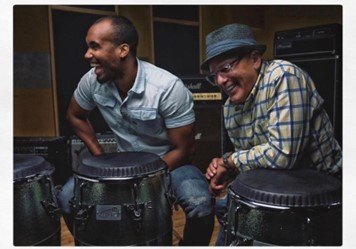
“Golpe Duro” is the new from Little Johnny Rivero

Percussionist Johnny Rivero presented his new album: Golpe Duro

By Johnny Cruz

News from NY City

The renowned percussionist released his new album called “Golpe Duro” with his band “El Cartel de Nueva York” which is released under the Mod Squad, LLC label. This would be Mr. Rivero’s third studio production. On this occasion he is also accompanied by vocalist Anthony Almontes, who together with the music created by Johnny have 9 wonderful songs.

“We had a lot of fun making this album @vamoalmonte … Golpe Duro Available Now !!” The percussionist said with a picture posted on his Instagram account where he is with Anthony, showing how much they enjoyed making this album.

The first song of this album, which was released in digital format on October 9 and as a preview of the complete album, is “Quien te ha dicho” which has the participation of the violinists Raúl Roa and Laura Pérez, but also shows a congas solo by Rivero himself; the same song is a loving message that carries an incredible cadence that ends in the congas solo.

The song that gives the album its name “Golpe Duro” is a representation of Rivero’s career, history and achievements which is demonstrated with congas solo where we repeatedly hear his name. Another of the outstanding songs on this album is “Chinita Monda”, composed by Anthony Almonte and with time of Son Montuno, it also features the participation of Nelson González on tres and Jeremy Bosch on flute.

“@Jeremyboschofficial on the song Chinita Monda from my new album‘ Golpe Duro ’another of our favorite pita truck!” Rivero posted this text accompanied by a video of Jeremy Bosch.

The remaining 6 songs are Mi Corazón Te Llama, Falta De Conciencia, Mi Son Asere, Listo Pa’ La Pelea, Sombra De Lluvia y Pide Que Hay. Which were composed by Eric Figueroa, Héctor Dávila, Anthony Almonte, Jeremy Bosch, Zaccai Curtis, Little Johnny and one of the guest Eddie Palmieri.

The official video for “Quien te ha dicho” was released on November 20, where musicians from various countries were brought together through technology, to perform the title song of this album. Little Johnny himself wrote on his Instagram account:

“Although we are apart, we unite for the music! From Puerto Rico and Venezuela to New York, these extraordinary musicians bring their talents, coming together to create this virtual presentation of the single “Quien Te Ha Dicho.” @vamoalmonte @pizaerik @edwin_ramos_music @atacaquinterooficial @ronaldroy @luquesc @cellifilm @joefiedler @jpowelltrumpet @rigdzinpema”

The new of Little Johnny Rivero

A bit of Little Johnny Rivero’s career

An international artist

Johnny Rivero was born in New York but moved to Puerto Rico, where he found his passion for music, until he achieved a place in the band La Sonora Ponceña with which he recorded 18 studio albums, which were excellently received by the salsa family. He has worked together and shared the stage with many great artists, such as nine-time Latin Grammy winner Eddie Palmieri.

He has also formed salsa and jazz bands where he brings together musicians from various parts of the world. In addition to teaching percussion at Kennedy High School in the Bronx in New York, it was there that he met Anthony Almonte who accompanies him in this new studio album, what neither of them knew was that they would meet again for this piece thanks to a mutual friend Jeffery Lopez.

After that, “Golpe Duro” has only received great reviews and has been acclaimed by the best of the genre. We hope only better things will come to Little Johnny and Anthony in 2021.

In a very good moment
Jphnny Rivero – In a very good moment

For  more information Johnny Rivero, Follow it through the following links:

Instagram: @littlejohnnyrivero

Web Site: https://smarturl.it/xy4u35

  • « Go to Previous Page
  • Page 1
  • Interim pages omitted …
  • Page 14
  • Page 15
  • Page 16
  • Page 17
  • Page 18
  • Go to Next Page »

International Salsa Magazine (ISM) is a monthly publication about Salsa activities around the world, that has been publishing since 2007. It is a world network of volunteers coordinated by ISM Magazine. We are working to strengthen all the events by working together.