• Skip to primary navigation
  • Skip to main content

International Salsa Magazine

  • HOME
  • Previous editions
    • 2026
      • ISM / March 2026
      • ISM / February 2026
      • ISM / January 2026
    • 2025
      • ISM / December 2025
      • ISM / November 2025
      • ISM / October 2025
      • ISM / September 2025
      • ISM / August 2025
      • ISM / July 2025
      • ISM / June 2025
      • ISM / May2025
      • ISM / April 2025
      • ISM / March 2025
      • ISM / February 2025
      • ISM / January 2025
    • 2024
      • ISM / December 2024
      • ISM / November 2024
      • ISM / October 2024
      • ISM / September 2024
      • ISM / August 2024
      • ISM / July 2024
      • ISM / June 2024
      • ISM / May 2024
      • ISM / April 2024
      • ISM / March 2024
      • ISM / February 2024
      • ISM / January 2024
    • 2023
      • ISM / December 2023
      • ISM / November 2023
      • ISM / October 2023
      • ISM – September 2023
      • ISM – August 2023
      • ISM July 2023
      • ISM Edition June 2023
      • ISM – May 2023
      • ISM April 2023
      • ISM March 2023
      • ISM February 2023
      • ISM January 2023
    • 2022
      • ISM December 2022
      • ISM November 2022
      • ISM October 2022
      • ISM September 2022
      • ISM August 2022
      • ISM July 2022
      • ISM June 2022
      • ISM May 2022
      • ISM February 2022
      • ISM January 2022
    • 2021
      • ISM December 2021
      • ISM November 2021
      • ISM October – 2021
      • ISM September 2021
      • ISM August 2021
      • ISM July 2021
      • ISM May 2021
      • ISM April 2021
      • ISM June 2021
      • ISM March 2021
      • ISM February 2021
      • ISM January 2021
    • 2020
      • ISM December 2020
      • ISM November 2020
      • ISM October 2020
      • ISM September 2020
      • ISM August 2020
      • ISM July 2020
      • ISM June 2020
      • ISM May 2020
      • ISM April 2020
      • ISM March 2020
      • ISM February 2020
      • ISM January 2020
    • 2019
      • ISM December 2019
      • ISM November 2019
      • ISM October 2019
      • ISM Septembre 2019
      • ISM August 2019
      • ISM July 2019
      • ISM June 2019
  • Download Salsa App
    • Android
    • Apple
  • Spanish

Search Results for: flute

Young Puerto Rican singer Jeremy Bosch supports the Spanish Harlem Salsa Museum

There are many people who believe that salsa is a genre of past generations that does not have worthy youth representatives who stick up for this set of rhythms that has been keeping so many people dancing for so long, but fortunately they are wrong. Jeremy Bosch, whom we had the opportunity to interview at The Johnny Cruz Shw a few weeks ago is a god example of this.   

We are honored to know that one of the new sensations of Latin music, specifically salsa, supports one of the most important institutions dedicated to the genre such as the Spanish Harlem Salsa Museum, so we want to take advantage to talk a little about the career of this young singer and everything he has achieved so far.   

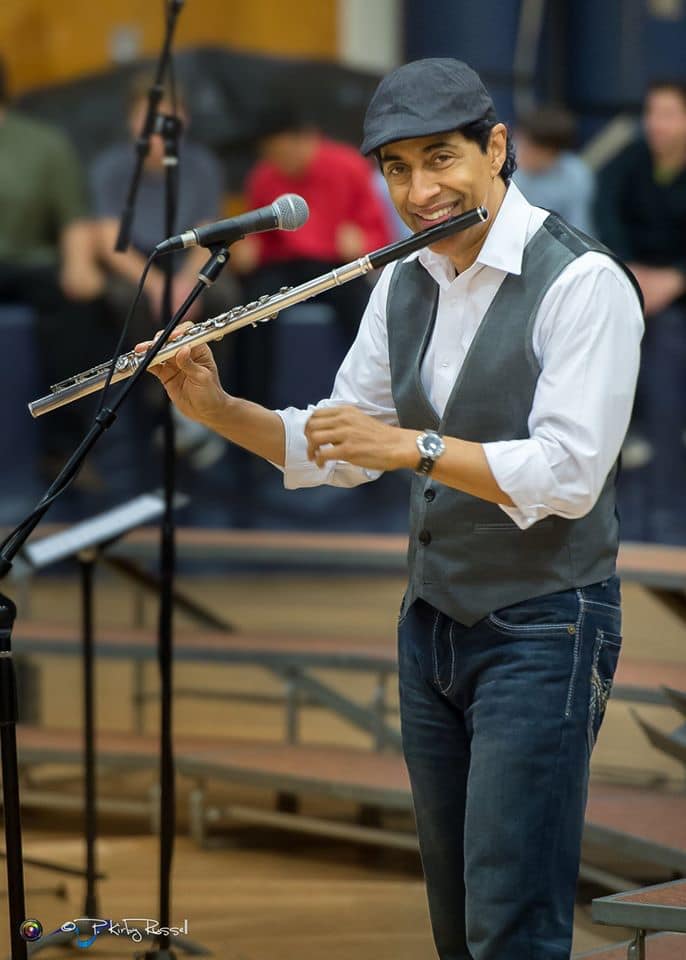
Jeremy playing the flute
Jeremy Bosch playing the flute live

Jeremy’s beginnings in this world 

Jeremy Bosch is a singer and flutist born in the city of Ponce, Puerto Rico, who began his journey in the world of music singing and playing percussion in the church on his block while growing up listening to a great variety of artists including Hector Lavoe to Chicago and Tonny Bennett, so he had influences of all kinds.   

Not much time would past before Jeremy took achevable steps towards the direction he was meant to take. At only 17 years old, he won a scholarship to study at Berklee College of Music in the city of Boston, United States, and graduated in 2023, specializing in jazz composition. From then on, what followed for the young artist have been successes and great proposals he could seize.   

One of thse things he is best known for is having been the vocalist and flutist of the acclaimed group Spanish Harlem Orchestra, but that has not stopped him from collaborating with great figures in the industry such as musical director and Grammy-winning percussionist Pete Perignon, with whom he recorded the social short called ”Sería Una Pena”.   

Johnny and Jeremy
Johnny Cruz and Jeremy Bosch posing for the camera

Jeremy’s professional career 

Sometime later, he would have the opportunity to realize one of the most important works of his career, which is the tribute to the late Cheo Feliciano, which was recorded live at the Dizzy Club in New York City and was titled ”The Music of Cheo Feliciano. In addition, the project included Nelson Gonzalez, Johnny ”Dandy” Rodriguez and Spanish Harlem Orchestra leader Oscar Hernandez.   

With regard to this great night for his career, Jeremy commented that since his debut both he and arranger and vibraphonist Felipe Fourniel had long time wanting to work on something about Cheo Feliciano and his legacy for a long time until they finally made it. This show was the sign that Jeremy has everything to become an icon of salsa and Afro-Caribbean music in general.   

As for his solo career, he has made a few remarkable recordings and one of them was ”Prologo Hoy”, which included the participation of Nicaraguan singer Luis Enrique and Cuban vocalist and guitarist Alain Perez. It is a five-song EP that focuses a lot on Afro-Colombian and tropical music, while including some covers in English such as ”Love Holiday”, which gives a distinct flavor to the material as a whole. 

Jeremy and Johnny on the set
Jeremy Bosch and Johnny Cruz on the set of The Johnny Cruz Show

Later on, Jeremy released ”Epilogo: la clave del tiempo”, which includes 11 tracks and is basically a mix of Afro-Cuban rhythms, soneo, urban genres, modern synthesizers, among other elements. The album starts with ”Locura” and continues with singles such as ”Try Again”, ”La Mala”, ”Autopsia” and a few more.   

Support for the Spanish Harlem Salsa Museum 

In the social networks of the director of the Spanish Harlem Salsa Museum, Johnny Cruz, there is a clip in which the The Johnny Cruz Show host introduces Jeremy as his special guest on that occasion, promotes the interview with him and describes him as the sensation of the moment. Then, the camera goes n Jeremy’s face, who thanks the invitation with a smile and assures that they both will have a good time talking about his life and career. 

We are honred to support young talents like Jeremy and, at the same time, to get the same support and love back because that is what salsa and the Latin music scene in general needs, that all those involved join together around it to keep it alive. 

Johnny Cru ISM corresponde in New York City


Read also: Paquito D’Rivera supports the salsa museum 

Flora Purim has earned her two Grammy nominations for Best Female Jazz Performance

Flora Purim (born March 6, 1942 in Rio de Janeiro) is a Brazilian jazz singer known primarily for her work in the jazz fusion style.

Airto Moreira, Flora Purim y Carlinhos Noronha

She was featured for her part on Chick Corea’s landmark album Back to Eternity.

She has recorded and performed with many artists, including Stanley Clarke, Dizzy Gillespie, Gil Evans, Stan Getz, the Grateful Dead, Santana, Jaco Pastorius, and her husband Airto Moreira.

Flora Purim’s voice has earned her two Grammy nominations for Best Female Jazz Performance and Down Beat magazine’s Best Female Singer award four times.

Her musical partners include Gil Evans, Stan Getz, Chick Corea, Dizzy Gillespie and Airto Moreira, with whom she has collaborated on more than 30 albums since moving with him from her native Rio to New York in 1967.

In New York, she and Airto became the center of the period of musical expression and creativity that produced the first commercially successful “Electric Jazz” groups of the 1970s.

Blue Note artist Duke Pearson was the first American musician to invite Flora to sing with him on stage and on record.

She then toured with Gil Evans, about whom she says, “This guy changed my life. He gave us a lot of support to do the craziest things.

This was the beginning for me. Her reputation as an outstanding performer earned her work with Chick Corea and Stan Getz as part of the New Jazz movement that also contained the nurturing influence of saxophonist Cannonball Adderley.

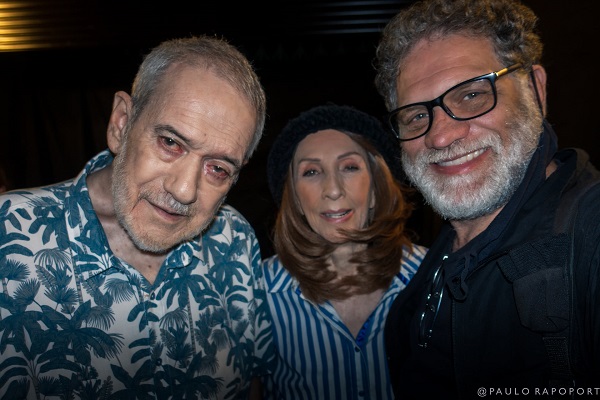
Airto Moreira, Flora Purim e Paulo Rapoport Popó

Soon after, Flora began to seriously re-educate discriminating musical minds after joining with Chick Corea, Stanley Clarke and Joe Farrell to form Return To Forever in late 1971.

Two classic albums resulted – Return to Forever and Light as a Feather nodal points in the development of jazz fusion.

Flora’s first solo album in the United States, Butterfly Dreams, released in 1973, immediately placed her among the top five jazz singers in Down Beat magazine’s jazz poll.

In the mid-1980s, Flora and Airto resumed their musical collaboration to record two albums for Concord – Humble People and The Magicians – for which she received Grammy nominations.

In 1992 she went further by singing on two Grammy winning albums – Planet Drum with Grateful Dead drummer Mickey Hart (Best World Music Album) and the Dizzy Gillespie United Nations Orchestra (Best Jazz Album).

Flora Purim y Carlinhos Noronha

The launch of the Latin jazz band Fourth World in 1991, featuring Airto, new guitar hero Jose Neto, and keyboard and reeds leader Gary Meek, marked a new era in Flora’s career.

The band was signed to the British jazz label B&W Music, and Flora consciously set out to win over the next wave of listeners.

Flora’s 1995 album Speed of Light, with major writing and performance contributions from Chill Factor and Flora’s daughter Diana Purim Moreira, makes the connection between her experimental beginnings with Chick Corea and Gil Evans and the new “head” music being produced by jazz musicians in the London and New York hip hop scenes.

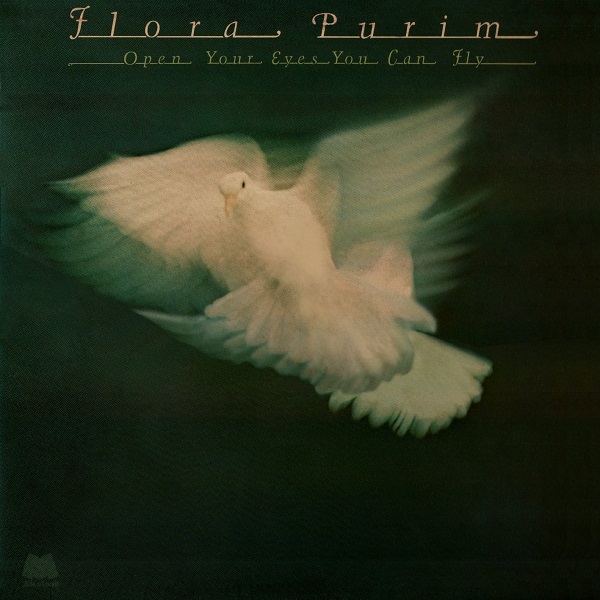
Flora Purim Open Your Eyes You Can Fly (1976)

Flora Purim Open Your Eyes You Can Fly (1976)

1- Open Your Eyes, You Can Fly (Chick Corea-Neville Potter)

2-Time’s Lie (Chick Corea-Neville Potter)

3- Sometime Ago (Chick Corea-Neville Potter)

4-San Francisco River (Airto Moreira-Purim Purim)

5-Andei “I Walked” (Hermeto Pascoal)

6-Ina’s Song “Trip to Bahia” (Flora Purim)

7-Conversation (Hermeto Pascoal)

8-Medley: White Wing/Blank Wing (Hermeto Pascoal-Flora Purim).

arrangements:

Hermeto Pascoal (4.5.7.

Egberto Gismonti (4)

Flora Purim (6)

The whole group (1.2.3)

01-David Amaro – electric guitar

George Duke – electric piano

Alfonso Johnson – electric bass

Ndugu (Leon Chancler) – drums

Background vocals: Flora, David Amaro, George Duke, Hermeto Pascoal

Instrumental solo: David Amaro (electric guitar)

02-Hermeto Pascoal – flute

David Amaro – acoustic guitar

George Duke – electric piano, ARP sequence,

ensemble synthesizer

Alfonso Johnson – electric and acoustic bass – Alfonso Johnson – electric and acoustic bass

Ndugu – drums

Airto Moreira – percussion

Instrumental solo: Hermeto Pascoal (flute), Nudgu (drums)

03-Hermeto Pascoal – flute

David Amaro – electric guitar

George Duke – electric piano, ARP sequence,

ensemble synthesizer

Alfonso Johnson – electric bass

Ndugu – drums

Airto Moreira – percussion

Laudir de Oliveira – congas

Instrumental soloist: Hermeto Pascoal (flute), David Amaro

(electric guitar)

04-Hermeto Pascoal – flute, electric piano

Egberto Gismonti – acoustic guitar

David Amaro – electric guitar

George Duke – moog synthesizer

Alfonso Johnson – electric bass

Ron Carretero – acoustic bass

Robertinho Silva – drums

Instrumental duet: Hermeto Pascoal (flute) and George Duke

(synthesizer

05-Hermeto Pascoal – flute, electric piano

David Amaro – electric guitar

George Duke – moog synthesizer, clavinet

Alfonso Johnson – electric bass

Airto Moreira – percussion

Robertinho Silva – drums, berimbauduet

vocal: Flora Purim and Airto Moreira

Instrumental duet: Hermeto Pascoal (flute), George Duke (flute), George Duke

(synthesizer), David Amaro (electric guitar)

06 -Hermeto Pascoal – electric piano

David Amaro – electric guitar

George Duke – moog, ARP Odyssey and ARP Odyssey sequences, ARP synthesizer

ARP, ensemble synthesizer

Alfonso Johnson – electric and acoustic bass – Alfonso Johnson – electric bass and acoustic bass

Robertinho Silva – drums, percussion

Laudir de Oliveira -congas

Instrumental solo: Georrge Duke (ARP synthesizer)

Odyssey)

07-Hermeto Pascoal – electric piano

David Amaro – electric guitar

George Duke – ARP sequences ensemble and moog synthesizer

moog synthesizer

Alfonso Johnson – acoustic bass

Airto Moreira – percussion

08-Hermeto Pascoal – electric piano, pipe, harpsichord,

whistling, percussion (seven-up bottles)

Egberto Gismonti – acoustic guitar

Ron Carretero – acoustic bass

Alfonso Johnson – electric bass

Airto Moreira – percussion, drums, berimbau

Robertinho Silva – percussion, berimbauduet

vocal: Flora Purim and Airto Moreira

Instrumental solo: Hermeto Pascoal (harpsichord and whistle)

Information realized (March 28, 2008)

Sources:

L’Òstia Latin Jazz 

Flora Purim

Also Read: Samuel Quinto Feitosa is a Brazilian virtuoso jazz and classical pianist

Nestor Torres

North America / USA / New York

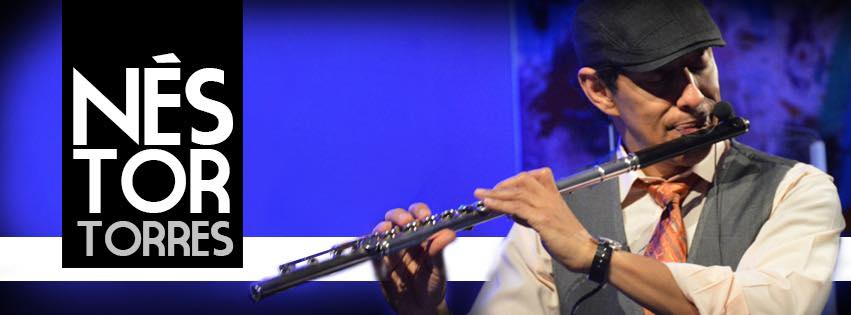
If a flute could talk and sing, it would certainly be in the voice of Nestor Torres

If a flute could talk and sing, it would certainly be in the voice of Nestor Torres, for he speaks through his instrument. Equally fluent in Jazz, Classical and Latin sounds, his fluid versatility sets him apart.

Nestor Torres
Nestor Torres

Nestor’s total command of his instrument allows him a freedom of expression that is at once captivating and liberating, powerful and genuine.

Born in Mayaguez, Puerto Rico, Nestor Torres has played music all his life. His parents (His father, a gifted musician himself, and his mother, an educator and business woman) gave him a set of drums at age 5, and later took up the flute (at age twelve).

He moved to NYC with his family in his teenage years and went on to study at Mannes School of Music and later at the New England Conservatory of Music in Boston.

At that time he was also able to learn to improvise in a style of Cuban Dance music called ‘Charanga’, which helped to shape and develop Nestor’s melodic and danceable sound.

In 1981, Nestor moved to Miami, where he continued to develop his unique sound – and a strong following. Since then he has – and continues to – tour all over the world.

He has also performed and recorded Ricky Martin, Tito Puente, Herbie Hancock, Gloria Estefan, and many more.

Nestor Torres has recorded 14 Cd’s to the date. His 5th & 7th records, Treasure of the Heart and My Latin Soul, were nominated for a Latin Grammy, and his production This Side Of Paradise won the Latin Grammy award in the Pop instrumental category on September 11, 2001.

“Of course it was a great honor and privilege to win the Grammy,” Torres reflects. “That being said, the fact that I was to receive it on 9/11 gave my work and my music a stronger sense of mission and purpose. Terrorism and violence come from ignorance, anger, and hopelessness.

Music inspires and empowers; it soothes the human heart and enlightens the spirit. I have made it my prime point to create music and live my life in a way that does just that.”

From that experience, together with a commission to compose and perform for the Dalai Lama, Nestor Torres produced Dances, Prayers & Meditations For Peace in 2005.

In his brand new CD, Nouveau Latino, Nestor Torres returns to his Latin roots with a fresh approach, impeccable musicianship, and irresistible improvisations. Featuring songs from stars like Celia Cruz and Ruben Blades, Torres’ interpretations of these great Latin hits appeal to those discovering the songs for the first time as much as those who remember them.

In addition to his achievements in the studio and on the stage, Torres is also recipient of two honorary doctorate degrees; one in 1994 from Barry University, and the other in 2000 from Carlos Albizu University, for his commitment to youth education and cultural exchanges.

Nestor Torres
Nestor Torres

NESTOR TORRES: Facts & Career Highlights

• Classical and Jazz flute studies at Mannes School of Music, and New England Conservatory of Music.

• Early improvisational ‘on the job training’ playing in Cuban and Latin Dance bands including Ray Barretto, Eddie Palmieri, Celia Cruz and Tito Puente.

• Regular featured guest at the ‘Salsa Meets Jazz At The Village Gate’ series in NYC.

• Has toured Japan repeatedly, including collaborations with Herbie Hancock, and Wayne Shorter.

• Collaborations: with James Moody, Jon Faddis, Chris Botti, Larry Coryell, Hubert Laws, Arturo Sandoval, Michel Camilo, Paquito D’ Rivera, Danilo Perez, David Sanchez, Pablo Zigler, Makoto Ozone, Patrice Rushen, Bob James, George Duke, Wallace Roney, Peter Nero and Clare Fisher, among many, many others.

• Jazz Festivals: Capitol Jazz Festival, JVC Jazz Festivals; in Los Angeles and in NYC with Eddie Palmieri; Aspen Snowmass; Maui; Heineken in Puerto Rico and Dominican Republic; Sedona; Atlanta…. Among many others.

• Symphonic: Has performed with the New World, Singapore, Springfield Missouri, Charleston, Signature (Tulsa, OK), Puerto Rico, and Stanford Symphonies; Philly Pops Orchestra; and the Naples, Florida; Malaysia, and Florida Philharmonics.

• Recordings to date (14): ‘Colombia En Charanga’, ‘Afro Charanga Volume 2’, ‘No Me Provoques, ‘Morning Ride’, ‘Dance of the Phoenix’, ‘Burning Whispers’, ‘Talk To Me’, ‘Treasures Of The Heart’, ‘Canciones Primeras’, ‘This Side Of Paradise’, ‘My Latin Soul’, ‘Sin Palabras’ (Without Words),‘Dances, Prayers & Meditations For Peace’, and ‘Nouveau Latino’.

• Grammys: His Latin-jazz composition “ Luna Latina” (from Treasures of the Heart) was nominated in 2000 for a Latin Grammy as well as his CD ‘My Latin Soul’ in 2002. In 2001, he won a Latin Grammy for his CD ‘This Side of Paradise’.

• Two Honorary Doctorate degrees from Miami-based Universities – one in 1994 from Barry University and the other in 2000 from Carlos Albizu University – for his commitment to youth education and cultural exchange as an Ambassador of Peace and Culture.

Nestor Torres
Nestor Torres

Current location

Miami, FL USA

General Manager

Ivette Delgado/ [email protected]

Influences

My Father, Hubert Laws, Miles Davis,Tito Puente, Richard Egues & Orchestra Aragon

Contacto de prensa

Wanda Jimenez/ [email protected]

Representative

The Jazz Agency
[email protected]
818-813-5299

https://www.facebook.com/NestorTorresMusic/

North America – June 2019


The Royalty of our Latin Music Pete “El Conde” Rodríguez first singer signed by Fania Records label

Pedro Juan Rodríguez, Pete “El Conde” Rodríguez “La Realeza de la Salsa” (Born in Ponce, Puerto Rico on January 31, 1933).

First singer signed to the Fania Records label in conjunction with the Johnny Pacheco Orchestra and of outstanding participation with the Fania All Stars and his own orchestra.

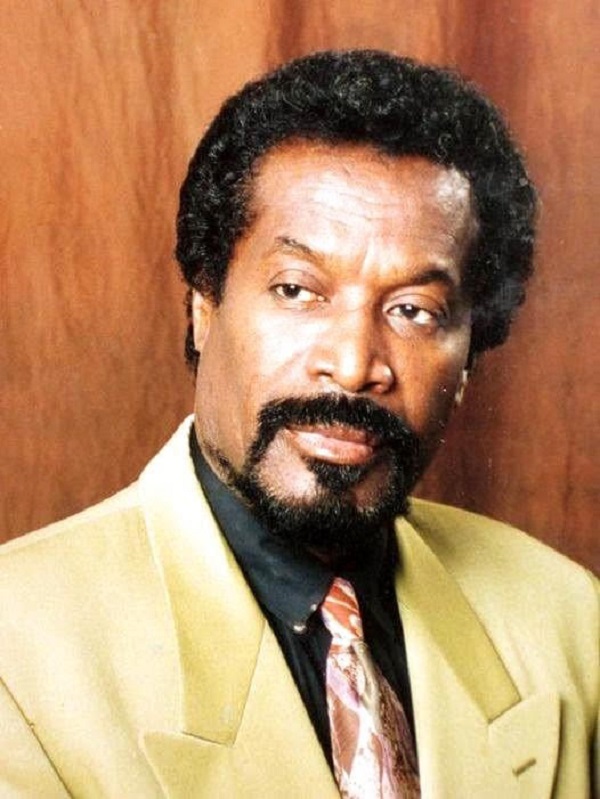
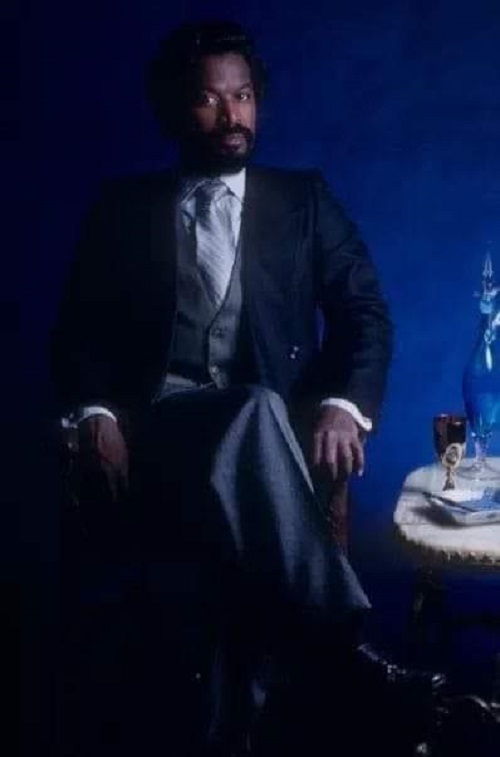
Pete “El Conde” Rodríguez

His father, who made his living as a musician playing in a string quartet that entertained parties and social gatherings, guided him during his first steps as a musician.

By the age of 6, little Pedro was very skilled with the bongo and singing popular Puerto Rican songs of the time.

Things became difficult after the death of his father and as a teenager Pete had to emigrate to the United States (1946) to live with his aunt in New York.

Once in New York, Pete managed to establish himself as a percussionist in the Orquesta Oriental Cubana. Before, long before joining the great Pacheco, Pete had to go through several orchestras among which stand out: Las Jóvenes Estrellas de Cuba (57), the Típica Novel and the Broadway from which he left for personal reasons.

In May 1962 Pete Rodriguez (he was not yet called El Conde), joined Pacheco in a Charanguero orchestra (flute, violin, rhythm and chorus). The first album with Pacheco was Suavito in 1963.

By 64 Jhonny Pacheco and Jerry Massucci founded Fania Records and created the internationally recognized Fania All Stars.

Pete was the first singer that Fania had, and on his shoulders was the responsibility of taking that project forward. On Fania’s first album Cañonazo (1964) Pete performs the song Fania, a composition by Josualdo Bolanos, with which the orchestra was inaugurated.

The Realiza of our Latin Music Pete "El Conde" Rodriguez
The Realiza of our Latin Music Pete “El Conde” Rodriguez

Rodriguez’s first appearance with Fania was at the Greenwich Village Red Garter Club in 1968.

For reasons of life Pete had to leave Jhonny Pacheco’s group; the concrete reasons for this separation will remain a mystery, but it seems that his departure was due to personal disagreements with other members of the group.

After Pacheco, Pete packed up his motets and moved with Rey Roig and the Sensación group (1964-1968). From his time with this group w For the years 66-67, Pete returned to the ranks with Pacheco. This was a more mature stage where the marvelous duo achieved their greatest hits: Azuquita Mami, Convergencia, La Esencia del Guaguanco, Sonero, Viralo al Reves and others.

The turmoil of the time, the world events, the new way of dressing and people’s way of thinking made Pete change his appearance; he let his beard grow and changed his hairstyle a little. This change gave him a new image and a new name “EL CONDE”.

The Pacheco-Rodriguez duo lasted approximately 8 years, since in 74 El Conde decided to go solo.

That same year El Conde released his best selling and Grammy award winning album El Conde (1974). Two years later (1976) El Conde became part of the Salsa Hall of Fame immortalizing himself with Catalina la O.

With the appearance of Salsa Romántica and the onslaught of Dominican merengue in the markets, salsa entered a crisis which was reflected in the musical work of El Conde. So between 1983 and 1990 El Conde managed to record only 5 albums of which Salsobita (1987) stands out.

In 1993 El Conde made way for his son Pete Emilio and his daughter Cita Rodriguez who joined the group as second voice and backing vocalist.

The family was already complete because Francis Rodriguez, his wife, was in charge of the administrative and financial part of the group.ere the following songs Salsa, Bailando Conmigo and his hit El Rincón.

El Conde made his last recording on the Masterpiece Album (1999) with Tito Puente (1923-2000) and Eddie Palmieri. This album is considered posthumous because in that same year (2000) Tito and El Conde passed away.

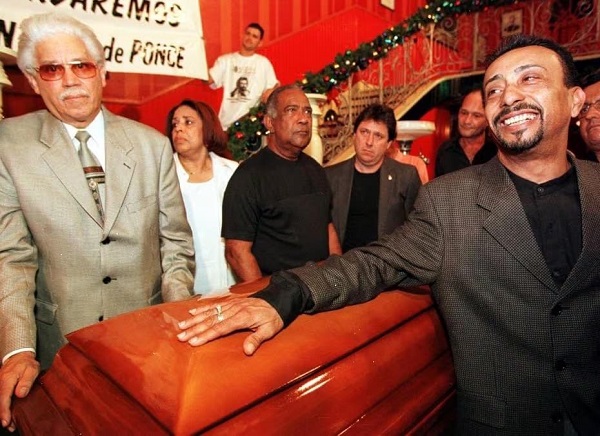
Cepelio de Pete El Conde Jhonny Pachoco, Cheo Feliciano, Ismael Miranda y Papo Lucca

El Conde had suffered from heart problems for many years, but was always reluctant to have open heart surgery. Pete “El Conde” Rodriguez passed away of a heart attack on Saturday, December 2, 2000.

His remains were taken to his native Puerto Rico. He is survived by his wife Francis, his two sons Cita and Pedro Emilio, and his grandchildren.

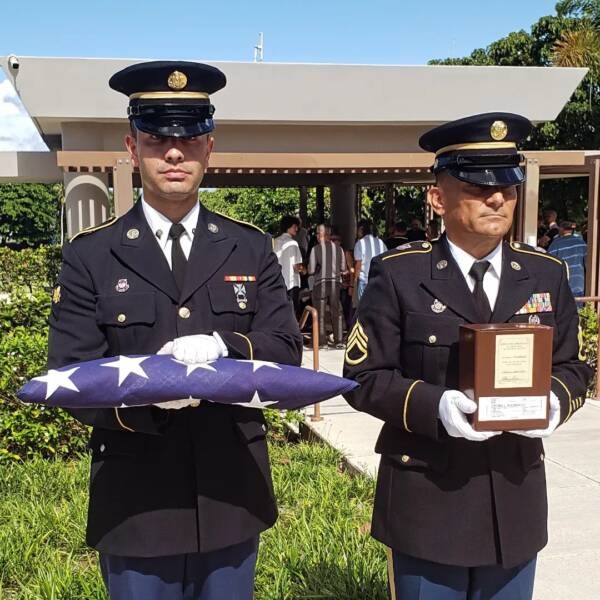
Remains of Pete “El Conde” Rodríguez finally rest on the island. December 7, 2023 – After his death in 2000, the remains of Ponceño singer Pete “El Conde” Rodríguez were transferred from New York to the National Cemetery for veterans in Bayamón.

Ashes of Pete El Conde Rodriguez

Source: El Pozo de la Salsa

Also Read: Héctor Martignon has been one of the most sought-after pianists on the Latin jazz scene in New York

  • « Go to Previous Page
  • Page 1
  • Interim pages omitted …
  • Page 7
  • Page 8
  • Page 9
  • Page 10
  • Page 11
  • Interim pages omitted …
  • Page 18
  • Go to Next Page »

International Salsa Magazine (ISM) is a monthly publication about Salsa activities around the world, that has been publishing since 2007. It is a world network of volunteers coordinated by ISM Magazine. We are working to strengthen all the events by working together.