• Skip to primary navigation
  • Skip to main content

International Salsa Magazine

  • Home
  • Previous editions
    • 2026
      • ISM / January 2026
      • ISM / February 2026
    • 2025
      • ISM / December 2025
      • ISM / November 2025
      • ISM / October 2025
      • ISM / September 2025
      • ISM / August 2025
      • ISM / July 2025
      • ISM / June 2025
      • ISM / May2025
      • ISM / April 2025
      • ISM / March 2025
      • ISM / February 2025
      • ISM / January 2025
    • 2024
      • ISM / December 2024
      • ISM / November 2024
      • ISM / October 2024
      • ISM / September 2024
      • ISM / August 2024
      • ISM / July 2024
      • ISM / June 2024
      • ISM / May 2024
      • ISM / April 2024
      • ISM / March 2024
      • ISM / February 2024
      • ISM / January 2024
    • 2023
      • ISM / December 2023
      • ISM / November 2023
      • ISM / October 2023
      • ISM – September 2023
      • ISM – August 2023
      • ISM July 2023
      • ISM Edition June 2023
      • ISM – May 2023
      • ISM April 2023
      • ISM March 2023
      • ISM February 2023
      • ISM January 2023
    • 2022
      • ISM December 2022
      • ISM November 2022
      • ISM October 2022
      • ISM September 2022
      • ISM August 2022
      • ISM July 2022
      • ISM June 2022
      • ISM May 2022
      • ISM February 2022
      • ISM January 2022
    • 2021
      • ISM December 2021
      • ISM November 2021
      • ISM October – 2021
      • ISM September 2021
      • ISM August 2021
      • ISM July 2021
      • ISM May 2021
      • ISM April 2021
      • ISM June 2021
      • ISM March 2021
      • ISM February 2021
      • ISM January 2021
    • 2020
      • ISM December 2020
      • ISM November 2020
      • ISM October 2020
      • ISM September 2020
      • ISM August 2020
      • ISM July 2020
      • ISM June 2020
      • ISM May 2020
      • ISM April 2020
      • ISM March 2020
      • ISM February 2020
      • ISM January 2020
    • 2019
      • ISM December 2019
      • ISM November 2019
      • ISM October 2019
      • ISM Septembre 2019
      • ISM August 2019
      • ISM July 2019
      • ISM June 2019
      • ISM May 2019
      • ISM April 2019
      • ISM March 2019
      • ISM February 2019
      • ISM January 2019
    • 2018
      • ISM December 2018
      • ISM November 2018
      • ISM October 2018
      • ISM September 2018
      • ISM August 2018
      • ISM July 2018
      • ISM June 2018
      • ISM May 2018
      • ISM April 2018
      • ISM March 2018
      • ISM February 2018
      • ISM January 2018
    • 2017
      • ISM December 2017
      • ISM November 2017
      • ISM October 2017
      • ISM September 2017
      • ISM August 2017
      • ISM July 2017
      • ISM June 2017
      • ISM May 2017
      • ISM April 2017
      • ISM March 2017
      • ISM February 2017
  • Download Salsa App
    • Android
    • Apple
  • Spanish

Search Results for: guaguancó

Once again, maestro Bobby Valentín delivers a very daring and innovative musical theme

While it is true that salsa is very much alive, it is also true that it has been enriched through fusions and transformations.  Of course, this is not the first time we see that the salsa sound is transformed to give way to increasingly daring musical themes.   

I’ve said it before and I’ll say it again: “I’m glad there are collaborations where the wallet of other sounds invests in producing music that I enjoy.  Note that the only music I enjoy with the passion I enjoy nothing else is salsa.  This salsa I’m talking about also includes fusions and other inventions, as long as I like them.”

Well, let’s get to the mambo….

During the “Tropical Music Festival” I was backstage and was able to share with the musicians before and after their performances.  That privilege gave me the opportunity to talk to them about their projects, among other things.  On a side note, Oria Rivera graciously let me know about the release that same day of Bobby Valentin’s latest single.  As soon as I got home I listened to the song via You Tube.

Once again, maestro Valentín delivers a very daring and innovative song. I know that “chinchas” are going to fall on me as usual; but without being repetitive, you know that I am one of those who believe that Valentin is never wrong. 
Let’s establish that boogaloo or bugaloo is a Latin music and dance genre that was popular in the United States in the 1960s. It originated in New York City, mainly among Hispanic and Latin American teenagers. The style was a fusion of popular African-American rhythm and blues (R&B), in turn combining soul music with mambo and son montuno.

In the 1950s and 1960s, African Americans in the United States listened to various styles of music, including jump blues, R&B and doo-wop. Latinos in New York City shared those tastes, but also listened to genres such as mambo and cha-cha-chá. There was a mix of Puerto Ricans, Cubans and African-Americans in clubs, whose groups tried to find common musical ground. In the end, boogaloo or bugaloo was the common musical ground, a fusion of many styles cooking American son montuno, guaguancó, guajira, guaracha, mambo, R&B and soul on the same stove.  That must have been the reason why the boogaloo or bugalú allowed Spanish and English on equal terms.

As you can see, fusions are not a recent fad.

Well then.  The time has come to tell you what my salsa ears have heard, since there will be those who say that this is not a salsa song.  Well, the truth of the matter is that it is not suitable for salseros without musical appreciation skills.

From the first bars of this song, Bobby Valentín’s musical arrangement highlights the bass, accompanied by trumpets and saxophones in an arrangement that sounds great.  In the first thirty seconds of the song you can appreciate the vocal part of the composer -Bobby Valentín- ultra well accompanied by his most recent acquisition for the front of his orchestra: Leró Martínez. And for the most skeptical, Bobby and Leró sing in impeccable English.

The song is perfect, since in three minutes it opens up a range of musical possibilities in “English without barriers”.  Despite the brevity of the song, it lacks nothing.  Nor does it feel or sound like musical creativity was curtailed by trying to shorten the time.  The track flows naturally from the prelude, to the mambo, to the closing. At one and a half minutes, the saxophones provide the melody and the trumpets the breaks.  At the fiftieth minute, the trumpets play challenging the rhythm section, formed by:  Victor Roque on the tumbadoras, Kevin Vega on the timbal and Javier Oquendo on the bongo. Ceferino Cabán’s piano complements the “king’s” bass in a masterful way.

Shortly after the second minute (2.19), Victor “Yuca” Maldonado’s baritone saxophone sets the stage for Julito Alvarado and Angie Machado’s trumpets to firmly establish their presence.  This second minute also highlights the dynamism of the trombone by Eliut Cintrón. Let’s not forget that the composer, arranger, producer and bassist of this song was a trumpet player in his beginnings. At exactly 2.40 the bass takes command of the orchestra with more forcefulness, melodically allying itself with the sound of the trumpets and saxophones. Well into the second minute (2.44) the electric guitar in command of Javier Perez begins a correspondence with the bass, which is maintained until the closing of the song.

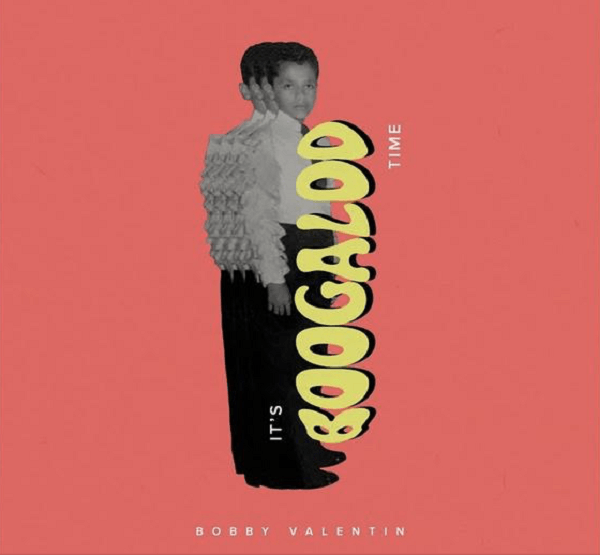
As for the cover art, it features a childish Bobby Valentine dressed as a musical celebrity.  The boy wears dark pants and a white shirt with those stylish puffed sleeves that scream mambo.  The title letters, which read It’s Boogaloo time are superimposed over the child’s image.  The style of the yellow letters that inscribe the word Boogaloo over the image described above make me imagine letters in some liquid material. The composition of the artwork rests on a rather garish salmon-colored background. According to the credits, both the graphic design and art direction were created by Orialis Valentin. Brava!

If you are one of those who say you are tired of the same old same old, I challenge you to listen to this gem, just as I recommended El Twist a while back. 
Salsa lives! I hope I have dispelled your doubts, if you had any.  If you still have any doubts, I confirm that you are not ready for this salsa conversation.

Musical Director: Bobby Valentín

Audio Recording & Mixing: Play Bach Studio

Engineer Carlitos Velázquez and Ramón Martínez

Mastering: WAVEM Acoustic LLC; Eduardo Ramos

Producer: Bobby Valentín

© 2022, Bronco Records, Inc. (Artist: Bobby Valentín)

Catalino “Tite” Curet Alonso, the most important composer in the history of Latin music.

(Guayama, 1927 – Baltimore, United States, 2003) Puerto Rican composer considered the most important author of salsa music in his country and one of the most outstanding Latin American composers of the second half of the 20th century.

His songs, produced throughout a fertile creative career that gave birth to more than two thousand pieces, were brought to fame by the most famous interpreters of the genre (Rubén Blades, Tito Rodríguez, Celia Cruz, Cheo Feliciano or Willie Colón, among others).

The son of an orchestra musician and a seamstress, Tite grew up in a working class neighborhood in Santurce, where he remained after his parents separated.

He studied music theory and solfeggio with professor Jorge Rubián, and in 1965 he wrote his first melodies for Joe Quijano, one of the best pachangueros of the time.

Are the 100 most listened to songs by Catalino “Tite Curet” Alonso in alphabetical order.


1.Adelante siempre voy :Ray Barreto con Adalberto Santiago

2.Anacaona :Cheo Feliciano

3.Adios Adiós :Pedro Arroyo

4.Apelo:(tema brasilero adaptado al Español por Tite para Roberto Roena)

5.Aquella mujer: Bobby Valentín y Marvin Santiago

6.Aqui estoy yo con mi son: Frankie Hernández

7.Aqui se puede :Airto Moreira /versión Ray Barreto

8.Babaila :Pete Conde Rodríguez

9.Barra limpia: Sonora Ponceña y Tonito Ledee

10.Barrunto: Willie Colon y Héctor Lavoe

11.Bandolera :Héctor Lavoe

12.Boca mentirosa(Andy Montañez)

13.Buen Corazón:(adaptación de Tite para Bobby Valentín/Cano Estremera

14.Cha cha ri cha :Willie Rosario/Guillo Rivera

15.CAONABO:(canta TITE CURET/arreglo Jorge Millet)

16.Candilejas:(Versión en Español de Tite para Wilkins/o Graciela)

17.Cabellos Blancos: Orquesta Mulenze y Pedro Brull

18.Callejon :Arabella (para la película Retén de Catia/Venezuela)

19.Camaron :Justo Betancourt /& versión Marvin Santiago

20.Cenizas:Milly Quezada con Perico Ortiz

21.Con los Pobres Estoy :Roberto Roena y Apollo Sound

22.Con mi viejo amigo: Larry Harlow e Ismael Miranda

23.De todas maneras rosas :Ismael Rivera y Los Cachimbos

24.Distinto y Diferente: Justo Betancourt y Borincuba

25.Don Fulano: Tito Rodríguez

26.Efectivamente: Joe Quijano

27.El eco de un tambor Dimensión Latina con Andy Montañez

28.El hijo de Obátala :Ray Barreto con Tito Allen

29.Ella está en otra rumba ;Justo Betancourt

30.Ellos se juntan: Cortijo y su combo con Maelo

31.Escucha una voz latina: Conexión Latina de Alemania

32.Estaca de guayacán: Marvin Santiago

33.Estampa Marina :Cheo Feliciano

34.El antifaz:Willie Rosario con Gilberto Santa Rosa

35.El cantar de los pinales: Pacheco y Pete Conde

36.El verdadero aniversario :El combo del ayer

37.Felicitaciones: Cheo Feliciano

38.Flor de los lindos campos Ray Barreto y Adalberto Santiago

39.Galera 3:Ismael Miranda

40.Guaguanco del Adiós :Roberto Roena y Apollo Sound

41.Hace furo: Cheo Feliciano

42.Hermano Héctor: La 2013 canta: Van Lester

43.Huracan:Bobby Valentín con Frankie Hernández

44.Isadora: Celia Cruz y Estrellas de Fania

45.Juan Albañil: Cheo Feliciano

46.Juanito Alimaña: Héctor Lavoe y Willie Colon

47.La Cura: Frankie Ruiz

48.La esencia del guaguancó (Pacheco/Pete Conde/primer versión Willie Rosario con Meñique)

49.La Oportunidad :Ismael Miranda con Larry Harlow

50.La Oportunidad: Ismael Rivera

51.La palabra Adiós: Ruben Blades con Estrellas de Fania

52.La Perla: Ismael Rivera

53.La Tirana: La Lupe

54.Lamento de Concepción: Roberto Roena y Apollo Sound

55.Las Caras Lindas: Ismael Rivera

56.Las mujeres son de Azúcar: Sonora Ponceña y Luigui Texidor

57.Los Entierros: Cheo Feliciano

58.Luz Negra: Sonora Ponceña y Miguel Ortiz

59.Llevame: Adalberto Santiago

60.Marejada feliz: Roberto Roena y Apollo Sound

61.Me pongo yo: La Descarga Boricua de Frank Ferrer

62.Morejon: Frankie Hernández

63.Mi música: Ismael Rivera

64.Mi triste problema: Cheo Feliciano

65:Nabori:Cheo Feliciano

66.Noche como boca ‘e lobo: Sonora Ponceña y Luigui Texidor

67.Pa’ Colombia: Willie Colon y Héctor Lavoe

68.Pa’ los ponceños: Sonora Ponceña y Tito Gómez

69.Pa’ que afinquen: Cheo Feliciano

70.Part time lover:(tema de Stevie Wonder traducido al español por  Tite para Bobby Valentín)

71.Pase la noche fumando: Willie Colon y Héctor Lavoe

72.Pedregal:Justo Betancourt

73.Penas de amor: Bobby Rodríguez y la Compañía

74.Periodico de Ayer: Héctor Lavoe

75.Piano Man: Ismael Quintana y Estrellas de Fania

76.Pirana:Willie Colon y Hector Lavoe

77.Plantacion Adentro: Willie Colon y Rubén Blades

78.Por que adore :Markolino y Chivirico Dávila/Versión Truco &

Zaperoko

79.Plante bandera: Tommy Olivencia canta: Chamaco Ramirez

80:Presencia:Justo Betancourt y Borincuba

81.Primoroso cantar: Pacheco y Pete Conde

82.Profesion esperanza: Ismael Rivera

83.Pueblo latino: Pete Conde con las Estrellas de Fania

84.Punto Bare: Pete Conde Rodríguez

85.Primer Montuno: Andy Harlow con Johnny Vásquez

86.Puro teatro: La Lupe

87.Que me lo den en vida: Roberto Roena y Apollo Sound

88.Reunion en la cima: Andy Montanez con la Puerto Rico All Stars

89.Sali porque sali: Cheo Feliciano

90.Salome:Cheo Feliciano

91.Salsaludando:Cheo Feliciano

92.Saborea:Los Hermanos Lebrón

93.Sobre una tumba humilde: Cheo Feliciano

94.Susana:Jose Feliciano

95.temes:Vitin Avilés

96.Tiemblas:Tito Rodríguez

97.Tomatero: Kim de los Santos

98.tu loco, loco y yo tranquilo: Roberto Roena y Apollo Sound

99.Vale más un guaguancó: Ray Barreto y Rubén Blades

100.Vete y Pregona: Justo Betancourt

Curet Alonso, the most important composer in the history of Latin music.


La Sonora Ponceña Returns To Salsa County

The only performance with Yolanda Rivera & Mario “Mayito” Rivera will be at the Lehman Center

The name “La Sonora Ponceña” is in honor of the Cuban band La Sonora Matancera and its hometown (Ponce – Puerto Rico)

La Sonora Ponceña “National Treasure of Puerto Rico” together with its leader Enrique Arsenio “Papo” Lucca returns to Salsa County (The Bronx) with the special guests Yolanda Rivera and the Cuban singer Mario “Mayito” Rivera (former member of Los Van Van) onstage at one of New York’s leading non-profit performing arts centers, Lehman Center.

This unique presentation, long-awaited by its fans, will be on Saturday, May 14th at 8 PM at the Lehman Center for the Performing Arts located at 250 Bedford Park Blvd West, Bronx, New York 10468 and the online price per ticket ranges from between $45 – $100. https://www.lehmancenter.org/sonora-poncena

La Sonora Ponceña gained popularity in 1960 during its trip to New York City to give a series of presentations and established itself as one of the most demanded orchestras among Hispanics.

The legendary band, for more than 65 years, has made uninterrupted performances and has been recognized as one of the best Salsa orchestras for its fusion of traditional Cuban sounds with the modern style of Latin Jazz.

In 1967, under the direction of Papo Lucca, they released the first LP Hachero Pa’ Un Palo with the Inca label (a subsidiary of Fania). This album was an overwhelming success in New York as well as its second record production Fuego en el 23 (1969). The famous band from Puerto Rico recorded 29 more albums for this record label, including eight with the singer Yolanda Rivera, La Ceiba with Cuban singer Celia Cruz (1979), and in 1980 New Heights from which they began to establish the internationalization of the orchestra.

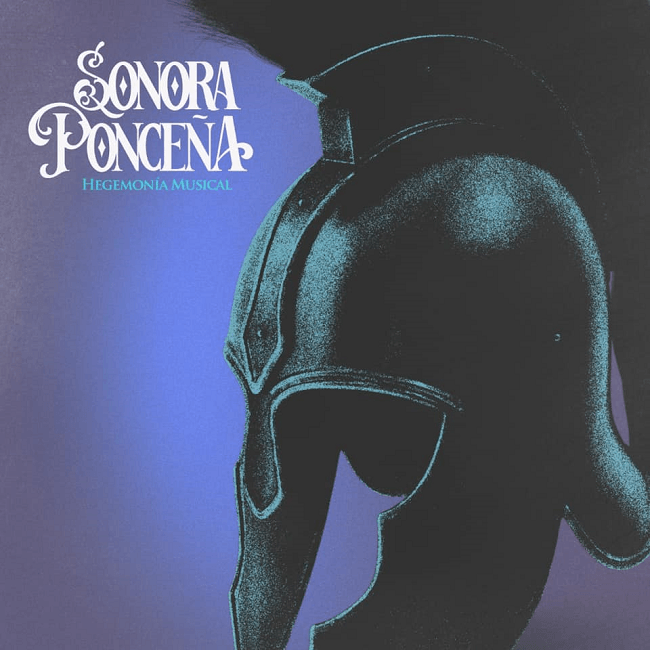
Musical Hegemony consists of 8 tracks including Caminando Con Mi Padre, Nadie Toca Como Yo, and Borrachera

This last year (2021), during the pandemic period, La Sonora Ponceña launched two new record productions: Hegemonía Musical (June 2021) and Christmas Star (November 2021).

The last one is the fourth Christmas-themed album in his career. “Thirteen years after our last Christmas production, we seek to present a record work that is a true reflection of the sound and musical quality that we always want to offer our audience”, Papo Lucca told digital media.

While “Salsa Que Cura To” is the first single taken from their most recent album Hegemonía Musical and whose authorship and interpretation is by Jorge Nicolai Avilés (vocalist of the band) with musical arrangements by Papo. Musical Hegemony, nominated in the Tropical Album of the Year category at the Billboard 2021 awards, was made with great dedication and professionalism as indicated on its official social media. “…We thank the public for the support they have been giving to this latest album that was worked with much love and dedication to the memory of our always remembered Enrique “Quique” Lucca Caraballo (RIP) and all our dear followers… And we will continue working as we have been doing for 67 years to place in your consideration what best of our music, soul, perseverance, and professionalism that seek to bring joy and enjoyment to all our dancers… Thank you very much!”

The song “Borinquen” (1980) with Sonora Ponceña becomes her a famous Salsa star

Yolanda Rivera will also perform at this event. She was born in Ponce (Puerto Rico) and moved to New York City with her family during her childhood. Her first opportunity as a singer was in 1969 in Willie Rosario’s band. In 1975 she returned to Puerto Rico and performed in several orchestras, including Joe Rodríguez’s La Terrifica. Her career reached its peak when she joined La Sonora Ponceña in 1977. The song “Borinquen” from the album Unchained Forcede (1980), a musical tribute to her native country (Puerto Rico), made her a Salsa star. Yolanda Rivera is considered one of the main and most famous singers of La Sonora Ponceña with songs like “Rumba en el Patio” and “Madrugador”. Her repertoire includes Salsa, Plena, Bolero, Guaguancó, Son Montuno, and Guaracha.

Mario “Mayito” Rivera (El Poeta de La Rumba)

The second special guest tonight will be Mario “Mayito” Rivera. His vocal skill and masterful interpretation of Cuban music in modern and traditional styles earned him the nickname “El Poeta de La Rumba”. Mayito was born in Pinar del Río (Cuba) and has training degrees from the National School of Art and the Higher Institute of Art. After his educational training in Cuba, he joined the band of the Cuban singer Albita Rodríguez and played bass in the Moncada group. From 1992 to 2011, Mayito was the lead voice and face of the successful Cuban band, Los Van Van, earning a Latin GRAMMY® and two nominations with them.

Néstor Sánchez “El Albino Divino”. With the Greatest Elegance the Golden Voice of Salsa

Néstor Sánchez “Maestro de Soneros¨.

Born in 1950 in New York, of Puerto Rican origin, he is considered by critics as one of the soneros with the best vocal technique.

Néstor Sánchez “El Albino Divino”.

In 1968 he began his musical career at the age of 19 in New York with the orchestra of Ray Rodriguez, Ray was the brother of the late Bobby Rodriguez, the recording was entitled “Introducing Ray Rodriguez and his Orchestra”, he was also with the Tonny Pabon Orchestra, and the Conjunto Candela.

1976 Nestor Sanchez joined the orchestra of the wonderful Jew, Larry Harlow, replacing Junior Gonzalez as lead vocalist and became a member of the Fania label stars, at that time,

Harlow was recording the album “La Raza Latina” for which Sanchez performed one song and the rest was in charge of the Panamanian Ruben Blades where he musically created the history of Nuestra Raza, from the Amerindians, the Spanish conquest, and the arrival of the black African slave.

The album, “El Albino Divino”, was one of his official presentations with the orchestra, with the Harlow Orchestra he spent almost ten years and recorded seven albums, among these: Rumbambola, Dulce aroma del éxito, Soy Latino.

1979 Harlow disbanded his orchestra, Sanchez also recorded with Tito Puente’s orchestra the song “Bonito y Sabroso” in the LP “Homenaje a Beny Moré” which won a Grammy award for Puente.

In 1984 he recorded the production Julio Castro y La Masacre, in 1990 he was released as a soloist in the romantic wave with the album Como Nunca.

Nestor Sanchez "El Albino Divino". With the Greatest Elegance the Golden Voice of Salsa
Néstor Sánchez “Maestro de Soneros¨

In the year 2000 he was invited by the King of Bass Mr. Bobby Valentin to participate in the album La Gran Reunión, and in all the recordings where he participated as the first voice in the chorus.

This talented man, whom we consider one of the most outstanding voices in our music, and sonero of soneros, never had the recognition he truly deserved. As a tribute and vindication, the February 2017 Salsero of our page is dedicated to him in a heartfelt and sincere way.

As a singer, Néstor Sánchez loved Cuban music and considered himself an admirer of Abelardo Barroso, Beny Moré and Miguelito Cuni, and from La Isla del Encanto his favorites were Tito Rodríguez and Ismael Rivera, in whom he was most likely inspired to create his own style.

His musical career began at the age of 19 in New York in 1968 with Ray Rodríguez’s orchestra. His first recording was the same year and was entitled Introducing Ray Rodriguez and his Orchestra; the second, in 1969 and with this same orchestra, was called Delusion, these two musical works were made for Al Santiago’s label “Alegre Records”.

In 1970, Néstor Sánchez joined Tony Pabón’s orchestra with which he recorded six albums in LP format, these musical productions are: in 1970, Tony Pabon And His All-Stars and La Protesta With Tony Pabón: Free; in 1972, On The Right Track; in 1973, Introducing Néstor Sánchez; in 1974, Tony Pabón & La Protesta Featuring Néstor Sánchez – El Capitán; and in 1976, Tony Pabón Y La Nueva Protesta – Fango – Pura Salsa, Puro Disco.

After his time with La Protesta, El Albino Divino joined Conjunto Candela, with whom he produced an LP entitled Conjunto Candela.

In 1976, he joined the orchestra of “El Judío Maravilloso” Larry Harlow as lead vocalist, replacing the Puerto Rican singer Junior González. With that, he became one of the stars of the Fania label. Between 1977 and 1984 he recorded the albums La Raza Latina – A Salsa Suite, El Albino Divino, Rumbambola; Larry Harlow & Junior González – Our Latin Feeling / Nuestro Sentimiento Latino; El dulce aroma del éxito; Larry Harlow, Canta: Gary Carrión / Así Soy Yo; Larry Harlow – Yo Soy Latino and Larry Harlow / Señor Salsa, featuring the young singer Ray Pérez.

Between 1968 and 1984, Néstor Sánchez was not only part of the orchestras of Ray Rodríguez, Tony Pabón, Conjunto Candela and Larry Harlow. He also recorded with King Nando, Orchestra Colon, Los Hermanos López, Yambú, Andy Harlow, Adalberto Santiago, Charlie Palmieri, Ismael Rivera, Tito Puente, Willie Colón, El Conjunto Libre, Azuquita y Su Melao, Fania All Stars and Louie Ramírez.

Throughout the eighties, Néstor Sánchez’s career had a second stage, in which he participated in musical works as a singer and backing vocalist for other great stars of our musical firmament, such as Héctor Lavoe, Típica 73, Ray Barretto, Julio Castro y La Masacre, Rubén Blades y Seis del Solar, Cheo Feliciano, Ismael Miranda, Oscar D’ León, Celia Cruz and Bobby Valentín.

It is presumed that in his more than three decades of music he participated in some two hundred musical works, about half of which are presented in our “Discography” section, available on our web page. Her voice was also recorded in many musical works of the so-called salsa romántica.

Among the songs that the beautiful voice of our great Albino Divino left us, we highlight numbers such as: “Amor pa’ qué”, “Averigua”, “Bobo tú te quedarás”, “Bonito y sabroso”, “Compay, póngase Duro”, “Con la mayor elegancia”, “El bobito”, “El diablo viene”, “Madre”, “Mentiroso”, “Quasimodo”, “Suena La Quija”, “Va llover”, “Guaguancó para los soneros” and “Vamos a gozar”. Our great sonero also recorded some songs in English.

Finally, we repeat that the present investigative work on the musical life of the great singer, chorister, arranger and composer Néstor Sánchez, “El Albino Divino”, is a tribute to his musical legacy with which the section “El salsero del mes” of our web page www.latinastereo.com wants to remember and keep all his work in force. Néstor Sánchez will remain forever in the hearts of the salseros of the world.

On September 2, 2003, Néstor Sánchez passed away at the age of 54 at his home in Bronx County, New York, after losing a battle with lung cancer.

Born in 1950 in New York, of Puerto Rican origin, he is considered by critics as one of the soneros with the best vocal technique. Nestor Sanchez "El Albino Divino".
Born in 1950 in New York, of Puerto Rican origin, he is considered by critics as one of the soneros with the best vocal technique.
Nestor Sanchez “El Albino Divino”.

Main source:

By: Sergio A. Rendón Ángel

To: www.latinastereo.com

Medellín, Colombia

Article of Interest: Raymundo “Ray” Barretto Pagan was born in Brooklyn, New York on April 29, 1929

Cuban-Canadian musician Alex Cuba talks about his life and career

How language influences Alex Cuba’s music

We have a very special guest. This is Cuban artist Alex Cuba whose real name is Alexis Puentes and is based in Canada. How are you feeling?  

I am very well. I would like to make a small correction before starting the conversation. I am Cuban-Canadian because I have been 23 years in this country. I am as Cuban as Canadian. It is very important for me to mention that I am Cuban-Canadian.  

Perfect, thank you very much for the clarification. You sing in both English and Spanish. How much has this bilingual approach of languages helped your career?  

Most of my work is in Spanish. There is very little that I have done in English. I think what has most helped my career has been my diversity and my ability to enter any musical genre. 

This is Alexis Puentes
Alex Cuba, who is based in Canadá for many years

I have noticed that when you sing in English, you usually focus more on pop or genres that are more popular in the Anglo-Saxon language.   

Not necessarily. I also make pop in Spanish. Language does not define pop music because you can find pop in any language in the world. I do things depending on how I feel them, how they come to me at that moment and how it makes sense to do them.  

Do you achieve more receptivity on the part of Spanish-speaking or English-speaking audiences?  

As you know, my native language is Spanish, so it makes total sense that I reach out more to the Spanish-speaking world than the English-speaking world. 

You are the son of a guitarist and music teacher. How do you think this influenced the path you would later take?  

Definitely, had I not been the son of a guitarist, I do not think I would be a musician now. I would probably be a doctor or a sportsman. I was lucky that he taught me to play guitar and my father definitely had a major influence on my path.   

Besides being an artist, was there another profession you entered or became interested in?  

When I was a teenager, I was interested in science and medicine. At some point, I wanted to be a surgeon, but my love for music came back permanently when I was about 14 years old. That’s the only thing I’ve done since then.

Alex and his wife
Alex Cuba and his wife and manager Sarah Goodacre

Has Cuban culture influenced his music?

What led you to enter Cuban jazz and folk?

I had the opportunity to have a very wide musical training that goes from jazz to rock, blues, folk, nueva trova, guaguancó, salsa, timba and many more genres. Music is all the same for me, I only divide it into good and bad music. Life led me to become a jazzman first because I was attracted to jazz and I think that has no explanation. It’s like love. You see something or someone and you like it. You see a person and you do not know why, which happened to me with jazz. So, jazz was a great start for me. When you begin a career in music like I did, I think you see music from the inside. Besides all the study and dedication needed to play jazz, you have to know an instrument pretty well and know in depth music. 

I never sang in Cuba because I left when I was only 21 years old. It was when I arrived in Canada that I started singing, people liked my voice and that gave me the push I needed to be who I am. We are talking about a career in life. 

Do you think those 21 years in Cuba influenced the music you play today?  

I wouldn’t say that those 21 years influenced the music I play, but further trained me for the future. Cuba trained me and Canada fulfilled me. If I Could not make music without targeting a specific audience as we do in Cuba or Miami, I would not be who I am now. If I had not come to Canada, I would not be the person I am now.  

After being away from your native country so much, what things do you retain from Cuba?  

I still like Cuban cigars. I really like Cohiba cigars. I’m a big fan of Cohibas and I love to smoke them while drinking whiskey. 

Do you think your music and way of life are a mix of both nations to a certain extent?  

Yes, definitely. It is a seed that grows between mango and apple. A tree that is born and grown between two places.  

Alex Cuba holding his Grammy
Alex Cuba after winning his Grammy

How has the course of your work and artistic activity during the pandemic?  

Everything has gone successfully. I have dedicated myself to creating, recording, composing, releasing singles and many other things. 

So things didn’t stop for you  

Not at all and I don’t think it happened that way for many content creators. Creativity is in need of nothing because it simply happens. That has been my case and that of many creators with whom I have been in touch in the past year because I have several guests on my album “Mendó”, of which we have just released a single and a new video for the song “Amor A La Distancia”. That album was created during the pandemic and all the collaborators with whom I had contact were at the same rate as me. We were all trying to do something and not hold us up because of the situation. It was nice to get that vibe.  

What projects do you have pending for 2022? 

I have pending tours that have been delayed since 2020. I’m going to tour and keep releasing music. That’s the point. I still don’t want to go to the moon in a rocket (laugh).  

So, you haven’t resumed your activities on the stage to date. 

I haven’t wanted to yet. I’m having trouble returning to the stage because it feels weird. I don’t think I’m psychologically prepared for that, but there will be.  

Would you have a message for those future artists who come to read this interview?  

They must ensure that the desire to be an artist or express art comes from the heart and the soul. That’s very important. If that’s how you start in the art world, it will be like this forever. If you start on social media, you will get to the point where you will not like it anymore. 

Your social networks and website for people to follow you

My website is alexcuba.com and you can find me on Instagram as @Iamalexcuba. On Twitter, you can find me as @alexcuba and on Facebook as Alex Cuba.

Alex with a guitar
Alex Cuba playing the guitar
  • « Go to Previous Page
  • Page 1
  • Interim pages omitted …
  • Page 10
  • Page 11
  • Page 12
  • Page 13
  • Page 14
  • Interim pages omitted …
  • Page 17
  • Go to Next Page »

International Salsa Magazine (ISM) is a monthly publication about Salsa activities around the world, that has been publishing since 2007. It is a world network of volunteers coordinated by ISM Magazine. We are working to strengthen all the events by working together.