• Skip to primary navigation
  • Skip to main content

International Salsa Magazine

  • Home
  • Previous editions
    • 2026
      • ISM / January 2026
      • ISM / February 2026
    • 2025
      • ISM / December 2025
      • ISM / November 2025
      • ISM / October 2025
      • ISM / September 2025
      • ISM / August 2025
      • ISM / July 2025
      • ISM / June 2025
      • ISM / May2025
      • ISM / April 2025
      • ISM / March 2025
      • ISM / February 2025
      • ISM / January 2025
    • 2024
      • ISM / December 2024
      • ISM / November 2024
      • ISM / October 2024
      • ISM / September 2024
      • ISM / August 2024
      • ISM / July 2024
      • ISM / June 2024
      • ISM / May 2024
      • ISM / April 2024
      • ISM / March 2024
      • ISM / February 2024
      • ISM / January 2024
    • 2023
      • ISM / December 2023
      • ISM / November 2023
      • ISM / October 2023
      • ISM – September 2023
      • ISM – August 2023
      • ISM July 2023
      • ISM Edition June 2023
      • ISM – May 2023
      • ISM April 2023
      • ISM March 2023
      • ISM February 2023
      • ISM January 2023
    • 2022
      • ISM December 2022
      • ISM November 2022
      • ISM October 2022
      • ISM September 2022
      • ISM August 2022
      • ISM July 2022
      • ISM June 2022
      • ISM May 2022
      • ISM February 2022
      • ISM January 2022
    • 2021
      • ISM December 2021
      • ISM November 2021
      • ISM October – 2021
      • ISM September 2021
      • ISM August 2021
      • ISM July 2021
      • ISM May 2021
      • ISM April 2021
      • ISM June 2021
      • ISM March 2021
      • ISM February 2021
      • ISM January 2021
    • 2020
      • ISM December 2020
      • ISM November 2020
      • ISM October 2020
      • ISM September 2020
      • ISM August 2020
      • ISM July 2020
      • ISM June 2020
      • ISM May 2020
      • ISM April 2020
      • ISM March 2020
      • ISM February 2020
      • ISM January 2020
    • 2019
      • ISM December 2019
      • ISM November 2019
      • ISM October 2019
      • ISM Septembre 2019
      • ISM August 2019
      • ISM July 2019
      • ISM June 2019
      • ISM May 2019
      • ISM April 2019
      • ISM March 2019
      • ISM February 2019
      • ISM January 2019
    • 2018
      • ISM December 2018
      • ISM November 2018
      • ISM October 2018
      • ISM September 2018
      • ISM August 2018
      • ISM July 2018
      • ISM June 2018
      • ISM May 2018
      • ISM April 2018
      • ISM March 2018
      • ISM February 2018
      • ISM January 2018
    • 2017
      • ISM December 2017
      • ISM November 2017
      • ISM October 2017
      • ISM September 2017
      • ISM August 2017
      • ISM July 2017
      • ISM June 2017
      • ISM May 2017
      • ISM April 2017
      • ISM March 2017
      • ISM February 2017
  • Download Salsa App
    • Android
    • Apple
  • Spanish

Search Results for: guaguancó

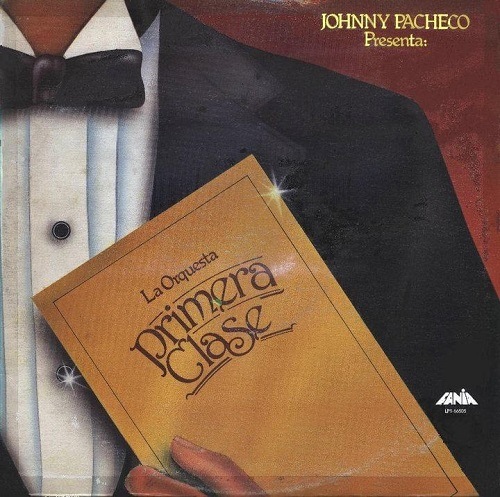
Johnny Pacheco, presents “Orquesta Primera Clase” from Maracay-Venezuela

The title of this album speaks for itself; the hand of the transcendental Dominican musician is introduced in this album.

El Zorro de Plata Pacheco appears as executive producer of the album, although we do not discard that he also participated in part of the musical production, due to the way the orchestra was structured and the style in which the arrangements were given; it is something that we can hardly notice when listening to the album, it is evident the great similarity to “Pacheco y su Tumbao”; four excellent trumpets with sonorous arrangements.

Johnny Pacheco, presents "Orquesta Primera Clase" of Maracay-Venezuela
Johnny Pacheco, presents “Orquesta Primera Clase” of Maracay-Venezuela

The predominance of Teo Hernandez (R.I.P)’s vocal style and register in the nasal coros, fits perfectly with the “Tumbao Añejo” that we have always been accustomed to from maestro Johnny Pacheco (R.I.P).

Although the album was backed by the Fania label and is loaded with a cheerful and swinging flavor, we think that it went somewhat unnoticed by the music-loving public.

The reasons could be several, we must remember that in those times in the 80’s the merengue rhythm was beginning to penetrate with a lot of strength.
Johnny Pacheco, presenta la Orquesta Primera Clase

Although we could also add the little interest that the public of the capital (Caracas) had for the groups of the regions or interior of the country, and although it seems ironic to say it.
Another possible reason could be linked to the inclusion of only unpublished songs (it is well known that in those times, they supported copies more than creativity); these are only conjectures of this server, however, they do not escape the reality of that time.

Teo Hernández (R.I.P)

As for the musical themes, we have already pointed out that all of them are original and very well compensated with their arrangement; In particular there are two songs that I like very much, one of them is “Negro Nací”, written and sung by Orlando Sanoja, is a very happy song dedicated to our black race of the danceable in his music, “Si negro nací nací nací, blanco no puedo ser”, The other song of my predilection is “El Sabio”, composition and lyrics by Jorge Compres and vocalized by Teo Hernández, with great diction, good phrasing and those tasty choruses that accompany him.
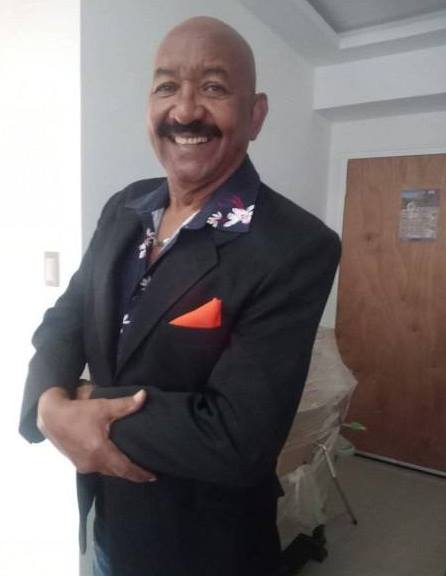
Orlando Sanoja
Orlando Sanoja

It is worth mentioning that the excellent La Orquesta Primera Clase is still in force with a musical staff of the new generation maintaining its original sound with its lead vocalist Orlando Sanoja.

It is another good Venezuelan album that you should have in your personal CD library.
Johnny Pacheco presents “La Orquesta Primera Clase” (1982) Fania LPS-66506

SIDE A

1.- NEGRO NACÍ (Orlado Sanoja) Sings: Orlando Sanoja/ Arrangements: Nicomedes López
2.- ME SIENTO MUY FELIZ (Al mMaro Ríos) Sings: Orlando Sanoja/Arrangements: Bolívar Javier
EL ANIMAL (Jorge Compres) Sings: Teo Hernández/Arrangements: Jorge Compres
4.- TODO TIENE SU FINAL (Bolívar Javier) Sings: Teo Hernández/Arrangements: Bolívar Javier
5.- LLEVAME CONTIGO (Almaro Ríos) Sings: Teo Hernández/Arrangements: Bolívar Javier

SIDE B

1.- EL SABIO (Jorge Compres) Sings: Teo Hernández/Arrangements: Jorge Compres
2.- A MARACAY (Orlando Sanoja) Sings: Orlando Sanoja/Arrangements: Jorge Compres
3.- EXTRANJERA (Phorto Jacquez) Sings: Teo Hernández/Arrangements: Jorge Compres
4.- VIVA MI GUAGUANCO (Jorge Compres) Sings: Teo Hernández/Arrangements: Gilberto Riera
AY QUE HUMANIDAD (Orlando Sanoja) Sings: Orlando Sanoja/Arrangements: Jorge Compres

Personnel:

Pastor Rodríguez (1st Trumpet)
Henry Kamba (2nd Trumpet)
Gustavo Nieves (3rd Trumpet)
William Fermín (4th Trumpet)
Armin Kail (Piano)
Carlos Fagúndez (Bass)
Harold Josef (Congas)
Edgar Aponte (Timbal)
Félix Benítez (Bongo)
Teo Hernández/Orlando Sanoja (Singers)
Bolívar Javier/ Nicomedes López/ Jorge Compres/ Gilberto Riera (Arrangements)
Teo Hernández/Orlando Sanoja/Edgar Aponte (Chorus)
Johnny Pacheco (Executive Producer)
Carlos Guerrero (Recording Technician)
Luis Arismendi (General Recording Supervision)
Recorded at Fidelis Studios
Alejandro Pérez (Art and Design)


National Zalsa Day in its XXXIX edition a total success

Sunday, March 19, 2023, the 39th edition of National Zalsa Day returned to the date established in 2000 with the approval of Law No. 100, which decrees the third Sunday of March of each year as National Salsa Day.

This edition of the activity of worldwide importance, which has almost reached four decades since its first edition at the José Pepito Bonano Park in Guaynabo, demonstrated Z-93’s support for the proposals of the new generation. That promise, made in its 38th edition, has been fulfilled.

The day began at about eleven in the morning. The Orquesta del Rey de Puerto Rico, winners of the contest held in Panama to select the talent to be presented yesterday on the DNZ stage, was in charge of the ignition.

Orquesta del Rey de Puerto Rico after the performance that kicked off the National Zalsa Day

As soon as this first intervention culminated; the orchestra of Robert Burgos shone in a change of rhythm something more cubaneao. When the sun was at its hottest moment, Maelo Ruiz arrived on stage for the first time as a soloist, accompanied by the musical direction of his nephew, the outstanding percussionist of the so-called nueva cepa: Jean Carlos Camuñas.  Pirulo arrived on stage with his usual urban charisma, stealing the hearts of the new salsa

The fifth intervention marked the arrival of the Orquesta del Día Nacional, led by the multifaceted Isidro Infante.  The orchestra backed Nino Segarra, who enchanted the audience with Entre la espada y la pared and Porque te amo; Yolanda Rivera, who performed Se formó and Hasta que se rompa el cuero as well as a descarga in front of the timbal; Luigui Texidor, who sang Boranda and Moreno soy.

Yolanda Rivera performing a timbal solo

Next, “El Niño Bonito de la Salsa”, Ismael Miranda arrived accompanied by his family and Pastor Alex D’ Castro to receive from Néstor Galán -better known as “el búho loco”- the well-deserved Estrella Award, instituted as part of the annual salsa day.

Ismael Miranda receives Estrella Award from Néstor Galán

Once the Estrella Award was presented to Miranda, Pichie Pérez sang El sonero del bailador and a medley of the songs that consolidated him as a singer when he was part of the giants of the south, the Sonora Ponceña. These were: Hacheros pa’ un palo, Fuego en el 23, El pío pío and Yambeque.

After Pichie finished his performance, Alex D’ Castro took the stage and gave the evening its climax with Te fuiste, Como si nada and Si no fuera por ti. Alex was followed by the new promise of salsa, already recorded, published and released by Sony Music Latin: Luis Figueroa.

As part of the tribute to the 50th anniversary of the establishment of Típica 73, there was a reunion on stage of singers Tito Allen, Adalberto Santiago and José Alberto “El Canario”; backed by the manager of Típica 73, Johnny Dandy Rodríguez. Tito Allen performed Guancona and Guaguancó de los violentos. Adalberto Santiago showed off his voice with Mañoño and La candela. For his part, “El Canario” arrived with his usual scenic mastery with A la hora que me llamen voy, Esta noche pinta bien, Xiomara -a theme in which he was accompanied by Tito Allen and Adalberto Santiago- and Baila que baila.

José Alberto "El Canario", Adalberto Santiago and Tito Allen joined Johnny "Dandy" Rodríguez in tribute to Típica 73
José Alberto “El Canario”, Adalberto Santiago and Tito Allen joined Johnny “Dandy” Rodríguez in tribute to Típica 73

After the segment in which the three singers came together again, bongos player Johnny Dandy received the tribute on behalf of Típica. The first intervention of the DNZ Orchestra closed with Domingo Quiñones in an energetic interpretation of Salsumba, a song with which he participated in the production El número 100 of the “King of the Timbal”, Tito Puente.

Domingo Quiñones performed Salsumba, a song he recorded with El Rey del Timbal for his production 'El número 100'
Domingo Quiñones performed Salsumba, a song he recorded with El Rey del Timbal for his production ‘El número 100’

When the afternoon wanted to give way to the night, Charlie Aponte’s orchestra was in charge of keeping the audience in the necessary mood to continue with salsa. The songs that Charlie kept the audience captive were Arroz con habichuelas, Se nos rompió el amor, Teléfono, Esos ojitos negros, Goyito Sabater and Gracias salsero.

Charlie Aponte and his orchestra

Preceding the tribute to the “King of the Timbal”, on the 100th anniversary of his birth; India showed off her interpretative quality, evidencing her well-earned title. Yes, India is “la más que canta”. Her interpretation of Vivir lo nuestro, Dicen que soy -a song for which she was accompanied by Sergio George on piano shortly after he brought her a birthday cake on stage-, Ese hombre and Mi primera rumba showed her vocal virtuosity.

Sergio George celebrated India's birthday within the framework of DNZ 2023
Sergio George celebrated India’s birthday within the framework of DNZ 2023

The concert was closed by Tito Puente, Jr. surrounded by timbaleros Nicky Marrero, Endel Dueño and Orestes Vilató, under the musical direction of timbalero José Madera.  Tito’s guest singers for the closing were Frankie Figueroa, Frankie Morales and Melina Almodóvar.

Melina Almodóvar fue una de las invitadas de Tito Puente, Jr.


Bella Martinez
Writer, Afro-Caribbean Music Researcher

Fanny Almenara better known in the salsa environment as “La Sonera del Callao”

Sonera of Callao, who maintains an impeccable musical career, loving music and recording numerous songs as a soloist and with various singers of first order of the Afro Latin Caribbean genre.

The salsa singer named Fanny Almenara, better known in the music scene as the Peruvian Sonera, was born in Callao, daughter of Don Hector Almenara and Carmen Barreto, the second of 9 siblings.

Fanny studied singing thanks to her mother, she met the best teacher, Mrs. Ana Maria Parodi and entered music at a very early age in the lyrical genre.

Juan Canevello: Percusionista, Antonio Cartagena: Cantante, Fanny Almenara: Cantante y Oscar Huaranga Bajista y Productor Musical

Her salsa collector father made her listen to the best of the best exponents such as Justo Betancourt, La Lupe, Candido Fabre, Benny More, Ismael Rivera, Los Papines, Irakere, Luis “Perico” Ortiz, etc.
At the age of 16 she fell in love with the genre called salsa and had the honor of singing with Junior Gonzales for the first time and alternated Grandes with Peruvian Orchestras such as Peru Salsa de Beto Villena, Las Estrellas de la Máquina de Boris Gómez, HIt Parade Latino del Callao, La Nueva Generación de Franco Crovetto.
She was chosen as the best new voice of the salsa genre in the 80s.

La cantante de salsa llamada Fanny Almenara mejor conocida en el ambiente como la Sonera Peruana

She made recordings for different groups, and also recorded an unpublished song of her own entitled “Yo te Espero”.

Between the 70s and 80s came to Peru Las Leyendas Latinas with Ray Barreto and Adalberto Santiago, gave him the great opportunity to sing with them Quítate la Máscara.

Then with Linda Caballero (lLa India), the song Mi Primera Rumba, then with the pharaoh of salsa Oscar D’ León the song Toro Mata, also with the great Hermanos Lebrón the song sin negro no hay guaguancó.
With the owner of Soneo Carlos “El Cano” Estremera the theme Ámame en Cámara lenta, with Frankie Vázquez the theme Cuarto de Tula, with Yolanda Rivera the theme Rumba en el Patio, Vity Ruiz brother of Frankie Ruiz the theme La Cura, with Aldalberto Santiago the theme Nadie se salva de la rumba.

Primera sonera del Callao, que mantiene una carrera musical impecable

And so with her imposing voice Fanny captivated the attention of the greats of salsa, representing Callao and for which the people of Chalaco named her “La Sonera del Callao” (The Sonera of Callao).
For her vast artistic career she was awarded by different musical associations and by the company Pilsen Callao.
(H3) Asocosalsa Peru (Tite Curet Ceremony, Hector Lavoe Bust, Charlie Palmieri and 25th anniversary of artistic life (Okonkolo Association).
Fanny Almenara, continues her impeccable musical career, loving music and recording a song entitled Amor de Mis Amores, salsa version with the Orquesta Ng del Callao director Franco Crovetto.
Although she was in a halt due to the pandemic, she recorded a Challenger “El Virus Se Mata Con Musica” invited by a Cuban musician, which was also recorded by Cuban artists in different parts of the world.

Fanny Almenara
Fanny Almenara

After her voice reached Cuban websites such as “Benny More” “Un Millón De Adalsoneros” “Al Son Del Pinar Del Rio” she was invited to the “Son 8 de mayo” days led by the gentleman of the son Adalberto Alvarez.
Then she also recorded a song written by the King of merengue Milly Quezada “Gracias A Ti” dedicated to those who are always on the front line as doctors and nurses in the Covid 19 and the last thing she has recorded the production of the song La Sitiera Tribute to the diva of Cuba Omara Portuondo in which in that production participated Nelson Gonzales in the tres: Eddie Montalvo on congas, Nohelia Zambrano on violin and Luis Perico Ortiz on trumpet.

Website: Fanny Almenara Oficial

Vicentico Valdés “The elastic voice” of Bolero in Cuba and the Caribbean

“The earrings that the moon lacks I have kept to make you a necklace”.

Vicente Valdés was born in the neighborhood of Cayo Hueso, Havana, on January 10, 1921. He was the younger brother of Alfredito Valdés (1908-1988), a versatile singer who performed with numerous sones groups, ensembles and orchestras in Cuba until, around 1940, he settled outside Cuba, mainly in New York and Mexico, where he continued his artistic career.

Vicente Valdés Una Vez

Two of Vicente’s other brothers, Marcelino and Oscar, stood out as percussionists, and the latter also as a singer in the Irakere group.

Also known as “La voz elástica” Vicentico is one of the most celebrated interpreters of the bolero with a great interpretative strength and dramatization in his performance for the benefit of couples in love who enjoy his songs to this day.

Valdés was part of “El Septeto Nacional”, the orchestra of Cheo Belén Puig, “La Cosmopolita”, the orchestras of Noro Morales, Arturo Núñez and Tito Puente,

In 1937, recommended by Alfredo, Vicentico sang for a short time with the Segundo Septeto Nacional, a group that had been founded to share the multiple artistic commitments that the renowned Septeto Nacional of Ignacio Piñeiro received at that time. He was also a member of the sones sextet Jabón Candado.

Vicentico Valdés La voz elástica del Bolero en Cuba

Later, he replaced Alfredo as a singer in the orchestra of Cheo Belén Puig, one of the most famous Cuban groups of the charanga format. Later, he joined the jazz band Cosmopolita, led by Vicente Viana and later by pianist and composer Humberto Suárez.

Together with Marcelino Guerra Rapindey and Cristóbal Dobal, among others, he was part of the sextet Los Leones.

In the mid-1940s, due to the difficult economic situation in Cuba after World War II, Vicentico, like many other Cuban artists of the time, went to Mexico to explore new horizons for his work in music.

In the Mexican capital he performed with Humberto Cané’s conjunto Tropical, and the orchestras of Arturo Núñez, Rafael de Paz and Chucho Rodríguez, with whom he later recorded with Benny Moré. In those years he received his first ovations on the stage of the Follies.

In Mexico, between 1946 and 1947, he made recordings for the Peerless label, backed by the orchestras of the Mexican Rafael de Paz and the Cuban Absalón Pérez.

The repertoire chosen for these records consisted almost entirely of guarachas, afros and sones montunos, which had been popularized in Cuba by Orlando Guerra Cascarita with the Orquesta Casino de la Playa.

Vicente Valdés
Vicente Valdés

Vicentico was hired as a singer of the musical group of the Puerto Rican pianist Noro Morales in New York at the end of 1947. In that city he had a successful season at the Hispanic Theater which, according to the chronicles of the time, “consecrated him in the taste of the Latin community”. He also performed at the Million Dollars, Park Plaza and Puerto Rico theaters.

In 1948 he joined Tito Puente’s orchestra as a singer, along with his brother Alfredo. With Puente he recorded his first boleros (among them “Quiéreme y verás”, by José Antonio Méndez) for the Seeco label. Until then he had been used mainly as an interpreter of upbeat numbers. With Tito Puente he made numerous recordings throughout his career.

In 1953, the Seeco record company promoted a group of recordings with the Sonora Matancera, which had great repercussion in Cuba, where he was hardly known, and in other Caribbean countries.

Among the pieces recorded in Havana in November of that year were two boleros (“Una aventura”, by Elisa Chiquitica Méndez and “Decídete mi amor”, by José Antonio Méndez), a genre in which he achieved the greatest triumphs of his career.

From then on, in New York, with great studio orchestras conducted by René Hernández, Joe Cain, and later Charlie and Eddie Palmieri, he made new recordings that were quickly distributed throughout Latin America.

Their repertoire during this stage (early 1960s) included boleros and songs by authors of different tendencies and styles; the Cubans René Touzet, Javier Vázquez, José Antonio Méndez, Piloto y Vera, Pepé Delgado, Juan Pablo Miranda, Marta Valdés and the Rigual brothers; the Puerto Ricans Silvia Rexach, Myrta Silva and Rafael Hernández; the Dominicans Rafael Solano and Manuel Troncoso; and the Mexicans Manuel Prado, Luis Demetrio and Armando Manzanero.

Vicente Valdés y La Oquesta de Bobby Valentin

La Sonora Matancera among others no less important. He also excelled in other genres such as Mambo, Guaguancó, Son and Guaracha.

He was an exceptional singer with a particular style that set the standard and also spread the best Latin American bolero composers, particularly those of the Cuban Feeling, of which he was a valuable promoter at an international level. His career as a soloist was impeccable.

He died in a New York hospital on the morning of June 26, 1995, according to a heart attack.

Source: En Caribe

Sonora Matancera

Read also: La Sonora Matancera musical congregation of long trajectory and its sound quality, is one of the most popular in the Caribbean island “Cuba”

In front of adversity we grow with Johnny Cruz .

North America/ All USA

Johnny Cruz : This month I wanted to dedicate myself to good news, highlighting the work of those who, despite adversity, continue to strive to bring the best to the public. We keep working!

Gilberto Santa Rosa surprises us with his new album Colegas. His most recent phonogram. In this, Santa Rosa invested the last six years and presents 16 collaborations with Cuban artists -Isaac Delgado and Juan Jose Hernandez-Puerto Ricans -Tito Nieves, Tito Rojas, Luisito Carrion, Pirulo, Nino Segarra, Choco Orta among others-, as well as with a Dominican – Jose Alberto “El Canario” -.

Gilberto Santa Rosa - Colegas
Gilberto Santa Rosa – Colegas

The album is preceded by “40… y contando en vivo desde Puerto Rico”, an album recorded in 2018 live at the Coliseo de Puerto Rico in San Juan, to celebrate its 40 years of musical career. The majestic arrangements were the work of Dino Nugent (Apaga La Luz), Marty Sheller (Caminalo, Ban Ban Quere), Ramón Sánchez (Que Se Sepa), Javier Fernández (Tremendo Coco, Masacote), Louis García (Por La Calle Del Medio, Ocana Sordi, El Guateque De Chombo), Ricky González (Vamos a Bailar El Son, Eque Tumba), Manolito Rodríguez (Medley Boleros), José Madera (Bailadores), Rene González (Estoy como Nunca), Isidro Infante (Mario Ague, El Mejor Sonero, Sonerito), James Hernández (La Fonda De Bienvenido).

In good time Santa Rosa presents this production. He positions him on the GRAMMY platform and refreshes him in his role as sonero and incidentally, he extends a helping hand to some who had not recorded Salsa Brava again.

Tracks: La Familia; Caminalo; Que Se Sepa; Mazacote; Apaga La Luz; Sonerito; Por La Calle Del Medio; Nos Vamos A Bailar El Son; Medley Boleros; Ocana Sordi; Bailadores; El Mejor Sonero; Tremendo Coco; Estoy Como Nunca; Mario Ague; Eque Tumbao; La Fonda De Bienvenido; Ban Ban Quere; Guateque De Chombo.

Members: Angie Machado, Jan Duclerc, Jesús Alonso, turbidity Vilchez – trumpet; Charlie Sierra – maracas; Dino Nugent – violín; Johnny Torres, Pedro Perez – bass; Manolito Rodriguez – timbal; Rafy Torres, Toñito Vásquez, Víctor Vázquez, Reynaldo Jorge – trombones – trombone; Richie Bastar – bongo; Sammy García, Jimmie Morales – congas; Sammy Vélez, Josué Urbina; Pedro Méndez, Frankie Pérez, Janice Maysonet – saxophone; Luis Marín, Isidro Infante, Javi Fernández, Ricky González – piano; Orestes Vilató – timpani; Pablo “El Indio” Rosario – percussion; Meñique, Paquito Guzmán, Víctor Manuelle, Luisito Carrion, Justo Betancourt – backing vocals. Guests: Víctor Manuelle, Choco Orta, Juan José Hernández, Isaac Delgado, Yan Collazo, Luisito Carrion, Pirulo, Tito Nieves, Tito Rojas “El Gallo”, Ismael Rivera Jr., José Alberto “El Canario”, Carlitos Ramírez, Michelle Brava, Herman Olivera, Maelo Ruiz.

I take this opportunity to greet my good friend Johnny Rodríguez Jr., better known as Johnny “Dandy” Rodríguez, is an American bongo player. He was Tito Puente’s longtime bongo player, and also played with Tito Rodríguez, Ray Barretto, and Alfredo de la Fe. He belonged to various popular bands of the salsa era such as Tico All-Stars, Fania All-Stars, and Typica 73. He is a proud son of El Barrio (Spanish Harlem), New York, and stickball (street baseball) was more interested than music.

Marco Bermúdez - En mi voz
Marco Bermúdez – En mi voz

However, influenced by his father, Johnny, 17, earned the position of playing bongos in the Tito Puente Orchestra. Johnny spent more than 30 years with the orchestra, also working with Tito Rodríguez from 1965 to 1968 and with Ray Barretto from 1970 until the end of 1972. Johnny went on to form Tipica 73, of which he remained a member until 1979. He then returned to the band. Tito’s band, playing alongside him until the time of Tito’s death in May 2000.

Johnny “Dandy” Rodríguez Jr. continues to be a Latin jazz and salsa percussionist. Today he works as a percussionist in different Latin music ensembles, He is unstoppable and is very active with the Latin Jazz Giants (alongside his colleagues and Exclusive LP Artists Jose Madera and George Delgado) and that includes the stars from the original Tito Puente Orchestra. The band plays the famous music from the Palladium days of Tito Puente, Tito Rodríguez, and Machito, and also recorded The Giants Play the Music of the Palladium.

In 2008, Johhny entrusted LP’s Research and Development Department with the design of the John “Dandy” Rodríguez Jr. bongoes from the Legends series. John is proud that these drums, which bear his name, present such a sound and visual characteristics outstanding. Keep going, Johnny!

A few days ago, En Mi Voz, the solo debut of the Ecuadorian singer Marco Bermúdez, was officially launched on the market. This is a very good selection of ten songs, under the master hand of Oscar Hernández, the prestigious and renowned musician who is making his debut as a record producer with Ovation Records.

Pedro Bermudez - Arrasando
Pedro Bermudez – Arrasando

Marco has not saved anything for this premiere. He has met with his colleagues from the “Hispánica del Barrio” and the result could not be better: Jerry Madera, Máximo Rodríguez, Maneco Ruiz, Héctor Colón, Doug Beavers, Reynaldo Jorge, Jeremy Bosch, George Delgado, Luisito Quintero and Jorge González give solvency and flavor to En Mi Voz. The album opens with “Amanecer Contigo”, composed with four hands between Hernández and Bermúdez, where the trumpet solos by Maneco Ruiz and flute by Jeremy Bosch stand out.

Jeremy is also heard with his flute in his fine and heartfelt composition “Canto a mi Mamá” and in “Únicamente tú”, making Marco the second voice. The romantic spirit of the singer of the Spanish Harlem Orchestra and Mambo Legends Orchestra is confirmed in songs like “Solo Basta” and “Tu Regreso”. Oscar’s arrangements guarantee the key melody. Highly recommended this album, it has no waste!

I send my greetings and wishes for a reunion with this excellent salsa singer: Hermenegildo Olivera, or Herman Olivera. Born in Newark, New Jersey, the son of Puerto Rican parents and from an early age linked to Latin music. In the 70s, in the middle of the salsa boom, Herman began his love of singing by listening to the interpretations of Chamaco Ramírez, Héctor Lavoe, Cheo Feliciano and Marvin Santiago, among others. These vocalists were primarily his source of inspiration. When he was just 15 years old, Herman began his career as a salsa interpreter with an orchestra called La Justicia.

Johnny Rodríguez
Johnny Rodríguez

Later he was part of the band La Sónica, where he met his friend and trombonist Jimmy Bosch. After this he spent time with the Caramelo orchestra to later take the most important leap in his career by being part of the Conjunto Libre in 1978, where he left his voice reflected for the first time in the Incredible LP of 1981 under the direction of percussionist Manolo Oquendo and bassist Andy González, where he stands out with the theme Decídete.

In 1990, he was invited to record on the album Salsa Sudada, from the Valdesa Records label of Víctor Raúl Sánchez “Patillas” and with the musical direction of Isidro Infante, sharing vocalization with Mario Muñoz “Papaíto”, Adalberto Santiago, Eladio Peguero “Yayo El Indio” and Pablo Villanueva Branda “Melcochita”; in this work he interprets the songs La Aguja and a tribute to the city of Cali called Valle Plateado de Salsa. Later, it launched an independent project called Herman Olivera y La Exclusiva. Chequea la Mercancía.

Herman Olivera
Herman Olivera

Produced by Fernando Pastrana where the song Me Extraña Araña is one of the most outstanding. For 1997 he participates in the CD of the band Rikoson All Stars, called Evoluciones del Son, where he stands out very well in the romantic theme Aquella Noche. In 1998 he was requested by the piano teacher Eddie Palmieri and together with the vocalist Wichy Camacho they recorded the album El Rumbero del Piano, where he stands out as a singer on the songs Malagueña alerosa and Oiga mi Guaguancó.

That same year he was invited to the recording studios by the trombonist Jimmy Bosch and they released the album titled Soneando Trombón, which contains the hit Otra Oportunidad. Who plays a duet with Frankie Vázquez. On this CD also appears the song Descargarana. That same duo, Olivera and Bosch, meet the following year (1999) and produce Salsa Dura, where Herman shines performing the full Impacto Tendremos. The album also features the participation of singers Frankie “Nene” Morales and Frankie Vázquez. Parallel to this album, the RMM label launches a live CD and DVD titled Eddie Palmieri & Friend’s, where Herman looks excellent in the number Palo pa ’Rumba.

Felix Villalobos
Felix Villalobos

The invitation to tune in to the new Fm / Internet radio station on Live365.com continues: Salsagallery. Good music, interviews with the artists and much more… now with the participation of Felix Villalobos who joins Salsagallery Radio with a segment in which we will be talking about Music.

At the Spanish Harlem Salsa Gallery Museum we are happy to say that we are gradually returning to our activities and we will be opening the gallery sporadically. We do not stop, we continue to work for our music and we will always keep you informed through our social networks. We hope to have more news shortly and that we can return to normal soon.

Publicity
Raymond Stewart
Johnny Cruz
Correspondent
New York
  • « Go to Previous Page
  • Page 1
  • Interim pages omitted …
  • Page 7
  • Page 8
  • Page 9
  • Page 10
  • Page 11
  • Interim pages omitted …
  • Page 17
  • Go to Next Page »

International Salsa Magazine (ISM) is a monthly publication about Salsa activities around the world, that has been publishing since 2007. It is a world network of volunteers coordinated by ISM Magazine. We are working to strengthen all the events by working together.