• Skip to primary navigation
  • Skip to main content

International Salsa Magazine

  • Home
  • Previous editions
    • 2025
      • ISM / November 2025
      • ISM / October 2025
      • ISM / September 2025
      • ISM / August 2025
      • ISM / July 2025
      • ISM / June 2025
      • ISM / May2025
      • ISM / April 2025
      • ISM / March 2025
      • ISM / February 2025
      • ISM / January 2025
    • 2024
      • ISM / December 2024
      • ISM / November 2024
      • ISM / October 2024
      • ISM / September 2024
      • ISM / August 2024
      • ISM / July 2024
      • ISM / June 2024
      • ISM / May 2024
      • ISM / April 2024
      • ISM / March 2024
      • ISM / February 2024
      • ISM / January 2024
    • 2023
      • ISM / December 2023
      • ISM / November 2023
      • ISM / October 2023
      • ISM – September 2023
      • ISM – August 2023
      • ISM July 2023
      • ISM Edition June 2023
      • ISM – May 2023
      • ISM April 2023
      • ISM March 2023
      • ISM February 2023
      • ISM January 2023
    • 2022
      • ISM December 2022
      • ISM November 2022
      • ISM October 2022
      • ISM September 2022
      • ISM August 2022
      • ISM July 2022
      • ISM June 2022
      • ISM May 2022
      • ISM February 2022
      • ISM January 2022
    • 2021
      • ISM December 2021
      • ISM November 2021
      • ISM October – 2021
      • ISM September 2021
      • ISM August 2021
      • ISM July 2021
      • ISM May 2021
      • ISM April 2021
      • ISM June 2021
      • ISM March 2021
      • ISM February 2021
      • ISM January 2021
    • 2020
      • ISM December 2020
      • ISM November 2020
      • ISM October 2020
      • ISM September 2020
      • ISM August 2020
      • ISM July 2020
      • ISM June 2020
      • ISM May 2020
      • ISM April 2020
      • ISM March 2020
      • ISM February 2020
      • ISM January 2020
    • 2019
      • ISM December 2019
      • ISM November 2019
      • ISM October 2019
      • ISM Septembre 2019
      • ISM August 2019
      • ISM July 2019
      • ISM June 2019
      • ISM May 2019
      • ISM April 2019
      • ISM March 2019
      • ISM February 2019
      • ISM January 2019
    • 2018
      • ISM December 2018
      • ISM November 2018
      • ISM October 2018
      • ISM September 2018
      • ISM August 2018
      • ISM July 2018
      • ISM June 2018
      • ISM May 2018
      • ISM April 2018
      • ISM March 2018
      • ISM February 2018
      • ISM January 2018
    • 2017
      • ISM December 2017
      • ISM November 2017
      • ISM October 2017
      • ISM September 2017
      • ISM August 2017
      • ISM July 2017
      • ISM June 2017
      • ISM May 2017
      • ISM April 2017
  • Download Salsa App
    • Android
    • Apple
  • Spanish

Search Results for: jazz club

Aguas Trio North American debut in Birdland

North America - United States – New York

Aguas Trio with Omar Sosa, Yilian Cañizares and Gustavo Ovalles from February 18th to 22nd in Birland
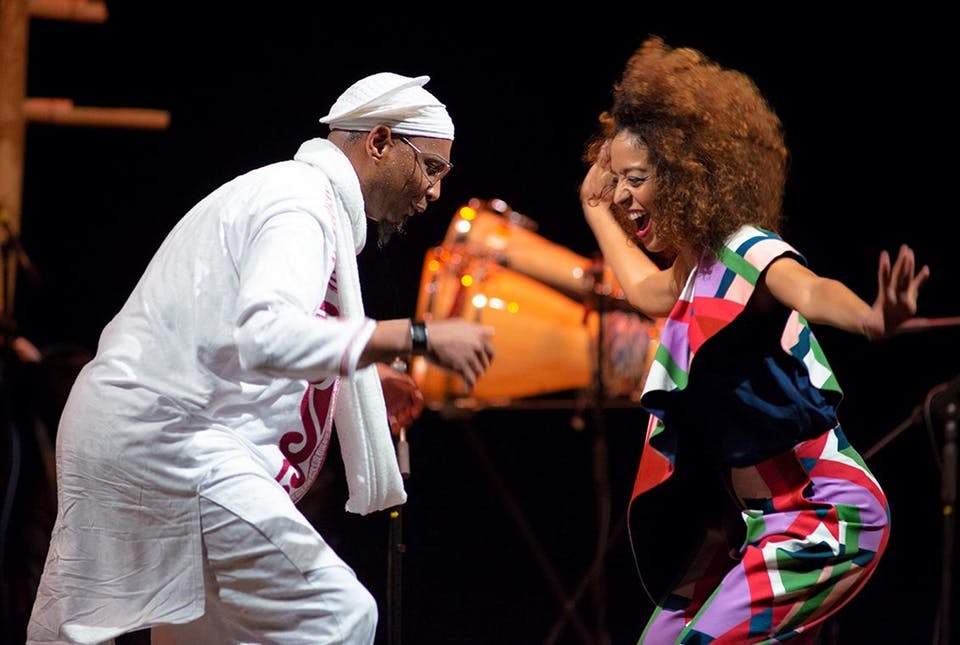
Aguas Trio with Omar Sosa, Yilian Cañizares and Gustavo Ovalles

Cuban pianist Omar Sosa and Cuban violinist-vocalist Yilian Cañizares have come together to create AGUAS Trio, an inventive and engaging mix of the artists’ Afro-Cuban roots, Western classical music, and jazz.

Featuring Venezuelan percussionist Gustavo Ovalles, Aguas Trio reflects the perspectives of two generations of Cuban artists living outside their homeland, interpreting their traditions in subtle and unique ways. Songs range from the poignant to the exuberant and are expressive of the exceptional musical chemistry, poetic sensibilities and originality of the artists. The concerts at Birdland are the group’s North American debut!

Omar Sosa y Yilian Cañizales, Aguas Trío

Aguas Trio

It is dedicated to water, and especially to Oshun, the Goddess of Love and Mistress of Rivers in the Lucumí tradition of Yoruba ancestry known in Cuba as Santería – a spiritual practice important to both artists. As water is synonymous with life and energy and strength, the music of Aguas Trio is inspired by the important influences of water- its hidden powers, its infinite transmutations and its relentless destruction and creation.

Dubbed the “The Jazz Corner of the World”, by its namesake, the late Charlie “Bird” Parker, Birdland is a modern nightclub in Midtown Manhattan in the tradition of classic New York elegance, and one of the town’s most iconic venues. In recent years, Birdland has presented memorable sets by such music legends as Oscar Peterson, Pat Metheny and Diana Krall, as well as the big bands of Chico O’Farrill and Maria Schneider. Birdland remains New York’s premier destination for jazz lovers the world over.

Dates and Prices

Doors: 7:30 PM / Show: 8:30 PM

$30.00 – $40.00

Birdland Jazz Club

Address

Birdland Jazz Club

315 West 44th St

New York, NY 10036

(212) 581-3080

Bebo Valdés is considered one of the central figures of the golden age of Cuban music

On March 22, 2013 in Stockholm, Sweden, Dionisio Ramón Emilio Valdés Amaro, better known as Bebo Valdés, died.

He was an excellent musician of Cuban music and Afro-Cuban jazz, considered one of the central figures of the golden age of Cuban music.

In addition to being a pianist, his best known facet, he has been a composer, arranger and orchestra conductor.

He was born in Quivicán, Cuba, on October 9, 1918. He was the father of the Afro-Cuban jazz pianist Chucho Valdés (b. 1941). From 1931 to 1935 he studied piano in his hometown with Moraima González; in 1936 he moved with his family to Havana, where he studied music theory, harmony and composition with Oscar Bofartigue.

In 1938 he made his professional debut with Happy D’Ulacia’s orchestra. He played in Havana, since the 1940s, in the orchestras Ulacia, García Curbelo, Julio Cueva and Orquesta Tropicana, and recorded albums with groups dedicated to performing Afro-Cuban jazz.2

Known among his family and friends by the affectionate nickname of Caballón because of his considerable stature, he composed mambos, such as La rareza del siglo, which covers the genre recently introduced by Pérez Prado and which would change the course of Cuban music. From 1948 until 1957, he worked at the Tropicana cabaret as pianist and arranger for Rita Montaner.

The Sabor de Cuba orchestra, of Bebo Valdés, and that of Armando Romeu, made the show of this night club, in which Valdés stopped performing in 1957, when he was hired by Ernesto Roca, of the Peer International Music Publishers, to make arrangements for Xiomara Alfaro and Pío Leyva; at the same time, he joined Guillermo Álvarez Guedez, of the Panart and Rolando Laserie in Radio Progreso. With his orchestra Sabor de Cuba, he accompanied singers Reinaldo Henríquez, Orlando Guerra (Cascarita), Pío Leyva and Ada Rex; Beny Moré also sang with this group, and Chucho Valdés made his debut.

About the descarga or jam session, there are multiple versions, this is the one by Bebo Valdés which, due to the concreteness of data, dates and record labels that made the recordings, is the most objective: “One night in October 1952, I was resting in a cabaret in Havana with members of the Tropicana orchestra.

Bebo Valdés Fue un excelente músico de música cubana y jazz afrocubano, considerado como una de las figuras centrales de la época dorada de la música

It is important to know that since 1948, Cuban, Mexican or even American musicians used to meet on Sunday afternoons at the Tropicana to play descarga, in the course of which we mixed jazz and Cuban rhythms.

Sometimes the descargas were held at four o’clock in the morning, at the end of the [Tropicana] show. The percussionist Guillermo Barreto was the one who animated them; we had received Roy Haynes, Kenny Drew, Sarah Vaughan, Richard Davis and many other musicians passing through; in fact, all the great names of jazz paraded through the Tropicana.

All of that could have been recorded, but no one was interested. So, that night Irving Price, the owner of a record store on Galiano Street, announces to me that producer Norman Granz is in town and that he can’t believe that Cuban musicians are capable of playing jazz.

Granz and Price ask me to go to the studio to record. It was September 16, 1952. So, I called some musicians, but I myself was late for the session, because in the morning I had another recording for RCA: I was going to accompany a singer! When I finally arrived at Panart’s studio, Granz had already left for the United States.

We called the orchestra The Andre’s All Star, after the name of Irving Price’s record store. We had decided to play classic jazz tunes, such as Distrust, Taboo, Sleep and Blues for Andre. At the end of the session, as there were still a few minutes available for the record, I started playing a riff, from which we improvised. We called that track “Con poco coco.”

The record was titled Cubano! and the participating musicians were all from the Tropicana cabaret: Gustavo Más, tenor saxophone; Alejandro Vivar (El Negro Vivar), trumpet; Kiki Hernández, double bass; Guillermo Barreto, timbal; Rolando Alfonso, tumbadora and Bebo Valdés, piano.

The works it contains are the same as those mentioned by Bebo Valdés, and the label, Mercury. In 1955, Bebo Valdés recorded, in the studios of Radio Progreso, Holiday Habana and She Adores the Latin Type, for the Decca label, which contained mambo, chachachá, bolero, jazz descarga, even jazz with bebop tendencies.

According to Luc Delannoy, in 1956 the Panart recorded Cuban Jam Session, with Julio Gutiérrez and Pedro Jústiz (Peruchín), as directors, and the musicians Alejandro Vivar (El Negro Vivar), Edilberto Escrich, Osvaldo Urrutia (Mosquifin), Emilio Peñalver, José Silva (CHombo), Juan Pablo Miranda, Salvador Vivar, Jesús Esquijarrosa (Chucho), Oscar Valdés, father, Marcelino Valdés, Walfredo de los Reyes and José Antonio Méndez. The participation of Israel López (Cachao) in a descarga did not occur until 1957, when the Panart recorded Descargas cubanas, with the participation of Cachao himself, Guillermo Barreto, Gustavo Tamayo, Rogelio Iglesias, Richard Egües, Andrés Hechavarría (El Niño Rivera), Rolito Pérez, Alfredo León, Arístides Soto (Tata Güines), Alejandro Vivar (El Negro Vivar), Generoso Jiménez, Orestes López (Macho), Emilio Peñalver and Virgilio Vixama. In other years, there were also recordings of downloads, and some unrecorded ones, such as those recalled by Leonardo Acosta at the Cuban Jazz Club, held between 1958 and 1960, with the participation of Pedro Jústiz (Peruchín), piano; Guillermo Barreto, drums and pailas, and Arístides Soto (Tata Güines), tumbadora (drums). This proves -or at least shows another side of the coin- that Bebo Valdés was one of the initiators of descarga in Cuba, a resource used by Cuban musicians in the most diverse instrumental formats, genres and styles of our popular music, as, for example, did the composers of the filin movement.

On June 8, 1952, with a band of twenty musicians, Bebo unveiled the batanga rhythm in the studios of RHC Cadena Azul; among the three singers in the orchestra was Beny Moré.

Bebo Valdés un virtuoso de la música cubana

That same year he travels to Mexico with the purpose of recording a disc with this new modality of Cuban music, which also included a new choreography; they were not successful, and, according to Bebo Valdés, “the batanga died a natural death”.

When he left Cuba in 1960 due to disagreements with the Cuban government, Bebo also abandoned his family, his wife Pilar Valdés and his five children (including Chucho). Bebo Valdés goes to Mexico, then moves to Los Angeles, California, where he works with singer Miguelito Valdés; from there he travels to Spain, where he records two albums as director of the orchestra that accompanies Chilean singer Lucho Gatica.

Later he toured England, France, Holland, Germany and Finland with the Lecuona Cuban Boys. In 1963 he settled in Sweden, and worked with the Hatuey Orchestra, a Swedish group playing Cuban music. In Sweden he formed a new family when he married in 1963.

International career

After thirty years of relative anonymity, on November 25, 1994, Valdés received a call from Paquito D’Rivera, who invited him to record a new album in Germany for the Messidor label. A new beginning in his career took place at the age of 76 with the recording of Bebo Rides Again.

He participated in Fernando Trueba’s film Calle 54, along with, among others, pianist and composer Chucho Valdés, Paquito D’Rivera, Elaine Elías, Chano Domínguez, Jerry González, Michel Camilo, Leandro J. Barbieri (Gato Barbieri), Ernesto Antonio Puente (Tito Puente), Arturo O’Farrill (Chico), Israel López (Cachao), Orlando Ríos (Puntilla) and Carlos Valdés (Patato).

In 2004 he traveled to Salvador de Bahia, Brazil, to participate in Trueba’s film El milagro de Candeal, along with Carlinhos Brown, Marisa Monte, Mateus Aleluia and César Mendez.

Bebo y Chucho Valdés una verdadera dinastía de la Música Cubana

An integral musician capable of tackling the most diverse genres and styles of music, not only as a pianist and composer, but also as an orchestrator and orchestra conductor of sublime values; of solid technical training, both theoretical and pianistic, Bebo Valdés is one of the all-time greats of Cuban music. He was, with Israel López (Cachao) and Patato Valdés, nominated for the Latin Grammy Award for El arte del sabor, best traditional tropical album 2002.

In 2002, Fernando Trueba produced Lágrimas negras, an album that unites flamenco singer Diego el Cigala with Bebo Valdés on piano.

After its release in 2003, it became an international success, recognized with a Grammy, three Music Awards, an Ondas Award, five Amigo Awards, three Platinum Discs in Spain and one each in Argentina, Mexico and Venezuela. The New York Times praised the album as Best Latin Music Album of the Year and opened the doors to a tour of Paris, New York, London, Havana, Buenos Aires, Tokyo, Mexico City, Madrid and Barcelona, among others. By the end of 2004 the album had sold more than 700,000 copies worldwide.

He retired to Benalmádena, a village in the province of Málaga (Spain), until his death in Stockholm (Sweden).

Chucho Valdés

Read also: Carlos “Patato” Valdés one of the best percussionists in the history of Latin Jazz

Yissy García Calzadilla, former member of the Anacaona Orchestra, plays drums, timbal and bongo

On May 29, 1987, in Havana, Cuba, Yissy García Calzadilla was born.

With a great musical heritage that comes from her father and inspiration, Bernardo Garcia, who is a drummer of the ICRT Orchestra.

Since she was a child she has been inclined towards percussion and has her father as her first teacher.

At the age of 9 she began her elementary music studies at the “Manuel Saumell” school, later attending the Amadeo Roldan Conservatory where she excelled in the school’s Charanga band and was also a member of the Youth Symphony Orchestra.

As a student of the conservatory in 2004 she traveled to the island of Guadeloupe as part of a cultural exchange between music schools in both countries.

Also in 2005 she was invited as a soloist in the paila (Cuban percussion instrument) to play with the National Symphony Orchestra of Cuba under the direction of the prestigious conductor Zenaida Romeu. In the same year she obtained the Special Prize of the “Fiesta del Tambor” contest.

In 2006 he travels to Barbados to participate with the “Quinteto Chico de la Habana” (a group of outstanding students of the conservatory) in the Barbados Jazz Festival and shares the stage with prestigious jazzmen such as Horacio Hernández (El Negro), Giovanni Hidalgo, Arturo Tappin (saxophonist) and Roy Hargrove (trumpeter), his performance is reviewed by international television stations and for the English newspaper Daily Niticns.

In November of the same year he obtains a Special Performance MECION at the International Festival of Young Jazz Players “JOJAZZ” and plays drums with the Big Band of Canada.

It is in this same year that she graduates in Percussion with excellent grades.

Once graduated, she joined the female orchestra Anacaona with which she made multiple performances on stages all over the country, and also performed on national television and radio, recorded the album “No lo puedo evitar” for the Bis Music label, and has also accompanied the Buena Vista Social Club diva Omara Portuondo.

With a small orchestra format, he recorded in 2008 the song “Parampampán”, for the musical film: “Chico y Rita” by the Spanish filmmaker Fernando Trueba. And also participates in another recording of traditional music with an American singer, both in the Areito studios of the EGREM.

In 2009 she made two important international tours with Anacaona, first in several Canadian cities, among them, performing at the “Art Jazz Festival” in Toronto, and in the Lula Lounge of the same city, the “30th Montreal International Jazz Festival”, alternating with the famous salsa singer “La India” with whom she was also invited to play, During the days of this great festival she participated very actively in various Jan sessions with Canadian musicians and musicians from other countries, in the city of London in the “Sunfest”, the Festival “La Nuit de Africa” in Montreal in its 27th edition and in the cities of Chicoutimi in the Festival “Rhythms of the World” and in the City of Quebec in its festival “Musics of the World” in addition to other venues in some of these cities, monopolizing in all many applause and congratulations for his outstanding performance.

In September 2010 the Aruba Jazz Festival is presented where they have the responsibility to close the festival and also perform with great success with saxophonist David Sanborn with whom they have the honor of downloading to close his performance the first day of the festival, for all this they are welcomed with great success by the public and the press.

He has worked in Cuba with other important jazzmen such as Alexis Bosh and Orlando Cubajazz.

He also performs for a special program on French TV channel 33 about his musical life and appears on a web page of the Spanish magazine “The H”.

He competes again in the JOJAZZ Contest and obtains the 2nd place in interpretation.

He has also recorded the Cuban Television program “A todo jazz” with trumpeter Roberto García and saxophonist Emir Santa Cruz, and with the group “Joven Jazz” led by saxophonist Michel Herrera, with whom he also performs in Havana’s Jazz clubs. He has worked with the outstanding trumpet player Yasser Manzano and his group.

In early 2010 he made the national tour of the singer Cucu Diamantes and also participates in the film that was recorded of the same.

In June 2010 he performed with Anacaona a successful tour of Curacao presenting the show “Viva Cuba”, in order to raise funds for the fight against breast cancer, organized by the Sinte Rose Foundation of that country and also close the 1st International Film Festival of Aruba.

Solo career

Yissy and Bandancha.

In 2012 she decided to embark on her solo career, debuting as composer and leader of the project YISSY & BANDANCHA, a quintet that develops jazz from the fusion with other genres.

She is regularly invited to participate in the most important festivals in Cuba, such as Jazz Plaza, JoJazz, Ellas Crean, Havana World Music Festival, among others.

Along with her project, she develops an intense work of collaboration in record productions and with various artists and recognized groups in the country, as is the case of Interactivo, Alexis Bosch and Telmary Diaz.

In 2014 he participated in Argentina in the festival El sur suena a cubano, along with Kelvis Ochoa, William Vivanco and Yusa, whom he also accompanied on his tour of Japan. He participated in the recording of the album Feeling Marta, by singer Gema Corredera, and accompanied the Buena Vista Social Club diva, Omara Portuondo, on her tour of Mexico.

Since that same year and until now, he is part of the line up of the band Maqueque, led by the renowned Canadian saxophonist Jane Bunnet, with whom he has played in the most important festivals in Canada and USA, in addition to having recorded the album Jane Bunnett and Maqueque, winner of the 2015 Juno Award for Best Jazz Album.

She began 2015 with the recording of her debut album Última noticia, and with a tour with her band YISSY & BANDANCHA through several cities in the USA.

She was included in a documentary for Brazilian TV directed by filmmaker Max Alvim, which aims to collect the most outstanding of the vanguard of Cuban jazz today.

She was part of the concert Women of the World, led by M Alfonso. She participated, together with Brazilian artist Baddi Assad, in the Les Voix Humains festival, held in Havana and organized by the Leo Brouwer Office.

Invited by the prestigious drummer Terri Lyne Carrington, she gave a clinic on Cuban rhythms at Berklee College of Music.

What’s Happening in London?

Five Salsa & Latin Jazz Events To Be Held In The UK Capital That You Can’t-Miss

The United Kingdom has removed essential restrictions against Covid-19 and its Omicron variant after battling weeks with the new wave of infections in the country since the end of last year.

The British executive has provided the relaxation of the restrictive measures due to the low numbers of infected people and deaths. This relaxation seeks to initiate the return to complete normality.

The new measures that are no longer mandatory are the use of masks (it will be at personal discretion, however, they must wear them if the site is crowded with unknown people or it is a closed space), and Covid passports are no longer a legal requirement to enter to the establishment.

For these reasons, we bring you a range of options in the Salsa & Latin Jazz genres in the country this month that you will be excited to see, and that you will not want to miss any detail. Here, we go…

latin woman with orange dress dancing in gabeto restaurant / bar
Gabeto offers Cuban, Colombian, and Puerto Rican Salsa style, classes

We open this poster of options with the Gabeto Camden Restaurant/Bar. This Cuban gem north of the city has two floors, a Latin atmosphere, and an outdoor terrace. They serve genuine Latin dishes, modern British drinks with Afro-Caribbean twists, and have a wide variety of nightly events throughout the week.

On Tuesdays, Wednesdays, Fridays, and Sundays you will live the Salsa experience with the instructor Ramiro Zapata (from Bolivia) with more than 20 years of experience in Salsa. Ramiro teaches his Cross Body style with a mix of Cuban, Colombian, and Puerto Rican Salsa, as well as a strong focus on Cali (Colombia) style footwork, male body movement, and female style. The cost of the lessons varies depending on the length of instruction; one hour is £10 while two hours cost £12. Lessons start at 7:30 PM and end at 9:30 PM except on Sundays with Rumba Pa’ Ti classes which are from 6:30 PM to 8:30 PM. The Cuban spirit is found in Gabeto, located at Camden Market, The Stables Market, Chalk Farm Road, a few minutes from Camden Town and Chalk Farm stations. Only people over 18 can attend and for more details, visit their website.

pink flyer with the event of San valentine in Salsa Temple Bar
Sundays at the Salsa Temple Bar are 9 continuous hours of Salsa

We continue with the Salsa Temple Bar. Every Sunday they are explosively Salseros. DJs Jorge Andre & DJ Jlatino mix the most recognized songs of yesterday and today from Timba, Salsa, Cubaton, and Bachata. Beginner Salsa Classes start at 6 PM, Bachata lessons at 7 PM, and Cuban Salsa instruction is at 8 PM. The cost for admission is £5 and on February 14th, they will offer the Valentine’s Night Fuego event.

Starting this month Salsa Temple Bar with Rhythm & Vibes Dance Co and The Latin Collective will make Monday nights the biggest Afro-Latin party in the country appearing in the Latin Room (Second Room) Salsa, Bachata, and Reggaeton. In addition to this, there will be Salsa and Bachata classes for one session (1 hour) for £7 and two sessions (2 hours) for £10.

Bar Salsa Temple is located at Temple Station WC2R 2PH. Join and experience the Sabor in detail on its official website.

Roberto Plas playing the Timbal
Roberto Pla is the Colombian percussionist known as the “Father of Latin Music” in the UK

As a third option, we bring you the concert of Roberto Pla’s Latino ensemble on Friday, February 4th at Pizza Express – Holborn. This Latin Jazz concert led by Colombian percussionist Roberto Pla is made up of a 12-piece band of saxophones, trumpets, trombones plus a powerful layered percussion section with Roberto on timbales and the powerful voice of Graciela Rodríguez.

The most recent presentations of the Latin Ensemble orchestra have been the Brecon Jazz Festival, Expo Festival Lisbon, Canada Square Festival, Under the Stars Festival, among many others.

Admission to enjoy this live performance is £25 and starts at 8:00 PM. The venue is Pizza Express Jazz Club located at 99 High Holborn since 2017. This Jazz Club is considered one of the best clubs of its kind in Britain with an international reputation. Performances by Grammy winners such as Gregory Porter and Amy Winehouse have been seen here.

Trumpeter with beige suit on Ronnie Scott's Jazz Club
The Ronnie Scott’s Jazz Club presents every Friday of the month “Viva Cuba Live”

We continue with the most important and historic jazz club in the world founded in 1959, Ronnie Scott’s. In addition to the main club, there is the bar known as Upstairs @ Ronnie’s, it is highly regarded as an elegant and luxurious venue recreating the atmosphere of the ’50s, ideal for spending the night in style.

As part of the new Jazz club policy, they are expanding their program of Latin events at Upstairs @ Ronnie’s. Below I detail the events that will be held on Fridays from 6 PM during this month.

Jesús Cutiño Band + DJ Gavin (February 4th). Jesús Cutiño is a Cuban singer-songwriter recognized as one of the best Tres players in Europe (the Tres is the Cuban guitar that forms one of the pillars of the Cuban Son sound).

Sarabanda + DJ Rico (February 11th). With this band, you will listen to arrangements of classic and contemporary Cuban songs.

Son Yambu + DJ Jim (February 18th). This group plays the authentic Cuban Son that originated in the streets of eastern Cuba at the beginning of the last century and later gave rise to modern Salsa. Most of the members come from Cuba and have the experience of a lifetime playing the genre, as well as being passionate about maintaining the traditions of Cuban Son.

Havana Latin Fun + DJ Alex (February 25th). This five-piece band led by piano/vocals René Álvarez presents Cuban melodies with amazing rhythms.

Ronnie Scott’s Jazz Club is located at 47 Frith St, London W1D 4HT, and you can find out more by clicking here.

Bishopsgate institute with green flag
The Latin and Ballroom Dance course for beginners will be held in person

We close this list of Latin events in London with the Latin and ballroom dance lessons for beginners next Saturday, February 12th. With this one-day course, you will learn how to perform the basic steps, footwork and move around the floor with the correct dance line. The hours will be between 11 AM and 4 PM, and the price is £25. The maximum limit is 30 students. The venue is the Bishopsgate Institute located at 230 Bishopsgate EC2M 4QH. An institution was erected for the benefit of the public in 1894 with the motto “I never stop learning”.

  • You Can Also Read: 6 Clubs To Dance Salsa In London

How Birdland began operating and its role in Latin music

What is Birdland?

Birdland has been the place in which many of the most important New York’s stars of the show were born and has represented the beginning of many artistic careers that have achieved worldwide fame, so this spectacular venue deserves all the recognition and fame that it has accumulated over the years. 

This is a jazz club that began operations in December 1949 in Manhattan and was closed for a few years until its reopening in 1986. What happened was that a second location of the same name was opened in Manhattan and was not too far from the land on which the original club operated. Today, Birdland operates at the same facility as the headquarters of the famous local newspaper The New York Observer in the past. 

Stage at Birdland
Stage of the jazz club Birdland

Story about how the idea to create Birdland was born  

During the 1920s, there were a lot of musicians who had to move to New York City because it was there that the biggest jazz movement of the moment was being produced. It could be said that the birthplace of the most famous jazz styles of the last decades was the Big Apple and its surroundings. 

It was there where and when the musical career of Charlie Parker, affectionately known as Bird by most of his fans, emerged. Some time later, it would be this brilliant artist and talented saxophonist who would get one of the most popular jazz clubs in the city and the country in general named after him. This would be one of the many tributes received by Parker before and after his death in 1955. 

Once Birdland was opened in the late 1940s, the saxophonist began performing there on a regular basis along with many other music legends of the moment such as Dizzy Gillespie, Lester Young, Lennie Tristano, Maxie Kaminsky and many more. Although Birdland was named to honour Charlie, that did not keep the artist from having some friction with Oscar Goodstein, one of the founders of the venue, who said that Parker was constantly asking for too much money. As the story goes, this was the reason why the musician did not perform as many times as expected. 

On the facade of the club, a neon sign could read Birdland, Jazz Corner of the World, making it clear what its customers would find once they entered the facility. Once inside, there was space for approximately 500 visitors and a full orchestra to lighten the mood that night. Birdland included a very long bar, spacious tables, stands with a wide variety of products, folding chairs, among other things. At that time, customers only had to pay a $1.50 fee to enjoy everything that the nightclub had to offer.   

It went on to have so much prestige that it had among its visitors Marilyn Monroe, Frank Sinatra, Gary Cooper, among other personalities from the entertainment world. It has taken so much popularity in those years that composer George Shearing dedicated one of his greatest creations entitled Lullaby of Birdland to it, which was also inspired by Charlie Parker as well as the name of the place.  

Tommy Potter, Charlie Parker, Dizzy Gillespie and John Coltrane at Birdland
Tommy Potter, Charlie Parker, Dizzy Gillespie and John Coltrane performing at Birdland in 1951

The role of Birdland in Latin music 

Just as Birdland contributed to the emergence of important careers in the jazz music scene, it also did the same with a good number of Latin music singers who saw this corner of New York as an opportunity to make their art known to other audiences. One of them was world-famous bandleader, composer and musician Tito Puente, who performed at the venue on several occasions and improvised many sets with Dizzy Gillespie and Lionel Hampton. 

There is also the case of Tito Rodríguez, who made use of his great talent to record a spectacular live album entirely dedicated to Birdland and whose name was Live at Birdland. In addition, he featured incredible collaborations with great musicians such as Clark Terry, Al Conh, Zoot Sims, among others. 

Another of the great Latin music artists who came to perform at this venue was Cuban bandleader, arranger and trumpet player Chico O’Farrill. The artist played and recorded at the club on a wekly basis about the time he already had his own orchestra called Afrocuban Jazz Orchestra. Arturo O’Farrill, worthy son of his father, also performs regularly at Birdland with his orchestra The Afro Latin Jazz Ensemble. 

Announcement about Tito Puente's concert
Announcement of Tito Puente’s show at Birdland in 1999
  • « Go to Previous Page
  • Page 1
  • Interim pages omitted …
  • Page 3
  • Page 4
  • Page 5
  • Page 6
  • Page 7
  • Interim pages omitted …
  • Page 34
  • Go to Next Page »

International Salsa Magazine (ISM) is a monthly publication about Salsa activities around the world, that has been publishing since 2007. It is a world network of volunteers coordinated by ISM Magazine. We are working to strengthen all the events by working together.