• Skip to primary navigation
  • Skip to main content

International Salsa Magazine

  • Home
  • Previous editions
    • 2026
      • ISM / January 2026
      • ISM / February 2026
    • 2025
      • ISM / December 2025
      • ISM / November 2025
      • ISM / October 2025
      • ISM / September 2025
      • ISM / August 2025
      • ISM / July 2025
      • ISM / June 2025
      • ISM / May2025
      • ISM / April 2025
      • ISM / March 2025
      • ISM / February 2025
      • ISM / January 2025
    • 2024
      • ISM / December 2024
      • ISM / November 2024
      • ISM / October 2024
      • ISM / September 2024
      • ISM / August 2024
      • ISM / July 2024
      • ISM / June 2024
      • ISM / May 2024
      • ISM / April 2024
      • ISM / March 2024
      • ISM / February 2024
      • ISM / January 2024
    • 2023
      • ISM / December 2023
      • ISM / November 2023
      • ISM / October 2023
      • ISM – September 2023
      • ISM – August 2023
      • ISM July 2023
      • ISM Edition June 2023
      • ISM – May 2023
      • ISM April 2023
      • ISM March 2023
      • ISM February 2023
      • ISM January 2023
    • 2022
      • ISM December 2022
      • ISM November 2022
      • ISM October 2022
      • ISM September 2022
      • ISM August 2022
      • ISM July 2022
      • ISM June 2022
      • ISM May 2022
      • ISM February 2022
      • ISM January 2022
    • 2021
      • ISM December 2021
      • ISM November 2021
      • ISM October – 2021
      • ISM September 2021
      • ISM August 2021
      • ISM July 2021
      • ISM May 2021
      • ISM April 2021
      • ISM June 2021
      • ISM March 2021
      • ISM February 2021
      • ISM January 2021
    • 2020
      • ISM December 2020
      • ISM November 2020
      • ISM October 2020
      • ISM September 2020
      • ISM August 2020
      • ISM July 2020
      • ISM June 2020
      • ISM May 2020
      • ISM April 2020
      • ISM March 2020
      • ISM February 2020
      • ISM January 2020
    • 2019
      • ISM December 2019
      • ISM November 2019
      • ISM October 2019
      • ISM Septembre 2019
      • ISM August 2019
      • ISM July 2019
      • ISM June 2019
      • ISM May 2019
      • ISM April 2019
      • ISM March 2019
      • ISM February 2019
      • ISM January 2019
    • 2018
      • ISM December 2018
      • ISM November 2018
      • ISM October 2018
      • ISM September 2018
      • ISM August 2018
      • ISM July 2018
      • ISM June 2018
      • ISM May 2018
      • ISM April 2018
      • ISM March 2018
      • ISM February 2018
      • ISM January 2018
    • 2017
      • ISM December 2017
      • ISM November 2017
      • ISM October 2017
      • ISM September 2017
      • ISM August 2017
      • ISM July 2017
      • ISM June 2017
      • ISM May 2017
      • ISM April 2017
      • ISM March 2017
      • ISM February 2017
  • Download Salsa App
    • Android
    • Apple
  • Spanish

Search Results for: jazz

Paquito D’Rivera supports the salsa museum

There have been many legends of whom we have spoken in this section of International Salsa Magazine and today it is the turn of the bandleader, composer, clarinetist, and saxophonist born in Havana, Cuba, Paquito D’Rivera.  

Today, we want to dedicate the following lines to one of the main references in Cuban music and everything he has contributed to the Latin music scene, which is growing every day in the United States.   

Paquito smiling
Paquito D’Rivera smiling for the camera

Paquito’s beginnings in music 

Francisco de Jesús Rivera Figueras, who is artistically known as Paquito D’Rivera, was born in the city of Havana, Cuba and is the son of orchestra director and saxophonist Tito D’Rivera, from whom he inherited his great artistic vein and love for music. 

At just five years old, Paquito began studying music formally and, two years later, he was already performing on stage in front of large audiences, which prepared him for what he would do as an adult. That same year, Selmer (a musical instrument company) hired him, which was a very important step in the boy’s path to becoming an artist. 

A few years later, he performed at the National Theater of La Habana, which was a very important moment for the young man, who shortly after began studying at the Havana Conservatory, where he specialized in areas of music such as clarinet, composition and harmony. 

His first media appearance was during his debut in the National Symphony Orchestra of Cuba, an event that was nationally televised so that the whole country could appreciate the talent of the young choir boys.  

A year later, when he was only 18 years old, Paquito and Chucho Valdés founded the Orquesta Cubana de Música Moderna, while working for the Orquesta Nacional and the Banda del Ejército Cubano. 
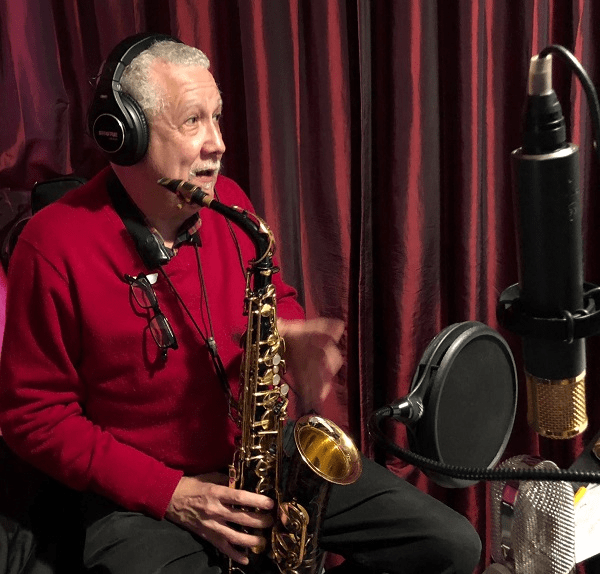
Paquito playing
Paquito D’Rivera playing the saxophone

Some time later, he founded the Orquesta de Música Moderna with some of his colleagues at the time, and then created the group Irakere, which integrated jazz, traditional Cuban music, classical music and rock in ways never seen before. Together with Irakere, he toured Europe and the United States and earned several Grammy Award nominations.   

Leaving Cuba 

Like so many Cubans, Paquito became tired of the situation experienced by the island and knew he had to make a final decision on the subject. He took advantage of a stop in Spain and sought asylum at the American embassy in the European country. Once in the United States, his process of adaptation to his new country of residence was not easy, but there were artists who gave him a lot of support such as Mario Bauza, Dizzy Gallespie, David Amram, among others. 

It did not take him too long before he earned the love and respect of many members of the jazz music community.  His place in the Latin music scene was consolidated thanks to his first two solo albums called ”Paquito Blowin” and ”Mariel”. His popularity was also benefited from a Time magazine article that talked about his great work and his appearance on the famous ”Sunday Morning” show.   

He also collaborated with artists such as Artur Sandoval, Michel Camilo, Bebo Valdés, Claudio Roditi, among others. He also participated in the founding of the United Nations Orchestra, Paquito D’Rivera Big Band, Paquito D’Rivera Quinquet and many other groups.  

More recently, in 2027, he was in Europe with the Orquesta de Valencia at the Palau de La Música promoting ”The Elephant and The Clown” of his own.   
Paquito and Johnny
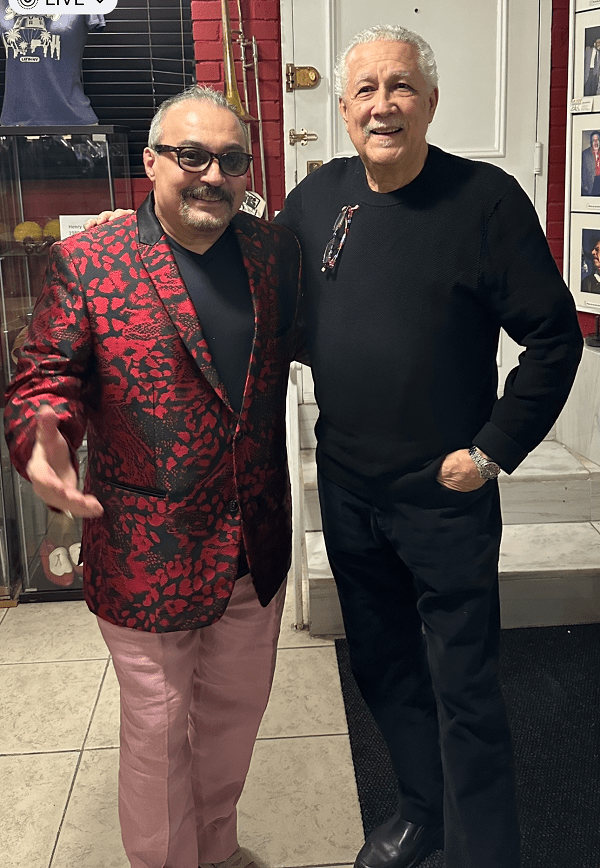
President of the Spaha Harlem Salsa Museum Johnny Cruz and Paquito D’Rivera

Paquito and the Spaha Harlem Salsa Museum 

In December 2023, Paquito visited the Spaha Harlem Salsa Museum to see the huge collection of personal items belonging to world-renowned Latin artists and, once there, he expressed his surprise at the large number of items that both stars and their families have donated to the famous museum.   

In a post by Johnny Cruz, the museum’s president, on his Facebook account, Paquito said he was very impressed by all the items housed in the institution while supporting the work done by the museum’s staff and expressing his admiration for the effort devoted to the collection. 

Johnny Cru ISM corresponde in New York City


Read also: Poncho Sanchez visited us at the Salsa Museum 

Chile Directory 2024

Club Havana
Club Havana
Boliviana 499
6201231 Punta Arenas, Chile
+56 9 6673-7008

Pub Dejavu
Dejavu Pub
Maipu 403
6200000 Punta Arenas, Chile
+56 9 7976-4121

Club Amanda
Club Amanda
Embajador Doussinague 1767 / Local 0027D
Santiago, Chile
+56 2 3223 0000

Havana Salsa
Havana Salsa
Dominica 142
Santiago, Chile
+56 2 2777-5829

Thelonious's
Thelonious
Bombero Núñez 336, Barrio Bellavista
Santiago, Chile
+56 2 2735-7962

GazGaz
Gazgaz Club Valdivia
Camilo Henriquez 436
5090000 Ciudad de Valdivía, Chile
+56 9 9088 8598


Bolivia Directory 2024

El Cortijo
El Cortijo
Av. Pando esq. Juan Capriles
Cochabamba, Bolivia
+59 1 7546-8801

JazzStop
JazzStop
Pedro Blanco #364
Cochabamba, Bolivia
+59 1 7546-8801

Mandarina Lounge
Mandarina Lounge
Pasaje Portales 0591
Cochabamba, Bolivia
+59 1 6942-0002


New York Directory 2024


Taj Lounge
Taj Restaurant & Lounge
48 W 21st St
New York, NY 10010
+1 212 620-3033

Gonzalez y Gonzalez
Gonzalez y Gonzalez
192 Mercer St
New York, NY 10012
+1 212 473-7878

Sound Of Brazil
Sound Of Brazil
204 Varick St
New York, NY 10014
+1 212 243-4940

Copacabana Nightclub
625 W 51st St
New York, NY 10019
+1 917 559-1779

Birdland
Birdland
315 W 44th St #5402
New York, NY 10036
+1 917 559-1779

Havana Café
Havana Café
3151 E Tremont Ave
The Bronx, NY 10461
+1 718 301-8323

Salsa Fuego
Salsa Con Fuego
2297 Cedar Ave
The Bronx, NY 10468
+1 718 561-6161

Kiss
Kiss Entertainment
130-35 91st ave
Richmond Hill, NY 11418
+1 917-232-7098


Large projects of Mexican pianist and composer Irving Flores

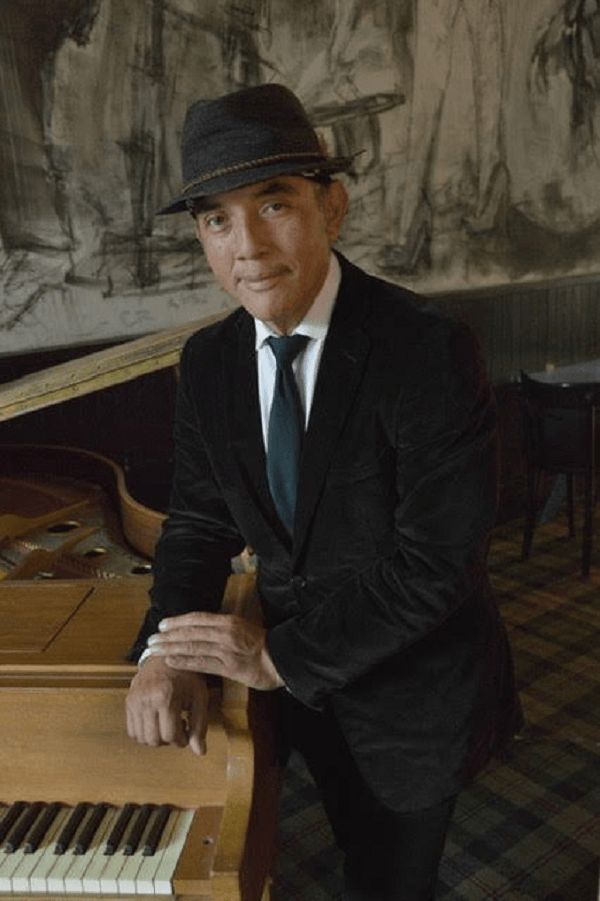
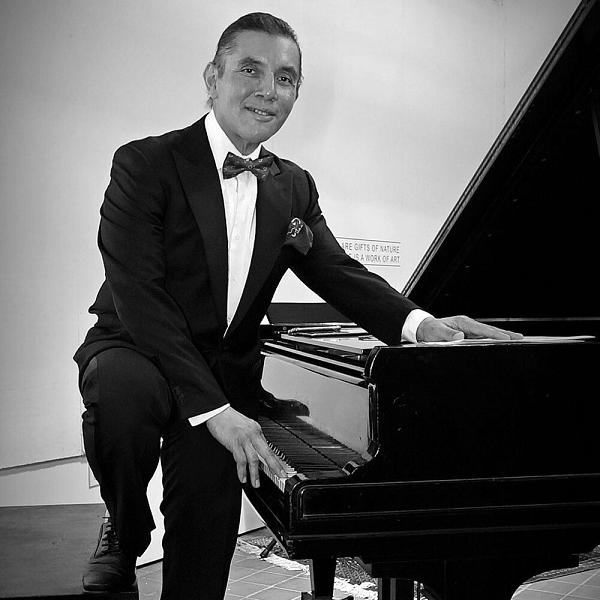
It is always a pleasure for us to talk with important figures from the Latin music industry in the United States and today it was the turn of the incredibly talented producer, arranger, composer and pianist Irving Flores, who has been kind enough to connect via Zoom and talk a little about his career and personal life. 

After the usual greetings and introductions, Irving started talking about what inspired him to get started in music which, in his case, was his father.   

Pianist Irving Flores
Mexican producer, arranger, composer and pianist Irving Flores

Irving’s father as a source of inspiration 

Irving’s first important contact with music was his father, who was a professional saxophonist in the 60’s and even worked for a big band in Tamaulipas, Mexico, the artist’s native country. 

He was his first musical maestro and the one who helped him take his first steps in this complicated world, to the extent that Irving also started playing the saxophone encouraged by his father. The young man always wanted to learn how to play piano, but the high level of salinity in the city of Tampico damaged this type of instruments. It is then that he chose the organ which, being electronic, withstood the weather conditions, but he never discarded the instrument he was most passionate about. 

Once he began his career as an orchestrator and arranger, he was exploring all wind instruments such as the saxophone, trumpet, and trombone and string instruments such as the guitar. He played the saxophone professionally for some years, studied at the National Conservatory of Music and received private music lessons to strengthen his knowledge.  

Roles as a producer, an arranger and a composer 

So, as was the case with many other Latin musicians, Irving perceived music as a job in which experience has been much more important than the academic part. In fact, he told us that, as a child, he saw his father sitting writing music and making arrangements, which led him to imitate him and do the same.  

When he has beraly 15, he was perfectly capable of arranging at a professional level, an experience that served him well in Mexico City when dealing with the best composers of his native country, such as Luis Demetrio, Vicente Garrido, Eugenia León and maestro Armando Manzanero. He was also Paulina Rubio’s musical director for many years. 

For years, Irving spent three or four days each week in a studio, which gave him the necessary experience to prepare for what was to come in his professional future.  

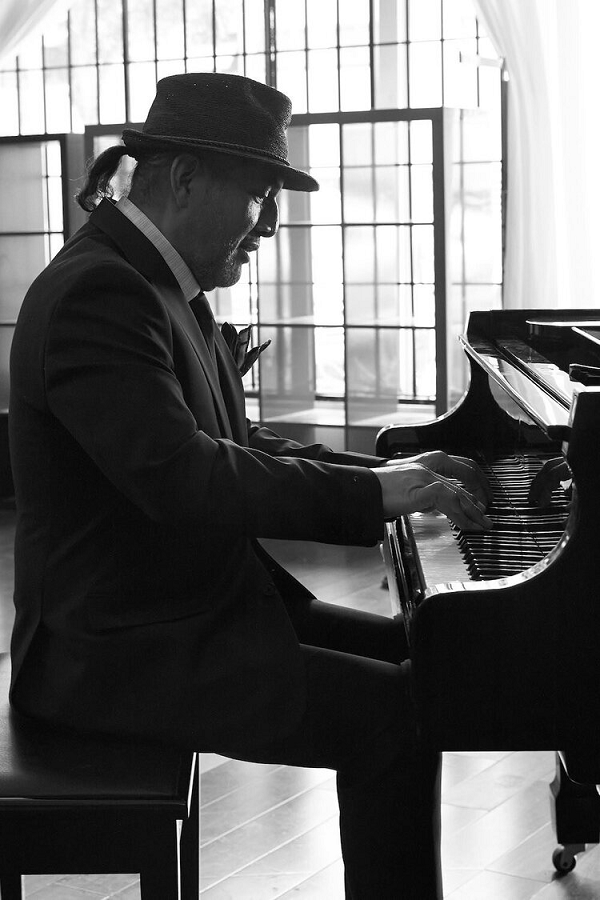
Irving worked with many figures
Irving has worked with many important figures in the music industry

San Diego 

Irving married a U.S. citizen and had a daughter with her, which made it much easier for him to get a visa to travel to the United States. After he split up with his wife, he specifically chose the city of San Diego because his daughter lives here and he wanted to see her grow up.  

Although that was the primary reason for his move there, he immediately noticed that there was much scope for him to work on his own stuff and make many contacts. One of them was Dave Scott, thanks to whom he was able to write music for the San Diego Symphony Orchestra. 

The artist assures that, regardless of the place he used to live, he never lost his way and never stopped learning everything he could about music. 

One of the greatest experiences he had in this city had to do with taking the place of Oscar Hernandez in the Spanish Harlem Orchestra. It turns out that Hernandez lost his luggage and passport on a flight, so someone had to take his place in the concert the band would have the next day in Mexico City. It was then that Gilbert Castellanos recommended Irving for this task.  

Hernandez and Irving met, each one put their terms and reached an agreement. The founder of the orchestra bought the artist a plane ticket and went to assume the role of pianist that Hernandez could not take that night and the result could not be better. Since then, Irving and the orchestra has been on excellent terms and both he and the world famous pianist became good friends.   

Irving and his piano
Irving next to his greatest passion, his piano

Working for great artists 

According to Irving, one advantage Latin musicians have is that they are able to play all styles of music, which gives them a greater range of action compared to other artists. We are also influenced by Latin music, Afro-Antillean music and Afro-Cuban music. These elements help us a lot to do our job. American musicians tupically specialize in a single context or genre, but Latinos don’t have those limitations,” Irving said on the subject.   

Although the pianist specializes in makings arrangements for jazz, the above mentioned shows that he is perfectly capable of entering any other genre, which has led him to work with great artists with many styles.   

One of the most interesting cases was Luis Miguel. One of his most important producers, Alejandro Carvallo, spent some time in Los Angeles, where he and Irving met and forged a friendship. That is how he started writing arrangements for ”El Sol de Mexico” and had a very good experience working for him and his team.  

In the case of the San Diego Chamber Orchestra, a composer working for the institution (and Irving’s friend) named Dave Scott needed an urgent arrangement at that time, but they did not have the budget for the relevant work. So, he asked Irving what they could do, to which he replied that he needed a few days to write a new arrangement. The following two weeks, the pianist had no time even to sleep, but he achieved the goal and wrote ”A Tribute to Frank Sinatra”. According to Irving himself, this has been one of the most important projects he has had in his entire career.  

Irving worked with Luis Miguel
Irving worked with many talented Mexican artists such as Luis Miguel and Paulina Rubio

American Citizen 

In the year 2021, Irving became an American citizen, which is certainly a great honor for anyone who lives in that country and also a great responsibility. The artist seems to know this very well.   

When we asked Irving about this topic, his answer was not so much based on the artistic aspect, but on everything that involves the acquisition of citizenship as a Latino. In this sense, the artist emphasized that the cultural and even judicial environment in which we grew up in most of our countries are completely different from those of the United States, so adapting to this country is a real challenge, but well worth it.   

In his case, the pianist also says that he was as disciplined as possible in each of his decisions to be able to get to the point where he is now. In that sense, he has always done his best to exercise his career as a musician with excellence, but always respecting U.S. laws at all times. He said this because he knows many talented people who were unfortunately imprisoned or deported for making mistakes in this regard.  

On the same subject, he also said that it is very important to follow the rules for American society to accept you as a member and give you all the opportunities you are given as a citizen with all the letters. 

Musically speaking, having a U.S. passport has provided him with the possibility to travel and tour anywhere in the world without any problem, which is extremely important for the growth of an artist’s career. 

Read also: The Rumba Madre and its roots in Basque culture 

  • « Go to Previous Page
  • Page 1
  • Interim pages omitted …
  • Page 46
  • Page 47
  • Page 48
  • Page 49
  • Page 50
  • Interim pages omitted …
  • Page 103
  • Go to Next Page »

International Salsa Magazine (ISM) is a monthly publication about Salsa activities around the world, that has been publishing since 2007. It is a world network of volunteers coordinated by ISM Magazine. We are working to strengthen all the events by working together.