• Skip to primary navigation
  • Skip to main content

International Salsa Magazine

  • HOME
  • Previous editions
    • 2026
      • ISM / March 2026
      • ISM / February 2026
      • ISM / January 2026
    • 2025
      • ISM / December 2025
      • ISM / November 2025
      • ISM / October 2025
      • ISM / September 2025
      • ISM / August 2025
      • ISM / July 2025
      • ISM / June 2025
      • ISM / May2025
      • ISM / April 2025
      • ISM / March 2025
      • ISM / February 2025
      • ISM / January 2025
    • 2024
      • ISM / December 2024
      • ISM / November 2024
      • ISM / October 2024
      • ISM / September 2024
      • ISM / August 2024
      • ISM / July 2024
      • ISM / June 2024
      • ISM / May 2024
      • ISM / April 2024
      • ISM / March 2024
      • ISM / February 2024
      • ISM / January 2024
    • 2023
      • ISM / December 2023
      • ISM / November 2023
      • ISM / October 2023
      • ISM – September 2023
      • ISM – August 2023
      • ISM July 2023
      • ISM Edition June 2023
      • ISM – May 2023
      • ISM April 2023
      • ISM March 2023
      • ISM February 2023
      • ISM January 2023
    • 2022
      • ISM December 2022
      • ISM November 2022
      • ISM October 2022
      • ISM September 2022
      • ISM August 2022
      • ISM July 2022
      • ISM June 2022
      • ISM May 2022
      • ISM February 2022
      • ISM January 2022
    • 2021
      • ISM December 2021
      • ISM November 2021
      • ISM October – 2021
      • ISM September 2021
      • ISM August 2021
      • ISM July 2021
      • ISM May 2021
      • ISM April 2021
      • ISM June 2021
      • ISM March 2021
      • ISM February 2021
      • ISM January 2021
    • 2020
      • ISM December 2020
      • ISM November 2020
      • ISM October 2020
      • ISM September 2020
      • ISM August 2020
      • ISM July 2020
      • ISM June 2020
      • ISM May 2020
      • ISM April 2020
      • ISM March 2020
      • ISM February 2020
      • ISM January 2020
    • 2019
      • ISM December 2019
      • ISM November 2019
      • ISM October 2019
      • ISM Septembre 2019
      • ISM August 2019
      • ISM July 2019
      • ISM June 2019
  • Download Salsa App
    • Android
    • Apple
  • Spanish

Search Results for: music

Origins of Kizomba

Kizomba is a very catchy musical genre that has its origin in Angola, Africa. It can be said that its birth was in the 1980s; but if we want to understand its history, we must look further back to the 50s and 60s.
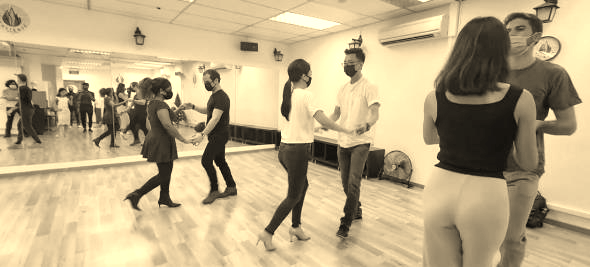
Kizomba class photo
Kizomba class photo

It was then that certain traditional dances of the African country and one of them was semba, began mixing with other rhythms both from its country of origin and other cultures after Africa was colonized by Europe in the 14th century. It is from there that a fusion of rhythms begins in which partner dancing takes center stage.

However, the old continent did not do all the work. Argentina and Cuba also played an essential role in the form in which semba must be danced.

In Portugal, the word Kizomba has its origin in all musical rhythms that derive from zouk, with which it is often constantly confused. It is a type of dancing laden with great sensuality and highly contagious that has become very popular with the passage of time, particularly in countries such as the United States, Canada, France, Spain, Poland, Belgium, Denmark, among others. Many Latin Americans consider that this is a breath of fresh air because it does not seem like anything they previously knew in terms of dance.

One of the reasons that it became so famous around the world is that this dance is very easy to learn due to its softness and simple dance steps. If you want to learn to dance, kizomba is a very good option to begin with.

Kizomba lets the couple play the music they dance. The more intimate the members of the couple, the more likely that the dance will be much more sensual and there will be much more complicity between men and women who enjoy this pleasure.

How kizomba originated

As we have said previously, kizomba has its origin in Angola, which was a colony of Portugal in the mid-1970s. With the arrival of Cuban military personnel, certain rhythms came from the Caribbean island that started to be used by various Angolan artists for their musical projects. The result was a fabulous mix of fast local rhythms with much slower, romantic and partially synthetic sounds.

The resulting genre was danced with semba and merenque, which made it known as kizombadas and, subsequently, kizomba.

By the 90’s, the word kizomba started to be used in Portugal to refer to all African rhythms danced in the nightspots of the most important cities in the European country. With the passage of time, the term would be used to refer to the musical genre and many other sub-genres with which it shares history.

Once this type of dance began to take hold in the rest of Europe, it was in France where all these rhythms that resemble one another started to be called kizomba, leading to the controversy over whether it and soft zouk are the same. Given that on certain islands belonging to France they were the cradle of zouk, it can be assumed that this has kindled heated debate even further still.

At the beginning, kizomba was only able to spread throughout the African continent, but migration allowed it to reach Europe and America respectively where a lot of passionate dance groups of this genre began to appear. The number of followers accumulated by this genre in countries such as Portugal, France or Spain was very huge.

Currently, there are a number of exponents of this kind of music that became famous worldwide such as Nelson Freitas, Djodje, Anselmo Ralph, Matias Damasio, among many others.

Kizomba dancer in Europe
Kizomba dancer in Europe – Origins

Kizomba in Europe

It is incredible the number of places where you can enjoy this spectacular dance. One of them is the world famous Eiffel Tower, where there are many options to learn or improve the dance steps. In France, the genre has been very popular, so much so that many places for dancing celebrate exclusive kizomba nights known as kizomba soirées by the locals. Considering the major African influence on this dance, those wishing to find out more will be able to enjoy a wonderful mix of dance styles and cultures that will leave no one indifferent.

In these places, you can share with a very impressive amount of tourists and foreigners from around the world. This contributes enormously to linkages and friendships between people of other cultures and other ways of seeing the world, which may be very rewarding from all points of view.

In the case of Lisbon, Portugal, it can be said that this is another place that every lover of kizomba in Europe should visit. Besides being a city that receives all its visitors with genuine hospitality, the dancing and music are ever-present. Among the many places you can go to enjoy the dance, it is important to mention the Estudio Sabor & Dança dance studio, the Academy World Dance and the Kizomba Power Dance School.

Kizomba class in Europe

Regarding Barcelona, Spain, what can be said is that this is one of the best European cities for dancing as there is a gigantic variety of musical styles that can be found there. There are always parties and events worth attending. One of those dances that can be found in the city’s nightlife is kizomba that has gained popularity in recent years.

Latin music events and festivals were based on salsa and bachata, but kizomba has completely changed that reality. Today, it is very common to find festivals and congresses dedicated exclusively to this dance and its most loyal lovers. If you want to learn to dance this genre, there are a number of schools and workshops that could be very useful such as Así se Baila, Seven Dance and Baila Barcelona.

Kizomba in Latin America

Many people who do not know the origin of the kizomba think that it originated in Latin America due to its type of dancing, but the fact is that this dance was not even known in most countries of the continent. In fact, its main boom started relatively recently in some places such as Colombia, where it began to be known not long ago. In that country, there are currently academies and teachers who are dedicated exclusively to this musical style, which has started to happen in other Latin nations.

In Venezuela, it is said that it has been danced for more than 10 years, but it began to be known a short while ago thanks to some videos on the major social networks after it became famous in Europe. The pioneers of this practice were a certain number of instructors born in the Caribbean country after being trained in Brazil. Following this, kizomba was the subject of a great deal of interest in many young Venezuelans who want to learn to dance it. There are not many records on places to dance where this genre may be found, but there is no doubt that soon it will be like this.

Kizomba dancer in Europe

Kizomba in Asia

There are many events and congresses linked to kizomba in Asia, which have a great influx of visitors, even when it is commonly believed that Asians are not fans of this type of rhythm. Experience with congresses of the last years has given the impression that this is not true. In fact, there are many fans of this rhythm from the continent who want to know all events and competitions details that are carried out in their countries for the coming months.

Japan is one of the nations where this type of event can be found the most. Such is the case of the Japan Kizomba Festival that has been going on in the country for many years due to the high level of attendance of visitors.

Video: https://www.youtube.com/watch?v=6WOVBNULkYc


Michael Nathan “Conga King”

Europe / London / England

Michael Nathan Conga King  hails from London, England (South Kensington) and now resides in California’s Bay Area.  He’s a percussionist/conguero, specializing in Latin, Funk, R&B, Dance, POP, House, Neo Soul and Old School.

Michael Nathan
Michael Nathan “ Conga King ” in concert

Conga King plays weekends in the Bay Area with International DJ’s at some of the hottest clubs including Alameda Islands, The Churchward Pub as well as with his band, MeritageMusic, at wineries, tasting rooms and hotels throughout Northern California’s Wine Country.

Conga King ordered his custom set of Gon Bops California Series back in 2005 and has been playing them exclusively ever since.  Playing a quinto, conga, tumba, super tumba, bongos and a cajon, Michael Nathan is all-in with Gon Bops!

Facebook: https://www.facebook.com/OfficialMichaelNathan


Good initiatives must be shared!

North America - United States - New York

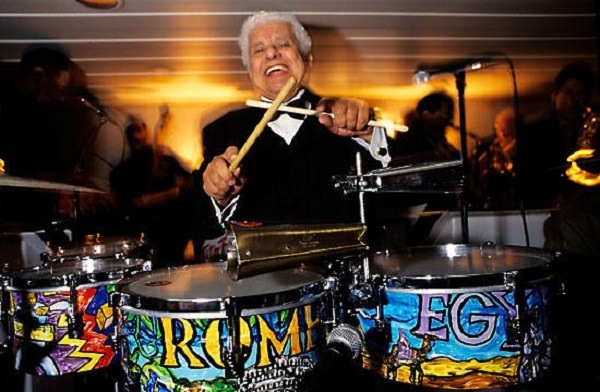
We were taking the Salsa exhibition to Puerto Rico for the I Encuentro de Coleccionistas de Salsa, we made an exhibition of the clothing, records and instruments used by the Fania All Star orchestra, Tito Puente, Héctor Lavoe, Adalberto Santiago, the Gran Combo and others. For the first time, the last “tuxedo” that Tito Puente used in his participation with the Orquesta Sinfónica de Puerto Rico was exhibited.

Spanish Harlem Salsa Music Gallery, offered an exhibition and Master Class on the history of Salsa at the Escuela Especializada en Música Jesús T. Piñero in Cidra, Puerto Rico. We transported ourselves to Puerto Rico in search of an opportunity to publicize the Salsa Museum-Gallery in New York.

This is part of the efforts being made for the participation and dedication that is made to the people of Cidra in the Desfile Nacional Puertorriqueño 2020 and that is locally coordinated by the Patronato Cidreño along with other civic and professional organizations.

We were able to benefit hundreds of students at this school who are precisely focused on music. The knowledge offered in the three conferences and being able to closely observe the exhibition helped to foster the enthusiasm of the students who make up the campus, unique in the mountains of Puerto Rico, dedicated to the creation of good musicians and knowledgeable in musical art.

We are dedicated to enhancing Latin music and offering spaces focused on arts education, accessible and friendly to the community as a strategic partner.

I thank valuable people such as Laura Torres, Silkia Vázquez, Wilson Nazario and Wilfrido Torres “Puruco” for all the attention and teamwork that we were able to develop during our visit. I cannot stop also thanking my assistant in Puerto Rico, Carmen Cruz; and to Joseph Cruz for his magnificent and beautiful work with me during this pleasant experience.

I also take advantage of this space in International Salsa Magazine because I want to tell you about an artist and a great friend who is doing his best for music and Salsa. Without a doubt, Yova Rodríguez is a long-standing professional who has developed countless projects and initiatives to support those who need it most. With his music, his work and his human quality, he has reached many hearts from New York.


Geovanni “Yova” Rodríguez Ruiz, born in Puerto Rico, had a musical inspiration since he was a child, his uncle Antonio “Toño” Ruiz – his mother’s uncle who played the cuatro – was his first music teacher (melody) and his uncle José Antonio “Pipo” Ruiz Crespo -mama’s younger brother- taught him how to sing aguinaldos (lyrics); and with this they formed the solid foundations that encouraged little Yova to prepare himself accordingly for his foray into the musical world.

The celebration of the Promesa de Reyes, a celebration in which he participated with his mother at his short seven years, leads him to worry about creating and recreating aguinaldos to be interpreted each year, which in some way becomes the seed of composer that we know today.

At the age of 14, he attended the Escuela Libre de Música Ernesto Ramos Antonini in Mayagüez, hand in hand with piano teacher César Toro, rising as vocal leader of the Orchestra after a year.

Years later he gave himself the task of forming his own musical concept, and thus Sakao Aká was born. This orchestra was in charge of accompanying singers such as Camilo Azuquita, Ray de la Paz, Pupy Cantor and Herman Olivera in their presentations in Puerto Rico; and the cover letter for some of these singers to integrate Yova as a chorus girl in their presentations in various countries in Central and South America.


At the end of the 90s, on a trip to Cuba, he was impacted by the music of Fernando Borrego Linares, better known as Polo Montañez, to the point that, some years later upon learning of his death, he had the idea of ​​paying tribute to him, his musical reference, thus giving birth to the idea for her debut feature Homenaje a Polo Montañez (2005), a production of 10 songs by Montañez, and covered by Yova Rodríguez with the participation of renowned musicians from the patio such as Herman Olivera, Héctor “Pichie ”Pérez, Papo Lucca, Edwin“ Caneca ”Rosas, Edwin Colón Zayas, among others.

In 2008, like many of her compatriots, Yova prepares her luggage and heads to the southern United States, where she stays for two years and then moves to New York, a city that has become her center of operations and from where He has extended his working ties as a composer and where he records his next two productions.

The album Letras, canciones y sueños, musical work of 8 songs all written by Yova, comes to light after some years of having published his first production and of having worked silently composing and waiting for his opportunity. This possibility is materialized in 2013.

Already in 2015, the album Mi musa en las voces de mis amigos is released.

Salsa with Yova Rodriguez

Recently, Yova Rodríguez has created more than 420 songs, and many of them have been duly registered with the American Society of Composers, Authors and Editors (ASCAP) under the registry “El Negrito De Delia Music” . “Exceso de amor” is the first composition he has interpreted and recorded; like the song “No me odies”, it is the first recording of a song by him made by a third party.

Now they are going to hear more from Yova, as some productions that will include her compositions are in the process of recording / publishing. Attentive to the upcoming releases of the young Puerto Rican percussionist José Jomar Marcano, the master trumpeter Luis González, the young trombonist, arranger musician and also singer Leo Morales; the renowned DJ Andy Rodríguez, better known as DJ ANDY and the Venezuelan sonero Marcial Isturiz .

As always, remember that Spanish Harlem Salsa Gallery is in 1708 Lexington ave New York N.Y. 10029. Open free to the public all Thursdays & Fridays from 4 to 7 pm and Saturdays from 1 to 8 pm. Check the updates in our website: spahasalsagallery.com.

Also, The Johnny Cruz Show, the # 1 Salsa Show on television on all 5 Boroughs of New York on CH67. Saturdays from 3:30 to 4:30 pm.

Contact: Johnny Cruz. 917-747-8505. [email protected]

By Johnny Cruz, ISM Correspondent, New York, New York


“Tito Puente: When the drums are dreaming” A biography of the King of Latin Percussion by Josephine Powell

North America – USA –CaliTifornia

This month we are sure that you will have time to enjoy an excellent reading at home. So we recommend this book by Josephine Powell. An interesting biography about the legendary Tito Puente, that takes us on a journey through the more than 60 years in which he performed.

Further the life of Tito Puente, you can know his insight into the Latin music industry. With many anecdotes of his encounters, racial discrimination while touring and how that impacted his relationship with other band members. There are also numerous insights into his personality, his temperament, and the many obstacles he had to overcome to achieve legendary status.

Josephine Powell’s book on Tito Puente and his contributions to Latin music and dance is a treasure trove of people, places, facts and history. Because of the author’s place in the history of Latin dance, she takes the reader with her through that fascinating maze of how artists like Puente changed the exposure and tastes of the American public and the world.

The Latin Ballroom world today reflects how we adore – and then neglect and forgets – the people who made us who we are. She mentioned many fascinating dance-related characters in this story that takes place in New York, Los Angeles, Miami, the Catskills and Havana.

It is also a much-needed history of great nightclubs and ballrooms, which are only dim memories for the young – but in their time, were the breeding grounds of Latin music and dance. Tito Puente’s percussion and passion are finally brought to life in a fascinating book.

To remember Tito Puente’s career as accurately as Josephine Powell has done makes this biography a worthwhile read. Tito Puente the man and Tito Puente the musician are blended into the tempo of the times during which the musical man lived. For young musicians seeking success Josephine Powell’s well-written commentary provides a glimpse of what can lie ahead in one’s career; so do read Powell’s take on Tito Puente’s life and perhaps capture a taste of how you too can climb the charts with a dash of spice in your style.

With over 100 albums, several Grammy nominations, 7 Grammys and posthumously awarded The Grammy Lifetime Achievement Award in 2003, his footprint in the world of music will forever be the standard of excellence that others will look to emulate.

Josephine Powell took on the monumental task of writing about his life, the forward was written by Tito Puente 2 months before he died.

Because of their lifelong friendship of many decades, Josephine was the one person who could create this book. Her talent and passion will pulled this off to perfection. He was a man who brought his music to the world, and put the Mambo on the map.

This book never could have been written without her dedication and perseverance and the personal moments she shares. From the very first chapter, the quality of her writing can be seen as she starts with the moments leading up to his death and continues for 16 more, giving you the history of Latin music from its inception to the music of today. Throughout her many archives of pictures from her private collection, your eyes will wide with wonder.

Josie Powell traces the evolution of Afro-Cuban, Puerto Rican and jazz forms from their generally recognized origins through the end of the twentieth century, focusing on Puente’s interactions with professional allies and constant rivals.

Powell documents musical events as an aficionado of the Latin genres, almost religiously avoiding disclosure of Puente’s family life. Those not yet born during the Big Band decades or Mambo mania can imagine the atmosphere from descriptive passages of Manhattan ballrooms, Havana dance halls, LA nightclubs.

About Tito Puente

Ernesto “Tito” Puente was born in 1923 in Spanish Harlem and grew up with the advent of radio and American swing bands. At 10 years old he aspired to be a dancer, like Fred Astaire. An ankle injury gave him the opportunity to explore his talent as a musician. At fourteen he won the coveted Benny Goodman, Gene Krupa drum contest. Tito became a master percussionist. His instrument was the timbales, a pair of cylindrical drums beat upon with sticks. When he joined the dynamic Machito Orchestra at seventeen he saw a promising future, but the Japanese attack on Pearl Harbor December 7, 1941 took him off to war.

He led a makeshift orchestra delivering lovable American wartime tunes when he was not fighting. He returned home wounded, weary and jobless. Puente’s tale should have been the story of every returning American GI, who went off to war, came home to his sweetheart, attended college, raised a family and settled down in an adorable house. Things were not that way.

After the war his obsession for Cuban music drove him to Havana. He attended secret meetings of Santería, an Afro-Cuban religious cult with its roots steeped in mysticism often referred to as black magic. With the lure of the sacred batá drum he discovered a world of rhythms never heard by a white man’s ear. He found himself inside the beat, and thoroughly possessed. Soon Tito became a devotee of Santería and used those drum patterns and calls, which were the mainstay and backbone of his music. Today this hot hypnotic music is known worldwide as Salsa.

About Josephine Powell

Author Josephine Powell – a music historian, lecturer, and consultant on ballroom music and dancing and Latin American music – was a consultant (music, history, and dance) on the motion pictures Salsa, Havana, and The Mambo Kings, and their soundtracks; The Mambo Kings track received a Grammy Nomination. She also consulted on two Golden Eagle television shows; two television documentaries, one Presidential Inaugural Ball, and two Grammy-winning record albums by her mentor Tito Puente.

In 1990, she obtained a star for her mentor on Hollywood’s Walk of Fame, orchestrated his associated live concert on the Boulevard, and organized a gala event at the Hollywood Roosevelt Hotel, with music industry executives, film producers, and celebrities.

Powell’s dance career took her to the South Pacific, the Philippines, Guam, Hong Kong, Thailand – where she performed for the Royal Family – and Vietnam, where she introduced mambo to the troops in a revue she wrote herself. A Gold Medal ballroom dancer, Powell was Tito Puente’s West coast mambo dance partner, and a cast member of the Broadway show Sketchbook in Las Vegas.

Through touring the country for over a decade with stage and lounge shows, along with work in the recording, television, and movie industries, Powell learned wardrobe design, writing, comedy, and choreography. Appeared at the Tropicana, El Rancho Vegas, Flamingo, and Nevada Club in Las Vegas; The Golden Hotel and Mapes Hotel in Reno; The Wagon Wheel in Lake Tahoe, and The President Hotel in Atlantic City, among others.

After an injury forced her to retire from dance, Powell became a real estate agent in Beverly Hills, where she became actively involved in political work with celebrities and later joined Connie Stevens’s organization Les Girls. Powell’s work and charitable activities afforded many opportunities to work with Hollywood producers, directors, writers, and luminaries.

Powell studied the history of ballroom music and dance, ethnomusicology, journalism, and Spanish at UCLA. A regularly featured musicologist on radio stations KXLU and KPFK, Powell receives many requests for lectures and consultations. She has been a presenter and judge at numerous dance competitions, including the Feather Awards and the U.S. Open National Swing Dance Competition. The Mormon Temple Genealogical Library in Los Angeles has made her its expert lecturer on French Colonial Maritime records. Since 1986, she has conducted ten research and study trips to Havana, where she is a curatorial consultant for El Museo Nacional de la Música Cubana.

With information from: https://josephinepowell.com
You can buy this wonderful book in Amazon: https://www.amazon.com/Tito-Puente-When-Drums-Dreaming/dp/1425981585

Adelaide Tropical: Salsa reaches a wide audience at Disney California Adventure

North America – California – Anaheim

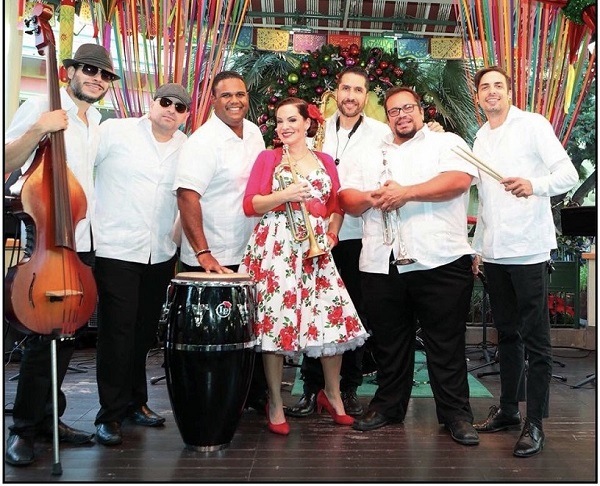
Adelaide Benavides is an artist, a businesswoman and the band leader of Adelaide Tropical.

Born in Texas, Adelaide is based in California with her different projects and putting a lot of creativity and innovation in each one of them.

Adelaide Tropica
Adelaide Tropical; a band that has become the official Salsa set of Disney California Adventure.

One of the projects that have brought her the most gratifying moments is Adelaide Tropical; a band that has become the official Salsa set of Disney California Adventure.

They are being featured on their largest stage for their Food and Wine Festival. As Adelaide expresses, this band differs from many other Salsa bands because she has achieved bring together a show of which she calls “Salsa Americana“.

Perform classics from Celia Cruz and Tito Puente, but also incorporate a lot of Latin pop that people of all cultures will recognize. Salsa arrangements of popular hits like “Havana”, “Despacito“, Cardi B, Selena and even some original Salsa arrangements of popular Disney songs. This presentation of Salsa has been very successful at Disney and many festivals because of its ability to reach such a wide spanned audience.

Currently, Adelaide Tropical is recording a salsa version and video of “Me voy a enamorar” which will be released this summer. While that moment arrives, you can see Adelaide Tropical perform at Disney California Food and Wine Festival. The Adelaide band is also continuing to perform at Downtown Disney and will be all over the west coast through the end of the summer at various festivals, city concerts, popular venues and every Sunday at Knott’s Berry Farm where they will also be doing a special tribute performance to Selena.

Adelaide Benavides
Adelaide Benavides

Adelaide Benavides has created different successful formats with great musical quality ando performances that have led her to a variety of venues ranging from Disneyland and Knotts Berry Farm, popular music festivals, grand casinos, and even the Staples Center. She was also a contestant on La Voz México 2018-2019 edition, and recently released her 2nd and all original album “Reflexiones De Mi Mente“, which can be found on all major streaming applications.

Adelaide Tropical
Adelaide Tropical Photo

You can also listen the new Adelaide’s album and presentations of Adelaide Tropical on her social media:

Website: Adelaidetheband.com

Email: [email protected]

Instagram: @adelaidepilarmusic

Facebook: Facebook.com/adelaidepilar

Twitter: AdelaidePilar

  • « Go to Previous Page
  • Page 1
  • Interim pages omitted …
  • Page 175
  • Page 176
  • Page 177
  • Page 178
  • Page 179
  • Interim pages omitted …
  • Page 293
  • Go to Next Page »

International Salsa Magazine (ISM) is a monthly publication about Salsa activities around the world, that has been publishing since 2007. It is a world network of volunteers coordinated by ISM Magazine. We are working to strengthen all the events by working together.