• Skip to primary navigation
  • Skip to main content

International Salsa Magazine

  • HOME
  • Previous editions
    • 2026
      • ISM / March 2026
      • ISM / February 2026
      • ISM / January 2026
    • 2025
      • ISM / December 2025
      • ISM / November 2025
      • ISM / October 2025
      • ISM / September 2025
      • ISM / August 2025
      • ISM / July 2025
      • ISM / June 2025
      • ISM / May2025
      • ISM / April 2025
      • ISM / March 2025
      • ISM / February 2025
      • ISM / January 2025
    • 2024
      • ISM / December 2024
      • ISM / November 2024
      • ISM / October 2024
      • ISM / September 2024
      • ISM / August 2024
      • ISM / July 2024
      • ISM / June 2024
      • ISM / May 2024
      • ISM / April 2024
      • ISM / March 2024
      • ISM / February 2024
      • ISM / January 2024
    • 2023
      • ISM / December 2023
      • ISM / November 2023
      • ISM / October 2023
      • ISM – September 2023
      • ISM – August 2023
      • ISM July 2023
      • ISM Edition June 2023
      • ISM – May 2023
      • ISM April 2023
      • ISM March 2023
      • ISM February 2023
      • ISM January 2023
    • 2022
      • ISM December 2022
      • ISM November 2022
      • ISM October 2022
      • ISM September 2022
      • ISM August 2022
      • ISM July 2022
      • ISM June 2022
      • ISM May 2022
      • ISM February 2022
      • ISM January 2022
    • 2021
      • ISM December 2021
      • ISM November 2021
      • ISM October – 2021
      • ISM September 2021
      • ISM August 2021
      • ISM July 2021
      • ISM May 2021
      • ISM April 2021
      • ISM June 2021
      • ISM March 2021
      • ISM February 2021
      • ISM January 2021
    • 2020
      • ISM December 2020
      • ISM November 2020
      • ISM October 2020
      • ISM September 2020
      • ISM August 2020
      • ISM July 2020
      • ISM June 2020
      • ISM May 2020
      • ISM April 2020
      • ISM March 2020
      • ISM February 2020
      • ISM January 2020
    • 2019
      • ISM December 2019
      • ISM November 2019
      • ISM October 2019
      • ISM Septembre 2019
      • ISM August 2019
      • ISM July 2019
      • ISM June 2019
  • Download Salsa App
    • Android
    • Apple
  • Spanish

Search Results for: music

Chantel Collado: a Canadian star of Latin descent

La Princesa de La Bachata

I am talking today with La Princesa de La Bachata Chantel Collado (https://www.facebook.com/chantelcolladoficial), who is an immensely talented artist. I understand she is a resident of Canada and is of Dominican descent. Thank you so much for accepting our invitation, Chantel. We learned that you are in Italy at the moment, what are you doing there?

First of all, thank you for the invitation. The pleasure is mine. Certainly, I grew up in Canada, but I’m on tour around Italy and pleased to bring my music to this beautiful country.

Chantel Collado was born in Canada, but her parents are Latino

Wonderful! How has reception towards your music in Italy?

It was amazing! Actually,I’m proud to see how both Italians and foreigners dance to bachata and enjoy it. Bringing this music to a country like Italy makes me very proud. It is a blessing to be able to travel, come, sing my lyrics and see how the audience loves them.

The nickname people you are given caught my attention. Where does La Princesa de La Bachata come from?

People give me that name when I went to London to give a concert. In view of the lack of women in the genre, I think it was easy for the public to call me that. For me, it’s a great honour for me to represent the genre, being a woman and a Dominican, since there aren’t many women who sing bachata.

Precisely because there weren’t a lot of women in the genre, did you feel a strong competition? Did you feel like you weren’t taken seriously?

Being a woman can complicate a few things. Thank goddness, men in the genre have also given me the opportunity and supported me, such as my musical godfather Frank Reyes, who is someone I admire. He is a bachata icon in the Dominican Republic and an example of a man who has supported me in my career. I had the opportunity to record a song and a music video with him.

I have received a lot of support from my colleagues and I am very happy to receive that support.

Who have been your musical references in and out of bachata?

I really like Romeo Santo, The King of Bachata. I grew up listening to exponents of Dominican bachata like Frank Reyes, Luis Vargas, Hector Acosta and Juan Luis Guerra. Outside of bachata, I have always liked Beyonce because of her stage presence. Regarding artists in this generation, I also really like Karol G.

Chantel Collado on stage

Have you experimented with urban or more modern rhythms?

Of course! I love to experiment and change from time to time. From a very early age, when I started singing in a competition in Los Angeles, I sang a cumbia by Selena titled Como La Flor. I have an urban song called Así. I’ve also sung salsa and I have merengues. What I like most is bachata, but for my generation, I listen to much urban music.

According to your biography, you decided to pursue a career in music after a talk you with your father, who also supported you very much in this regard. Can you describe that moment?

I grew up watching my father on stage as a director, musician and singer. From a very early age, I went on stage and sang with him. My brother is also a musician, so I think it just was natural for me. I didn’t know it’d like it or take it seriously as a career, but it was when I turned 15 that we decided to focus on music.

I was also performing and participating in musical theater, so I was singing, performing and dancing at the same time. When I turned 15, we decided as a family to focus on only one thing, which would be music. That’s how I started writing songs with my brother and we’ve been going at it for the last 14 years.

Latin descent

Your father is Dominican and your mother is Uruguayan. Do you think that coming from a Latin family has pigeonholed you or on the contrary?

Quite the opposite! It expanded my horizons. I grew up in Canada, speak English and, try to incorporate this language into my music. I’m of Uruguayan stock and even if people don’t listen to bachata in that country, I chose that genre because I listened to it all the time and I love it. I think that all this mix of countries expanded my horizons and I don’t feel that singing bachata is an obligation for me because I love doing it.

Her father and brother supported her a lot during her career

What did you do during the pandemic?

The pandemic was very difficult for me and all the artists in general, but I tried to focus on writing new music. I don’t know where I got the inspiration, but I recorded a music video with my mobile, which was made for my song Contigo o sin ti that you can find on YouTube. I did my own makeup and my own hairstyle for that day, put my IPhone on a tripod and got it all. I had to find thae encouragement to move regardless the situation.

Fortunately, I returned to the stage to sing for the public after two years.

In which countries are you touring now?

I am touring only in Italy. We’ve already been to two cities and we have two more to go to complete the tour. Then I will return to Canada, rest for a week and travel to the United States to continue touring.

Do you plan to tour Latin America?

I’ll be happy to do so. In fact, we already have some tentative dates in countries such as Colombia and Mexico. Let’s just hope that everything will happen because it would be the first time I brought my music to those corners.

How is urban bachata different from traditional bachata?

I think urban bachata is a movement that is starting to develop. My generation listens to a lot of urban music and an example of this is Bad Bunny, who is killin’ it right now. If we want bachata to evolve a little bit, we have to add a little urban touch and that’s what we’re doing. I think traditional music will never die because it is our main genre in the Dominican Republic, but it can also be made enjoyable for present generations, adding a little urban touch.

Speaking of urban artists, who do you want to collaborate with someday?

At the moment, I would love to collaborate with Bad Bunny. I love Bad Bunny and his new album. I had the great honor of opening for him in Toronto, Montreal, a few years ago. I also had the honor of meeting him, but I haven’t had the chance to collaborate with him yet, though I would love to.

As for traditional genres, I would like to collaborate with Anthony Santos on a more traditional song in my genre, bachata.

A message for young girls who want to dedicate themselves to the same as you.

I’d advise them to follow their dreams. I started in the music industry at a very young age I have achieved many things in the last 10 years. As a woman, I’d tell them to keep going because we are living in a time when women have more attention than ever before. We’re strong, independent and we can do anything we want.

Chantel at a photo shoot

This is Josean Rivera and his incredible talent in salsa and other genres

How it all started

Today we are going to talk with Puerto Rican composer and vocalist José Manuel Rivera Rivera, better known as Josean Rivera (https://www.facebook.com/unsoneroparaelpueblo). Pleasure to meet you, Mr. Rivera, how are you doing? It is lovely to have you here.

Thank you so much for the invitation. Thank heaven I’m fine and I hope you’re too.

This is Josean Rivera, Puerto Rican composer and vocalist

Your name is José Manuel Rivera Rivera, but you are known artistically as Josean Rivera. Where does this name come from?

That’s a nickname my parents called me since very early childhood. I don’t know where it came from because my name is José Manuel. Instead, Josean is almost always used for people named José Antonio or José Ángel, but I’ve always been called that and ot still is (chuckles).

And you are still called that way to this day.

Yes, to this day. This is so.

I understand that you knew your calling as a vocalist when you were 15 years old. How did this happen?

More or less. I became interested in music long before that, but I liked percussion instruments such as the conga or the timpani. Through some friends, I met Miguel El Pollo Torres from El Gran Combo de Puerto Rico and used to go to the patron saint festivities. When I saw the dynamic Charlie, Papo and Jerry had when singing with El Gran Combo, I said I like that, let’s see what can be done.

In one of your most recent songs, you paid tribute to Raphy Leavitt. What did this pianist and La Selecta represent for the rest of your career?

A very important stage because it was my first participation in a renowned orchestra. I had many experiences and learned a lot from him, Sammy, Carlitos and the rest of the membership. They were like a family.

I understand that you were in medical school and, later, in the army. How did you combine these activities with your role as an artist?

I started studying medicine and then I understood it wasn’t my thing, so I joined the army. Everywhere I went, I always found local orchestras playing traditional salsa or covers. Also, working in the U.S. Army is not like that of other countries where soldiers are not allowed to go out and spend locked up. In our case, it was a normal job like any other, so we were able to engange in other activities with no problem.

However, when we had to travel to other places, we had to get some time off of work, take a vacation and stuff like that.

Raphy Leavitt and La Selecta were very important for his carrer

Music and the army

Many of your Puerto Rican-born colleagues also followed the military path when they go to the United States. Did you find any of your colleagues in the army? If so, did that help you or influence you in any way?

By sharing some time and being part of many shows with people from the armed forces or international singers who were going to perform where we were, I was able to sing with them and do the chorus for them. I think that helped me a lot.

I read that it was in the year 2016 when you decided to found your own orchestra. What led you to that? What made you then become a soloist?

What happened is that I belonged to the orchestra of Raphy Marrero, so I recorded two albums with him. The thing is that I was moved from one base to another, which made it very difficult for me to meet with the orchestra and do my activities with them, so I decided to try something by myself and see how it went.

Do you feel that you have achieved your goals or still have a long way to go?

We have achieved a great deal. As a soloist, I have made four musical productions and am working on the fifth one. We have already selected the songs and the arrangements, so we are going to start recording very soon.

The dream of every artist is to be able to play on stage and, owing to the whole issue of Covid and quarantine, all the activity decreased, but little by little things are getting back to normal.

You have experienced everything from classical to modern salsa, which is the style you enjoy singing best?

Since I grew up with El Gran Combo, La Sonora Ponceña, Willie Rosario and Bobby Valentín, of course that kind of salsa is my strongest point. I grew up in that environment where salsa is a little braver, but you have to sing anything because you have to try to please everyone.

Josean Rivera loves salsa brava, but sing anything

With what other musical genres have you experimented or would you like to experiment?

In the different orchestras in which I was, I got to sing merengue, bolero, cha cha chá and things like that. I can sing anything. In fact, I’ve come to sing some boleros in my albums as a soloist.

Which of these genres attrack most people?

Merengue and bachata are very popular.

What did you do during the pandemic?

We decided to make a new abum and used all that confinement time to select the songs for the album.

Have you returned to the stage?

I’ve already toured two or three times. I went to Washington, Seattle, Florida, among others. God Lord willing, we’re going to go to Colombia, Peru, Panama, and Mexico. We’re promoting the latest album Esto No Es Secreto.

What advice would you give to young artists who want to devote themselves to these genres?

My advice to those who want to start an artistic career is to dare to do so. The means to get ahead are there. You have to be active, let people get to know you and make promotions in different countries because that is how your music will reach the world. You have to keep moving forward and never giving up.

The biggest problem that these young artists will have to go through, based on your understanding.

I think the biggest problem is that there are no record labels anymore. One of the biggest obstacles is the budget for an album, whether it is a complete production or just one single at a time. It costs money.

Since there are no record labels to support you financially, it’s hard for the newer artists to record their albums.

Josean Rivera singing on stage

Puerto Rican singer Wito Rodríguez talks about his success and career

How his career starts

We are here with the very talented Irwin Wito Rodriguez (https://www.facebook.com/nmjrecords). Pleased to meet you, Mr. Rodriguez, such a pleasure to have you here. How are you?

Thank you very much, Karina. Thank you for the invitation. Quite well, thanks to God. I am in Florida at the moment, where the temperature is very pleasant.

Talented Puerto Rican singer Wito Rodríguez

Your beginnings in the musical world occured in a rock band, which is very common in many of your colleagues. Many of them start as boleristas and rockers. How did you go from a rock band to singing salsa and other genres like this?

I was born in Chicago and my parents are Puerto Rican, so I was raised American and tended to speak more English than Spanish. I listened only to music in English, but I also listened to Daniel Santos, Los Panchos and Tito Rodriguez at hore since I was a little boy. However, they were my parents’ favorite artists, not mine. As the years went by, my dad bought me my first guitar, so I joined a rock band of four or five kids and we started playing very cool songs. This lasted until I was 14 years old, when my father decided to send us to Puerto Rico and it was a very drastic change for me because now I was going to be in a school where Spanish is spoken and my Spanish was very bad. When I arrived in Puerto Rico, it was very nice to see the island in person because I only knew it from what my dad told me.

Five or six months after I arrived in Puerto Rico, I started singing with another rock band until I turned 16, which was when a very famous percussionist named Chacón (he had a band called Chacón Y Sus Batirítmicos) heard me sing and told me that he would like me to sing with them. He lived near me, so I could go to his place. I started going about twice a week to learn to play the conga and the clave. Around that time, I started learning everything related to salsa and typical Puerto Rican rhythms.

So I started playing in a nightclub, but I wasn’t supposed to do that because I was still 16 years old. So, they got me a jacket, hid me and I started singing there. When I turned 17, I moved to Chicago to finish school and speak English again. Three months later, I started singing salsa with the first orchestra in Chicago whose name was La Orquesta La Justicia from 1971.

So, you didn’t like salsa, but you developed a taste for it.

That’s correct. I didn’t have the joy of attending music school, so I just tried to learn as much as I could from what I saw. If I saw someone playing on a stage, I would approach the musicians, ask questions and clear my doubts. I learned a lot of things on my own.

Image taken from his video clip You’ll Never Find Another Love Like Mine

Military service and his first orchestra

You were part of the German orchestra Conexión Latina while serving in the army. How did the idea of starting a Latin music group in such a country arise?

When I was in the Orquesta La Justicia, I met many salsa stars like La Lupe, Ismael Rivera, Larry Harlow, Ray Barreto, El Gran Combo de Puerto Rico, La Sonora Ponceña and many others. All these artists helped me and taught me many things.

When I joined the U.S. Army, I had the opportunity to sing with an orchestra in Puerto Rico, but I was in Chicago. I accepted and prepared everything to return to the island, but the orchestra had already gone on tour when I arrived and they didn’t take me. It was very sad for me because I left everything in Chicago, since I wasn’t thinking of returning.

From there, I decided to join the U.S. Army and wanted to be sent as far away as possible. A week later, I reveived word that I passed the test and that I would be sent to Germany. That’s when I started a band called Wito Y Su Conjunto Sabor in 1977 along with other Puerto Ricans who also sang or played instruments. We were the only salsa band in Germany at that time. In 1981, I already had an orchestra called La Sonora Antillana and we played for the German audience, which was very tough.

In 1983, I left the army. Then, Luis García, an excellent tres player, and Cano Robles from Conjunto Canayon, Puerto Rico, made my first album called Calorcito. The following year, I released my first album and it was awesome because it led me to release another record production that took me to tour all around Europe.

In 1992, I went back to Tampa, where my dad lived. I came back to be in need because nobody knew who I am there. It was very difficult, so I had to start working until I returned to the Army and was sent to Pennsylvania. In 2007, I finally retired with 30 years of service.

In 2013, I started making my first solo album whose name was Qué Mundo Maravilloso. In 2016, I moved to Orlando, where I finished my other three albums I released later.

Art for the song Qué Mundo Maravilloso

You took opera classes. How did this help you in salsa?

Those classes taught me how to stabilize my voice, know how to modulate, know how to breathe, know how to feel the tone in one part of the body (under your nose), know what tone comes after the previous one and all kinds of things. I also learned some very good exercises to warm up my voice.

Another thing these classes taught me was resistance. Spending an hour singing on stage is not easy.

A lot of singers have a good voice, but they don’t have the necessary training to get to the right tone for them and avoid singing off-key.

I read that you have been nominated for the Hollywood Media Music Awards and the Miami Fox Music Awards for both English and Spanish songs. Which songs are the most successful? English or Spanish?

I try to include even a salsa song in English in all my albums. My last song focuses more on the American audience than the Latin audience. It was a good choice because the video has about 42,000 views on YouTube, which means it attracks more attention than my other work.

One of the things that has done musicians in general most harm has been Covid-19. Many are recovering, but others had to get a job because they could no longer make a living from music.

Many of his songs are related to his Puerto Rican roots

Directory of Salsa Clubs in Europe

Diobar

Av. del Marquès de l’Argentera, 27, 08003 +34 656 62 11 45 Barcelona, España

Havanna

Hauptstraße 30, 10827 Berlin, +49 30 78899655 Germany

La Bodeguita del Medio

Kaprova 19, 110 00 Staré Město, +420 224 813 922 Praha, Chequia

La Macumba Music Latino bar

Štefánikova 230, 150 00 Praha 5-Anděl, +420 776 795 166 Czechia

Ronnie Scott’s Jazz Club

47 Frith St, London W1D 4HT, +44 20 7439 0747 United Kingdom

Salsa Carlos

Yegi’a Kapayim St 10, +972 54-573-7173 Tel Aviv-Yafo, Israel

Baby’Oh Elche

Carrer Sabadell, 16, 03203 Elx, +34 633 77 80 90 Alicante, Spain

Havana Music Club

Yigal Alon St 126, +972 3-562-3456 Tel Aviv-Yafo, Israel

Hideaway

2 Empire Mews Stanthorpe Road, Streatham, Londres SW16 2BF +44 20 8835 7070 United Kingdom

Kona Kai

515 Fulham Rd., London SW6 1HD, +44 20 7385 9991 United Kingdom

Mi Barrio

Münzwardeingasse 2, 1060 Wien, +43 1 5876125 Austria

Mojito Club

Carrer del Rosselló, 217, 08008 +34 654 20 10 06 Barcelona, Spain

El Sabor Cubano

Carrer de Marià Cubí, 4, 08006 +34 674 98 88 63 Barcelona, Spain

Salsa! Soho

96 Charing Cross Rd, London WC2H 0JG, +44 20 7379 3277 United Kingdom

Salsa Temple

Victoria Embankment, Temple, London WC2R 2PH, +44 20 7395 3690 United Kingdom


Spanish Harlem Salsa Gallery and its role towards salsa

Spanish Harlem Salsa Gallery and Latin music

The Spanish Harlem Salsa Gallery (https://salsagoogle.com/north-america/the-spaha-salsa-gallery-and-the-johnny-cruz-show-to-the-order-of-salsa/) is one of those places where every salsa lover in New York should visit since there is plenty to see here. This museum has all kinds of items donated by many renowned artists or relatives of some who had passed away. This collection of valuable possessions has resulted in a set of priceless objects that will bow anyone visiting the facilities of such a special institution out of water.

The Spanish Harlem Salsa Gallery, also known as Spaha Salsa Gallery, can be defined as an institution of a cultural nature whose main purpose is to serve as a reminder of how great our culture is, especially our music. Both residents and visitors of East Harlem, New York, can learn about the salsa genre and its roots as long as they desire. All thanks to a lot of tools, information and many initiatives with which those interested will know all kinds of interesting facts about salsa first hand.

Another of the great objectives pursued by this place is the quest for knowledge about Latin music and the artists involved to offer it to anyone who decides to visit its facilities. That is why both its president Johnny Cruz and the team that helps him have been responsible for creating an inclusive and diverse gallery in which you can appreciate how far Hispanic talent has come by the hand of its top stars.

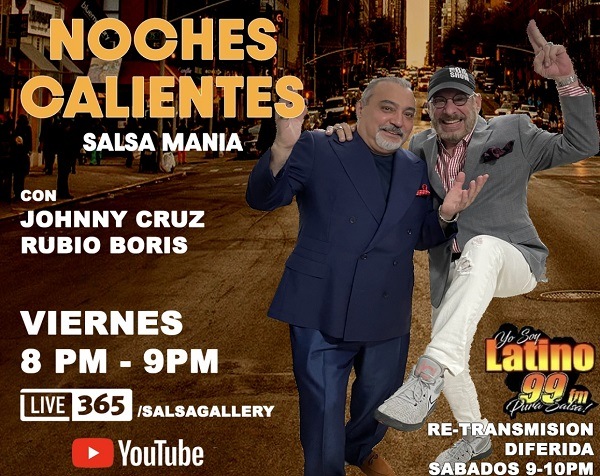
Johnny Cruz and Rubio Boris presenting their show

Role of the Spaha Salsa Gallery in the dissemination of Latin culture

The role played by the Spaha Salsa Gallery in the dissemination of Latin culture is very important, since these institutions are the ones that manage to arouse the interest of the inhabitants of Harlem and other nearby sectors towards one of the most representative musical genres of Latinity. This has made many other cultural institutions to use this gallery in order to awaken a higher interest in its own activities, which shows extensive cooperation between those who seek to promote anything Latin-related at all costs.

Fortunately, our work is not that complicated to carry out because too many tourists visit New York every day and many of them know that this city was the birthplace of the biggest salsa movement in history, so they are always looking for cultural sports in which you can find information about this set of rhythms and how it emerges in the public arena.

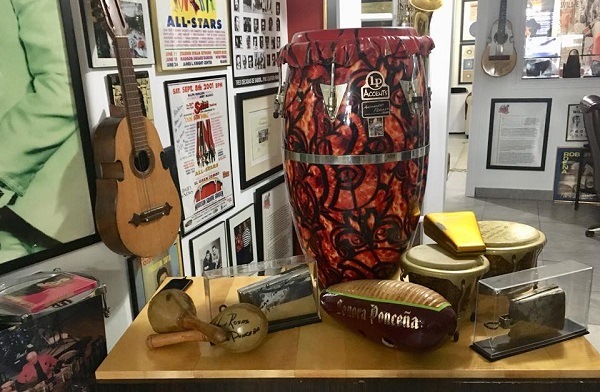
Some instruments donated by La Sonora Ponceña

Who Johnny Cruz is

Johnny Cruz is the founder of the Spaha Salsa Gallery, but there are many other facets by which this talented Puerto Rican is known in the entertainment industry. Cruz is a famous musician and record producer who has worked and make friends with a wide number of artists from all genres, by providing him with the platform to create a true sanctuary for Latin music lovers.

One interesting fact about the museum is that it is located on the plot where a hardware business owned by Johnny’s father used to function, which was made into something completely different thanks to the genius of his son long after. Today, that place contains several of the most invaluable objects in the history of salsa and whose relationship with some of the greatest figures of the genre is legendary.

Link to the official website of the Spaha Salsa gallery: spahasalsagallery.com

        By Johnny Cruz, ISM Correspondents, New York, New York City


  • « Go to Previous Page
  • Page 1
  • Interim pages omitted …
  • Page 211
  • Page 212
  • Page 213
  • Page 214
  • Page 215
  • Interim pages omitted …
  • Page 293
  • Go to Next Page »

International Salsa Magazine (ISM) is a monthly publication about Salsa activities around the world, that has been publishing since 2007. It is a world network of volunteers coordinated by ISM Magazine. We are working to strengthen all the events by working together.