• Skip to primary navigation
  • Skip to main content

International Salsa Magazine

  • Home
  • Previous editions
    • 2025
      • ISM / November 2025
      • ISM / October 2025
      • ISM / September 2025
      • ISM / August 2025
      • ISM / July 2025
      • ISM / June 2025
      • ISM / May2025
      • ISM / April 2025
      • ISM / March 2025
      • ISM / February 2025
      • ISM / January 2025
    • 2024
      • ISM / December 2024
      • ISM / November 2024
      • ISM / October 2024
      • ISM / September 2024
      • ISM / August 2024
      • ISM / July 2024
      • ISM / June 2024
      • ISM / May 2024
      • ISM / April 2024
      • ISM / March 2024
      • ISM / February 2024
      • ISM / January 2024
    • 2023
      • ISM / December 2023
      • ISM / November 2023
      • ISM / October 2023
      • ISM – September 2023
      • ISM – August 2023
      • ISM July 2023
      • ISM Edition June 2023
      • ISM – May 2023
      • ISM April 2023
      • ISM March 2023
      • ISM February 2023
      • ISM January 2023
    • 2022
      • ISM December 2022
      • ISM November 2022
      • ISM October 2022
      • ISM September 2022
      • ISM August 2022
      • ISM July 2022
      • ISM June 2022
      • ISM May 2022
      • ISM February 2022
      • ISM January 2022
    • 2021
      • ISM December 2021
      • ISM November 2021
      • ISM October – 2021
      • ISM September 2021
      • ISM August 2021
      • ISM July 2021
      • ISM May 2021
      • ISM April 2021
      • ISM June 2021
      • ISM March 2021
      • ISM February 2021
      • ISM January 2021
    • 2020
      • ISM December 2020
      • ISM November 2020
      • ISM October 2020
      • ISM September 2020
      • ISM August 2020
      • ISM July 2020
      • ISM June 2020
      • ISM May 2020
      • ISM April 2020
      • ISM March 2020
      • ISM February 2020
      • ISM January 2020
    • 2019
      • ISM December 2019
      • ISM November 2019
      • ISM October 2019
      • ISM Septembre 2019
      • ISM August 2019
      • ISM July 2019
      • ISM June 2019
      • ISM May 2019
      • ISM April 2019
      • ISM March 2019
      • ISM February 2019
      • ISM January 2019
    • 2018
      • ISM December 2018
      • ISM November 2018
      • ISM October 2018
      • ISM September 2018
      • ISM August 2018
      • ISM July 2018
      • ISM June 2018
      • ISM May 2018
      • ISM April 2018
      • ISM March 2018
      • ISM February 2018
      • ISM January 2018
    • 2017
      • ISM December 2017
      • ISM November 2017
      • ISM October 2017
      • ISM September 2017
      • ISM August 2017
      • ISM July 2017
      • ISM June 2017
      • ISM May 2017
      • ISM April 2017
  • Download Salsa App
    • Android
    • Apple
  • Spanish

Search Results for: nominations

Five Latin – Caribbean artists who triumph in Canada

Canada is another of the countries that has been influenced by the arrival of Latin music. Its beginnings are attributed to the immigration of Latin Americans to their lands.

Canada's map
Canada’s map

By sharing borders, the United States and Canada tend to have similarities in the musical field. In the 90s, Latin music was present in Canada. However, Spanish pop singers such as Julio Iglesias and Gloria Estefan, as well as Lydia Mendoza, an interpreter of Tejano music, were already known.

Having Latin Americans started a kind of Latino roots, allowing Latin music to gain more ground on Canadian soil. Singers like Celia Cruz, Willie Colón and Rubén González made their songs sound in Canada. However, the beginnings of Latin music in the country are attributed to Ferdinand Morton, known in the artistic field as Jelly Roll Morton, an American jazz pianist.

Starting in 1999, Latin music had a greater growth, beginning to be heard on radio stations, events, festivals and national television stations. By that time singers like Ricky Martin were already being heard in other parts of the world.

Selena, Buena Vista Social Club and Jennifer López. Arriving in Canadian lands was no exception. In fact, Buena Vista Social Club’s album broke a record by becoming the highest-selling Latin album in Canada.

Surprisingly, Canadian artists were also captivated by the benefits of Hispanic countries, by the Caribbean flavor and the warmth of its people. Nelly Furtado, singer, songwriter and producer born in Canada was inspired by the island of Cuba for her album “Mi Plan”. Furtado recorded what would be his fourth album entirely in Spanish. It featured the participation of renowned Latin artists such as Juan Luis Guerra, Alejandro Fernández and the Latin American Julieta Venegas.

“I think this album has several of my first true love songs. They are not complicated. They were not over-thought and I discovered that it is liberating to be able to sing in a Latin language and express my Latin soul,” he said.

Mi Plan obtained great merits and was positioned as the album in Spanish with the highest sales numbers recorded by a Canadian singer. Undoubtedly, a suitable place for many Latino musicians of birth or descent who have wanted to try their luck outside their borders. Some have succeeded and today are among the most loved in Canada.

Some representatives of Latin music in Canada

Hilario Durán, Cuba
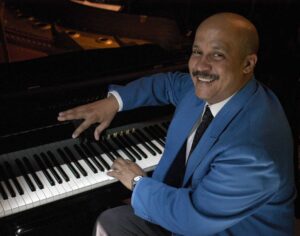
Photo by Hilario Duran

Hilario Durán

Hilario was born in Havana in 1953. He moved to Canada in the late 90’s, after touring the world with his band “Perspectiva”. He is a famous jazz pianist who fell in love with Canada and decided to live on its streets. He joined the Afro-Cuban jazz band “Spirit of Havana” belonging to Jane Bunnet, a Canadian lover of Cuban culture. In fact, Bunnet regularly travels to Havana to perform with Cuban musicians.

Hilario Durán has become known in Canada and other parts of the world thanks to his orchestra (Big Band), where together with his friend Roberto Occhipinti, a Canadian musician, they bring together Cuban and Canadian musicians. Leaving Latin jazz high. In 2007 he was nominated for a Grammy for his album “From the Heart”, along with Roberto D’Rivera. In addition, it obtained three Juno Awards and different awards in Canada.

Amanda Martínez, Mexico

Photo - Amanda Martínez in concert

Amanda Martinez in concert

Amanda Martínez was born in Toronto, Canada with Latino blood. His father is Mexican. Martínez studied biology and business administration but decided to take a course in his life and dedicate himself to what he really loved: music. The artist was not wrong in her decision. He has left his roots high by venturing into Latin jazz.

In 2007 and then in 2009 she was nominated for the Latin Jazz Artist of the Year Award at the National Jazz Awards in Canada. He has three albums to his credit and his first album “Sola” won the Best World Music award, selling around 6,000 copies.

Martínez has performed on famous stages and renowned events; she sang at the Winter Garden Theater, at the Koerner Hall in Toronto, the Festival Centro Histórico de México, at the Montreal Jazz Festival

Ogguere, Cuba

Ogguere's photo

Ogguere

Aka Edrei Riveri, is a Cuban singer and songwriter who resides in Canada. It has become famous for its musical fusions. He walks through rap, hip hop, jazz and la chacuba. A mix of cha-cha and rap. It is registered as the first mix between both styles.

Ogguere has two solo albums, “Solar” released in 2011 which earned two nominations for a Cubadisco award and “Raíces”. He moved to Toronto in 2010 and has since become an immediate reference in jazz and hip hop.

Natasha Roldán, Colombia

Photo by Natasha Roldan
Natasha Roldán

Born in Colombia and based in Toronto, Canada, Natasha Roldán breaks stereotypes in the musical field. She walks between jazz and bossa.

The artist has a fair complexion and very light eyes. From what anyone would believe, she is a native Canadian singer. However, her Colombian roots run deep in her career.

For Natasha it is important that the musical boundaries collapse. It promotes pattern-free Latin music.

“I think that above all I break many stereotypes because people in Canada whenever they think of Latin music, identify it directly with salsa or bachata. Well, and now reggaeton (laughs). And everything is linked to a super sexy image of the Latin woman, who dresses spectacularly and clearly I am not like that.

Therefore, it is very gratifying to share another type of music that people do not know such as bambuco, cumbia, Argentine zamba, Brazilian music aside from bossa nova … and whenever I talk to someone and they discover that I am always Colombian They ask me why I don’t play such music or dance this.

Suddenly I break with the stereotype but not because it is a bad stereotype but because other things have to be shown as well ”, she expressed in an interview for the Hispano Phone portal.

Her music has allowed many Canadians to have access to the Latin culture and to experience sounds with different influences.

Henry Vivel, Colombia

Photo by Henry Vivel

Henry Vivel

Henry was born in Colombia but moved to New York and later to Toronto. In New York he had the opportunity to study music with Enrique Gil, musician and composer. After his arrival in Toronto, he worked in Sky’s Banda, a group that performed at weddings and different events. He sang Latin music.

In 2009 he became the leader of the Tropicanada Orquesta. Pioneer Latin Orchestra in Toronto. They have participated in different salsa festivals and radio stations. Henry and the band have also been a part of different charities in Canada and other countries. In the same way, Henry has joined social causes for the inclusion of immigrants, he has taught them English and part of Canadian culture.

In 2013 he was nominated for the Oye Awards and 10 Most Influential Latinos in Canada. The singer is very pleased with the affection of the Canadian public.

“The chemistry is so great, especially with those who don’t understand my songs in Spanish, which makes the language barriers dissolve into enjoying themselves, dancing and having a good time. With the orchestra I have been able to witness how people enjoy the beauty of Latin music and it makes me very happy to be a Colombian who sings to Canadians and who puts up our musical roots ”, he commented

Toronto has been a city with great Latin influence. Canada has received mixtures of different cultures and they have formed a variety of styles that locals and visitors enjoy. It has been one of the countries that receive the foreign musicians as part of a great family and give them the opportunity to present their work. They have a great affection for Caribbean music.


Goodbye to El Canario de Carolina

Music in mourning

The world of music, more specifically salsa, has lost one of its greatest stars later this year 2022 and is none other than the unforgettable Lalo Rodriguez, who leaves a huge void after his unfortunate departure. In view of the unfortunate things that happened to the humanity of the great artist, we want to take this opportunity to remember the most important of his musical work and the importance of the legacy left by him.

A little of his biography

Ubaldo Rodríguez Santos, better known as Lalo Rodríguez, was born in Río Piedras, Puerto Rico on May 16, 1958 in the family formed by his parents José Rodríguez and Magdalena Santos. As a child, he soon started singing in music festivals and radio and television shows, in which he already showed the great talent that would carry him for the rest of his life. So much so that, a few years later, he was already part of his first musical group, the Tempo Moderno Orchestra.

Lalo Rodríguez was found dead on December the 13th

When he was 15 years old, he received the necessary support to move to New York City, a place where some of the biggest salsa stars of the time were located. While there, he joined Eddie Palmieri‘s band and provided vocals for several songs on the album ”Sun of Latin Music”, which became the first salsa album to win a Grammy. The following year, the artists would team up again to create ”Unfinished masterpiece”, which got a nomination for the aforementioned awards. At that time, it was Palmieri himself who named him ”Lalo” for the first time.

After walking away from Palmieri, he participated in the Machito Grillo’s orchestra, with whom he recorded the album ”Fireworks”. Incredibly, this album also got a Grammy nomination, which represented fabulous numbers for Lalo. Upon coming of age, he already had three albums, a Grammy won and two Grammy nominations.

1980s

During these years, Lalo recorded a significant amount of albums and was beginning to be considered as one of the precursors of romantic and erotic salsa, a subgenre that was beginning to gain much more notoriety in those years. One of the biggest hits of his entire career was the song ”Ven devórame otra vez”, which won him a Lo Nuestro Award in the category of Tropical Song Of The Year and reached very good positions in the Latin Music charts.

Lalo Rodríguez and Eddie Palmieri

1990s

In the 1990s, he continued working hard in his career, resulting in the albums ”Nací para cantar” and ”Estoy aquí”, with which he won gold and platinum records due to the large number of copies sold. These were the last record productions of the artist to be released to the public.

Recent years

Lalo never stopped being active on stages of all types, both in his native Puerto Rico and in other countries around the world. In 2020, it was announced that he was going to release a new album and already had a song selection to include in the material, although no further details had been offered.

Unfortunately, fate would not allow him to go forward with his plans and he was found dead near a basketball court in Carolina, Puerto Rico. One of the first relatives to make an appearance was his road manager.

Lalo Rodríguez and Johnny Cruz

After knowing that Lalo was found dead, his road manager Francisco Pérez, who had been working with the artist for several years. He indicated that he had communicated with him that same day and they had agreed to meet, but instead, he received the unfortunate news about his death.

During the following days, many artists expressed their sorrow for the departure of the singer and highlighted his great talent in life, such as Víctor Manuelle, Elvis Crespo, Arnaldo Vallellanes, among many others.

Read also: This is the story of Percussionist Joe González

        By Johnny Cruz, ISM Correspondents, New York, New York City

“Mambo Fiesta” the new of Maelo y su Klan from Oslo Noriega

As of Thursday, November 4, 2022 it will be available for sale on all digital platforms worldwide.

A musical production of Café Records.

Miami, FL, November 4th, 2022. (Café Records) It already smells like the holidays, both the World Cup Qatar 2022 and Christmas and the native of Caracas, the Venezuelan Ysmael D’La O (Maelo), producer, composer and director of the European group “Maelo y su Klan”, brings us this new and catchy single from the album “Cultura Viva”, titled Mambo Fiesta.

Mambo Fiesta lo nuevo de Maelo y su Klan desde Oslo Noriega

In his musical biography, Maelo has the album “Ritmo y Sabor” 2018 and singles from his new production; “Son Kizomba”, “La reina de la Campana”, “Que Extraño es Eso”, which was his first Feat with the Venezuelan cultural heritage group “El Sondeo Clásico del Caribe” and last summer’s hit “Son Onomatopeya”.

It has been a spectacular year, full of nominations, recordings and successes of the mulatto from Carapita, in which we highlight the following: winner as the best Antillean Group of 2022 of the Cristo Rey Awards, which is awarded in Cali, Colombia, known for being the world capital of salsa.

He also received the “Honorable Mention” as producer of the year 2022, at the Golden Latin Awards in Tenerife, Spain, after more than 20 years in music production in the old continent.

Referring to the Mambo, today few groups are recording this type of rhythms, but Maelo, as a good visionary and knowledgeable of the emerging market, breaks with that scheme and presents us with a work of musical art for the dancer.

With the invitation of excellent and first class musicians as collaborators:

Composer: Ysmael D’La O (Maelo), Trumpets: Luis Ruiz, Trombone: Michael Palma, Voice: Luis González, Alto and Baritone Saxophones: Julio Estrada, Tumbadoras, Bongo, Campana, Maracas and Guiro: Yomar “Caballo” Méndez, Timbal: Hungría Rojas Jr, Bass: José “Mortadelo” Soto, Piano: Julio Estrada, Backing Vocals: Luis González, Alexis “El Chivo” Aguilar and Ysmael D’La O (Maelo). Arrangement and musical production: Julio Estrada, recorded at Estudio Requena and JE studio, mixing: Francisco Requena and Julio Estrada.

Mastering: Estudio Requena: Francisco Requena, all under the general and executive production of: Ysmael D’La O (Maelo).

“Mambo Fiesta” is here to stay in the public’s taste, and is already available on all digital platforms distributed by Café Records.

Maelo y su Klan

You can read: Live The Salsero Rhythm In Asia

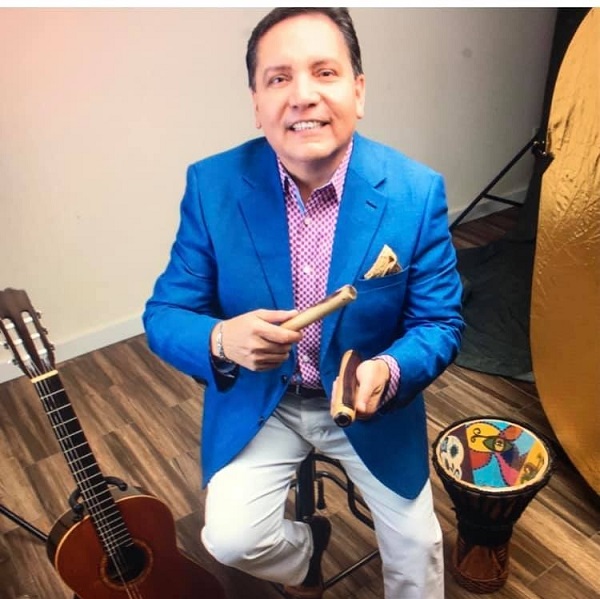
Marco Bermúdez extraordinary Musician, Percussionist, Singer, Composer

On october 19, 1961 in Portoviejo, Ecuador, Marco Bermudez Brito was born. Extraordinary Musician, Percussionist, Singer, Composer.

Nobody is a prophet in his own land. At the age of 23 he traveled to the United States as a singer. And in 2004, being a member of the Spanish Harlem Orchestra (SHO), he won the Grammy in the category Best Salsa Album for the album Across 110th street.

On a day like today, October 20, Marco Bermudez was born in Portoviejo, Ecuador. He is an excellent performer, composer and studio musician in all styles of Latin music.

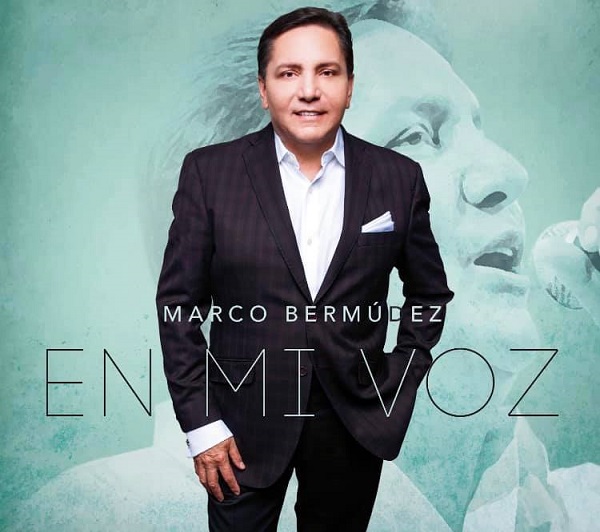
Marco Bermúdez
Marco Bermúdez

He was born into a family with a rich musical heritage and has resided in New York for the past thirty-four years. Marco has toured the world with Latin music greats: Tito Puente, Celia Cruz, Cheo Feliciano, Oscar D’ Leon, Tito Nieves, Domingo Quiñones, Jose Alberto and all the artists on the RMM Records label.

Marco’s discography includes: RMM All Stars 10th Anniversary CD/DVD Live at the Continental Arena New Jersey; Recorded a Selena (RMM) and Tropical Tribute to the Beatles CD/DVD recorded live at Radio City Music Hall in New York.

Marco is currently one of the singers of the Spanish Harlem Orchestra. As a performer and composer, Bermudez has collaborated in the record productions of the SHO, writing the lyrics of the songs Son de Corazón, Regalo de Dios, Qué Bonito, La Fiesta began.

(One more year of life for this Ecuadorian performer, composer and musician who has performed in different variations of Latin music.

Marco Berudesz en Mi Voz

Experiences with Isidro Infante y La Élite, Conjunto Clásico, Tito Puente, Celia Cruz, Cheo Feliciano, Oscar D’León, Tito Nieves, Domingo Quiñones, José Alberto “El canario”, and Ralph Mercado’s RMM Records family in which he participated in productions such as “RMM All Stars 10th Anniversary – Live in Continental Arena of New Jersey”, “Recorded a Selena”, “Recorded a Selena”, “Recorded a Selena”, “Recorded a Selena”, “Recorded a Selena”, “Recorded a Selena”, “Recorded a Selena”, “Recorded a Selena”, and “Recorded a Selena”; the album “Recorded a Selena” (RMM) and “Tropical Tribute to the Beatles”, a CD/DVD recorded live at Radio City Music Hall in New York.

The pinnacle of his career came when he became part of the Spanish Harlem Orchestra’s line-up of singers, collaborating in different record productions and strengthening his facet as a composer through titles such as “Son de corazón”, “Qué bonito”, “Regalo de Dios” and “La fiesta empezó”.

He has also been part of The Mambo Legends project sharing microphones with Frankie Vázquez and Jorge Maldonado.His story is told to us when he was in Ecuador on vacation with his wife.

“From a very young age, I was always surrounded by music,” she says proudly. He refers to his parents, siblings and most of all to his uncle, the great singer Eduardo Brito.

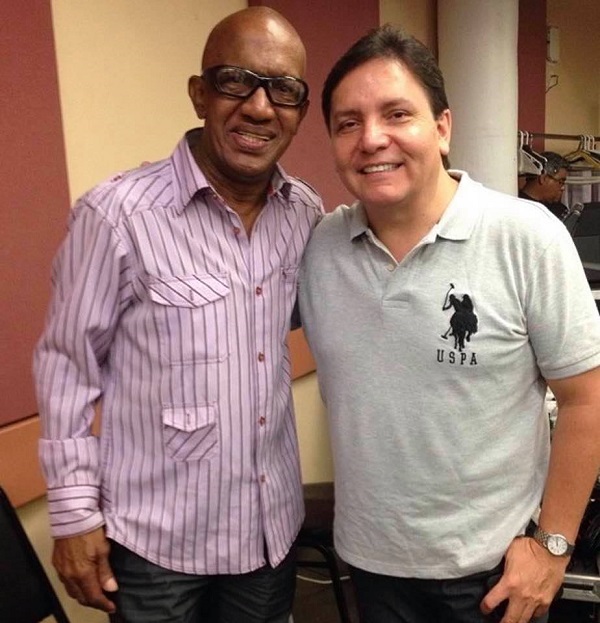
Eddie Palmieri y Marco Bermudez

Marco, at the age of 9, together with his brother Eduardo formed the duo Hermanos Bermúdez Brito, being the first to record the pasillo Romance de la tejedora manabita, lyrics by Paco del Casty and music by Filemón Macías, Marco’s uncle: “Con horma de esperanzas/y encajes de clavellina/ va tejiendo su sombrero/ la manabita más linda” (With a last of hopes/and lace of carnation/ she weaves her hat/ the prettiest manabita).

In the early eighties, brothers Mariano and Venancio Larrea invited him to join the Marfil group, from Guayaquil. That was when the group turned to salsa music, which was just becoming popular in these parts.

But his life and stage changed in 1984, when he and his brother joined the Manabita orchestra Los Profetas, which would perform in Los Angeles, Miami and Chicago.

With the illusion of succeeding in the north, Bermúdez stayed and formed El Combo de Nueva York, which was the staff orchestra of a chain of nightclubs in Queens.

Roberto Roena y Marco Bermudez

At that time, Marco was concerned about his musical training, besides being a singer and composer, he was also a percussionist. His entry into the big leagues of salsa came when he was part of La Élite, led by maestro Isidro Infante, for 6 years.

There he achieved fame as the interpreter of the songs Santo, Militar and Montuno and for the album Tributo Tropical a Los Beatles.

He was also part of La Charanga de Johnny Almendra and Los Jóvenes del Barrio, and was one of the singers of the legendary Conjunto Clásico orchestra. “Even when there is a tour they call me because I know the repertoire and I know the routine”.

At the beginning of 2003 he made a great leap when he joined the SHO, an orchestra that besides winning the Grammy and achieving nominations for two of its albums, is considered “the best salsa orchestra in the world”, according to the Puerto Rican critic Jaime Torres Torres, who in referring to Bermúdez affirms: “He is the only recognized Ecuadorian salsa singer who dominates the difficult art of soneo and clave”.

Spanish Harlem Orchestra

About the renowned SHO, Bermúdez says that in reality this orchestra “is the sound of the Harlem neighborhood, where urban salsa was born.

We are inspired by masters like Tito Puente and Mario Bauza, who left us that legacy”. And although every salsa singer is mistakenly called a sonero, very few are.

The soneo is an improvisation by the singer when the percussionist solos on the drums, he explains.

The next SHO album will feature three songs by Bermúdez: Son de corazón, Regalo de Dios and La fiesta empezó. “I like to write everything, romantic, jocular, nature and rumba songs,” says Marco who is currently selecting songs for his solo album which he hopes will be released this year. It will include a recording with Las Leyendas del Mambo, Tito Puente’s legendary orchestra.

These are his plans. His dream: “to come to Ecuador as a soloist or with SHO because I have had recognition abroad, but it must be nice to be recognized in your country”. Although they say that no one is a prophet in his own land, Bermúdez, the sonero, will surely be.

At the age of 9, together with his brother Eduardo, he formed the duo Hermanos Bermúdez Brito, being the first to record the pasillo Romance de la tejedora manabita.

In the early eighties, the brothers Mariano and Venancio Larrea invited him to join the Marfil group, from Guayaquil.

In 1984, together with his brother, he joined the Manabita orchestra Los Profetas, which would perform in the United States. He stayed in New York and formed El Combo de Nueva York, which was the staff orchestra of a chain of nightclubs in Queens.

Later he was part of La Élite, led by maestro Isidro Infante, for 6 years.

He was also part of La Charanga de Johnny Almendra and Los Jóvenes del Barrio, and was one of the singers of the Conjunto Clásico orchestra.

At the beginning of 2003 he joined the “Spanish Harlem Orquestra” of Maestro Oscar Hernandez. He has collaborated, among others, with the band of “Mister Moña” Jimmy Bosch and “La Mambo Legends.

You can read: Héctor “Bomberito” Zarzuela Calidad y Tuning en la Maquinaria Fania All-Star

Marco Bermudez

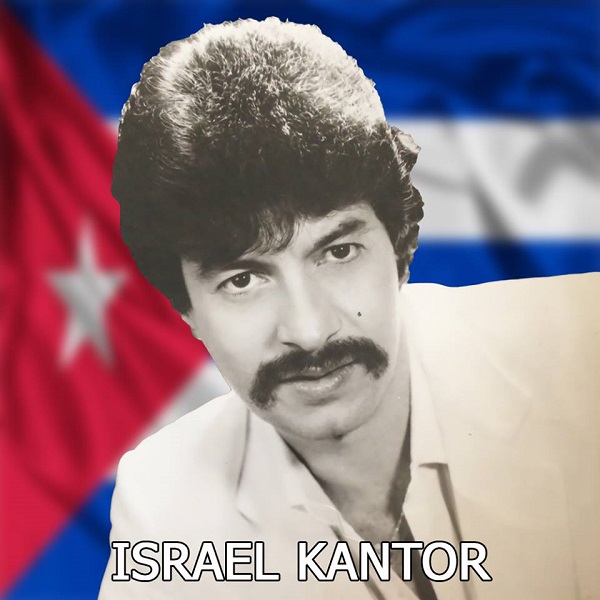
Israel Kantor was an excellent bassist, arranger and composer who achieved great popularity in Cuba for his vocal technique and original “Sonear” style.

His real name was Wilfredo Israel Sardiñas Domínguez. 

He was born on October 16, 1949 in Alturas de Canasí, a town in western Cuba between Havana and Matanzas, and his parents registered him a couple of years later in Bacuranao (birth date October 16, 1954).  A bassist, arranger and composer, he achieved great popularity in Cuba for his technique and original “sonear” style.

Although he was not very well publicized or acclaimed as a sonero, he managed to make a good name for himself in exile.

His mother played the tres and seven of his nine siblings formed a group with guitar, tres and lute; he played both sones and punto guajiro.

They used as bass a box called marímbula, which consisted of a box with four straps to produce the bass sound.  He began to sing with his brothers at the age of eight.

Later he went to Havana to study at the Conservatory of Guanabacoa, where he started playing trova sonera.

israel kantor
HE BECOMES A PROFESSIONAL

Israel Sardiñas improvised on the sonos with astonishing ease, and he is not exactly what you would call an interpreter “by ear”, or empirical. 

In fact, he played the bass before singing, and it was precisely his condition of bassist and arranger that made Meme Solis discover him in 1975 and took him and his group to work in the shows he was then directing in tourist centers on the beaches east of Havana.

“One night, at the dance show they were doing at the Hotel Atlántico, in Santa María del Mar, Israel took the microphone, I think because the group’s singer was not there,” Meme Solís recalls now.  “I saw him and told him: ‘But how well you sing!’ When I put on another show I gave him two numbers, and from then on people began to follow him”.

“I began to study Carlos Embale, Miguelito Cuní, Raúl Planas, Roberto Faz and Beny Moré,” he said, referring to the time when he stopped playing bass to devote himself to singing.  “There is everything that is Cuban music: guaracha, son, rumba. What I did was to listen to them and transfer them to the staff to understand how they moved their voices.

The one I liked the most was Raúl Planas; he was the one who rubateaba the most, the one who broke the syncopation the most.

Cuní had a good timbre, but always in time. Planas had a deeper timbre, and the sonero’s timbre must be metallic”.

That was the beginning of his professional career, which in Cuba would take him to the groups Ireson, Neoson, Los Yakos and Los Reyes 73. In 1979, he joined the Cuban group Los Van Van, founded and directed by bassist and composer Juan Formell (Juan Clímaco Formell Cortina was born on August 2, 1942 in Havana, Cuba).  As vocalist of the famous group, Israel became popular in Cuba for his vocal technique and his “sonear” style, which aroused great interest in the musical media, especially in popular music.  With the Los Van Van Orchestra he participated in the recording of the albums “Juan Formell y Los Van Van” in 1981 and “El Baile Del Buey Cansa’o” in 1982, both in the Egrem label of Cuba.  It was with this group that the artist became known, and left his stamp on the interpretation of the song “Seis Semanas”.

From that time on, he began to make musical arrangements.

After several international tours with Los Van Van he decided to leave them in Mexico in 1983, in search of greater freedom and possibilities for his career.

A month later he was already in Miami after crossing the border.  “I wanted to go to Grupo Afrocuba, but the bureaucracy wouldn’t let me,” he said on one occasion. “Van Van is very good, but Afrocuba came with a very strong force. I also wrote, I made arrangements, I had other ideas, and Afrocuba suited me better, because it was more jazzy”.  In an interview for a news agency years ago, he said: “I had a great school before being with Los Van Van. After traveling a lot with them, I was very anxious to see the world and the third time we were in Mexico, I decided not to return to Cuba”.

SUCCESS IN EXILE

When he arrived in New York in April 1984, he was still Israel Sardiñas, but when Johny Pacheco, the legendary director of the Fania All Stars, took him to an anniversary party of the group at the Cheetah two months later, the late “singer of singers”, Héctor Lavoe, heard him improvising and stopped the orchestra: “I want to baptize him right now as Israel Cantor”, said Lavoe.  The only thing left to do was to change the c for the k, spend two months with Lavoe’s band, and in October create his own, which he called La Verdad.

Thus, in 1984, he released the album “Israel La Verdad” with the production of Larry Harlow, on the Bacán Records, Inc. label. All the numbers were written and composed by Israel Kantor.

As its name indicates, La Verdad was a constellation of excellent musicians: Sonny Bravo on piano, Salvador “Sal” Cuevas on bass, Tony Barrero and Pedro “Pouchi” Boulong on trumpets, Barry Rogers on trombone, Mario Rivera on saxophone, Karen Joseph on flute, Frankie Malabé on congas and Nicolás “Nicky” Marrero on bongo among others.  Justo Betancourt and Adalberto Santiago collaborated on backing vocals, with Justo doing a duet track: “Rumberos De Nueva York”.  Other numbers on the album that deserve attention are: “La Verdad”, “Tu Lindo Pasado”, “María Antonia” and “A Mis Idolos”.

That same year he is invited to sing on the album by Ñico Rojas y su Orquesta entitled “Paso La Vida Pensando: ‘En Tí'”, on the Kanayón Records label, three songs: “Juan Ramón (El Chichón)”, which was popularized by José “Cheo” Feliciano when he was part of Joe Cuba’s group, “Por Encima Del Nivel”, which had the arrangements and piano of Luis Quevedo, in which he performs a superb piano solo, and in “Lo Voy A Matar”, composition by Tony Pabón and arrangements by maestro Kenny Gómez.

In 1986, he is the lead vocalist of the group Salsa Latina in the album “De Aquí . . Pa’ Lante!”, on the Coa Records label, which was produced by Isidro Infante and Israel Kantor himself and in which he composed half of the eight songs that make up the album.  The most outstanding numbers are: “En Honor A La Verdad”, “Se Acabó El Material”, “Saca Aserrín, Mete Madera”, “A La Mitad Del Camino” and “El Palo De China” (Composition by Raúl Marrero).

He temporarily left Miami to try his luck in Puerto Rico, Mexico and Italy until 1996, when he settled permanently in Miami.  He performed on various stages of the music scene: he inaugurated the Mamá Rumba Club in the Mexican capital, made arrangements for the orchestra of the Sábado Gigante program on Channel 23 in Miami, participated in a Cuban Jam Session at the Lincoln Center in New York, among others.

For more than two decades Kantor was the protagonist of important musical projects both in Latin America and Europe.  He recorded eight solo albums and six guest albums with orchestras such as those of Johnny Pacheco and Juan Pablo Torres.  Among his recordings are “Un Señor Kantor” for the BMG record label; a tribute album to Los Van Van for Sony Music and “Llegó La Música Cubana”, an album that took him on tour in Europe.

In 2003 he collaborated in the solo work of arranger and composer Jesús “El Niño” Pérez with Orquesta Sensación (not to be confused with the former group of Cuban Abelardo Barroso) entitled “Cuba y Puerto Rico Son De Un Pájaro Las Dos Alas”, in which Israel Kantor’s voice stands out over those of the other two singers: Danny Rojo and Rogelio Rente, as well as demonstrating his abilities to improvise on the soneo, in the number “Pa’ Puerto Rico” (which Jesus “El Niño” Perez composed for the album, “La Amistad” by Johnny Polanco).

His last great work, in 2003, was a tribute to Benny Moré his permanent artistic inspiration- entitled “To ‘El Bárbaro Del Ritmo'”, a live recording with the Tropicana All Stars orchestra, produced by Regu Records, owned by Recaredo Gutiérrez. 

The orchestra, made up of 22 musicians, mostly Cubans living in Miami, led by Israel Kantor, was nominated for a Latin Grammy Award in the traditional music category in 2004, and two other nominations for an Anglo-American Grammy.

The project, which consisted of a live show, recorded on DVD and seven albums, led them to share the stage with legendary figures such as Paquito D’Rivera, Marco Antonio Muñiz and Generoso “El Tojo” Jiménez, among other glories.

The Tropicana All Stars orchestra was made up of a large number of extraordinary musicians, all of them renowned and of the highest quality: Paquito Echevarría on piano, Cuban musician who has collaborated for a number of important singers such as Gloria Estefan, Rey Ruiz among others; Venezuelan Ramses Colón on bass, a virtuoso musician and desired in any band, Adalberto “Trompetica” Lara on first trumpet, possessor of a very Cuban technique when playing and improvising, he has been a musician of Irakere, Super Cuban All Stars, NG La Banda among others; Kiwzo Fumero on the second trumpet, comes from the conservatory “Alejandro García Caturla” of Cuba, since his beginnings he expressed his great interest in the instrument to which he has dedicated part of his life, he dominates the high notes with mastery for which he has been recognized by great masters of the genre; Lenny Timor on the third trumpet, participated with Los Sobrinos Del Juez for 14 years; Mario Del Monte on fourth trumpet, has been a member of prestigious orchestras such as Roberto Faz, Pacho Alonso, Tito Gómez among others; Alfredo Salvador on baritone sax, has been present in recordings for Celia Cruz, Paquito D’Rivera and Arturo Sandoval; José “Pepe” Vera on tenor sax, his resume includes recordings with the Tropicana Orchestra, Benny Moré, among others, Manuel Valera on alto sax; Juan Carlos Ledón on tenor sax, he has played with Orquestas Cubanas, Roberto Torres, Willy Chirino, Andy Montañéz, among others; Bayron Ramos on trombone, he has been a musician with Albita Rodríguez’s band and Fania All Stars; Braily Ramos on trombone, he has recorded with Gloria Estefan and Miami Sound Machine, Alejandro Sanz and others; Leonardo Timor Sr. on trombone; Leonardo García on timbales, has accompanied Luis Enrique, José Luis Rodríguez “El Puma”, Alexandre Pires, among others; Michael Gerald on percussion; Edwin Bonilla on congas, one of the best percussionists today who needs no further introduction; Juanito Márquez on arrangements, production and musical direction; Germán Piferrer is the musical director and arranger, and as very special guests Juan Pablo Torres, Roberto Torres, Generoso “Tojo” Jiménez, Carlos “Patato” Valdéz, Alfredo “Chocolate” Armenteros and Cándido Camero.

The vocal responsibility fell on Israel Kantor, who was emerging as one of the contemporary Cuban singers with the greatest international projection.  His voice can be heard in the twelve songs that made up the first musical volume: “Santa Isabel De Las Lajas”, “Oh! Vida”, “Maracaibo Oriental”, “Fiebre De Ti”, “Mata Siguaraya”, “Amor Fugaz”, “Bonito y Sabroso”, “Camarera Del Amor”, “Mucho Corazón”, “Yiri Yiri Bon”, “Perdón” and “Francisco Guayabal”, the cover was made by Cuban painter Andrés Puig.

Kantor’s love for his homeland turned his career into a constant homage to Cuban music.

“Over time, one assimilates growing up far from your homeland, not being able to return to stay connected to your roots, but time heals the wounds,” he said a short time ago.

“Inspiration is like a spring,” Kantor said, referring to the improvisations he made as a sonero singer.  “It’s born from the heart; ideas are constantly flowing to you. That’s why a sonero always sings the same song differently.

Cuban music is the continuity of what the singer generates: although the first thing is the vocal conditions, what you have to have is, above all, the clave; knowing how to play with the phrasing so as not to go against the clave”.

Kantor said, “You can train a vocalist to become a sonero, but if his relationship with the genre is not natural, from the heart, he will always end up giving clichés in his inspirations”.

He had no shortage of job offers, even though he was rarely heard on the radio in Miami.  When he was not performing with the Tropicana All Stars, he was performing with his group Havana Son -violin, flute, piano, bass, timbal and conga- in different stages both in the United States and internationally: at the Tropicana Hotel in Las Vegas; the Lincoln Center in New York (in 2003); at the Casa Cuba in Ponce, Puerto Rico, and on tours to the cities of Nicaragua, Lisbon, Oporto and Vigo, in Portugal and Spain, where he shared with other Cuban exiled stars like Willy Chirino and Albita Rodriguez.

Israel Kantor passed away on Saturday, July 1, 2006 at 11:00 p.m. at his residence in southwest Miami, victim of cancer, at the age of 57.  The artist, who had been suffering from liver problems for some time, had already undergone surgery in 2001 for colon cancer.  He is survived by his wife Rosalia Perez, aunts, uncles and cousins.  His body was laid to rest on Wednesday, July 5 at Caballero Rivero Funeral Home, 3344 SW 8th Street, in Miami, and buried the following day at Woodland Park Cemetery, located at 3260 SW 8th Street, in Miami.

“He always worked as if it was the first day,'” recounted his wife Rosalìa as she recalled the artist’s musical enthusiasm.  “He was never satisfied. He had a great hunger to play, to sing and to give people everything he had.”

REACCIONES POR SU MUERTE

 “Israel se hizo en Los Van Van. Tuvo una etapa muy brillante”, señaló Juan Formell, fundador de Los Van Van, ayer desde La Habana a El Nuevo Herald. “Está entre los cantantes más importantes con los que he trabajado. Para nosotros es una pena la pérdida de Israel”.

“Fue una de las voces más representativas de la música cubana de los últimos años”, dijo Adolfo Fernández, amigo personal y publicista de Kantor.  A su juicio, con la muerte del famoso sonero desaparece “una personalidad única y una manera de cantar irrepetible”. “El color de voz de Kantor era único”, destacó.

“Ha muerto uno de los mejores soneros que ha dado Cuba, y uno de los soneros auténticos, de los cuales no quedan muchos. Tenía una voz privilegiada, un ritmo y un sabor muy auténticos”, anotó la cantante Albita Rodríguez tras conocer la noticia de su deceso.

Fuente: herencialatina.com

  • « Go to Previous Page
  • Page 1
  • Interim pages omitted …
  • Page 4
  • Page 5
  • Page 6
  • Page 7
  • Page 8
  • Interim pages omitted …
  • Page 10
  • Go to Next Page »

International Salsa Magazine (ISM) is a monthly publication about Salsa activities around the world, that has been publishing since 2007. It is a world network of volunteers coordinated by ISM Magazine. We are working to strengthen all the events by working together.