• Skip to primary navigation
  • Skip to main content

International Salsa Magazine

  • HOME
  • Previous editions
    • 2026
      • ISM / March 2026
      • ISM / February 2026
      • ISM / January 2026
    • 2025
      • ISM / December 2025
      • ISM / November 2025
      • ISM / October 2025
      • ISM / September 2025
      • ISM / August 2025
      • ISM / July 2025
      • ISM / June 2025
      • ISM / May2025
      • ISM / April 2025
      • ISM / March 2025
      • ISM / February 2025
      • ISM / January 2025
    • 2024
      • ISM / December 2024
      • ISM / November 2024
      • ISM / October 2024
      • ISM / September 2024
      • ISM / August 2024
      • ISM / July 2024
      • ISM / June 2024
      • ISM / May 2024
      • ISM / April 2024
      • ISM / March 2024
      • ISM / February 2024
      • ISM / January 2024
    • 2023
      • ISM / December 2023
      • ISM / November 2023
      • ISM / October 2023
      • ISM – September 2023
      • ISM – August 2023
      • ISM July 2023
      • ISM Edition June 2023
      • ISM – May 2023
      • ISM April 2023
      • ISM March 2023
      • ISM February 2023
      • ISM January 2023
    • 2022
      • ISM December 2022
      • ISM November 2022
      • ISM October 2022
      • ISM September 2022
      • ISM August 2022
      • ISM July 2022
      • ISM June 2022
      • ISM May 2022
      • ISM February 2022
      • ISM January 2022
    • 2021
      • ISM December 2021
      • ISM November 2021
      • ISM October – 2021
      • ISM September 2021
      • ISM August 2021
      • ISM July 2021
      • ISM May 2021
      • ISM April 2021
      • ISM June 2021
      • ISM March 2021
      • ISM February 2021
      • ISM January 2021
    • 2020
      • ISM December 2020
      • ISM November 2020
      • ISM October 2020
      • ISM September 2020
      • ISM August 2020
      • ISM July 2020
      • ISM June 2020
      • ISM May 2020
      • ISM April 2020
      • ISM March 2020
      • ISM February 2020
      • ISM January 2020
    • 2019
      • ISM December 2019
      • ISM November 2019
      • ISM October 2019
      • ISM Septembre 2019
      • ISM August 2019
      • ISM July 2019
      • ISM June 2019
  • Download Salsa App
    • Android
    • Apple
  • Spanish

Search Results for: record company

Louie Ramírez. The Hidden Talent of Salsa Ahead of its time

North America / USA / New York

Louie Ramírez.

Music often requires characters who are always behind the scenes and support the work of singers and performers with their talent, who are ultimately the ones who “put on their face” and become popular. Sometimes, however, these anonymous characters rise to fame in order to perform their own work and even become more popular than any popular singer.

In the case of Pop, this character is called Quincy Jones, of whom it is enough to say that he has been an arranger for Frank Sinatra and a producer for Michael Jackson. A nobody”. In the case of Salsa, these characters have been symbolized by Jones’ emulator, a guy named Louie Ramírez who has done everything with everyone.
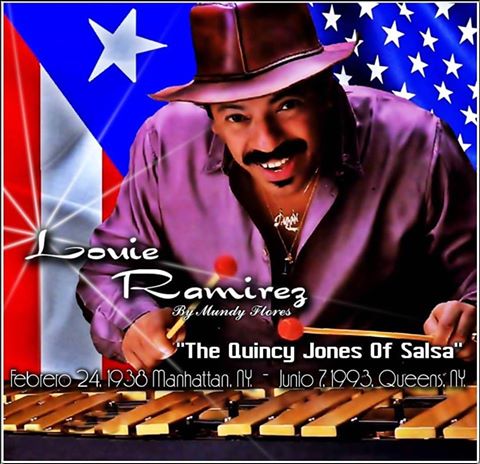
Louie Ramírez
Louie Ramírez

One afternoon in 1994, Ramírez was driving his car down the highway that would take him to Variety Studios in New York. It was going to be a quick session since he only needed one song to complete his 20th album as conductor. Perhaps that was why he was nervous and that filled him with anxiety. Minutes later he couldn’t resist the feeling and had to pull over to the side of the car. He had not finished doing it when a cardiac arrest ended his life.

Louie Ramírez
Louie Ramírez

Louie Ramirez was a genius. The classic man to whom everyone turns for advice and solutions to their problems. It didn’t matter if they were young or old musicians. The fact was, Louie had the answer, and visiting him was like rubbing Aladdin’s lamp. That was a characteristic that always accompanied him, from that first recording “Conozca a Louie Ramírez” in 1963.

He was 20 years old at the time and had already stood out for composing some pachangas and arranging for Pete and Tito Rodríguez’s orchestras. The commentator Dick Sugar then presented it like this: Ramírez breaks the image of the director of a group that uses the talent of other composers and becomes a follower of a rhythm. No, Louie Ramírez is a creator in his genre.

Louie Ramírez Photo
Louie Ramírez Photo

That talent did not go unnoticed by the new Czar of Latin music in New York, Jerry Masucci, who hired him as a star for Fania Records and at the same time, as an arranger for the orchestras and ensembles that belonged to the record company. Ramírez was soon involved in work and was only able to record two albums during the sixties, “Good news” and “Alí Babá”.

On that last album appeared the hit that allowed him to be a famous artist, El Títere, a true Salsa classic. The theme was sung by Rudy Calzado, the third of the soneros that Louie had used without finding the ideal. That was a burden that accompanied him as a director during the seventies, when he used singers of the stature of Pete Bonet, Tito Allen, Jimmy Sabater, “Azuquita” Rodríguez, Adalberto Santiago, and even Rubén Blades.
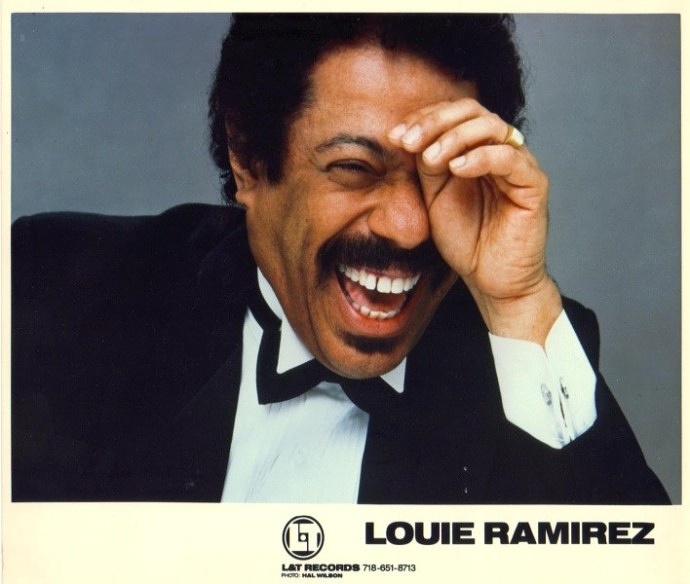
Louie Ramírez
Louie Ramírez

It was with Blades, precisely, that he made an anthological album, “Louie Ramírez and his friends”, in which the song Paula C was included, with an arrangement of those that deserve -hats off-. By then, Ramírez was considered in New York as the most progressive arranger that Salsa had, thanks to the brilliant work done for the Fania All Stars. An excellent job had been the instrumental arrangement of Juan Pachanga, to be sung by Blades, of Canta Canta for a performance by Cheo Feliciano, and of the entire album “Algo nuevo” that Tito Rodríguez sang with Louie’s orchestra.

But the high point of Ramírez’s career came in 1980 when Joni Figueras, representative of the K-Tel International label, hired him to arrange the ballads Todo se derrumbó and Estar Enamorado de Manuel Alejandro. The album, which included these and other tracks, was released two years later under the title “Hot Night” and was recorded by Louie’s own orchestra.

Louie Ramírez - Salsa Progresiva
Louie Ramírez – Salsa Progresiva

This is how the Salsa-ballad or Salsa-romántica was born in a job that Ramírez continued until his death, making attempts at Latin Jazz from time to time, which he loved. That is why he recorded an album in tribute to Cal Tjader, where Louie was director, producer, composer and arranger, in addition to playing the timpani and his favorite instrument: the vibraphone.

Louie Ramírez was a genius in arranging, in a career where those of Guantanamera and Isadora stand out for Celia Cruz, El Guiro de Macorina for Johnny Pacheco and El Caminante for Roberto Torres. Apart from this, there are his works for the Alegre and the Cesta All Stars. Regarding this profile of Ramírez, the critic Eleazar López defined it very well:

Louie Ramírez - salsero
Louie Ramírez – salsero

It is not easy to arrange for a dance band, especially when it comes to a group that cultivates the hot tropical genre. Many musicians feel influenced by Jazz and the result of their orchestrations leaves a void in the dancer. Others arrange simple, but so simple that they repeat and copy themselves, and the result is tiresome music, without any degree of creativity: music that says nothing, that leaves nothing. Louie Ramírez has found the perfect balance… that’s why he always stays current.


Louie Ramírez flyers

Puerto Rican singer Irma Kaché speaks exclusively to us

Irma Kaché is a talented singer born in Ponce, Puerto Rico, who has a very interesting story behind her, so we have set about communicating with her to talk about the most important facts of her life and career.   

Irma Ortiz, the artist’s real name, shows us that it is possible to achieve a lot with little whenever there is the will and desire to get what we want. What she tells us below proves it.   

Irma was born in Ponce
Talented singer Irma Kaché was born in Ponce, Puerto Rico

How Irma first became interested in music   

In her native Puerto Rico, music was always in Irma’s home since she was very young, as her mother was a singer in a radio station and won talent shows, but all that changed when she got married and had children, since it was not seemly for a wife participate in such activities.   

However, she and her siblings inherited the taste for music from their mother and she always instilled in them everything related to it. This is how the children began to play and sing the songs they listened to at home, many of which belonged to Los Condes, Los Panchos and other trios from that time.   

Although Irma’s mother was proud that her children played music as one of their main hobbies, she did not think they would follow it professionally. Irma’s older brothers already have their own orchestras and one of them calls himself Julio Kaché. That is where she took the name of Irma Kaché. 

While it is true that music had a very important place in her life, Irma finished high school and studied social work at the Pontifical Catholic University of Puerto Rico, so she did not practice her great passion at that time. She only limited herself to imitate her favorite artists of the time such as Yolandita Monjes, Ednita Nazario, Sophy, among others. 

Upon graduation, she moved to New York with the hope of singing professionally, but she became a single mother and found it difficult to have evening performances with a small child. In addition to that, her son presented certain language problems and had to attend therapy constantly. She only had her older sister’s support, who is also a singer by profession.    

On top of that, breaking into salsa as a woman was very complicated in a world dominated by men.    

Irma’s beginnings were not easy
Irma’s beginnings in music were not easy, but her talent and effort led her to be the artist she is today

Irma’s transit in music   

Just as Irma met ”dream merchants” who caused her to lose time and money with empty promises that went nowhere, she also met people who supported her and contributed a lot to her career as the composer and singer Miguel Angel Piñeiro, who is a very prominent figure in the salsa scene. 

Piñeiro discovered her on the local TV show Diamante Show, contacted her and they became good friends for a while. At that time, she was working with a record company, but things were not going as she wanted, so she let her new friend guide her in many aspects of her career. Piñeiro accompanied her to the studio, rehearsed with her, introduced her to important people in the industry and many other things that helped her become the singer she is today. 

Among those people she met thanks to Piñeiro, we can mention arranger Harry Rios, who was the one who made each and every one of the arrangements for her new album and played a pivotal role in its final result. 

In addition to this, he made a small monetary investment in Tumbao Media Productions, which is a marketing and PR agency, which has been highly beneficial for his career and the chance to become known to a wider audience. In addition to this, the work she has done in her own social networks to create her own community around her music.   

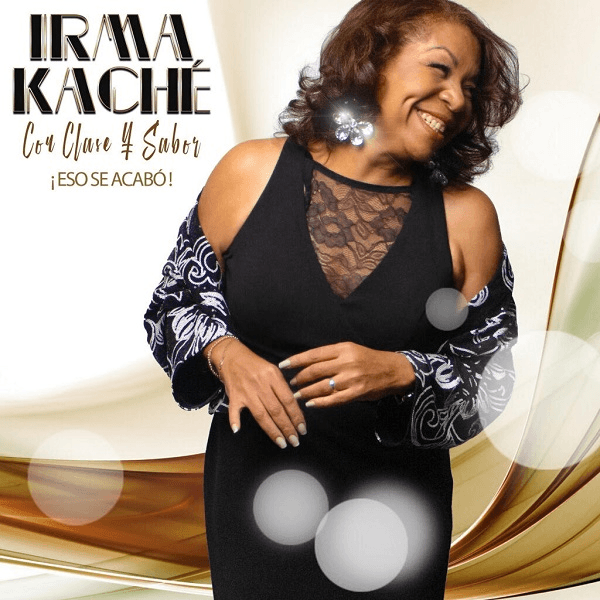
Con Clase Y Sabor
Cover of the album ”Con Clase Y Sabor”

Orquesta Salsa Libre NY 

Irma has been part of the Orquesta Salsa Libre NY since 2008 without uninterrupted, although the group has been through hard times such as the pandemic, which caused the loss of its most important members. This led Miguel, director of this orchestra, to seek new musicians to replace the previous ones. 

The pandemic had also prevented them from performing live for a very long time and Irma was anxious to return to sing in front of an audience, so she talked to Miguel to remedy the situation and be back to the stage as soon as possible. This is how Miguel, who was also Irma’s producer, contacted the Sound of Brazil (SOBs) nightclub to study the possibility of performing a small concert there. So, Miguel and Irma accepted the venue’s proposal and got to work.   

In fact, the Puerto Rican singer and her orchestra performed a wonderful show at SOBs with renowned producer and vocalist Javier Luis, who was already experienced in singing in that place and many others of its kind, so most of the responsibility fell on his shoulders. He was the one who made the arrangements for the show and sent her copies of the emails so that she could see how the organization of a show like theirs was handled.   

In the end, the performance was a success and Irma learned a lot from this experience, which would help her to replicate the right steps on other occasions. In addition, that night opened many doors for both of them. 

Read also: The road to success for Venezuelan harpist and cultural entrepreneur Ángel Tolosa 

Gilberto Santa Rosa

Latin America/ Puerto Rico / Puerto Rico

Gilberto Santa Rosa – The Salsa Knight

Gilberto Santa Rosa (Santurce, 1962) Puerto Rican singer. Nicknamed El Caballero de la Salsa, he has been one of the most prominent performers of the genre, particularly since the 1990s. From an early age his love of music manifested itself, which led him to organize his first amateur ensemble.

Gilberto Santa Rosa
Gilberto Santa Rosa

At only fourteen years old, he already recorded his first songs, thanks to the trumpeter and orchestra director Mario Ortiz. His first group as a professional singer was the Orquesta Grande; Later, as a result of a performance in 1980 in homage to Eddie Palmieri, he joined Tommy Olivencia’s band. Later he sang for a time with Willie Rosario’s orchestra, with which he would record six albums.

Gilberto Santa Rosa

In 1986 he began his solo career at the head of his own orchestra within the Combo Records record company, owned by producer Ralph Cartagena. His first solo album was titled Good Vibrations. This was followed by three more jobs with the same label, which he left in 1990 to sign with CBS Records (later Sony Records).

Gilberto Santa Rosa in concert

That same year, Punto de vista was published, a romantic salsa album that went platinum and number one on the Latin charts thanks to its successful songs Vivir sin ella and Perdóname. The album also earned him the award for best Latin singer awarded by Billboard.

Photo by Gilberto Santa Rosa

In 1991 his album Perspectiva confirmed a brilliant artistic career and opened up new markets for him. In May of this year he made his debut in Spain in a series of concerts in which he shared the stage with Pete Rodríguez, Johnny Pacheco and Roberto Torres, also from the Caribbean, and in September he made an equally successful Central European tour.

Gilberto Santa Rosa singing at the concert

In 1992 he recorded an album in tribute to the singer Tito Rodríguez entitled A dos tiempo de un tiempo. This work was followed by Born Here (1993) and Facing the Wind (1994), which would be his business card in Japan, a country he visited in 1995.

Photo of Gilberto Santa Rosa in concert

After the publication of Esencia, in 1996, and De corazón, the following year , in 1999 came his successful Expresion, an album that consolidated his position in the international Latin music market and that included hits like Déjate Quiero and especially Que somebody dice me, number one on Billboard for several weeks.

Santa Rosa was one of the first performers to fuse salsa music with classical music, with results such as his well-known work Salsa Sinfónica, which he presented at the Center for Fine Arts on his native island accompanied by the Puerto Rican Symphony Orchestra.

Gilberto Santa Rosa live

In addition to this historic performance, the concerts given by Santa Rosa at New York’s Carnegie Hall in 1995 (which would be included on the live album The Man and His Music) are well remembered; his performance at the I President Festival of Latin Music (Santo Domingo, June 1997); or the presentation at the Lincoln Center in New York with his compatriot Andy Montañez in July 1997.

Also of note are his performances at the Anayansi Theater in Panama in September 1997; at the Teresa Carreño Theater in Caracas, in February 1998; the concert at the Roberto Clemente Coliseum in San Juan; and his 1998 European tour with performances in London, Milan and Rome. Apart from his facet as a singer, he showed his qualities as an actor in the play The Uneven Couple (1990), together with Luis Vigoreaux Jr. and Rafo Muñiz.

Gilberto Santa Rosa
Gilberto Santa Rosa
Gilberto Santa Rosa
Gilberto Santa Rosa

Roberto Roena and Apollo Sound will celebrate 50 anniversaries at the Puerto Rico Fine Arts Center

Latin America / Puerto Rico / San Juan

Roberto Roena: Staying active in any profession for 50 (fifty) years is not an easy task for anyone. But if it is a musical orchestra that half a century later continues to bring tropical music to all corners of the planet, more than a musical group, it becomes an institution.

That is the reality of the Apollo Sound orchestra and its founder, the percussionist and dancer Roberto Roena, who this summer celebrate five decades making the world dance and will celebrate it with a great concert to commemorate his career.

“We are going to do something big to celebrate 50 years. It will be in the month of June at the Center for Fine Arts, “said Roena in conversation with this medium.

“It’s going to be something really cool. We are going to sing the hits of the orchestra, we will have guests and a little bit of everything”, added the musician, who indicated that the exact date will be confirmed in the coming weeks.

Roberto Roena and Apollo

The Apollo Sound Orchestra was founded in July 1969 and its name derives from the launch that same month of the Apollo 11 space mission, which aimed to carry the first human being to walk on the surface of the moon.

His record catalog includes more than 20 productions and among his most notorious hits are “Tú loco loco y yo tranquil”, “El Escapulario”, “Marejada Feliz” and “El Progreso”, among many others. In the case of Rohena, the renowned 79-year-old musician from Mayagüez began his musical career much earlier, at age 16, with the distinguished group of Rafael Cortijo y su Combo.

He was also part of Rafael Ithier’s Gran Combo and appeared in the star catalog of the famous Fania record company and its All Stars, among other collaborations.

It was in the Mayagüez neighborhood of Dulces Labios where he was born, raised and took his first steps as a dancer. “Sweet Lips is my neighborhood. I have many memories of my childhood days.

From there came great musicians, such as Santitos Colón and Mon Rivera”, he pointed out.

Roberto Roena
Roberto Roena

When she was nine years old, her family moved to Santurce and when she was barely a teenager, she was already appearing on television.

He was discovered by Cortijo in one of his dance performances on the La Taberna India program and from there he became a percussionist for the renowned group. Since then, he has not stopped delighting his followers with his music.

“In these 50 years, there is no greater satisfaction than being able to continue playing,” said Roena, who last Saturday began the celebration of his 50 years in a concert at the Lehman Center of Performing Arts in New York, where he brought together several of the singers who accompanied the group in its beginnings, such as Sammy González, Tito Cruz and Carlos Santos, among others. In addition to the concert, Roena does not rule out going back to the studio to continue shaping her music for posterity.

“This does not mean the end of Roberto Roena and the Apolo Sound. We are going to continue as long as God wants”, he sentenced.

Roberto Roena
Roberto Roena

RELATED ITEMS: 50TH ANNIVERSARY, CENTER OF FINE ARTS P.R., INTERNATIONALS, ROBERTO ROENA AND HIS APOLLO SOUND

http://asondesalsa.com.pa/roberto-roena-y-apollo-sound-celebrara-50-aniversario-en-centro-de-bellas-artes-p-r-para-el-mes-de-junio/

Felipe Pirela | The Bolero of America

North America / USA / New York

Felipe Pirela:

En mi barrio el empedrao
Parroquia Santa Lucia
Había una barbería
Que era muy populachera
Te lavaban en ponchera
La silla se reclinaba
Y Luis el perro pelaba
Al son de una periquera

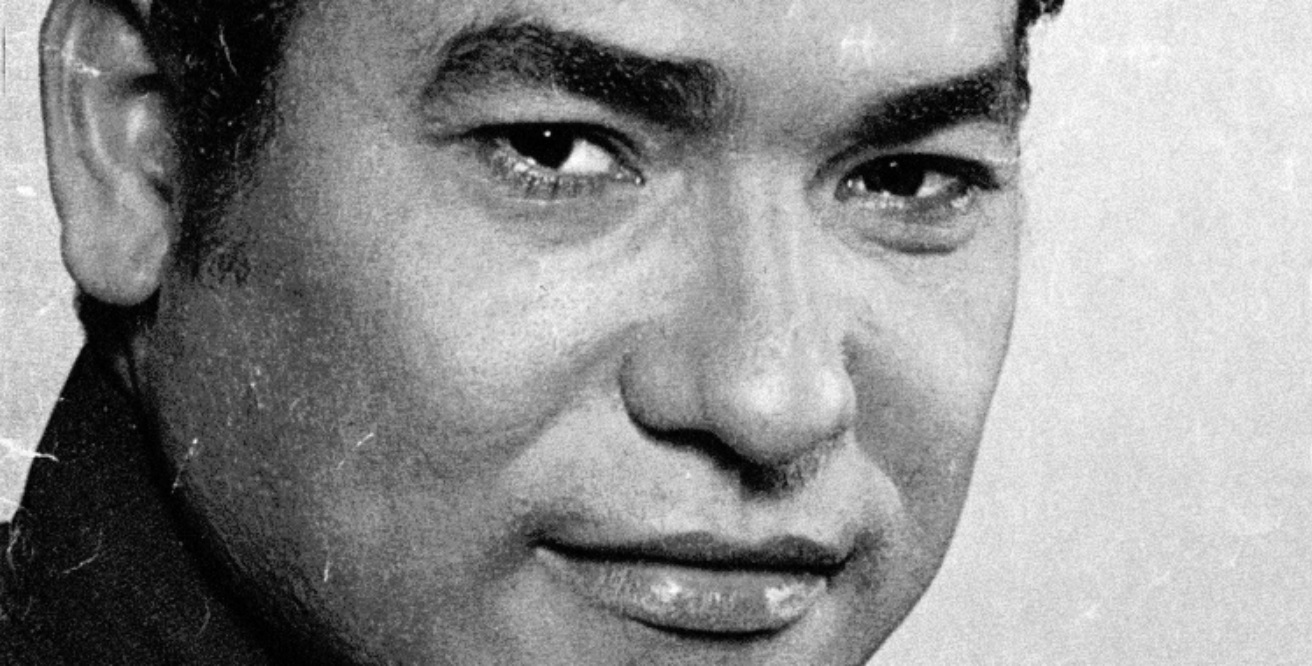
Felipe Pirela
Felipe Pirela

This is the sound of the tasty gaita performed by the group Sabor Gaitero and Los Gaiteros de Pillopo. It refers to a barbershop in a picturesque neighbourhood of Maracaibo in the Venezuelan state of Zulia. It was in this popular neighbourhood of Maracaibo, El Empedrao, that Felipe Antonio Pirela Morón was born in 1941. It was probably in this popular barbershop that he got his first haircut, and it was certainly in some corner of the neighbourhood that he took his first steps as a singer, perhaps interpreting gaitas or some other popular genre. The young Felipe was far from imagining that he would become “El Bolerista de América” (The Bolero of America).

The son of a bricklayer, Felipe Pirela Monsalve, and a housewife – an artist at heart – Lucia Morón de Pirela, the boy began his musical career as a child, supported by his mother, in small radio singing competitions. Incredibly, at the age of 13, together with some boys from the neighbourhood and his two brothers, he founded the group Los Happy Boys, which performed in various venues in Maracaibo, without even imagining that he would later become the main star of Billo’s Caracas Boys, a group that, upon arriving in Venezuela, debuted under the same name, Billo’s Happy Boys, directed by the Dominican maestro Billo Frometa.

At the beginning of his singing career, Felipe specialized as a bolerista, performing songs by prominent singers such as the Chilean Lucho Gatica, the Cuban bolerista Olga Gillot and Venezuela’s favorite tenor Alfredo Sadel.

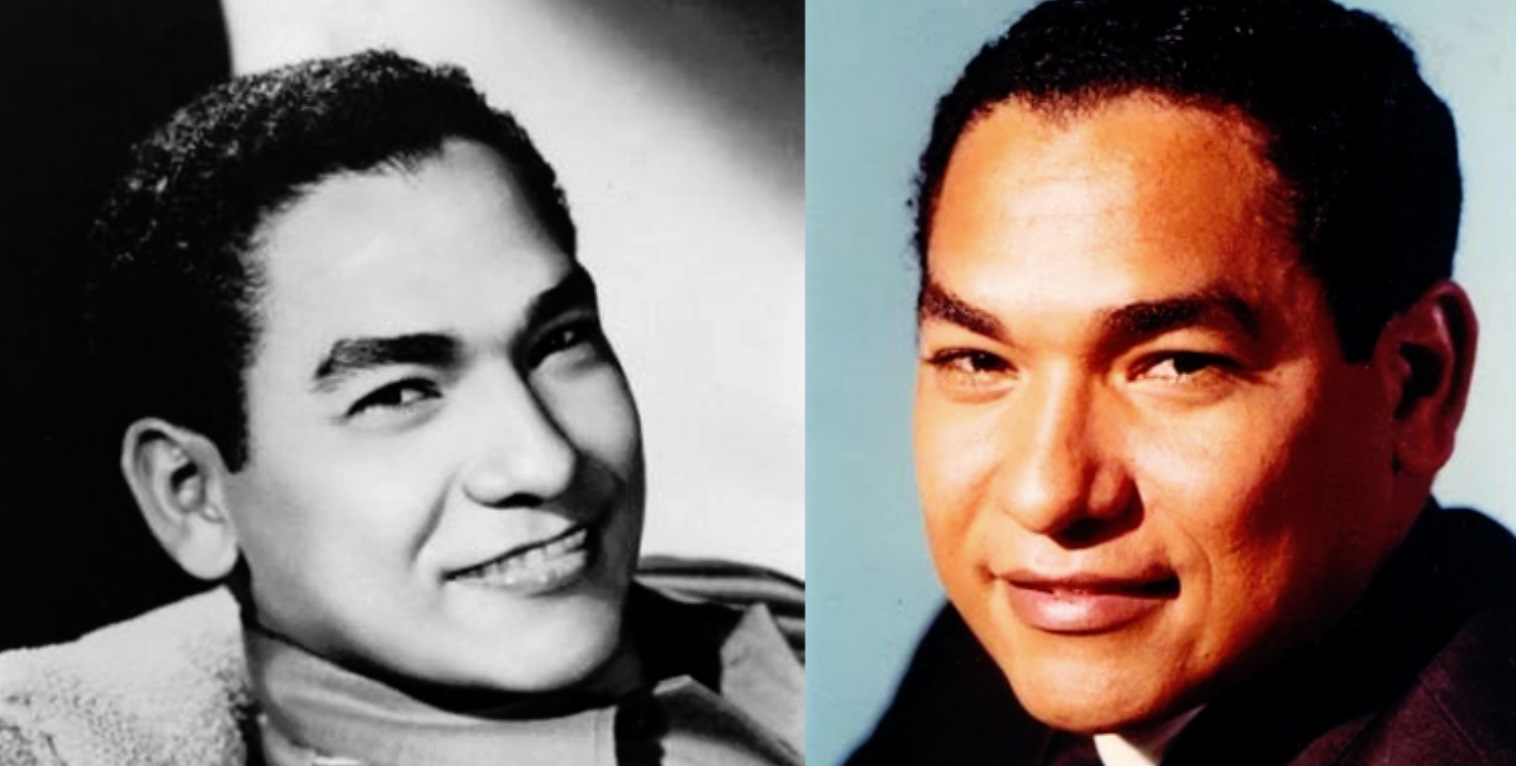
Felipe Pirela
Felipe Pirela

Radio Caracas Television had the honor of making Felipe’s image public for the first time in 1957, through an amateur program in which Felipe placed third. Unfortunately, there were no video recording systems in those days, so there is no record of this historic achievement. Later, the now defunct and legendary Venezuelan regional television station from Maracaibo, Ondas del Lago, served as a springboard for Felipe, who was one of its founding artists.

These performances allowed him to sign a contract with the station in 1958, after which he moved to Caracas, where he performed on Radio Caracas and in various nightclubs.

Shortly thereafter, he returned to Maracaibo to join the orchestra Los Peniques, with whom he recorded his first album in 1960 and began his professional career.

Like most of the artists, baseball players and boxers from Maracaibo, Felipe was a man of humble origins, pobre del pobre, with limited economic resources, who for a time missed opportunities to be noticed despite his immense talent.

Felipe Pirela
Felipe Pirela

Fortune smiled on him when Maestro Billo Frometa heard him sing, at a time when the arranger, director and musician from Quisqueyano was preparing to restructure his band, Billo’s Caracas Boys, and at the same time hired another singer from Maracaibo, the remarkable José “Cheo” García. This hiring gave an enormous boost to the already famous Billo’s Caracas Boys; the band acquired great international prestige, performing throughout America and Europe, popularizing the immortal mosaics that for many years enlivened the parties and were the favorites of the Venezuelan public.

Not for nothing, Billo’s Caracas Boys Orchestra has been called the most popular in Venezuela, the Caracas and Venezuelan clubs, Latin American countries and even the European continent (Tenerife, Spain) showed full houses during the band’s performances. In these performances, the acclaim for Felipe Pirela was total. Huge demonstrations of support, full houses and legions of fans followed the “crooner” on his tours.

When Venezuela’s favorite tenor, Alfredo Sadel, left the popular genre and his country to devote himself to opera, Pirela almost immediately replaced him in the favorite place of Venezuelans.

In 1961, “El Bolerista de América” recorded with a string orchestra conducted by Billo, the long playing Canciones de Ayer, including old songs and songs of that time, a recording that marked his resignation and departure to Mexico, where he also had memorable successes.

Felipe Pirela boleros with guitars

In 1964 he married Mariela Montiel, a marriage that resulted in the birth of a daughter, Lennys, and in which La Retirada was quickly marked by the fact that Amor se Escribe con Llanto (Love is Written with Crying) and that it probably does not last a lifetime.

Canada and Mexico witnessed his successes in ’67 and his return to Venezuela. Successful performances in Miami that same year motivated him to reside in the United States, where he tried to structure his own record company, a project that came to nothing and he was deeply disillusioned and returned to Venezuela, later residing in Puerto Rico, where he was taking La Última Copa when he was tragically assassinated in 1972.

For some, his career was marked by Sombras Nada Más, but for the vast majority, “El Bolerista de America” remains in the memory as one of the most unique stars of Latin American music of all time.


For Mario Cabrera Bello

Mario Cabrera Bello


  • « Go to Previous Page
  • Page 1
  • Page 2
  • Page 3
  • Page 4
  • Page 5
  • Page 6
  • Interim pages omitted …
  • Page 42
  • Go to Next Page »

International Salsa Magazine (ISM) is a monthly publication about Salsa activities around the world, that has been publishing since 2007. It is a world network of volunteers coordinated by ISM Magazine. We are working to strengthen all the events by working together.