• Skip to primary navigation
  • Skip to main content

International Salsa Magazine

  • HOME
  • Previous editions
    • 2026
      • ISM / March 2026
      • ISM / February 2026
      • ISM / January 2026
    • 2025
      • ISM / December 2025
      • ISM / November 2025
      • ISM / October 2025
      • ISM / September 2025
      • ISM / August 2025
      • ISM / July 2025
      • ISM / June 2025
      • ISM / May2025
      • ISM / April 2025
      • ISM / March 2025
      • ISM / February 2025
      • ISM / January 2025
    • 2024
      • ISM / December 2024
      • ISM / November 2024
      • ISM / October 2024
      • ISM / September 2024
      • ISM / August 2024
      • ISM / July 2024
      • ISM / June 2024
      • ISM / May 2024
      • ISM / April 2024
      • ISM / March 2024
      • ISM / February 2024
      • ISM / January 2024
    • 2023
      • ISM / December 2023
      • ISM / November 2023
      • ISM / October 2023
      • ISM – September 2023
      • ISM – August 2023
      • ISM July 2023
      • ISM Edition June 2023
      • ISM – May 2023
      • ISM April 2023
      • ISM March 2023
      • ISM February 2023
      • ISM January 2023
    • 2022
      • ISM December 2022
      • ISM November 2022
      • ISM October 2022
      • ISM September 2022
      • ISM August 2022
      • ISM July 2022
      • ISM June 2022
      • ISM May 2022
      • ISM February 2022
      • ISM January 2022
    • 2021
      • ISM December 2021
      • ISM November 2021
      • ISM October – 2021
      • ISM September 2021
      • ISM August 2021
      • ISM July 2021
      • ISM May 2021
      • ISM April 2021
      • ISM June 2021
      • ISM March 2021
      • ISM February 2021
      • ISM January 2021
    • 2020
      • ISM December 2020
      • ISM November 2020
      • ISM October 2020
      • ISM September 2020
      • ISM August 2020
      • ISM July 2020
      • ISM June 2020
      • ISM May 2020
      • ISM April 2020
      • ISM March 2020
      • ISM February 2020
      • ISM January 2020
    • 2019
      • ISM December 2019
      • ISM November 2019
      • ISM October 2019
      • ISM Septembre 2019
      • ISM August 2019
      • ISM July 2019
      • ISM June 2019
  • Download Salsa App
    • Android
    • Apple
  • Spanish

Search Results for: record company

La Sonora Matancera musical congregation of long trajectory and its sound quality, is one of the most popular in the Caribbean island “Cuba”

It was founded in Matanzas in 1924 under the name of La Tuna Liberal.

Its first members were: Valentín Cané, director and tres player, Manuel Valera, guitar and second voice, Manuel Sánchez (Jimagua), timbal, Ismael Governa, cornetín, Pablo Vázquez Govín (Bubú), double bass, Domingo Medina, guitar, Ismael Goberna, cornetín, Julio Govín, guitar, José Manuel Valera, guitar, Juan Bautista Llopis, guitar.

In 1926 Carlos Manuel Díaz Alfonso (Caíto), falsetto voice and maracas, and Rogelio Martínez Díaz (El Gallego), guitar, joined the group and it adopted the name Sexteto Soprano.

On January 12, 1927, under the name of Estudiantina Sonora Matancera, they moved to Havana. In November of that year they recorded their first two recordings for the Victor label: Fuera, fuera, chino, by José Manuel Valera, and El porqué de tus ojos, by Valentín Cané.

With the definitive name of Conjunto Sonora Matancera, it began its transmissions on the radio station El Progreso Cubano (later Radio Progreso). At that time it appeared on Radio Atwater Kent; in 1932, at the suggestion of Rogelio Martínez Díaz, it took the name of Sonora Matancera, and began its performances in the Havana Sport dance academies, and later in Marte and Belona, and later became part of the cast of CMQ Radio. In 1935, trumpeter Calixto Leicea joined the group; in 1939, composer, pianist and orchestrator Severino Ramos, who gave the Sonora its distinctive sound with his orchestrations.

La Sonora Matancera congregación musical de larga trayectoria y su calidad sonora, es una de las más populares en la isla caribeña “Cuba”

In 1944 pianist Lino Frias and trumpeter Pedro Knight Caraballo joined the group, who with Calixto Leicea formed the most interesting trumpet duo in the history of Cuban ensembles; in 1945 singer Bienvenido Granda Aguilera; in 1948, Angel Alfonso Furias (Yiyo), tumbadora. At this time the Sonora Matancera was formed by Rogelio Martínez Díaz, director, guitarist and chorus; Pablo Vázquez Govín (Bubú), double bass; José del Rosario Chávez (Manteca), timbal; Ángel Alfonso Furias (Yiyo), tumbadora, who replaced Valentín Cané; Calixto Leicea, first trumpet; Pedro Knight Caraballo, second trumpet; Lino Frías, pianist; Carlos Manuel Díaz Alfonso (Caíto), falsetto voice and maracas; Bienvenido Granda, singer and claves; and Celia Cruz, who soon became the stellar singer we knew and the mainstay of the Sonora Matancera hits. Thus began a period that critics have called the golden age of the Sonora.

In 1950, with the advent of television, the Sonora Matancera was one of the first musical groups to perform on this medium. It also signed a contract with the Seeco record company, with whose recordings it made a name for itself in the international market. In 1952, Raimundo Elpidio Vázquez replaced his father, Pablo Vázquez, on double bass (when Rogelio Martínez Díaz died in 2001, he took over the leadership of the group).

In 1926, it changed its name to “Septeto Soprano”. That same year, Carlos M. Díaz “Caíto” accompanied Eugenio Pérez in the choir.

Later in 1927, on Caíto’s recommendation, Rogelio Martínez joined the group and the name of the group was changed to Estudiantina Sonora Matancera.
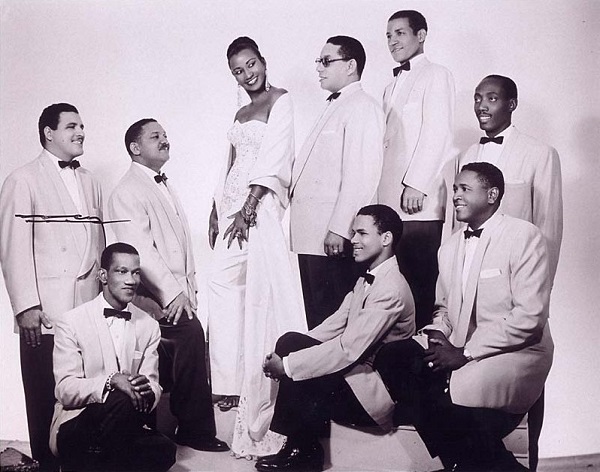
Sonora Matancera
Sonora Matancera

With a great desire to improve the group travels to Havana where they get in touch with the record company “RCA Victor” and make their first recording on January 12, 1928.

At the beginning of the thirties, the group began to adapt to the new rhythms that were appearing at that time as well as adapting new instruments, such as the grand piano, which was played for the first time in the group by Dámaso Pérez Prado, who years later would become the “King of the Mambo”.

But it was in 1935 when the group took the name La Sonora Matancera, and with this change it introduced a new trumpet player: Calixto Leicea, who replaced Ismael Goberna, who died a few months later due to health problems.

The unforgettable José Rosario Chávez “Manteca”, who replaced the resigned “Jimagua”, also joined the band. Humberto Cané joined the group playing the tres and his father Valentín Cané began playing the tumbadora.

In 1938, Dámaso Pérez Prado retired and left the vacant piano position to Severino Ramos, who soon after became the musical arranger of the group.

During the first years of the forties they made presentations in dance academies, cabarets and in Radio Progreso Cubano, they also included in their repertoire: guarachas, montunos.

On January 6, 1944, two musicians from Arsenio Rodriguez’s group joined the group: Lino Frias (author of the popular song Mata Siguaraya) who began to play the piano and Pedro Knight who became the second trumpet player of the Sonora Matancera.

In the month of December, Bienvenido Granda enters the band recommended as vocalist, being his first recording “La Ola Marina” by Virgilio González, and with him they sign a contract with the nascent record label Panart Records. Valentín Cané, Israel del Pino, Caíto and Humberto Cané made recordings with this label.

In the middle of 1946 the founder Valentín Cané suffers asthmatic problems that force him to leave the group, dying two years later. Before the group joined Panart Records, it recorded other songs for the “Varsity” label, without the name of the Sonora Matancera appearing on the labels, here the first version of “Se Formó la Rumbantela” by Pablo Cairo, “Tumba Colorá”, “El Cinto De Mi Sombrero”, Bienvenido Granda and Humberto Cané participated in these numbers.
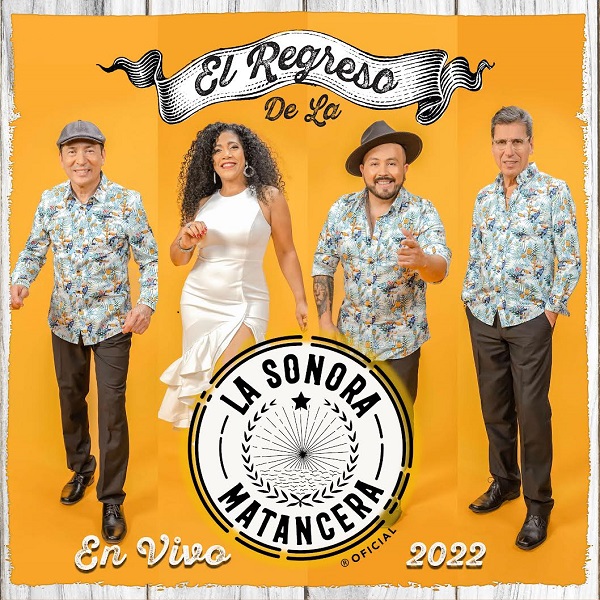
El Regreo de La Sonora Matancera 2022 2023

Members

Trumpets: Calixto Leicea and Pedro Knight

Double Bass: Elpidio Vázquez, replacing his father Pablo Vázquez, “Bubu”.

Piano: Lino Frías

Timbales, Bongó and Campana: José Rosario Chávez “Manteca” Chávez

Tumbadora: Ángel Alfonso Furias “Yiyo”.

Guitar and Choir: Rogelio Martínez

Maracas and Chorus: Carlos Díaz Alonso “Caíto”.

Claves and Choir: Bienvenido Granda.

Last January 13, 2023 they turned 99 years old and are still going strong from generation to generation.

Source:

Enrrique “Culebra” Iriarte, Venezuelan pianist, arranger and orchestra conductor.

Bibliography: Ecured Cuba

La Sonora Matancera 

You can read: Carlos “Patato” Valdés one of the best percussionists in the history of Latin Jazz
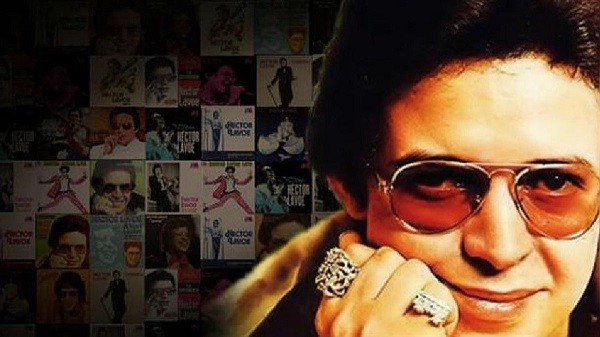
International Salsa Magazine showcases important facts about Héctor Lavoe

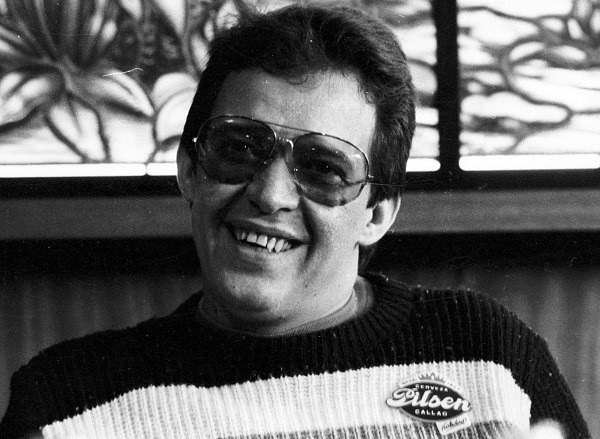
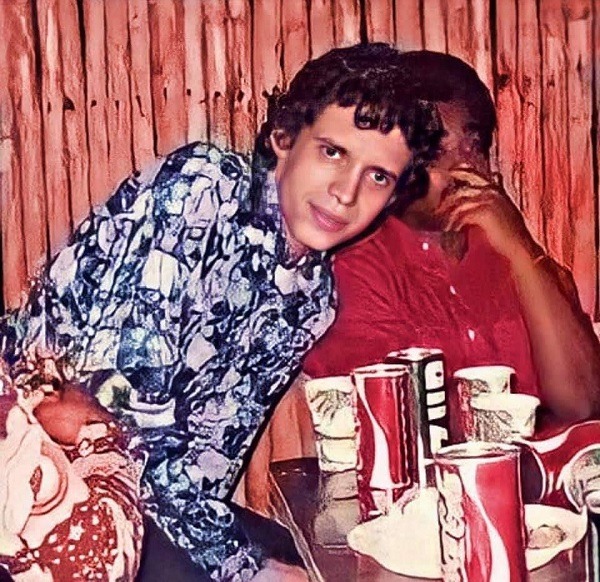
(Héctor Juan Pérez Martínez; Ponce, 1946 – New York, 1993) Puerto Rican singer and composer, considered one of the best interpreters of Caribbean music of all time and a pioneer in the introduction of New York salsa in the early 1970s.

He was part of the legendary orchestra of trombonist Willie Colón and was known by the nickname of El Cantante de los Cantantes.

-.Héctor Juan Pérez Martínez was born on September 30, 1946 in Ponce, Puerto Rico. His parents Luis and Francisca are musicians who, from song to song, manage to support a large family of several children.

-. In the year of Hector’s birth, the singers who would influence him are much older: Daniel Santos is 30 years old; Ismael Rivera, better known as “Maelo”, is 15; and Jose “Cheo” Feliciano is eleven.

-. At the age of three, he suffers his first loss: the death of Francisca Martínez, his mother.

-. Juan Morel Campos is a music academy where his father enrolls him. Héctor begins to learn classical music, but he quickly decides to learn what is played in the streets. Jesús Sánchez Erazo, better known as “Chuito el de Bayamón”, is his first idol.

-. Sings the song Campanitas de cristal, a bolero composed by Rafael Hernández Marín, at a school party.

-. In the early sixties, he forms with friends, including Papo Luca, a group that performs boleros and salsas. He earns 18 dollars a night and his talent seduces the people of Ponce. He is invited to sing on television programs. Musicians Felipe Rodríguez and Tito Lara give him a promising future.

-. At the age of 17, being recognized in his native Ponce, he travels to New York. His family does not agree with his departure. In the city he is greeted by the ghost of the death of a brother, who was supposedly a drug addict. He stays in the apartment of Priscila, one of his older sisters.

Héctor Juan Pérez Martínez

Before joining the Fania All Stars for the first time, a group directed by the Dominican Johnny Pacheco, he was part of bands such as Orquesta Nueva York and Alegre All Stars.

-. In 1966, at the age of 21, he sings alongside Pete Rodríguez, Adalberto Santiago, Tito Puente, Richie Ray, among other artists, in the incipient Fania All Stars. He meets Willie Colón, an American musician with Puerto Rican parents. “We both knew the world in the Bronx neighborhood. I learned to speak Spanish with Hector, although at first I understood what he was saying. I remember he had a brilliant sense of humor and was a great imitator of singers,” said Colón in an interview.

-. In 1967, he achieved fame with his first album with Willie Colón. It is a mixture of genres such as guaracha, plena and guaguancó, and is entitled El Malo. The album is a tribute to the slum culture of the United States and Latin America.

-. He tries to work as a painter, but his sister won’t allow it. After two weeks, he attends a musical rehearsal with his backing vocalist friend Roberto Garcia. Hector takes the microphone and makes the orchestra directors fall in love with him.

-. At the beginning of 1968 he meets Carmen, a follower he meets at a concert. On October 30 of that year Jose Alberto, his first son, is born.

-. After the birth of Jose Alberto, he has his second son with Nilda Román, another follower. With her, who is nicknamed “La Puchi”, he finally marries and stays in an apartment in Queens. Héctor Junior is the name of his second son.

-. At the end of the sixties he becomes addicted to drugs. In more than one stage he leaves the audience in a daze.

-. In 1971 he is called again to record, together with other stars, Fania All Stars at the Cheetah. This combo featured Cheo Feliciano, Richie Ray, Ismael Miranda, Celia Cruz and the young Rubén Blades. In 1973, the group filled the Yankee Stadium bleachers. Anacaona, Quítate tú and Ahora vengo yo are some of their hits.

-. With Willie Colón, he recorded more than 18 albums between 1967 and 1973. Thousands of reissues of Asalto navideño, El Juicio and Lo Mato were made. Che che colé, Ausencia, Calle luna calle sol, Todo tiene su final are the most requested songs by the Latin American public.

(H3) -. Willie Colón dissolves the duet in 1974. However, both continue to work. Lavoe’s talent continues despite his excesses and the author of Talento de televisión knows it well.

-. In 1975 he releases La voz, his first solo album. This incursion is interpreted as a second wind in his career. So much is his energy to continue that he releases eight more albums. De ti depende (1976) is a collection of boleros and Comedia (1978) breaks sales with the song El cantante, written by Rubén Blades. This work was also produced by Willie Colón, who that year teamed up with Blades to record Siembra, the best-selling salsa album.

-. His interpretation of El cantante helps to build the nickname “El cantante de los cantantes” (The singer of the singers).

-. He performs at the Coliseo Evangelista Mora in Cali in 1977. This concert was attended by the writer Andrés Caicedo, who managed to take a picture with Lavoe in the dressing room. Months later, the author of ¡Qué viva la música! committed suicide with an overdose of barbiturates.

-. As a result of a strong depression, Lavoe is interned in a mental sanatorium in the United States in 1977. His heroin addiction, which he had begun to suffer at the end of the sixties, is not only known by those close to him but also by his fans. “He paid a lot of attention to me and, when he was in trouble, he would call me”, confessed singer Ismael Miranda in an interview.

-. Lives in Cali between November 1982 and March 1983 at the Hotel Aristi. He is a regular singer at the Juan Pachanga discotheque, owned by Larry Landa, a concert organizer. In the capital of the Valley it is said that Lavoe takes drugs during the day and tries to sing at night.

Hector Lavoe el Cantante de los Cantantes

In February 1987, due to a fire, he jumps out of his apartment in Queens. At the same time, in Puerto Rico, his mother-in-law is stabbed to death.

-. On May 7, 1987, his son Hector is hit by a stray bullet. “That death broke his heart,” said Tito Nieves in an interview. “At that moment Héctor Lavoe’s soul dies”.

-. He is diagnosed with AIDS in 1988. Those who visit him in the hospital maintain that he does not lose his sense of humor nor his desire to return to the stage.

-. In Bayamón, Puerto Rico, he sings Mi Gente in a patron saint festival. But his presentation is sabotaged by one of the organizers who supposedly owes him money; in the middle of the song the lights are turned off and Lavoe is left without sound to continue.

-. In 1988, he throws himself from the ninth floor of a hotel in San Juan. He survives to continue fighting the battle. He sings on a Bronx street in 1989. His physical deterioration is a reflection of his state of mind. Lavoe is a ghost of his former self.

Héctor Lavoe
Héctor Lavoe

-. Tito Nieves is one of his friends who accompanies him in his difficult days. Lavoe depended on other people to live. A thrombosis paralyzes part of his body.

-. In March 1993, pushed by his record company, he makes his last presentation in New Jersey. He sings with Roberto Roena’s orchestra. Maestro Roena is not able to play in front of the “Singer of singers”. “It was too much to put him on stage”, he said indignantly.

-. At the age of 46 he dies of a cardiac arrest, on June 29, 1993, in New York. “He came into the world to enjoy it and suffer it. Although he was not happy, he made many people happy,” said his sister Priscila.

-. He is buried in Puerto Rico. He is accompanied by a horde of followers. The presence of his friend Ismael Miranda stands out, who bids him farewell saying: “He is not here with us, but his music continues”.

-. In 2007, El cantante, a movie inspired by his life, was released. It stars Marc Anthony and Jennifer Lopez.

-. Currently there are two monuments in his honor. One in his native Ponce, Puerto Rico, and another in Callao, Peru.

Héctor Lavoe

You can read: Génesis of Salsa, its essence, characteristics, rhythm, history and expansión

The Caribbean joined the party with Billo Frómeta

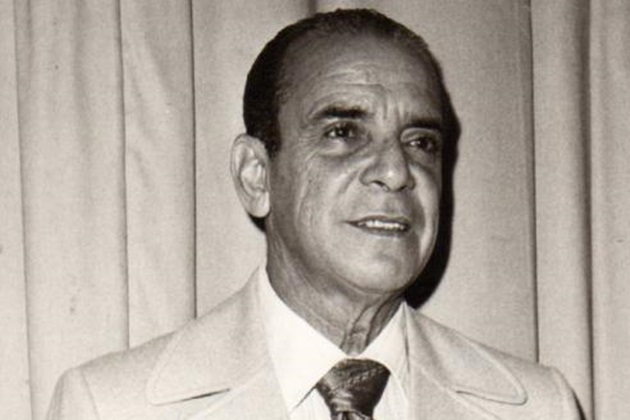
Luis María Frómeta Pereira, better known as Billo Frómeta, was born on November 15, 1915 in Santo Domingo, the capital of the Dominican Republic. However, this Caribbean man has more of a Venezuelan feeling than other compatriots, since he was very grateful to Caracas, that is where he made his life, both professionally and personally.

Despite his love for the Venezuelan lands, he never lost his Cibao smile, specifically from Quisqueya. But his gestures, his affection and tenderness, the details with which he acted, and his musical stamp are very Venezuelan. Perhaps we say goodbye to Billo very soon and he could not see his tribute in his lifetime, that only adds more strength to his career. Read all about his life with the following lines .

The beginnings of Billo Frómeta as Luis María

Although he was born in Santo Domingo, the Frómeta family moved to San Francisco de Macorís, where Billo spent his childhood and met the friends with whom he would embark on the musical adventure of his life: Rafael Minaya and Francisco Simó Damirón. As Billo recounted in his last interview before losing him to a brain stroke in 1988:

“There couldn’t be a birthday that we knew about because the three of us from San Francisco de Macorís were there playing and brightening up the evening. I always keep that in mind when I go to a special event”.

It can never be denied that Luis María was born with an innate talent for music, which he polished during his basic education, since rhythms and sounds were a compulsory subject in the Dominican Republic. As he already said, it was something he continued to do during his adolescence, although this was already in Santo Domingo where he moved back in 1933. There he is part of the firefighters, where with the rank of captain he founded and became director of the Band of the Fire Department of the capital.

Here he also gives guitar lessons, which leads him to meet the young saxophonist and violinist Freddy Coronado, through him Billo enters the world of dance orchestras, forming a group and working on the radio. Some time later, when they are already university students, Billo meets up with his childhood friends and introduces them to Freddy. They form the Santo Domingo Jazz Band, whose activities and presentations are carried out along with their studies.

However, Damirón moved to Puerto Rico, leaving Billo in charge of the management, but his medical studies were interrupted since at first it was difficult for him to comply with both things, then in his third year he began an internship at the military hospital but his ideas collide with those of the regime of Rafael Leonidas Trujillo, so he abandons his studies and decides to devote himself entirely to music.

Arrival in Venezuela and its success in Caracas

The Santo Domingo Jazz Band received the opportunity to play on December 31, 1937, at the Roof Garden, an important local in Caracas. The journey to reach those Venezuelan lands was an adventure full of many sacrifices. However, on the day of the presentation, without the teacher Billo being consulted, the name of the band was changed to Billo’s Happy Boys, which generated discontent in the Dominican Republic, especially from Trujillo’s regime.

Due to this discontent and the growing popularity of the band in Caracas, the boys were forced to stay in the capital of Venezuela. This was the point that would change Billo’s life forever, since this city is the one that sees him grow as a person and as a professional. As he himself relates:

“My forever girlfriend, the city with which I owe a debt of gratitude and affection…”

This is shown in the number of songs by the band that speak in one way or another of the city. Despite the great affection he has for Caracas and Venezuela as a whole, Billo never renounced his Dominican nationality:

“It is the least I can do for the land where I was born. Venezuela is my life. Here I have planted. So as a feeling of gratitude to the Dominican Republic, I keep that nationalist umbilical cord. It is like the case of two mothers, one brings you into the world but the other raises and educates you. You will not stop loving the first and you will show your affection in something even if all your tenderness arrives at the second…”

Two years later in 1939, Billo faces a tough stage, he falls ill with typhus and the doctors give him no hope, but the teacher shows them that his time had not yet come. He returns to the stage ready to consolidate the popularity of the band more than ever, to which he gives a new name: Billo’s Caracas Boys, which the band maintains to this day.

From that moment the career of Billo and the band goes through ups and downs, from having a radio program where he can even produce and edit his own records, to spending days in jail for marriage demands. Speaking of love, Billo got married 3 times, being Morella Peraza his last wife and the greatest love of his life:

“… the one that Morella inspires me and I don’t know what is the miracle by which I see her prettier every day… I think it is the miracle of love, of that feeling that creates the need for one with the other, that transforms what is impossible into possible, that gives life to life… Sometimes it scares me… I am getting old and when one is old one no longer inspires appetites or desires, but Morella loves me and that is the triumph of love over the years. Isn’t it wonderful?”

Billo Frómeta dark days

By 1957 Billo’s career was on the ground, in addition to jail he also faced vetoes due to having contacts with important figures of Marcos Perez Jimenez’s regime, which caused him to be banned “for life” from performing in Venezuela. However, this did not prevent him from continuing to work as an arranger and producer, not only in Caracas but also in other countries such as Mexico and the United States.

In 1958 he met and befriended Renato Capriles, who was a businessman at the time, but wanted to replicate the success of dance bands like Billo’s. The unusual thing about this friendship is that it began precisely with Renato asking Billo to help him in the composition and production of various works for his band “Los Melodicos”. The friendship was maintained over the years but always with a touch of enmity.

A phrase that sums up these fateful years is: “What hurts me the most in life is ingratitude, and I have cried for it.”

Last years of Billo and his mark in the musical history of Venezuela

Between the 1960s and 1980s, Billo focused on his career and his band, brought Billo’s Caracas Boys together again, thanks to the lifting of the veto, and from that moment embarked on the search for those little-known talents who by passing through the band would be taken to stardom, as is the case of Felipe Pirela, José Luís “El Puma” Rodríguez, Guillermo “Memo” Morales, among others.

In addition to presenting new and unpublished works, they also continue to present the old ones. Also, Billo embarks on the business adventure of founding his own record label called Fonograma, although this does not last long and after several problems he decides to close the record company, and sell the catalog to his son-in-law.

For the 80s, the band continued with a success that rose like foam, not only in Venezuela but in the rest of the continent, they even performed alongside great artists like Celia Cruz. For 1988 a tribute to the master in life was planned, which he himself was going to direct, and had him very moved and excited. How well the words of Lil Rodríguez portray him, to whom he granted his last interview:

“The Master would arrive with the minutes, loaded with thoughts and concerns which he had no qualms about spilling on his way home, as if he thought out loud and with affection. Here I have, finally, more or less the order of the concert. Almost everything is ready and only the last rehearsal is missing. It would not be the first time that Billo would conduct a Symphony, but he was excited as in a debut.”

But this tribute never happened and in his place a slow procession was held to say goodbye to the master. Billo Frómeta, out of emotion, nerves and his perfectionist mania, suffered a brain accident that led him to fall into a coma, just one day before his concert and tribute. He died on May 5, 1988, that day Caracas lost an adoptive son, that it made its own and it saw his development as a musician.

Many people said goodbye to the master at the Caracas Municipal Council, while others accompanied the coffin to the Eastern Cemetery. This way, a great chapter in the history of dance music in Venezuela and the Caribbean was closed, but leaving an incredible legacy that continues to this day, since who has not danced with the Billo’s Caracas Boys?

Two Latin Events Will Blow Europe Away In August

A Salsero Festival and Tour will be the stars of the summer in the main cities of Europe

Europe welcomes Latin music events in the last month of summer this year with two impressive Salseras parties. During these events, the safety of the attendees will be guaranteed, will be an unbeatable festive atmosphere and lots of fun. So, don’t miss the opportunity to attend the Salsa Latina Istriana Festival in Croatia and the Cuban artist Maykel Blanco y Su Salsa Mayor’s European Tour, and enjoy the heat of August with your favorite Latin music.

Salsa Latina Istriana Festival 2022

DJ Sergio, DJ Marc “El Mágico” and DJ Julián Duke will be in charge of mixing the greatest Salsa hits during the Festival

Salsa Latina Istrian Festival began in 2004 as a free dance workshop with 100 dancers who love and dance enthusiasts to promote Salsa and other Caribbean dances.

This year the eighteenth edition of this festival with tradition and support for the community of European dancers arrives from August 26th to August 29th with four Bootcamps, workshops (Salsa, Bachata, Kizomba, Semba, and Urban Kiz), international instructors, Masterclasses, night parties, boat and beach parties (the farewell party on Monday will be free), 12 famous DJs, two free social dances on four floors, and much more.

Salsa Latina Istriana Festival 2022 http://www.salsalatinaistriana.com will be held under the precautionary measures agreed for events and dance academies.

The workshops, as well as the night parties, will take place over three days at Dom Hrvatskih Branitelja, Leharova 9, in the center of the coastal city of Pula, Croatia, and the cost of the gold pass is €150.

Maykel Blanco y su Salsa Mayor

The singles Qué Hace Que Te Mueve and Ya Tú No Coronas belong to the “Qué Hace Que Te Mueve” album released in 2019

Cuban artist Maykel Blanco and his orchestra will continue their tour of Europe (Part 2) on Saturday, August 27th, at London’s iconic auditorium Electric Brixton with a special six-hour Cuban Salsa show. Javier La Rosa and Dr. Jim will be the evening’s Cuban DJs, while Osbanis and Anneta (Cuban Salsa Dancers and UK and World Champions) will lead a Cuban Salsa class for all levels.

On Sunday, August 28th, they will visit Glasgow (United Kingdom) at The Garage (nightclub) and will end their tour on September 9th at the Transformatorhuis event venue located in Amsterdam (Netherlands).

Maykel Blanco y Su Salsa Mayor made their way into the Havanera capital’s music scene more than a decade ago. This popular band in Cuba combines catchy lyrics with irresistible arrangements that get dancers, fans, and onlookers moving on the dance floor.

They currently have two great hits playing on the popularity charts of the most important radio stations on the Afro-Caribbean Island, Ya Tú No Coronas (2019) and Qué Hace Que Te Mueve (2019).

“Maykel was born in San Leopoldo, a neighborhood of the Centro Habana municipality in the Cuban capital, on January 21st, 1981, the year that began a decade of splendor for Cuban popular music. With academic training at the Guillermo Tomás Music Schools and the Amadeo Roldán Conservatory, at the age of 17, he joined the orchestra “Abel y la Seducción” and a year later created, “Suprema Ley”, thus starting his outstanding career professional.

At this stage, he arouses the interest of the Spanish record label Envidia Record with which he signed his first international contract. With this record company, he managed to produce more than ten phonograms for his group and various other artists, including Tirso Duarte. He also participated in the recording of 40 albums as a percussionist in various productions and created music for various “Latin Jazz” groups, such as “Havana Express”.

Maykel decides on October 10th, 2004 to make his big debut with his new orchestra “Maykel Blanco y Su Salsa Mayor”, made up of talented musicians, who graduated from various art schools in the nation.

Since then and up to the present, he has devoted his energy, creation, and musical talent to this interesting project. Thus, allowing his professional career to continue on the rise, as a pianist, percussionist, composer, music producer, arranger, and cultural promoter reaching a high level of popularity and prestige, in Cuba and the world”. Fragments extracted from Maykel Blanco biography. http://www.maykelblanco.com/

Home

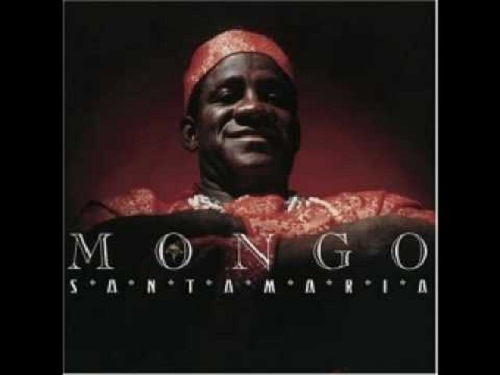
Ramón “Mongo” Santamaría “I wanted to do something that sounded like home”.

April 7, 1917, Mongo Santamaría was born in the Jesús María neighborhood of Havana, Cuba.

Exceptional percussionist of Latin Jazz and related rhythms, whose first name was Ramón Santamaría.

Mongo left to continue playing his Congas hard in the sky on February 1st, 2003.

“I wanted to do something that sounded like home”. With these simple words, Ramón Santamaría Rodríguez “Mongo Santamaría” spoke of his essence.

The purpose of his music pursued a sonority and a memory, possibly located in Cuba, in Jesús María, a marginal neighborhood where he grew up and enjoyed a tradition attached to the drum, to religion, to the street and from where this great Cuban percussionist drank infinitely.

But surely those drums also came to him from far away, from the Congo, where his grandfather came from to be a slave on the island and who also filled his head with sounds full of meanings and colors, which he later masterfully spread around the world.

The name of Mongo Santamaría (Havana, April 7/1917 – Miami, Feb. 1/2003) is, for the glory of all music, an inevitable reference of Cuban percussion.

Since he was a child he knew that his thing was to play the drum and he was lucky enough to belong to a family of empirical musicians, singers and drummers who supported him in the learning and mastery of these instruments.

During his time in Cuba, already a professional musician, he participated in numerous groups that little by little gave him a place among the most outstanding percussionists of the time. Some names of these groups are El Conjunto Boloña, Lecuona Cuban Boys, with whom he was able to participate in the recording of his first album, Conjunto Matamoros, Segundo Grupo de Arsenio Rodríguez, among others.

Each group had its own style and stamp, but in each of them Santamaría put his personal “touch”.

At the prestigious Tropicana cabaret he played with Chano Pozo as a member of Armando Romeu’s orchestra.

From that moment on, his career would not stop. Conjuntos, Septetos de Son were the perfect selection to complete the sap from which he would draw all his style and technique.

Later, from carnival to carnival, he would gather with other percussionists to play in the comparsas and experience the festive musical atmosphere par excellence of those years.

Alongside him played other friends who soon became a Cuban reference in the United States: Patato Valdés and Armando Peraza.

As part of the Tropicana orchestra and located in a show in Mexico, he decided to settle there as did many musicians of his time and came to play with Pérez Prado and Benny Moré.

It was precisely in the latter orchestra where he met Clemente Piquero “Chicho”, another Cuban percussionist whose style made him rethink the role of percussion in Cuban popular orchestras.

Mongo Santamaría belongs to the second wave of Cuban percussionists who arrived in New York in 1950.

His new idea of restructuring and designing his own style in the use of Cuban percussion was perfectly in tune with the reality that a few years earlier was being experienced in the music produced and sold in New York, after the arrival of the Cuban rumbero Chano Pozo.

“The rhythm produced by the conga organizes all the percussion of a band, from which melodies and counter-melodies can be experimented with.”

“I think percussion is the base from which things come out.”

Already in the United States, Mongo plays with Gilberto Valdés, again he is part of Pérez Prado’s orchestra and finally with Tito Puente’s, where he stayed for 7 years. Once in the line of Afro-Cuban jazz, so popular at the time, he joined George Shearing’s group and later the vibraphonist Cal Tjader.

With his own orchestra, he accompanied La Lupe, one of his favorite singers, and undertook projects of novel formats for the time, such as small formations of brass trio, piano, bass, percussion and drums, at a time when jazz bands predominated.

Mongo Santamaría, perhaps without the theatricality to which Chano had accustomed the New York public, focused all his strength on achieving his own sonority, with a fusion of Cuban styles and genres, perfected and deepened in the introduction of Afro-Cuban rhythms with a naturalness and using colorful timbre elements by using several tumbadoras in his set.

His creativity is highly demonstrated in the great amount of music that is part of his catalog of works and the quality becomes indisputable when seeing the amount of outstanding jazz interpreters that version and recreate his work.

In 1959 he recorded Tambores y cantos, which contains the song Afro blue, which over the years became “a jazz anthem of all times”, according to Nat Chediak, author of the Latin Jazz Dictionary.

His long recording career (50 albums), testifies to the musical activity that this great percussionist carried out throughout his professional career. He worked with American jazz legends such as Chick Corea, Herbie Hancock, flutist Hubert Maws, Dizzy Gillespie, trumpeter Marty Seller, among other musicians who today still pay tribute to this Cuban conguero who was the architect of the fusion of rhythm & blues rhythms and Afro-Cuban music, recognized the connection of Cuban music to African roots and placed the congas in an indispensable instrument for the determination of Latin jazz.

In 1977 Mongo Santamaría received the American Grammy Award for “Best Latin Recording” for the work Dawn.

In 1999, Rhyno Record Company, based in Los Angeles, California, recognizing his contribution to Latin Jazz, released the “box set” (CD) Skin On Skin: The Mongo Santamaría Anthology (1958-1995), which includes 34 of his most successful pieces (from his rumba albums, his LP with La Lupe and his projects in the fusion of Jazz and Latin) and an extraordinary literature about his career written by actor Andy García, musician Poncho Sánchez and other connoisseurs of the Latin Jazz genre such as José Rizo, Luis Tamargo, Joel Dorn and Miles Pelich.

The legendary musician was extremely honored and grateful for the distinction Rhyno gave him by introducing this historic anthology to the world. As stated in the conversation with Jaime Torres, Mongo said:

“This is the fruit of many years of work, music made with taste and love.”

May he rest in peace and eternal glory to him.

  • « Go to Previous Page
  • Page 1
  • Interim pages omitted …
  • Page 4
  • Page 5
  • Page 6
  • Page 7
  • Page 8
  • Interim pages omitted …
  • Page 42
  • Go to Next Page »

International Salsa Magazine (ISM) is a monthly publication about Salsa activities around the world, that has been publishing since 2007. It is a world network of volunteers coordinated by ISM Magazine. We are working to strengthen all the events by working together.