



Latin America / Cuba / La Habana
On this occasion I feel very proud to be able to speak directly with a cultural ambassador, recently appointed by the Latin Institute of Music, the leader of those who are are and one of the founders of the very famous Van Van orchestra, the great Cesar Pupy Pedroso, teacher of teachers, as we have called him for this occasion.
Good morning maestro, thank you in advance for the time you give us to all the readers of the International Salsa Magazzine and the portal www. salsamundi.com.
“Well, here I am very happy to be able to talk a little with you and grateful that you want to talk about this server”
Maestro with 19 years of foundation with Pupy and those who are maestro, tell us how the idea of founding this great orchestra was born after making the whole world dance with the Van Van.
“The idea for the project ‘’Los que Son Son’’ arose from a recording I made (while in Los Van Van) with songs of my authorship performed by an internationally renowned performer. (Omara Portuondo, Rolo Martínez, Xiomara Laugart, Raúl Planas, Caridad Cuervo, Pedro Calvo, Raúl Planas etc…etc..) From that moment on I got the idea of making another album with other performers, with a German publisher, and The album was called César Pedroso y Los que Son.
There came a time when I was on tour with Van Van and the dancers came with the records, so I could sign them, and it was then that the idea came to me of forming an orchestra and leaving Van Van and calling it ‘Los que Son Son’. . ”
“In my house when I was born there was already a piano, my father was a pianist, and children always want to be like their parents, and I was not going to be the exception, regardless of the fact that I liked the piano since I was little.”
What theme do you consider the flag of Pupy Pedroso’s new journey? When your orchestra opens
“Themes of the new transit: themes like ”What are the things in life” ””A crazy man with a motorcycle” ”Mommy behave well”, ”They’re calling me” and of course ”Six weeks “”

“From Timba to Pogolotti: It arises from a piano solo that I did in ”Sandunguera” and Pedrito Calvo identified me, as ”Pupy the sandunguero of Pogolotti” and the neighbors of La Timba (neighborhood where I I was born) they asked my older relatives why they said about Pogolotti, if I was born in La Timba, then I wanted to be okay with the two neighborhoods, when I made ”Los que Son…”
Well, I made that song in honor of the two neighborhoods, because I was born in La Timba, but I grew up in Pogolotti, and all my childhood friends are from Pogolotti, I don’t have friends in La Timba, and I consider that one is from where one is from. upbringing, not where he was born, because all the customs, friendships, first ”girlfriend” were Pogolotti’s.”
“If you talk to me about the songs from Van Van’s golden age, there are several, of mine the authorship of Maestro Formell and others of mine, for example of the maestro, there are several, “My doubts” ”Marilu”” The Painful” ”There are women” ”I’m everything” and one of mine: ”Six weeks “Sugar” ”The Negro is cooking” ”It must be over” ”That’s good ”, among many others, we live in a wonderful time”
“I consider both things, an achievement because it is not easy in a country with so much talent and so many performers to take me into account for said recognition, and at the same time a commitment, because I am obliged not to let my musical guard down in any way.” sense.”
“Yes, sir, I am grateful for having been born in this family where there was so much musical talent, where only music was breathed, my autistic grandfather, director of an orchestra called ”Cuba”, my uncle a percussionist in an orchestra very famous for that ”Arcaño y sus Maravillas” era, and I believe a lot in the musical heritage because I consider myself a product of it.
As a pianist, it is because my fundamental patron was my father, from whom I copied and learned a lot from what I could discreetly practice and as a conductor, because I had the joy of having worked with different directors, Rolando Valdés, Enrrique Pérez, I assisted in substituting for my father and the ones I spent the longest time with, Elio Revé and Juan Formell, I spent 6 years with Revé and 32 with Formell and I learned a lot with both directors, I was lucky.”
“I think that to be good at any career, the fundamental thing is that you like it and have the aptitude for it, I think that music does not escape from that rule, because you can like it, but if you don’t have the aptitude, don’t waste your time, and Maybe if you have aptitude and you don’t like it, over time you may like it and fall in love with it, so aptitude is the fundamental thing.”
“My greatest influence is Son, I love Son, rumba, guaguancó, Cuban music and Brazilian music, jazz, but my greatest influence is Son.”
“I believe that at all times, there have been different musical genres, which have been in the preference of the dancer, in the era of Rock and Roll they danced with Elvis Presly, with Bill Halle and his comets, with Little Richard, but also they danced with Aragón, Benny Moré, Sonora Matancera, among others,…
but today the balance leans more towards these foreign movements, good and bad, and that is happening all over the world, in the dance area, but I do not consider our dance music critical or dead, because there is taste for everything and every time “A convening orchestra performs on an open-air stage, it overflows with audiences, that means we are in battle, and the country that has the most musicians making a living from music is Cuba.”
“Fundamentally starting the next album, the release of a documentary of a tour we are doing in Cuba and some presentations abroad, to reappear again at the end of the year in Europe, with one of the dance hits from France:
”Having a good time”, I make a parenthesis, clarify that there are countries where our music prevails (El Son, La Timba, La Salsa) like Peru and Colombia, Cuban rhythms are still in fashion, thanks to many musicians and orchestras that make a great job for the dissemination, to the printed media and now the digital wave that quite develops our work, look, you are an example of this, we hope to continue giving our audience reasons to dance.
In August we return to South America, it is the tour we are most looking forward to, the Latin public is one of the best, we think about stopping in August in Colombia, Ecuador and Peru, in the same way we are now planning to organize the calendar, for businessmen or producers who wish to have us in their cities, must contact our direct representatives, talking to them is like talking to Pupy”
“No compadre, very simple, contact them at these numbers +573022582306 and +51992630351, they are the only ones authorized to market our tour, we want to be in all the cities of Latin America.”
Grateful teacher for your time and for letting us get to know you a little, may the successes continue for what they are.
“Grateful to you, thank you for the dissemination you make of the popular dance music of my island.
It remains to leave you the social media links of such an important orchestra so that you can follow in its footsteps and find out about the development of the successes of this great band, on Facebook:
@pupypedroso and the numbers
+573022582306 and +51992630351.
Latin America / Puerto Rico / San Juan
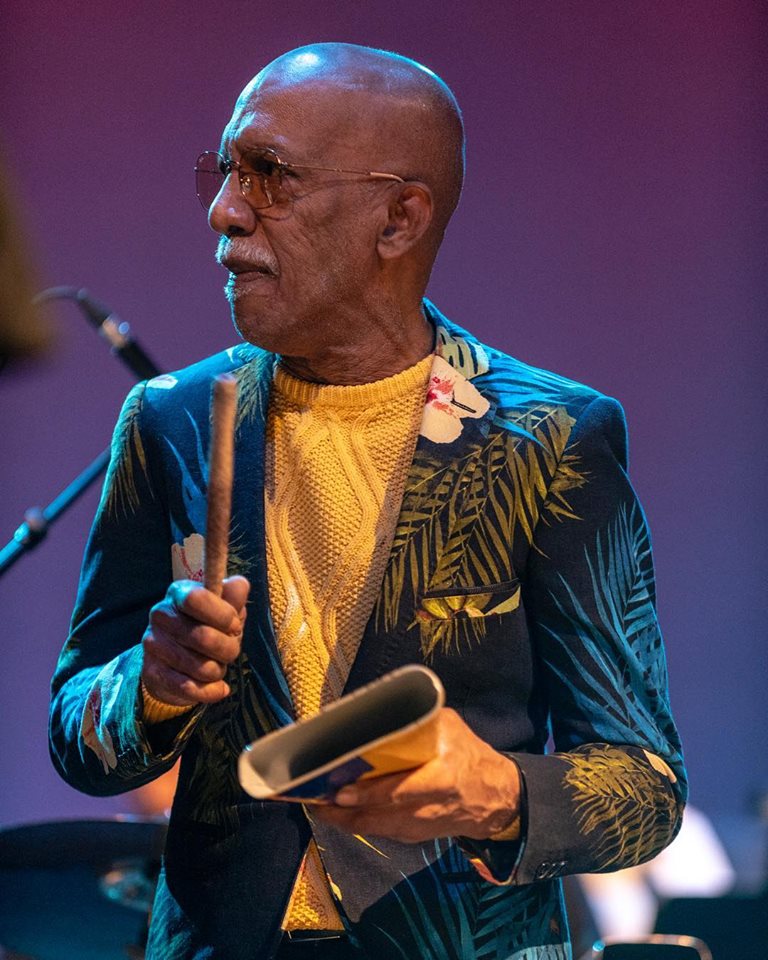
That is the reality of the Apollo Sound orchestra and its founder, the percussionist and dancer Roberto Roena, who this summer celebrate five decades making the world dance and will celebrate it with a great concert to commemorate his career.
“We are going to do something big to celebrate 50 years. It will be in the month of June at the Center for Fine Arts, “said Roena in conversation with this medium.
“It’s going to be something really cool. We are going to sing the hits of the orchestra, we will have guests and a little bit of everything”, added the musician, who indicated that the exact date will be confirmed in the coming weeks.
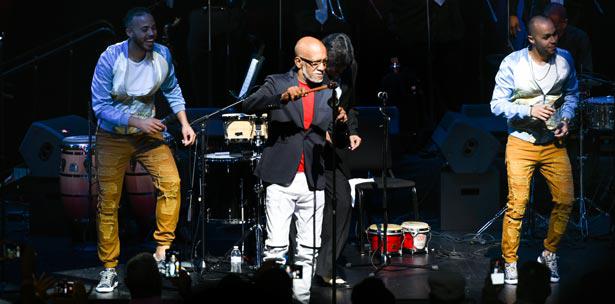
The Apollo Sound Orchestra was founded in July 1969 and its name derives from the launch that same month of the Apollo 11 space mission, which aimed to carry the first human being to walk on the surface of the moon.
His record catalog includes more than 20 productions and among his most notorious hits are “Tú loco loco y yo tranquil”, “El Escapulario”, “Marejada Feliz” and “El Progreso”, among many others. In the case of Rohena, the renowned 79-year-old musician from Mayagüez began his musical career much earlier, at age 16, with the distinguished group of Rafael Cortijo y su Combo.
He was also part of Rafael Ithier’s Gran Combo and appeared in the star catalog of the famous Fania record company and its All Stars, among other collaborations.
It was in the Mayagüez neighborhood of Dulces Labios where he was born, raised and took his first steps as a dancer. “Sweet Lips is my neighborhood. I have many memories of my childhood days.
From there came great musicians, such as Santitos Colón and Mon Rivera”, he pointed out.
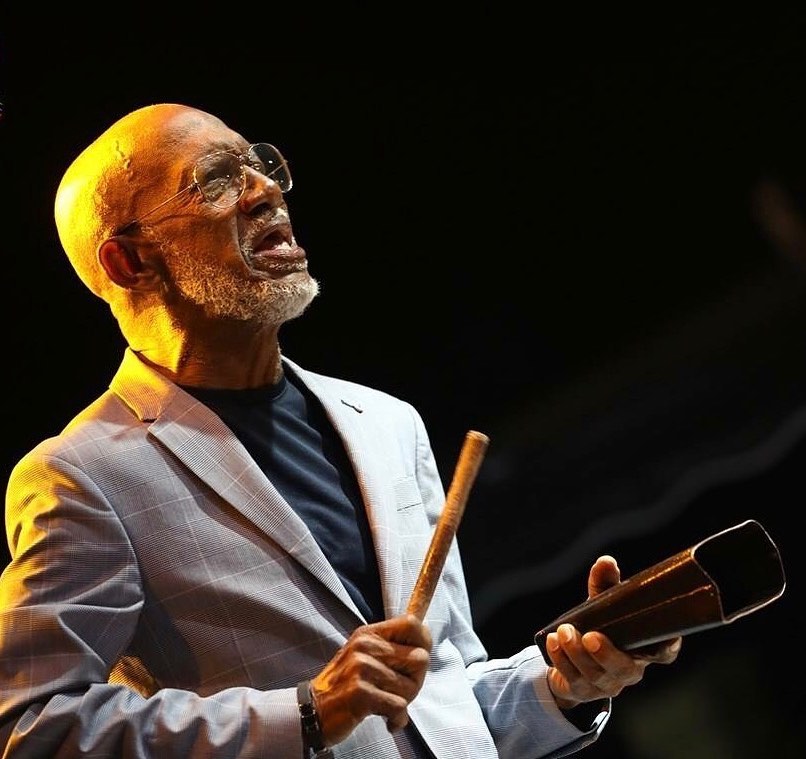
When she was nine years old, her family moved to Santurce and when she was barely a teenager, she was already appearing on television.
He was discovered by Cortijo in one of his dance performances on the La Taberna India program and from there he became a percussionist for the renowned group. Since then, he has not stopped delighting his followers with his music.
“In these 50 years, there is no greater satisfaction than being able to continue playing,” said Roena, who last Saturday began the celebration of his 50 years in a concert at the Lehman Center of Performing Arts in New York, where he brought together several of the singers who accompanied the group in its beginnings, such as Sammy González, Tito Cruz and Carlos Santos, among others. In addition to the concert, Roena does not rule out going back to the studio to continue shaping her music for posterity.
“This does not mean the end of Roberto Roena and the Apolo Sound. We are going to continue as long as God wants”, he sentenced.
RELATED ITEMS: 50TH ANNIVERSARY, CENTER OF FINE ARTS P.R., INTERNATIONALS, ROBERTO ROENA AND HIS APOLLO SOUND
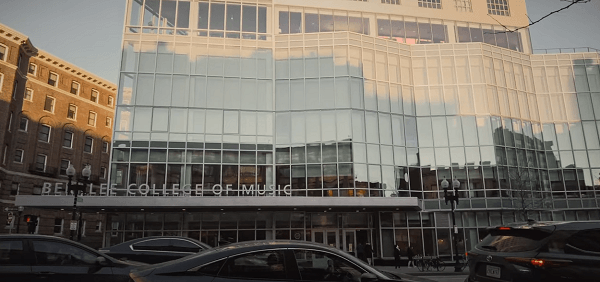
According to many of the artists we have had the honor of interviewing in this section, one of the most important things to succeed in the world of music is education and academic preparation. Fortunately, the United States is full of academic institutions offering all kinds of degrees, courses and diplomas to contribute to knowledge base artists use for their work. One such institution is Berklee College of Music.
Berklee College of Music is one of the leading music institutes in the state of Massachusetts and offers all kinds of academic degrees related to this important branch of the arts on its campuses in Boston, New York and Valencia, Spain. Its biggest focus is developing the potential of its students in areas like music, dance and theater.
In this prestigious institution, students have the opportunity to experience every aspect of the music industry through an interdisciplinary curriculum. On its website, those interested can see everything that is offered such as undergraduate, graduate, summer programs and online courses.
In addition, Berklee has made available to its applicants the possibility of studying in an online mode through its Berklee Online initiative.
Berklee Online is an initiative by Berklee College of Music created in 2002 with a view to allowing aspiring musicians and established artists to pursue economic and high-quality degrees and educational programs from anywhere in the world.
Berklee students will be able to develop and improve all of their artistic skills through online certificate programs, award-winning courses, and undergraduate programs.
An important thing to note is that online students will be able to learn from the same professors from the physical campus, so at no time will there be any decrease in the quality of teaching compared to face-to-face classes. We are talking about the best professionals in each of their areas who have taught classes to numerous artists and have been part of national and international award-winning projects. Likewise, many of the graduates of this institution have won Grammys and other awards of this kind.
According to figures handled by the college, Berklee Online has students from around 140 countries and very diverse academic and work backgrounds, but with the same desire to learn and absorb the best from their instructors.
Another benefit offered by Berklee is the assignment of an academic advisor to students in order to support them in achieving their goals and help them in everything they need to make their experience the best it can be.
And for those who are not particularly interested in enrolling in a paid course, they can also opt for free resources to complement the activities they are carrying out. Among these resources, we can mention free sample lessons, degree handbooks, online course catalogs, news and exclusive content.
Once on the page online.berklee.edu, whoever wishes to have access to all this material must sign up and create an account by typing the data required by the page in order to get access to the content.

Berklee College of Music has been the home of many renowned artists who have been able to learn much of what they know today in its facilities.
In this same section, we have spoken with renowned musicians who attended this college, which has greatly contributed to the training that has allowed them to get to where they are today.
One of them is Venezuelan percussionist and musician Omar Ledezma Jr., who received a scholarship to study in this institution and, at that moment, he told us that he applied for the scholarship and managed to pass the audition required to enter the school. A month later, he was informed that he had been admitted to Berklee through a letter and, in his own words, it was one of the most important news in his life.
Today, Ledezma has an important participation in groups such as Pacific Mambo Orchestra with which he has played in major festivals such as Tempo Latino in several of its editions. He is also teaching at the SF Community Center where he shares his knowledge with other young people who want to follow the same path.
Another fitting case to mention is that of Puerto Rican arranger, composer and sound engineer Felix O. Rodriguez, who studied production, mixing and remastering at Berklee College of Music to prepare his return to the stage since leaving the music for an extended period of time. After that, he started his solo career with all the irons and released his first studio album. Having developed in the aforementioned areas, he has much more control over his work and has no need to hire as many people to record his music.
While it is true that these artists attended face-to-face classes, their professors and content were the same for online classes, so students enrolled in the online mode can enjoy the same benefits and the same learning without any problem.

Read also: Tracy Jenkins from Lula World Records spoke exclusively with us
Quinto grew up in Salvador, where he developed his art mainly with the piano. Samuel Quinto was born in Belém, Pará, but grew up in Salvador, Bahia.
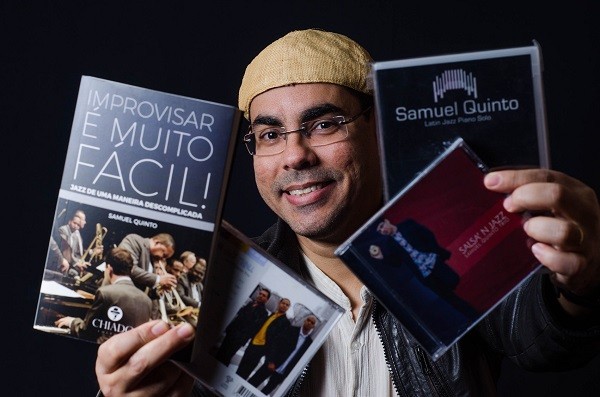
Since the age of seven, he developed his musical talent by virtue of the contact with the piano through the gospel, accompanied by the Baptist Church that he studied during his childhood with his family in Salvador.
Then Samuel took the first steps on the piano in the family home, always without accompanying teachers, and developed his piano skills learning also, as self-taught, harmony, reading and writing music and orchestration, musical composition, arrangements for the church choir, which begins to play as a pianist at the age of 12 years. In Europe.
Samuel Quinto released his first CD “Latin Jazz Thrill” in 2007, in Portugal, with trio formation (Bass, Piano and Drums), which formed the core of his repertoire in various festivals and concerts during the years 2007 and 2008 in Portugal.
During his 2008 tour he performed in cities such as Hamburg, Berlin, Cologne, Heilbronn, Liège and Limoges; in addition to a special concert held in Salvador in collaboration with the Catholic University of Salvador in June 2008. His compositions are used at the University of Porto (ESMAE) in the Jazz degree, as study material in the training of Jazz students.
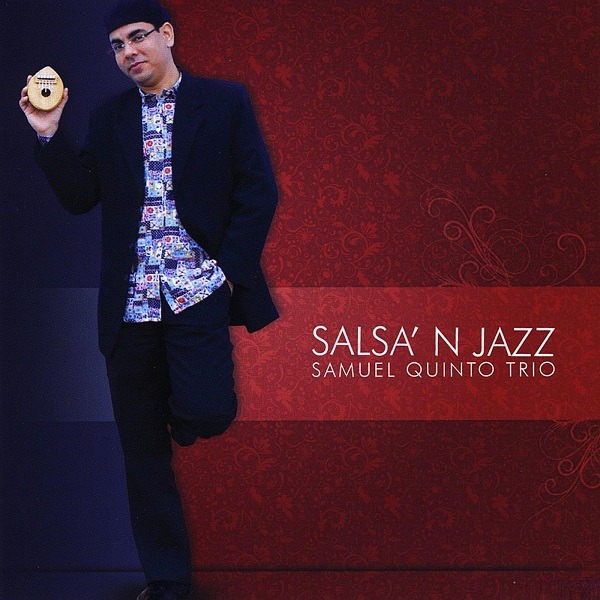
Even more extensive, which passed through Belgium, Germany, Portugal, Spain, France, Luxembourg, Netherlands and England. In this second work, Samuel was accompanied by another Brazilian, classically trained, Marcos Borges on bass and Manuel Santiesteban, Cuban, graduated in drums in Havana, Cuba.
He founded the first Latin Jazz course at the North Jazz School, Porto – first professional Jazz school accredited in Portugal and one in the Iberian Peninsula to have the Professional Jazz Instrumentalist course until then.
Besides being invited to be the artistic director of one of the most traditional Portuguese jazz clubs, Si bemol.
Samuel has also been invited to conduct workshops in the field of Jazz, Latin Jazz Composition and Arranging both in Brazil and Europe. But his musical talent is not only to jazz, after having been a pianist of the corps de ballet, he began to develop the scholar side of his music.
Inspired by great composers such as Beethoven, Mozart, Bach, Tchaikovsky, Brahms and others, he began compositions to accompany ballet in performances, as well as for orchestra and choir. _ (allaboutjazz)
There is something about Brazilian-born pianist Samuel Quinto that strikes a vibrant chord in the inner ear. Perhaps it has to do with his wonderful grasp of the joy that abounds in the Brazilian northeast.
His sense of “joy”. Perhaps it also has to do with his mature approach, his wonderful use of dynamics, his expression and his innate ability to allow the tonal center of his music to shine.
He has an exquisite ear and his hands are independently controlled by his mind, which separates melody and harmony when necessary.
Quinto, as a result, makes his fingers tingle on the keys, rumble and guffaw and cry with chords from which he wrings laughter and sadness and pure joy.
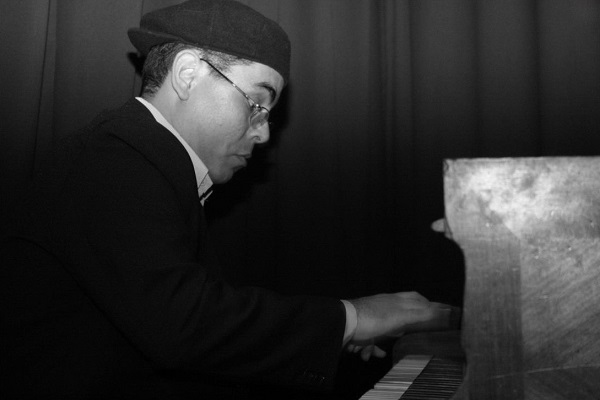
The result is a discotheque where these cultures converge in a point of ignition that warms the blood of the soul. His playing is muscular and intuitive and smacks of an artist who likes to invent on the fly, to constantly evolve.
The starting point of Quinto’s playing is also a deeply symbiotic relationship with forro music in all its vibrant splendor-baiao, xote and arrasta-pe-all elegantly captured and sparkling as his fingers touch ebony and ivory.
The most joyous and memorable display of this is her rendition of Victor Young’s “Stella by Starlight,” which gets a rousing liner treatment and reaches its climax as the song’s choruses unfold.
It is worth mentioning that on this song – as on the others on this album – Brazilian bassist Marcos Borges and Cuban drummer Manuel Santiesteban shine with their wonderful interplay.
Samuel Quinto is also an accomplished composer and demonstrates maturity and a sense of adventure with the rhythmic variety he presents here in a rumba, “Quinto’s Rhumba” which, by the way, is played in a deliciously choppy style reminiscent of Thelonious Monk.
“Jaci” is an exciting, danceable song that crosses Cuban rhythms with a touch of Brazil.
“Bolero To Preta,” an affectionate semblance of the pianist’s mother, suggests that the pianist has a lot of inner clave.
“Ficou No Meio” is simply a marvelous forro that becomes dizzying as Quinto, Borges and Santiesteban gloriously rumba in harmony and rhythm.
Santiesteban gloriously ruminate the harmony and rhythm.
“Voo Da Andorinha” is a chorinho that, quite simply, reveals Quinto’s “Alma de Nordeste”. And “Isabel (Para Voce)” is a beautiful ballad that shimmers and shines as its emotive tonal colors begin to unfold.
Here is a very promising pianist, who brings with him his rich Brazilian tradition and, indeed, all of Latin America, a new and exciting musical landscape. _
Raul D’Gama Rose
Samuel Quinto Trio – Salsa’N Jazz (2009).
Musicians:
Samuel Quinto (Piano)
Marcos Borges (Bass)
Manuel Santiesteban (Drums)
Information provided (September 16, 2023)
Samuel Quinto Feitosa (Neuroscientist and Musician)