 |
Summer Salsa Fest VarnaAug 04 2023 – Aug 06 2023
|
Varna Free University (VFU)Chayka 9007, Varna, Bulgaria, 9007 DescriptionThe 12th edition of Summer Salsa Fest Varna offers 3 days of workshops, shows parties and 3 beach Latino fiestas with international instructors, performers and dj’s. Cost from € 70 |
Search Results for: salsa

Latin music Festival in Portugal August 2023
 |
Dmaes Summer BootcampAug 04 2023 – Aug 13 2023
https://bootcamp.dmaes.pt/ https://www.facebook.com/DMAES.Summer.Bootcamp |
Muxima BarRua Maurício Lourenço de Oliveira, No 206, Vila Nova de Gaia , Portugal, 4405-034 DescriptionOver the course of 10 days, the Summer Festival has dance as the common denominator for all activities taking place: workshops, dance performances, seminars, exhibitions, parties and beach activities. Cost from € 130 |

Redames (Randy) Plaza
Latino America / Puerto Rico / Carolina
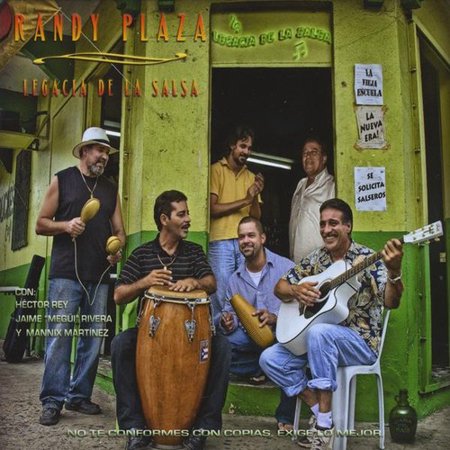
Redames Randy Plaza. Salsa Legacy
“It is salsa from yesterday and today for the dancer and the romantic salsero”.
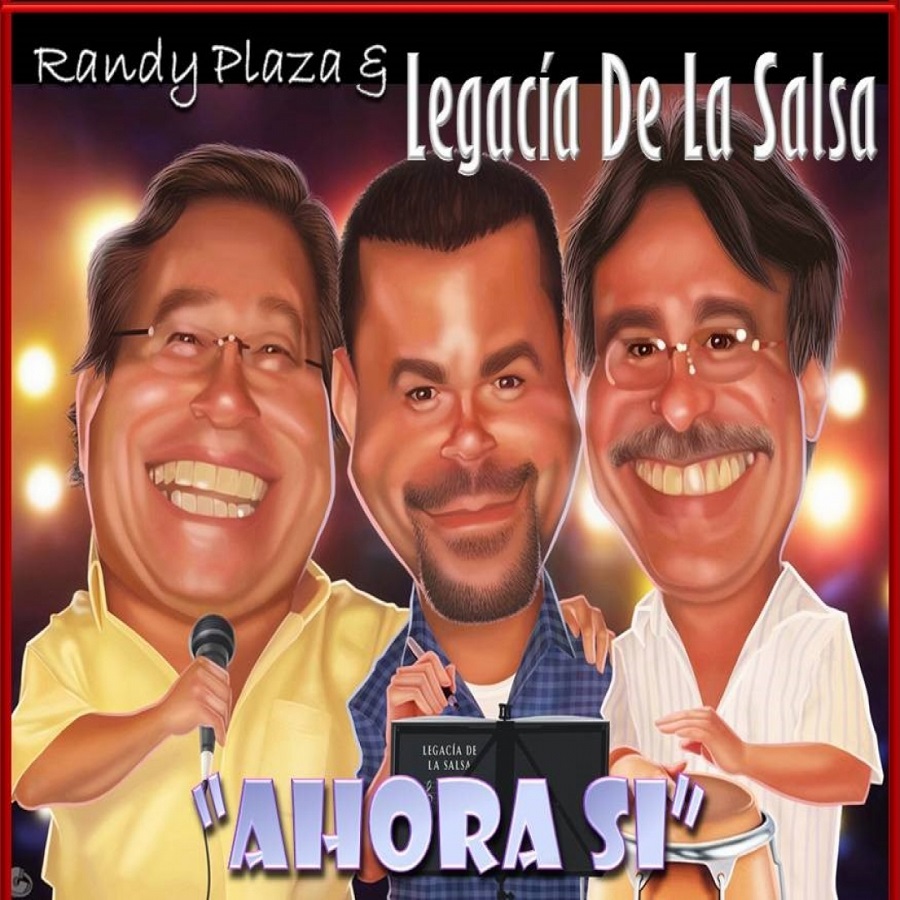
Randy Plaza, a native of Carolina, Puerto Rico, is the producer, composer, publisher and independent label of Legacía de la Salsa. Created in 2007, LS arises under a constant concern of seeing and feeling how the salsa genre has been musically devalued over the years.
Legacy of Salsa is an invention, a concept, a movement, an experiment, which tries firstly to raise the musical quality of salsa to another level, to keep the tradition alive, to demonstrate that if we work together and without interest, everything can be achieved. and proclaim to everyone that the sauce is not over.
That it is not in extinction, that it has not gone out of fashion, nor has it lost its style.
“That all these are tales of the boring.”
Legacy of Salsa is the legacy and teaching received from the great masters of salsa, who have captivated us in various ways and to whom we owe everything that was the development and fusion of this genre to the point of establishing it as a root in the heart of every Latino.
“It is salsa from yesterday and today for the dancer and the romantic salsero”.
Legacy of Salsa manages to incorporate the feeling of some of the greatest salsa institutions in this project, whether it be for the musical sound, for the style, for the arrangements, for the romantic, the singers, etc.
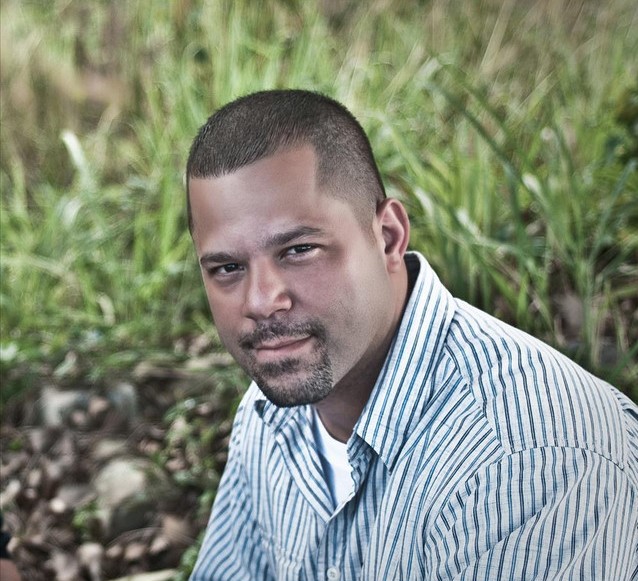
In this way we can recover a little of what has been lost today, please the entire salsa market, and fill that empty space; orphan of style and rhythm, and musically instructing and educating the disoriented and those who got lost along the way.
“The essence of yesterday in today’s day, traditional sauce without monotony and without fillers. For you salsero, cocolo, rumbero, with flavor and feeling”.
The unexpected, unfortunate and tragic death of Humberto Gómez leaves a huge void in the formation of Legacía de la Salsa.
A week before leaving Tito Gómez was already part of this musical concept.
Due to such loss, it was decided to cancel the first Legacía de la Salsa concert in New York City on July 21, 2007, where he would have participated as a guest star.
At that moment we entered the recording studio insecure and with the enormous concern of wanting to do the best possible on his behalf, never forgetting the person he was and will continue to be for us and without leaving aside his musical legacy.
Israel “Cachao” Lopez Sobrado in fame and respect in the seventies was dedicated to maintain the tradition at the highest level
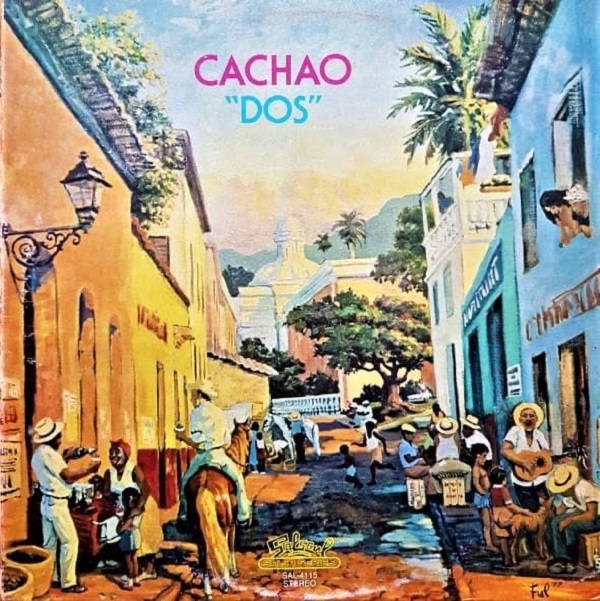
“Cachao Dos” for the year 1977.
It will be enough to mention the name of this celebrity to open a whole range of creativity and genius embodied in what is considered a cult discography.
Since 1931, the year in which he started musically as a member of the Havana Philharmonic Orchestra, the precocious Israel would give a foretaste of the talent he had and that, as time went by, would be consummated hand in hand with his right-hand man and musical accomplice, Orestes “Macho” López, his older brother.
Certainly, music was impregnated in the DNA of the López family, a generating machine of musicians by tradition, something that Lázara Cachao, Israel’s niece and daughter of his deceased younger brother Orlando “Cachaito” Lopez, reaffirms: “The tradition of being musicians comes from the grandparents and great-great-grandparents, all the Cachao are musicians”.
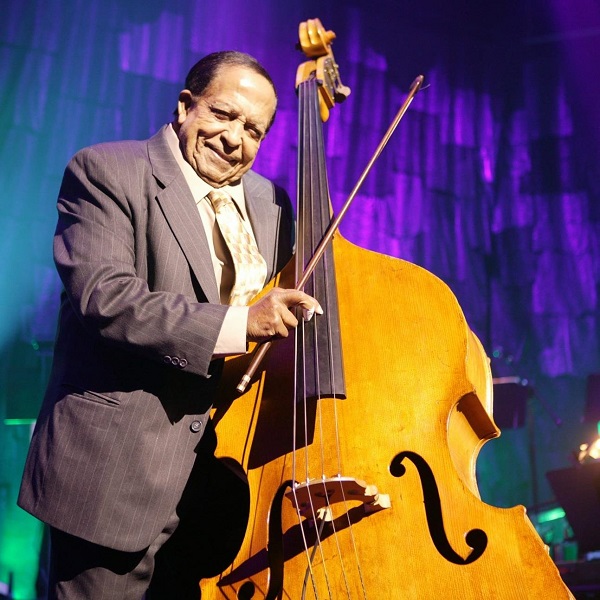
Regarding his transcendence, he and his older brother Orestes are said to be the creators of the Mambo, a rhythmic variation of the Danzón and a genuine musical expression that would mark a before and after in Latin music.
However, and as it is known, this contribution would change its clothing and would reach worldwide popularity when it reached the hands of another “inventor” born in Matanzas, Cuba, named Dámaso Pérez Prado, who as it is known, gave it another treatment and musical twist reaching surprising popularity.
“Cachao”, after a 31-year stay with the Havana Philharmonic Orchestra, decided to leave Cuba, settling for many years in New York City.
As it is understandable, his presence in this city was more than important for the musical guild and music fans.
He was nothing less than one of the managers and protagonist of the famous Jam Sessions recorded by the Panart whose presence was capitalized among many others by Tito Puente, Tito Rodríguez and Eddie Palmieri.
From the first one we could say, a whole school, a musician with a deep knowledge of his double bass and creator of his own style, bow in hand, and as a prolific composer, with approximately three thousand compositions together with his brother “Macho” López.
The years in New York were musically very good for Israel Lopez as well as in Las Vegas and finally Miami, where he lived until his last days.
Making a discography of him is quite a task and a challenge. However, after his arrival, I remember with great pleasure his collaboration for the album Latin Explosion by Joe Cain and his orchestra in 1964, where among others, Listen dos Trompetas and Mungo, Mungo Baby stand out.
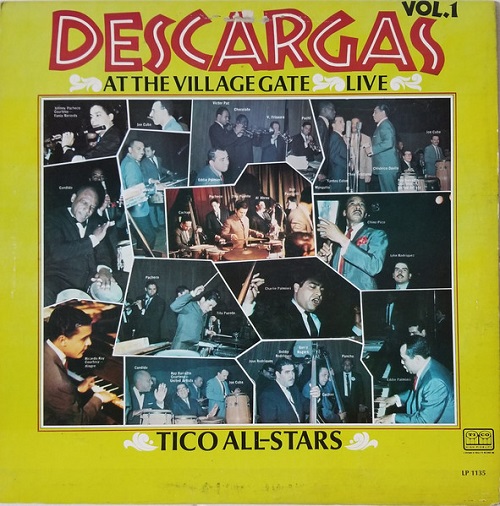
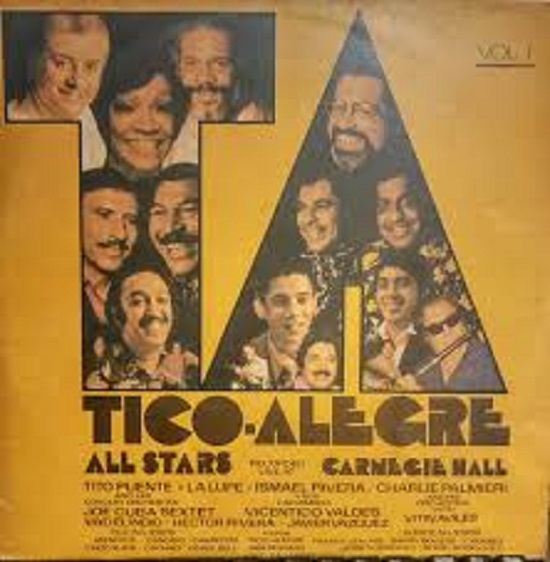
Esta es mi Orquesta, theme/performance of Tito Rodriguez’s musicians emulating what Stan Kent and his Big Band did, or those performances as special guest in the famous Descargas at The Village Gate Live and Tico All Stars, among many others.
In the seventies, Cachao, with his fame and respect, dedicated himself to maintain the tradition at a supreme level, and from that period, punctually 1977, Cachao will present two epic works, the first one entitled Cachao y su Descarga Vol. 1 and then Cachao Dos, both recorded for Salsoul Records under the production of René López and Andy Kaufman.
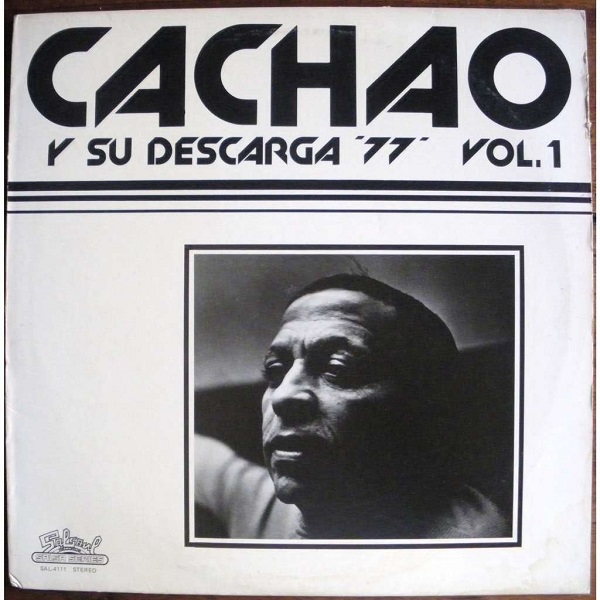
The latter contains only a total of five tracks, but they are well fulfilled in their purpose of maintaining a fierce defense of the rhythms that Gran Cachao has been proclaiming for years.
This album, like everything else recorded by the double bass player, is genuine and of supreme quality, something that is due to Israel’s responsible and dynamic character, something that the leader Julio Castro can attest to, having not only known him personally but also having worked with his orchestra La Única, which arrived in NYC for a prolonged stay of a little more than half a year.
Repertory
Ko Wo Ko Wo: (Guiro): Julito Collazo
Israel “Cachao” López: Contrabajo
Julito Collazo: Vocal, Chekere, Conga
Mario Muñoz “Papaito”: Campana
Diane Cardona: Coro
Marcelino Guerra: Coro
Héctor “El flaco” Hernández: Coro
Zunny López: Coro
Frankie Rodríguez: Coro
Fela Wiles: Coro
Jóvenes del Ritmo: (Danzón): Israel López
Israel “Cachao” López: Contrabajo
Julián Cabrera: Congas
Gonzalo Fernández: Flauta de Madera
Oswaldo “Chihuahua” Martínez: Timbales
Charlie Palmieri: Piano
Rolando Valdés: Guiro
Cuerdas:
“Pupi” Legarreta: Violín
Alfredo de la Fe: Violín
Eddie Drenon: Violín
Yoko Matsuo: Violín
Carl Héctor: Violín
Patricia Dixon: Cello
Centro San Agustín: (Danzón-Cha): Israel López
Israel “Cachao” López: Contrabajo
Carlos “Patato” Valdés: Congas
Gonzalo Fernández: Flauta de Madera
Lino Frío: Piano
Rolando Valdés: Guiro
Nelson González: Tres
Mario Muñoz “Papaito”: Percusión
Alejandro “El negro” Vivar: Trompeta
Alfredo “Chocolate” Armenteros: Trompeta
Rafael “Felo” Barrios: Coro
Roberto Torres: Coro
Trombón Melancólico: (Descarga): Israel López
Israel “Cachao” López: Contrabajo
Manny Oquendo: Timbales
Charlie Palmieri: Piano
Barry Rogers: Trombón
José Rodríguez: Trombón
Andy González: Campana
Frankie Rodríguez: Percusión
Gene Golden: Percusión
Milton Cardona: Percusión
Rafael “Felo” Barrios: Coro
Roberto Torres: Coro
Chambelona (Popurrí de Congas): Neri Cabrera
Israel “Cachao” López: Contrabajo
Julito Collazo: Bombo
Lino Frías: Piano
Mario “Papaito” Muñoz: Percusión
Oswaldo “Chihuahua” Martínez: Percusión
Virgilio Martí: Percusión
Eugenio “Totico” Arango: Coro
Rafael “Felo” Barrios: Coro
Read Also: Carlos “Patato” Valdés one of the best percussionists in the history of Latin Jazz
Adrian Suarez Composer, arranger, trombonist and percussionist
Trombonist Adrian Suarez’s musical career began when he was very young at a music school.
“From the age of five they put us to study theory and solfège, and four years later I managed to get my hands on an instrument.”
However, once he was able to play an instrument, he took a break to dedicate himself to baseball. “It was at the age of 14 that an uncle took me to some Latin percussion lessons and soon after that I started with the trombone.”
On April 23, 1969, in Caracas, Venezuela, Adrian Suarez was born.
Excellent composer, arranger, trombonist, percussionist and researcher.
Bachelor of Arts (UCV-1994), he studied music, trombone and composition at the Escuela Superior José Ángel Lamas.
He also studied Afro-Caribbean percussion and Afro-Venezuelan percussion (1985-1990). He was a researcher and advisor for the foundation of ethnomusicology and folklore, fundef, between 1993 and 1995.

He studied composition at the Cátedra Latinoamericana de Composición Antonio Estévez, with maestro Juan Carlos Núñez from 1994 to 1996. In Germany he obtained a master’s degree in composition.
As a professional, he has collaborated with the Papel Musical Magazine (1992); he has been a researcher and advisor for the Foundation of Ethnomusicology and Folklore (FUNDEF) under the direction of Dr. Isabel Aretz; and he has worked as a documentary advisor for visual arts exhibitions.
He studied composition with Helmut Lachenmann and Marco Stroppa. In 2001 he received his master’s degree in composition from the Staatliche Hochschule für Musik und Darstellende Kunst in Stuttgart, Germany.
Since 1999 he has been a founding member of the international group of composers Aspect, based in Germany, and since 1991 of the Musikós Association in Caracas. He participated in the Latin American Composition Chair Antonio Estévez, under the direction of Juan Carlos Núñez (1994-1996).
He has received numerous awards, including the Unique Prize of the Manuel Enrique Pérez Díaz National Composition Competition (CONAC, Caracas, 1998) for his work “Soledades”, “Hommâge à Octavio Paz”, for two guitars and harp, the Municipal Music Prize (Caracas, 2002 and 2017), the National Culture Prize (2010) as well as the Prize of the Ibero-American Composition Competition for Symphonic Band Ibermúsicas-Oaxaca (2016).
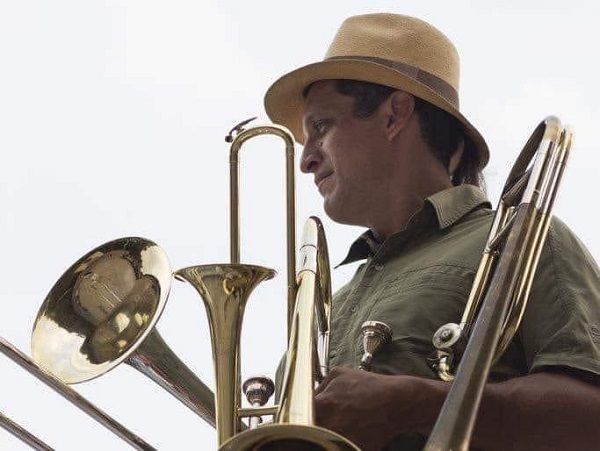
He has worked as author and director of musical-dramaturgical shows in Venezuela, including titles such as: “Lamas siempre” (1995), “Proyecto Música e Hipótesis Aleatorias” (1997), “Atavismos del Sol y de la luna” (2000), “Maithuna” (2009), “Watunna” (2010), “Meñé Ruwa, los dueños del canto” (2011) the first musical theater play in the continent for instrumental ensemble and two shamans and “La salsa es trombón” (2012, 2015, 2017).
He led a band integrated by a group of the best musicians of the salsa scene nationwide: Tuky Torres, on piano; Carlos Rodríguez, bass; Víctor Cardona, on timbal and bongo; Freddy Rivas, congas; Johan Muñoz, trombone; Eliel Rivero, trombone. Special guests included soneros Edgar Dolor Quijada, Reinaldo Torcat, as well as a group of batá drummers.
Creator of the Ensemble Lux Aeterna, dedicated to the interpretation of spiritual and sacred works of all times. He is also founder of the Akoustikos New Music Festival in 2009.
As a trombonist, he has cultivated popular music from all over the continent, with special emphasis on Venezuelan and Caribbean music. His work as a researcher, composer and performer has allowed him to take his work and music to several countries in the Americas, Europe, Africa and Asia.
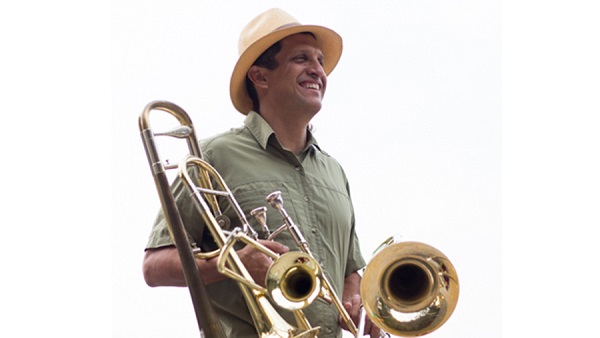
“It won’t be a master class in history,” says Venezuelan musician and composer Adrián Suárez with a chuckle; in reality it is a musical show, with hints of theater and dance, that will show the public the evolution of the trombone, and its relationship with the salsa genre from prehistoric times to contemporary times.
Adrián Suárez brings sacred sounds and turns them into music.
Suárez won the Second Iberoamerican Composition Contest for Symphonic Band Ibermúsicas, in the Mexican city of Oaxaca, with his work Aerofanía, retumbos místicos para banda sinfónica.
Salsa is trombone, Suárez assures, “It is a beautiful show that is not only educational, but also seeks to inspire the audience through the values and feelings it promotes”.
The artist and researcher’s expectation is that his audience will be completely involved with the sound and ambience: “To completely move the energy, since it is not only music to dance to, it is to sit down and listen to it carefully”.
Víctor Porfirio Baloa Díaz, more commonly known as Porfi Baloa